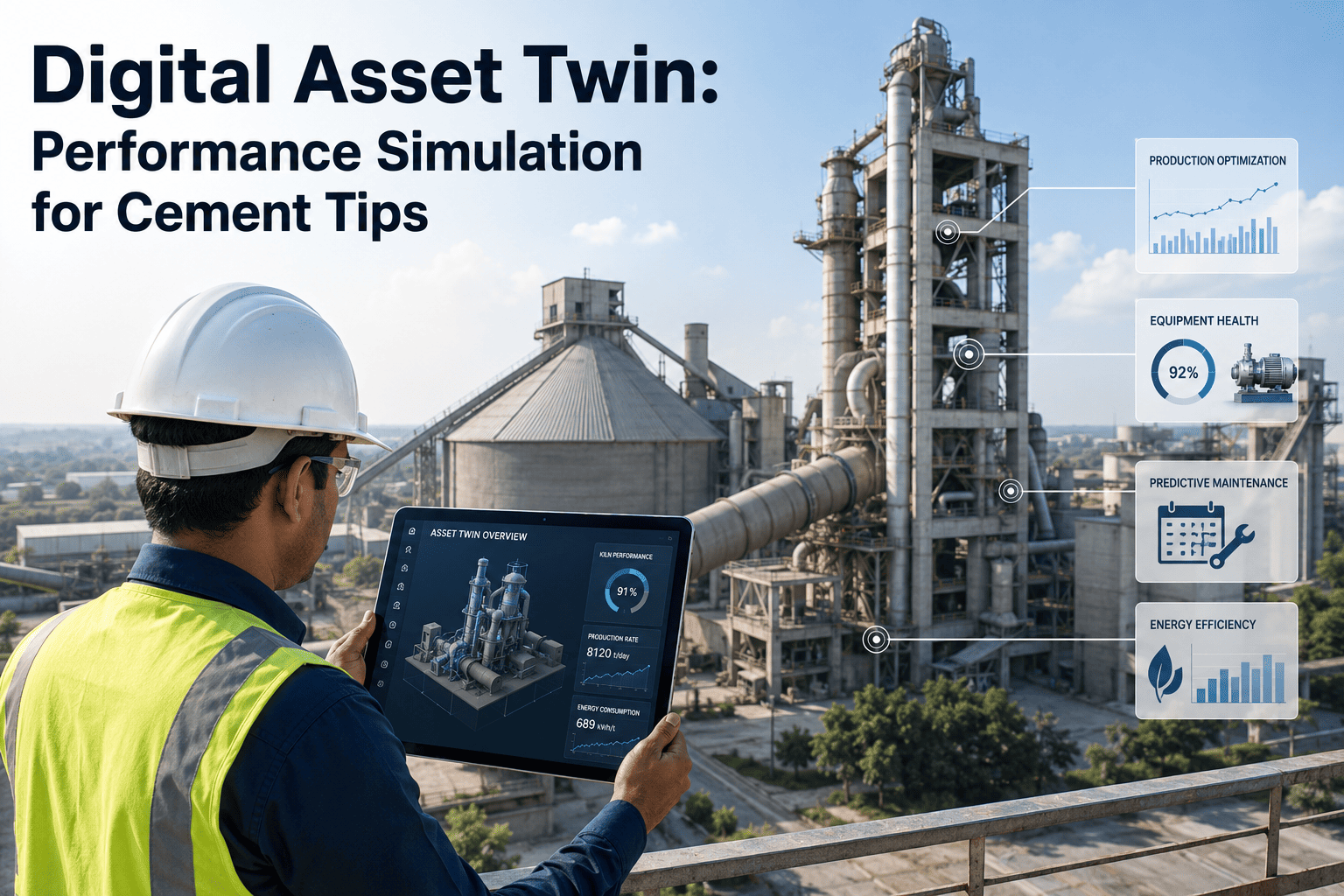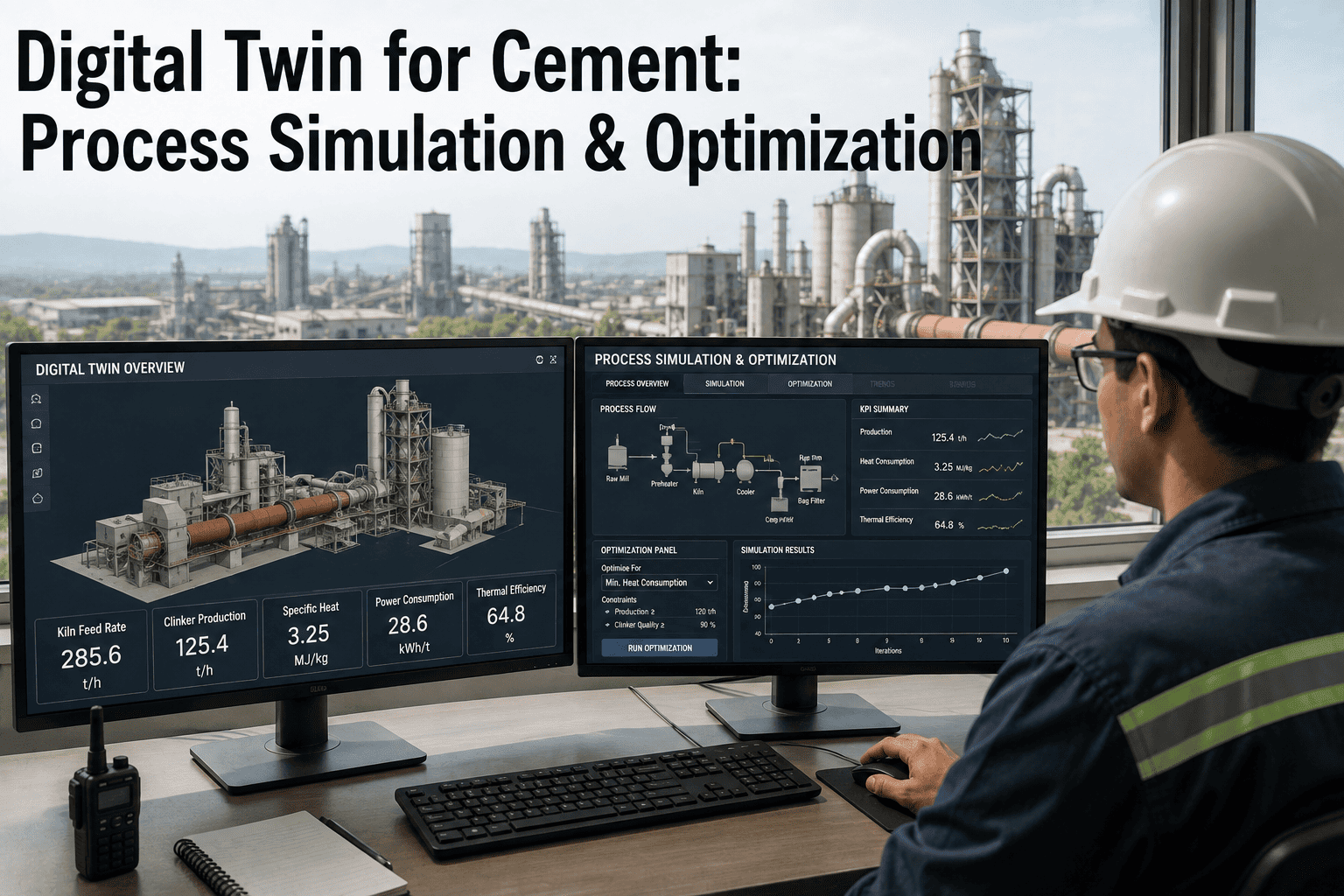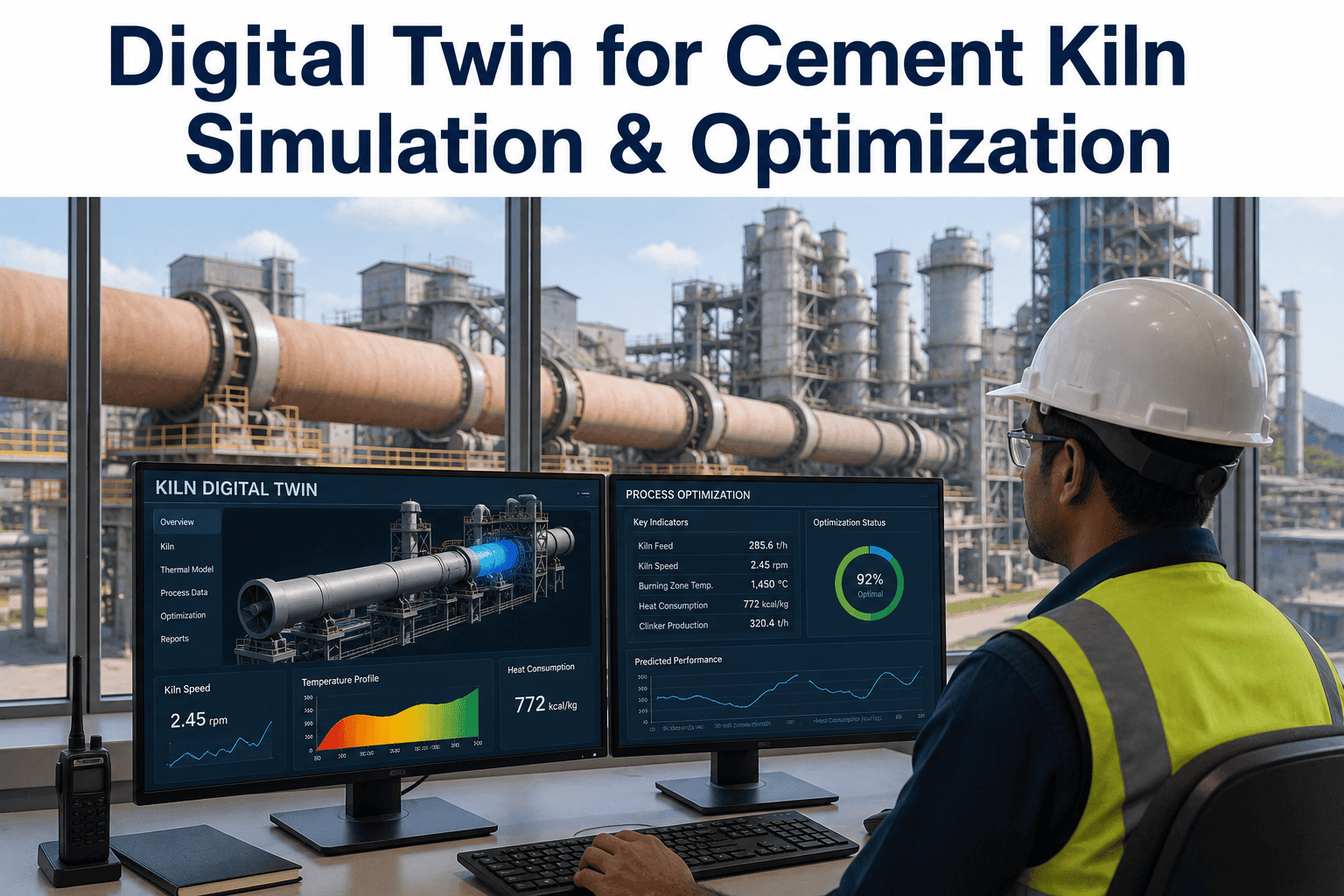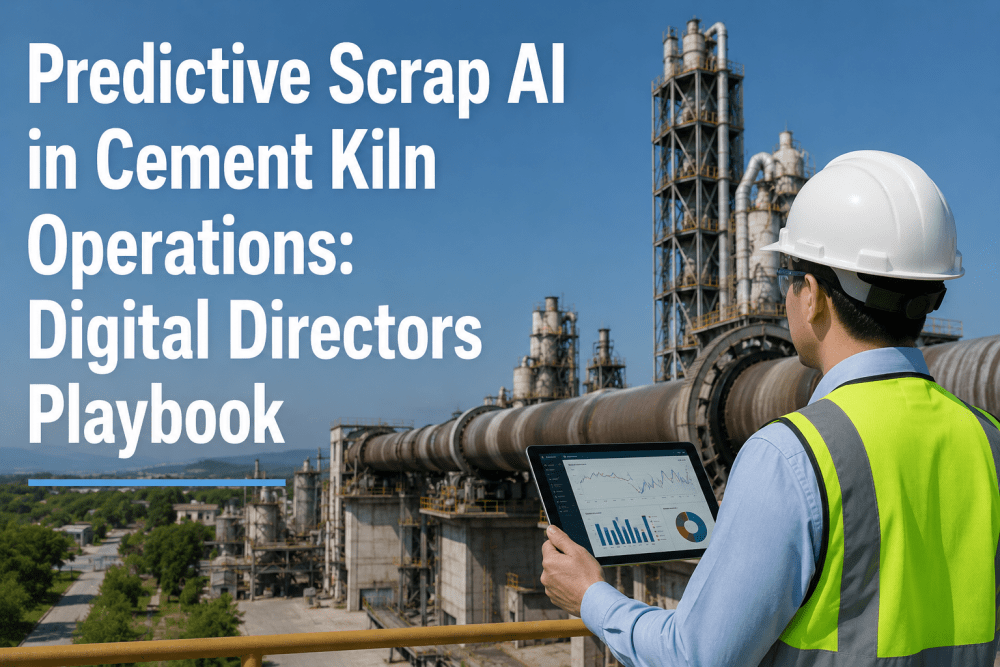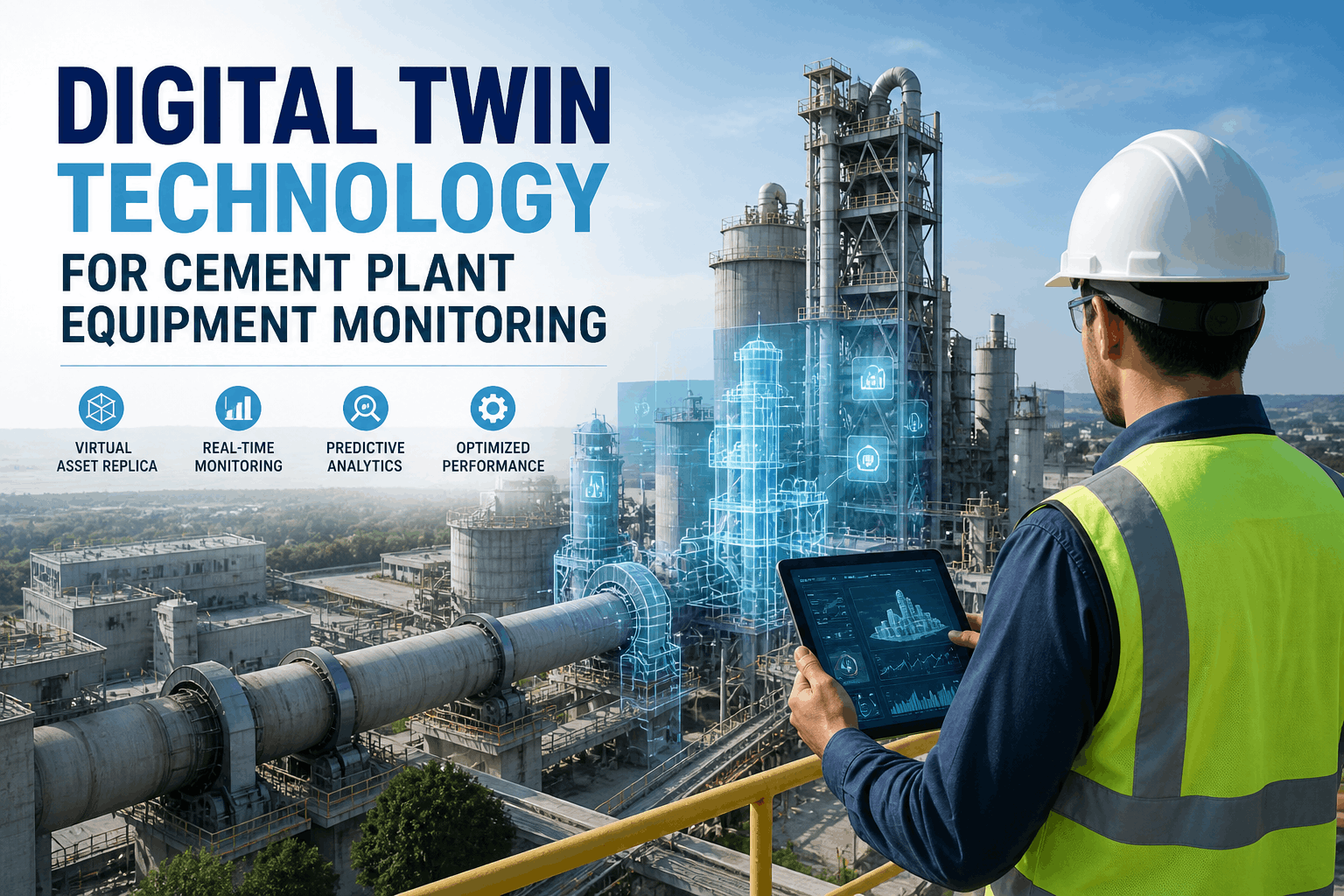
In the era of Industry 4.0, **digital twin technology** for cement manufacturing has shifted from a theoretical concept to the most significant operational asset in a facility's digital arsenal. A digital twin is not merely a 3D visualization; it is a dynamic, multi-physics virtual replica of a kiln, mill, or crusher that synchronizes with real-time IoT data to simulate performance, predict failures, and optimize energy consumption. For Plant Managers and Digital Transformation Directors, the mandate to implement digital twins is no longer about "exploring innovation" — it is about survival in a market defined by volatile fuel costs and aggressive decarbonization targets. Understanding the architecture of a **predictive digital twin** is the foundation for moving from reactive maintenance to autonomous operational excellence. If you want to see how leading cement producers are using virtual replicas to drive 15% energy efficiency gains, you can book a demo of our digital twin platform today.
What Is Digital Twin Technology for Cement Plant Equipment?
A digital twin in a cement plant is a software-based representation of a physical asset that is continuously updated with data from sensors, SCADA systems, and laboratory chemistry logs. Unlike traditional static models, a digital twin reflects the **exact current state** of the equipment — including wear levels, thermal stress, and mechanical degradation. By combining physics-based equations (thermodynamics, fluid dynamics) with data-driven AI models, the digital twin allows engineers to run "What-If" simulations in a safe virtual environment before making changes to the physical production line.
The scope of digital twin application in cement covers the entire clinker production chain: from the primary crusher's mechanical load to the kiln's thermal profile and the finish mill's energy intensity. As the cement industry moves toward Carbon Capture and Storage (CCS) and alternative fuel usage, the digital twin becomes the "Control Center" for managing these increasingly complex process variables. Book a demo to see how we build high-fidelity asset replicas for cement equipment.
The Anatomy of a Cement Digital Twin: 5 Layers of Asset Intelligence
Implementing a digital twin is not a single software installation; it is the construction of a multi-layered intelligence framework. For critical cement assets like the kiln main drive or the raw mill VRM, the digital twin must capture data across five distinct dimensions to provide actionable predictive insights.
Physical Entity Layer (The Foundation)
The actual kiln, mill, or fan equipped with IoT sensors (Vibration, Temperature, Pressure, Acoustic). This layer provides the raw data streams that "feed" the virtual replica.
Data Communication Layer (The Nervous System)
High-speed edge gateways and cloud connectors that transmit SCADA and sensor data with ultra-low latency. iFactory ensures 99.9% data continuity to prevent the twin from "drifting" from reality.
Virtual Model Layer (The Physics)
The 3D geometric and physics-based mathematical models. This layer "understands" that if the kiln speed increases, the torque and thermal load will shift according to known clinker chemistry laws.
Service Layer (The Prediction)
AI algorithms that analyze the difference between "Expected" vs. "Actual" performance. This layer detects "Early Warning" anomalies — such as a slight vibration shift that indicates a future planetary gear failure.
HMI & Visualization Layer (The Action)
The user interface where plant operators interact with the twin. This includes 3D heat maps of the kiln shell, predictive health scores for mills, and simulation sandboxes for alternative fuel trials. Book a demo to see the HMI in action.
Digital Twin Capabilities by Asset Type: Cement Plant Breakdown
A digital twin is only as useful as its asset-specific configuration. In a cement plant, the requirements for a Kiln Twin (thermal/process heavy) are fundamentally different from those of a Finish Mill Twin (mechanical/vibration heavy). The table below outlines how iFactory's digital twin technology maps to the unique challenges of each cement asset category. Book a demo to see how we customize virtual replicas for your specific asset list.
| Asset Category | Digital Twin Capability | Primary Physics Layer | Strategic ROI |
|---|---|---|---|
| Rotary Kiln | Shell Thermal Heat-Mapping & Refractory Life Simulation | Thermodynamics & Radiation | Maximize Campaign Life |
| Raw Mill (VRM) | Grinding Force vs. Feed Chemistry Optimization | Structural Mechanics | Energy Efficiency |
| Primary Crusher | Tramp Metal Impact Stress Modeling | Dynamic Load Analysis | Prevent Seizure |
| Clinker Cooler | Grate Air-Flow & Thermal Quench Optimization | Fluid Dynamics (CFD) | Clinker Quality |
| ID Fans / Process Fans | Blade Fouling & Aerodynamic Imbalance Prediction | Vibration & Airflow | Uptime Stability |
| Conveyor Networks | Longitudinal Stress & Splice Fatigue Twin | Elasticity Modeling | Zero Rip Outages |
The "Virtual Sensor" Revolution: Monitoring Where Physical Sensors Fail
One of the most powerful aspects of digital twin technology is the creation of **Virtual Sensors**. In many areas of a cement plant — such as the internal burning zone of the kiln or the center of a grinding mill — physical sensors cannot survive the extreme heat or abrasion. A digital twin solves this by using physics-based models to "calculate" the temperature or pressure at these inaccessible points based on surrounding data.
These virtual sensors provide plant operators with a "Look Inside" the process that was previously impossible. By monitoring the "Virtual Internal Temperature" of a kiln support roller or the "Virtual Stress" on a planetary gear tooth, iFactory gives reliability teams the data they need to prevent catastrophic failures weeks before a physical sensor could detect them. Book a demo to see how virtual sensor technology works in a live cement scenario.
iFactory utilizes a "Hybrid" approach, combining physics-based simulation with AI-driven data analysis. While AI is excellent at finding patterns in historical data, physics models ensure the twin remains accurate even when the plant enters a completely new operating state (e.g., switching to 100% alternative fuels). This hybrid approach eliminates the "Black Box" risk of pure AI and provides engineering teams with the transparency they need to trust digital predictions.
AI-Driven Simulation: Closing the "Loop" in Cement Plant Optimization
The final goal of digital twin technology is to close the loop between data capture and operational action. Through automated simulation, the digital twin can test thousands of different set-points to find the optimal balance between clinker quality, energy cost, and asset wear. This "Autonomous Optimization" capability transforms the digital twin from a monitoring tool into a proactive operational guide. Book a demo to see iFactory's simulation engine in action.
Predictive Failure Simulation
The twin simulates the cumulative stress on an asset, predicting the "Remaining Useful Life" (RUL) of critical components like bearings and gear-sets with 90%+ accuracy, allowing for precision maintenance planning.
Energy "What-If" Analysis
Engineers can virtually test new alternative fuel mixes or kiln feed rates to see the impact on specific energy consumption (SEC) before actually making the change on the physical production line.
Root Cause Virtual Playback
When a failure occurs, the twin provides a "Virtual Playback" of the event — allowing teams to see the internal mechanical or thermal conditions that led to the trip, ensuring it never happens again.
Digital Handover & Training
New operators can "Drive" the virtual kiln or mill in a sandbox environment, learning how to handle process upsets without risking actual production tonnage or equipment safety.
Digitalization Gaps: Where Cement Plants Are Currently Falling Behind
Based on digital maturity assessments of global cement producers, the following gaps are preventing facilities from reaching full Industry 4.0 reliability potential.
Building a Cement Digital Twin Roadmap: A Step-by-Step Approach
For Digital Transformation and Plant Directors, the roadmap from "Digital Chaos" to "High-Fidelity Twins" follows five operational phases. Each phase builds the data integrity required for the next.
Asset Data Integrity Audit
Identify all critical assets and audit the existing sensor density. A digital twin is only as good as its inputs. iFactory helps you identify where additional IoT sensors (Vibration, Thermal) are needed to provide full virtual coverage. Output: a sensor-gap remediation plan.
Unified Data Architecture (Connect)
Connect SCADA, MES, and IoT gateways into a single, high-speed data lake. Ensure data tags are standardized across all plant sites to enable corporate-wide benchmarking. Output: a live "Nervous System" for the virtual plant.
Physics-Model Calibration (Build)
Develop the physics-based mathematical models for your specific equipment. This involves calibrating the twin against historical performance to ensure the "Virtual Kiln" behaves exactly like your "Physical Kiln." Output: a validated baseline digital replica.
Predictive Intelligence Rollout (Analyze)
Deploy AI models for health scoring, RUL prediction, and process outlier detection. Integrate these alerts into the maintenance workflow (CMMS) to ensure digital insights trigger physical actions. Output: automated predictive maintenance work-orders.
Autonomous Simulation & Loop-Closure (Optimize)
Enable the simulation engine to test and recommend optimal process set-points. Use the twin to drive the "Advanced Process Control" (APC) strategy, achieving the final stage of Industry 4.0 maturity. Output: a self-optimizing clinker production line.
Frequently Asked Questions: Digital Twin Technology for Cement Plants
What is a digital twin in a cement plant?
A digital twin is a dynamic virtual replica of a physical asset (like a kiln or mill) that uses real-time IoT data and physics-based models to simulate current performance, predict future failures, and optimize energy set-points.
How does a digital twin differ from a standard SCADA system?
SCADA shows you *what* is happening now. A digital twin shows you *why* it is happening and *what will happen* in the future. It uses physics-based modeling and AI to provide predictive insights and "What-If" simulation capabilities that SCADA lacks.
Can a digital twin help with cement plant decarbonization?
Yes. By optimizing the thermal profile of the kiln and maximizing the efficiency of alternative fuels, a digital twin can reduce specific energy consumption by up to 12%, directly lowering the plant's CO2 footprint per ton of clinker.
What is a "Virtual Sensor" and why is it used?
A virtual sensor uses mathematical models to calculate data (like internal kiln temperature) that cannot be measured by physical sensors due to extreme conditions. It allows for monitoring in areas where traditional sensors would fail.
How long does it take to deploy a digital twin for a cement kiln?
A baseline digital twin for a critical asset like a kiln can be deployed in 12–16 weeks. This includes data connection, physics model calibration, and AI training against historical performance data.
Does iFactory's digital twin integrate with my existing CMMS/ERP?
Yes. iFactory is designed to be the "Intelligence Layer" that feeds insights directly into your existing maintenance and production systems, ensuring that digital predictions trigger physical work orders.
What is the "Hybrid" digital twin approach?
The hybrid approach combines data-driven AI with physics-based equations. This ensures the twin remains accurate and transparent, avoiding the "Black Box" risk where operators don't understand why the AI is making a recommendation.
How does a digital twin improve MTBF?
By simulating asset stress in real-time, the twin identifies the "root causes" of degradation long before failure. This allows maintenance teams to fix small issues before they trigger a catastrophic breakdown, structuraly increasing the Mean Time Between Failures.