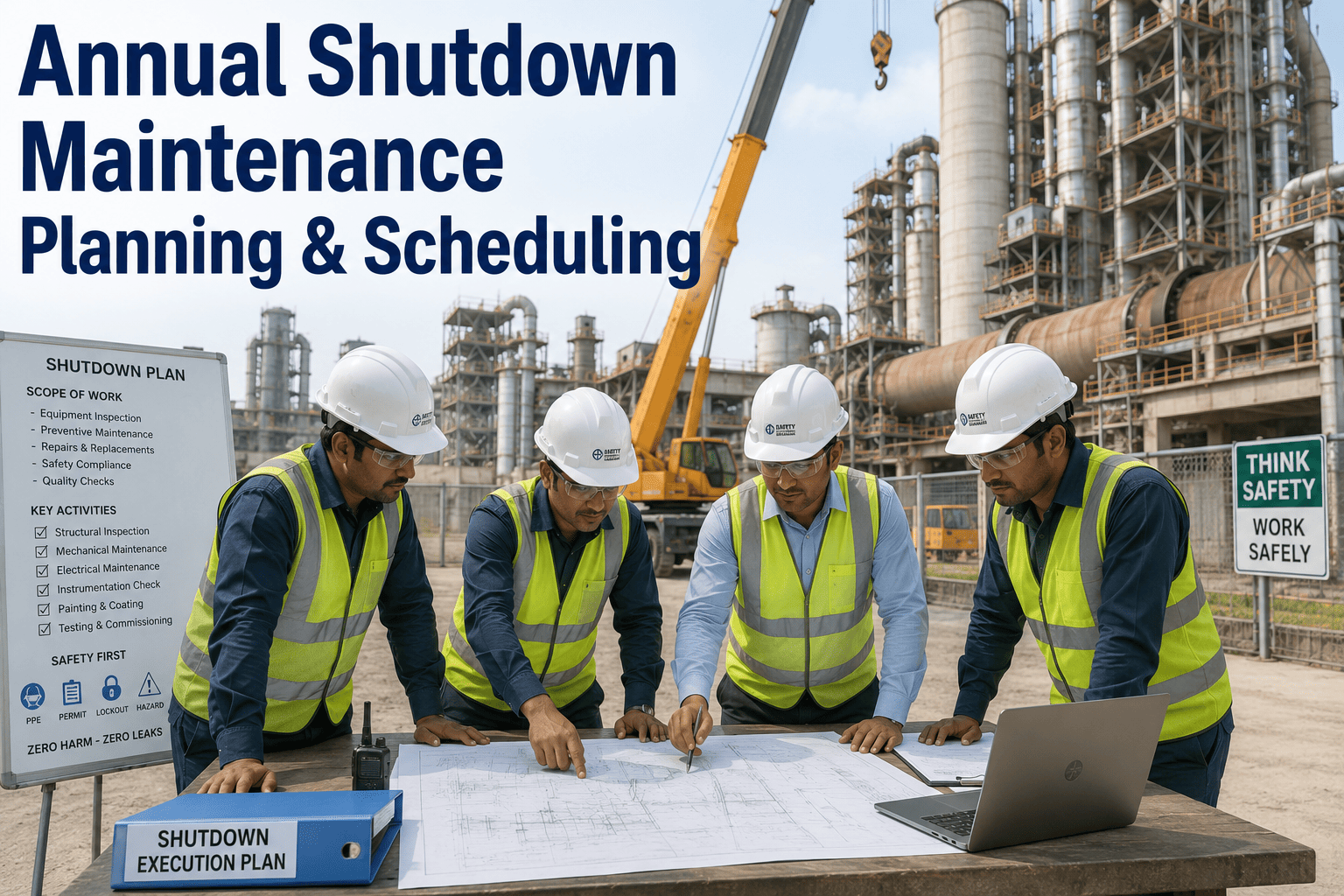
Every unplanned shutdown day in a cement plant costs between $150,000 and $300,000 in lost production value. For most plant managers, that number keeps them awake at night — because even the best-planned turnarounds can spiral into costly overruns when scheduling is manual, work orders are siloed, and inspection data arrives too late. That is exactly why AI-powered shutdown planning is no longer a luxury for cement operations in 2026 — it is the operational standard separating plants that consistently hit 330+ uptime days from those scrambling to reach 290. This guide walks you through the most effective AI strategies being deployed right now, and why a digital-first approach to turnaround management is the single biggest lever a cement plant can pull.
Why Traditional Shutdown Planning Fails
Cement plant shutdowns involve hundreds of parallel work orders, thousands of contractor hours, critical-path activities like kiln refractory relining, and zero tolerance for sequencing errors. Traditional planning — built on spreadsheets, whiteboards, and tribal knowledge — simply cannot process this complexity without error. Sign up for iFactory and eliminate the guesswork that causes 60% of shutdown overruns.
When inspection data isn't available until humans enter equipment, repair scope discovery happens after the clock has already started — causing reactive scheduling chaos.
Without real-time work order tracking, project managers can't see which activities are drifting until a delay has already compounded into a multi-day overrun.
Understaffing the kiln refractory reline while overstaffing lower-priority tasks is one of the costliest shutdown mistakes — and it's invisible without AI resource modeling.
When knowledge lives in people rather than platforms, each shutdown starts from scratch. The same mistakes repeat year after year because data isn't captured or analyzed.
AI Scheduling Optimization: Build the Perfect Shutdown Plan
AI-powered scheduling engines analyze thousands of task dependencies, resource constraints, and historical shutdown data to generate optimized Gantt sequences that a human planner would take weeks to produce manually — and produce in hours. The system continuously reoptimizes as real-world conditions change during execution. Book a demo to see iFactory's AI scheduling engine in action for cement plant turnarounds.
AI aggregates maintenance history, sensor alerts, and past shutdown data to auto-generate work scope recommendations before any human scoping begins.
AI builds a dependency-aware master schedule across all critical path activities, contractor crews, and material deliveries — optimized for minimum total duration.
Thermal robots enter kilns before cooldown completes, locking repair scope weeks in advance — eliminating day-one discovery surprises that derail schedules.
As work progresses, AI monitors completion rates and reoptimizes the remaining schedule in real time — surfacing critical path risks before they become delays.
Digital Work Order Sequencing: Every Task in the Right Order
The difference between a 19-day and a 28-day shutdown often comes down to work order sequencing. When task A must complete before task B can begin, and that dependency isn't enforced by a system, human error fills the gap — with expensive consequences. iFactory's AI work order engine automatically enforces dependency chains, assigns crew allocations, and flags sequencing violations before they happen. Sign up for iFactory to bring intelligent work order management to your next cement shutdown.
- Manual dependency tracking in spreadsheets
- Crew conflicts discovered day-of
- Scope changes cascade silently
- Status updates delayed hours or days
- Rework due to missed sequencing steps
- Auto-enforced task dependency chains
- Real-time crew assignment optimization
- Instant cascade alerts on scope changes
- Mobile status updates from the field in real time
- Zero-rework sequencing validated before execution
Robotic Inspection: Compress the Cooldown Window
The kiln cooldown period — typically 4 to 6 days — is dead time in traditional shutdowns. No humans can enter until temperatures drop. AI-coordinated thermal robots change this entirely: they enter kilns at 300°C, inspecting refractory condition and documenting the full repair scope while cooldown is still in progress. That means your repair crews can start work the moment human-safe entry is possible, with scope already locked. This single strategy alone has reduced shutdown durations by 3–4 days at plants that have deployed it.
Thermal-shielded robots operate at up to 300°C — inspecting refractory thickness and documenting hotspots days before human entry is safe.
UAVs capture 3D wear maps of ball mills and vertical roller mills during inspection windows, generating precise scope data for repair crews.
Robotic cleaning systems operate 24/7 through night shifts, removing buildup from cyclones and ducts without human fatigue limits.
Ready to cut your next cement shutdown by 30%+?
iFactory's AI platform connects scheduling, work orders, robotic inspection data, and progress tracking into a single shutdown command center — built for cement operations at scale.
AI Progress Tracking: Real-Time Shutdown Visibility
You cannot manage what you cannot see. AI-powered progress tracking gives shutdown managers a live dashboard of every work order — what's on schedule, what's at risk, and what's blocking critical path activities. Field crews update status from mobile devices; the AI engine processes those updates instantly and surfaces alerts before delays compound. Book a demo to see iFactory's real-time shutdown dashboard live.
Safety Management: AI-Driven Permit and Hazard Control
Cement plant shutdowns concentrate hundreds of contractors, confined space entries, and high-energy isolation tasks into a compressed time window — making safety management as critical as schedule management. AI systems now automate permit-to-work workflows, validate LOTO (lockout/tagout) compliance before work begins, and flag safety conflicts when crews are assigned to overlapping hazardous zones. The Turkey case study referenced above achieved zero safety compliance incidents during the 19-day shutdown — down from a historically non-zero baseline — directly attributable to AI-coordinated safety management. Sign up for iFactory to automate safety compliance in your shutdown planning.
Digital permits generated from work orders, validated against hazard registers, and approved through mobile workflows — no paper, no missed signatures.
AI checks energy isolation requirements before any work order is released to field crews, preventing unsafe starts on live equipment.
Robotic inspection replaces human confined space entry for routine assessment — reducing risk exposure during the most hazardous shutdown phases.
Turkey Cement Plant: 28 Days Down to 19
A cement plant in Turkey was experiencing chronic shutdown overruns — their annual kiln turnaround had ballooned from a target of 20 days to a realized average of 28. After deploying AI-coordinated scheduling, robotic kiln inspection, and digital work order management, results arrived in the first shutdown cycle.
Post-Shutdown Analytics: Make Every Shutdown Smarter Than the Last
Most plants treat post-shutdown review as an afterthought — and pay the price by repeating the same mistakes at the next turnaround. AI post-shutdown analytics automatically compare planned versus actual performance across every work order, crew assignment, and resource allocation. The platform identifies root causes of deviations, generates improvement recommendations, and feeds that intelligence directly into the planning database for the next shutdown. Plants that run structured post-shutdown reviews improve turnaround efficiency by 10–15% per cycle. Book a demo to see how iFactory builds institutional shutdown intelligence over time.
Every work order compared against baseline — duration variance, cost variance, and resource utilization all captured automatically.
AI identifies whether overruns were caused by scope change, resource constraints, or sequencing errors — and quantifies each factor.
Lessons learned feed directly into the next planning cycle — actual durations replace estimated durations for recurring tasks.
Track shutdown KPIs across multiple cycles to measure continuous improvement and identify which strategies are delivering the most value.
Your next shutdown is your biggest opportunity.
iFactory's AI-powered turnaround management platform is purpose-built for cement operations — from robotic inspection coordination to live critical-path dashboards and post-shutdown analytics.