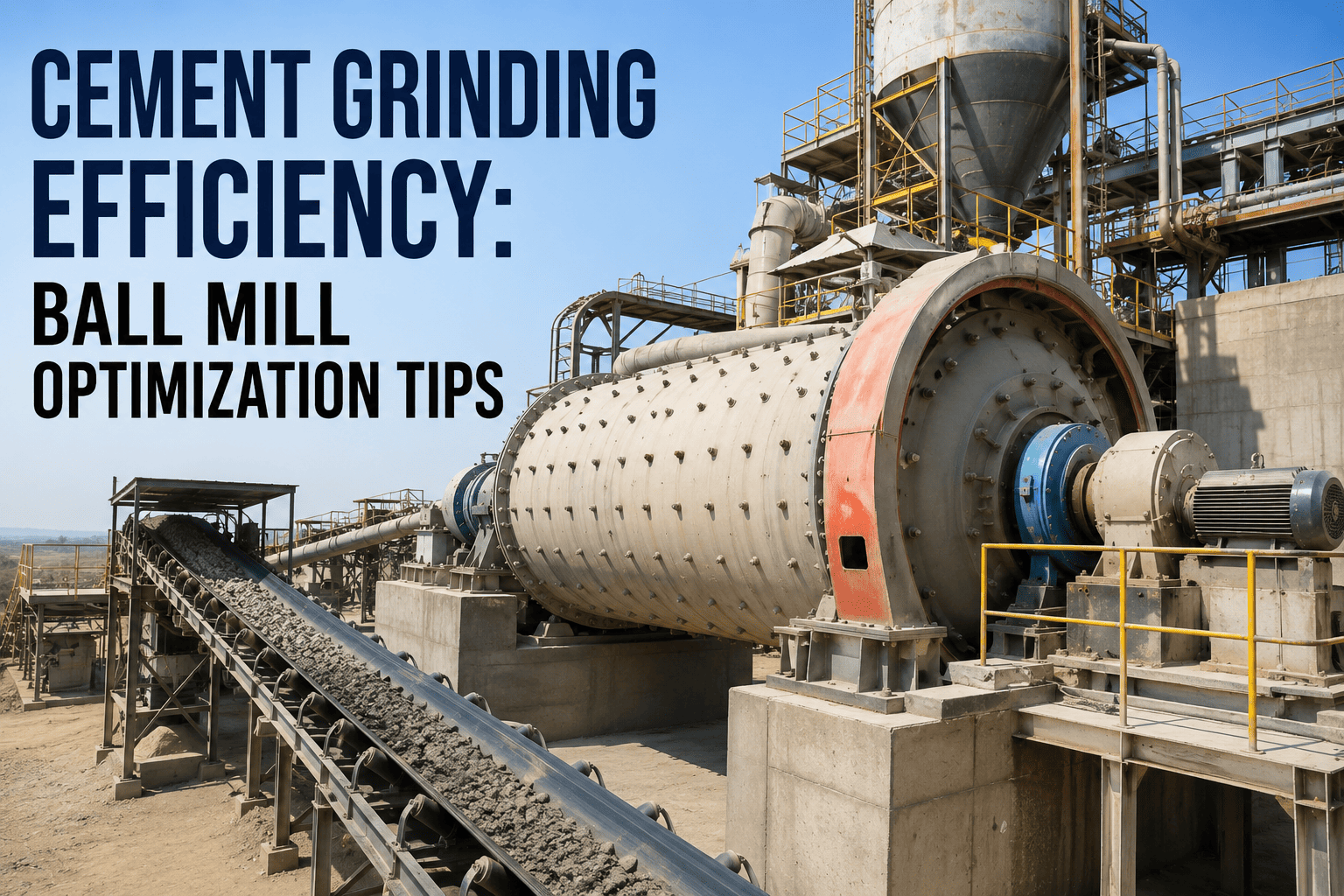
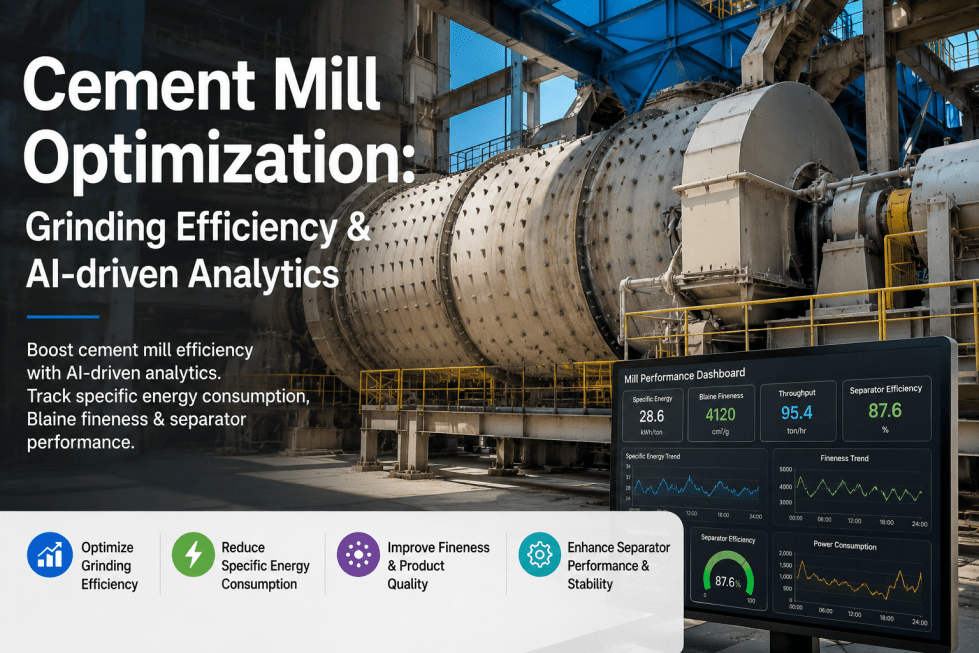
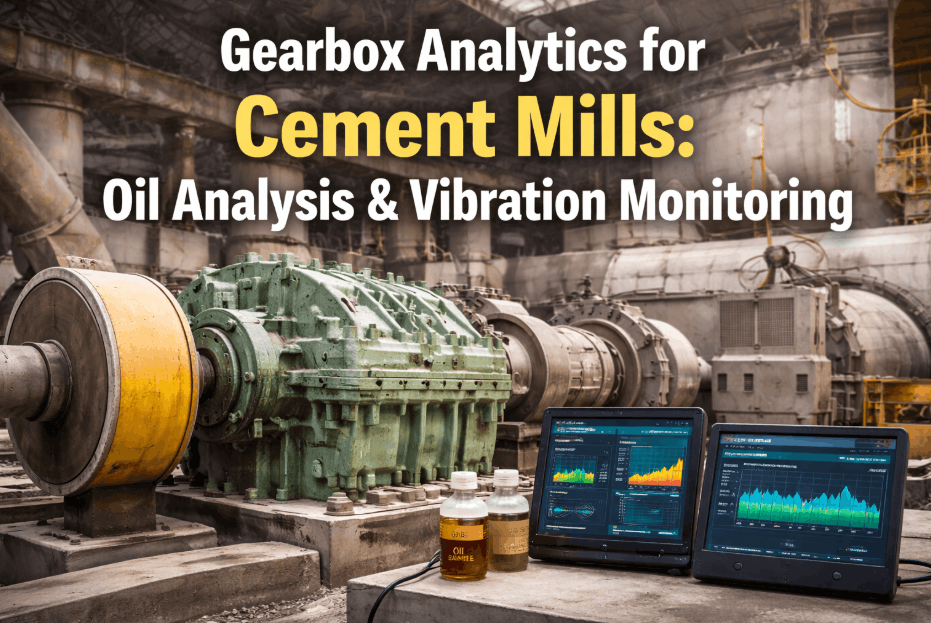
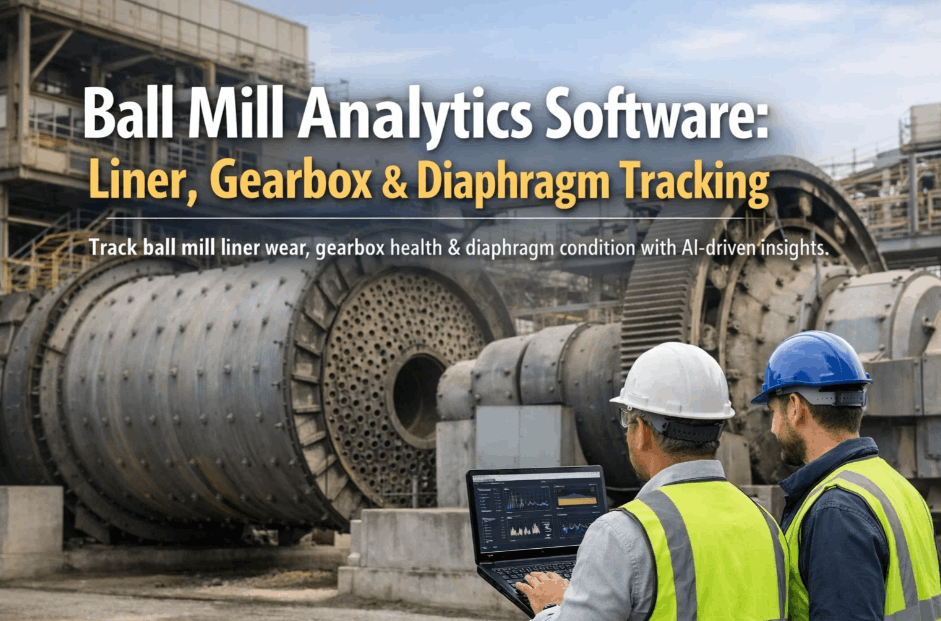
Cement ball mills are the workhorses of every grinding circuit — rotating steel cylinders 4–5 metres in diameter, 12–16 metres long, loaded with 80–150 tonnes of grinding media, consuming 30–40% of a cement plant's total electrical energy. When a ball mill fails without warning, it does not simply reduce output — it starves the cement silos, halts dispatch, and triggers contractual penalties that compound daily. The average unplanned ball mill stoppage lasting 48 hours costs $180,000–$420,000 in lost production, emergency labour, and expedited spare parts. Yet every major ball mill failure — bearing seizure, liner collapse, gearbox tooth fracture, and diaphragm blockage — produces detectable warning signals weeks or months before catastrophic breakdown. iFactory's Predictive Maintenance and Asset Tracking platform integrates vibration analytics, oil condition monitoring, PLC power draw analysis, and AI thermal imaging into a single mill health dashboard — giving your maintenance team the lead time it needs to convert every emergency into a planned repair.
Cement Ball Mill Analytics: Troubleshooting Common Problems
Master ball mill troubleshooting — bearing failure prevention, liner wear monitoring, vibration analysis, and how iFactory eliminates the breakdowns that cost $180K–$420K per event.
Top 5 Ball Mill Failures — And How iFactory Detects Each One
Every ball mill failure follows a predictable degradation curve. iFactory's AI models are trained on each failure signature — detecting the earliest deviation from normal and raising a work order weeks before the breakdown window. See your mill health dashboard live — from Day 1.
Trunnion Bearing Seizure
Supports full mill weight. Lubrication starvation or contamination causes overheating and seizure — 72–120 hrs downtime.
Main Gearbox Failure
Gear tooth pitting or fracture from torque overload. Single-reduction gearbox replacement takes 5–10 days and $200K+ in parts.
Liner Plate Collapse
Worn liners detach, jam diaphragm, and damage shell. Reline costs $80K–$150K with 4–7 days of downtime per chamber.
Diaphragm Blockage
Clogged slots reduce material flow, causing first chamber overload and "swollen belly" — output drops 30–50% before full blockage.
Mill Motor Overheating
Winding insulation breakdown from dust ingress or cooling fan failure. Causes nuisance trips and eventual motor burnout.
Vibration Health Zones — What Each Level Means for Your Mill
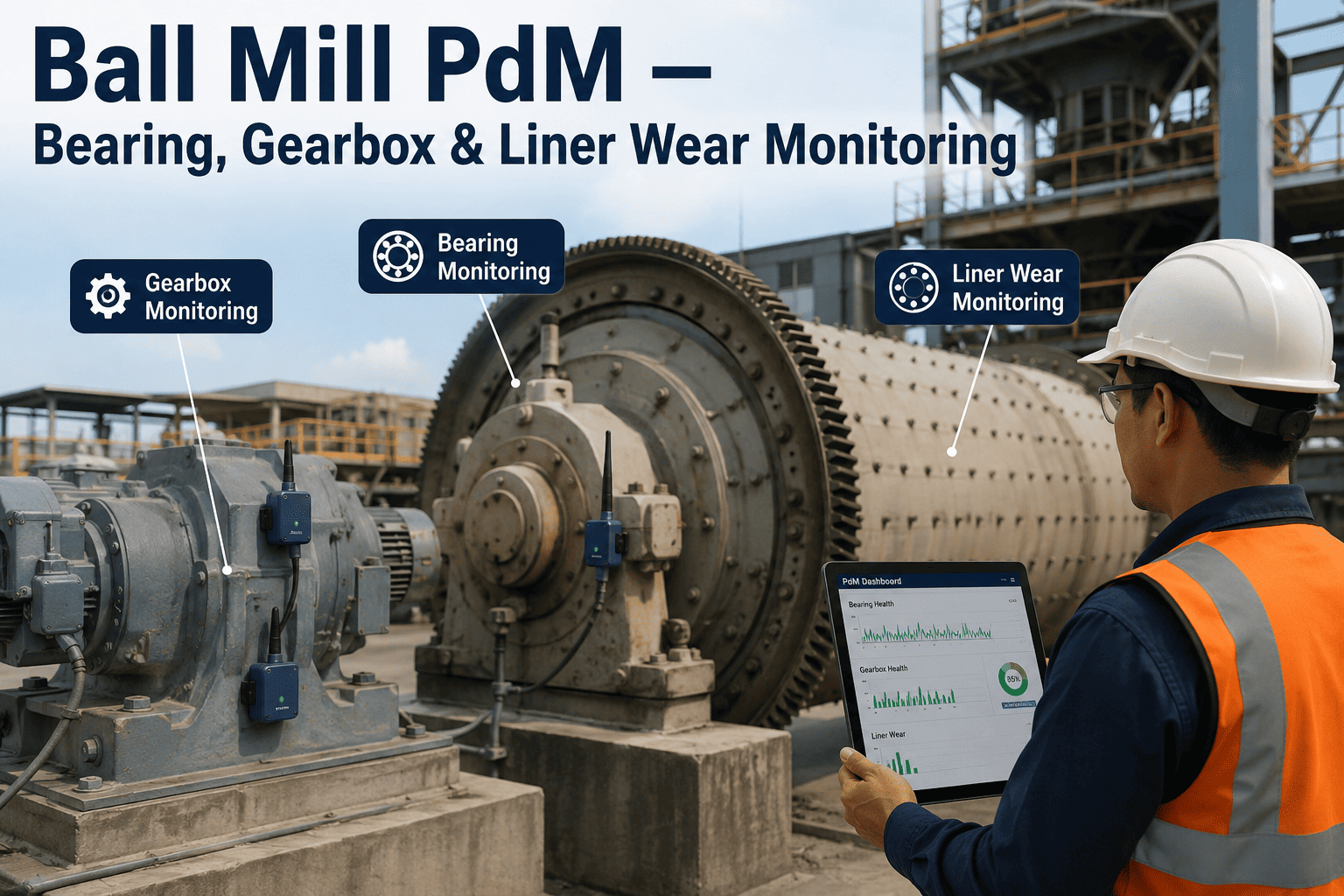
Vibration monitoring is the single most effective predictive tool for ball mills. iFactory reads RMS velocity continuously from trunnion bearings, gearbox, and motor — classifying mill health into four zones aligned with ISO 10816 standards.
Healthy operation. Routine weekly monitoring.
Minor deviation. Monitoring increased to daily.
Active degradation. Auto work order raised.
Catastrophic risk. Bearing or gear failure imminent.
Liner Wear Lifecycle — From New to Condemn Limit
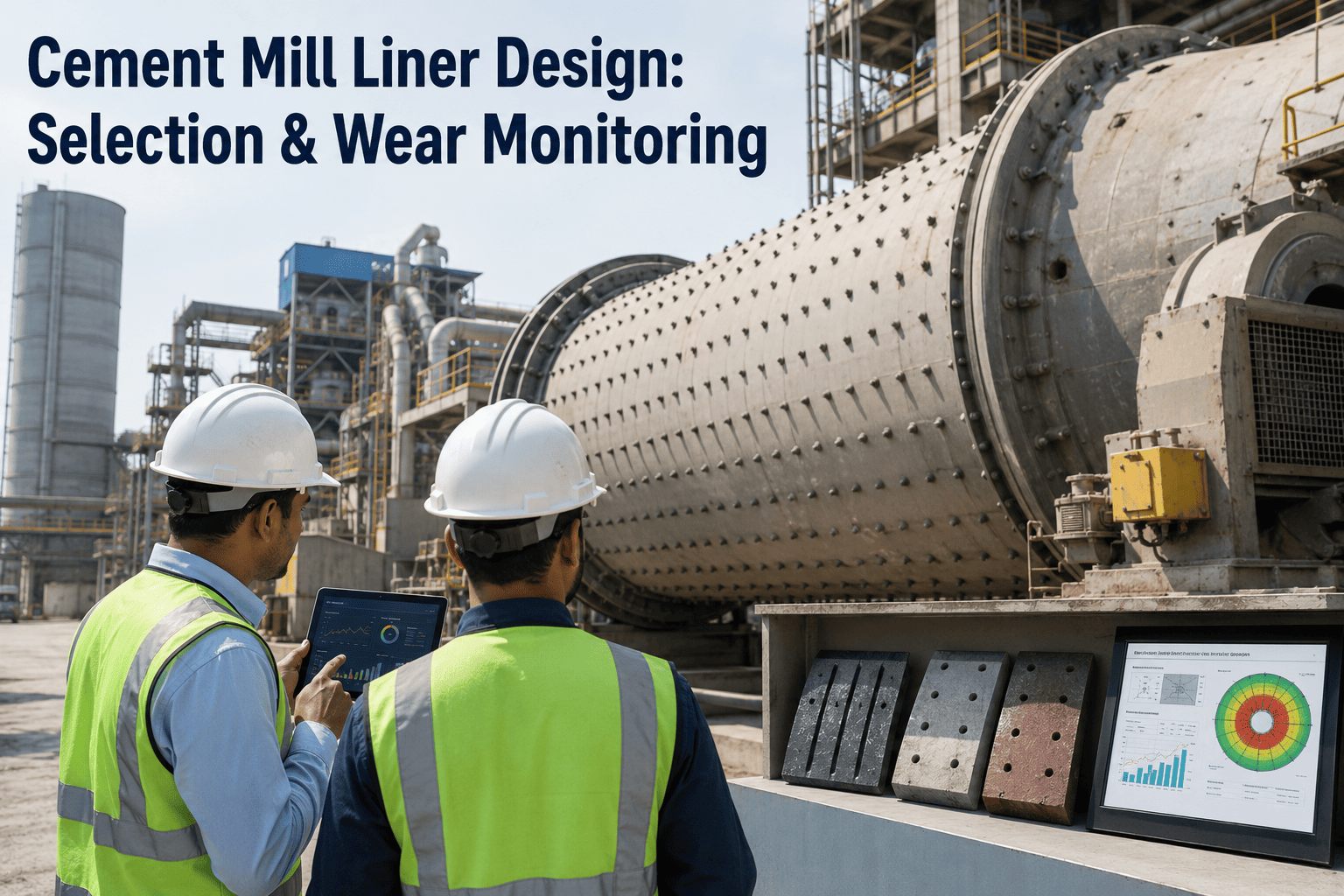
Mill liners account for 30–40% of ball mill maintenance cost. iFactory tracks liner thickness per zone from installation to condemn limit — calculating the exact replacement window so you never replace good liner early or run a worn liner into shell damage. Talk to our cement team about your liner tracking setup.
Break-In
High initial wear rate as surface roughness reduces. Monitor bolt torque weekly.
Steady Wear
Consistent wear rate. Peak grinding efficiency. Optimal operating zone.
Order Trigger
Profile change increases impact. Efficiency drops. Schedule reline now.
Condemn Limit
Risk of shell damage, bolt failure, throughput collapse. Emergency zone.
How iFactory's AI Stack Prevents Ball Mill Failures
PLC Vibration Analytics
Continuous FFT analysis on trunnion bearings, gearbox, and motor. Detects bearing defects (BPFO/BPFI), gear mesh faults, and misalignment — 6–10 weeks before failure threshold.
AI Thermal Camera
Fixed IR cameras monitor bearing housings, motor windings, and gearbox casing. Thermal anomaly detection identifies overheating 3–5 weeks before temperature trips.
Digital Twin — Liner Life Model
Calculates liner remaining life per zone from thickness surveys, tonnage processed, and media charge — scheduling reline 4–8 weeks ahead with zero guesswork.
SAP PM Integration
Every alert auto-generates a SAP PM work order with failure mode, location, and recommended action. Captured on mobile, synced in 60 seconds. Monthly MTBF reports auto-generated.
Ball Mill Inspection Checklist — What to Check, How Often
| Component | Daily | Weekly | Monthly | Annual Stop |
|---|---|---|---|---|
| Trunnion Bearings | ||||
| Gearbox Vibration | ||||
| Liner Thickness | ||||
| Oil Particle Count | ||||
| Diaphragm Slots | ||||
| Motor Winding Temp | ||||
| Ball Charge Level |
What a Grinding Section Manager Said
iFactory flagged a gearbox vibration anomaly — 3.2x gear mesh frequency — seven weeks before our planned stop. We moved the gearbox inspection forward, found three cracked pinion teeth, and replaced the gear set during the scheduled window. Without that alert, we were looking at a catastrophic gearbox seizure mid-campaign — $340,000 in emergency repairs plus 8 days of lost production.
Frequently Asked Questions
How often should ball mill liners be replaced?
Typically every 8,000–12,000 operating hours depending on material hardness. iFactory's digital twin tracks wear rate per zone and triggers replacement at 25% remaining life.
What causes excessive ball mill vibration?
Common causes include trunnion bearing wear, gear mesh faults, loose liners, mill imbalance, and foundation issues. Talk to our team about vibration diagnostics.
Can iFactory integrate with existing PLC and vibration sensors?
Yes — iFactory connects via OPC-UA, Modbus, or direct PLC feed. Existing vibration sensors, oil analysers, and thermal cameras all feed into the unified dashboard.
What is the optimal ball charge percentage for cement grinding?
Typically 28–35% of mill volume. iFactory monitors power draw trends to detect charge depletion and recommends top-up schedules based on throughput data.
Protect Your Ball Mills with iFactory AI
Vibration + thermal + liner tracking live in 3 weeks.