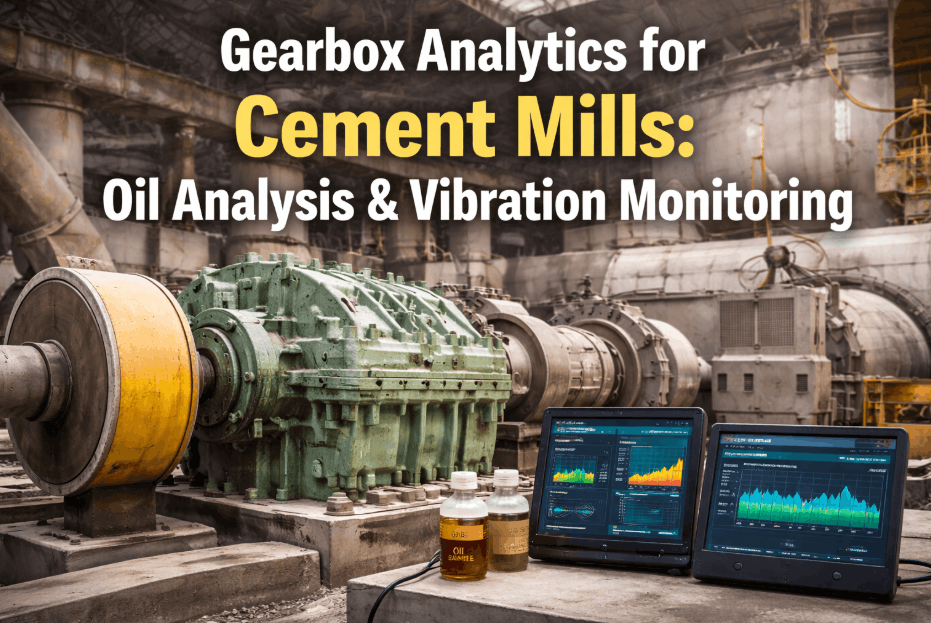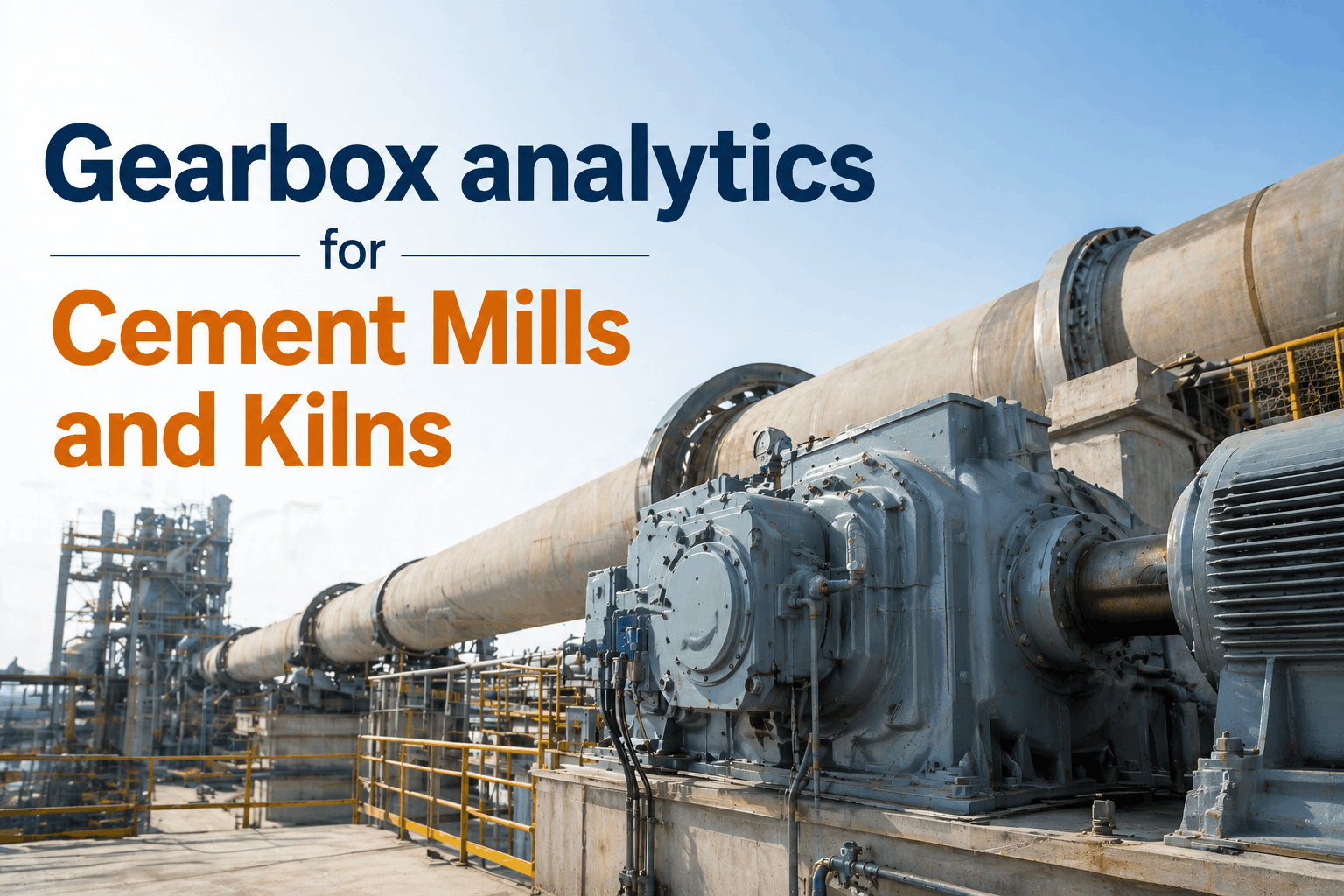
In cement manufacturing, **gearbox analytics** has evolved from a routine lubrication check into a mission-critical operational intelligence layer. Every high-torque kiln drive and massive grinding mill depends on the structural integrity of complex planetary and bevel-helical gear sets — and yet most facilities still manage gearbox health through reactive oil changes, periodic visual inspections, and disconnected paper logs. The gap between what a $2M mill gearbox requires and what legacy monitoring systems deliver is where catastrophic tooth breaks, multi-week outages, and expensive gear-set lead times breed. Understanding gearbox analytics requirements for cement equipment is the foundation of a proactive, data-driven drive reliability programme. If you want to see how leading cement producers close this gap with real-time gear intelligence, you can book a demo of our production intelligence platform today.
Is Your Gearbox Health Being Monitored with AI-Driven Precision?
Deploy real-time gear-mesh vibration monitoring, automated ISO 4406 oil analysis tracking, and predictive wear modeling — all in one connected system.
What Gearbox Analytics Means for Cement Mill and Kiln Reliability
Gearbox Analytics is the high-resolution synthesis of vibration frequency spectrums, lubricant chemical properties, and thermodynamic trending applied to large-scale industrial drives. Within cement manufacturing, this involves continuously processing "Gear Mesh Frequencies" (GMF) and their sidebands to identify microscopic gear-tooth surface distress long before a failure occurs. For producers operating high-capacity lines, the requirements of a gearbox analytics programme are non-negotiable. A failure in a kiln main drive or a raw mill planetary gearbox doesn't just stop production; it triggers a logistical crisis, as replacement gear sets for these units often carry lead times of 6 to 12 months.
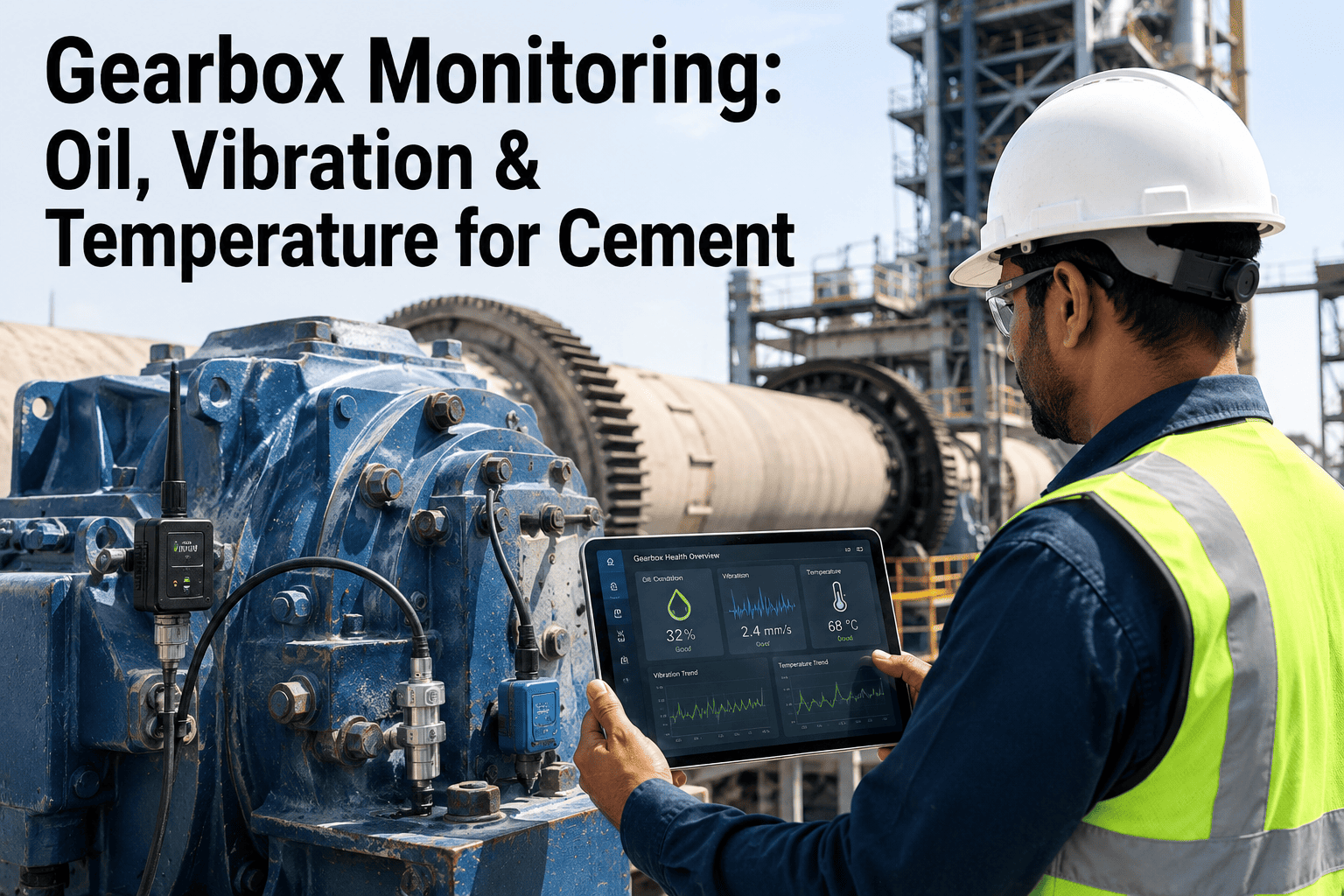
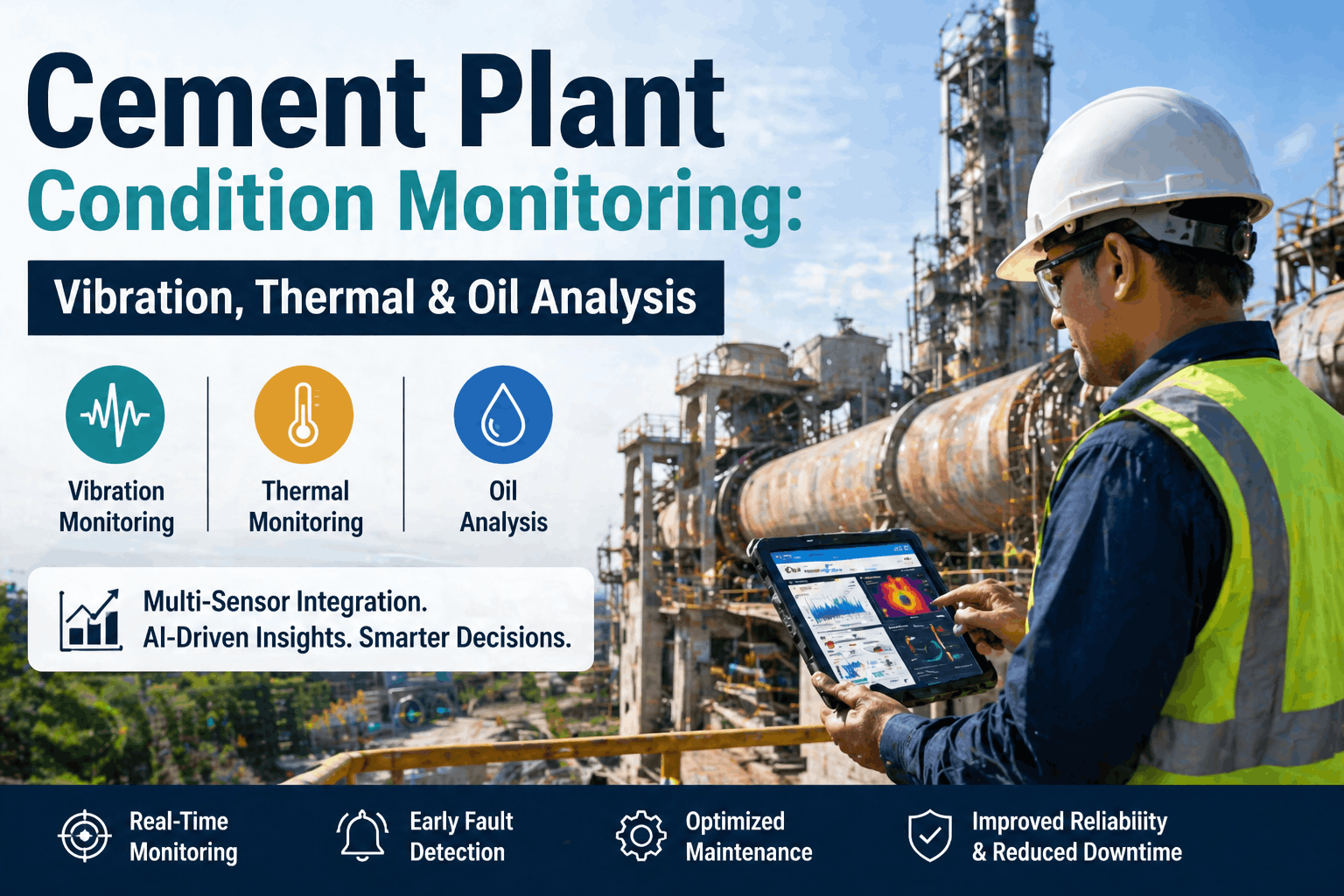
Modern gearbox analytics platforms address this by correlating data from multiple sources — SCADA torque loads, wireless vibration sensors, and automated oil particle counters — to deliver a "Health Index" that is maintenance-ready by design. The shift from reactive gearbox maintenance to proactive AI-driven analytics is a structural improvement in how cement manufacturers control mechanical risk at their most expensive assets. You can book a demo to explore how real-time gearbox monitoring works across different cement drive categories.
Gear-Mesh Frequency Analysis
Every analytics programme begins with mapping the unique gear-mesh frequencies (GMF) of the unit — allowing AI to distinguish between normal noise and tooth-wear signatures.
ISO 4406 Oil Cleanliness
Continuously tracking oil particle counts (4μm, 6μm, 14μm) to detect the onset of "Abrasive Wear" before it destroys gear-tooth geometry and bearing races.
Sideband Trend Monitoring
Monitoring the "Sidebands" around gear-mesh peaks to identify eccentricity, misalignment, or uneven gear loading that indicates a shift in internal alignment.
Torque-to-Vibration Correlation
Correlating drive torque from the VFD with vibration intensity to identify "Micro-Slippage" or "Gear Scuffing" occurring during high-load cement grinding cycles.
Thermal Delta Analysis
Comparing input-to-output oil temperatures and case-thermal trending to identify lubrication failures or internal friction spikes before seizure occurs.
Predictive Spares Planning
Using health trends to predict the exact quarter when a gearbox overhaul will be required — allowing for the 12-month advance procurement of critical gear sets.
Gearbox Analytics Benchmarks: Cement Drive Performance Standards
Not all cement gearboxes carry the same mechanical burden. The specific monitoring frequencies, ISO oil cleanliness targets, and vibration thresholds vary significantly by gearbox type (Planetary vs. Bevel-Helical) and the load characteristics of the mill or kiln. The table below provides a benchmark overview of gearbox analytics requirements by asset category, supporting more precise reliability programme design. For any facility where drive analytics is being formalised, understanding the per-asset compliance obligation is essential before selecting a monitoring platform.
| Gearbox Type | Primary Asset | ISO Oil Target | Critical Metric | Failure Risk |
|---|---|---|---|---|
| Planetary Gear Set | Raw Mill / VRM | 16/14/11 | Planet Bearing Vibration | Critical |
| Bevel-Helical Drive | Kiln Main Drive | 17/15/12 | Gear-Mesh Harmonics | Critical |
| Large Helical Unit | Ball Mill Drive | 18/16/13 | Case Temperature Delta | Critical |
| Worm Gear Reducer | Cooler Drive | 19/17/14 | Backlash Trending | Medium |
| Helical-Bevel Unit | ID Fan Drive | 17/15/12 | Input Shaft Vibration | High |
| Vertical Planetary | Cement Mill | 16/14/11 | Output Torque Stability | Critical |
| Single-Stage Helical | Conveyor Drives | 19/17/14 | Oil Moisture Levels | Medium |
| Girth Gear Pinion | Kiln / Mill Ring | N/A (Open Gear) | Spray-Pattern Compliance | Critical |
These benchmarks represent standard industry gearbox reliability targets and should be validated against your specific OEM gearbox manuals and operating loads. To build a gearbox analytics configuration mapped to your facility's drive list, you can book a demo with our drive reliability team.
How Gearbox Preventive Analytics Architecture Works in Cement Production
The architecture of a robust gearbox analytics programme in cement manufacturing operates across five interconnected layers — from the internal gear tooth to the corporate reliability dashboard. Leading cement manufacturers who have implemented data-driven gearbox analytics programmes consistently report 40-60% longer gear life and a complete elimination of "Surprise" gearbox seizures. The cascade of value runs from the lubricant layer upward — but it must be built from the Gear Mesh Frequency layer first.
Multispectral Sensor Integration
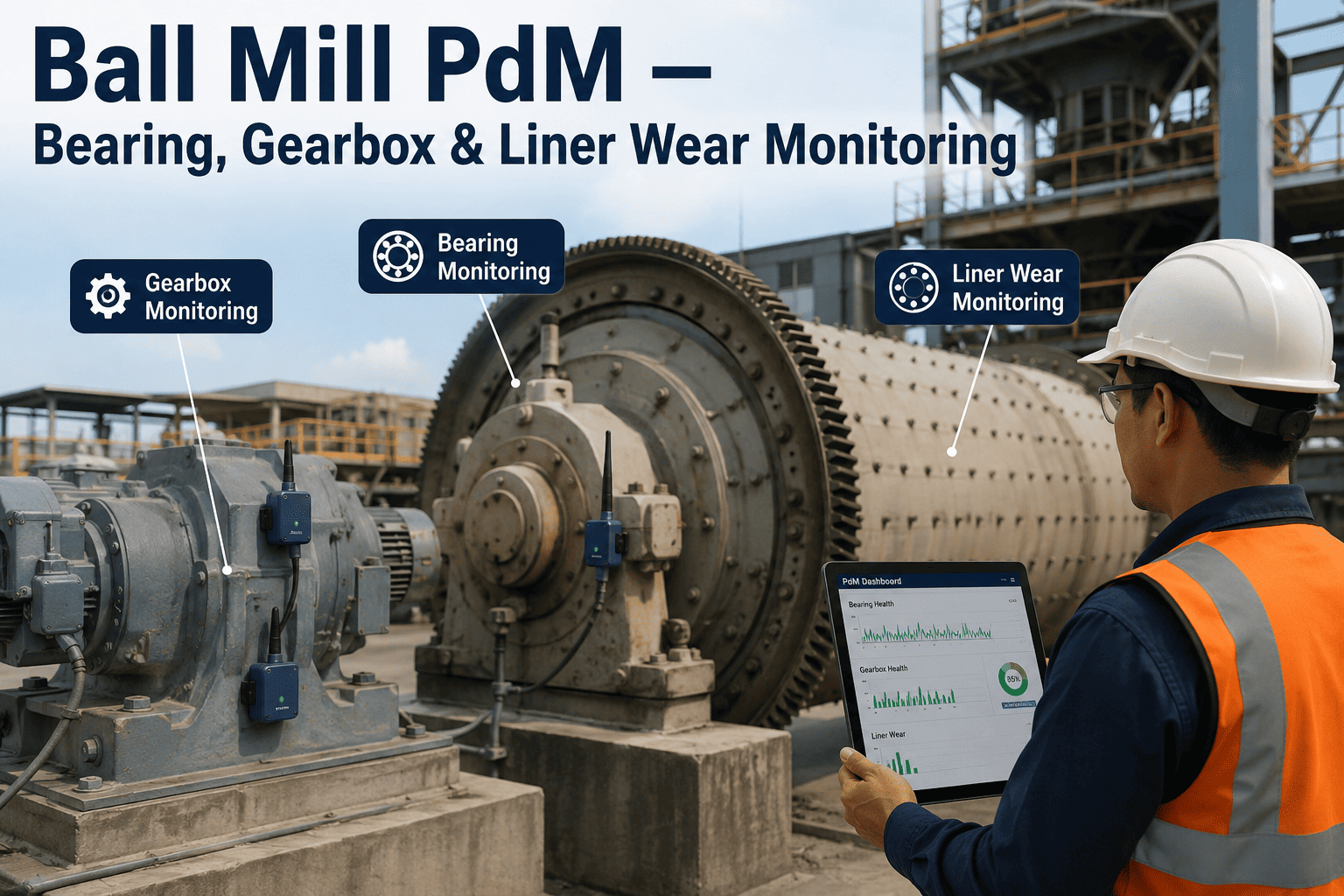
Sensors on input/output bearings and internal planet carriers transmit real-time data — high-frequency vibration, thermal trending, and torque loads — directly into the analytics platform.
Gear-Mesh AI Analysis Engine
Incoming vibration data is continuously processed for GMF signatures. AI identifies the specific harmonics of pitting, scuffing, or misalignment — automatically tagging the specific gear stage that requires attention.
Automated Lubricant Quality Correlation
The platform correlates oil analysis results (particle counts, moisture, viscosity) with mechanical vibration. If particle counts rise alongside vibration peaks, the system confirms an active wear event.
Predictive Maintenance Workflow Trigger
When a gearbox health score drops, the system initiates a structured review workflow — checking spares availability and recommending the next scheduled stop for internal scope inspection.
Asset Life-Cycle Dashboard
All gearbox health history, oil records, and vibration trends are compiled into structured reports — providing the technical justification for multi-million dollar gearbox overhauls or replacements.
Gearbox Oil Analytics for Cement Equipment: What Digital Monitoring Delivers
Oil is the life-blood of a cement gearbox, and its analytics form the first line of defense against catastrophic failure. In the harsh, dusty environment of a clinker mill, maintaining ISO oil cleanliness targets is impossible without digital tracking. Every gearbox requires a specific oil cleanliness level, a validated moisture threshold, and a verified wear-metal profile — all of which must be available for reliability audits. Traditional oil analysis (sampling every 3 months) fails because gear wear often accelerates from "Healthy" to "Failure" in weeks. Digital oil analytics management addresses this by delivering continuous data. You can book a demo to see how automated oil tracking integrates with your existing gearbox health programme.
Gearboxes require specific cleanliness intervals (e.g., 16/14/11). Digital tracking enforces these limits automatically, triggering filtration cycles or oil changes before particles can "sand-blast" gear teeth.
Moisture ingress in ID fan or cooling tower gearboxes leads to rapid acidity and corrosion. Digital sensors detect moisture spikes in real-time, preventing the "Oil Sludging" that causes lubrication film failure.
Predictive analytics platforms track "PQ Index" and wear metals (Iron, Copper, Lead) over time. A spike in wear metals linked to high torque identifies exactly when gear scuffing has initiated.
Insurance and OEM warranty requirements demand that gearbox oil records are searchable and complete. Digital systems create this linkage automatically, protecting your multi-million dollar asset investments during claims.
Gearbox Analytics Strategy: From Manual Sampling to Intelligent Tracking
The documentation and physical burden of a comprehensive gearbox programme in a cement plant is substantial. Many facilities struggle with "Data Overload" from vibration specialists and lab reports that don't point to a specific action. Intelligent gearbox tracking systems transform this into a competitive advantage. Facilities that operate with real-time digital gearbox records consistently achieve 50% lower drive-train downtime and zero "Surprise" failures on critical kilns. If your facility is managing high-consequence drives and your current posture relies on manual sampling, you can book a demo to review how our platform prepares your gearbox health record automatically.
Consolidate All Drive Health in a Single Platform
Eliminate disconnected oil lab portals, vibration reports, and VFD torque logs by consolidating all gearbox data into a single, searchable compliance record. This "Single Source of Truth" is the prerequisite for drive reliability at scale.
Automate "Gear-Mesh" Fault Detection
Remove the dependency on expert vibration analysts for routine tooth-wear detection. iFactory's AI automates the GMF harmonic scan, identifying pitting or scuffing signatures without manual data mining.
Integrate Oil Condition with Mechanical Vibration
Correlate particle count spikes with vibration sideband increases. This confirms that wear is occurring internally, providing the "High Confidence" diagnosis required to justify a $500k gearbox overhaul.
Build Long-Term Wear Trends for Spares Strategy
Modern drive management requires that every gearbox overhaul can be planned 12 months in advance. Building this wear-linkage automatically eliminates the air-freight premiums and emergency part costs currently consuming budgets.
Conduct Quarterly Gearbox Strategy Reviews
Gearbox reliability programmes require periodic management reviews that assess whether filtration and lubrication strategies are delivering asset life. Data-driven reviews using "ISO Cleanliness Trends" provide the evidence base for continuous improvement.
Manual vs. Digital Gearbox Analytics: The Performance Gap
The performance difference between manual gearbox checks and a digital gearbox analytics programme is not marginal — it is structural. Facilities that have transitioned from manual sampling to real-time monitoring consistently report measurable improvements across every gearbox KPI, from oil life to gear-set longevity. When expressed in terms of unplanned downtime risk and spare part capital, the financial case for digital gearbox monitoring is typically decisive. To understand what a transition would look like for your facility, you can book a demo with our drive compliance team.
| Gearbox Compliance Dimension | Manual / Sampling-Based | Digital Gearbox Analytics | Performance Gain |
|---|---|---|---|
| Tooth Wear Detection Speed | Months (Delayed lab reports) | Seconds (Automated AI alert) | Critical |
| Oil ISO Cleanliness Adherence | 50–65% (Manual filtration control) | 99%+ Automated Verification | High |
| Unexpected Drive Seizures | Common (Trailing metrics only) | Zero (Predictive health scoring) | Critical |
| Gear-Set Service Life | 8–12 Years (Sub-optimal) | 15–20 Years (Optimized health) | High |
| Audit Preparation Time | 3–5 days of file retrieval | Hours (Automated reporting) | High |
| Maintenance Cost Per Ton | High — Emergency repairs/spares | Low — Planned overhauls only | Medium |
| Insurance Compliance | Manual — Prone to gaps | Automated — Full digital history | High |
Stop Guessing What's Happening Inside Your Gearbox. Start Using Real-Time Intelligence.
Our production intelligence platform gives cement producers continuous gear-mesh verification, automated oil analysis tracking, and audit-ready drive health documentation.
Frequently Asked Questions: Gearbox Analytics for Cement Mills and Kilns
What is Gear-Mesh Frequency (GMF) and why is it monitored?
GMF is the frequency at which gear teeth engage (Number of teeth × Rotational speed). By monitoring GMF and its "Harmonics," AI can detect tooth pitting, wear, or cracks. A rising harmonic peak linked to GMF is the definitive early-warning sign of gear-set degradation long before it can be heard or felt.
How does oil ISO 4406 cleanliness impact cement gearbox life?
ISO 4406 tracks the number of particles (dust or metal) in the oil. In a cement plant, fine clinker dust is highly abrasive. If oil cleanliness drops from 16/14/11 to 20/18/15, the bearing and gear life can be cut by 50% due to "three-body abrasion." iFactory monitors these levels to ensure filtration systems are working.
What is "Micropitting" and can analytics prevent it?
Micropitting is microscopic surface fatigue that eventually leads to deep pitting and tooth failure. It is often caused by sub-optimal lubrication film thickness. AI analytics monitors gearbox temperatures and torque to ensure the lubricant viscosity is sufficient for the current load, preventing micropitting before it starts.
Which is more important: Vibration or Oil Analysis for gearboxes?
Both are essential and must be correlated. Oil analysis is the "Leading Indicator" for wear-metal and contamination (tells you wear is happening). Vibration is the "Location Indicator" (tells you EXACTLY which gear or bearing is failing). iFactory integrates both to provide a high-confidence diagnosis.
How does torque correlation improve gearbox diagnostics?
Vibration alone can change based on the mill's "Grinding Load." By correlating vibration with drive torque (from the VFD), iFactory's AI distinguishes between "Normal Load Noise" and "Actual Mechanical Wear," virtually eliminating the false alarms that plague standalone vibration systems.
Can the system detect a cracked tooth in a planetary gear set?
Yes. A cracked tooth creates a "Transient Impact" signature every time that tooth engages. AI detects this "Once-per-Revolution" impact in the time-waveform data, allowing for the gearbox to be stopped before the tooth snaps and causes catastrophic case destruction.
What is the "PQ Index" and why is it used in cement gearboxes?
The PQ (Particle Quantifier) Index measures the total amount of ferrous debris in an oil sample, regardless of size. While standard spectroscopy misses particles larger than 5-8μm, PQ Index catches the "Large Metal Flakes" associated with advanced gear-tooth spalling, providing the final warning before failure.
How long does it take to implement gearbox analytics?
Drive monitoring for a critical kiln or mill can be deployed in 2-4 weeks using a combination of oil-sensor integration and wireless vibration sensors. This includes establishing baselines for all gear-mesh stages and calibrating the AI's torque-vibration correlation engine.