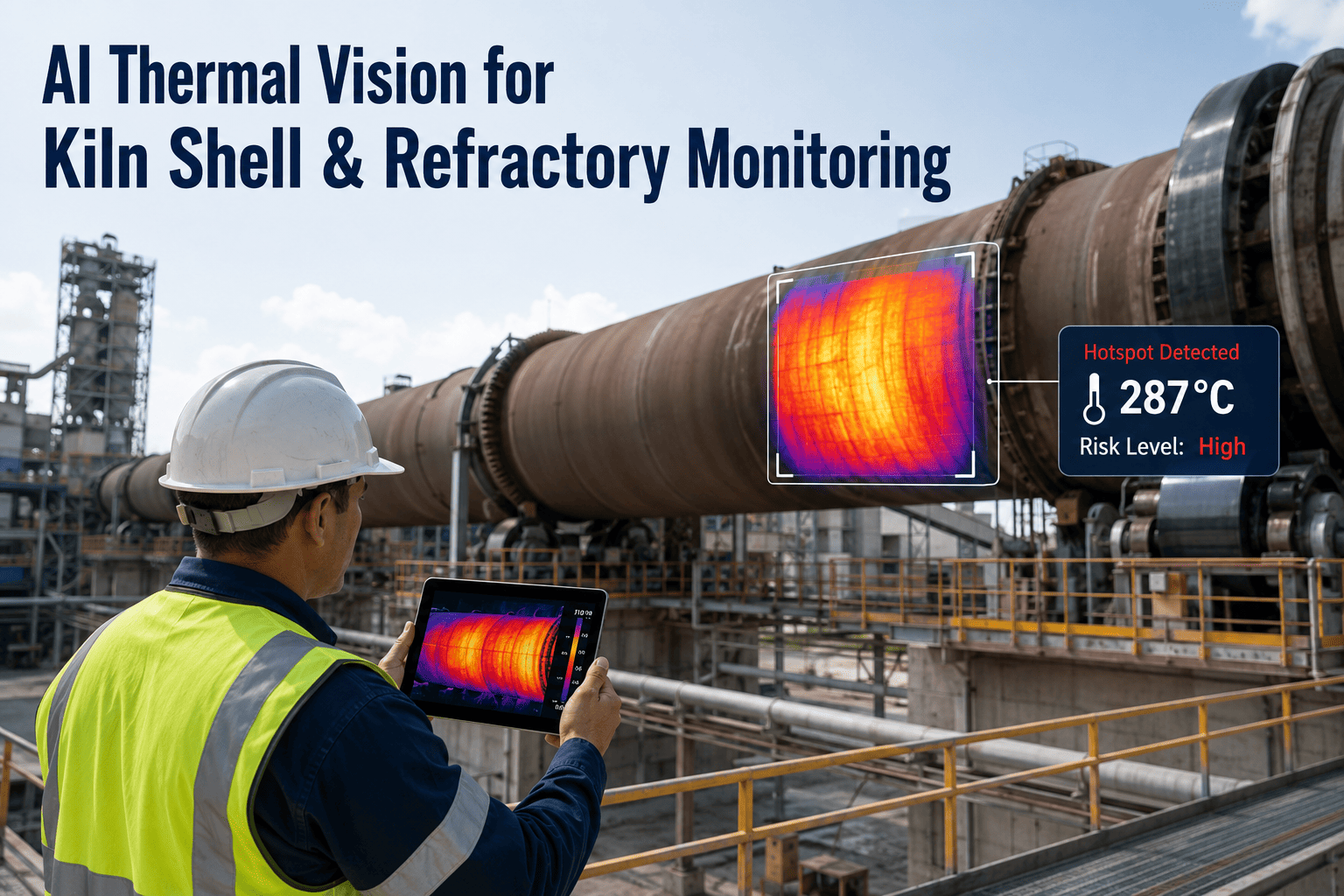
The rotary kiln is the heart of every cement plant — a rotating steel cylinder 60–90 metres long, operating at 1,400–1,500°C, carrying 200–400 tonnes of material at any moment, turning on tyre-roller systems that bear loads of 1,000–2,000 tonnes. When a cement kiln fails unexpectedly, it does not just stop producing clinker — it stops the entire plant, with the raw mill, coal mill, and cement mills all eventually halting as upstream and downstream stockpiles are exhausted. The cost of a single unplanned kiln stoppage lasting 24 hours typically ranges from ₹1.5 to ₹6 crore in direct production loss, with emergency repair costs adding a further 40–80% on top of the planned repair price for the same work. What makes kiln maintenance uniquely challenging is the combination of extreme operating conditions — thermal cycling, mechanical stress from rotation, and corrosive atmosphere — with the impossibility of inspection during operation. Every kiln failure mode is detectable in advance: shell ovality and tyre migration through geometric survey, hot spots through thermal camera, refractory coating loss through shell temperature trending, tyre-roller contact through vibration and contact pattern measurement, and drive train condition through vibration and power draw analysis. iFactory's Predictive Maintenance and Asset Tracking platform integrates all six monitoring dimensions into one kiln health dashboard — ensuring your maintenance team has the information it needs to prevent every failure category that accounts for 85% of unplanned kiln stoppages.
Cement Rotary Kiln Maintenance: Complete Guide to Preventing Failures
Master rotary kiln maintenance — inspection schedules, failure modes, AI monitoring technologies, and how iFactory prevents the breakdowns that cost ₹1.5–6 crore per event.
The 6 Kiln Zones — What iFactory Monitors in Each
Every kiln zone has distinct thermal conditions, wear mechanisms, and failure modes. iFactory assigns a separate monitoring programme to each zone — with AI models trained on the specific failure signatures relevant to that zone's operating conditions. See your kiln health dashboard — live from Day 1.
Lower temperatures but highest mechanical stress from feed material abrasion. Inlet seal wear and feed chain damage are primary failure modes. iFactory monitors shell ovality weekly via geometric survey and inlet seal condition via AI camera.
Calcination zone coating protects refractory from thermal shock. iFactory tracks shell temperatures via thermal camera — detecting coating loss 3–4 weeks before it causes refractory damage visible as a hot spot.
The zone with the highest refractory replacement frequency. No protective coating, highest thermal cycling stress. iFactory's digital twin calculates refractory remaining life from shell temperature history — scheduling replacement 8–12 weeks in advance.
Primary clinker formation zone — and the highest consequence zone for refractory failure. AI camera thermal imaging detects shell temperature anomalies indicating coating loss within minutes. Red kiln events prevented by real-time shell monitoring.
Nose ring wear, outlet seal damage, and clinker buildup are primary failure modes. iFactory tracks nose ring condition via AI camera inspection during every kiln stop and schedules replacement based on wear rate measurement.
Tyre-roller system carries the entire kiln weight — 1,000–2,000 tonnes per pier. iFactory monitors tyre migration, contact pattern, and roller skewing via PLC data and geometric survey — the single highest-cost maintenance intervention when neglected.
Top Kiln Failure Modes — Severity, Cost & iFactory Detection Method
| Failure Mode | Severity | Avg Downtime | iFactory Detection | Warning Lead Time |
|---|---|---|---|---|
| Red Kiln / Hot Spot | Critical | 48–120 hrs | AI thermal camera · shell temp trend | 2–4 weeks |
| Main Drive Gear Failure | Critical | 72–168 hrs | Vibration + PLC power draw trend | 6–10 weeks |
| Tyre-Roller Contact Failure | High | 24–72 hrs | Contact pattern + tyre migration survey | 8–12 weeks |
| Refractory Brick Failure | High | 48–96 hrs | Shell temp mapping · Digital Twin life calc | 4–8 weeks |
| Support Roller Bearing | Medium | 12–36 hrs | Online vibration · oil temperature trend | 6–10 weeks |
| Inlet / Outlet Seal Wear | Medium | 8–24 hrs | AI camera inspection · wear measurement | 3–6 weeks |
Rotary Kiln Inspection Schedule — Every Frequency, Every Component
AI Technologies That Make Kiln Failures Predictable
AI Thermal Camera — Shell Monitoring
Fixed IR cameras scan the full kiln shell length continuously — detecting hot spots, coating loss zones, and refractory distress. AI distinguishes thermal anomalies from normal temperature variation, generating alerts with zone location and severity rating. Red kiln events prevented in real time.
Digital Twin — Refractory Life Model
iFactory's kiln digital twin calculates refractory remaining life per zone from shell temperature history, kiln throughput, and fuel type — predicting reline requirements 8–12 weeks in advance. No more calendar-based relines that replace good brick or miss failing zones.
PLC Drive & Vibration Analytics
iFactory reads main drive motor current, gear unit vibration, and roller bearing temperature from kiln PLC continuously. Drive system degradation — gear wear, coupling failure, bearing deterioration — is detected 6–10 weeks before failure through current signature and vibration pattern analysis.
SAP PM Kiln Stop Integration
Every kiln stop — planned or unplanned — generates a SAP PM order in iFactory automatically. Stop cause, duration, repair scope, and restart time are captured on mobile and synced to SAP PM within 60 seconds. Monthly kiln availability and MTBF reports generated automatically from this data.
What a Kiln Section Head Said
iFactory's thermal camera flagged a temperature anomaly at the transition zone — 42°C above baseline — 19 days before our scheduled kiln stop. We brought the stop forward by 4 days, found a failed brick segment of 6.5 square metres, and replaced it in the planned window. The alternative — waiting for the anomaly to become a red kiln — would have cost us 72 hours of emergency stop, ₹3.8 crore in production loss, and three times the repair cost we actually paid.
Kiln Shell Temperature Profile — Normal vs Alert vs Red Kiln
iFactory's AI thermal camera produces a continuous shell temperature profile across all 6 zones — comparing against the plant-specific normal range and raising alerts at two thresholds before reaching the red kiln danger level. This chart shows what a developing hot spot looks like across the three stages.
Frequently Asked Questions
How often should a cement rotary kiln refractory be inspected?
Shell temperature scanning should run continuously via thermal camera. Physical refractory inspection — thickness measurement via laser or ultrasound — should occur at every kiln stop. iFactory's digital twin calculates zone-specific remaining life continuously between stops, eliminating the need for timed replacement of refractory that still has useful life remaining.
What causes a red kiln and how does iFactory prevent it?
A red kiln occurs when the refractory coating or brick fails, exposing the steel shell directly to burning zone temperatures of 1,400°C+. iFactory's AI thermal camera detects the temperature progression that precedes a red kiln 2–4 weeks before the shell reaches the danger threshold, giving the maintenance team time to plan a controlled stop and reline.
How does iFactory track tyre migration and why does it matter?
Tyre migration is the axial movement of the kiln tyre relative to the shell — caused by differential thermal expansion. Excessive migration causes tyre pad and shell wear, leading to tyre drop — a catastrophic failure. iFactory tracks migration daily via PLC position sensors, alerting when migration exceeds the safe limit and scheduling adjustment before damage occurs.
Can iFactory integrate with existing kiln shell thermal scanners already installed?
Yes — iFactory integrates with all major kiln shell scanning systems (Raytek, FLIR, Thermoteknix, and others) via OPC-UA or direct data feed. Existing scanner data feeds into iFactory's AI model, which adds trend analysis and remaining life prediction on top of the raw thermal data the scanner provides.
Protect Your Kiln with iFactory AI Monitoring
Thermal camera + digital twin live on your kiln in 3 weeks.