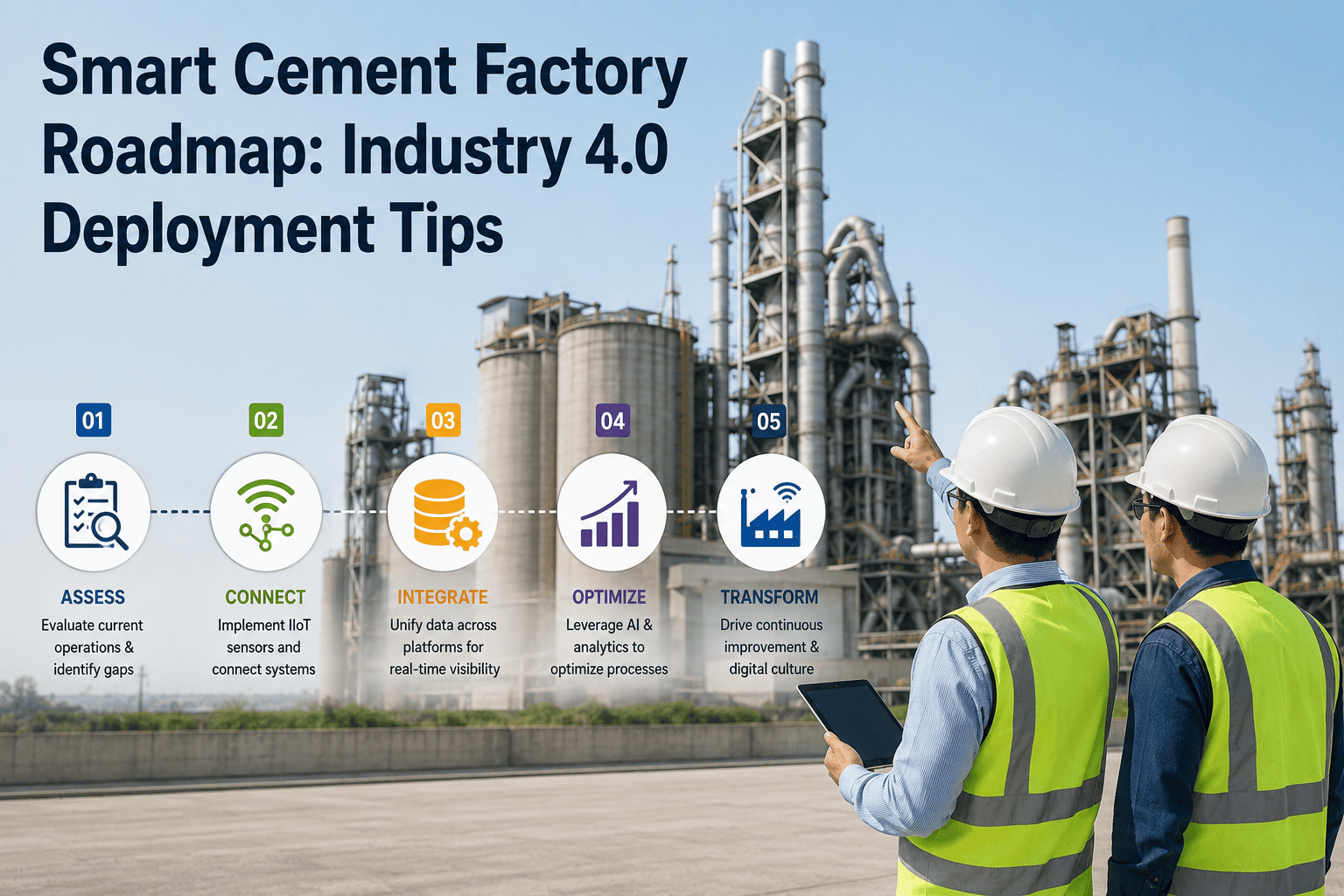
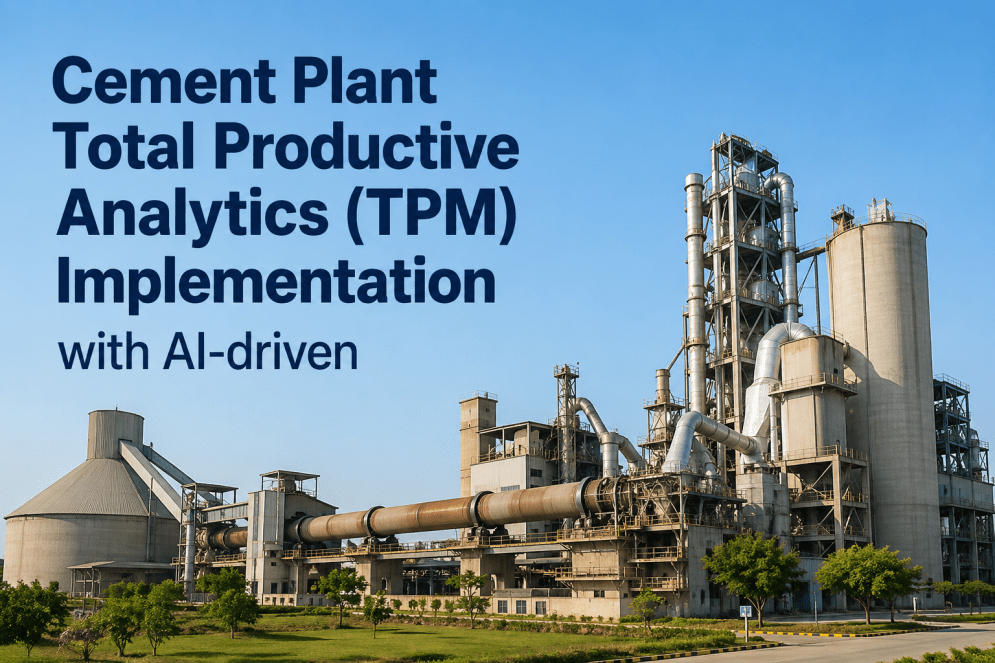
Achieving a fully digitized, AI-powered operation in an integrated cement facility is often viewed as a multi-year engineering marathon—yet the majority of that time is typically lost to fragmented data audits and vendor misalignments. Cement plant AI-driven implementation is no longer an experimental luxury; it is a 12-week strategic sprint that transforms legacy "run-to-fail" cultures into predictive powerhouses. By following a structured 12-week deployment roadmap, iFactory allows cement operators to migrate asset registries, digitize PM schedules, and activate real-time kiln analytics without disrupting production cycles. Organizations that schedule a deployment blueprint session with iFactory are discovering that the gap between raw sensor data and autonomous maintenance can be closed in less than 90 days.
The Deployment Readiness Gap: Why Traditional Rollouts Stall
Most industrial digitalization projects fail not due to technology, but due to a lack of "Asset Context." A generic AI tool can ingest vibration data, but it cannot tell a raw mill fan apart from a cement mill separator without manual, month-long configuration. Cement plant AI-driven deployment requires a platform that arrives with a pre-built industrial asset library. iFactory eliminates the "configuration bottleneck" by providing a cement AI-driven setup that understands the specific physics of kilns, mills, and baghouses from Day 1.
The iFactory accelerated deployment framework overlays your existing asset hierarchy with our pre-trained industrial models. This allows your team to skip the 6-month "data labeling" phase and move directly to predictive insights. By mapping your facility's specific data maturity against our readiness matrix, we ensure that your cement analytics digitization project remains on track and under budget.
Asset Criticality ↓
The 5 Pillars of a Successful Cement AI-Driven Rollout
Digitalizing a cement plant involves navigating five distinct "Operational Hazards" that can derail traditional software projects. iFactory's cement AI-driven rollout strategy is specifically designed to bypass these bottlenecks through automated data migration and rugged field tools.
Legacy Data Fragmentation
Cement plants often have 20+ years of paper logs and siloed historians. iFactory’s data migration tools use AI to ingest and normalize these fragmented records, building a clean 5-year digital history for your assets in less than 72 hours, enabling Day 1 predictive accuracy.
Asset Hierarchy Complexity
From the limestone quarry to the silo, cement plants have thousands of components. We use automated ISO 14224 asset mapping to build your digital hierarchy, ensuring every motor and gearbox is correctly parented and searchable via QR code from the start.
Cultural Adoption Resistance
Change is hard for veteran maintenance teams. Our "Technician-First" mobile app replaces complex forms with intuitive "Confirm-Step" workflows, resulting in a 90% adoption rate within the first 14 days of go-live in harsh dusty environments.
Connectivity Dead Zones
WiFi rarely reaches the top of a preheater tower. iFactory’s offline-first architecture allows technicians to complete inspections and AI diagnostics in zero-signal zones, with automated delta-sync as soon as they return to a network area.
Environmental Friction (Dust/Heat)
Traditional laptops fail in the clinker zone. Our implementation roadmap includes the deployment of high-contrast, ruggedized tablets that withstand the heat and dust of the kiln area, ensuring 100% digital compliance even in the most extreme zones.
The 12-Week Rapid Deployment Methodology
We don't believe in "Phase 0" planning that takes months. iFactory’s cement plant AI-driven setup follows a proven, evidence-based sequence that delivers functional AI diagnostics by Week 8 and full ROI measurement by Week 12.
The Strategic ROI of a 12-Week Deployment
Rapid deployment isn't just about speed; it's about cash flow. By reaching "Full AI Operation" in 12 weeks instead of 12 months, cement plants recover their initial investment 4x faster. The financial impact of iFactory’s cement plant digitalization is measurable across four primary value streams.
A Cement CEO’s Perspective on Rapid Deployment
We had been 'planning' our digital transformation for three years with three different consultants. We were stuck in a cycle of endless audits and pilots that never went anywhere. iFactory arrived with a specific 12-week plan, used their data migration tools to clean up our messy SAP records in a weekend, and had our first predictive alerts firing on the main kiln drive by week 4. The 12-week timeline wasn't just a marketing promise—it was a disciplined execution that forced our team to stop planning and start digitizing. Our unplanned downtime is down 47% since the week 12 go-live.
Frequently Asked Questions: Cement AI-Driven Deployment
How can you deploy in 12 weeks when others take 12 months?
The difference is our 'Industrial Context Engine.' Most platforms start with a blank slate and expect you to teach the AI what a cement mill is. iFactory arrives with pre-trained models for every major cement asset. We spend our 12 weeks integrating your data, not 'learning' the industry. Our automated data migration tools also eliminate months of manual data cleansing.
Does the 12-week roadmap require any plant downtime?
No. Implementation is performed in parallel with your normal production. Sensor integration and QR-tagging are conducted during routine maintenance windows or while equipment is running. We do not require a major shutdown for any part of the 12-week rollout.
Can we migrate data from a 20-year-old SAP or Oracle system?
Yes. We have built-in connectors for virtually every version of SAP (from R/3 to S/4HANA), IBM Maximo, and Oracle EAM. Our migration engine handles the messy, inconsistent data often found in older systems, normalizing it into an AI-ready asset hierarchy automatically.
How much time do our technicians need to spend on training?
We keep training focused and field-based. Technicians typically require one 4-hour classroom session followed by 2-3 days of 'Over-the-Shoulder' field coaching during their regular rounds. Because the app is designed like a consumer tool, the learning curve is extremely shallow.
What happens if our sensor data is incomplete or low-quality?
iFactory's AI is designed for 'Noisy Environments.' If you lack real-time vibration data, the system uses 'Virtual Sensors' based on motor current and process parameters to infer asset health. Part of our 12-week roadmap includes identifying these data gaps and providing low-cost retrofit sensor kits where absolutely necessary.
Is the 12-week timeline guaranteed for multi-site deployments?
We run a 'Lead-Plant' model. We deploy at your first site in 12 weeks to build a 'Master Template' for your group. Subsequent sites can then be rolled out even faster—often in 6-8 weeks—by leveraging the configuration and data standards established during the first site rollout.
How do you handle the change management aspect of the rollout?
Our roadmap includes a dedicated 'Trust Building' phase (Weeks 8-10). During this time, the AI provides advisory insights that are validated by your senior maintenance leads. Once the team sees the AI detect 2-3 genuine developing faults that they had missed, the cultural barrier disappears and adoption becomes pull-driven rather than push-driven.