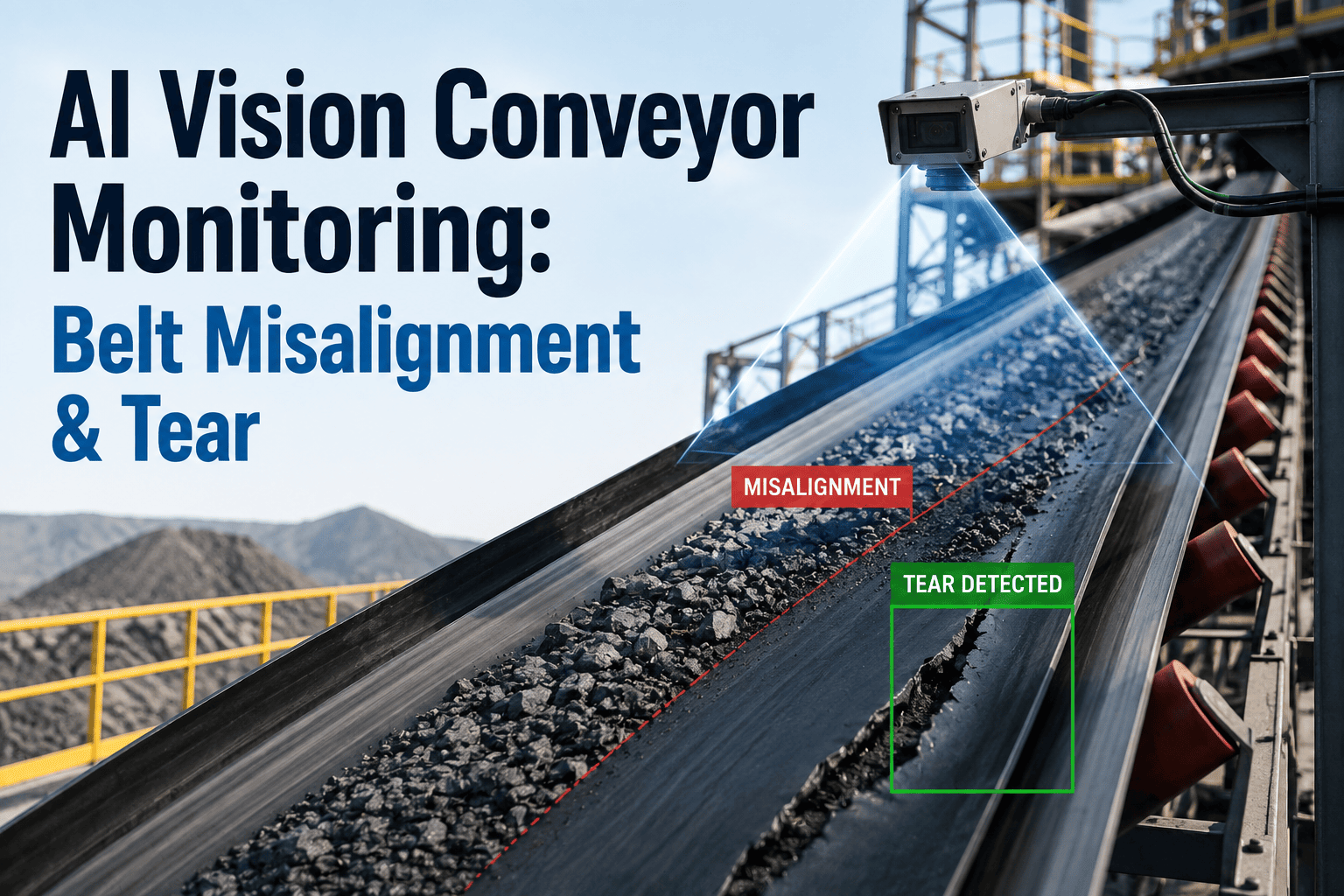
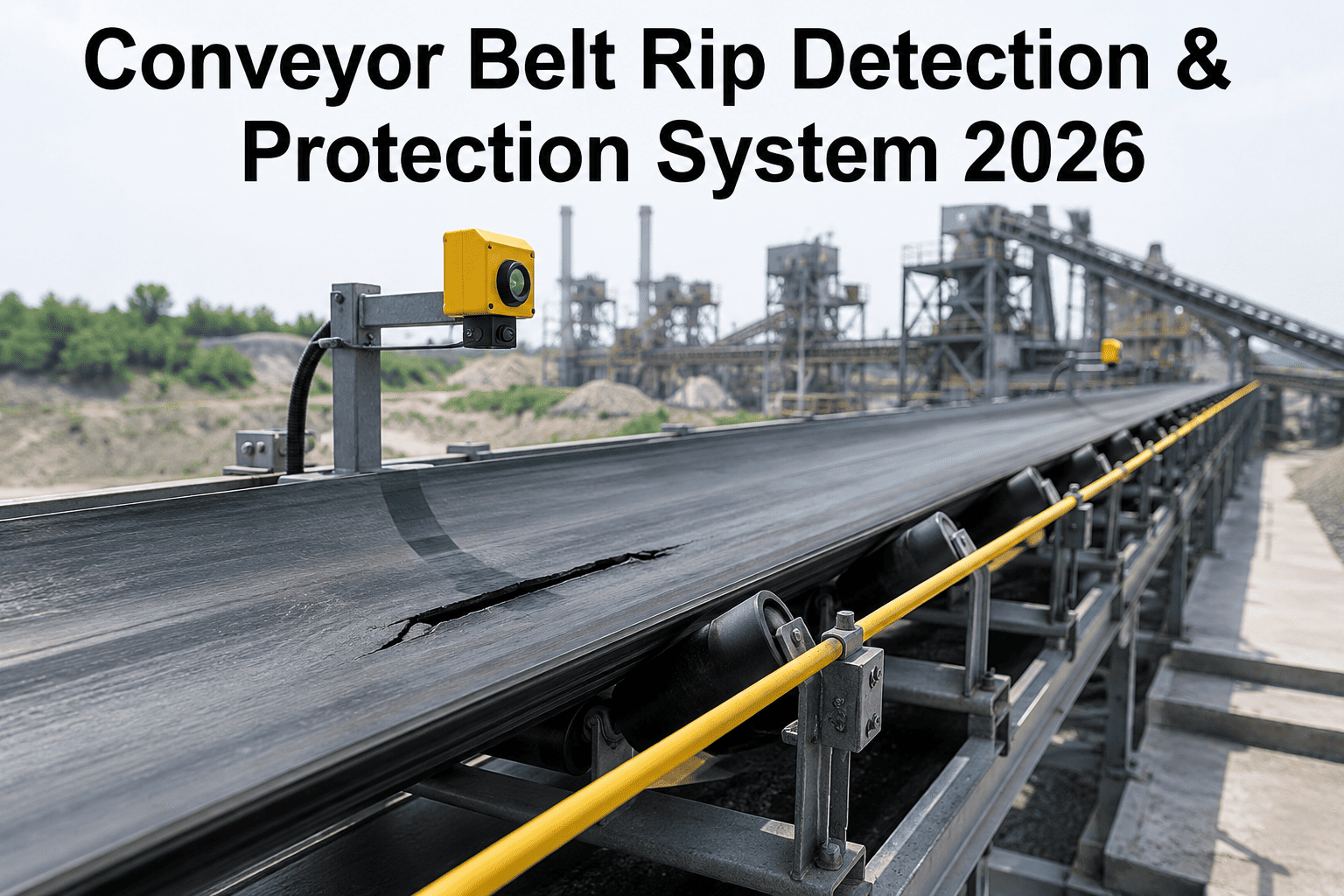
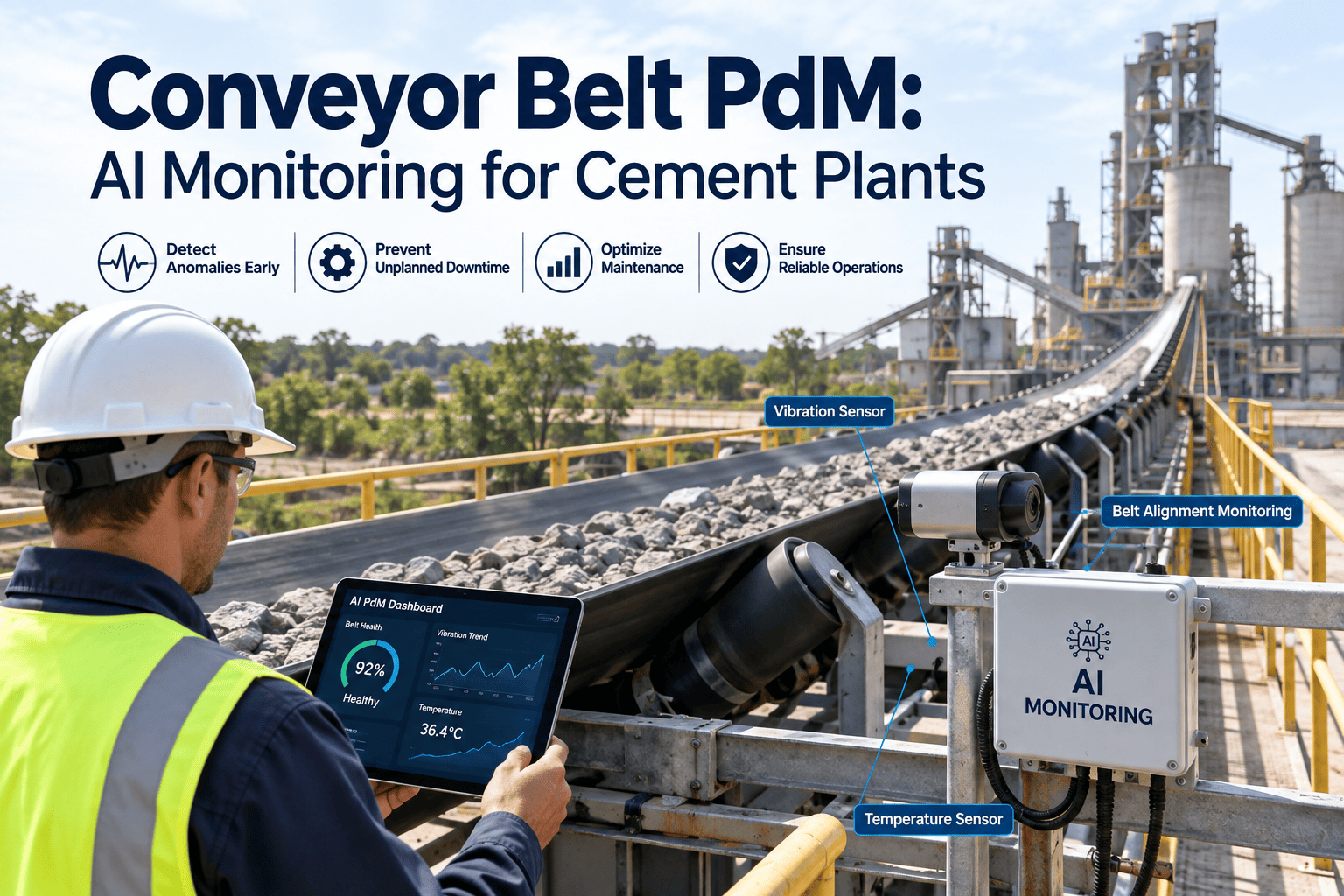
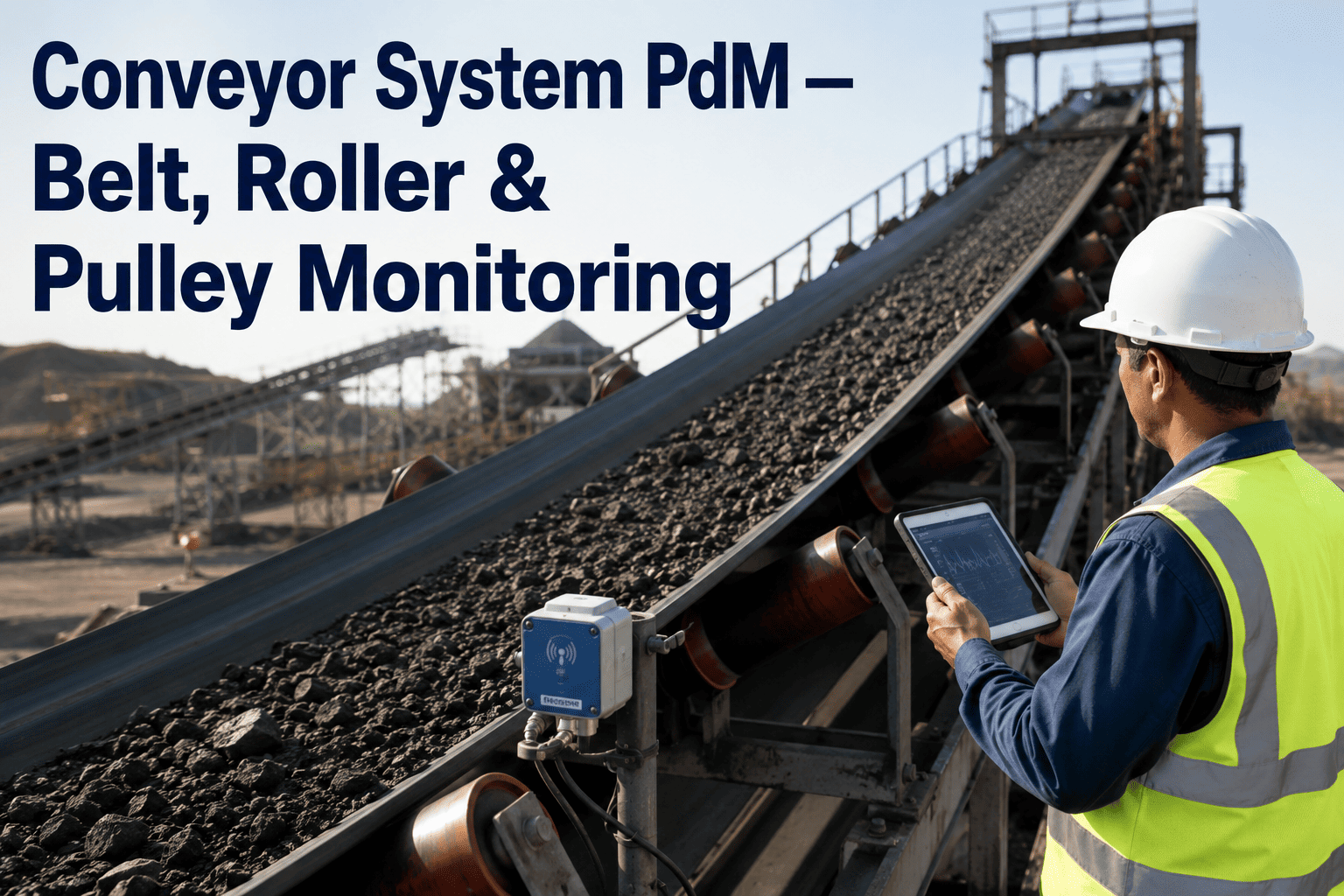
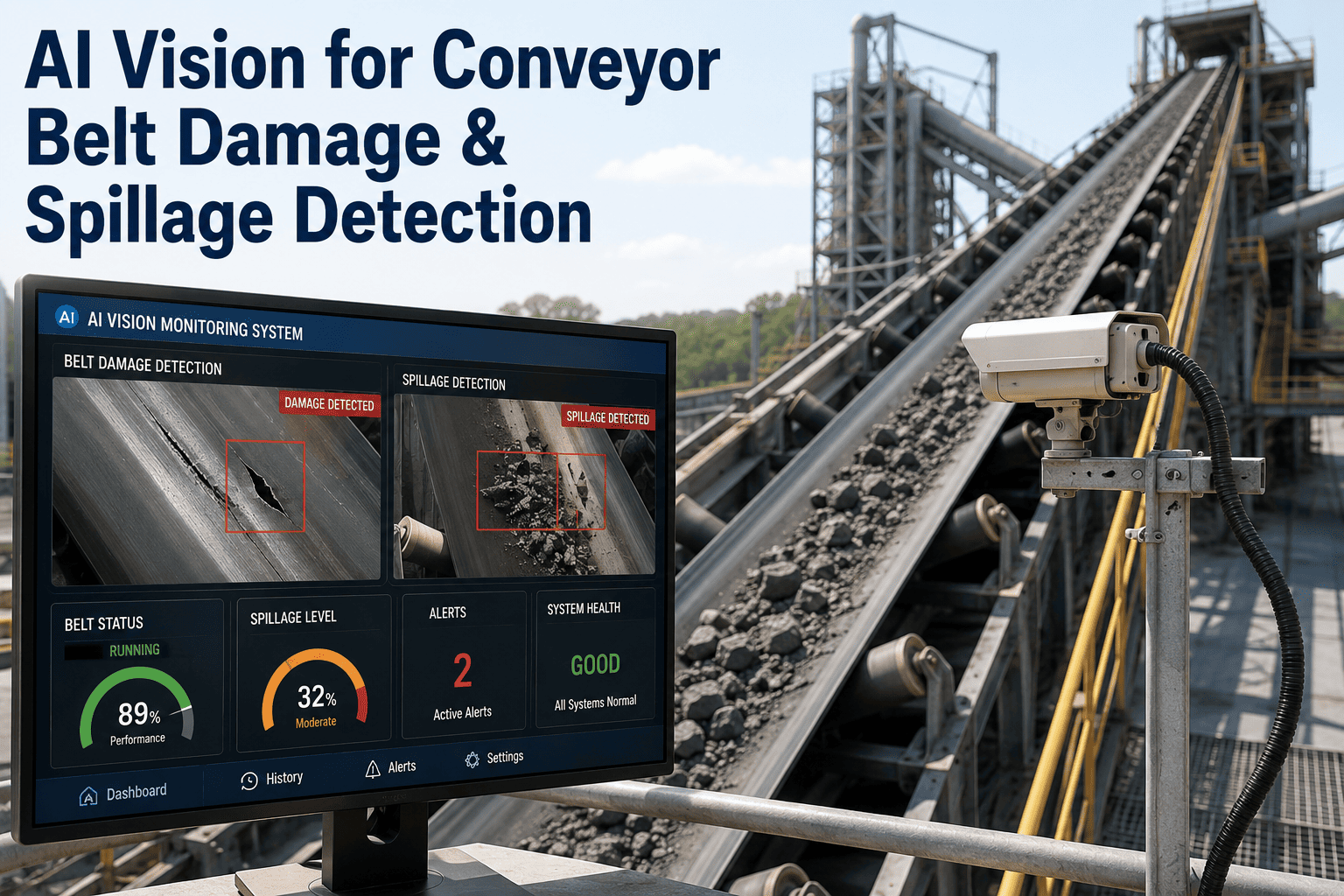
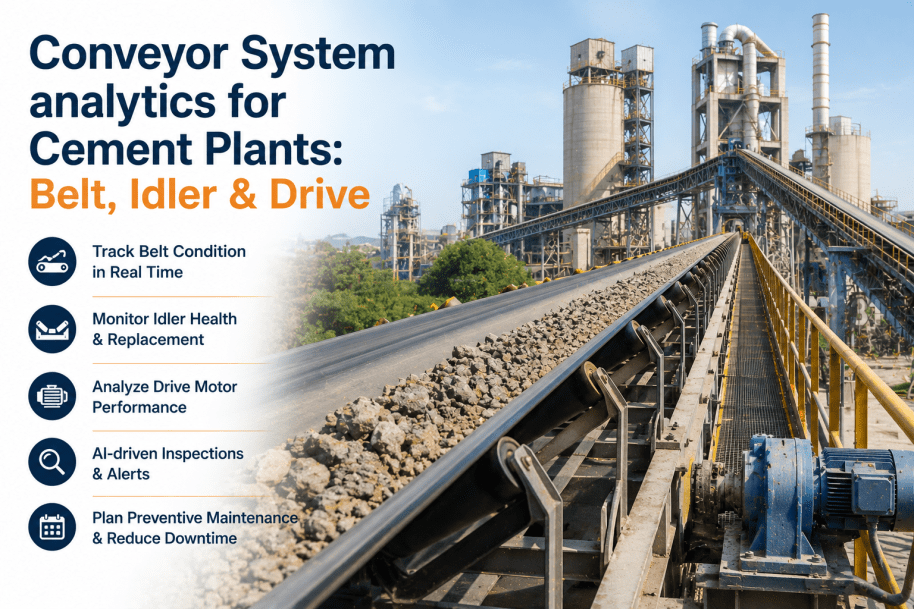
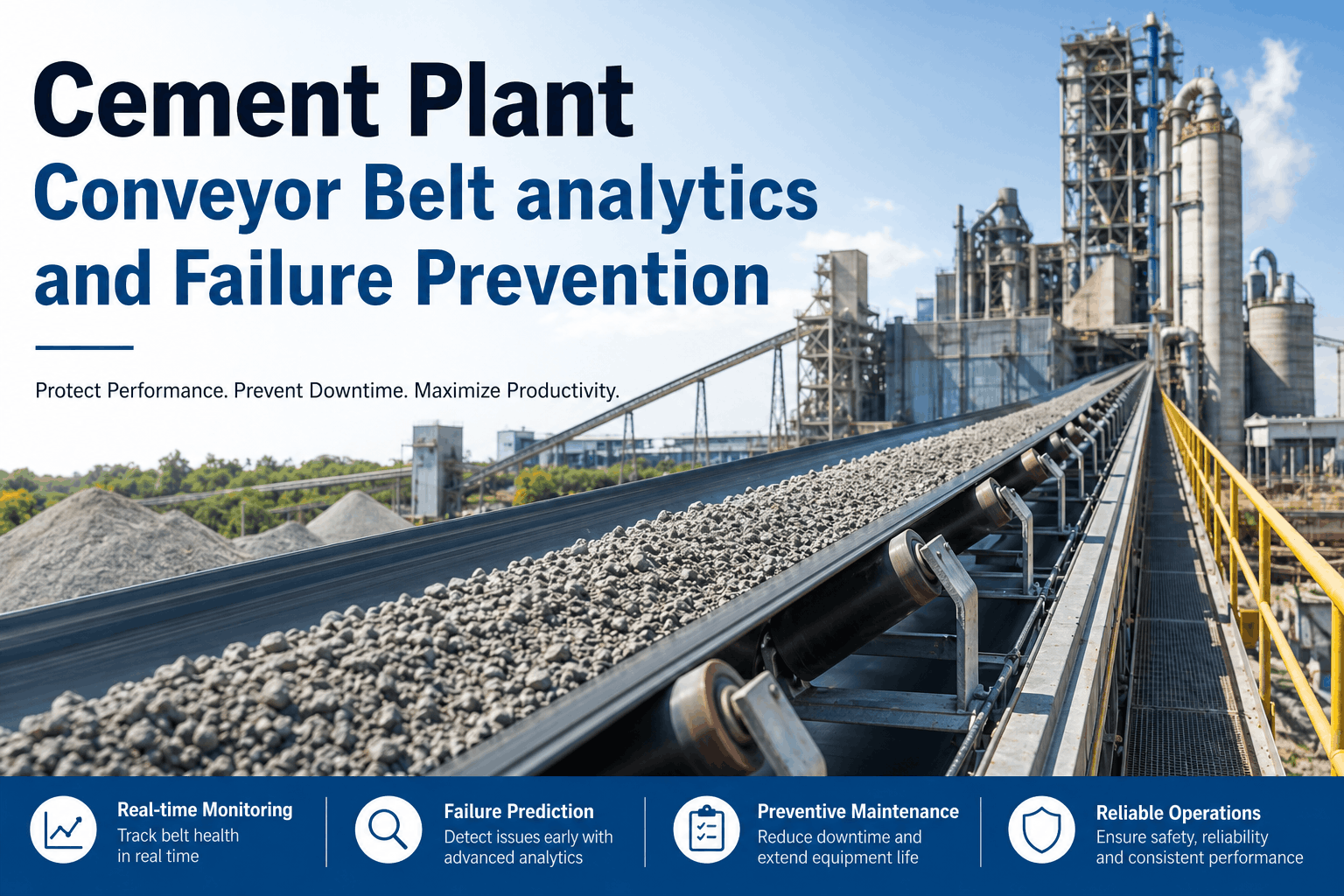
Clinker conveyor belts are among the most punishing material handling assets in a cement plant — carrying high-temperature clinker at 200–400°F directly off the cooler grate, running at continuous duty cycles that leave no operational window for inspection without a production stop, and operating in environments where abrasive dust, thermal shock, and mechanical impact combine to accelerate the failure modes that most inspection programs are not equipped to detect early enough. A longitudinal tear event — where a sharp clinker fragment or embedded metallic piece cuts along the belt's travel direction rather than across it — can propagate from a 6-inch cut to a catastrophic full-belt split in under two hours at clinker belt operating speeds. The production consequence is an emergency kiln feed stop a conveyor replacement campaign measured in days rather than hours, and lost clinker throughput that cannot be recovered in the production schedule. AI vision monitoring for clinker conveyor belts changes this risk equation fundamentally — continuously scanning every inch of belt surface, splice, and edge in real time, detecting longitudinal tears, misalignment drift, and splice degradation before they become emergency failures, and automatically generating work orders that direct maintenance crews to the exact belt position requiring intervention. For Plant Managers, Maintenance Directors, and Reliability Engineers at U.S. cement facilities, AI vision-based conveyor monitoring is the most direct investment available for eliminating unplanned clinker conveyor failures — and iFactory's platform deploys it without modifying your existing conveyor structure or control system.
Why Clinker Conveyor Belts Fail — and Why Manual Inspection Cannot Stop It
Clinker conveyor belt failures are not random events — they follow predictable failure mode progressions that begin with damage signatures visible to AI vision systems weeks before the failure reaches catastrophic severity. The challenge is that these early signatures occur at belt speeds, in environmental conditions, and across belt surface areas that make human inspection inherently unreliable as a primary detection method. A maintenance technician performing a weekly visual walkdown cannot observe 150 meters of belt surface traveling at 1.2 meters per second, cannot see splice wire exposure through accumulated clinker dust, and cannot detect a 4mm longitudinal cut developing on the belt's carrying surface before it has already propagated to a length where emergency intervention is the only option.
The four primary clinker conveyor belt failure modes — longitudinal tears, transverse splice degradation, belt edge fraying and misalignment, and cover rubber thermal degradation — each have distinct visual signatures at early, mid, and late stages that iFactory's AI vision platform classifies continuously against a validated failure mode library built from thousands of documented belt failure events across heavy industrial conveyor environments. Schedule a conveyor monitoring assessment with iFactory to map your specific clinker belt configuration against the failure modes most prevalent in your operating conditions.
Longitudinal Tear Propagation
A sharp clinker fragment or embedded metallic scrap pierces the belt carrying surface and initiates a cut running parallel to belt travel direction. Propagation rate increases with belt tension and clinker impact loading — a 6-inch cut can reach 40 feet within a single operating shift without AI vision detection triggering an early intervention stop.
Splice Degradation and Failure
Mechanical splice fasteners corrode and loosen under the thermal and chemical attack of hot clinker transport. Wire hook exposure, fastener loss, and splice edge fraying develop progressively over weeks before a splice pull-apart event stops the conveyor entirely and requires emergency splice re-installation under production pressure.
Belt Misalignment and Edge Damage
Lateral belt tracking drift causes the belt edge to contact the conveyor structure, rapidly abrading the edge cord reinforcement and creating an entry point for longitudinal tears. Misalignment develops gradually from uneven loading, idler wear, or thermal expansion differentials — visible as a progressive edge deviation that AI vision tracks with millimeter precision at every belt rotation.
Cover Thermal Degradation
Continuous exposure to clinker at 300–400°F degrades the belt cover rubber compound, progressing from surface cracking through deep cover crazing to cord exposure. Cover degradation accelerates significantly when clinker cooler performance is compromised — creating sudden high-temperature load events that the belt was not designed to absorb without permanent damage.
How iFactory's AI Vision Platform Monitors Clinker Conveyor Belts Continuously and Automatically
iFactory's clinker conveyor belt monitoring platform deploys AI vision cameras at critical positions along the conveyor — carry run, return run, head drum, tail drum, and splice zones — to achieve complete belt surface coverage at every pass. The platform processes continuous image streams at frame rates synchronized to belt travel speed, ensuring every square inch of belt surface is analyzed in each rotation cycle regardless of whether production is running at full capacity, part load, or startup conditions. Book a conveyor monitoring demo to see iFactory's detection interface applied to a live clinker belt scenario.
Longitudinal Tear Detection and Propagation Tracking
iFactory's tear detection AI analyzes both carry-run and return-run belt surfaces simultaneously — the return run is particularly valuable because clinker fallback and cover abrasion on the return side often precede longitudinal tear initiation on the carry side by several hours, providing an additional early-warning signal. When a longitudinal cut is detected, the AI immediately classifies its length, orientation, depth estimate (surface vs. cord-penetrating), and propagation velocity — providing the maintenance team with not just detection confirmation but a prioritized urgency assessment that distinguishes between a surface scoring event requiring scheduled attention and an active tear requiring immediate intervention.
Splice Integrity Monitoring at Every Pass
Each mechanical splice passes through iFactory's camera field of view on every belt rotation — typically every 60–90 seconds on a standard clinker conveyor circuit. The splice monitoring AI tracks fastener presence, wire hook condition, splice edge profile, and cover plate seating across every rotation, building a wear rate trend for each individual splice in the belt. As splice condition degrades through defined threshold stages, alerts escalate from a scheduled inspection notice through an advisory-level repair flag through a critical-level stop recommendation — giving maintenance planners the lead time to prepare splice re-installation materials and schedule the work during a planned production window rather than an emergency stop.
Real-Time Belt Misalignment Measurement
iFactory measures belt edge position continuously at multiple points along the conveyor — head end, tail end, and at the midpoint of each span between major support structures — calculating lateral tracking deviation with millimeter precision at every belt pass. The misalignment model distinguishes between transient tracking fluctuations caused by uneven clinker loading and persistent drift patterns that indicate idler misalignment, structural settlement, or thermal expansion differential — focusing maintenance attention on actionable alignment corrections rather than normal operational variation. Automated alerts trigger when drift exceeds the configurable edge-clearance threshold, directing the maintenance team to the specific idler station responsible for the tracking deviation before belt-to-structure contact damage has initiated.
Cover Degradation Mapping and Thermal Event Detection
iFactory's cover condition monitoring tracks surface crack density, crazing pattern progression, and cover thickness loss (estimated through texture analysis) across the full belt surface width and length, building a degradation map that shows which belt zones are approaching cord exposure risk. For clinker belts specifically, the AI also monitors for abnormal heat signatures on the return run that indicate a clinker cooler temperature excursion event is loading the belt above design specification — activating an immediate alert that allows the operator to reduce belt speed or implement cooling protocols before thermal damage progresses to cover rupture.
AI Vision vs. Conventional Inspection: What the Performance Data Shows
The performance gap between AI vision-based conveyor monitoring and conventional inspection methods is not marginal — it is structural. Manual inspection at any practical frequency cannot achieve the coverage resolution, temporal frequency, or failure-mode classification depth that real-time AI vision delivers continuously at zero per-inspection labor cost. The table below compares documented performance across each detection dimension for clinker conveyor belt failure modes. Talk to our engineers about how these performance differences translate to your specific belt length, production schedule, and maintenance program.
Clinker Conveyor Belt Monitoring: Manual Inspection vs. iFactory AI Vision
Stop Clinker Belt Failures Before They Stop Your Kiln
iFactory's AI vision platform gives cement plants real-time clinker conveyor belt monitoring — detecting longitudinal tears, splice degradation, and misalignment weeks before emergency failure — with automated work order generation that deploys the right crew before a belt stop becomes the only option.
Camera Placement, On-Premise AI Processing, and CMMS Integration for Clinker Belt Environments
Deploying AI vision in a clinker conveyor environment presents hardware and integration challenges that generic industrial camera solutions are not designed to address — extreme ambient temperatures, heavy particulate loading, vibration from conveyor structure, and the requirement for precise frame-rate synchronization to belt travel speed. iFactory's field engineering team designs every clinker belt monitoring deployment around the specific mechanical, thermal, and environmental conditions of the target conveyor, specifying camera enclosures, mounting positions, and AI processing hardware that are validated for the clinker hall environment rather than adapted from general-purpose industrial specifications.
Site Survey and Camera Coverage Design
iFactory's field team conducts a full conveyor site survey: belt length, width, travel speed, splice count, ambient temperature range, dust loading, structural mounting positions, and network infrastructure availability. Camera placement is modeled in iFactory's coverage simulation tool to confirm 100% belt surface coverage from the specified mounting positions before any hardware is ordered. Enclosure specifications — IP rating, purge pressure, thermal management — are finalized based on measured ambient conditions at each camera location.
Hardware Installation and Belt Speed Synchronization
Camera enclosures, edge AI processing hardware, and network switching equipment are installed at the surveyed positions. Camera frame rate is synchronized to belt travel speed — typically 15–30 fps at 1.0–1.5 m/s clinker belt speed — ensuring every point on the belt surface is captured in at least 3 consecutive frames at full resolution, providing the temporal redundancy the AI requires for reliable defect confirmation. All installations are completed during planned maintenance windows without belt production interruption.
AI Model Baseline Calibration
The AI detection models are calibrated to your specific belt type, surface texture, splice design, and normal operating condition range during a 2-week baseline period. This calibration eliminates false alerts from clinker dust accumulation patterns, belt surface printing, and normal cover texture variation that are specific to your belt — so when a real defect is detected, the alert reflects genuine anomaly, not normal belt surface characteristics. First real defect detections and early-stage alerts typically emerge during this calibration phase as the system's full coverage reveals damage not previously visible to inspection.
CMMS Integration and Work Order Automation
iFactory connects to the plant's CMMS (SAP PM, Maximo, Infor EAM, or native iFactory work order module) via API integration. Alert severity thresholds for automatic work order generation are configured with the maintenance team — defining which defect classes trigger immediate work orders vs. advisory notifications vs. watch-level logging. Each auto-generated work order includes the belt position by meter reference, the defect classification, severity score, photographic evidence from the detection frame, and recommended repair action with required material list.
Continuous Learning and Belt Life Analytics
The AI models continue learning from maintenance crew feedback on each detected defect — improving detection specificity as the system builds a comprehensive damage history for every belt section and splice. Belt life analytics reports are generated monthly, showing wear rate by zone, splice condition trend across the fleet, and projected replacement timing for each belt — giving maintenance planners the forward visibility to schedule belt changes during optimal production windows rather than emergency response to unexpected failures.
iFactory's AI inference hardware processes all camera feeds locally at the plant — delivering detection latency under 200 milliseconds from image capture to alert generation without any internet connectivity requirement. All belt image data, defect records, and maintenance histories are stored within the plant's own network perimeter, satisfying OT security requirements that prohibit cloud-connected devices in production-critical conveyor environments. The on-premise architecture also enables direct integration with the plant's DCS and PLC systems through local OPC-UA connections — allowing the AI to correlate belt defect events with clinker cooler temperature readings and belt drive load data that provide additional context for failure mode classification.
Expert Review: What Reliability Engineers Learn When AI Vision Goes Live on a Clinker Belt
The first thing every reliability engineer tells me after their first week with AI vision on a clinker belt is the same: they had no idea how much damage was already present. Not because the belt was poorly maintained — in most cases these are plants with structured maintenance programs, regular inspections, and competent crews. The damage they find is the damage that falls between the inspection cycles and outside the sight lines of the available inspection positions. A 14-inch longitudinal scoring event developing on the carry-side edge, visible from a return-run camera, invisible from the standard walkway inspection path. A splice where three consecutive fasteners have lost their wire hook engagement — detectable in a high-resolution frame-by-frame comparison of each splice pass, completely invisible at normal inspection distance and lighting. The second thing they tell me is that the alert fatigue they feared never materialized. The AI does not generate alerts for clinker dust patterns, for belt surface printing from the loading zone, for the normal texture variation between belt sections. It generates alerts for damage. When the system says there is a 340mm longitudinal cut developing on belt section 47 at the 38-meter mark, there is a 340mm cut at the 38-meter mark. The specificity is what makes the system operationally credible. And credibility is what converts a monitoring tool into a program that actually changes maintenance behavior — from reactive to predictive, from cost center to documented profit driver.
Conclusion: AI Vision Conveyor Monitoring Is the Reliability Investment That Pays for Itself Before the Year Ends
Clinker conveyor belt failures are expensive, disruptive, and — with AI vision monitoring in place — largely preventable. The technology required to detect longitudinal tears at 14 days advance lead time, monitor every splice at 90-second intervals, and track belt misalignment with millimeter precision in a continuous duty clinker environment exists today and deploys in under 9 weeks without modifying your belt structure or control system. The business case is straightforward: a single avoided emergency belt failure — with replacement costs, emergency labor, and lost clinker production combined — typically recovers the full investment in AI vision monitoring. Every subsequent avoided failure is pure margin recovery.
Cement plants operating clinker conveyors without real-time AI vision monitoring are accepting a risk that is both quantifiable and manageable. The production consequence of a catastrophic belt failure is not an unknown — it is a documented cost that your maintenance history has already measured. iFactory's platform eliminates that cost systematically, with verified performance data from documented deployments rather than theoretical projections. Schedule a no-obligation conveyor assessment to see exactly where your clinker belt monitoring gaps are and what they are costing you per year.
AI Vision Clinker Conveyor Belt Monitoring — Frequently Asked Questions
iFactory's longitudinal tear detection AI analyzes high-resolution belt surface images at frame rates synchronized to belt travel speed — typically capturing each point on the belt surface in 3–5 consecutive frames at sub-millimeter pixel resolution within the camera's field of view. The AI identifies the linear contrast signature and edge geometry characteristic of a longitudinal cut against the belt surface texture baseline established during calibration. Tears as short as 50mm (approximately 2 inches) are detectable at normal clinker belt operating speeds when camera positioning provides the specified resolution at the belt surface. Because the AI also monitors the return run — where the same tear location passes at the same interval — it achieves double-pass confirmation on every detected anomaly, dramatically reducing false positives from surface contamination or transient lighting variations.
Yes. iFactory's camera enclosures for clinker conveyor environments are specified with active cooling systems — typically water-cooled or air-purge-cooled housings — that maintain the camera's internal operating temperature within specification regardless of external ambient conditions. Enclosures are rated to IP67 for dust and moisture ingress protection, and the positive pressure purge system prevents clinker dust from entering the optical cavity and degrading image quality over time. Camera mounting positions are determined during the site survey to maximize the distance from the hottest belt surface zones while maintaining sufficient resolution — typically placing cameras at the return run underside where ambient temperatures are significantly lower than at the loaded carry run. Where carry-run imaging is required for edge misalignment or cover condition monitoring, water-cooled enclosures are specified with mounting brackets that allow periodic lens cleaning access during normal maintenance rounds.
iFactory tracks belt position through encoder integration with the belt drive — correlating each camera frame to a specific belt position reference measured from a fixed datum point (typically the head drum). When a defect is detected, the system records and reports the belt meter position, the belt face (carry side or return side), the transverse position across the belt width (center, left edge zone, right edge zone), and a timestamp-referenced photographic image of the detection frame. The maintenance crew receives a work order that specifies: belt position 47.3 meters from head drum, carry-side surface, left edge zone, 340mm longitudinal cut — sufficient to locate the defect on the first belt revolution after the crew arrives at the conveyor. For splice defects, the specific splice number is reported by reference to the splice inventory documented during commissioning, so crews can retrieve the splice's maintenance history before arriving for inspection.
Payback period varies by belt length, clinker throughput, and historical failure frequency — but the calculation is straightforward. A typical emergency clinker belt failure costs $180,000–$420,000 in combined belt replacement material, emergency labor at premium rates, and lost clinker production during the unplanned stop. iFactory's AI vision monitoring deployment for a single clinker belt system is typically investment-recovered in full if it prevents a single emergency failure event within the first 18 months. Across documented deployments, most plants achieve payback within 8–14 months — accelerated by the belt life extension from early defect intervention (planned repairs instead of emergency replacements cost 40–60% less) and the labor savings from eliminating the manual inspection labor hours that AI vision monitoring replaces. Plants with historically high clinker belt failure frequency — more than one unplanned stop per year — typically achieve payback within the first 6 months.
Yes. iFactory's conveyor monitoring platform integrates belt drive motor current, belt tension (where load cells are installed), drive gear temperature, and belt speed data from the plant's PLC alongside the AI vision belt surface monitoring — creating a unified conveyor health model that correlates visual belt damage events with drive load anomalies. A longitudinal tear developing on the belt carry surface, for example, will typically manifest as a subtle increase in belt drive current variability as the damaged section passes over the head drum — a signal that the AI correlates with the visual detection to elevate alert urgency above what the visual detection alone would classify. This multi-sensor correlation also detects drive-originated failure modes that are not visible on the belt surface: head drum bearing degradation showing as cyclical belt speed variation, take-up weight seizure causing belt slip events, and idler bearing failures producing abnormal belt tension signatures — all generating automated work orders through the same iFactory platform that manages visual belt defect alerts.
Deploy AI Vision Clinker Conveyor Monitoring and Eliminate Unplanned Belt Failures Permanently
iFactory's AI vision platform delivers 100% clinker belt surface coverage, real-time longitudinal tear and splice degradation detection, millimeter-precision misalignment tracking, and automated CMMS work orders — giving your maintenance team the predictive intelligence to protect every belt and eliminate every emergency replacement.