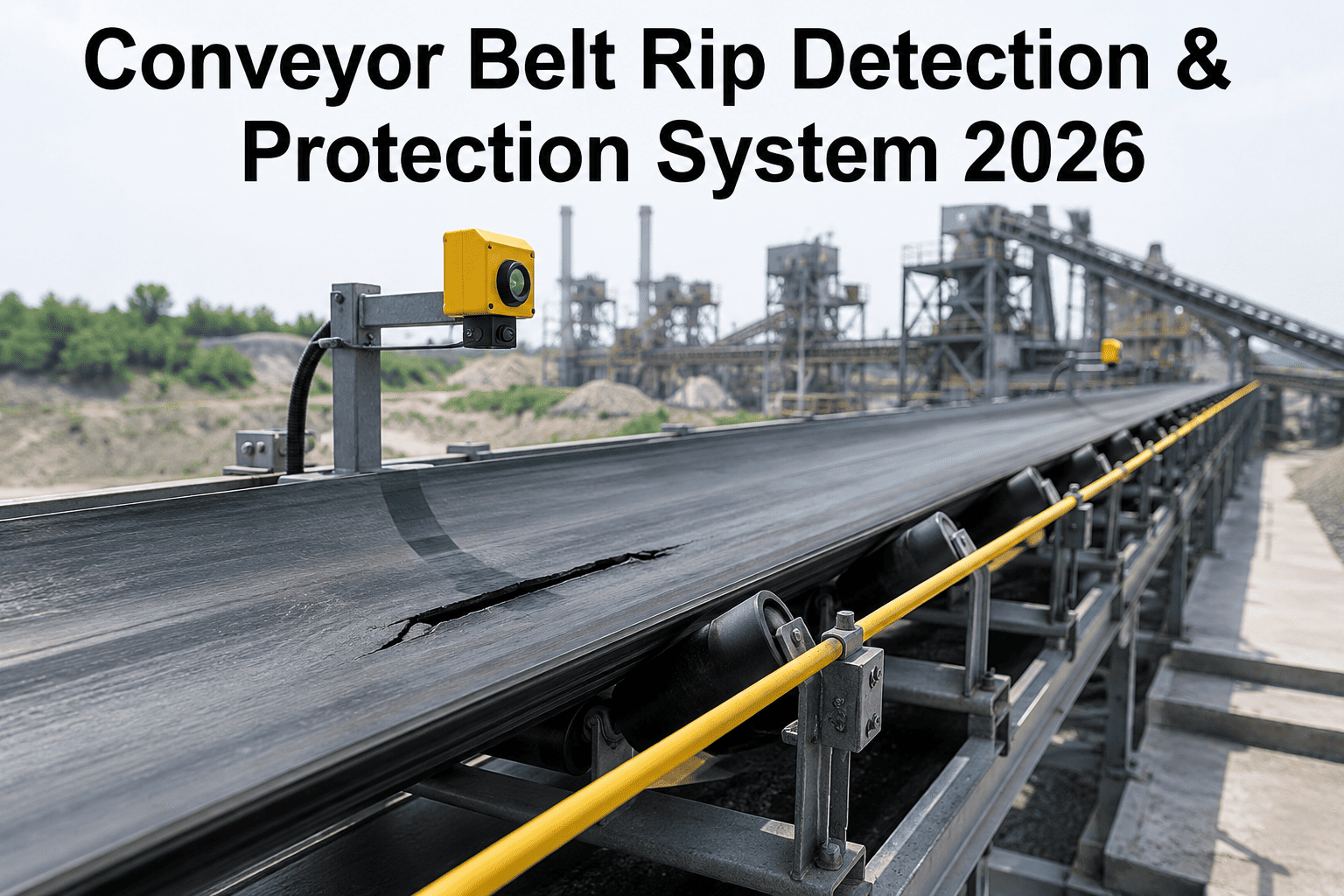
Conveyor Belt Rip Detection & Protection System 2026
By Johnson on August 17, 2026
A longitudinal rip on a cement plant conveyor belt does not announce itself with a bang. It starts as a tramp metal snag or a jammed idler, and within seconds it can split 30 to 60 meters of belt down its length before an operator watching a control room screen even notices the trip. Belt replacement, structural repair, and the production days lost while a fully torn belt is rebuilt routinely run into six figures for a single event — and clinker or raw mill feed conveyors rarely have redundant paths to fall back on. Reliable rip detection is one of the few investments in a cement plant with a payback measured in a single avoided incident, and booking a demo is the fastest way to see what coverage your current conveyor fleet actually has.
CEMENT · CONVEYOR FAILURES · BELT PROTECTION
Conveyor Belt Rip Detection and Protection: Stopping a Small Tear Before It Becomes a Full Belt Replacement
Longitudinal rips and transverse tears both start small and both escalate fast. The difference between a spot repair and a full belt replacement almost always comes down to how many meters of belt travel between the first tear and the automatic stop signal.
Typical direct cost of one uncontained longitudinal rip, including belt replacement, structural repair, and lost production
Longitudinal Rip vs Transverse Tear: Two Failures, Two Detection Problems
Not every belt tear behaves the same way, and a protection system built for one type will often miss the other entirely. Longitudinal rips run parallel to belt travel and can propagate the full length of the conveyor in seconds once started. Transverse tears run across the belt width, usually from impact damage or a failed splice, and tend to progress more slowly but still compromise the belt's tensile strength at the point of failure.
LONGITUDINAL RIP
Caused by tramp metal, jammed chutes, or trapped material dragging along belt travel. Propagates along the belt length at running speed and can split the entire belt in under a minute if undetected.
TRANSVERSE TEAR
Caused by impact loading, failed mechanical splices, or fatigue cracking at a joint. Weakens tensile strength across the full belt width and risks a sudden full-width break under load.
Characteristic
Longitudinal Rip
Transverse Tear
Typical root cause
Tramp metal, chute blockage, trapped material
Impact damage, splice failure, fatigue
Propagation speed
Seconds to a full belt-length split
Slower, but risk of sudden full-width break
Best-suited detection method
Conductive loop, inductive pin, vision scanning
X-ray/splice monitoring, vision scanning
Cost if uncontained
Full belt replacement, most severe outcome
Section replacement or emergency splice repair
Five Detection Technologies, and Where Each One Actually Works
No single sensor technology catches every failure mode at every belt speed, which is why most cement plants that have been burned by a rip event end up running two complementary methods rather than betting on one. Understanding the trade-offs upfront saves a retrofit later.
Conductive Loop Sensors
Embedded conductive loops running through the belt carcass break their circuit the instant a rip crosses them, triggering an immediate stop. Fast and proven, but only detects damage at the loop's exact location and requires loops embedded during belt manufacture or splice.
Inductive Pin / Steel Cord Monitoring
Works with steel-cord belts by tracking cord continuity along the belt length. Effective for detecting both rips and cord damage from tramp metal, but adds no protection on fabric-ply belts without cord reinforcement.
X-Ray Splice and Carcass Scanning
Periodic or continuous X-ray imaging reveals internal ply separation, splice degradation, and carcass damage invisible from the belt surface, making it the strongest early-warning tool for transverse tear risk building at a splice.
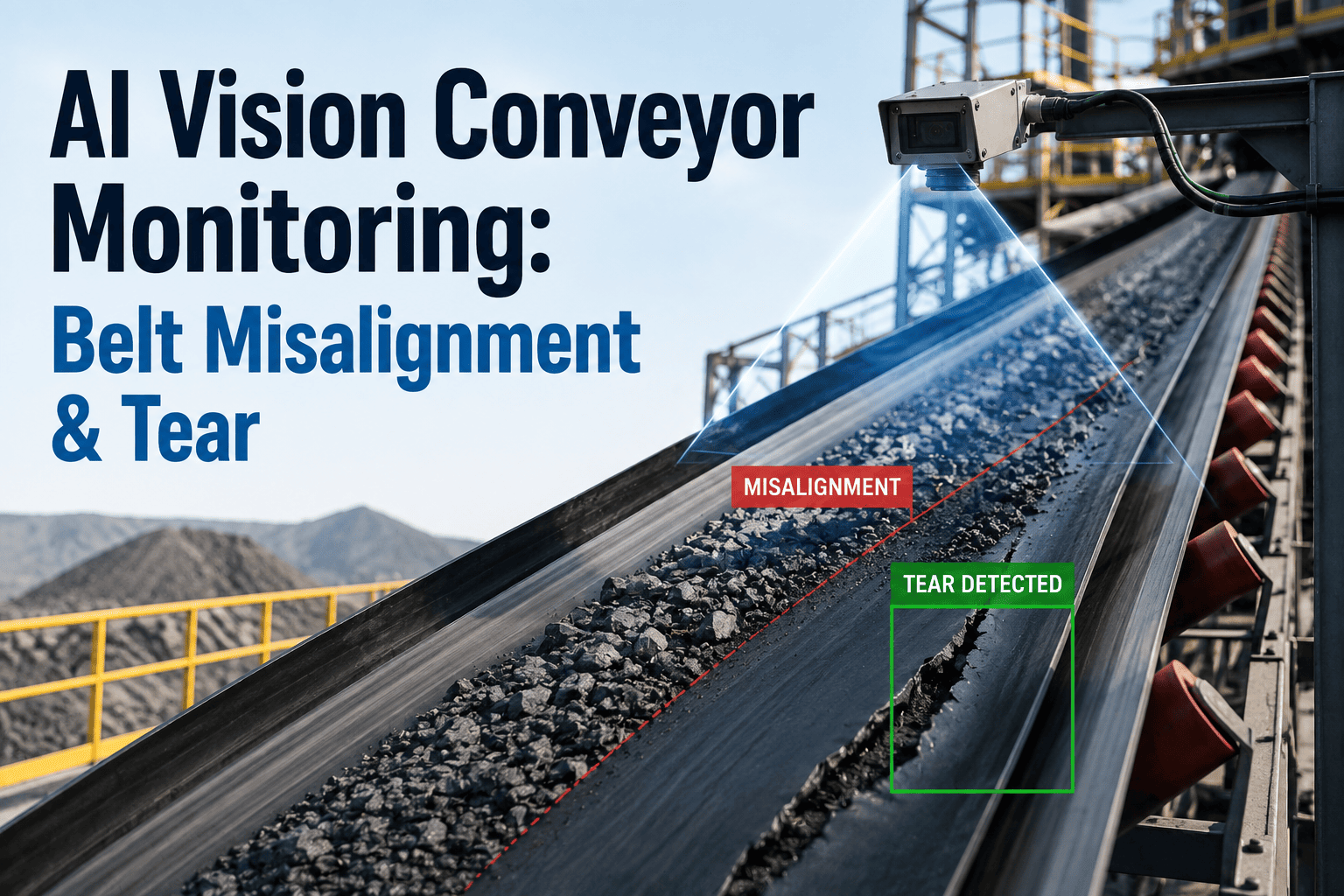
AI Vision Scanning
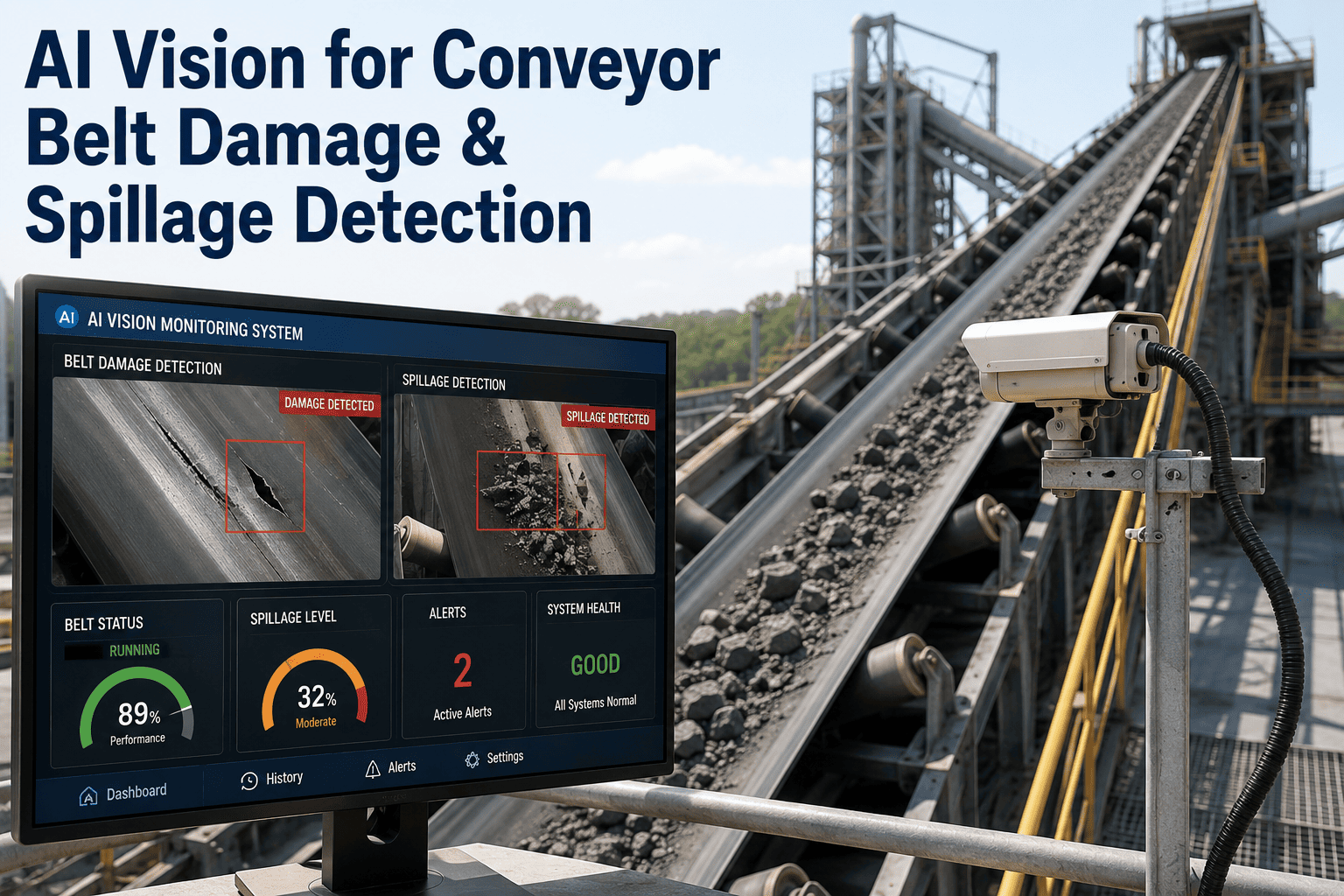
Continuous camera coverage trained to recognize surface tears, gouges, and edge damage as they develop, catching visible precursors before a full rip event and working on any belt type without embedded hardware.
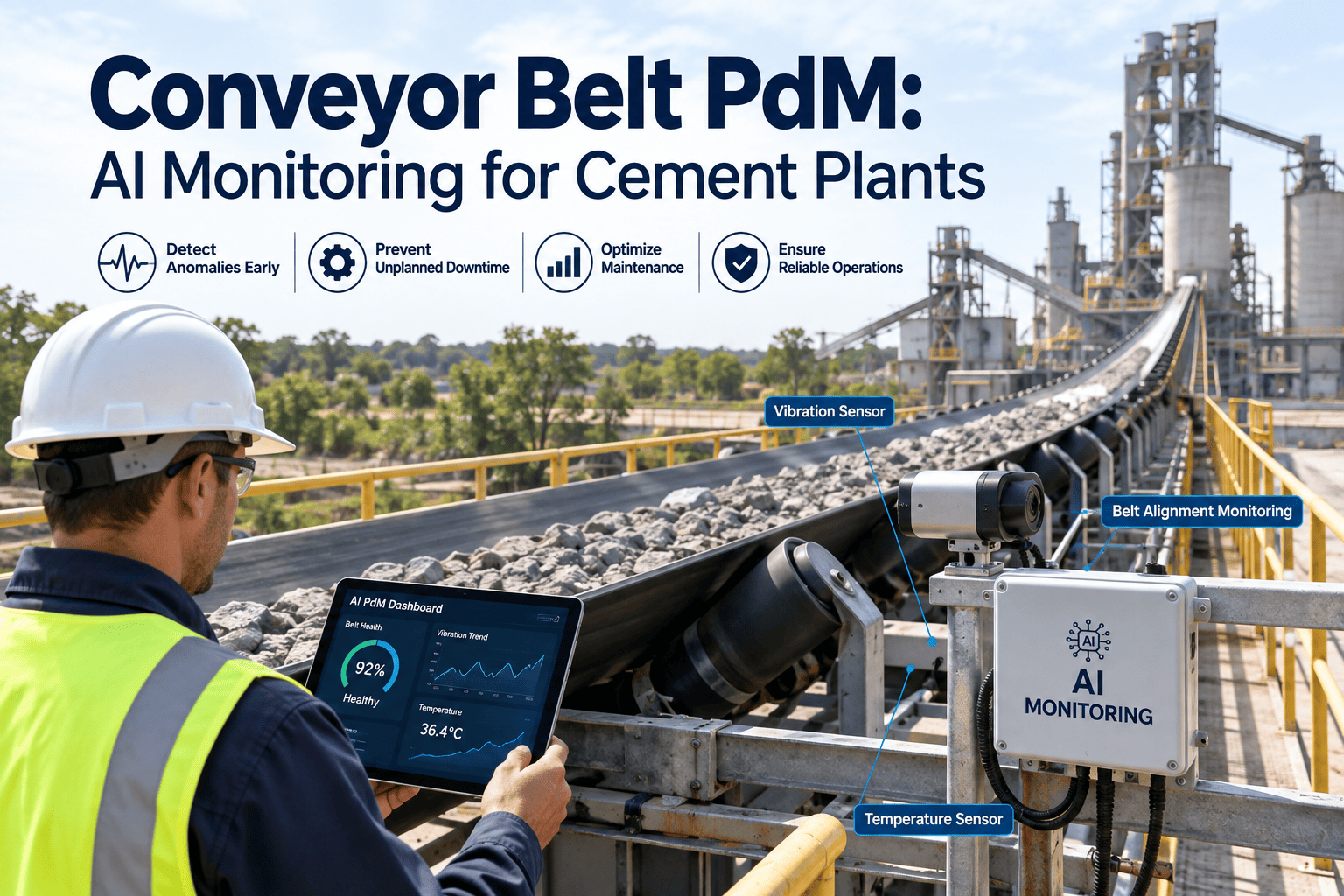
Acoustic and Vibration Monitoring
Detects the abnormal noise and vibration signature of tramp metal impact or a belt dragging against a jammed component, giving an early alert before contact has progressed to an actual tear.
Find Out Which Detection Gap Your Conveyor Fleet Has
Every belt line has a different combination of splice type, tramp metal risk, and belt construction. iFactory engineers can map your fleet against the right detection mix in a single review call.
Detection only pays off if the stop sequence that follows it is fast, reliable, and does not create a bigger problem than the one it prevented. A well-designed protection system moves from first detection to a controlled belt stop in a fixed, tested sequence rather than an improvised control-room reaction.
1
Sensor detects a break in loop continuity, an abnormal vision signature, or an acoustic anomaly at the point of damage
2
Signal is cross-checked against a second independent input where available, to rule out a sensor fault triggering a false stop
3
Trip command is issued to the belt drive and any upstream feed conveyors in the same material stream, halting new load onto the damaged section
4
Control room alarm fires with the exact detection location, so the response crew walks directly to the damage point instead of searching the full belt length
5
Event data, sensor readings, and time-to-stop are logged automatically for root-cause review and for tuning sensitivity thresholds going forward
The Trade-Off Every Plant Has to Manage: False Trips vs Missed Detection
A protection system tuned too aggressively stops production on every tramp metal clang and belt flutter, and operators start disabling or ignoring it within weeks. Tuned too conservatively, it misses the early signature of a real rip and only trips once the damage is already severe. Getting this balance right is less about the sensor hardware and more about how the sensitivity threshold is set and maintained.
Tuning Approach
Result
Long-Term Consequence
Overly sensitive threshold
Frequent false trips on normal belt flexing and material impact
Operators bypass or disable protection, defeating its purpose
Overly conservative threshold
Only major, already-severe damage triggers a stop
Small rips propagate far before containment, larger repair cost
AI-adjusted threshold
Sensitivity tuned against actual belt condition and load pattern
Fewer nuisance trips without sacrificing early detection
Where Sensors Actually Need to Sit Along the Belt Line
Coverage gaps are the most common reason a protection system fails to catch a rip that later gets blamed on faulty equipment. The sensor was working — it simply was not positioned where the tear started.
Loading and Transfer Points
The highest-risk zone for tramp metal entry and impact damage, and the location where most longitudinal rips originate. Dense sensor coverage here catches the majority of incidents at the source.
Along the Carrying Run
Continuous loop or vision coverage along the full carrying run catches propagation once a rip has started, buying critical seconds before it reaches the tail pulley.
Splice Locations
Every mechanical or vulcanized splice is a fatigue point and the most common origin for transverse tears. Splice-specific X-ray or vision monitoring should be scheduled independently of general belt coverage.
Return Run and Tail Pulley
Damage that starts on the carrying side often becomes visible or worsens on the return run, making this a useful secondary confirmation point rather than a primary detection zone.
Before and After: A Cement Plant's Raw Mill Feed Conveyor
A 1.8 km raw mill feed conveyor at a cement plant had experienced two uncontained longitudinal rips in eighteen months, both starting from tramp metal at the same loading point and both propagating well past the point where a faster stop would have limited damage to a single section.
Detection methodConductive loop plus AI vision at loading point
Average tear length before stop3 meters
Repair typeLocal vulcanized splice repair
Downtime per eventUnder 8 hours
The plant added dense loading-point coverage rather than relying only on full-length loop sensing, since both prior incidents originated at the same tramp metal entry zone. A third tear event was contained to a 3-meter section and repaired within a single shift, avoiding what history suggested would have been a third full belt replacement.
Frequently Asked Questions
How fast does a longitudinal rip actually propagate once it starts?
At typical cement plant belt speeds of 3 to 5 meters per second, an uncontained longitudinal rip can travel the full length of a conveyor in well under a minute once it catches on a snag point. This is why detection-to-stop time matters more than detection sensitivity alone — a system that identifies damage accurately but takes 30 seconds to issue a stop command still allows 100-plus meters of belt to tear. Book a demo to see actual stop-time benchmarks from comparable belt speeds.
Can one detection technology cover both longitudinal rips and transverse tears?
Not reliably on its own. Conductive loops and inductive pin systems are strong for longitudinal rip detection along the belt length but do not directly assess splice integrity, which is where most transverse tears originate. Plants with meaningful splice fatigue risk typically pair loop or vision coverage for longitudinal protection with periodic X-ray or vision-based splice monitoring, since the two failure modes have different root causes and different early-warning signatures.
What causes most false trips in belt protection systems, and can they be reduced?
Most false trips trace back to fixed sensitivity thresholds that cannot distinguish normal belt flexing, material impact, or minor surface wear from an actual rip signature. Static threshold systems force a choice between frequent nuisance stops and delayed real detection. Adjusting sensitivity dynamically against actual belt condition, load pattern, and historical event data narrows that gap significantly, and is one of the most requested upgrades from plants that disabled an earlier-generation protection system due to trip fatigue.
Is rip detection worth retrofitting onto an older belt that was not built with embedded loops?
Yes — vision-based and acoustic monitoring systems do not require loops embedded during belt manufacture, which makes them the practical retrofit path for existing belts. Conductive loop and inductive pin systems remain the fastest-responding option but generally require installation during a re-splice or belt replacement cycle. Many plants phase in vision coverage immediately at high-risk loading points and add embedded loop protection at the next scheduled belt change. Reach out to iFactory support to map a retrofit sequence for your existing fleet.
How should sensor coverage be prioritized across a plant with dozens of conveyors?
Prioritize by consequence, not just by conveyor length. A short feed conveyor with no redundant path to the kiln or mill often carries higher operational risk than a longer overland belt with a parallel line available. Combine that criticality ranking with historical incident data — belts with prior tramp metal events or splice failures should move to the front of any phased rollout regardless of where they rank by length or tonnage alone.
ONE UNCONTAINED RIP CAN COST MORE THAN A FULL DETECTION ROLLOUT
Map Your Conveyor Fleet's Detection Coverage Before the Next Tramp Metal Event
Share your conveyor list, belt types, and any past rip or splice incidents. iFactory engineers return a prioritized coverage plan showing exactly where detection gaps sit and what closing them would cost against your historical incident record.