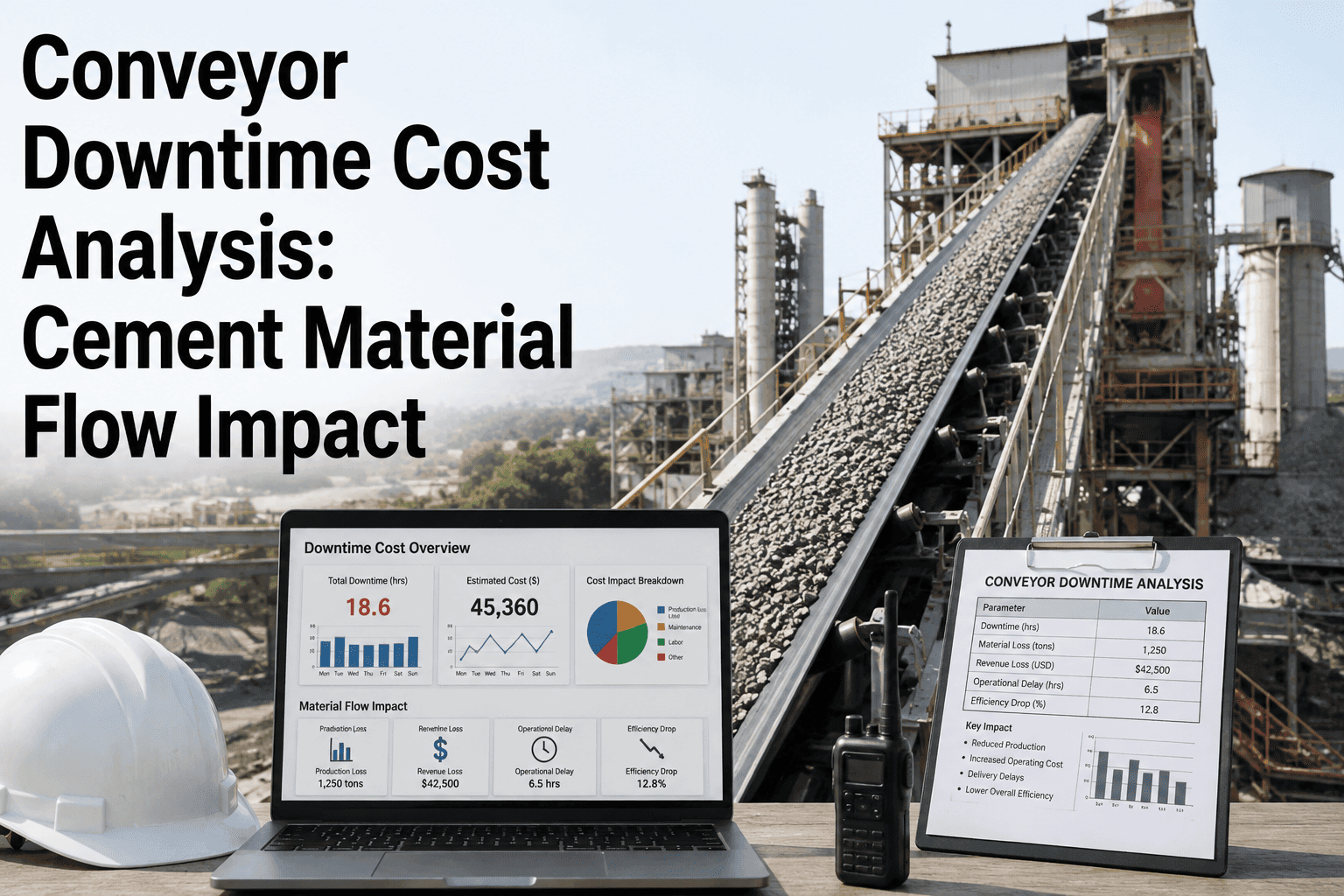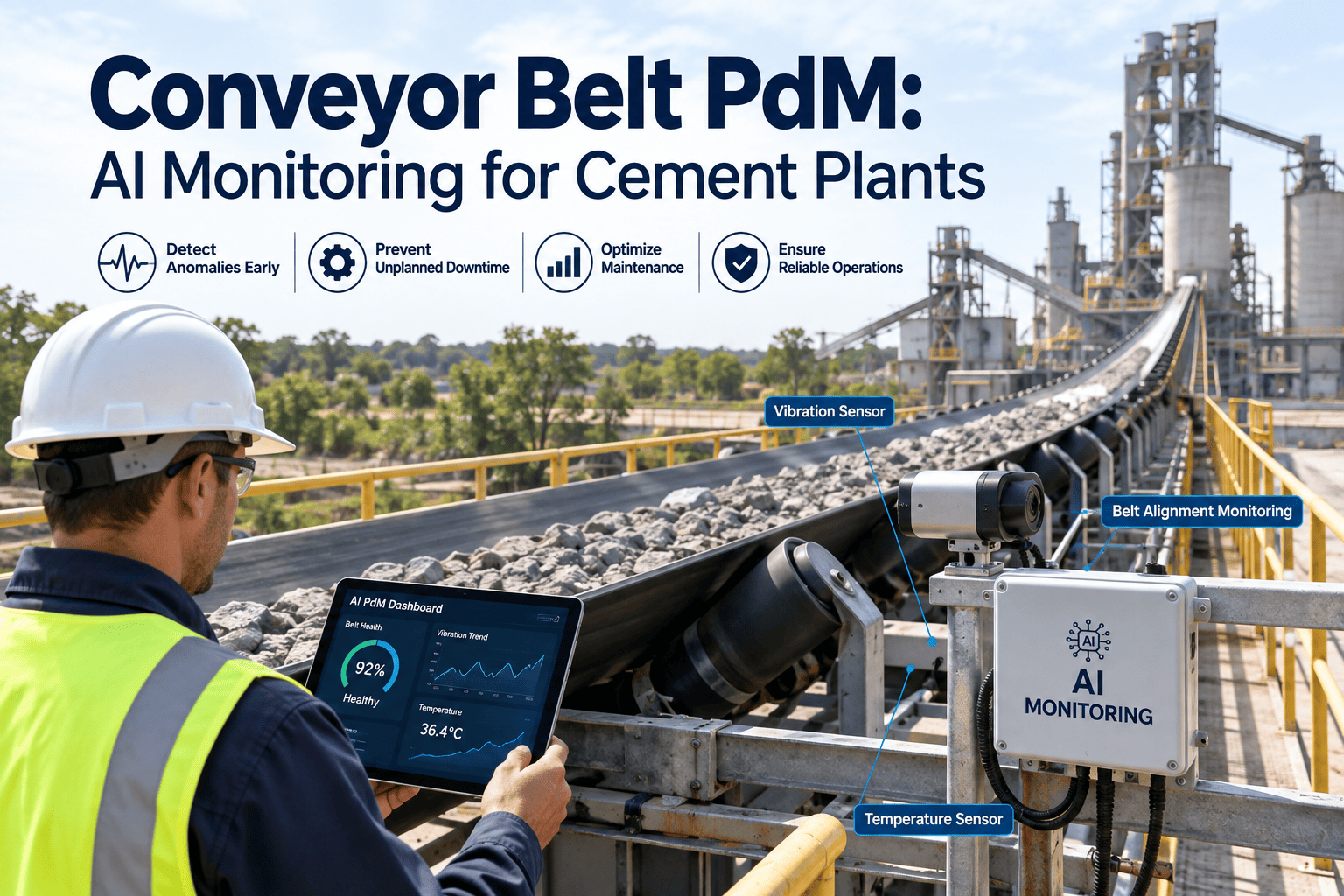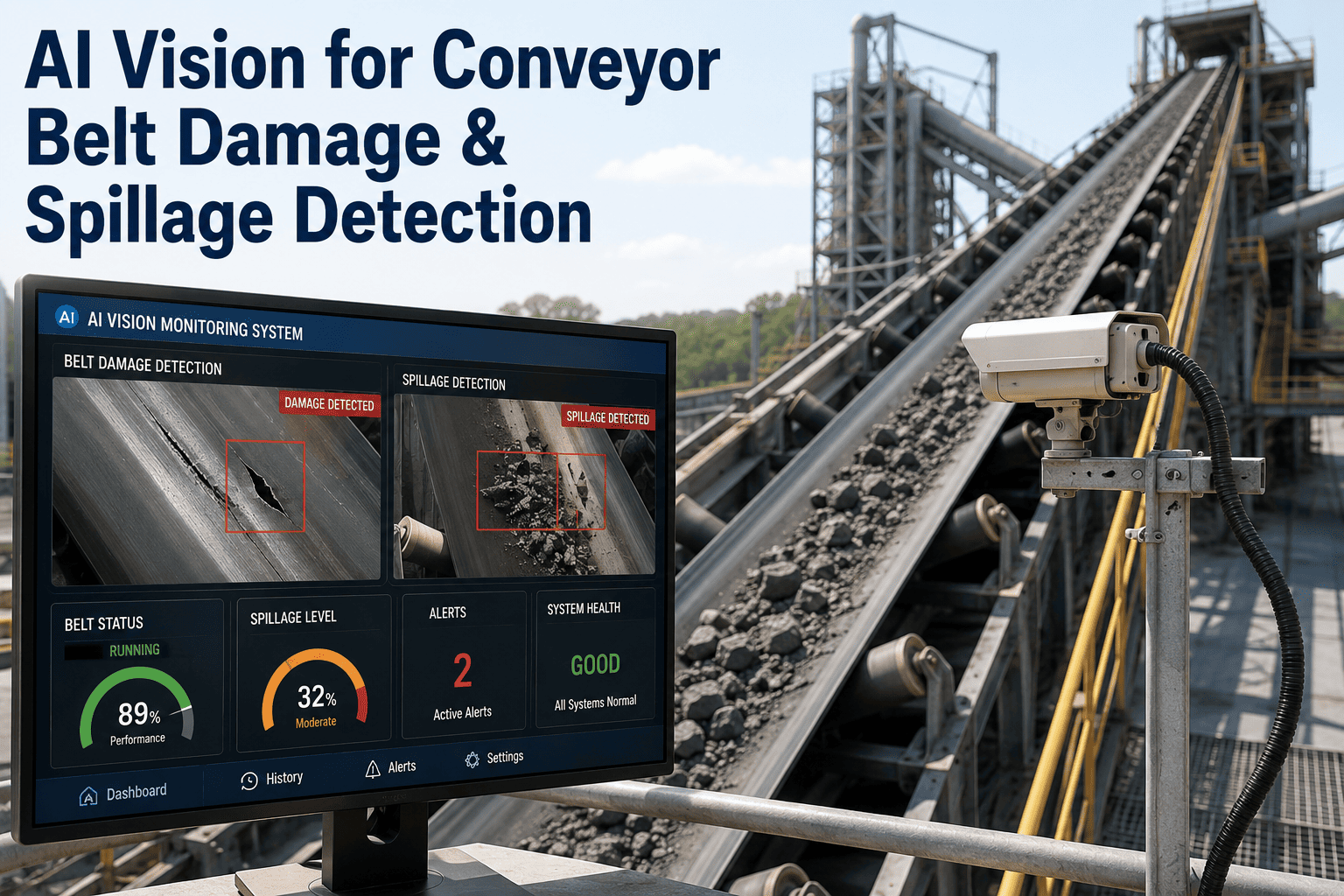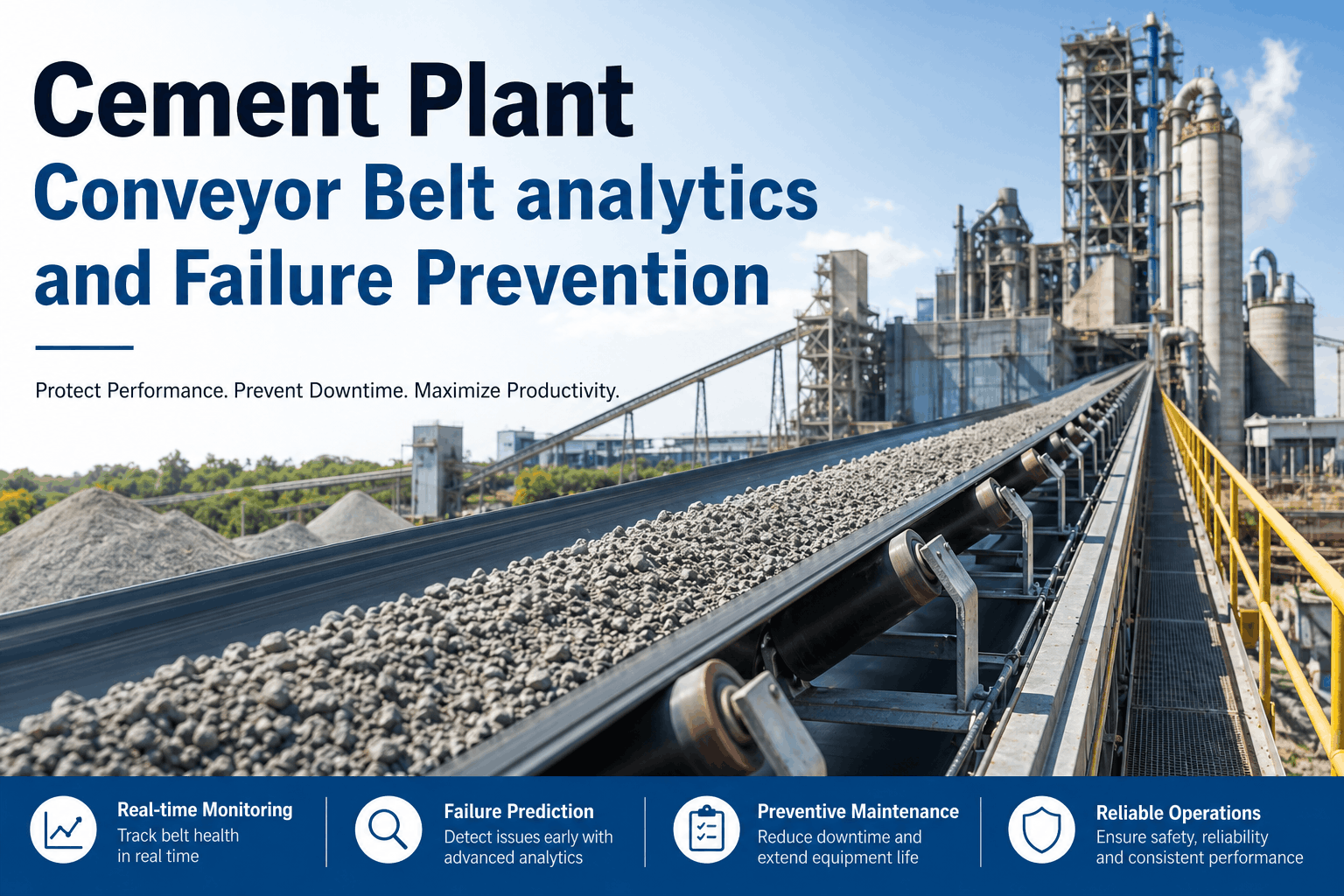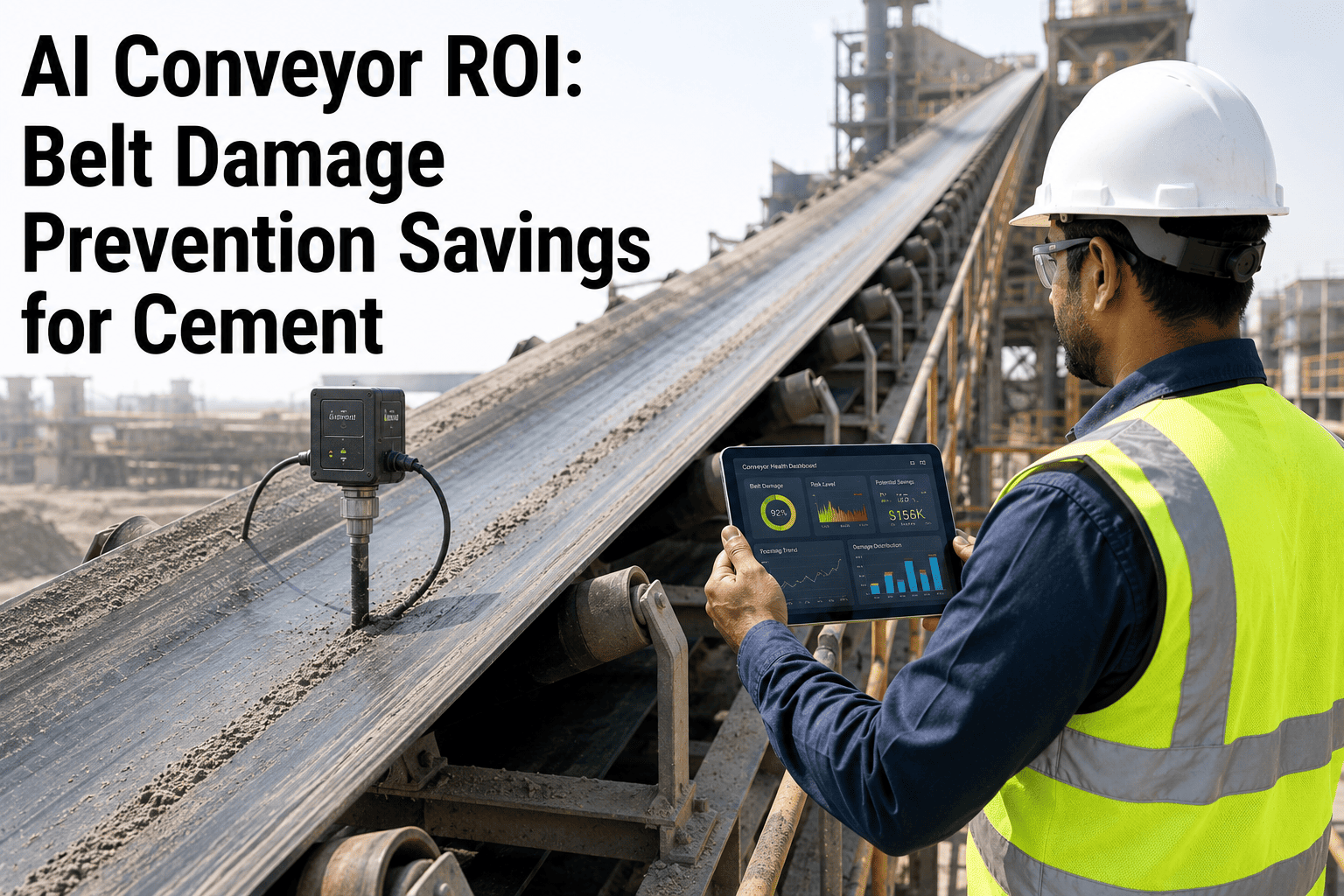
Conveyor belting is one of the largest single capital line items in a cement plant's material handling budget, and a single tear propagation event can turn a belt with years of service life remaining into an emergency replacement costing far more than the AI vision system that would have caught the tear at its first centimetre. The ROI case for AI conveyor monitoring is not a soft productivity argument — it is a direct, calculable comparison between the cost of the monitoring investment and the cost of the belt damage, downtime, and safety incidents it prevents. Book a session with the iFactory reliability team to see a payback calculation built from your specific conveyor fleet and belt replacement history.
AI Vision Conveyor · Investment Justification
AI Conveyor ROI: Calculating the Real Payback of Belt Damage Prevention
Belt damage prevention, unplanned downtime reduction, and safety improvement savings — a complete framework for building the business case for AI vision investment on your cement plant conveyor fleet.
The ROI Formula
Three Savings Categories That Make Up the Complete AI Conveyor Business Case
A credible ROI calculation for AI conveyor monitoring combines three distinct savings categories, each calculated from your plant's own historical data rather than industry averages, because belt damage frequency, downtime cost per hour, and safety incident history vary significantly between plants.
1
Belt Damage Prevention
Cost of belt sections replaced due to tears, gouges, or splice failures that progressed undetected, compared against the cost of early-stage repair when caught at first detection.
2
Unplanned Downtime Reduction
Production hours lost to unplanned conveyor stoppages from belt failure, blocked chutes, or misalignment events, valued at the plant's cost of lost production per hour.
3
Safety Incident Reduction
Reduced exposure to manual conveyor inspection in hazardous areas, and reduced risk of incidents related to undetected mechanical hazards along the conveyor line.
Belt Damage Prevention Detail
How Early Detection Changes the Economics of a Belt Tear
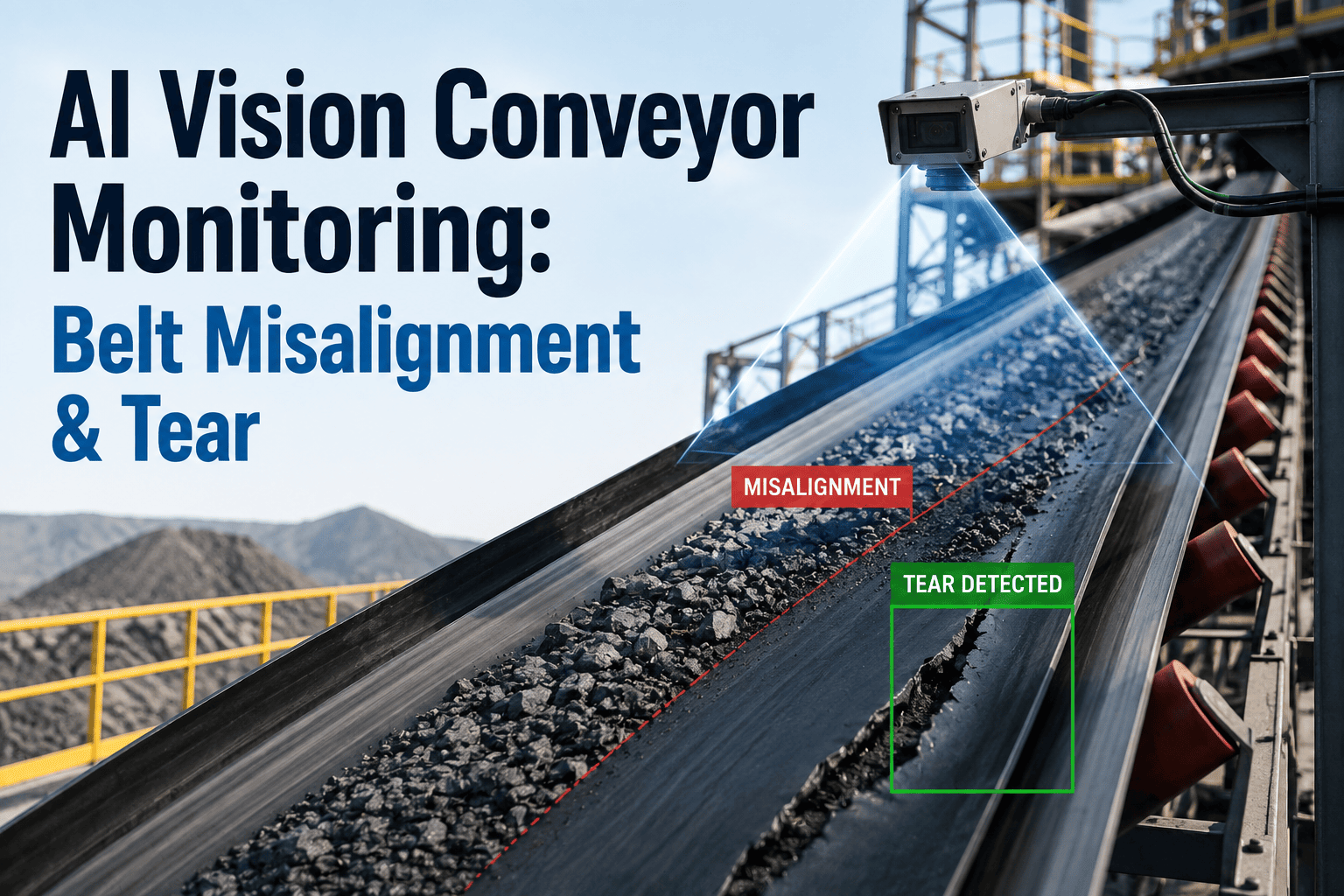
A longitudinal tear in conveyor belting almost always begins as a small, localised defect — a puncture from a tramp material, a stress crack at a splice, or gouging from a misaligned idler — and it propagates along the belt length as it continues to run under load. The cost difference between catching that defect in its first metre and discovering it after it has propagated across a significant length of belt is the core of the belt damage prevention savings case.
Late Detection — Manual Inspection
Defect discovered during periodic walk-down, often after significant propagation
Repair scope: belt section replacement or full re-splice
Unplanned production stoppage required for repair
Risk of secondary damage to idlers, structure, or material spillage
vs
Early Detection — AI Vision
Defect flagged at first frame it appears, with exact location and length logged
Repair scope: localised vulcanised patch or targeted splice repair
Repair scheduled at next planned maintenance window
No secondary damage — defect addressed before propagation begins
Build Your Specific ROI Case
iFactory Builds a Payback Calculation From Your Own Belt Replacement and Downtime History
Industry average figures are a starting point, not a substitute for your own numbers. iFactory's team works with your maintenance records, belt replacement history, and downtime logs to build a payback timeline specific to your conveyor fleet before you commit to a deployment.
Sample Payback Calculation
A Representative ROI Model for a Mid-Sized Cement Plant Conveyor Fleet
The table below illustrates the structure of a payback calculation using representative figures for a plant with a moderate-sized conveyor network. Actual figures for your plant will differ based on conveyor count, belt width and length, current inspection practices, and historical damage frequency — the structure of the calculation is what matters, and iFactory populates it with your actual data during an ROI assessment.
| Cost Category | Without AI Monitoring (Annual) | With AI Monitoring (Annual) |
|---|---|---|
| Belt section replacement | 2–4 major repairs | 0–1 major repairs |
| Unplanned downtime hours | 20–40 hours | 4–8 hours |
| Manual inspection labour | Full walk-down routine | Reduced to targeted spot checks |
| Safety incident exposure | Regular manual inspection in hazard zones | Continuous remote monitoring |
Safety Value
The Safety Case That Complements the Financial Case
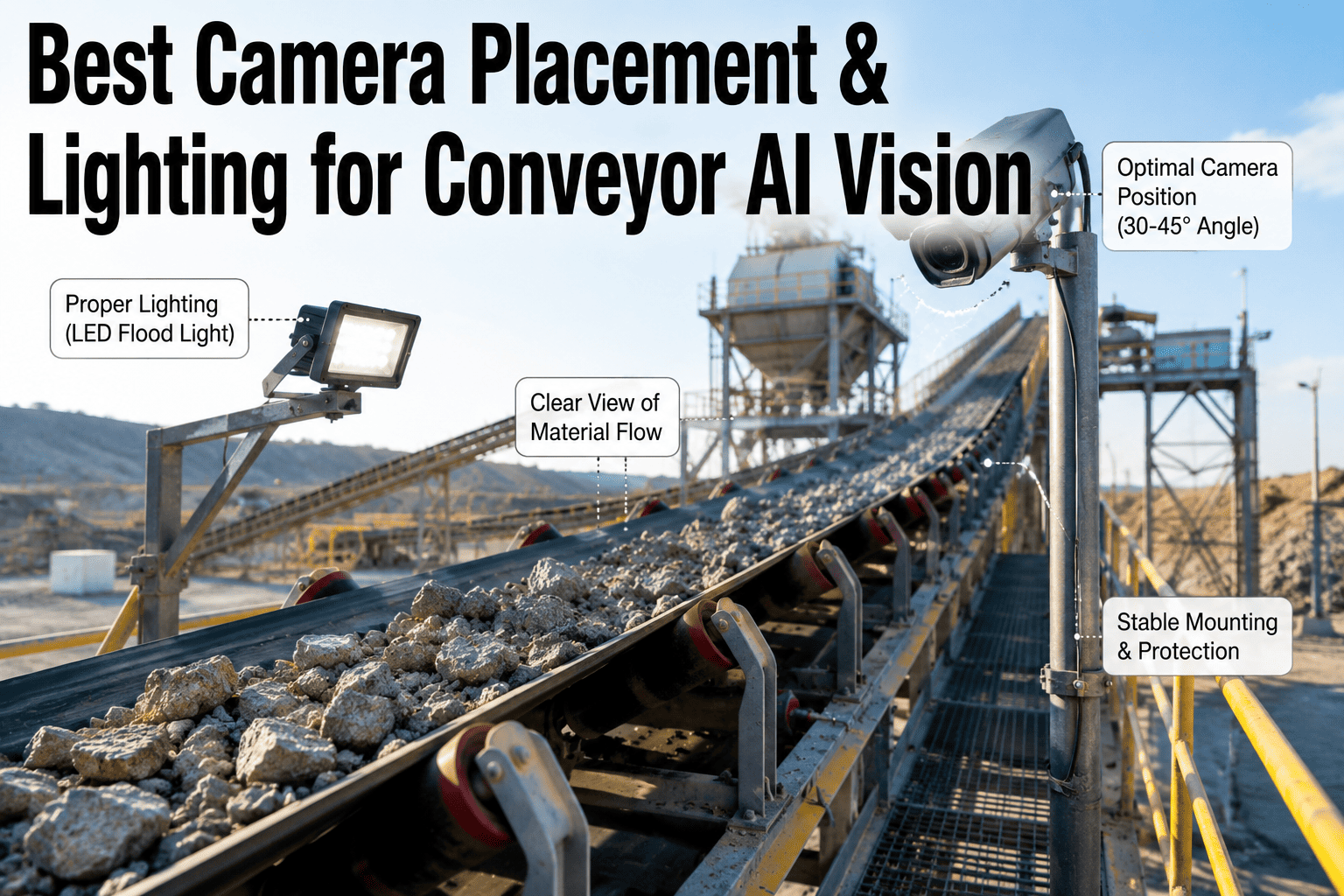
Manual conveyor inspection frequently requires technicians to walk lengthy conveyor galleries, work near moving belt lines, and inspect areas with limited lighting or confined access — all recognised hazard exposures in cement plant safety programmes. AI vision monitoring reduces the frequency of manual inspection required in these areas without reducing the quality or frequency of the inspection itself, since the camera system watches continuously rather than during periodic walk-downs.
Reduced walking-belt exposure
Fewer manual walk-downs required along active conveyor lines reduces exposure to moving equipment hazards during inspection.
Continuous coverage versus periodic checks
A hazard that develops between manual inspection rounds — a torn guard, an exposed pinch point — is caught immediately rather than at the next scheduled walk.
Documented inspection record
Continuous video record provides an auditable inspection history that supports incident investigation and safety compliance documentation.
From the Reliability Floor
When I build an ROI case for AI conveyor monitoring with a plant, the number that convinces the finance team is almost never the average savings figure — it is the worst single event in their own belt replacement history. Every plant I have worked with has at least one story about a belt that tore, ran for another shift or two before anyone noticed the propagation, and turned into an emergency replacement that cost multiples of what a proactive repair would have cost, plus the downtime, plus the expedited freight on replacement belting. That single event, priced out honestly, often justifies the entire monitoring investment on its own. The ongoing savings from catching smaller defects early are real and they add up, but the case that gets budget approved is usually the one built around preventing that one large, memorable, expensive event from happening again.
Fatima Al-Rashidi
Materials Handling Reliability Consultant · 15 years in conveyor systems reliability across cement and bulk materials handling · Former Head of Conveyor Engineering, regional cement manufacturing group
Reliability and Finance Team Questions
AI Conveyor ROI — Frequently Asked
How long does it typically take to see measurable ROI after deploying AI conveyor monitoring?
Payback timeline depends heavily on the conveyor fleet's historical damage frequency and current downtime cost, but plants with a moderate to high frequency of belt damage events typically see the investment pay back within the first six to twelve months, often driven by preventing a single significant belt damage event rather than accumulating many small savings gradually. Plants with a lower historical damage frequency may see a longer payback period based primarily on labour savings from reduced manual inspection and gradual accumulation of smaller catches, though the safety value accrues from day one regardless of the financial payback timeline. Book an ROI assessment with your specific plant data to get a realistic payback estimate.
What data do we need to provide for iFactory to build an accurate ROI calculation for our specific plant?
The most useful inputs are your belt replacement and repair history over the past two to three years including approximate cost per event, any recorded unplanned conveyor downtime events with duration, your current manual inspection schedule and labour allocation for conveyor walk-downs, and your plant's cost of lost production per hour if available. Not all plants track every one of these precisely, and iFactory's assessment team can work with partial data, using reasonable industry-informed estimates for any gaps while being transparent about which figures are plant-specific and which are estimated. Contact our support team to discuss what data you currently have available for an assessment.
Does the ROI calculation account for the ongoing cost of the AI monitoring system, or only the upfront investment?
A complete and honest ROI calculation accounts for the full cost of ownership, including any ongoing subscription, camera maintenance, and system support costs, not just the initial deployment cost, since presenting only the upfront number would overstate the payback speed and understate the multi-year value comparison. iFactory's ROI assessments present a multi-year total cost of ownership against the multi-year projected savings, so the business case presented to finance decision-makers reflects the true economics rather than a partial picture that looks better than the ongoing reality. Book a session with our team to review a full multi-year cost of ownership model.
How does AI conveyor monitoring ROI compare to other predictive maintenance investments we might be considering?
Conveyor belt damage tends to produce some of the highest single-event cost consequences of any material handling asset class in a cement plant, because belting is expensive per linear metre, replacement requires extended downtime for splicing or full section replacement, and damage frequently escalates quickly once it begins, which is different from many rotating equipment failure modes that progress more slowly and predictably. This does not mean conveyor monitoring should replace other predictive maintenance investments, but plants often find the conveyor business case compelling on a standalone basis given the severity of the worst-case damage scenario it prevents. Reach out to our support team to discuss how conveyor monitoring fits within a broader predictive maintenance investment roadmap.
Can we start with a pilot deployment on a limited number of conveyors before committing to a plant-wide rollout?
Yes, a pilot deployment on your highest-risk or highest-consequence conveyors — typically those with the longest length, highest replacement cost, or worst historical damage frequency — is a common and reasonable approach to validating the ROI case with real data from your own plant before committing to a full fleet rollout. iFactory's deployment team can help identify which conveyors in your fleet represent the strongest pilot candidates based on a combination of consequence and current risk factors, and the data gathered during a pilot period directly informs the business case for expansion to the remaining conveyor fleet. Book a session with our deployment team to discuss a pilot scope for your highest-priority conveyors.
The Belt Tear That Justified the Investment Already Happened. Don't Wait for the Next One.
Build Your Specific ROI Case for AI Conveyor Monitoring
iFactory works with your belt replacement history, downtime records, and conveyor fleet configuration to build a payback timeline specific to your plant — not an industry average — before you commit to a deployment.