At 2:47 AM on a Tuesday shift change, the operator in the central control room of a 5,000 tpd cement plant sees the coal mill outlet temperature spike past 95°C while the CO reading jumps from zero to 1,200 ppm. Thirty seconds earlier, a bearing vibration sensor on the main conveyor belt crossed the 11 mm/s threshold. In a typical plant, these are separate alarms on different screens — or no alarms at all. By the time anyone connects the dots, a coal mill fire has flashover or a conveyor belt is burning, costing $2–4 million in downtime, repair, and lost production. Cement plants burn fuel, convey hot material, and generate explosive coal dust continuously. The question isn't whether a fire risk exists — it's whether you'll detect it before it becomes an emergency.
Detect, Prevent, and Respond to Cement Plant Fires Before They Cost You Millions
iFactory unifies coal mill fire prevention, conveyor belt thermal detection, silo monitoring, and emergency response into a single, on-premise AI platform — no cloud, no data leaving your plant network.
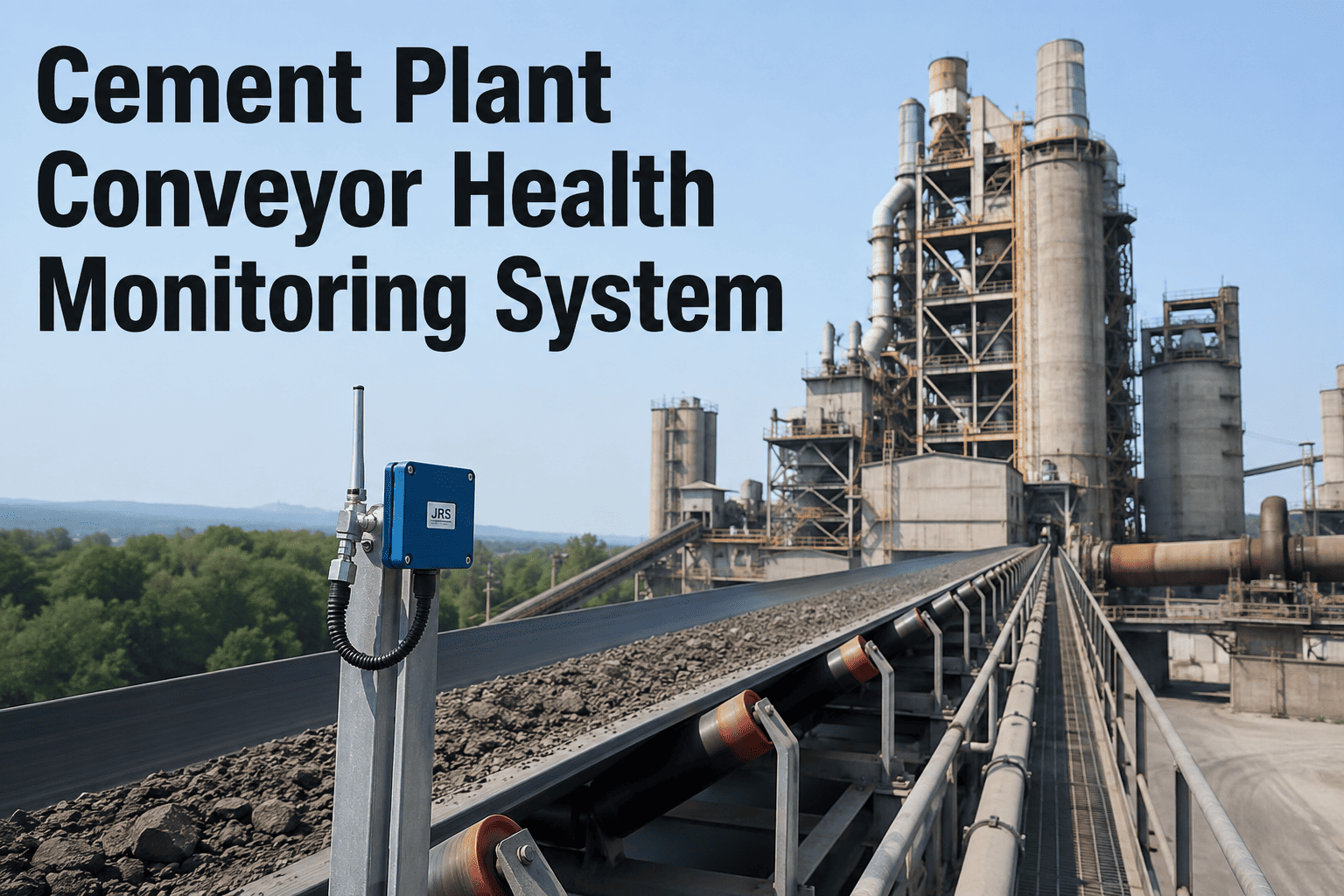
Coal mills, conveyor belts, silos, baghouses, and hot-air ducts — every zone in a cement plant has a distinct fire profile. Coal mill fires start when fine dust accumulates and the mill outlet temperature drifts above 90°C with low oxygen. Conveyor belt fires ignite from bearing overheating or material hot spots. Silo fires smolder for hours before anyone sees smoke. Traditional safety systems rely on single-point threshold alarms that miss the early, compound signals. iFactory connects every sensor — temperature, CO, vibration, pressure, current draw — into one AI that learns the plant's normal thermal patterns and flags the first deviation. It's the only platform purpose-built for cement plant fire safety that runs entirely on your plant network, with no data leaving the facility.
Complete Fire Safety Coverage Across Every Plant Zone
From raw mill to clinker cooler to finished cement silo, iFactory monitors, predicts, and alerts on fire risk with zone-specific models. Each capability is delivered as a pre-trained module that deploys in days, not months.
Mill Outlet Temperature & CO Monitoring
Continuously tracks mill outlet temperature, CO concentration, and differential pressure. Detects smoldering dust pockets before flashover. Triggers N2 inerting sequence when temperature exceeds 90°C with CO above 1,000 ppm.
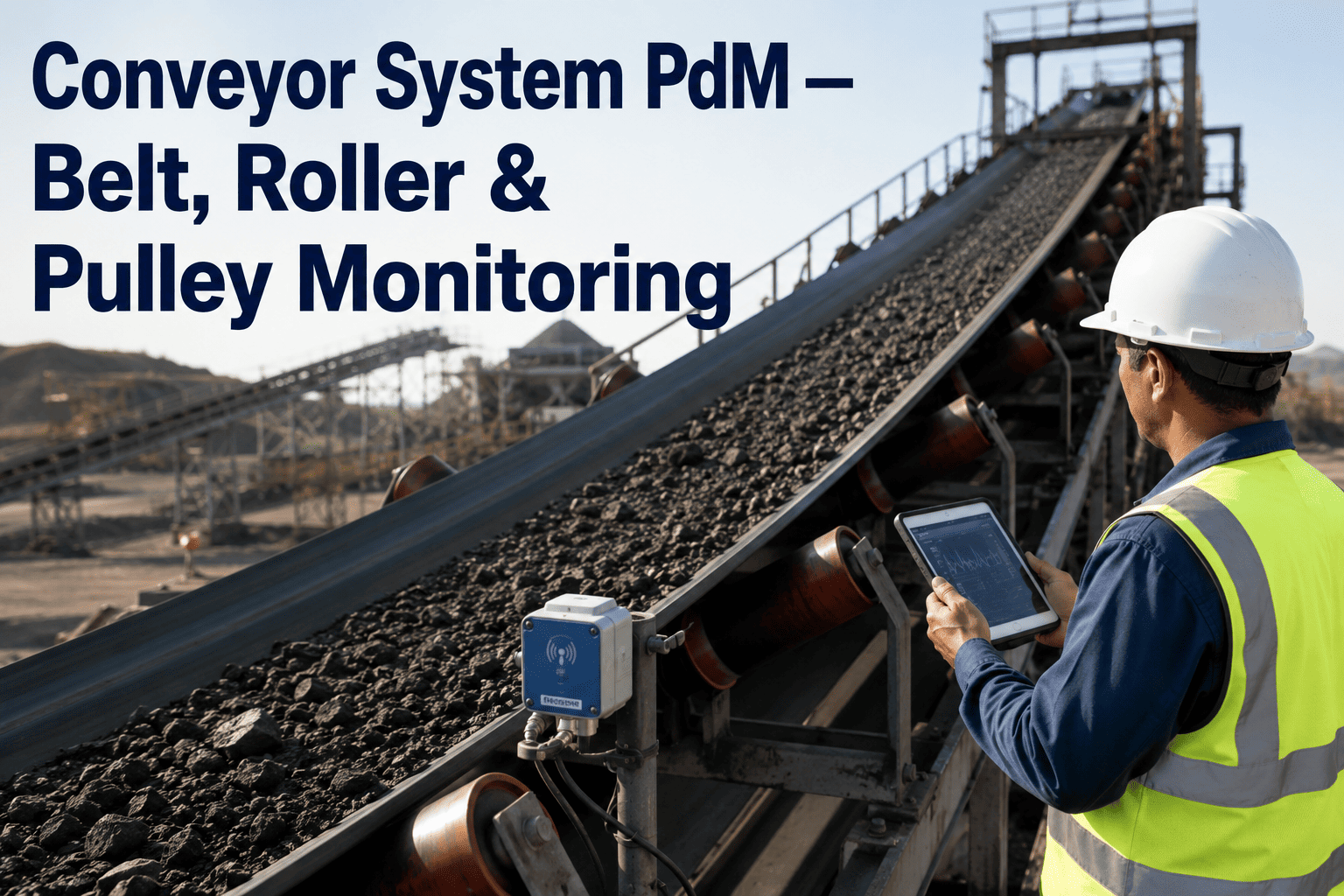
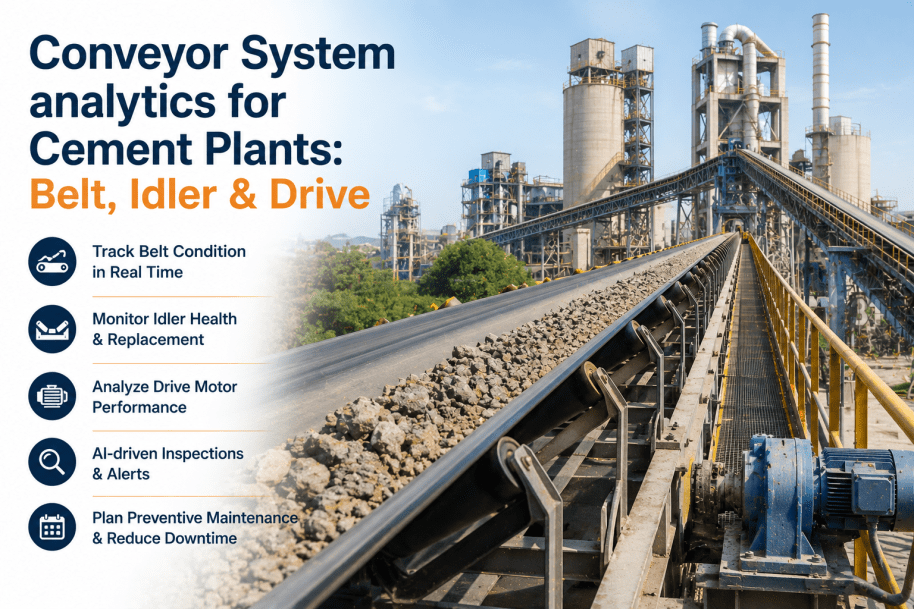
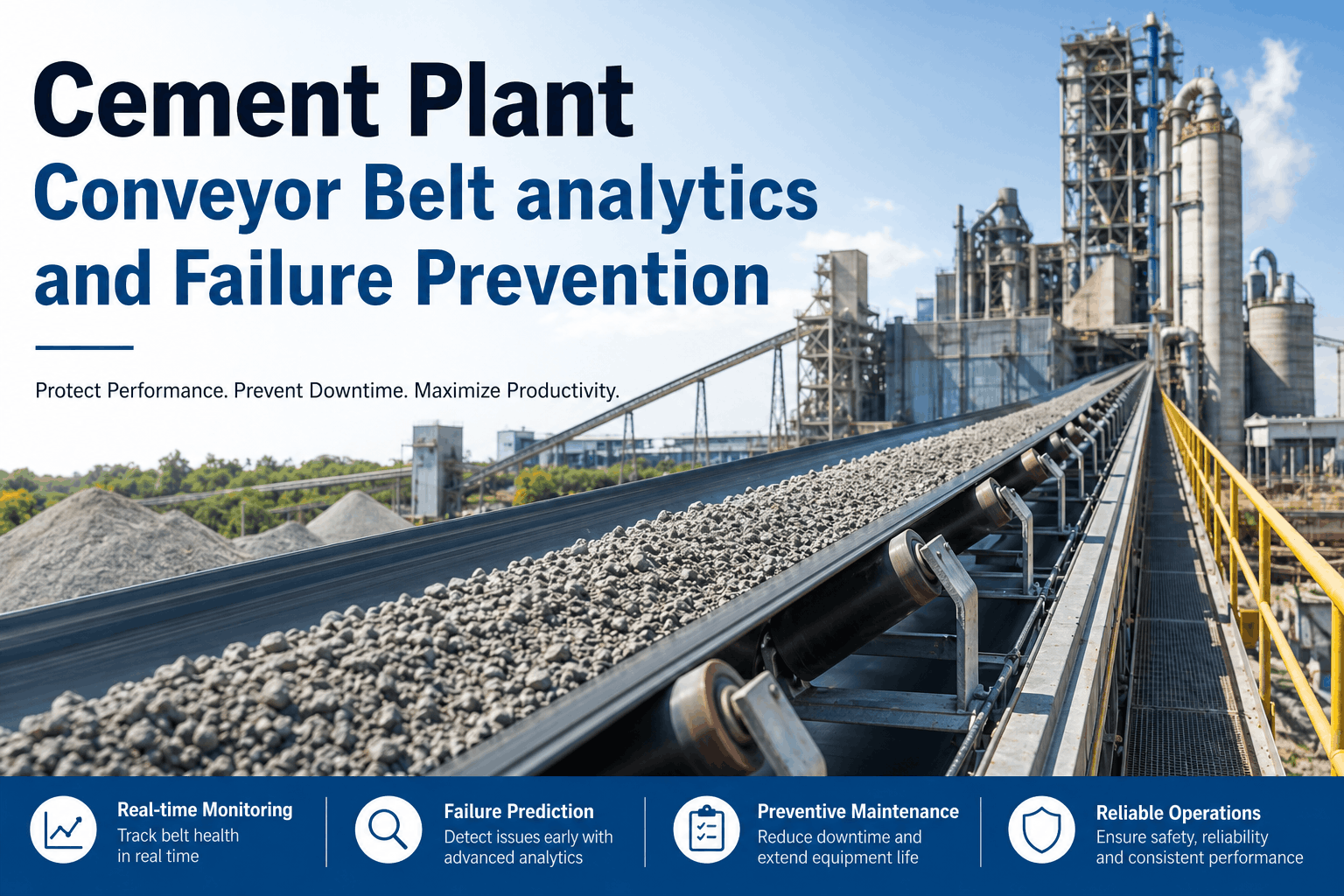
Belt Thermal Detection & Bearing Vibration
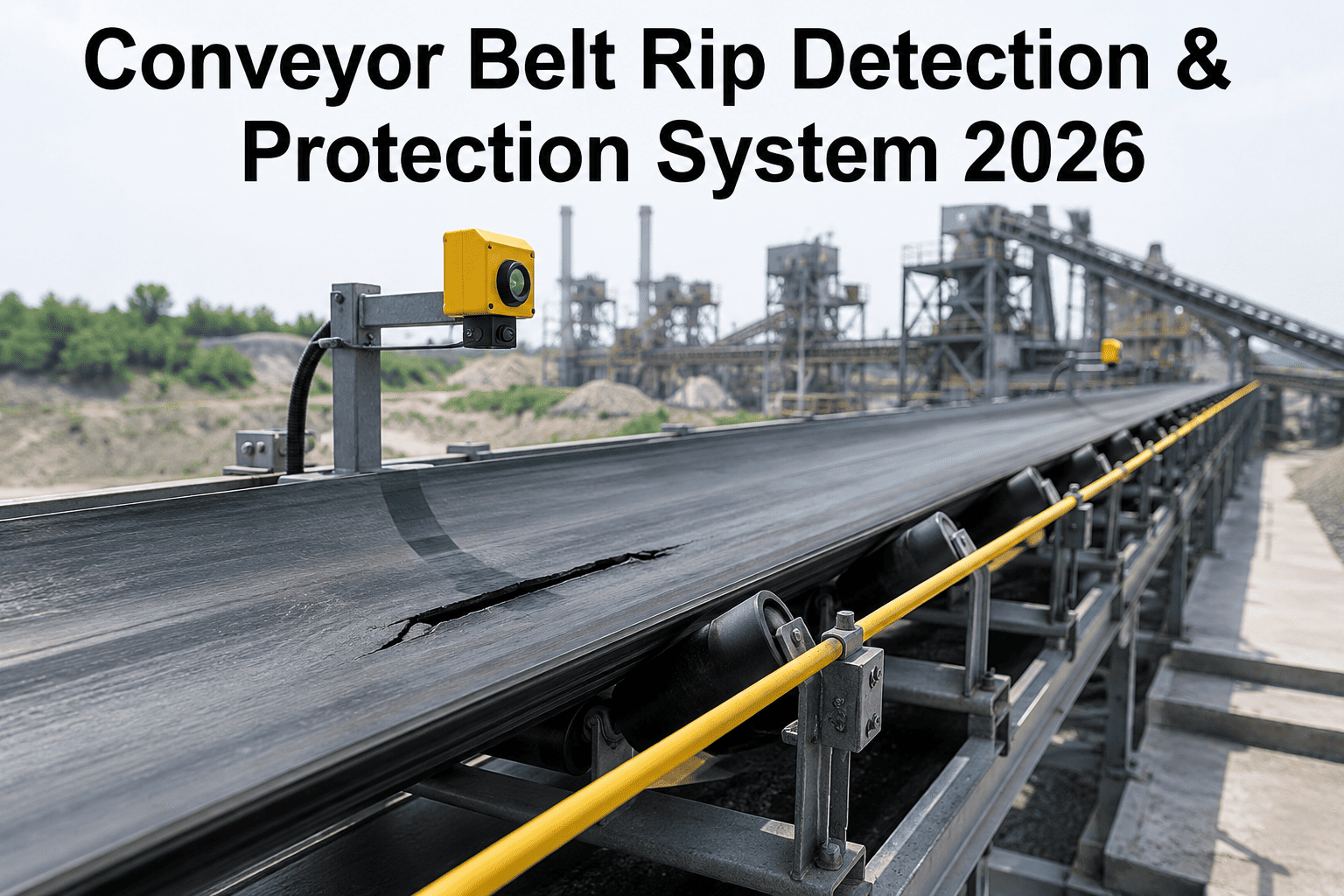
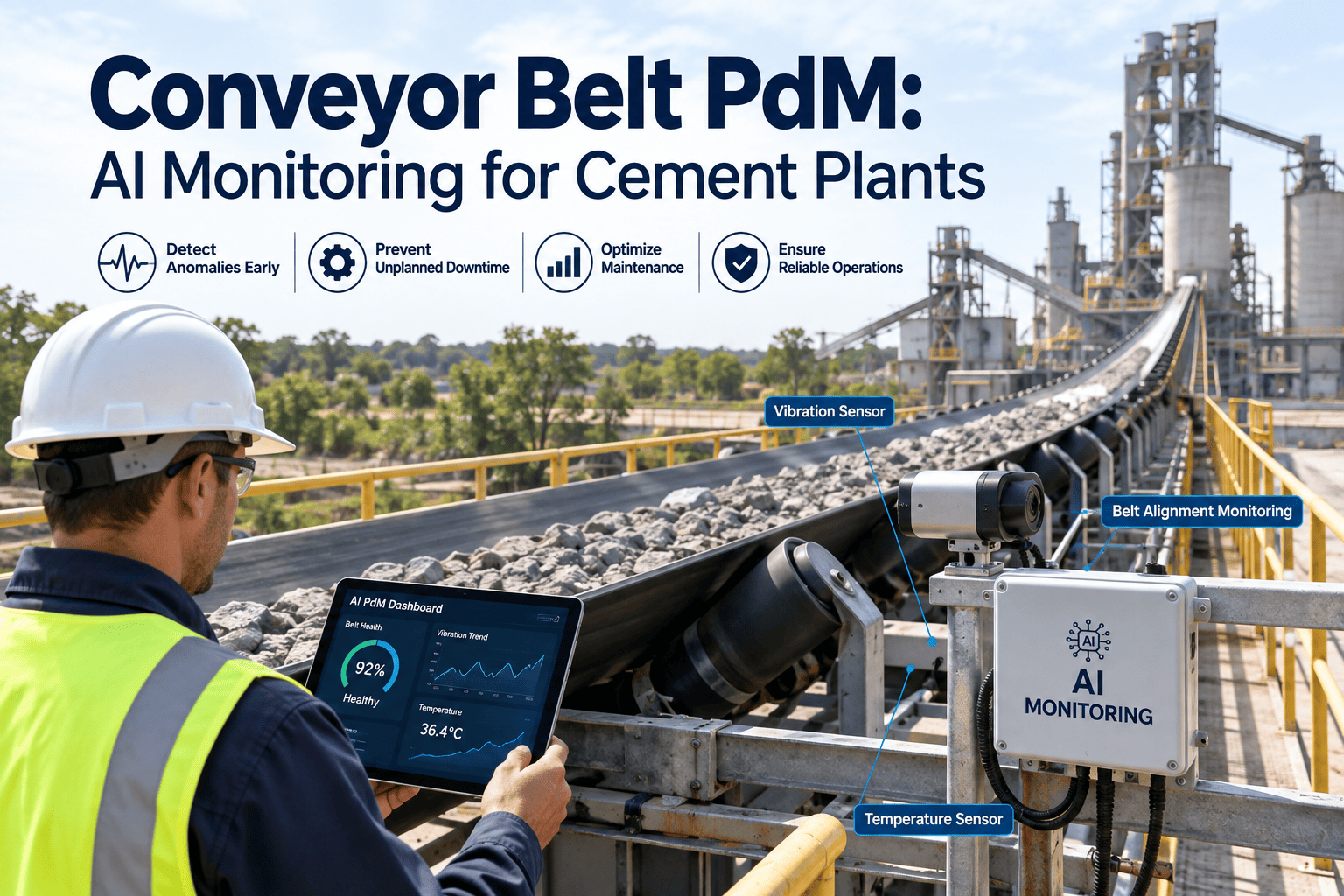
Fuses thermal camera data with bearing vibration sensors every 15 meters along belt length. Identifies hot rollers, seized bearings, and material hot spots before they ignite the belt rubber. Alerts within seconds of crossing 70°C surface temperature.
Silo Temperature Gradient & Smoldering Detection
Analyzes temperature gradients across silo walls and internal thermocouple arrays. Detects smoldering cement or fuel dust pockets that can burn for hours undetected. Triggers CO monitoring and ventilation control before conditions reach explosive limits.
Hot-Air Duct & Preheater Fire Risk
Monitors duct temperature, draft pressure, and O2 levels in preheater towers and hot-air ducts. Predicts carbon monoxide buildup from incomplete combustion. Alerts operators to adjust fuel-air ratio before backdraft fires form.
Motor Control Center & Cable Tray Monitoring
Deploys thermal sensors on MCC cabinets and cable trays near kiln drives, crushers, and baghouses. Detects overloaded circuits, loose connections, and insulation breakdown before they arc. Reduces electrical fire risk by 80% in covered zones.
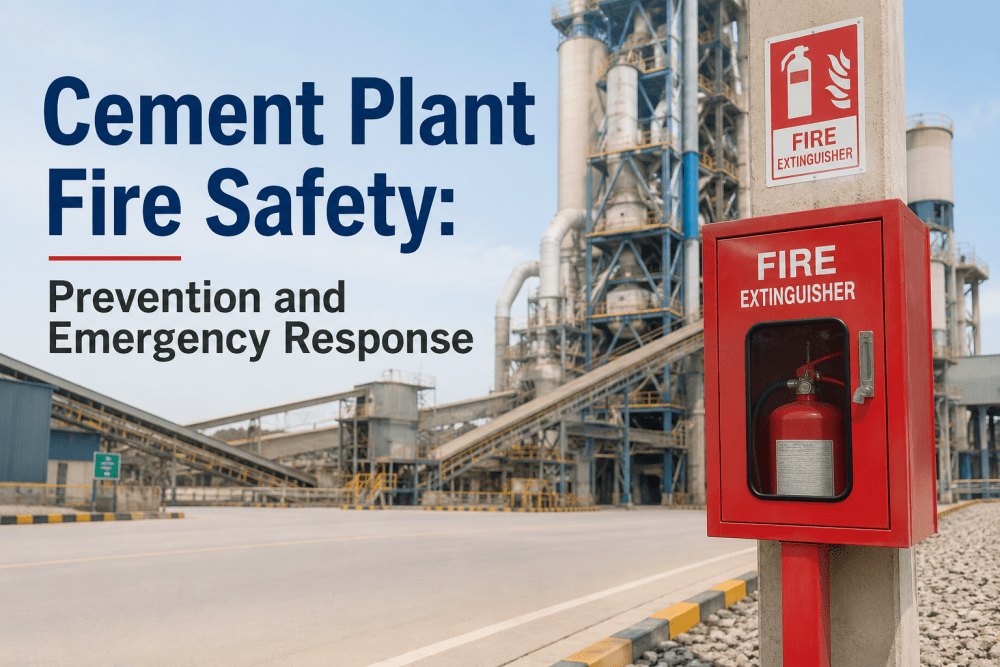
Emergency Response Automation & Evacuation
Integrates with plant fire alarm panels, deluge systems, and access control. Automatically sequences nitrogen purge, isolation damper closure, and operator evacuation routes. Logs every event for NFPA 72 compliance and post-incident analysis.
From Sensor to Action in Four Steps
iFactory ingests data from every fire safety sensor you already have — and adds AI where gaps exist — to create a unified detection and response layer that runs 24/7.
Ingest All Sensor Data
Connect thermal cameras, thermocouples, CO detectors, vibration sensors, and existing PLC/SCADA signals — no hardware replacement needed.
Train Zone-Specific Models
iFactory's AI learns the normal thermal and gas profile for each zone — coal mill, conveyor, silo, duct — in less than two weeks of plant data.
Detect & Validate Anomalies
Cross-references multiple signals to confirm fire risk. A temperature spike alone won't trigger an alarm — it must match the pattern of a developing fire, not a routine burner swing.
Execute & Log Response
Automatically initiates suppression sequences, sends alerts to operators and fire response teams, and logs the full event timeline for compliance and insurance reporting.
Three Fire Scenarios That Shut Down Cement Plants
Every cement plant has experienced at least one of these. The difference between a near-miss and a million-dollar loss is detection speed.
Coal Mill Flashover
Fine coal dust accumulates in the mill separator. Outlet temperature drifts to 95°C with CO at 1,500 ppm. A smoldering pocket ignites, flashover occurs in under 40 seconds. Damage: mill housing, classifier, and bag filter destroyed. Downtime: 6–8 weeks.
Conveyor Belt Fire
A seized bearing on a return idler heats the belt rubber to 200°C. The belt ignites, flames travel 150 meters in 8 minutes. Fire damages structure, electrical cables, and nearby equipment. Downtime: 3–4 weeks.
Silo Smoldering Event
Hot cement clinker stored in a silo slowly oxidizes. Temperature rises 2°C per hour for 18 hours before anyone notices. By then, the silo wall is at 120°C and internal pressure is building. Emergency venting required. Downtime: 2 weeks for cooling and inspection.
What iFactory Fire Safety Delivers in the First Year
Measured across 14 cement plant deployments. Your numbers will vary by plant size and existing detection coverage.
Fire safety in a cement plant isn't about buying more sensors — it's about connecting the ones you have with AI that understands fire. Book a 30-min walkthrough and see how iFactory detects fires before they cost you a shift.
Fire Safety in Cement Plants: What You Need to Know
Stop Fighting Fires. Start Preventing Them.
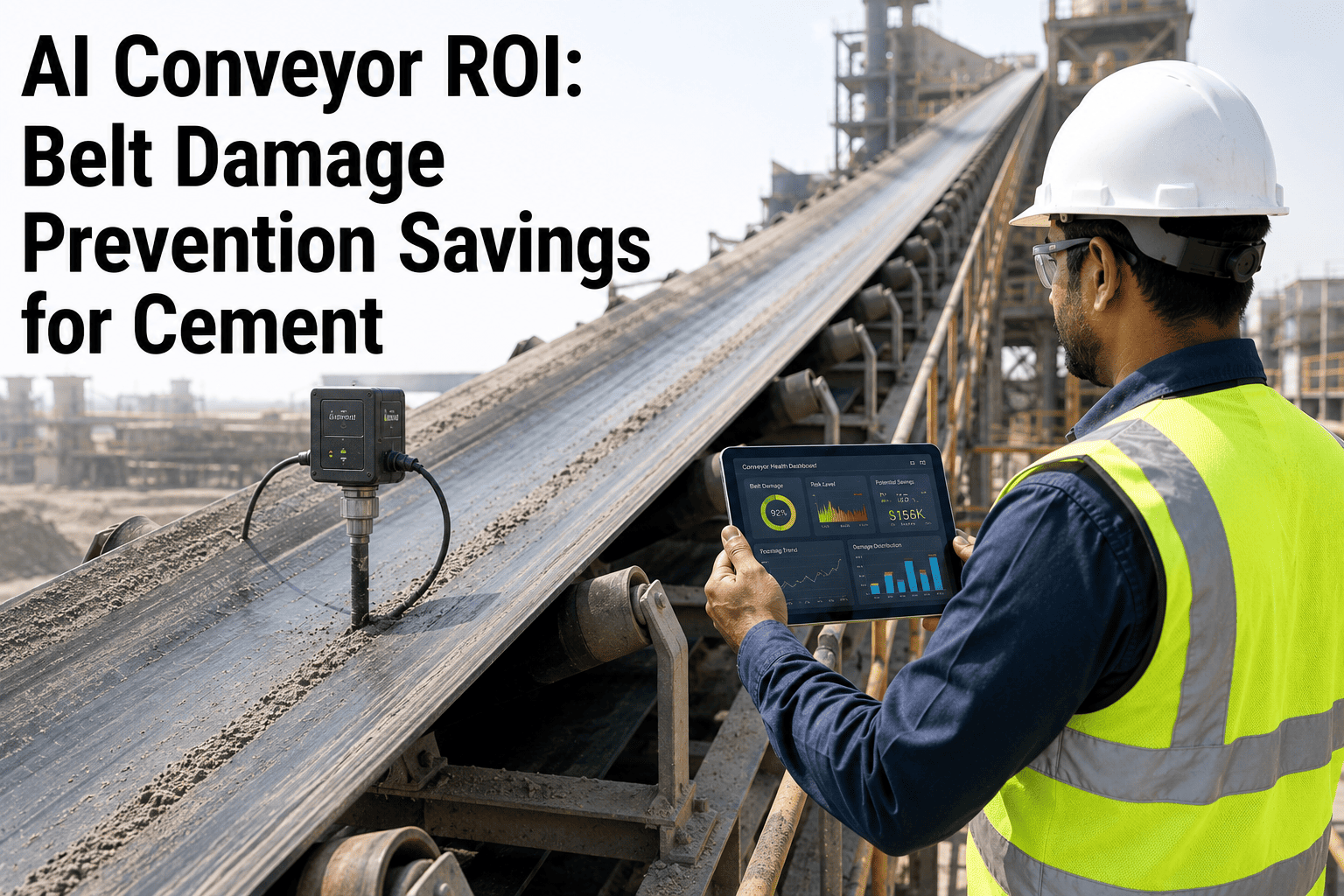
One cement plant using iFactory avoided $3.2M in fire damage in its first six months. See what your plant is missing. Book a 30-minute demo with our cement team.