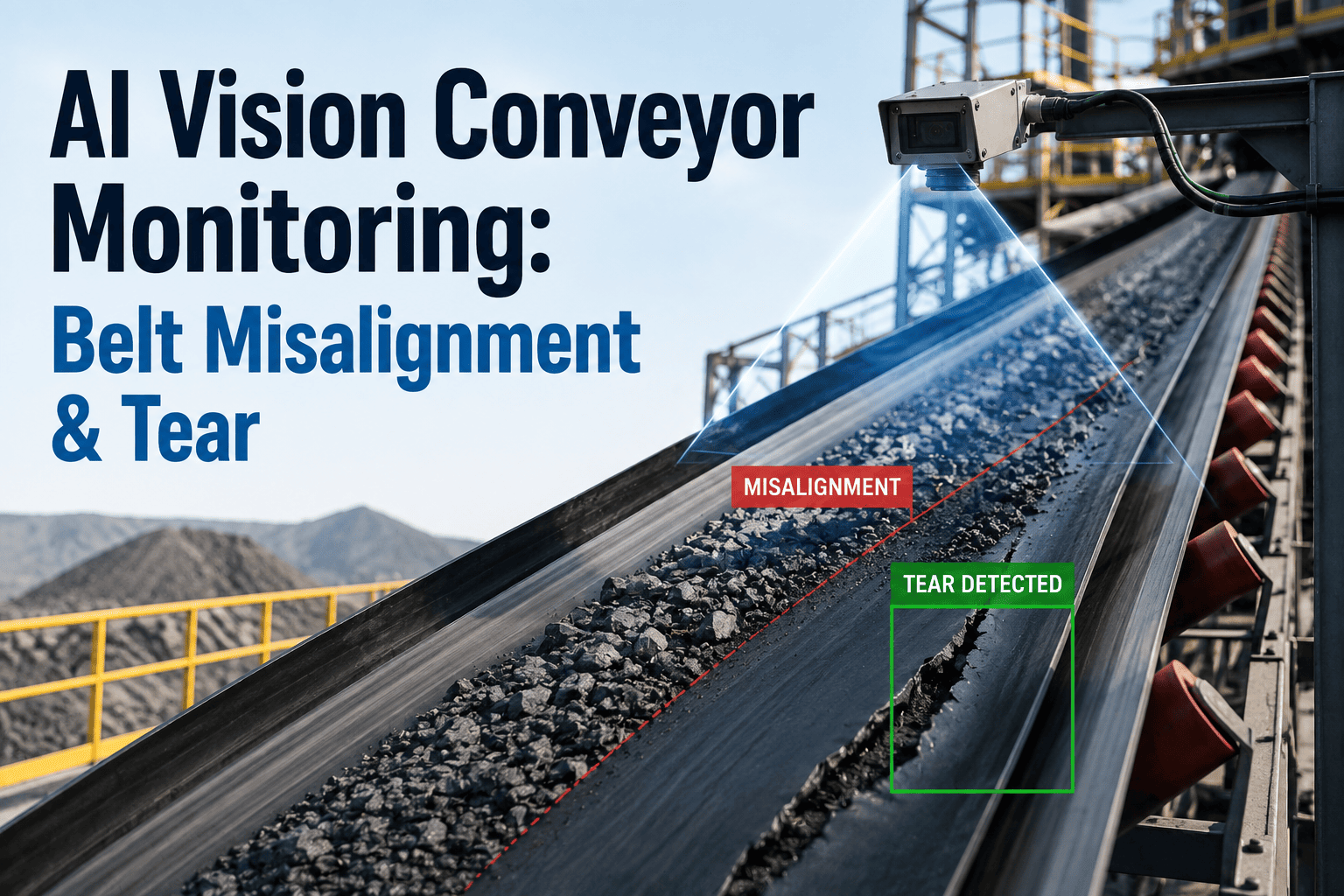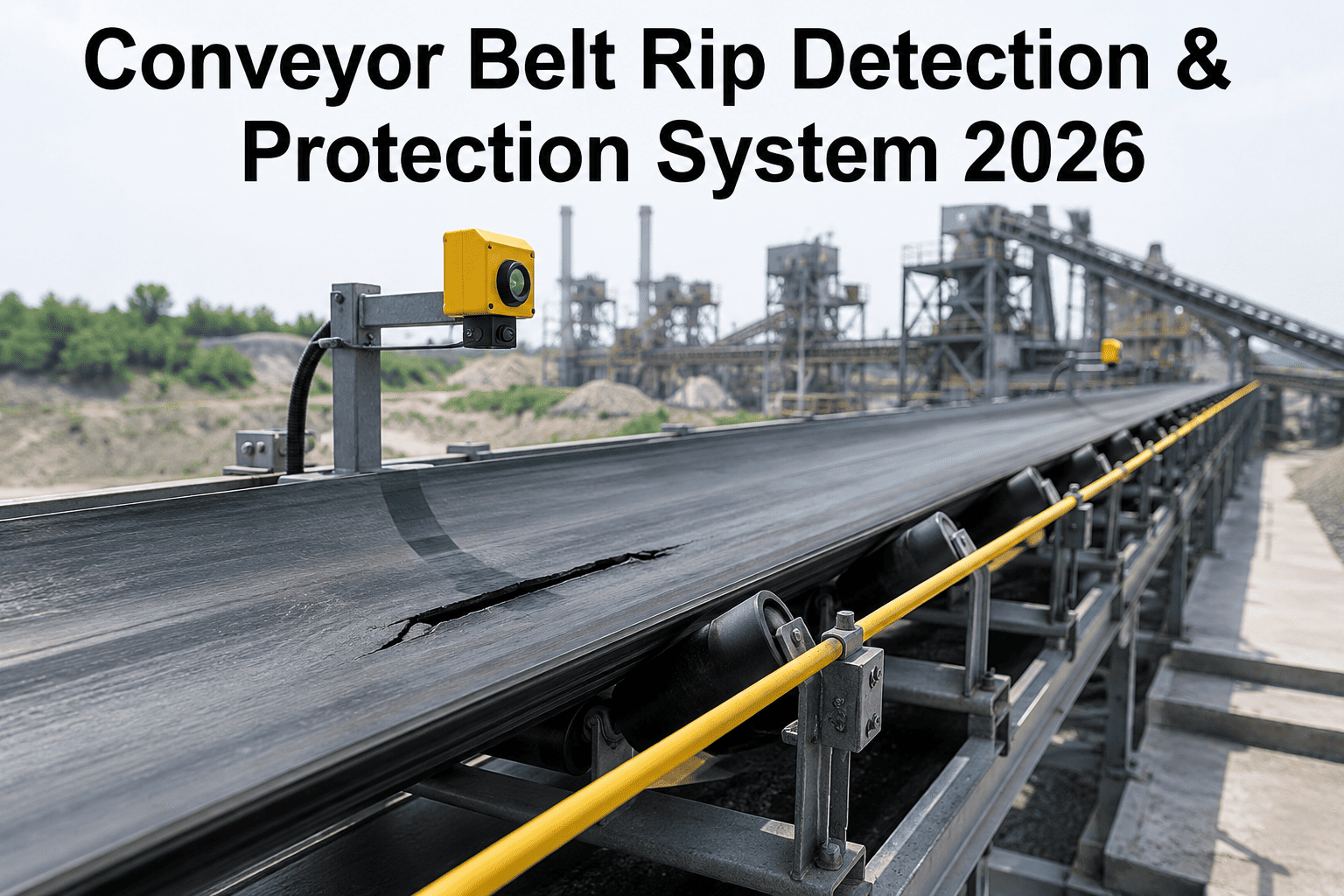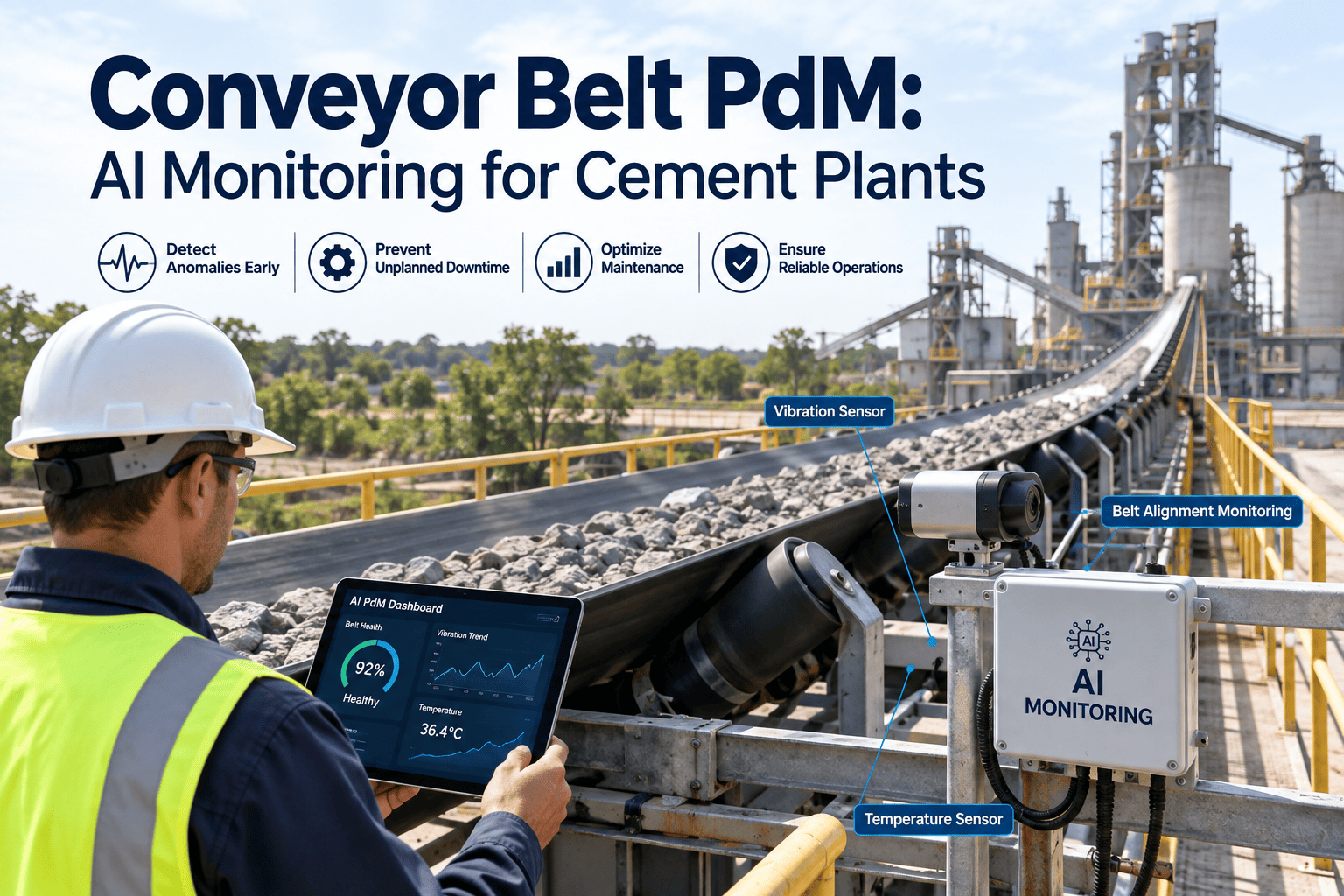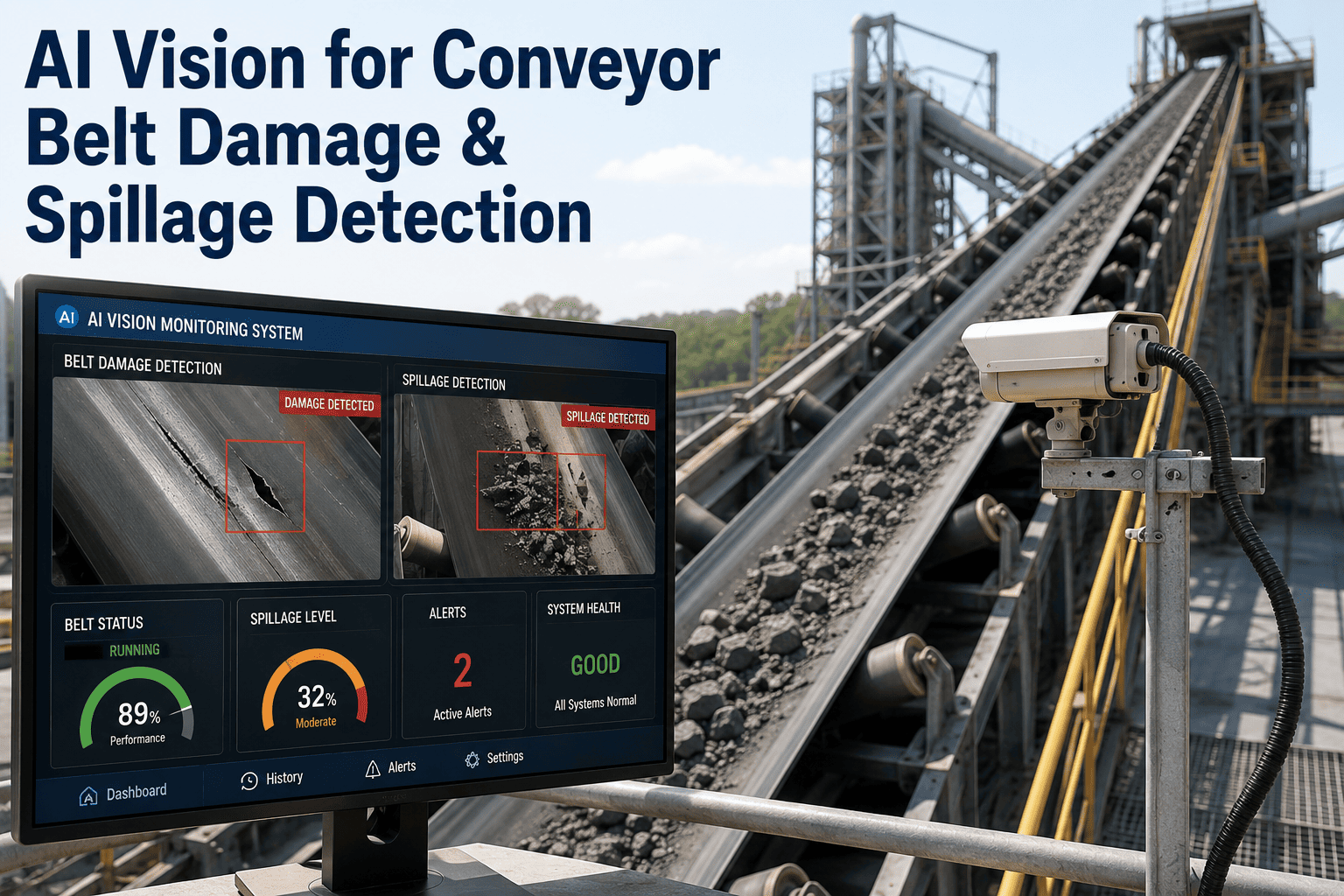
A conveyor belt rarely fails without warning. Splice joints lift and separate gradually, belts drift off-centre in small increments long before they scrape a frame, and material spillage at a transfer point usually starts as a thin trail before it becomes a housekeeping and safety hazard. The problem is that a weekly walk-around inspection samples a belt's condition once, while the belt itself is running continuously, twenty-four hours a day. AI vision cameras mounted along critical conveyor runs watch splice condition, belt tracking, and spillage patterns every minute the line is moving, catching the gradual signs that a scheduled walk-around inspection at ifactoryapp support would only see once a week at best.
Watch Every Splice, Every Belt Edge, Every Transfer Point — All the Time
iFactory's AI vision cameras monitor conveyor belt surface condition, splice integrity, and material spillage continuously, catching the gradual warning signs that lead to belt tears and unplanned line stoppages days before they happen.
Five Failure Modes That Account for Nearly Every Unplanned Stop
Belt mistracking from uneven loading, splice joint deterioration from age and thermal cycling, roller seizure from dust-contaminated bearings, drive motor degradation from heat and contamination, and surface wear from abrasive impact together explain the overwhelming majority of conveyor outages in a cement plant. Every one of them produces a visible warning sign well before it produces a shutdown.
Belt Mistracking
Uneven loading and idler misalignment push the belt toward one side, producing asymmetric edge wear, one-sided spillage, and eventually scraping against the frame structure.
Splice Joint Deterioration
Splice joints are the single highest-risk point on any belt. Edge lifting, visible elongation, and fastener pull-through are early signs of a joint approaching separation.
Roller and Idler Seizure
Dust-contaminated bearings cause idlers to seize or run rough, generating localised friction heat and accelerating belt wear at the contact point.
Material Spillage and Carryback
Spillage at chute lips and transfer points, and carryback on the return-side belt, both signal skirt seal gaps or scraper wear before they create a housekeeping hazard.
Surface Wear and Impact Damage
Oversized rocks and tramp metal cause impact damage at loading points, while general abrasion thins the belt gradually until it reaches a sudden tear.
All Five Are Visible Early
Every one of these failure modes develops gradually and shows a visible sign hours or days ahead of failure — the challenge has always been having a camera watching at the right moment, continuously.
Where the Cameras Watch, and What They're Trained to Catch
| Conveyor Zone | Primary Risk | Vision Detection Focus | Typical Warning Lead Time |
|---|---|---|---|
| Belt splice joints | Sudden catastrophic belt snap | Edge lift, elongation, fastener protrusion | Days to weeks |
| Belt edges (full run) | Mistracking, frame contact damage | Lateral position and edge wear profile | Hours to days |
| Transfer and chute points | Material spillage, safety hazard | Accumulation pattern in camera frame | Real time |
| Return-side belt | Carryback, drag, accelerated wear | Contrast analysis of underside material | Hours to days |
| Loading and impact zones | Tramp metal, oversized rock damage | Object detection on belt surface | Real time |
Find Out Which Belt Is Drifting Toward Failure
Our engineers can walk through your current conveyor layout and inspection routine, and show you exactly where continuous vision monitoring would have caught your last unplanned stop.
How Continuous Vision Monitoring Runs on a Live Conveyor
This isn't a one-time inspection tool. It's a standing watch that runs for as long as the belt does, building a condition history that a single weekly walk-around could never produce.
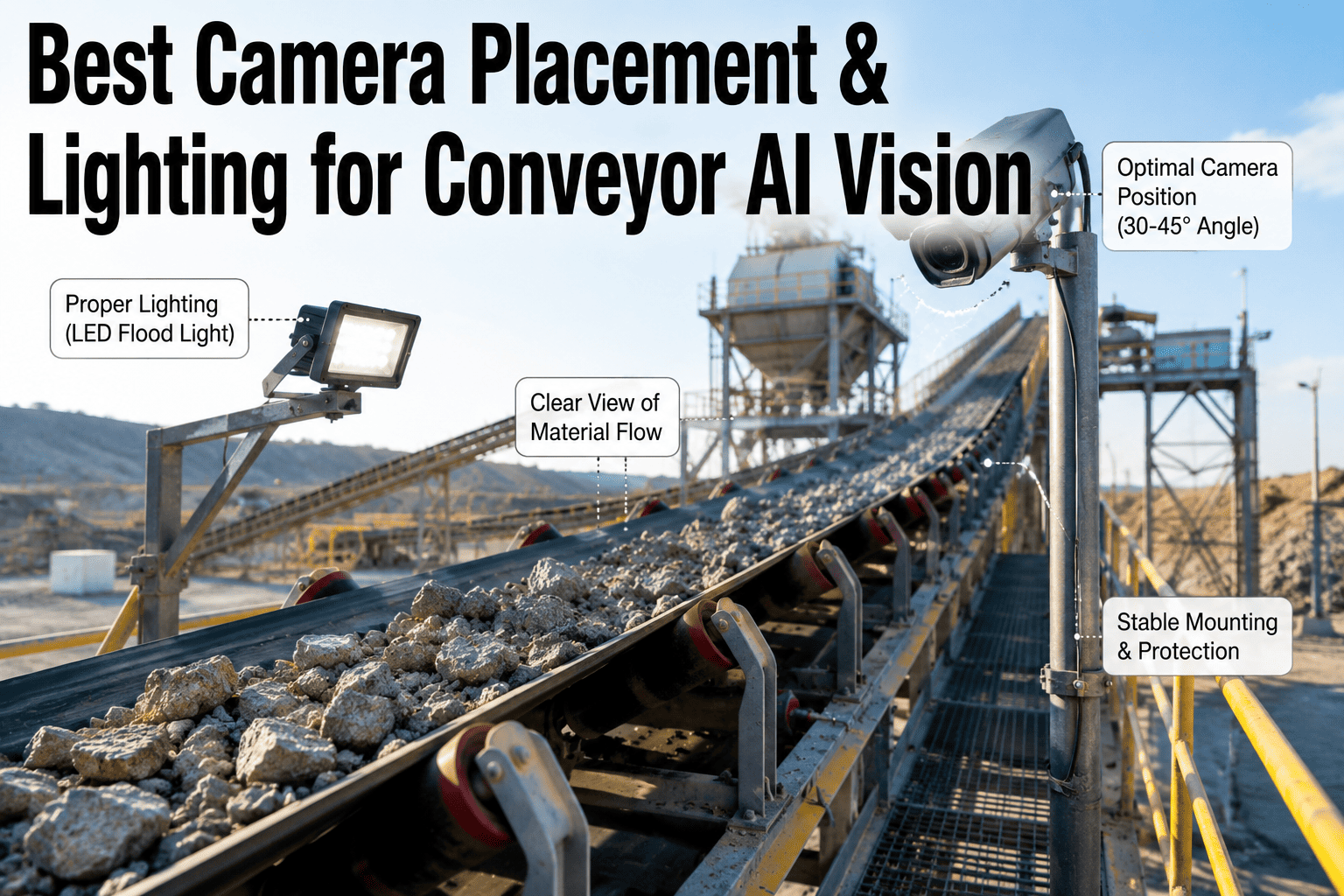
Cameras Positioned at Critical Points
Fixed cameras are installed at splice pass-through points, transfer chutes, and return-side runs on the conveyors your plant has flagged as highest failure impact — typically kiln feed, raw mill, and clinker transport lines.
Every Frame Analysed Against Baseline
Deep learning models trained on your plant's own conveyor conditions score belt surface, splice status, lateral position, and spillage accumulation on every frame, comparing each reading to your baseline condition.
Trend Tracked, Not Just a Single Alert
A splice showing gradual elongation or a belt drifting a few millimetres further each day builds a visible trend line, rather than triggering only when it finally crosses a hard threshold.
Work Order Raised Against the Belt Segment
Once a finding crosses your defined severity threshold, a maintenance work order is generated automatically against the specific belt segment or splice record, with the flagged footage attached as evidence.
Conveyor Vision Monitoring — Frequently Asked Questions
Does this replace our weekly manual conveyor walk-around inspections?
Not entirely, and it shouldn't. AI vision significantly reduces how much you depend on manual walk-arounds for catching real-time defects like mistracking or spillage, but close-contact checks such as splice tactile inspection, bearing greasing, and structural assessment still need a person on-site. The goal is to combine both, so the routine you already run becomes a confirmation step rather than your only line of defence. Teams often figure out the right split during a demo call with our engineers.
How does the camera tell normal dust and product coating apart from actual belt damage?
The vision model is trained specifically on footage from your own conveyors, under your plant's actual dust and material conditions, rather than on a generic industrial belt dataset. That plant-specific training is what allows it to separate a coating of raw meal dust from a genuine surface crack, splice lift, or edge fray, instead of raising false alerts every time the belt looks dirty.
Can the system tell us which specific belt segment or splice needs attention?
Yes. Every conveyor run and splice joint is tracked as its own asset record, so a flagged finding is tied to a specific belt segment, joining date, and splice type rather than a generic line-wide alert. This is what makes it possible to plan a re-splicing job at the next scheduled maintenance window instead of guessing which conveyor actually needs it.
What happens when the camera detects material spillage at a transfer point?
Spillage is detected by analysing material accumulation patterns building up in the camera's field of view at chute lips, skirt boards, and transfer points. Once accumulation crosses your defined threshold, an alert is raised for cleaning and a check of the skirt seal or scraper blade condition, since recurring spillage at the same point is usually a mechanical wear signal rather than a one-off event.
Do we need to instrument every conveyor in the plant, or can we start smaller?
Most plants start with the conveyors that carry the highest failure impact — typically kiln feed, raw mill, and clinker transport lines, where a stoppage halts the entire process rather than one isolated area. Coverage is expanded to secondary conveyors once the initial deployment proves out, and our team can help you prioritise which lines to instrument first through ifactoryapp.com/support.
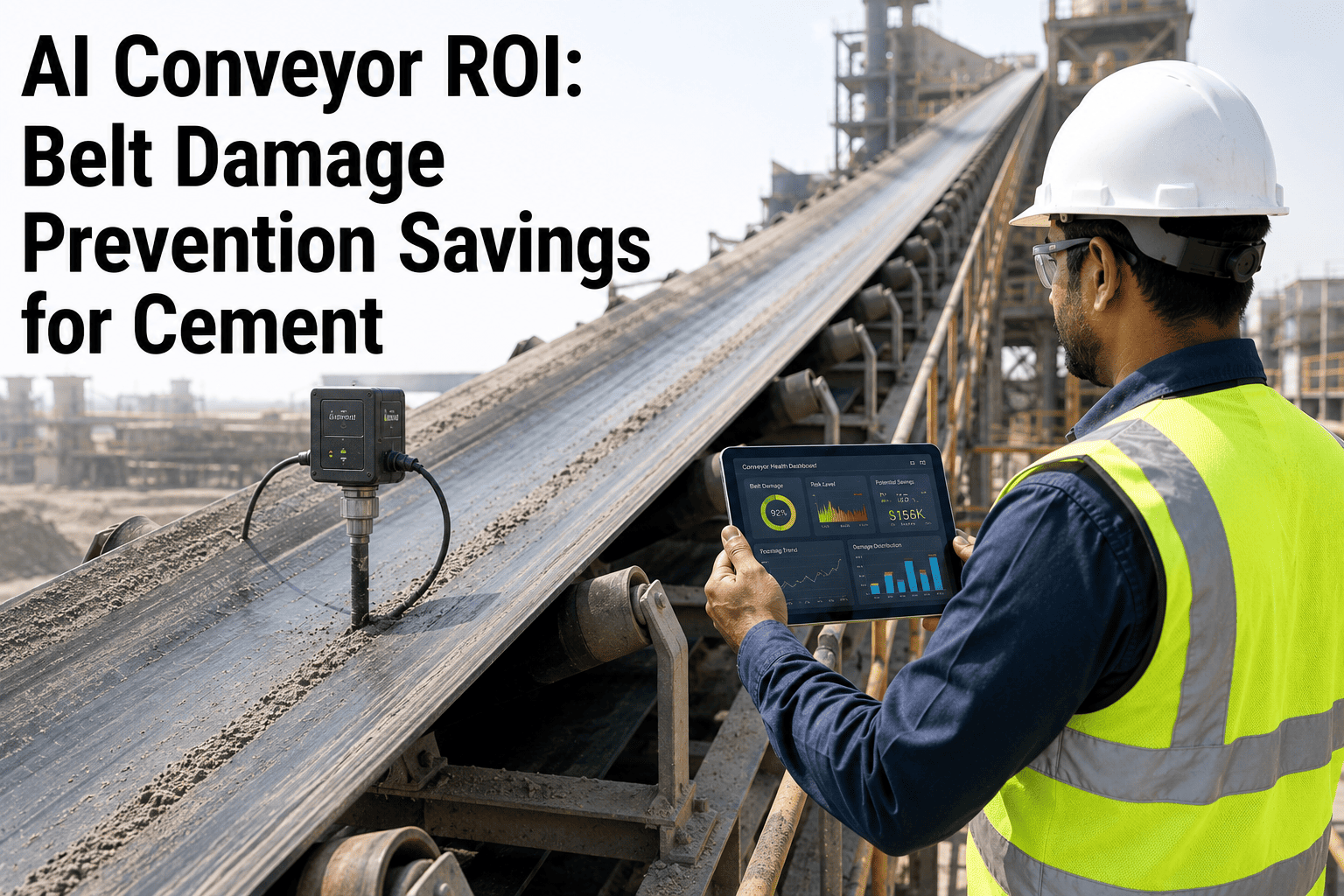
Catch Belt Damage While It's Still a Planned Repair
iFactory's AI vision cameras keep a continuous watch on your critical conveyor runs, so splice wear, mistracking, and spillage get flagged and routed to maintenance while there's still time to act — before they turn into an emergency shutdown.