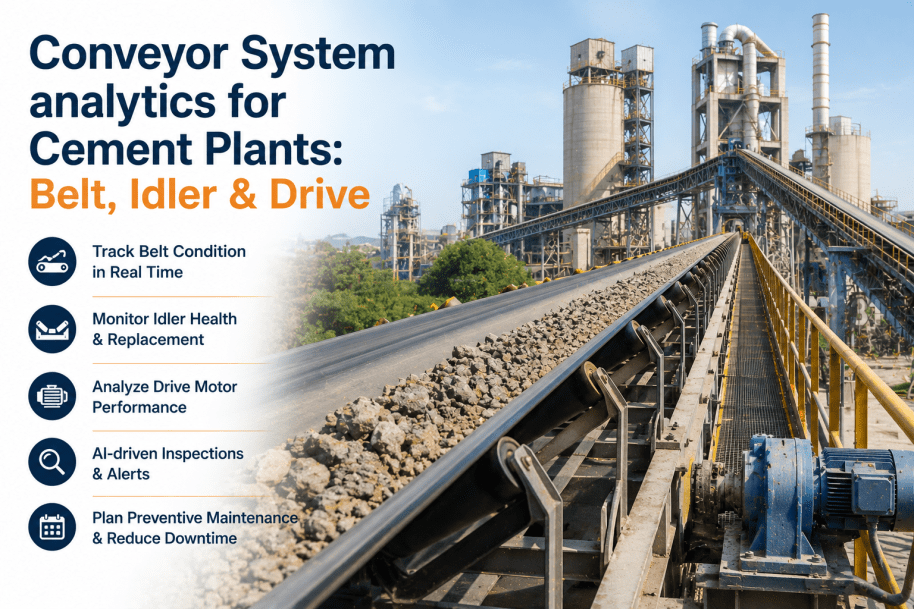
A cement plant's overland conveyor network can stretch for kilometers, carrying raw meal, clinker, and finished cement through dozens of transfer points, hundreds of idlers, and belt splices that were never designed to last forever. When one of those components fails without warning, the loss is never isolated — kiln feed stops, the mill backs up, and a single seized bearing or torn splice can halt production for a full shift or more. Predictive maintenance built on AI monitoring changes the economics of that risk entirely, turning belt condition, splice integrity, and pulley alignment into continuously tracked signals instead of once-a-shift visual checks. This guide walks through how AI-based conveyor PdM actually works, what it monitors, and how to build the business case before booking a 30-minute demo to see it running on your own conveyor data.
Conveyor Belt Predictive Maintenance: AI Monitoring for Cement Plants
Belt condition, splice integrity, and pulley alignment tracked continuously — so the maintenance team acts on a developing fault weeks before it becomes an unplanned stoppage.
Why Belt Failures Feel Sudden When They Almost Never Are
Every catastrophic conveyor failure — a torn belt, a seized idler that ignites, a splice that separates mid-shift — has a physical history that starts long before the moment production stops. A splice joint that fails today has usually been showing lift, separation, or fastener protrusion for weeks. A pulley bearing that seizes has been running hot and vibrating outside its normal band for days. The reason these failures still feel sudden is not that they are unpredictable, it is that the walk-around inspection schedule that most plants still rely on samples belt condition once or twice a shift, and a fault that develops between two inspection rounds gets no chance to be caught until it has already escalated.
Early Deviation
Bearing friction rises, a splice fastener loosens, or belt tracking drifts a few millimeters off center. No visible symptom yet — only a small signal shift in vibration, temperature, or edge position.
Detectable Trend
The deviation becomes a trend line. Temperature climbs a few degrees above baseline, vibration amplitude grows at a specific bearing frequency, or splice separation widens by fractions of a millimeter per pass.
Visible Symptom
A trained inspector could now spot it on a walk-around — but only if the round happens to fall while the symptom is visible, and only if the inspector reaches that exact section of belt.
Failure Event
The bearing seizes, the splice separates, or the belt tears. Production stops, emergency repair crews are called, and the cost multiplies against what a planned intervention would have cost.
What AI Conveyor Monitoring Actually Watches
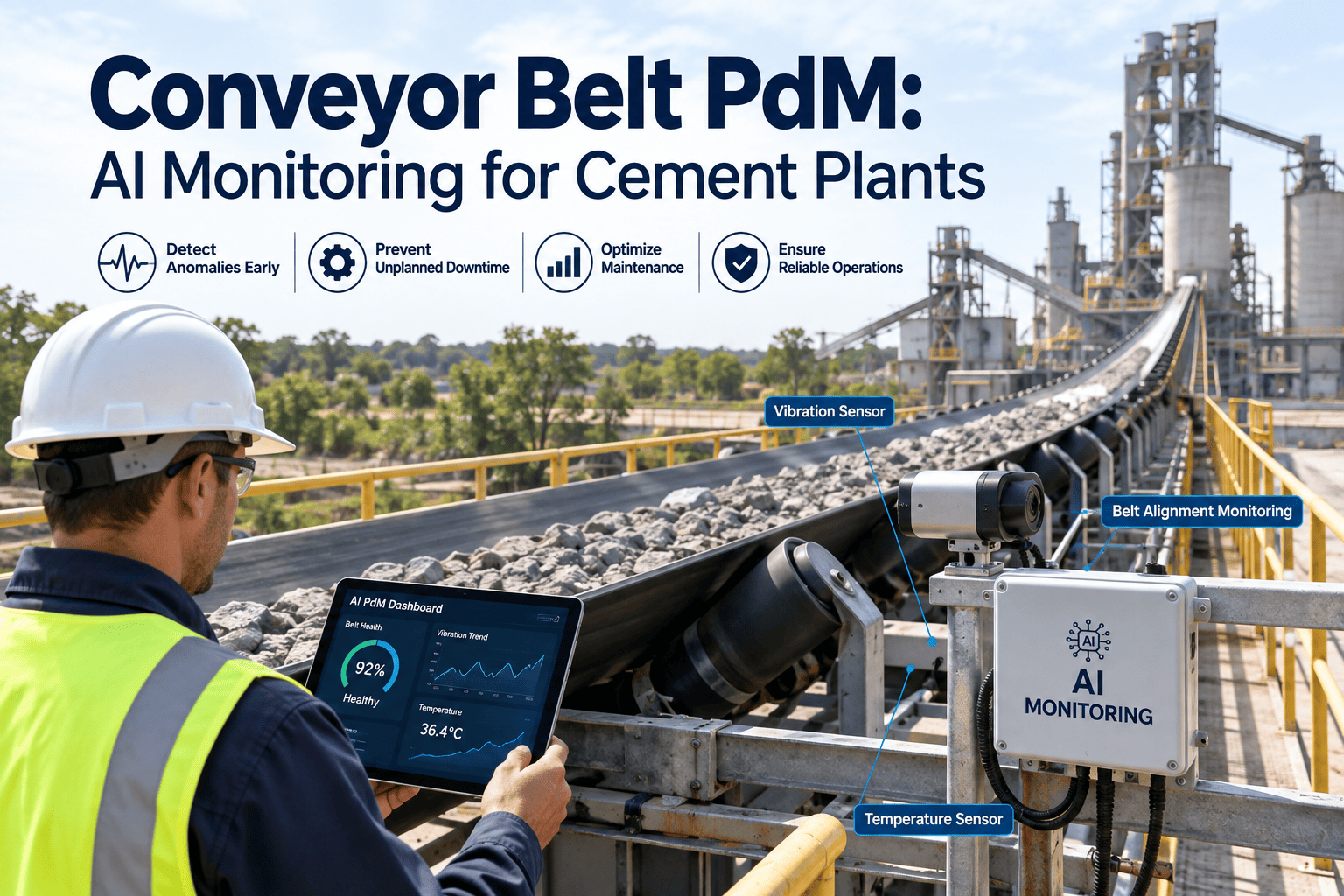
AI-based predictive maintenance for conveyors is not one sensor doing one job — it is several data streams fused together so that a single anomaly gets confirmed from more than one angle before it becomes a work order. That fusion is what separates a reliable PdM program from a system that either misses real faults or floods the maintenance team with false alarms.
Vibration Analysis
Accelerometers on drive motors, gearboxes, and pulley bearings pick up characteristic frequency signatures for bearing race defects, gear wear, and coupling misalignment long before the fault is audible to a human ear.
Thermal Monitoring
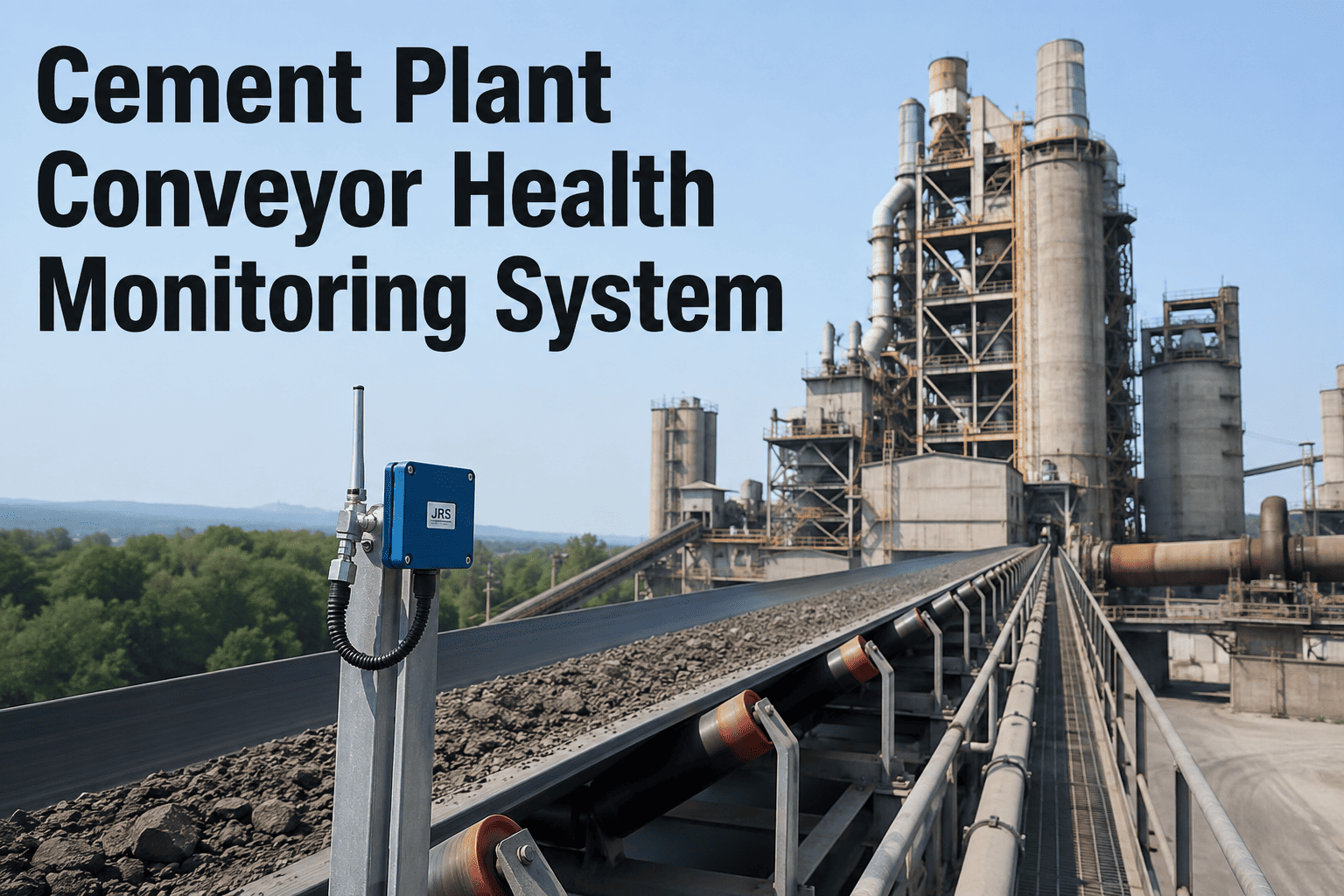
Fixed or scanning infrared sensors track surface temperature on every idler and pulley bearing, flagging the friction heat that precedes seizure — the single most common cause of belt fires on long overland conveyors.
AI Vision
Cameras positioned at the head pulley and along the belt line track splice condition, edge position, cover wear, and material carryback on every pass, catching splice lift and tracking drift that a shift inspection would miss.
Motor Current Analysis
Drive motor current draw reveals load imbalance, developing mechanical resistance, and winding degradation, adding a fourth confirmation layer that reduces false positives from any single sensor type.
Belt and Splice Condition — What the Cameras Are Actually Trained to Catch
Belt damage is not uniform in urgency — a surface scratch has days of lead time, while an active longitudinal tear near a splice joint can propagate rapidly once it starts, turning a patch repair into a full belt replacement within hours if it goes undetected overnight. This is why AI vision systems are trained specifically to distinguish between cosmetic wear and structurally significant damage, rather than flagging every surface mark as equally urgent.
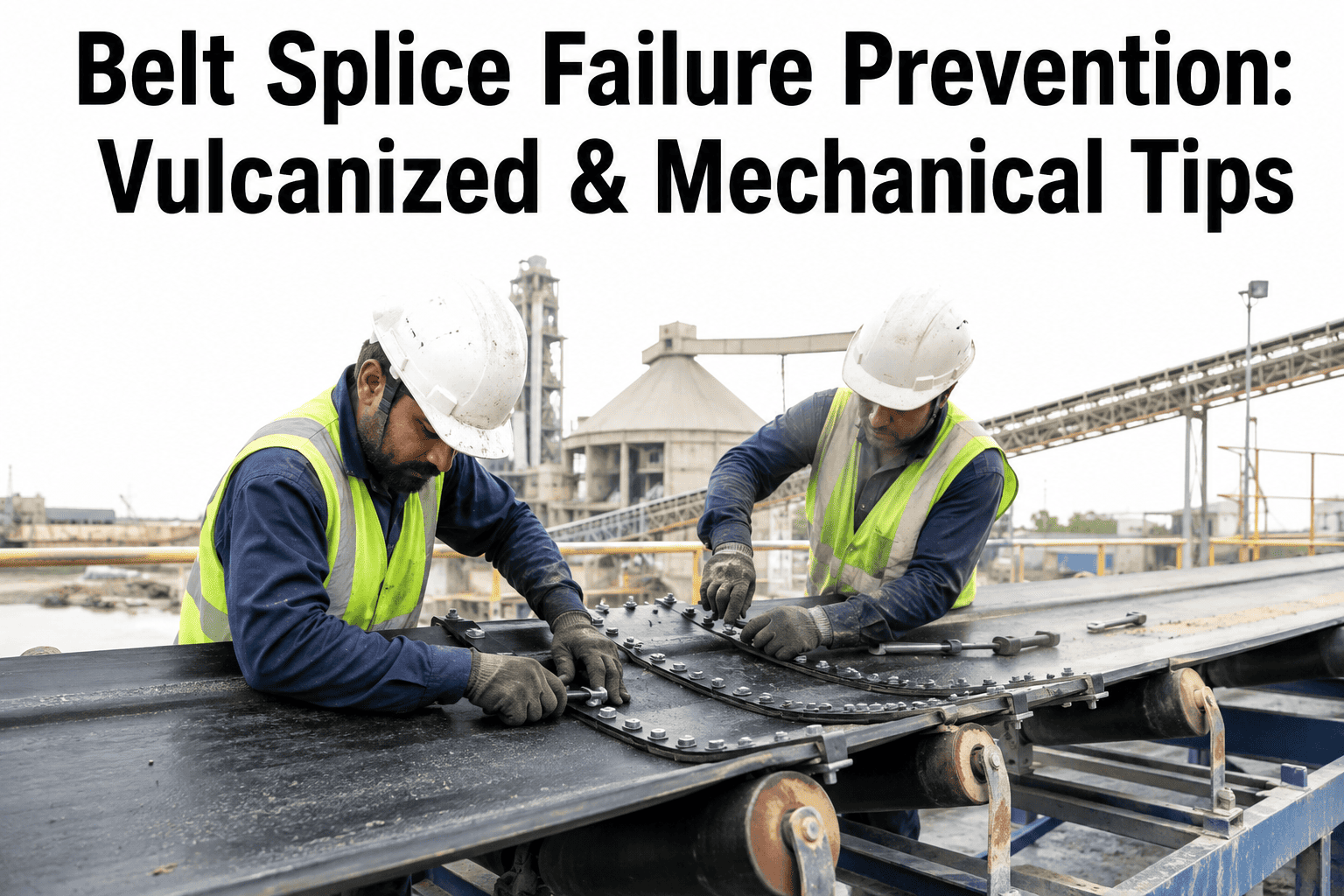
Splice joints are tracked as the number one failure point on most conveyor systems, with AI vision detecting lift, separation, and edge peeling at the joint before the failure becomes catastrophic. A well-designed system measures thickness, tears, cuts, cracks, holes, splice damage, grooves, wear, misalignment, and edge damage in a single continuous pass, giving reliability teams a single trend line for belt health instead of a scattered set of inspection notes.
One dashboard for every conveyor on the plant — not a spreadsheet per belt.
iFactory fuses vibration, thermal, motor current, and AI vision data into a single health score per conveyor, auto-generates prioritized work orders, and connects directly to existing DCS, SCADA, and CMMS platforms through standard APIs and OPC-UA — so predictive maintenance fits into the workflow your team already uses.
Live Health Score — One Number Per Conveyor
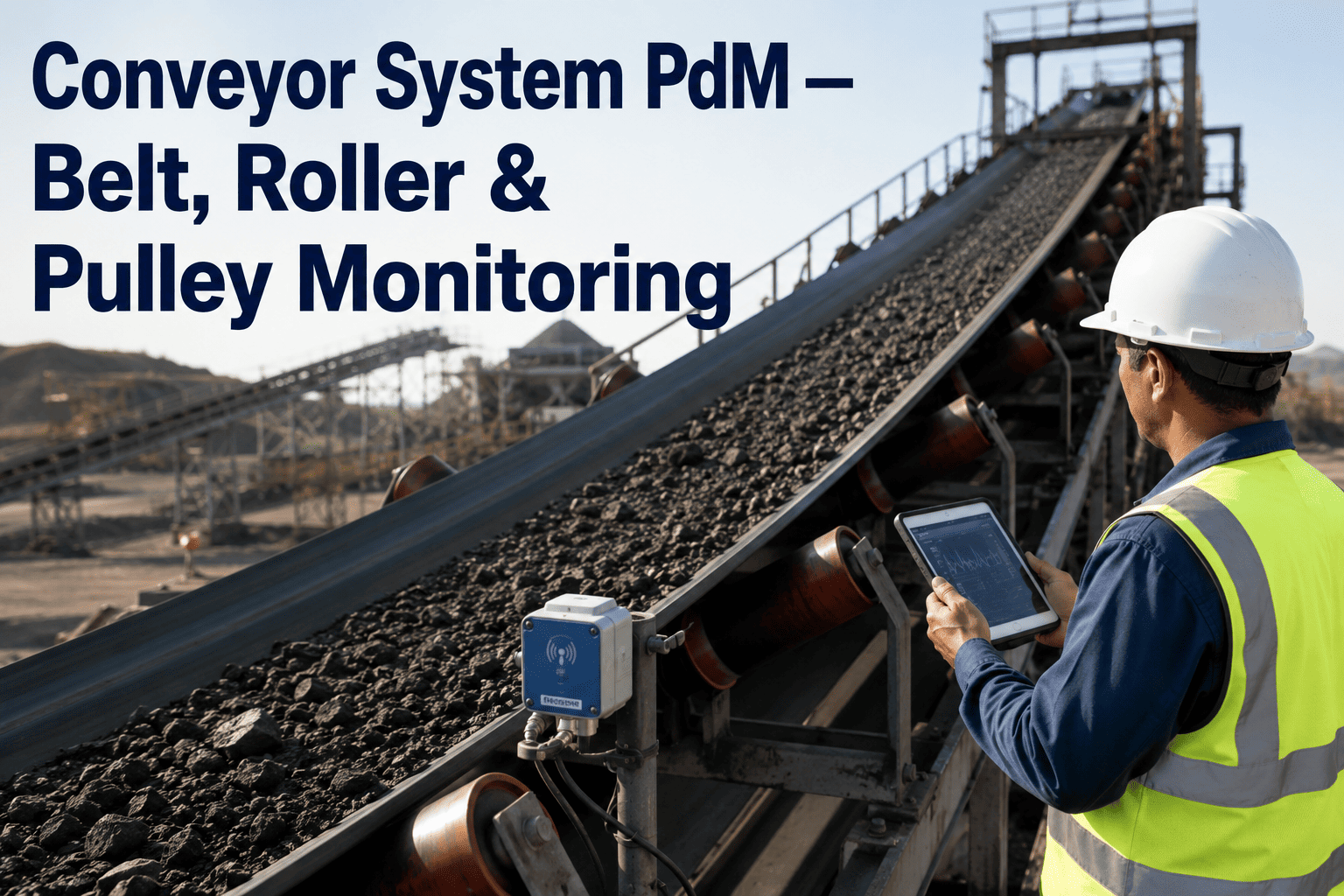
The most useful output of an AI conveyor monitoring program is not a stream of raw sensor data — it is a single combined health score per conveyor that pulls together vibration, thermal, motor current, and vision data so the maintenance team knows exactly where to focus and how much time is available before action is needed. A dashboard built around this score turns a kilometer of belt and forty idler sets into a short, prioritized list.
When AI detects a conveyor anomaly, the system auto-generates a work order with full context — equipment ID, failure mode, severity, predicted time to failure, recommended action, and the supporting sensor data attached as evidence — closing the gap between detection and dispatch. No manual translation step means fewer faults slip through the cracks between the alert and the work order.
Reactive vs Scheduled vs AI-Driven — Comparing the Three Approaches
| Approach | How It Works | Typical Outcome |
|---|---|---|
| Reactive | Repair after visible failure or breakdown | Highest downtime cost, unplanned crew mobilization |
| Time-based scheduled | Fixed interval belt and component replacement | Some components replaced too early, others fail between intervals |
| AI-driven predictive | Continuous sensor fusion with trend-based alerts | Intervention timed to actual condition, 14–30 day warning window |
A fixed replacement schedule is safer than pure reactive maintenance, but it still wastes belt and component life on parts that are replaced early out of caution, while leaving a gap for the parts that degrade faster than the schedule assumes. Condition-based replacement driven by continuous monitoring closes both gaps at once.
Rolling Out AI Conveyor Monitoring — A Three-Phase Path
Highest-Risk Conveyors First
Start with the conveyors that would cause the most production loss if they stopped — typically raw mill feed and kiln feed lines — and install thermal and vibration sensors on drive components plus a vision camera at the head pulley.
Baseline and Tune Thresholds
Run the system for two to four weeks to establish normal operating baselines for each conveyor, then tune alert thresholds so the maintenance team receives meaningful alerts rather than noise.
Expand and Integrate
Extend coverage across the remaining conveyor network and connect the platform to existing DCS, SCADA, and CMMS systems so work orders flow directly into the maintenance team's existing workflow.
Frequently Asked Questions
Does AI conveyor monitoring require replacing our existing cameras and sensors?
No — AI conveyor vision typically connects to existing camera infrastructure rather than requiring a full hardware replacement, with industrial processing units running deep learning models trained specifically for cement plant conditions such as dust, heat shimmer, vibration, and low-light environments. Most plants add targeted vibration and thermal sensors at the highest-risk points rather than instrumenting every idler on day one. Book a demo to see what your current camera and sensor coverage would support.
How accurate is AI fault detection in a dusty, high-vibration cement environment?
Detection systems trained specifically on cement plant conditions can achieve over 95% accuracy even in the harshest zones of the plant, including areas affected by dust, heat shimmer, and constant vibration. Accuracy improves further once the system has run long enough to build a plant-specific baseline, since normal vibration and thermal patterns vary between conveyors, belt speeds, and material types.
What is the single highest-value sensor to install first if budget is limited?
Most reliability teams start with a fixed AI vision camera at the head pulley exit combined with thermal or vibration monitoring on the highest-failure-risk idler bank, typically the loading zone. This combination catches splice condition on every pass and gives early warning on the bearing failures that account for a disproportionate share of unplanned stoppages. Contact support to discuss sensor placement for a specific conveyor layout.
How does AI monitoring integrate with our existing CMMS and work order process?
A properly connected AI monitoring platform links to existing DCS, SCADA, and CMMS systems through standard APIs and OPC-UA, and auto-generates a work order with full context — equipment ID, failure mode, severity, predicted time to failure, and supporting sensor data — the moment an anomaly is confirmed. This removes the manual translation step between an alert and a dispatched work order, which is often where faults get lost in plants running purely manual inspection processes.
How much advance warning does AI monitoring typically provide before a conveyor failure?
Production-grade AI conveyor monitoring that fuses belt alignment, roller vibration, motor current draw, bearing temperature, and acoustic emissions typically detects developing mistracking, idler bearing degradation, belt carcass damage, and drive system fatigue 14 to 30 days before functional failure occurs. That window is generally enough to schedule the repair during a planned stop rather than responding to an unplanned one. Book a demo to see the predicted-time-to-failure model applied to your own conveyor data.
Belt failures are predictable weeks in advance — if something is watching continuously.
See how iFactory's AI vision, vibration, thermal, and motor current fusion tracks belt condition, splice integrity, and pulley alignment across every conveyor in the plant, with prioritized work orders delivered straight to your maintenance team.