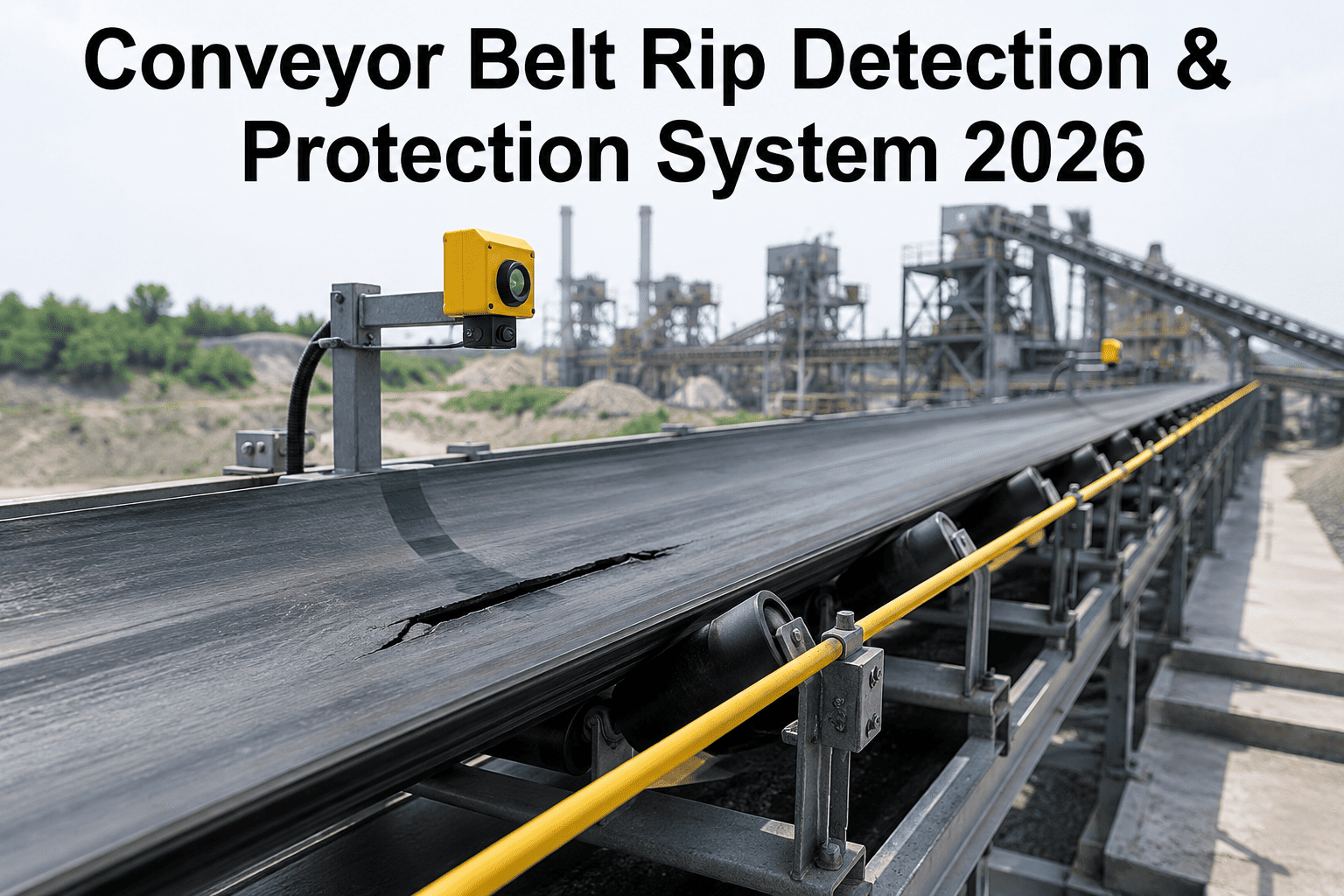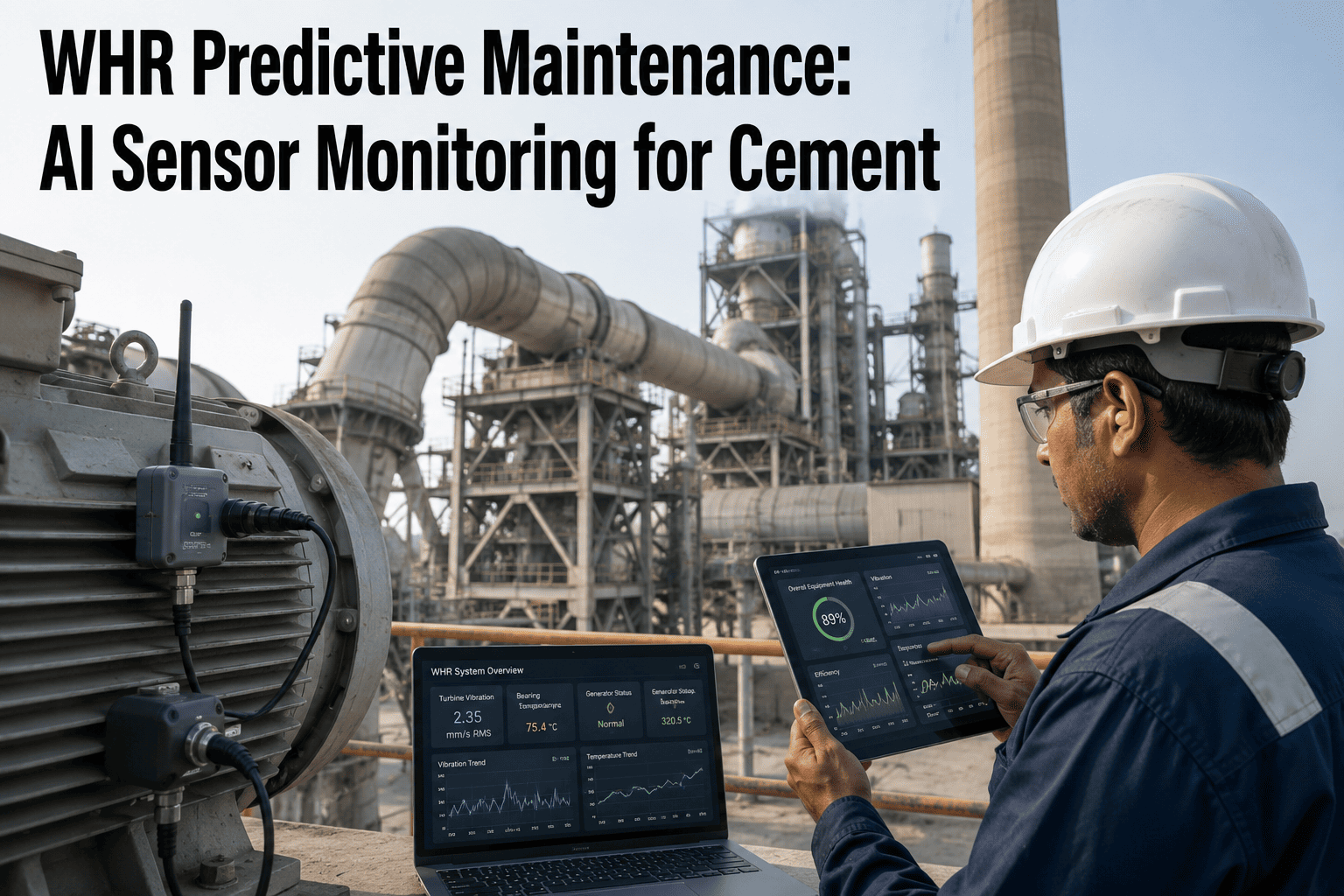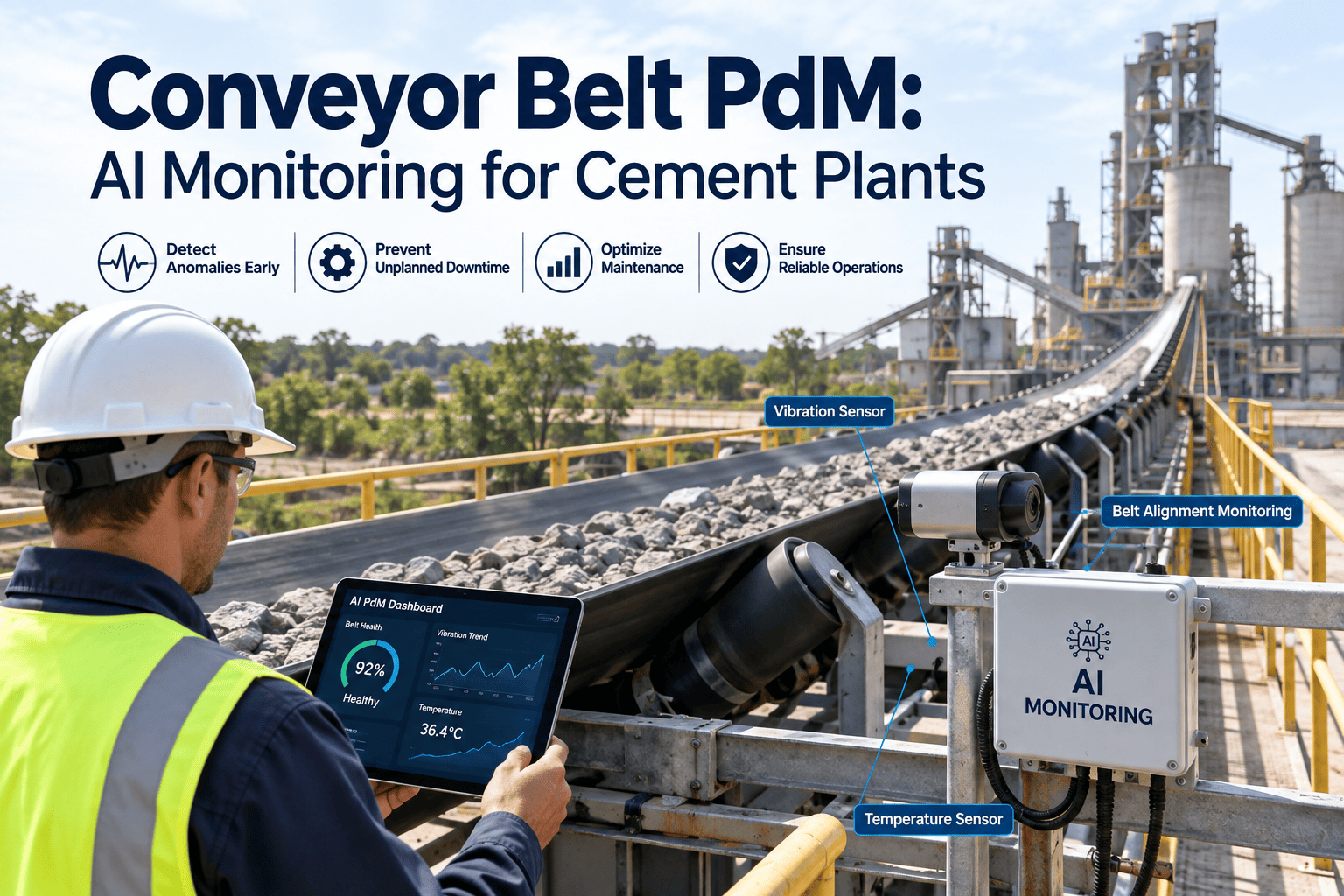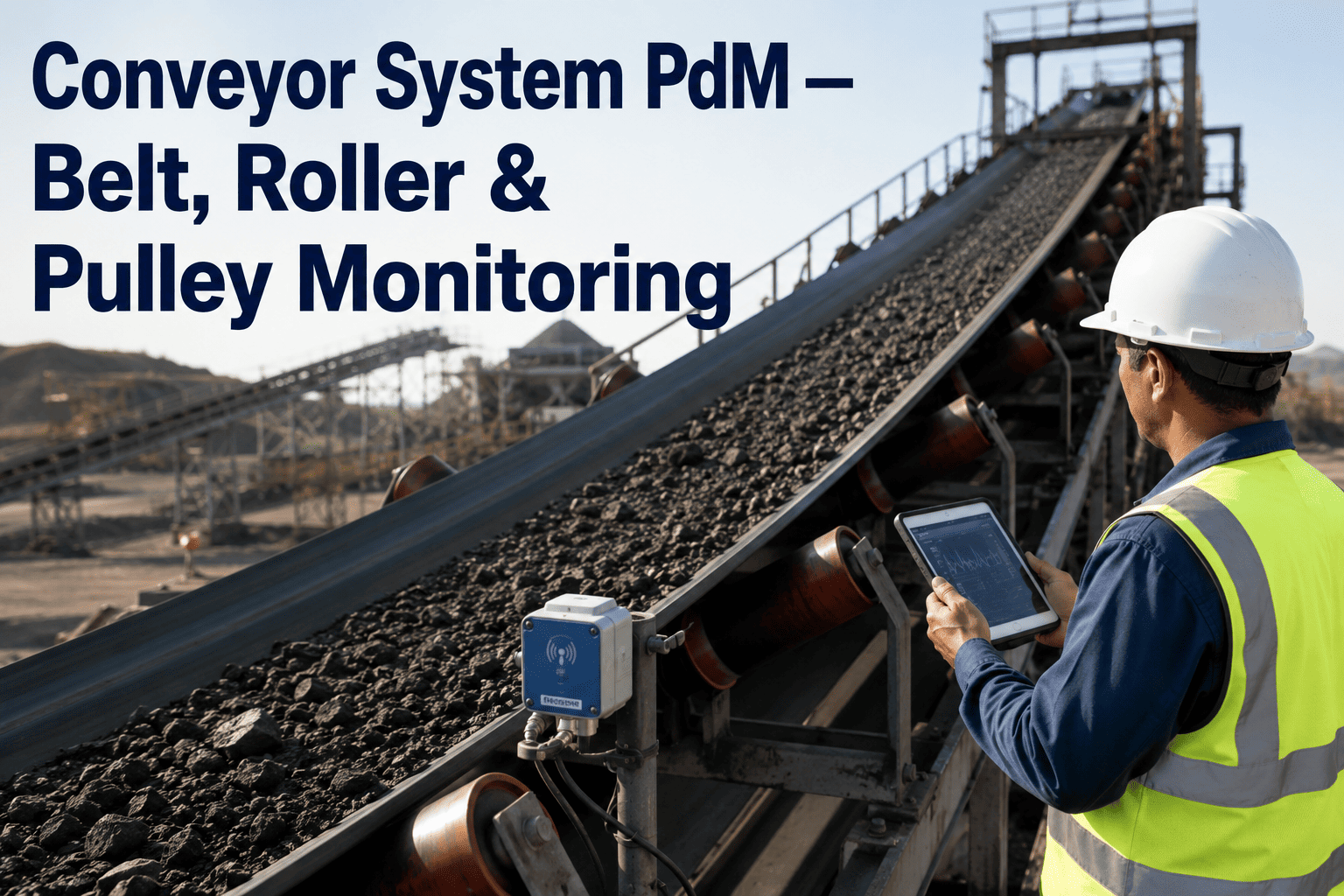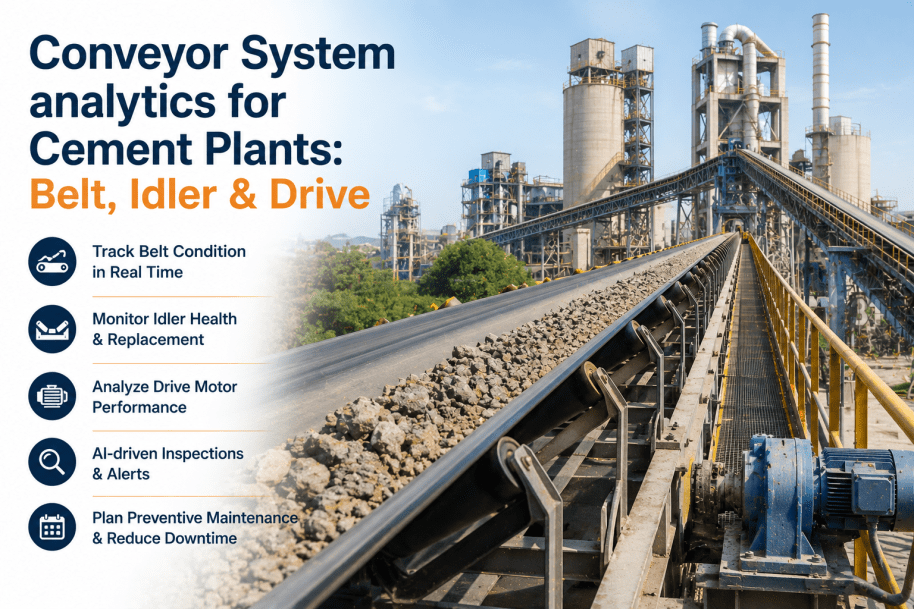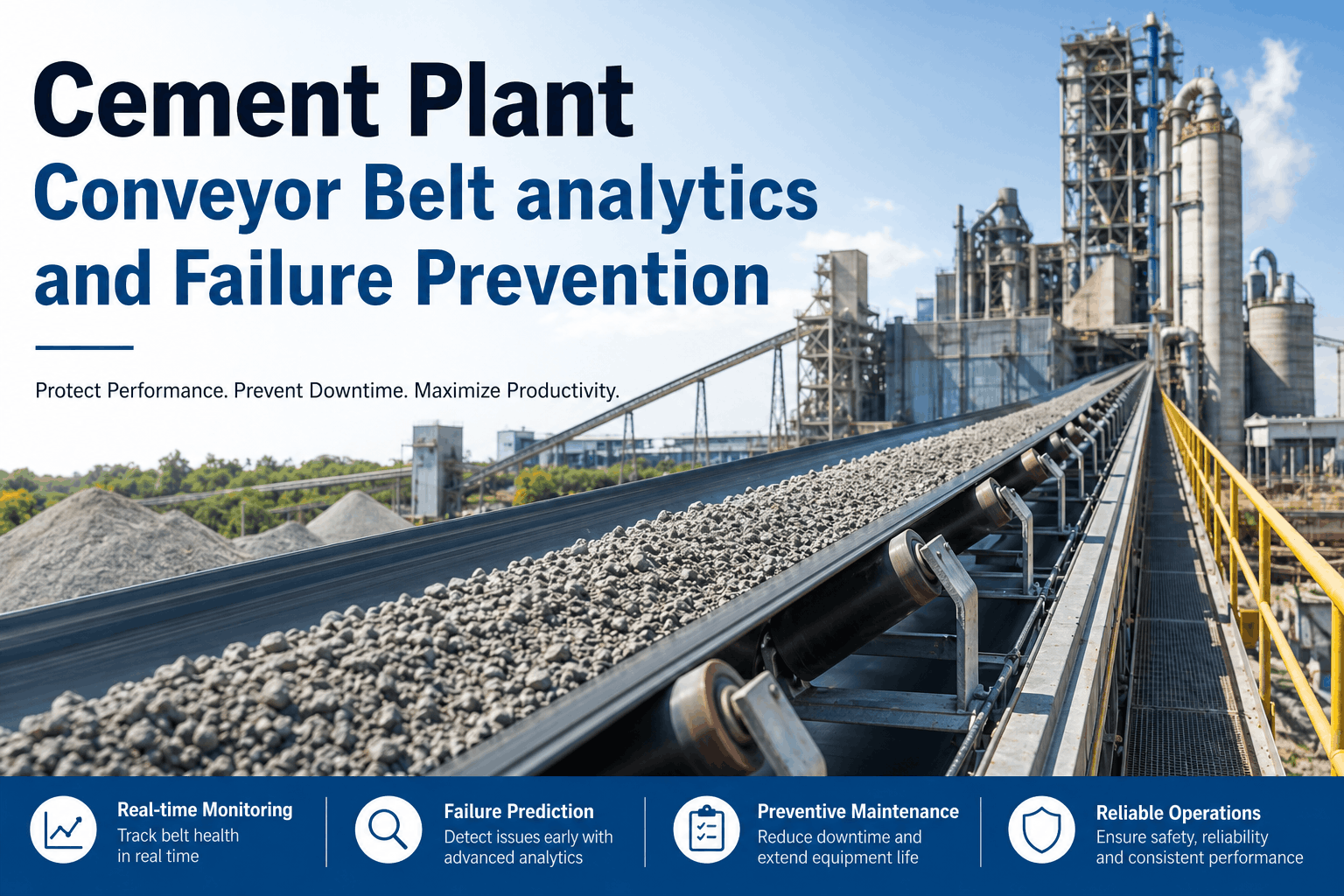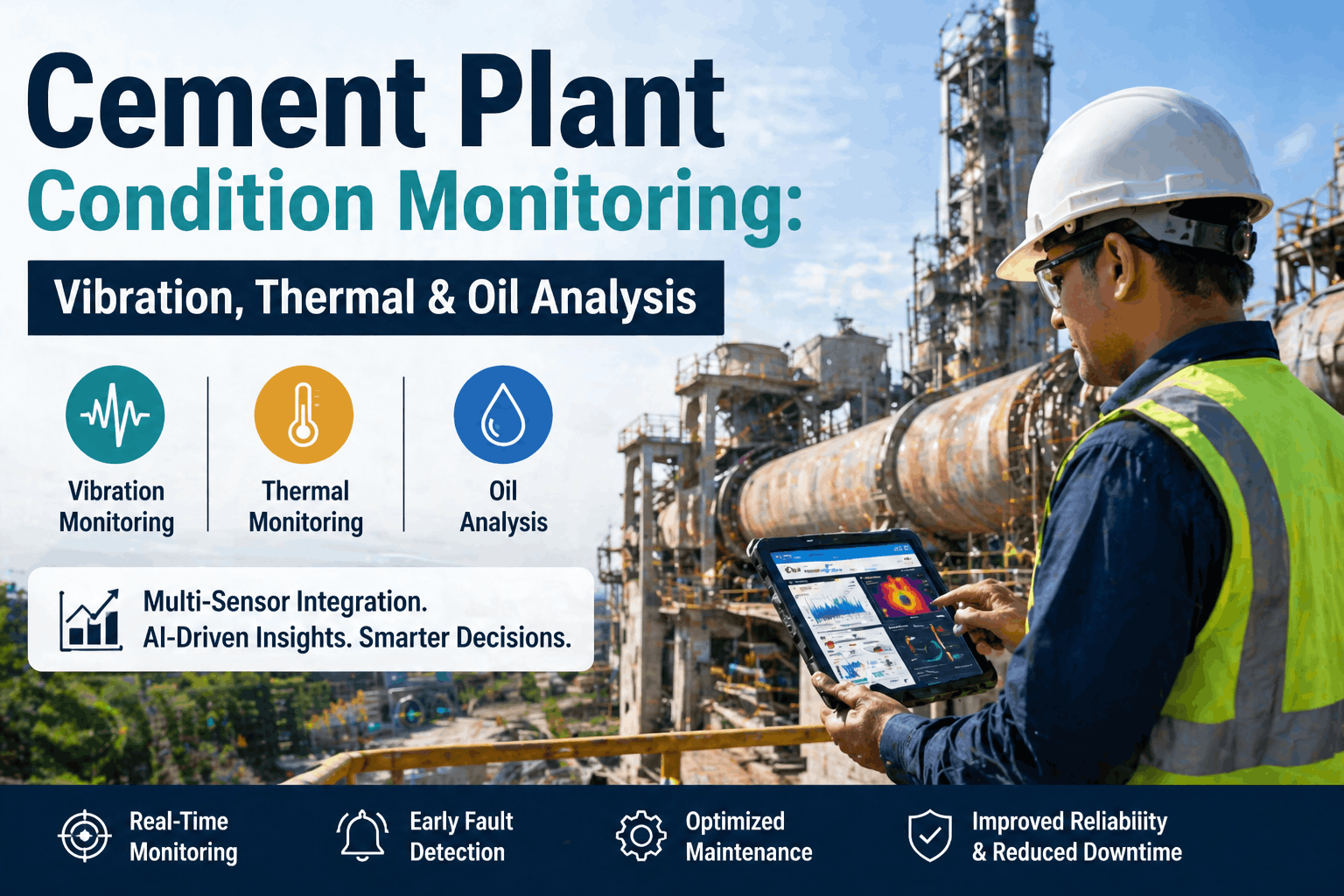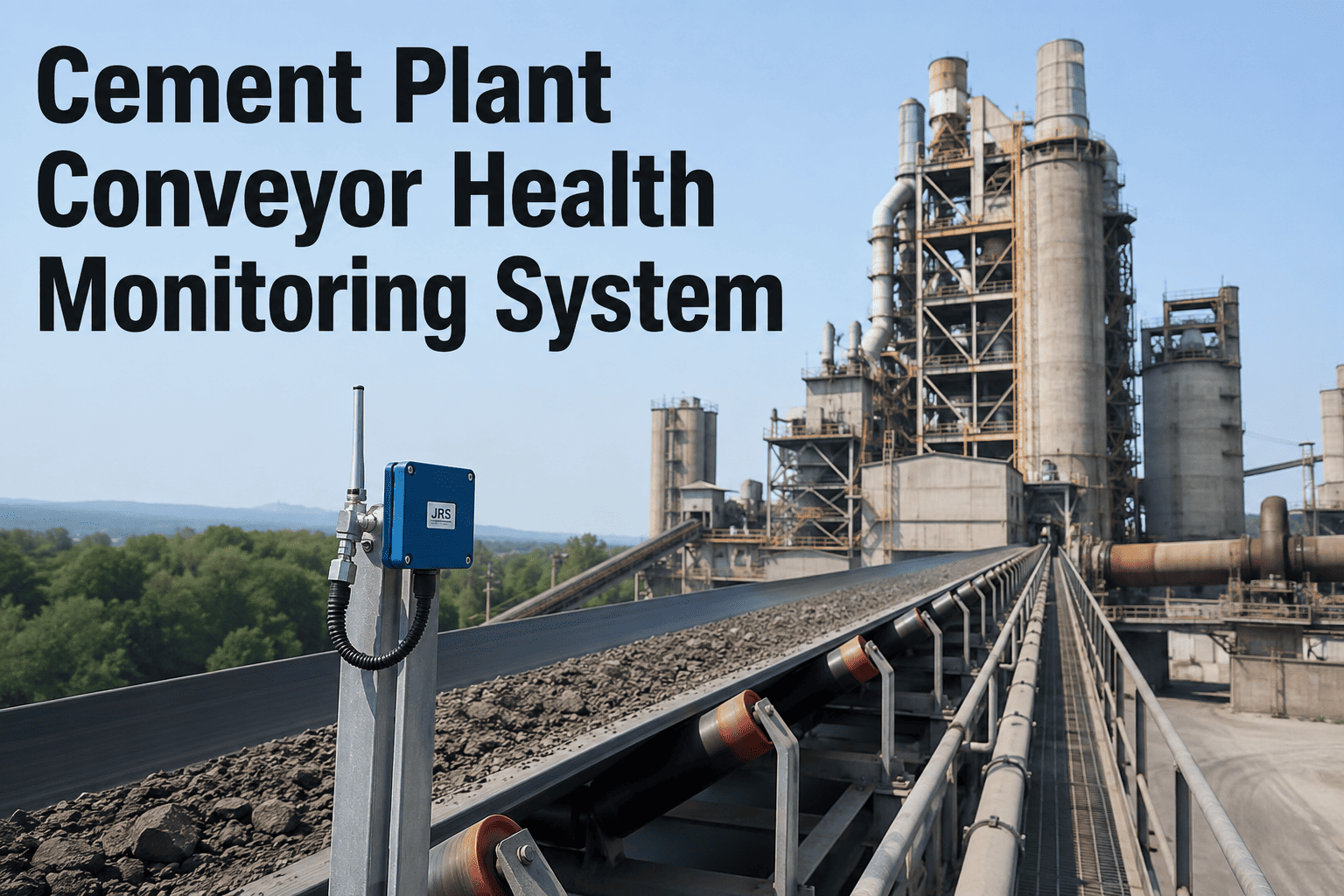
A torn belt splice at 2 a.m. does not announce itself. It starts as a slightly warm bearing three weeks earlier, a splice that has flexed a few thousand extra times, a pulley lagging that has worn 2mm thinner than spec — and none of it shows up on a walk-through. By the time a belt tears or a bearing seizes, the plant has already lost the shift, and sometimes the week. Conveyor systems move more tonnage per hour than almost any other asset in a cement plant, yet they are usually the least instrumented — a few smart idlers here, a manual grease schedule there, and a maintenance team that finds out about failures the same way everyone else does: when the line stops. AI-based conveyor health monitoring changes the order of events. Vibration, temperature, and belt-alignment data flow continuously into a model trained to recognize the signatures of bearing wear, belt mistracking, and splice fatigue weeks before they become downtime, and every alert routes straight to a work order. See how conveyor monitoring fits your plant's belt network before the next unplanned stop.
Conveyors Move Everything. Most Are Monitored By Nothing.
Idler bearings, belt splices, pulley lagging, and drive alignment fail gradually and quietly. Continuous AI monitoring turns that slow decline into an early warning long before a belt tear takes the line down.
of conveyor failures trace back to a component that showed abnormal signals for at least two weeks beforehand
typical downtime from an unplanned belt tear or splice failure on a main haulage conveyor
idlers on a typical long-haul cement conveyor network, each one a possible failure point
Where a Belt System Actually Breaks Down
A conveyor is not one asset — it is a chain of five or six subsystems, each with its own failure pattern, its own sensor requirement, and its own lead time between first symptom and forced stoppage.
Head Pulley & Drive
Bearing wear and motor misalignment raise vibration amplitude at drive-shaft frequency well before torque output changes.
Belt & Splices
Mechanical splices flex thousands of times per shift; thermal imaging and tension trending catch fatigue before separation.
Troughing Idlers
A single seized idler generates localized heat and vibration long before it scores or burns through the belt cover.
Tracking & Alignment
Gradual belt drift toward one edge is the leading cause of structural damage and spillage on long overland conveyors.
Tail Pulley & Take-Up
Take-up tension drift signals belt stretch or counterweight issues that eventually surface as slippage at the drive.
The Three Signals That Actually Predict Conveyor Failure
No single sensor type tells the whole story. Layering vibration, thermal, and optical tracking data gives a model enough context to separate a genuine developing fault from normal operating noise.
Vibration Analytics
Accelerometers on idler stations and pulley bearings pick up the frequency signatures of race wear, ball defects, and looseness weeks ahead of audible noise.
Thermal Imaging
Fixed or drone-mounted thermal cameras flag hot bearings, friction points on stuck idlers, and abnormal splice temperature under load.
Belt Tracking Vision
Camera-based edge detection continuously measures lateral drift, catching mistracking trends long before a belt rides against the structure.
Find Out Which Conveyor Is Closest to Failure
iFactory reviews your conveyor network layout, sensor coverage, and last twelve months of failure history to show exactly which belts, idlers, and drives carry the highest near-term risk.
Failure Mode, Early Signal, and Lead Time
Every major conveyor failure mode has a detectable early signature. The gap between first signal and forced downtime is usually measured in weeks, not hours — if something is actually watching for it.
What Changes When Conveyors Are Monitored Continuously
Figures reflect typical results within the first six months of deploying vibration, thermal, and tracking-vision monitoring across a cement plant's main haulage and process conveyors.
Which Conveyors to Instrument First
Most cement plants cannot sensor an entire conveyor network in one project. Prioritizing by criticality and failure history gives the fastest return on the first phase of a rollout.
Tier 1 — Main haulage and kiln feed conveyors
These carry the highest tonnage and have zero redundancy, so a single failure stops the entire production line rather than one process step. Vibration sensors at every bearing plus continuous belt-tracking vision are the standard starting point here, since these conveyors also tend to have the longest runs and the most idlers exposed to wear.
Tier 2 — Conveyors with a recent failure history
A conveyor that has already had two or three unplanned stoppages in the past year is telling you something about its current mechanical condition, whether that is an aging drive, a batch of idlers nearing end of life, or a chronic tracking issue. Instrumenting these next captures near-term risk even where overall tonnage is lower than a Tier 1 line.
Tier 3 — Conveyors in hard-to-access or hazardous locations
Elevated overland conveyors, enclosed galleries, and conveyors that run through dusty or high-temperature areas are the hardest for a technician to physically inspect on a regular basis, which is exactly why they benefit most from continuous remote monitoring rather than a periodic walk-through that may get skipped when access is inconvenient.
Tier 4 — Secondary and process conveyors
Lower-tonnage conveyors feeding packing lines or secondary process steps still benefit from monitoring, but route-based thermal and vibration checks combined with a lighter sensor footprint are usually sufficient, reserving the densest instrumentation for the conveyors where downtime cost is highest.
What a Rollout Actually Involves
Deploying conveyor health monitoring is less about the sensors themselves and more about building a clean data pipeline from those sensors into a system maintenance actually uses every day.
Baseline data collection
The first two to four weeks establish a normal-operating baseline for every monitored bearing and idler, since a model cannot flag an abnormal trend without knowing what normal looks like for that specific asset.
Threshold and alert tuning
Alert thresholds are tuned against your plant's own maintenance response times and spare parts lead times, so an alert arrives with enough lead time to actually schedule a repair rather than firing too late to matter.
CMMS and work order integration
Alerts are connected directly into the existing CMMS so a triggered signal becomes a work order with the asset, signal type, and severity attached, rather than a separate dashboard that maintenance has to remember to check.
A Reliability Engineer's View on Continuous Monitoring
We used to find out about idler failures from the smell of hot rubber or a spillage pile under the return belt. Once we had vibration and thermal data flowing continuously, the same failures started showing up on a dashboard two to three weeks earlier, and every one of them turned into a scheduled swap during a planned stop instead of an emergency call at midnight. The belt tracking data alone paid for itself the first time it caught a drift trend before the belt rode into the structure.
Why This Pays for Itself Faster Than Most Reliability Projects
Conveyor monitoring tends to show measurable value faster than many predictive maintenance investments, largely because the cost of an unplanned belt stoppage is so immediate and so easy to trace directly back to a specific asset.
Lost production is the largest cost, not repair labor
A torn belt on a main haulage conveyor can idle an entire kiln feed for hours, and that lost production almost always dwarfs the cost of the bearing, idler, or splice repair itself. Catching the same fault two weeks earlier turns an emergency stop into a planned swap that fits inside a scheduled maintenance window.
Belt life extension compounds over the asset's lifetime
Catching mistracking and idler wear early doesn't just prevent one incident — it reduces the cumulative structural stress a belt experiences over its service life, which is why plants running continuous monitoring often see meaningfully longer replacement cycles on their most expensive belts.
Spare parts planning gets more predictable
Knowing which bearings and idlers are trending toward failure weeks in advance lets a maintenance team order the right parts ahead of time instead of carrying excess inventory for every possible failure or scrambling for emergency shipping when something fails without warning.
The Bottom Line on Conveyor Health Monitoring
Conveyors fail gradually, not suddenly — a bearing warms up for weeks, a splice fatigues over thousands of cycles, a belt drifts a few millimeters at a time. The only real question is whether anyone is watching closely enough to see it happening. Continuous vibration, thermal, and tracking-vision monitoring turns that slow decline into a scheduled repair instead of a shift-stopping emergency, and it does it on the assets that move more tonnage per hour than almost anything else in the plant.
Frequently Asked Questions
How many sensors does a typical conveyor network need?
Coverage depends on conveyor length and criticality rather than a fixed sensor count per meter. High-priority haulage conveyors typically get vibration sensors on every drive-end and non-drive-end bearing plus periodic thermal scans of idler runs, while lower-priority process conveyors can rely on route-based thermal and vibration checks combined with continuous belt-tracking vision at the head and tail pulleys. Book a network review to see a coverage plan sized to your specific conveyor layout.
Can this detect belt mistracking before it damages the structure?
Yes — camera-based edge tracking measures lateral belt position continuously and trends the drift rate over days rather than reacting to a single snapshot. A belt drifting a few millimeters per shift toward one edge generates a clear trend line long before it contacts the frame, giving maintenance time to correct idler alignment on a planned basis instead of during an emergency stop.
Does this replace a belt scale or does it work alongside existing instrumentation?
Conveyor health monitoring is a mechanical-condition layer and works alongside existing weighing, speed, and control instrumentation rather than replacing it. Vibration, thermal, and tracking data feed into the same asset record as production data, so a maintenance team can correlate a developing bearing fault with tonnage load and belt speed at the time it started trending.
How is a failing idler different from one that is just noisy?
The distinction comes from trend direction rather than absolute noise level, since some idlers run naturally louder due to age or load position. A model trained on historical failure data looks for vibration amplitude and thermal signature that are rising over a sustained period against that specific idler's own baseline, which filters out idlers that are simply older but stable from ones actively heading toward seizure.
What happens when an alert fires — does it go straight to a work order?
An alert routes to the CMMS as a flagged work order with the specific asset tag, signal type, and severity trend attached, so the maintenance planner sees exactly which bearing or idler triggered it and why. Talk to a specialist about connecting this workflow to your existing CMMS or work order system.
Stop Finding Out About Belt Failures After They Happen
Book a 30-minute assessment. iFactory maps your conveyor network's current sensor coverage against last year's failure history and shows exactly where continuous monitoring pays off first.