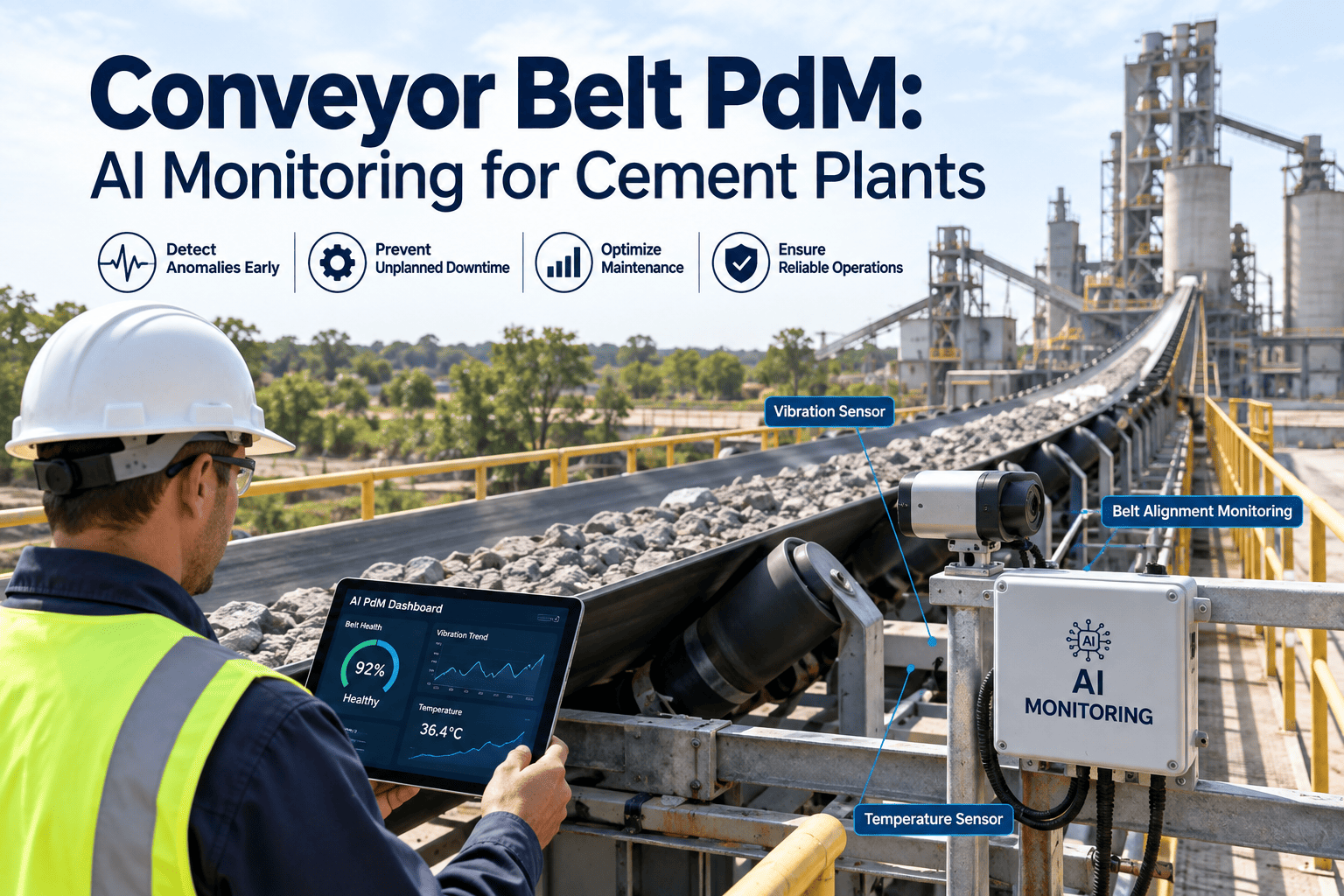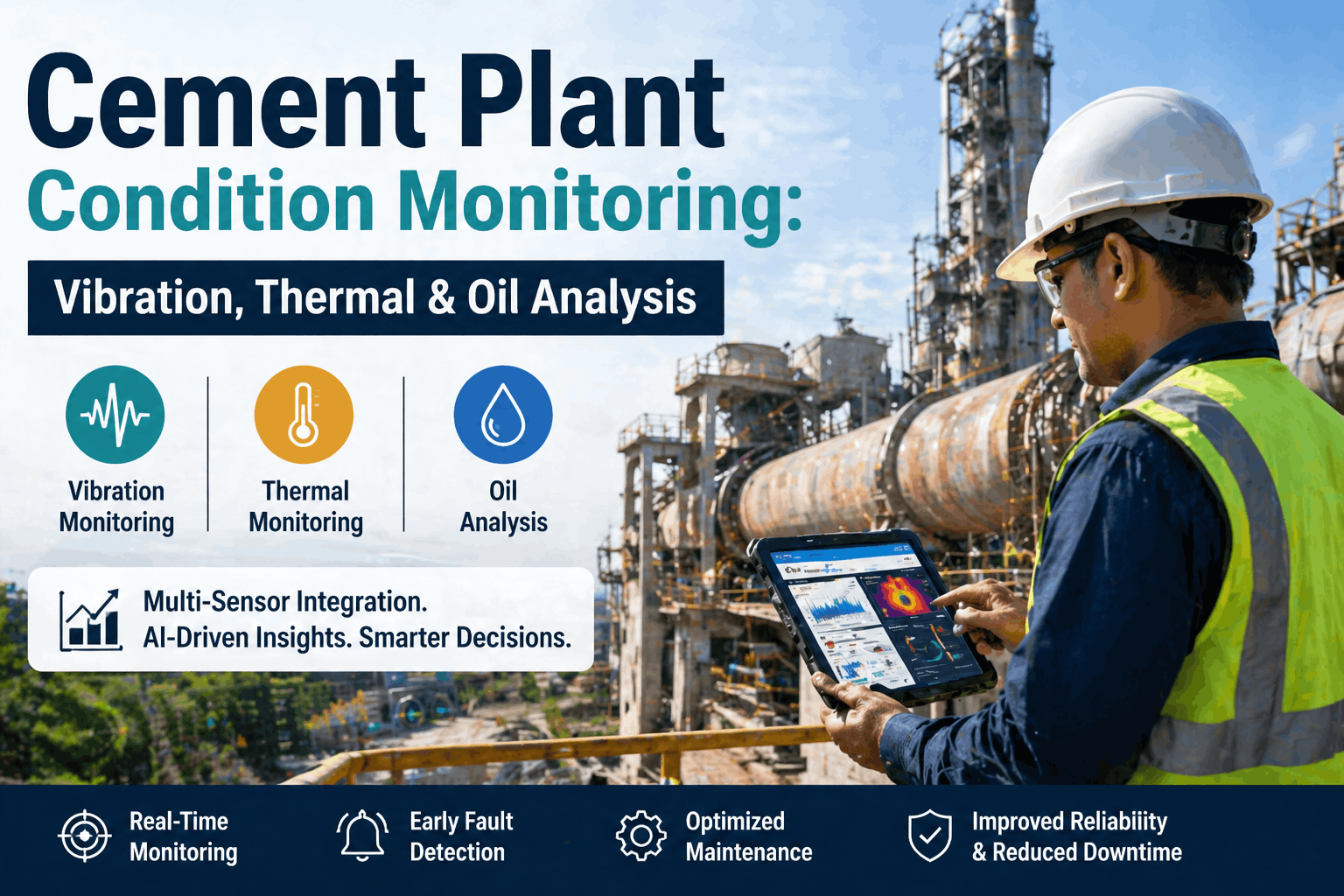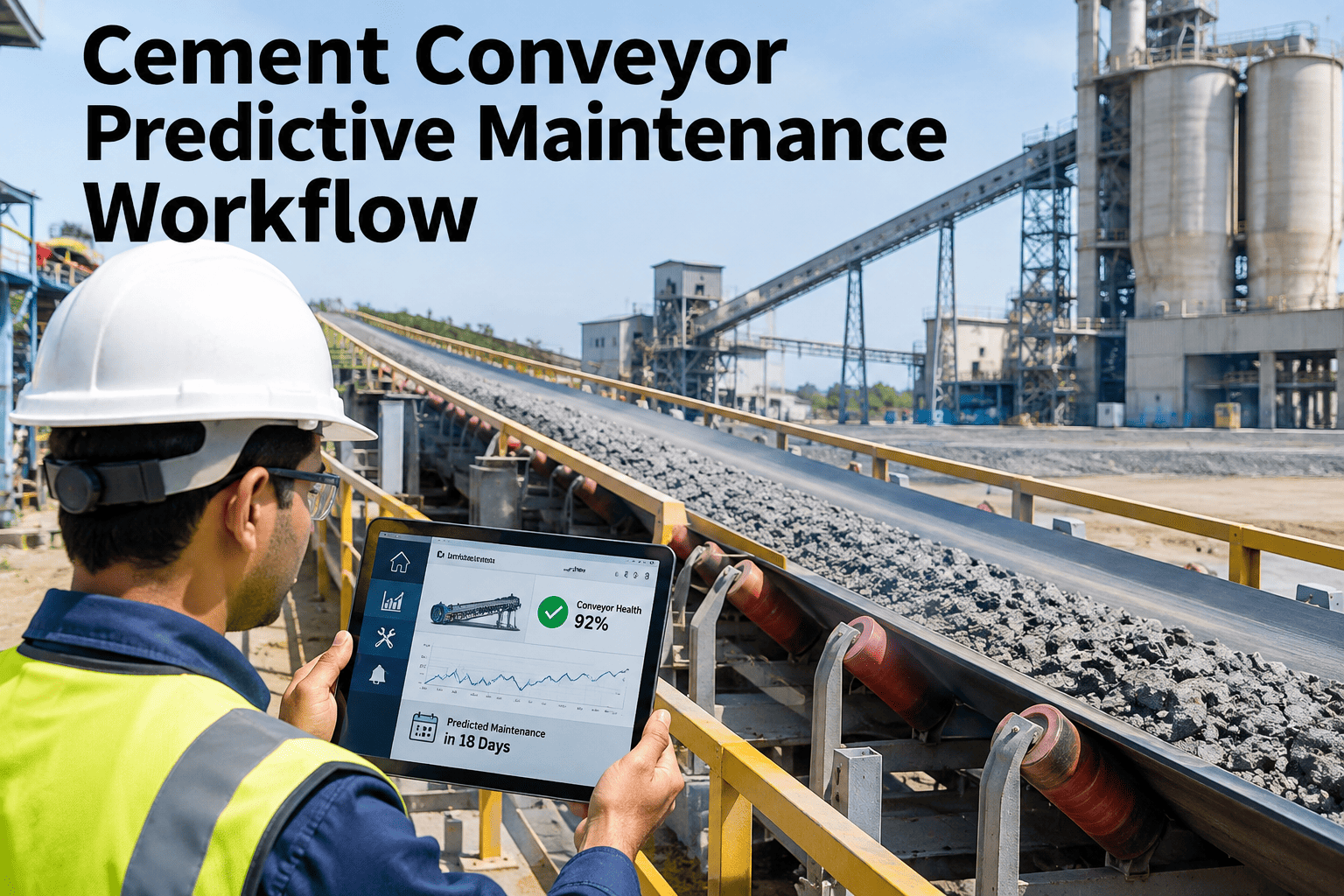
A cement plant can have every sensor it needs on a conveyor and still lose the belt to a seized idler, because the sensor was never the weak link. The weak link sits between the moment a signal crosses a threshold and the moment a technician with the right part stands in front of the right idler. Most PdM programs are built around detection technology and never finish designing the workflow that turns a signal into a closed work order. Reliability teams that want their own signal-to-closure path reviewed can walk through a conveyor PdM workflow built around their own criticality ranking with the iFactory AI team.
Detection Is the Easy Part. The Workflow From Signal to Closed Work Order Is Where Programs Fail.
iFactory AI turns belt and idler failure signals into a ranked, assigned, trackable work order — not a dashboard alert nobody owns.
Where Conveyor PdM Programs Actually Break Down
Idler bearings and belt drives produce detectable signals well before they fail — rising temperature, climbing vibration, a drifting edge. Catching these signals is mature, widely deployed technology. What breaks is everything after the alert fires: who sees it, who decides it matters, and whether a work order exists before the next shift change.
Step 1: The Signals Worth Watching on Belt and Idler Systems
Not every reading needs a response. A workflow starts by defining which signals, on which components, actually warrant one — otherwise the system drowns the team in noise before the first work order is ever written.
Map Your Own Signal List Against This Workflow
Bring your existing sensor coverage to a 30-minute session and see where the signal-to-work-order path actually breaks.
Step 2: Turning a Signal Into an Inspection Finding
A signal is a reading; a finding is a reading confirmed against the physical asset. Skip that confirmation step and single-signal noise — a load change, an ambient swing — turns into a false work order, and teams learn to ignore the system that generated it.
Step 3: Criticality Ranking — Not Every Idler Gets the Same Response
A plant with thousands of idlers across kilometers of belt cannot treat every finding the same way. Criticality ranking decides how fast a finding has to move; getting it wrong either buries the team in low-value urgency or quietly ignores the conveyor that feeds the kiln.
Set the ranking from the asset hierarchy before a finding ever occurs, not in the moment an alert fires — a finding on a Tier 1 kiln-feed idler should never route through the same response clock as the identical finding on a Tier 3 stockpile idler.
Step 4: The Work Order the Finding Actually Deserves
A ranked finding becomes a work order with four things attached, or it becomes another alert that fades into the noise. The work order is where the workflow either closes the loop or quietly breaks it.
Step 5: The KPIs That Show the Workflow Is Actually Working
A workflow that looks complete on paper still has to prove it is closing loops in practice. A small set of KPIs, tracked consistently, shows whether findings are turning into timely work or piling up unaddressed.
A Composite Scenario: The Alert That Fired for Three Weeks
A cement plant had vibration sensors on every idler along its primary kiln-feed conveyor, and the dashboard correctly flagged a bearing trending upward over three weeks. The signal was real; the detection technology worked exactly as designed.
What never happened was a work order. The alert sat on a shared dashboard nobody was assigned to clear, and because the conveyor had no recent failure history, nobody treated the trend as urgent. The idler seized on a Friday evening, and the belt damage took the kiln-feed line down for most of a weekend. The plant did not lack a sensor or a signal. It lacked a workflow that turned a three-week-old trend into a scheduled replacement before the bearing decided the timing itself.
Where iFactory AI Fits
Multi-Signal Correlation
Temperature, vibration and trend data are correlated against each asset's own baseline before a finding is raised.
Criticality-Based Ranking
Findings are ranked against a pre-built asset criticality hierarchy, not decided case by case when an alert fires.
Automatic Work-Order Generation
A ranked finding generates a work order with owner, due date, component ID and part check attached automatically.
Closed-Loop KPI Tracking
Finding-to-closure time and planned-vs-unplanned ratios are tracked continuously, so gaps in the workflow stay visible.
Frequently Asked Questions
Why do conveyor PdM programs fail even with good sensors in place?
Most failures happen after detection, not before it — a correctly flagged signal with no assigned owner, no due date and no work order behaves exactly like a conveyor with no monitoring at all. The sensor technology is rarely the gap; the workflow connecting signal to closed work order usually is. See this workflow mapped against your current setup in a short session.
How is criticality ranking actually set for a conveyor network?
Criticality should come from the asset hierarchy built before any finding occurs — which conveyors feed the kiln with no bypass, which have failure history, which carry fire or safety risk — not decided in the moment an alert fires. That hierarchy then sets the response clock for every finding on that asset automatically. Walk through a criticality ranking exercise for your own conveyor network.
What should happen before a signal becomes a work order?
A signal should be correlated against at least one other indicator and the asset's own baseline before it becomes a finding, and a finding should be ranked by criticality before it becomes a work order. Skipping either step either floods the team with false alarms or lets a real trend sit unranked and unassigned. Ask support how the correlation rules are configured for your signal types.
Which KPI best shows whether the workflow is actually closing loops?
Finding-to-work-order time is usually the most revealing single metric, since it exposes exactly where a confirmed signal sits idle before anyone acts on it. Pair it with the planned-versus-unplanned replacement ratio to see whether that speed is actually converting into scheduled work. See these KPIs tracked on a live dashboard for your conveyor network.
Can this workflow run alongside our existing sensor and monitoring investment?
Yes. The workflow sits on top of whatever vibration, temperature or vision monitoring is already in place, turning its raw signals into correlated findings, ranked work orders and tracked KPIs rather than requiring a sensor replacement. Ask how this connects to your current monitoring stack rather than replacing it.
Close the Loop From Signal to Work Order, Every Time
iFactory AI correlates belt and idler signals, ranks findings by criticality, and generates the work order with an owner and due date attached. Book a walkthrough with your own conveyor network.