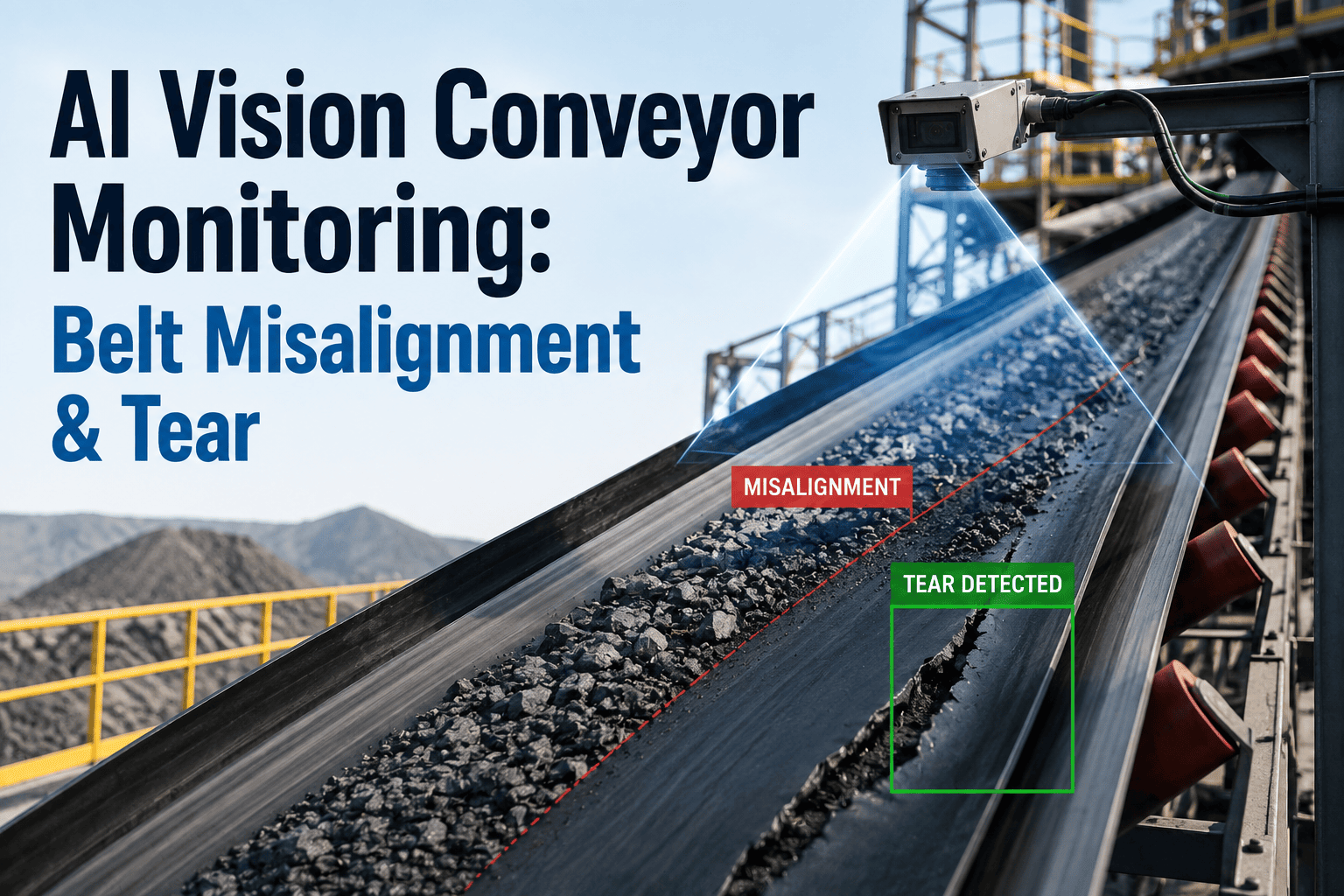
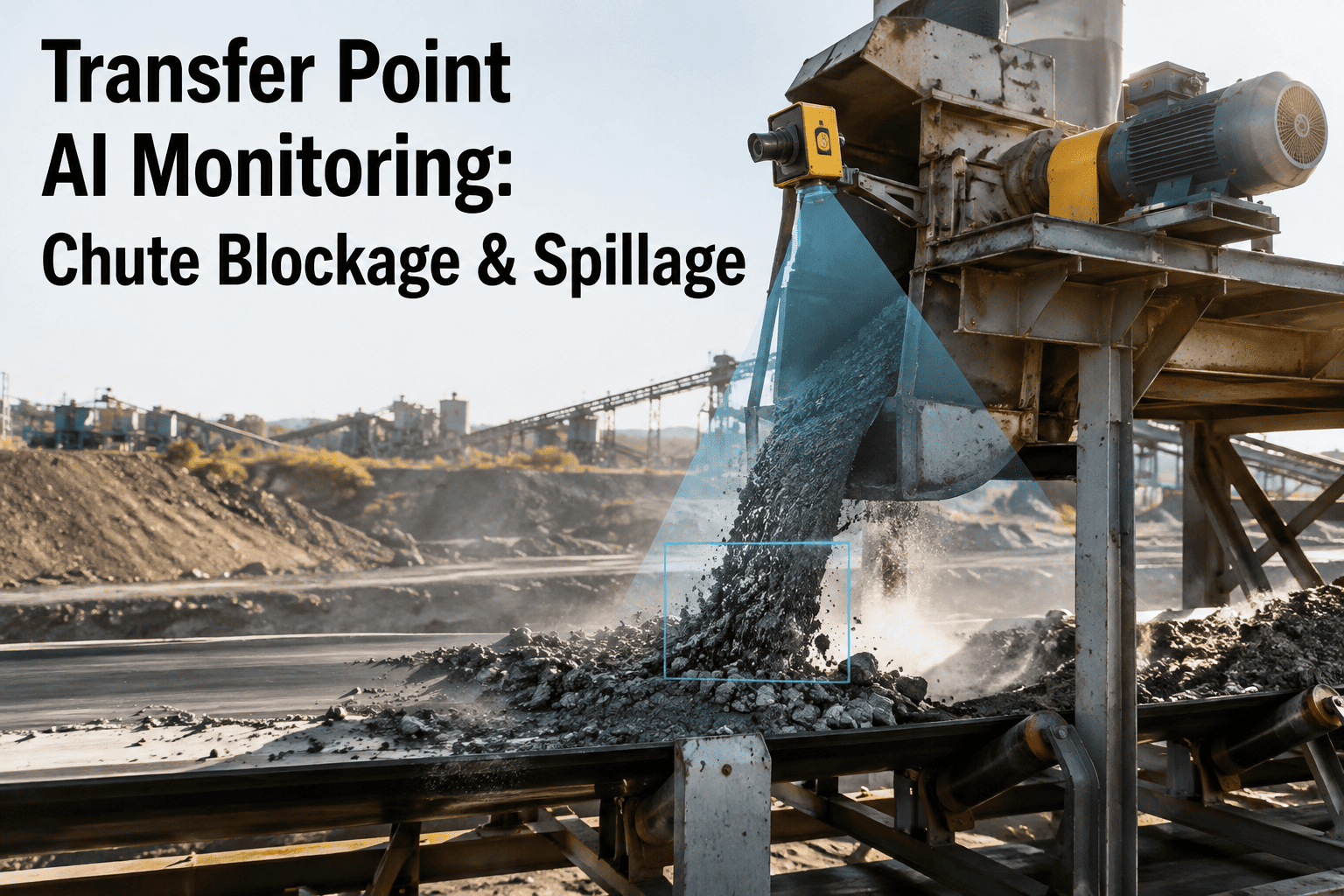
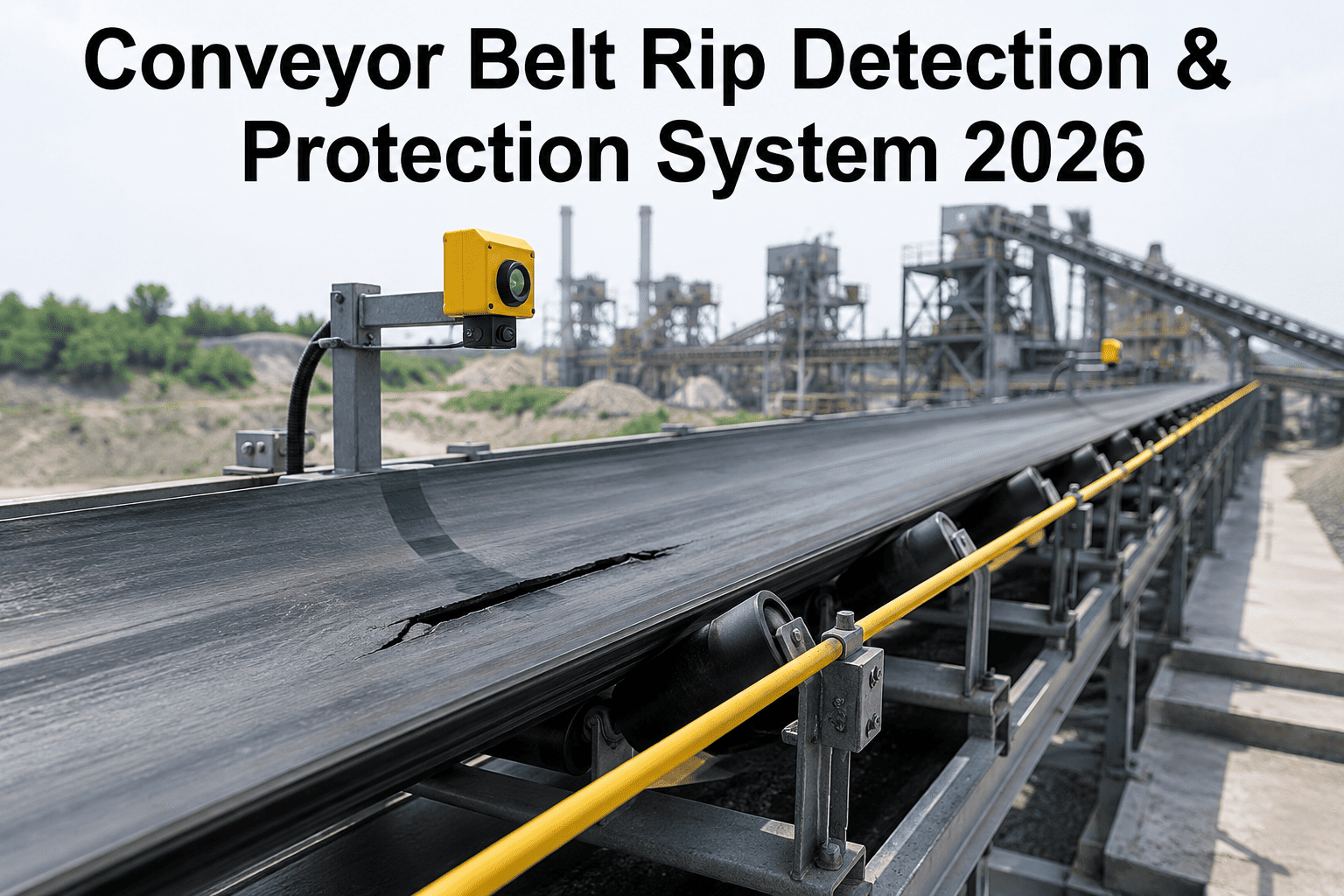
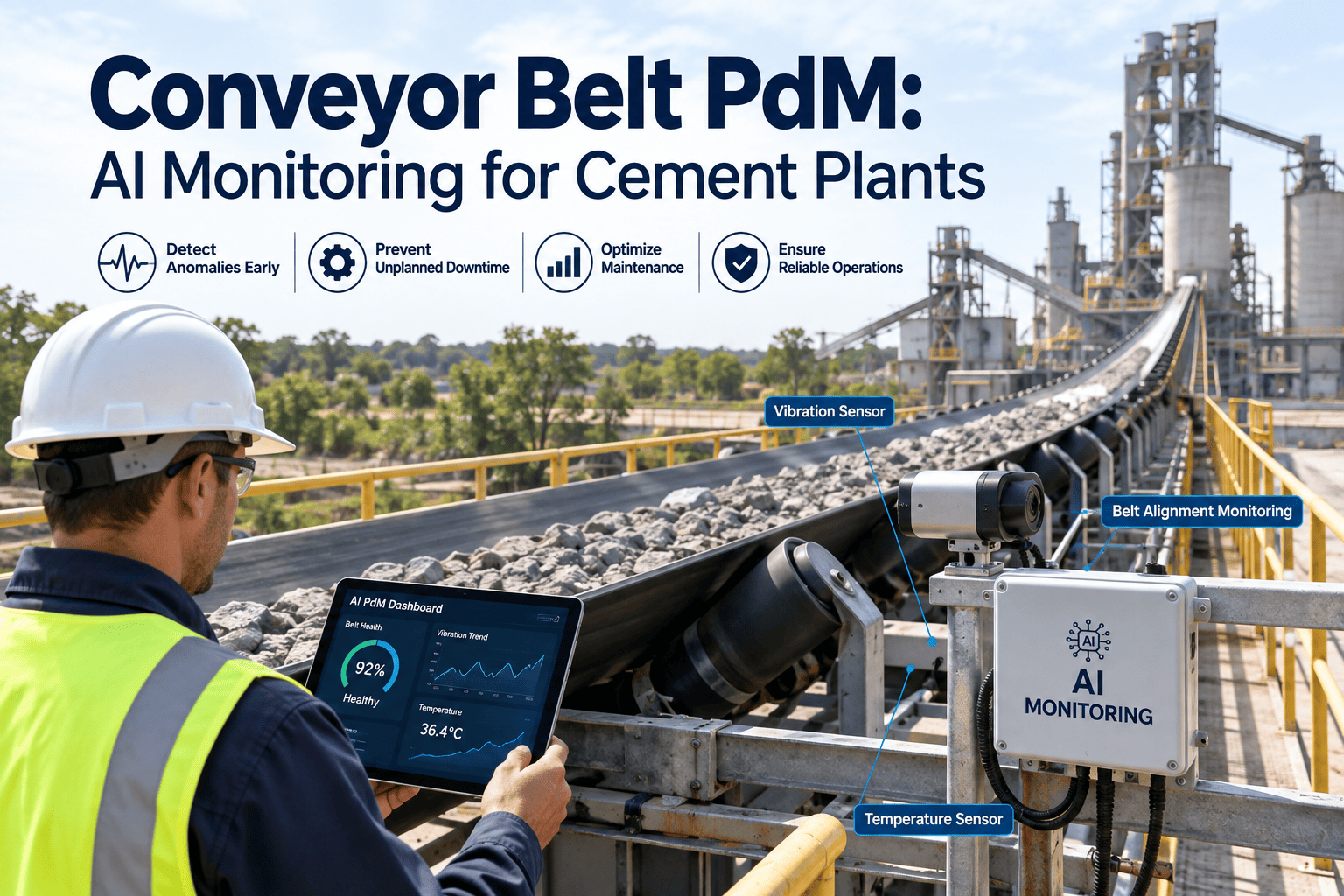
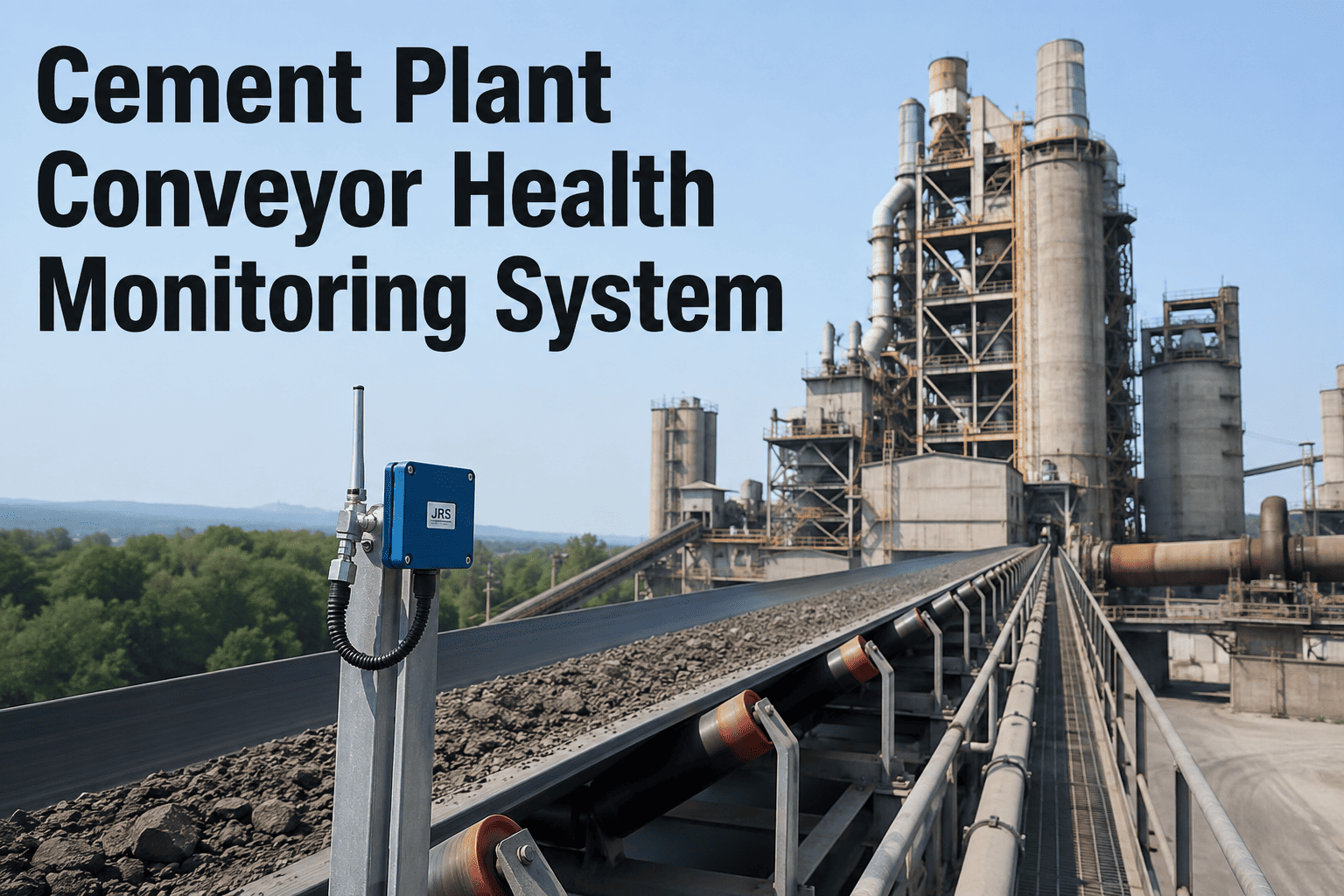
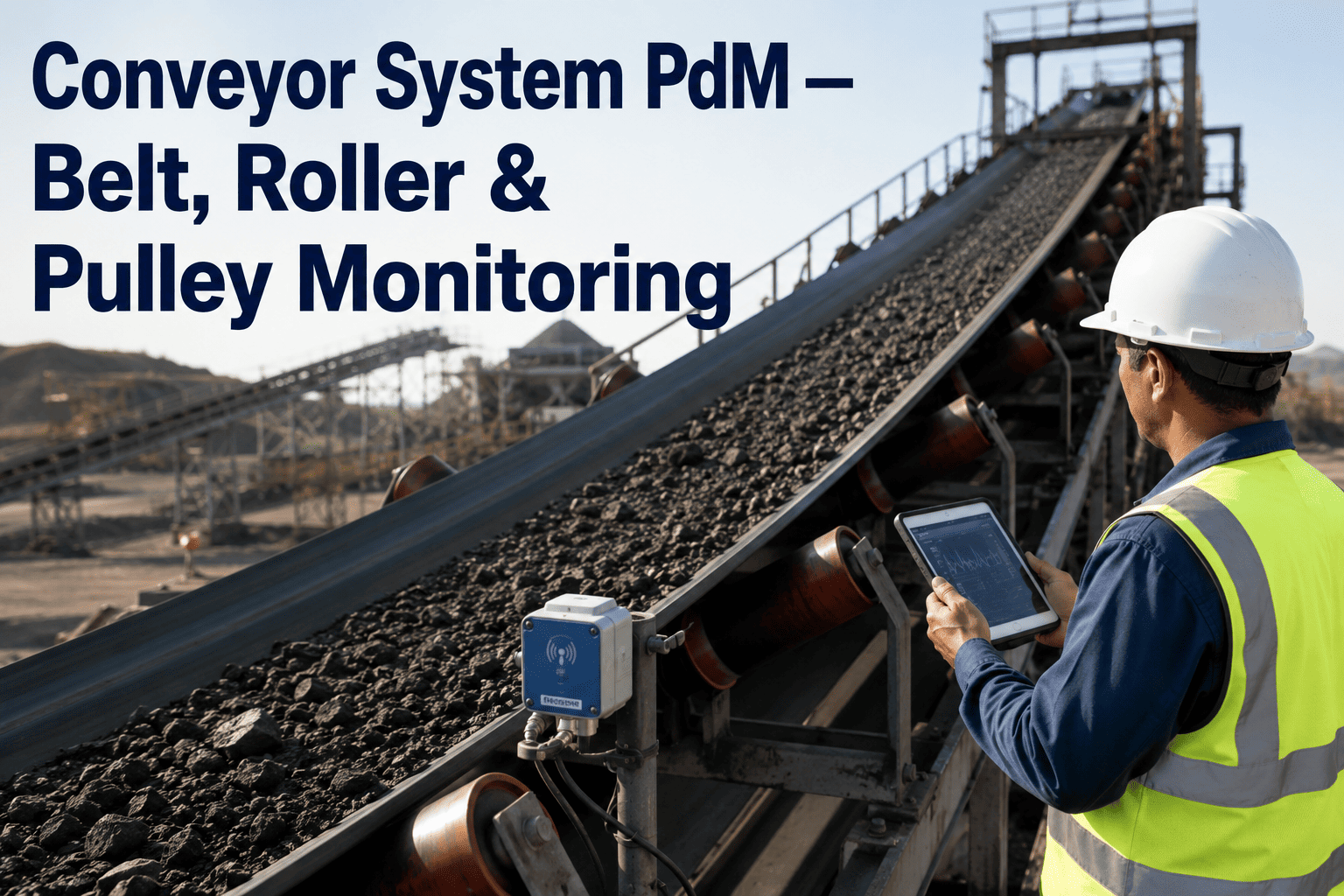
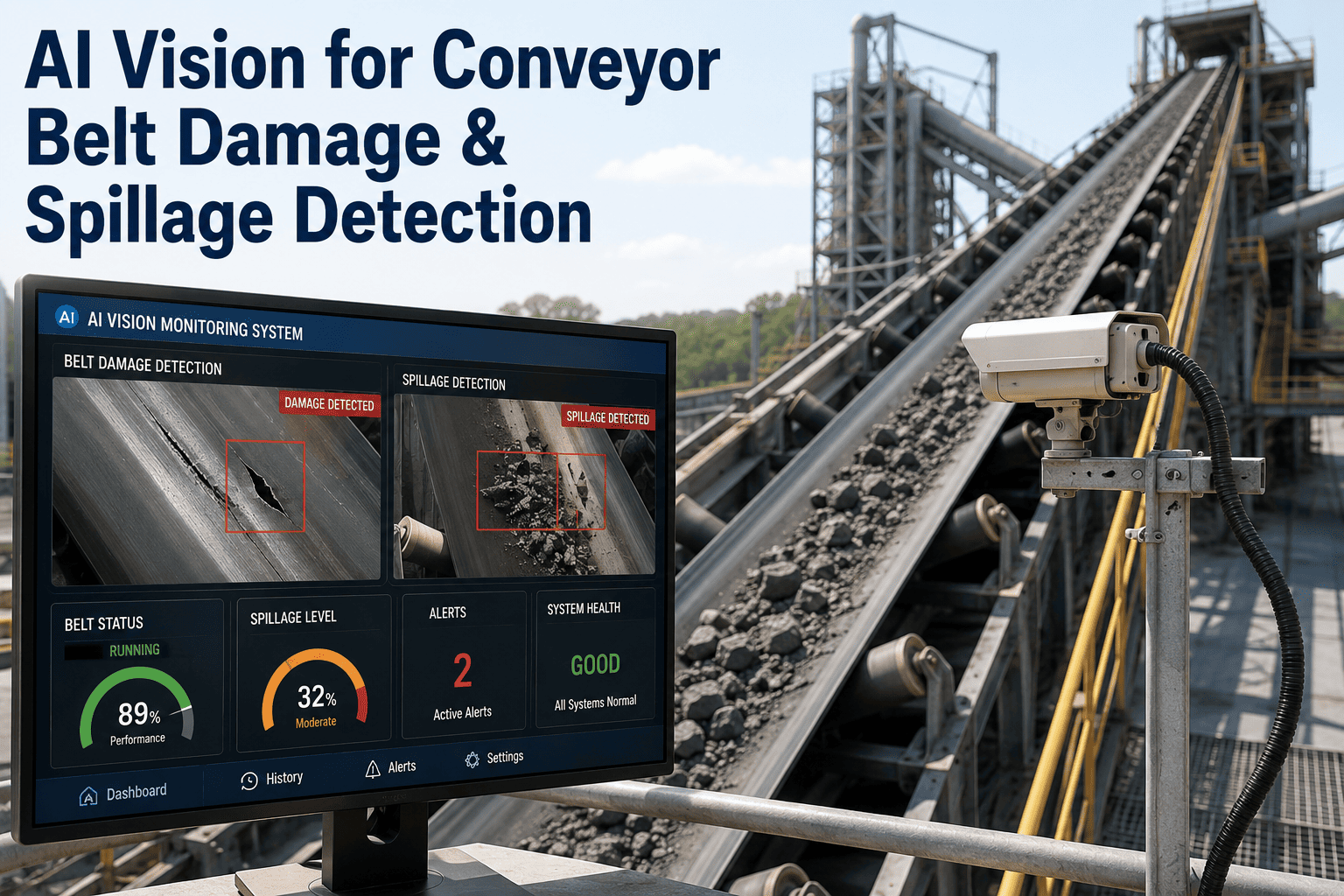
Conveyor belts move raw material, clinker, and fuel across nearly every stage of a cement plant, and belt failures rank among the most disruptive unplanned stops a plant can face. A misaligned belt wears through its edges and can shift enough to damage the structure around it. A developing tear, left undetected, can propagate the full length of the belt during a single run. Material spillage at transfer points buries idlers, creates fire risk near hot material, and adds hours of manual cleanup. Manual walkdowns catch these problems only when someone happens to be looking at the right spot at the right time. Talk to iFactory support about deploying AI vision monitoring across your conveyor network.
Cement · AI Vision · Conveyor Monitoring
AI Vision Conveyor Monitoring: Catching Misalignment and Tears Before They Stop the Line
A camera watching a moving belt around the clock catches what a walkdown every few hours cannot. Here is what AI vision actually detects on a conveyor, how it classifies severity, and what plants recover once continuous monitoring replaces periodic inspection.
24/7
Continuous belt observation versus periodic manual walkdown coverage
Seconds
Typical time from a detected tear or misalignment event to an operator alert
30–50%
Reduction in unplanned belt-related stops reported after continuous vision monitoring is deployed
What The Camera Catches
Three Failure Modes One Vision System Is Trained to Watch For
A single camera positioned along a conveyor run can be trained to recognize several distinct failure patterns at once, each with its own visual signature and its own consequence if missed. Below are the three that account for the majority of belt-related unplanned stops in cement material handling.
Belt Misalignment
The vision system tracks the belt edge position against a reference line across the full width of the frame. Gradual drift toward one side, often caused by uneven loading or worn idlers, is flagged well before the belt runs far enough off-center to contact the frame structure.
Belt Tear and Damage
Surface pattern recognition identifies longitudinal tears, splice separation, and edge fraying by comparing the belt surface against its expected uniform texture frame by frame, catching damage while it is still a localized defect rather than a running failure.
Material Spillage
At transfer points and load zones, the system identifies material accumulation outside the intended belt path, distinguishing normal load variation from spillage building up around idlers, chutes, or the walkway beside the conveyor.
Misalignment Detection
Tracking Deviation in Zones — From Centered to Critical
Belt tracking deviation is not a single trip point. Vision systems classify how far the belt edge has drifted from its reference position into zones, each triggering a different response, so a minor drift gets logged for trending while a severe drift gets an immediate alert.
Centered
Drift Watch
Warning
Critical
Belt edge within normal operating tolerance, no action needed
Gradual drift trend logged for maintenance review, no alert triggered yet
Deviation approaching frame clearance limit, operator alert sent
Belt at risk of contacting structure, immediate stop or intervention required
Tear Severity
Classifying Belt Damage by Severity, Not Just Presence
Level 1
Surface Scoring
Shallow surface marks or scuffing visible on the belt cover, logged for trend tracking without requiring an immediate response.
Level 2
Edge Fraying
Fiber exposure or fraying along the belt edge, typically linked to ongoing misalignment, flagged for a scheduled inspection.
Level 3
Splice Separation
Visible gap or lifting at a belt splice joint, a common precursor to a full-width tear, triggering a near-term maintenance alert.
Level 4
Longitudinal Tear
An active running tear along the belt length, capable of propagating the full belt run within minutes, triggering an immediate stop alert.
A Torn Belt Rarely Starts as a Torn Belt — It Starts as a Mark Nobody Was Watching For
iFactory's vision monitoring tracks belt condition continuously across every conveyor in the network, classifying misalignment and tear severity automatically so maintenance teams act on Level 2 damage instead of discovering Level 4.
Detection to Action
What Happens Between a Detected Event and an Operator Response
1
Continuous Frame Capture
Cameras positioned along each monitored conveyor run capture the belt surface and edge position continuously during operation.
2
Pattern Recognition
The vision model compares each frame against expected belt condition, identifying deviations in tracking position, surface texture, or material distribution.
3
Severity Classification
Detected anomalies are classified by severity level, determining whether the event is logged, scheduled for review, or escalated immediately.
4
Operator Alert
Warning and critical-level events generate an immediate alert to the control room with the location and image reference of the detected condition.
5
Trend Logging
Every event, regardless of severity, is logged against that conveyor's history, building a condition trend that supports planned rather than reactive maintenance.
Measured Outcomes
What Plants Report After Deploying Continuous Belt Vision Monitoring
30–50%
Fewer Unplanned Belt Stops
Catching misalignment and early-stage tears before they escalate reduces the frequency of emergency shutdowns caused by belt-related failures.
Earlier
Splice Damage Detection
Splice separation is consistently flagged at Level 3 well before it reaches the running-tear stage, when repair is simpler and cheaper.
Reduced
Manual Walkdown Load
Continuous monitoring shifts routine visual inspection from a scheduled manual task to an automated background process, freeing inspection time for other work.
Faster
Spillage Response
Automated spillage detection at transfer points shortens the time between material buildup starting and cleanup being scheduled, reducing fire and housekeeping risk.
Field Example
A Raw Material Conveyor Line Cut Belt-Related Downtime After a Splice Failure
A cement plant's raw material handling system experienced a full-width belt tear originating from an undetected splice separation, resulting in an extended unplanned stop while the belt section was replaced. The splice had likely been deteriorating for weeks, but with manual inspection rounds covering the conveyor only a few times per shift, the gradual separation was never caught before it progressed to a full failure. Following the incident, the plant deployed AI vision monitoring across its primary raw material and clinker transport conveyors, positioning cameras at splice locations and along belt edges prone to misalignment. Within the first month, the system flagged two Level 3 splice conditions on other conveyors that manual inspection had not yet identified, allowing scheduled repairs during planned maintenance windows rather than emergency stops. Belt-related unplanned downtime across the monitored conveyor group dropped substantially over the following quarter compared to the same period the previous year.
2 Splices
Level 3 conditions caught in the first month of monitoring
Planned
Repairs completed during scheduled windows instead of emergency stops
Lower
Belt-related unplanned downtime versus the prior year quarter
Continuous
Coverage replacing periodic manual walkdown rounds
Common Questions
AI Vision Conveyor Monitoring — What Maintenance Teams Ask First
Does the vision system need special lighting or camera hardware to work reliably around conveyors?
Most conveyor environments in cement plants involve dust, variable ambient light, and vibration, so camera placement and enclosure selection matter more than exotic hardware. Cameras are typically positioned with supplemental lighting where natural conditions are inconsistent, and the vision model is trained to handle dust interference as part of normal operating conditions rather than treating it as a fault.
Contact support to review camera placement for your specific conveyor layout.
Can one system monitor multiple conveyors, or is a separate setup needed for each belt?
A single monitoring platform can typically manage cameras across many conveyors simultaneously, with each camera feed processed independently for its specific belt and transfer point conditions while all alerts and trend data roll up into one control room view. This is generally more practical than treating each conveyor as an isolated monitoring project, since maintenance teams need a unified view of belt health across the whole material handling network.
Book a demo to see multi-conveyor monitoring in one dashboard.
How does the system tell the difference between normal belt loading variation and an actual spillage event?
The model is trained on the expected material profile at each monitored point, including normal variation in load height and distribution during typical operation, so it distinguishes between material that is still within the belt's intended path and material that has accumulated outside it. Spillage detection is typically tuned per location, since a transfer point and a straight belt run have different normal appearances, and treating them identically would produce unreliable alerts either way.
What is a realistic timeline to see AI vision monitoring catch its first meaningful issue after installation?
Many plants see the system flag its first genuine misalignment or early tear condition within the first few weeks of operation, since these conditions are often already present but simply undetected by periodic manual inspection at the time cameras go live. The value compounds over the following months as trend data accumulates, allowing maintenance planning to shift from reacting to individual alerts toward addressing recurring patterns at specific conveyor locations.
Contact support for a deployment timeline specific to your conveyor network.
Does continuous vision monitoring replace the need for manual belt inspection entirely?
Vision monitoring significantly reduces reliance on manual visual inspection for the conditions it is trained to detect, but it works best as a complement to periodic physical inspection rather than a full replacement, since some conditions such as internal ply damage or pulley bearing wear are not visible from surface imagery alone. The practical shift most plants see is manual inspection time moving away from routine scanning toward targeted checks on locations the vision system has already flagged.
Book a demo to see how vision alerts integrate with your existing inspection routine.
Every Belt Failure Leaves Visual Warning Signs Long Before It Becomes a Stop
iFactory's AI vision monitoring watches every conveyor continuously, classifying misalignment and tear severity in real time so maintenance teams act on early warning signs instead of responding to a belt that has already failed.