Transfer Point AI Monitoring: Chute Blockage & Spillage
By Johnson on August 17, 2026
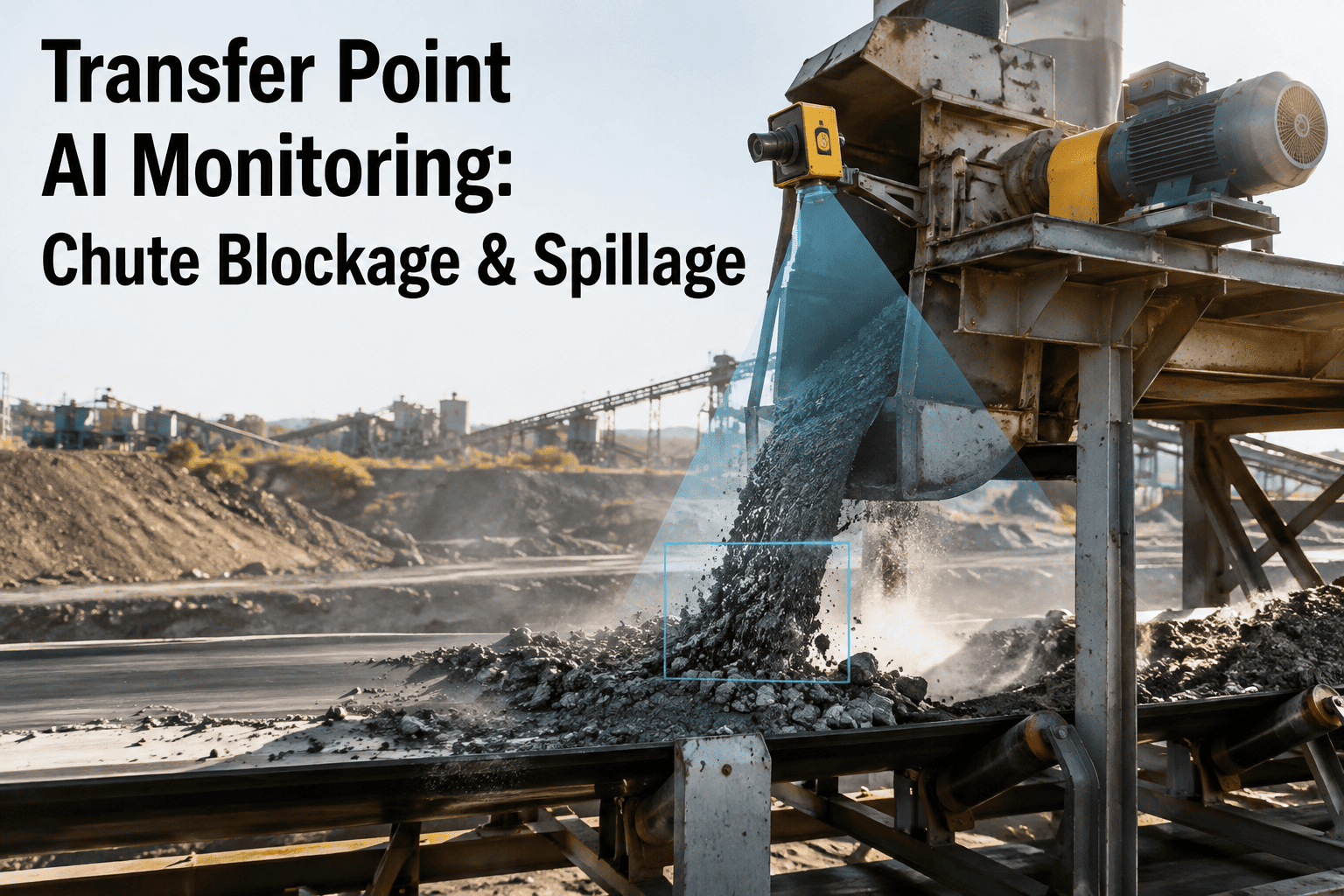
Transfer points cause a disproportionate share of conveyor downtime in a cement plant, and it is not close. A belt can run for months without incident along its straight carrying run, but the chute where material drops from one conveyor to the next is where blockages build, where spillage escapes onto structure and walkways, and where a five-minute housekeeping issue turns into an eight-hour unplanned stop if nobody catches it early. Most plants still rely on an operator walking past twice a shift to notice a problem that has often been building for days. AI vision at the transfer point catches blockage, spillage, and material buildup as they start — book a demo to see it running against your own transfer point footage.
CEMENT · AI VISION CONVEYOR · TRANSFER POINTS
Transfer Point AI Monitoring: Catching Chute Blockage and Spillage Before They Stop the Line
Every transfer point in a cement plant is a single narrow zone where three different failure modes converge — blockage, spillage, and material buildup — and where a two-minute early catch replaces a shift-long cleanup and an unplanned stop.
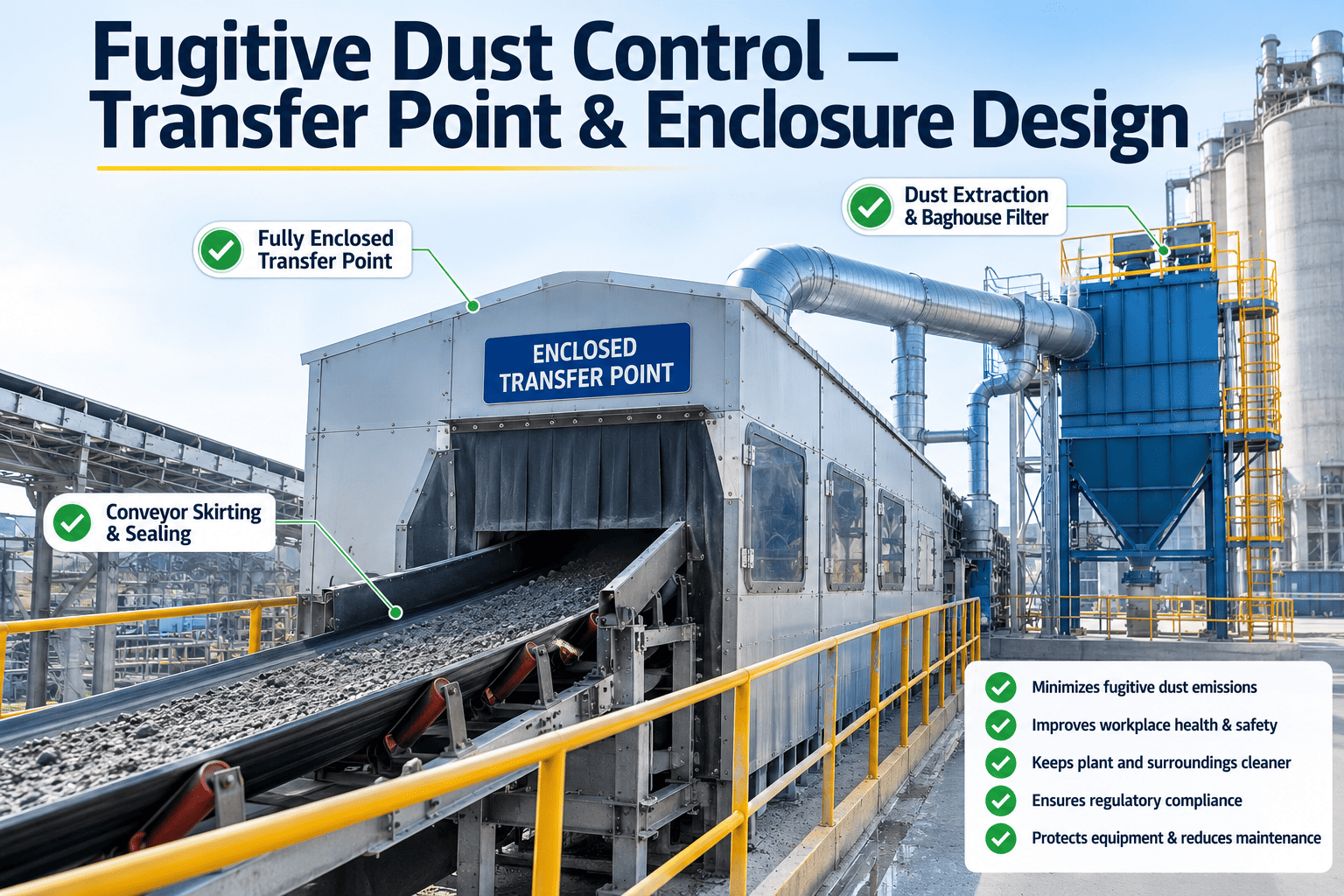
Buildup narrows the chute opening long before it fully blocks — the window AI vision is built to catch
Three Failure Modes, One Narrow Zone
Chute blockage, material spillage, and progressive buildup are usually discussed as separate problems, but at a transfer point they are stages of the same underlying issue — material is no longer flowing through the chute the way it was designed to. Recognizing which stage a transfer point is in changes what the right response actually is.
BUILDUP
Progressive Material Buildup
Wet or fine material adheres to chute walls and slowly narrows the flow path. Buildup is the earliest-stage warning sign and the easiest to clear if caught before it hardens into a blockage.
SPILLAGE
Material Spillage Past the Skirt
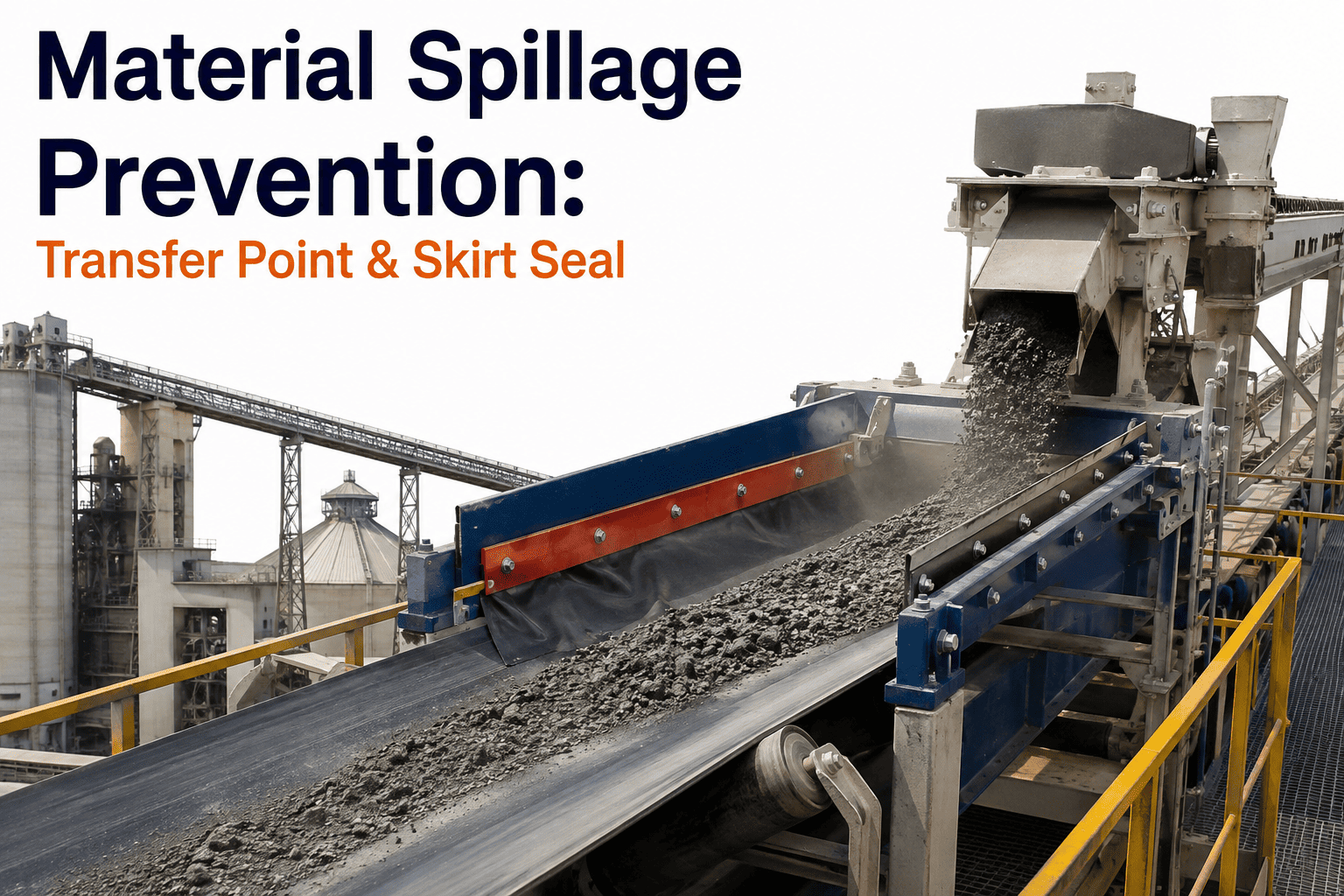
Material escapes past worn skirting rubber or a misaligned chute, accumulating on structure, walkways, and idlers below. Left unaddressed, spillage becomes a housekeeping burden and an idler-damage risk.
BLOCKAGE
Full Chute Blockage
Buildup that goes uncleared eventually restricts the chute enough to back material up onto the belt itself, forcing an emergency stop before the belt derails or the drive trips on overload.
What Each Failure Mode Actually Costs
The three failure modes look similar from a distance, but their cost profiles are different enough that treating them as one problem leads to the wrong fix. A plant that only budgets for emergency blockage response is missing the much larger, quieter cost sitting in unaddressed spillage and buildup.
Spillage on idlers accelerates bearing wear and belt mistracking
Full blockage
Emergency stop, belt overload risk, production loss
Repeated blockages accelerate chute liner and skirt wear
See How Many Transfer Points Are Already Drifting Toward a Stop
Most plants find several transfer points running with partial buildup they did not know about once continuous monitoring is switched on. iFactory engineers can run a live assessment against your own camera feeds.
A single camera and model cannot treat buildup, spillage, and blockage as the same visual pattern — each has a distinct signature, and a monitoring system built for transfer points needs to recognize all three independently rather than triggering one generic alarm for anything unusual.
Buildup Recognition
Models trained on chute geometry track the visible flow opening over time, flagging a gradual narrowing trend well before it reaches a restriction threshold, rather than waiting for a single frame to look wrong.
Spillage Identification
Vision coverage of the area around skirting and structure below the chute identifies material accumulation outside the intended flow path, distinguishing normal dust film from an actual spillage event.
Blockage Confirmation
Combined with belt load and motor current signals, vision confirms an actual blockage versus a momentary shadow or lighting change, cutting false alarms that would otherwise erode operator trust in the system.
From Detection to Action: The Response Sequence
Detection only creates value if it reaches the right person with enough context to act before the situation escalates. A transfer point monitoring system should shorten the path from "something is wrong" to "someone is clearing it," not just add another alarm to a screen nobody watches.
1
Vision model detects a buildup trend crossing a defined flow-restriction threshold at a specific transfer point
2
Alert routes directly to the area operator or housekeeping crew with the transfer point location and a snapshot of current chute condition
3
Crew clears buildup during a normal walkdown rather than during an emergency stop, keeping the belt running throughout
4
System confirms flow restored to normal chute geometry and closes the alert automatically
5
Recurrence at the same transfer point over time flags it for a design review rather than repeat manual clearing
Transfer Point Design Factors That Predict Recurring Problems
Some transfer points block or spill far more often than others on the same plant, and it is rarely random. Design and material characteristics at a specific transfer point predict recurring issues well before monitoring data confirms the pattern.
Chute Angle and Geometry
Chute angles below the material's angle of repose invite buildup regardless of how well the rest of the system is maintained, particularly with fine or moisture-prone material.
Material Moisture Content
Raw meal, wet additives, and seasonal moisture swings change flow behavior significantly, and transfer points sized for dry material are the most common recurring blockage points.
Skirt Rubber Condition
Worn or improperly tensioned skirting is the single largest contributor to chronic spillage, and its degradation is gradual enough to go unnoticed between scheduled inspections.
Transfer Height and Impact
Excessive drop height increases material degradation and dust generation at the transfer point, both of which accelerate buildup on chute walls over time.
Before and After: A Clinker Transfer Chute Case
A clinker transfer chute feeding the cement mill circuit had experienced repeated unplanned stops that operations logged simply as "blockage," with no pattern tracked across events until continuous monitoring was installed.
BEFORE
Detection methodTwice-per-shift visual walkdown
Blockage events / month5–7
Average stop duration3.5 hours
Root cause trackedNo, logged as recurring nuisance
AFTER
Detection methodContinuous AI buildup tracking
Blockage events / month0–1
Average clearing timeUnder 20 minutes, no stop required
Root cause trackedYes, chute angle flagged for redesign
The buildup trend data made it clear the chute angle was undersized for the clinker's moisture variation during monsoon months, a design issue that had been misdiagnosed as an operations problem for over a year. A targeted chute modification, guided by the monitoring data, removed the recurring pattern entirely.
Frequently Asked Questions
How early can AI vision actually detect a chute blockage forming?
The system tracks the visible chute opening continuously and flags a narrowing trend as it develops, typically giving hours to days of warning depending on material and moisture conditions, rather than waiting until the opening is fully restricted. This is a meaningfully wider window than a twice-per-shift walkdown can offer, since buildup that starts right after an inspection can otherwise go unnoticed for up to twelve hours. Book a demo to see detection lead time against footage from your own transfer points.
Can the same camera setup distinguish normal dust from an actual spillage event?
Yes — models trained specifically on transfer point conditions differentiate a thin dust film, which is expected and does not indicate a problem, from actual material accumulation building up outside the intended flow path. This distinction is what keeps false alarm rates low enough that operators trust and act on the alerts, rather than the system generating so many low-value notifications that people start ignoring it entirely.
Does transfer point monitoring require new cameras, or can it use existing plant CCTV?
In many cases existing CCTV coverage at transfer points can be integrated directly if resolution and lighting are adequate for the model to track chute geometry reliably. Where coverage gaps exist or lighting is inconsistent, targeted camera additions at the highest-risk transfer points are usually a smaller investment than a full new camera network, since transfer points are naturally concentrated in a small number of locations per plant. iFactory support can assess your existing camera coverage before any new hardware is proposed.
How does the system tell the difference between buildup that needs clearing and buildup that will clear itself?
The trend direction matters more than a single snapshot. Buildup that plateaus at a stable level and stops narrowing further is tracked but not escalated, while a continuing narrowing trend triggers an alert before it reaches a defined restriction threshold. This trend-based approach avoids sending crews to clear minor, self-limiting buildup while still catching the cases that would otherwise progress to a full blockage if left alone.
Is transfer point monitoring worth prioritizing over belt-length rip detection if a plant can only invest in one first?
Transfer point issues are far more frequent, even though rip events carry a higher cost per incident. Most plants see recurring blockage and spillage events weekly to monthly per transfer point, compared to rip events that may occur once every year or two on a given belt, which makes transfer point monitoring the higher-frequency, faster-payback starting point for plants building out AI vision coverage in phases. The two are complementary rather than competing investments, and many plants roll out both together once the first zone proves out.
STOP LOSING SHIFTS TO A PROBLEM THAT STARTS SMALL EVERY TIME
See Your Transfer Points Monitored Before the Next Blockage Call
Share footage or details from your highest-incident transfer points. iFactory engineers return a coverage plan showing where buildup and spillage detection would catch the most recurring stops, and what early warning would have looked like on your last few incidents.