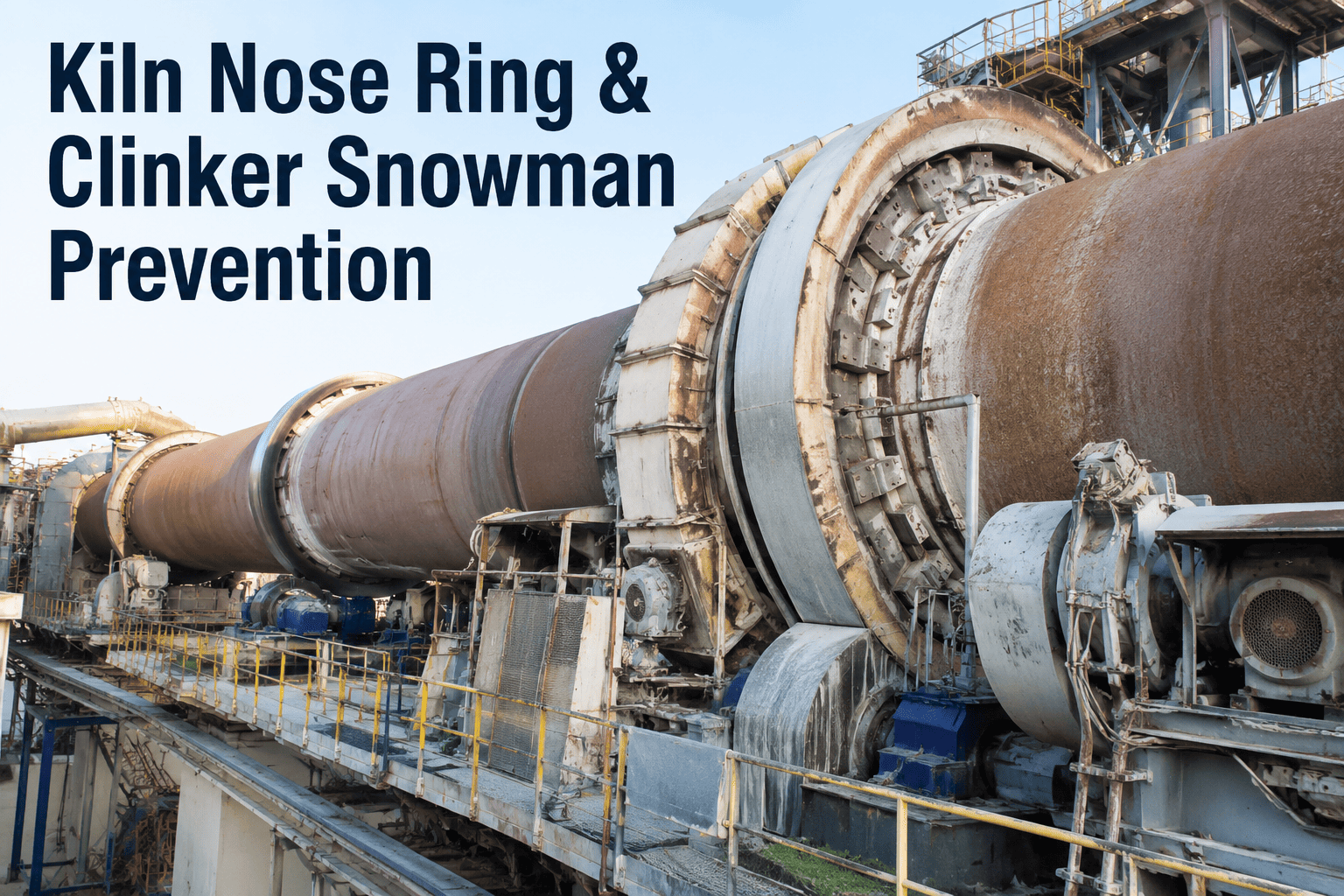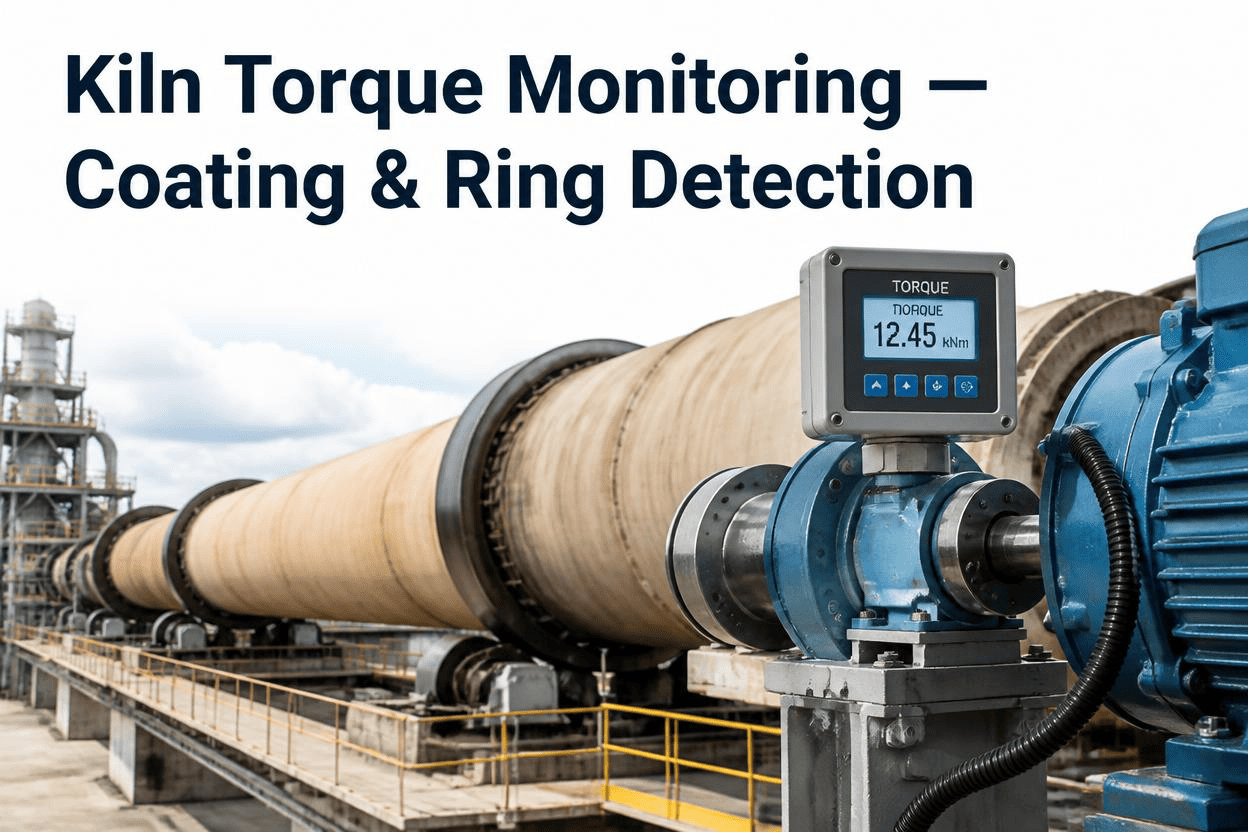
By the time a SCADA alarm fires because kiln drive torque has crossed 120% of rated load, the coating ring that caused it is usually already constraining production — the alarm is reporting a problem that has already arrived, not warning that one is coming. Torque is one of the most information-dense signals a kiln produces, because it reflects the mechanical load the drive is fighting against in real time, including the buildup that eventually forms rings and restricts material flow. The difference between a threshold alarm and a trend-based warning is the difference between reacting to a production-limiting event and catching it while intervention is still cheap. If your kiln's torque monitoring stops at a fixed threshold alarm, book a demo to see what a trend-based early warning actually looks like.
What Kiln Torque Actually Measures
Kiln drive torque reflects the resistance the main drive motor works against to keep the kiln rotating at its set speed. Under normal operation, that resistance stays within a predictable band shaped by material load, kiln fill level, and coating condition. When a coating ring starts forming inside the kiln, it changes the internal material flow pattern and increases the mechanical resistance the drive has to overcome — and that shows up in the torque signal well before it shows up anywhere else in the control room.
SCADA Threshold Alarms vs. Trend-Based Detection
What Torque Monitoring Detects Beyond Ring Formation
Torque is rarely read in isolation for a reason — on its own it flags that something changed, but correlating it with other signals is what identifies what actually changed and why.
Why Correlation Beats a Single Signal
SCADA systems are threshold-based by design — they respond to conditions that have already occurred, often once the underlying issue is already severe enough to have caused a measurable production impact. A correlated approach instead tracks deviation trajectories across multiple process variables simultaneously, identifying the root cause of an emerging problem and prioritizing alerts by their likely production, quality, or safety impact rather than treating every threshold crossing as equally urgent.
| Correlated Signals | Likely Root Cause | Typical Lead Time |
|---|---|---|
| Rising torque + falling preheater draft | Early-stage coating ring formation | 2–4 hours ahead of threshold alarm |
| Rising drive current + constant feed rate | Brick or coating loosening | Days ahead of visible temperature signature |
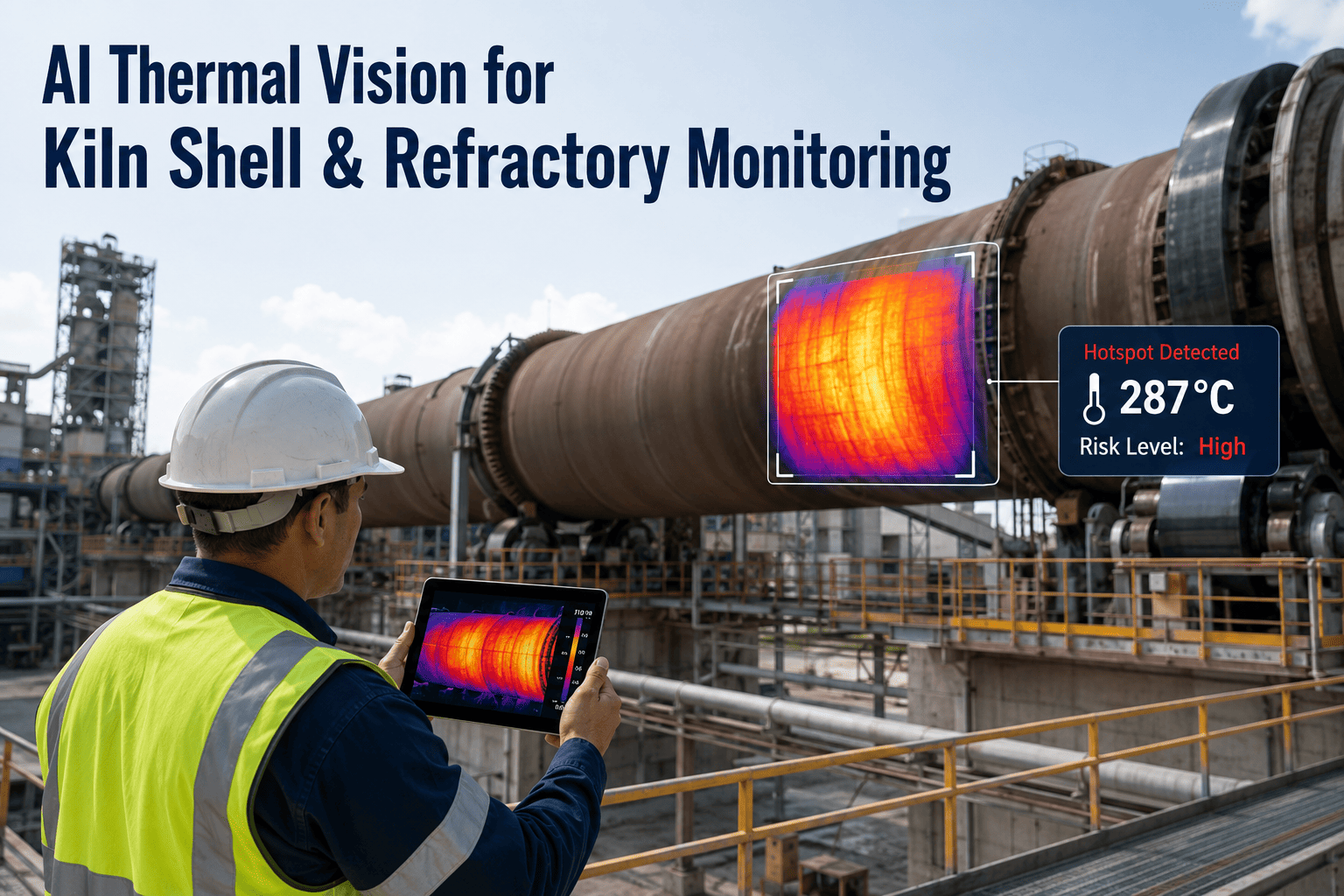
| Torque variation + shell hotspot trend | Refractory thinning vs. thermal stress | Weeks, when combined with scanner data |
| Torque anomaly + vibration + geometric drift | Kiln crank or mechanical misalignment | Days to weeks depending on progression rate |
What a Missed Ring Formation Actually Costs
Ring formation that goes undetected until it constrains throughput doesn't just slow production — it forces manual removal, which typically means an extended stop while the ring is broken up and cleared. Combined with the fuel inefficiency of running a partially restricted kiln in the hours or days before the issue is caught, the cost compounds well beyond the immediate downtime, which is exactly why the 2 to 4 hour earlier warning from trend-based detection has outsized value relative to how small that time window sounds.
Setting Up Draft and Torque Correlation Alerts
Getting real value out of trend-based detection requires more than just plotting torque over time — it requires defining what an abnormal rate of change actually looks like for your specific kiln, since a rate of rise that signals trouble on one line may be well within normal variation on another. This typically starts with establishing a baseline torque pattern across a range of normal operating conditions, including feed rate changes, fuel quality shifts, and planned ramp events, so the correlation logic isn't triggering false alarms every time the kiln does something routine. From there, the alert logic layers in preheater draft as a second variable, since torque rising in isolation is a weaker signal than torque rising alongside a simultaneous draft decline, which together point much more specifically toward material flow restriction. Getting the sensitivity right takes some tuning in the first few weeks of operation — too sensitive and operators start ignoring alerts as noise, too conservative and the system misses the early window it was built to catch. Most plants find the right balance faster by starting with a wider alert margin and tightening it gradually as confidence builds in the correlation logic's accuracy.
How This Fits Into a Broader Kiln Reliability Program
Torque monitoring rarely delivers its full value as a standalone system — its real strength shows up when it's one input feeding a broader picture of kiln health alongside shell temperature scanning, vibration monitoring, and refractory condition tracking. A ring formation event flagged by torque and draft correlation, for instance, becomes far more actionable when an operator can also check whether shell temperature in the same section shows any correlated anomaly, or whether recent feed chemistry data offers a likely explanation. Plants that build out kiln monitoring one isolated system at a time often end up with several disconnected alert streams that each require separate attention, rather than one prioritized view of what's actually happening on the kiln. Bringing torque, thermal, and mechanical signals into a single connected system doesn't just improve detection accuracy — it also reduces the operator workload of cross-checking multiple standalone dashboards every time an alert fires, which matters as much for adoption as the underlying detection accuracy does.