Cement manufacturing is one of the most operationally complex industries on the planet. A single integrated plant juggles hundreds of interdependent variables simultaneously — kiln temperatures, raw mix chemistry, equipment health, energy consumption, regulatory thresholds, and supply chain logistics — all running 24 hours a day, 365 days a year. For decades, plant operators managed these variables in silos: separate teams, separate software, separate spreadsheets. The result was predictable — gaps between systems became gaps in performance. iFactory AI was built to close every one of those gaps. This article walks through the eight most critical challenges facing cement producers in 2026 and shows exactly how iFactory's unified AI platform solves each one — not with point solutions, but with one intelligent platform that sees the entire operation at once.
The Complete iFactory AI Solution Framework
Every challenge below represents a measurable operational pain point costing cement plants millions annually. iFactory addresses each with targeted AI capability — and uniquely, all eight run on a single integrated platform, enabling cross-domain intelligence impossible with siloed tools.
Unplanned Equipment Failures & Catastrophic Downtime
Rotary kilns, ball mills, vertical roller mills, and clinker coolers are the revenue-generating heartbeat of any cement plant. A single unplanned kiln stoppage costs $80,000 or more per hour in lost clinker production, not including emergency repair costs, expedited spare parts, and post-restart rejects. Traditional time-based maintenance schedules are blind to actual equipment condition — they over-maintain healthy equipment and chronically under-maintain degrading assets.
AI Predictive Maintenance with Multi-Sensor Fusion
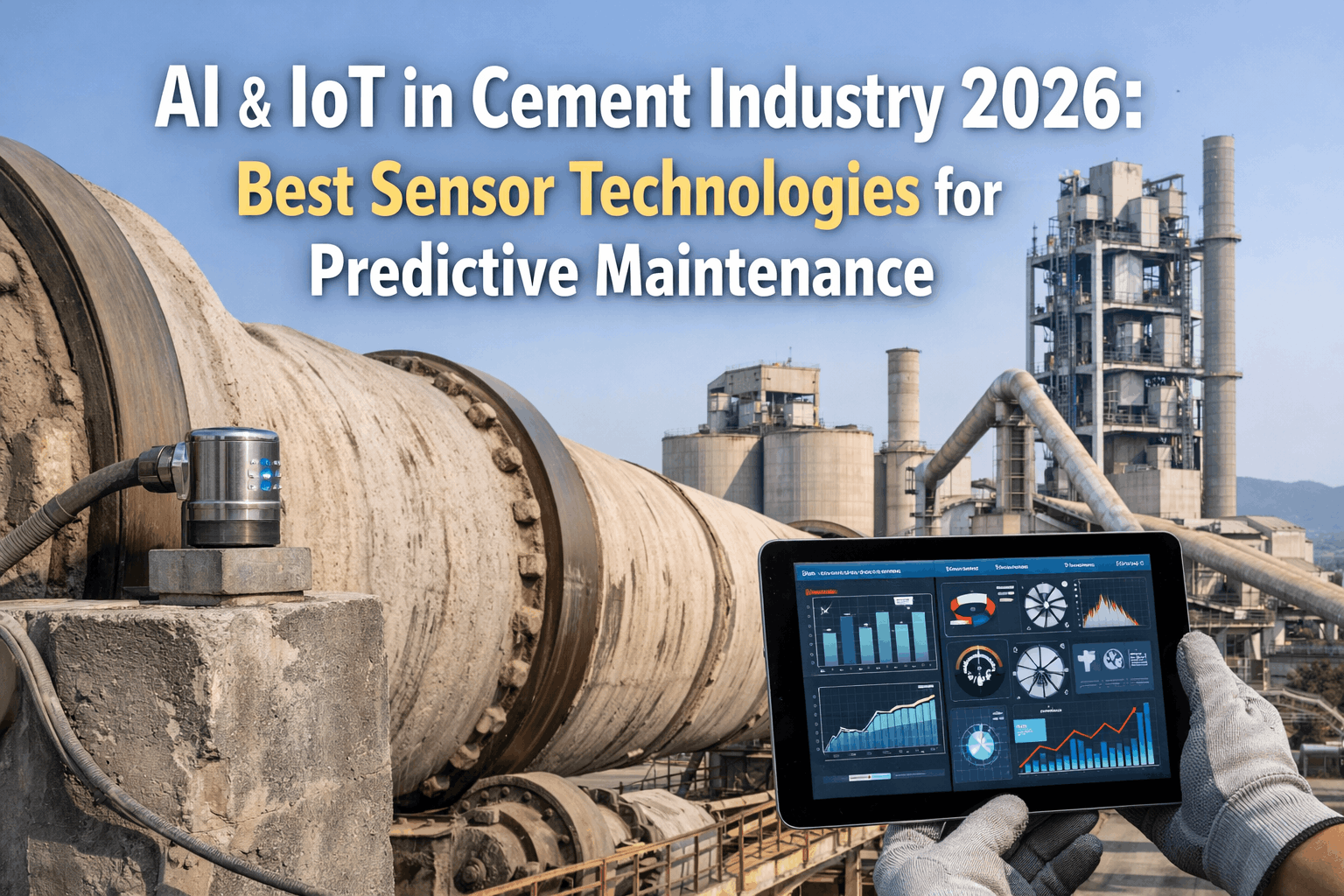
iFactory ingests continuous data from vibration, thermal, acoustic emission, and oil analysis sensors across every critical rotating asset. Its equipment-specific AI models analyze frequency spectra, thermal gradients, and lubrication wear markers simultaneously, detecting developing faults 2–8 weeks before failure with over 94% classification accuracy. When a fault is detected, iFactory automatically generates a prioritized work order with the fault description, recommended action, and required parts — integrated directly into your CMMS or SAP PM. Sign up with iFactory and connect your first assets within days.
Soaring Energy Costs & Inefficient Process Control
Cement production is among the most energy-intensive industrial processes — energy accounts for 30–40% of total production cost. Kiln fuel consumption alone is subject to enormous variability driven by raw mix composition, kiln feed moisture, secondary air temperature, and coal calorific value. Manual process adjustments by operators are always reactive and rarely optimal, leaving significant energy waste embedded in every production hour.
Real-Time AI Energy Optimization Engine
iFactory's AI process optimization module continuously models the kiln thermal system, pre-calciner fuel split, and cooler air flow against real-time production parameters. It provides operators with AI-generated setpoint recommendations that reduce specific heat consumption, optimize the tertiary air temperature, and minimize false air ingress — all while maintaining clinker quality targets. The system learns from historical process data to build a plant-specific optimization model that improves continuously. Book a demo to see the energy dashboard live.
Inconsistent Clinker Quality & High Reject Rates
Clinker free lime, LSF (Lime Saturation Factor), silica modulus, and 28-day compressive strength are the quality pillars of cement production. Variability in these parameters leads to rejected batches, customer complaints, and regulatory non-compliance. With lab results arriving hours after production decisions are made, quality deviations are typically discovered too late to prevent waste.
Real-Time AI Quality Prediction & MES Integration
iFactory's Manufacturing Execution System (MES) integrates online analyzers (cross-belt analyzers, XRF spectrometers) with process data to predict clinker quality parameters in real time — before lab results are available. AI models trained on thousands of production hours detect correlation patterns between process variables and final quality outcomes, enabling operators to make proactive corrections at the raw mill or kiln. Sign up to connect your quality lab data to iFactory's AI quality engine.
Spare Parts Stockouts & Carrying Cost Overruns
Cement plant maintenance departments face a classic inventory dilemma: stock too little and a critical bearing failure turns into a 5-day shutdown waiting for parts; stock too much and working capital is locked up in slow-moving inventory. With hundreds of critical spare parts required across kilns, mills, and drive systems, traditional min/max reorder systems fail to account for actual equipment condition and upcoming maintenance demand.
AI-Driven Predictive Inventory Forecasting
iFactory connects predictive maintenance forecasts directly to inventory management. When the AI predicts a bearing replacement will be needed in 6 weeks, it automatically checks stock levels, calculates lead time, and triggers a purchase requisition if the part is not available — weeks before it is needed. This demand-driven approach eliminates emergency procurement while reducing average inventory carrying costs significantly. Request a demo to see predictive procurement in action.
High-Risk Environments & Safety Incident Rates
Cement plants are inherently hazardous environments. Rotating equipment, elevated temperatures, dust exposure, confined spaces, and high-voltage electrical systems create a combination of risks that require constant vigilance. Traditional safety management relies on periodic audits, manual observations, and reactive incident reporting — all of which are inadequate for a 24/7 industrial operation.
AI Safety Hazard Detection & Real-Time Risk Monitoring
iFactory's AI safety module integrates with plant sensor networks and camera systems to detect unsafe conditions in real time — abnormal equipment temperatures near operator walkways, kiln shell hot spots close to maintenance zones, and process deviations that historically precede equipment failures. Automated safety alerts notify supervisors and trigger work permit lockouts when hazardous conditions are detected, before an incident can occur. Sign up with iFactory to build your AI-powered safety monitoring layer.
CO2, NOx & Dust Emissions Exceeding Regulatory Limits
Cement production accounts for approximately 8% of global CO2 emissions, placing plants under intense regulatory scrutiny from the EU ETS, EPA standards, and local environmental agencies. NOx emissions from the kiln combustion zone, dust from ESP and bag filter systems, and process CO2 from limestone calcination all require continuous monitoring and active management to stay within permit thresholds.
AI Emissions Tracking & Process Optimization for Compliance
iFactory integrates with CEMS (Continuous Emission Monitoring Systems) to provide real-time emissions dashboards, predictive exceedance alerts, and AI-generated process adjustments to reduce NOx and particulate emissions within permit limits. The platform also supports carbon accounting workflows, aggregating process CO2 data for regulatory reporting and internal sustainability targets. Proactive emissions management replaces reactive compliance fire-fighting. Book a demo to see iFactory's emissions intelligence module.
Deteriorating Asset Base & Poor Capital Planning
Cement plant assets have long operational lifespans — kilns and mills routinely run for 30–40 years. Without accurate condition data and lifecycle tracking, capital planning decisions about major overhauls, component replacements, and asset retirement are based on age and gut instinct rather than real remaining useful life. This leads to premature capital expenditure and, in other cases, assets that run to failure because degradation went undetected.
Digital Twin Asset Management & AI Lifecycle Intelligence
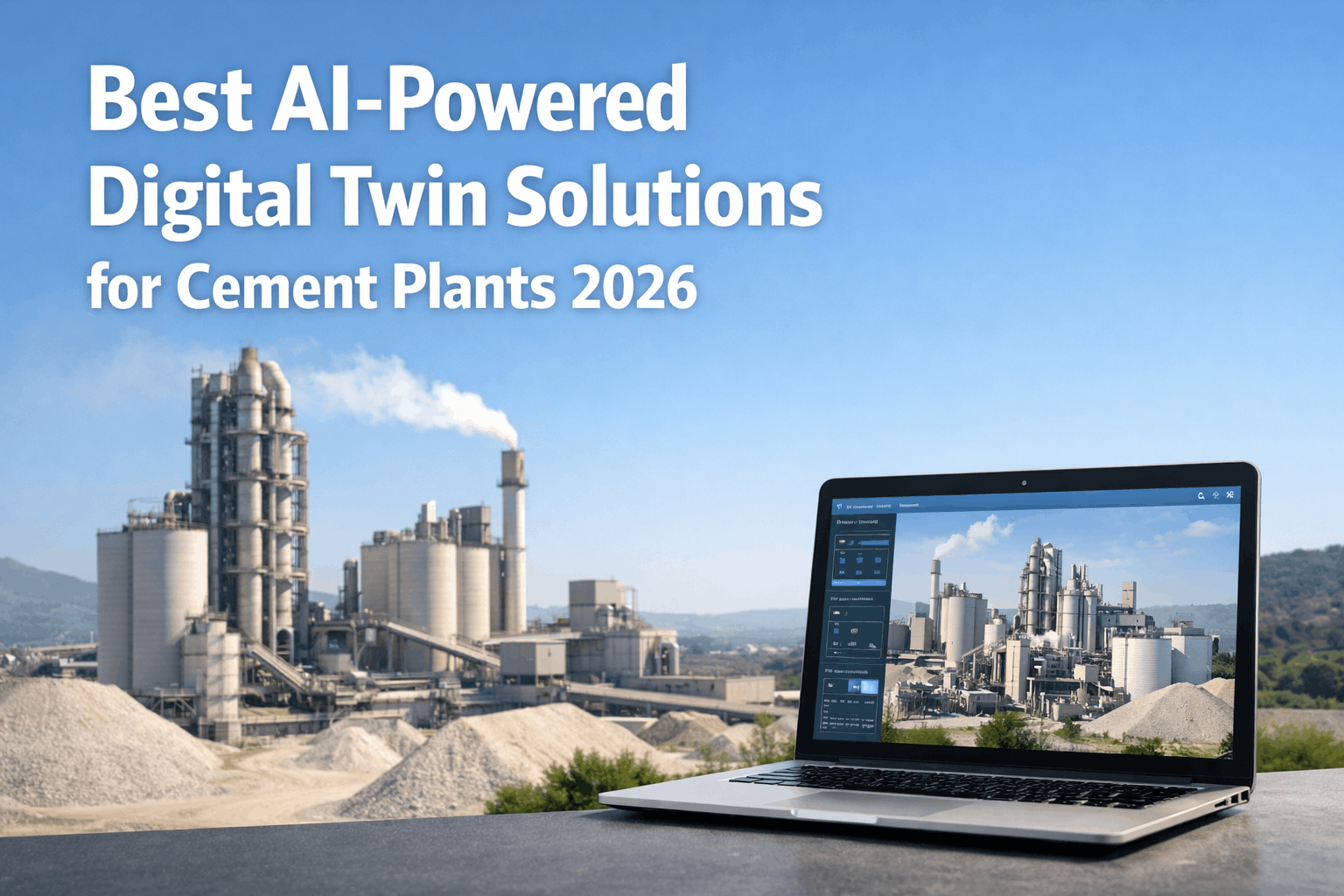
iFactory creates a digital twin for every major asset — a continuously updated virtual model that reflects the asset's current condition, maintenance history, and remaining useful life estimate. Plant engineers and asset managers can access a complete lifecycle view of each kiln, mill, and drive system, with AI-generated capital expenditure recommendations based on degradation trajectories. This transforms capital planning from a calendar exercise into a data-driven process.
Regulatory Compliance Burden & Audit Preparation
Cement plants operate under a complex matrix of regulatory requirements — ISO 9001 quality management, ISO 14001 environmental management, OSHA process safety standards, and industry-specific cement standards across different geographies. Maintaining compliance documentation, managing audit trails, tracking corrective actions, and preparing regulatory submissions consumes substantial management time and creates significant administrative burden on already stretched maintenance and quality teams.
Automated Compliance Documentation & Audit Trail Management
iFactory automatically captures, timestamps, and organizes compliance-relevant data across all plant operations — maintenance records, calibration logs, quality test results, safety inspections, and emissions readings. AI-powered compliance dashboards show real-time status against regulatory requirements, flag upcoming compliance deadlines, and generate audit-ready reports in the required format. When an auditor arrives, every record is organized, searchable, and timestamped — eliminating weeks of pre-audit data assembly.
One Platform. All 8 Solutions. Fully Integrated.
Unlike bolt-on point solutions, iFactory's AI platform shares data intelligence across all eight modules — enabling cross-domain insights that no standalone tool can deliver.
Transform Your Cement Plant with iFactory AI
Stop managing 8 problems with 8 different tools. Start solving all of them with one AI platform built for cement manufacturing.
Frequently Asked Questions
Ready to Solve All 8 Challenges in Your Cement Plant?
iFactory's full-platform AI is built specifically for cement manufacturing complexity. See every module live in a personalized demo.