The cement industry enters 2026 under compounding pressure from every direction simultaneously. Energy costs that once accounted for 25–30% of total production expense have climbed to 30–40% at many plants. Regulatory frameworks around CO₂ emissions are tightening faster than most operations can adapt. Aging equipment inherited from decades-old capital cycles is failing at increasing rates while skilled operators who spent careers managing those assets are retiring, taking irreplaceable institutional knowledge with them. Yet the same year that stacks these pressures highest is also the year that AI solutions for cement manufacturing have matured to the point of practical, measurable deployment. This is the definitive breakdown of the eight most critical challenges cement plants face in 2026 — and exactly how artificial intelligence addresses each one.
Top 8 Cement Industry Challenges
— and How AI Solves Every One
Unplanned Equipment Failures & Costly Downtime
Cement plants run some of the most mechanically demanding equipment on earth — rotary kilns operating continuously at 1,450°C, ball mills grinding clinker around the clock, gearboxes transmitting enormous torque loads for months without shutdown. When these assets fail unexpectedly, the consequences are severe. A single kiln outage can halt production for 12–72 hours, destroying hundreds of thousands of dollars in output and triggering emergency repair costs that dwarf what a planned intervention would have cost. Yet most plants still service equipment on calendar intervals that ignore actual component condition, replacing parts prematurely while missing the slow degradation patterns that precede real failures.
Predictive Maintenance with IoT Sensors
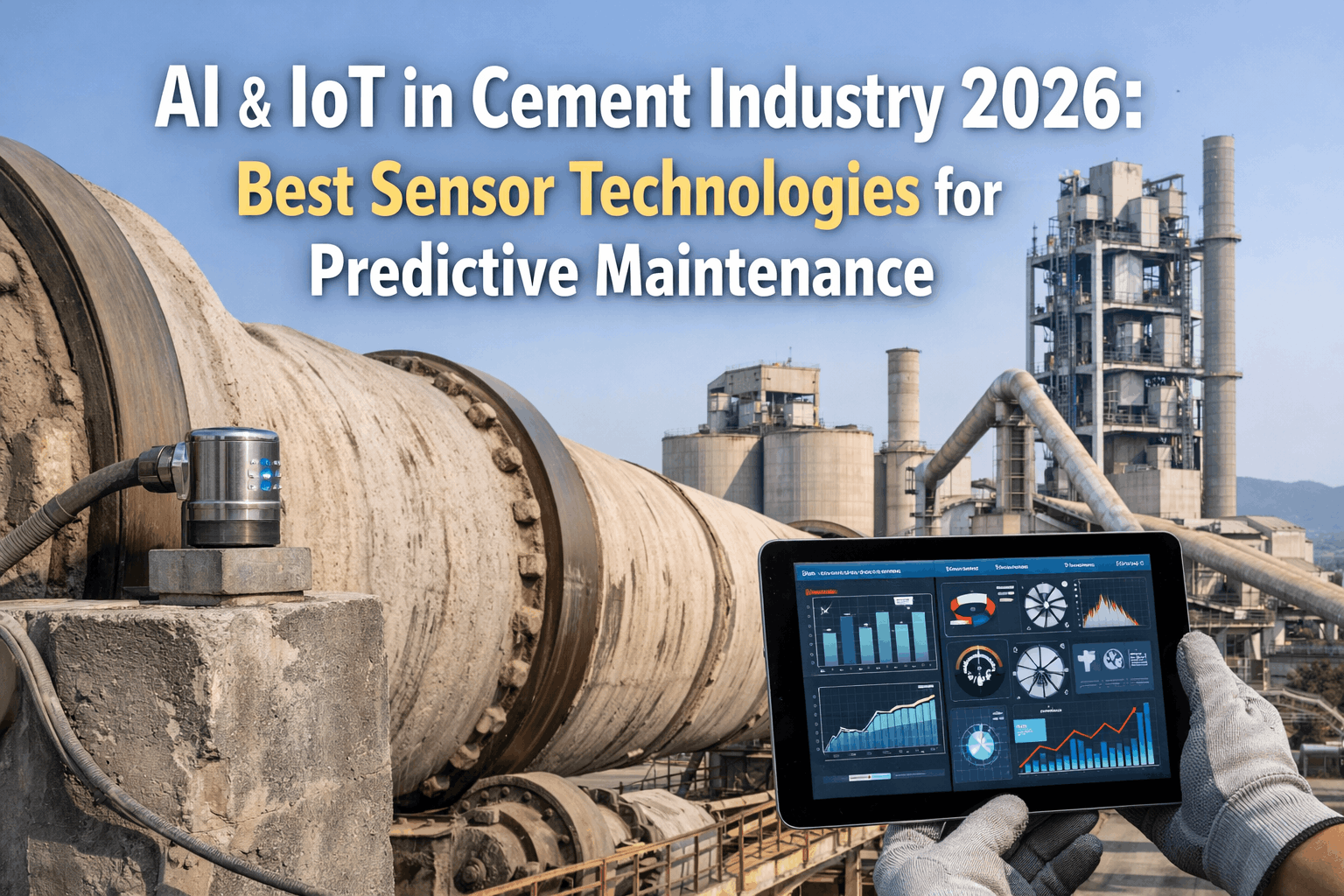
AI-powered predictive maintenance embeds IoT sensors on critical assets — kilns, mills, gearboxes, coolers, fans — streaming vibration, temperature, and acoustic data continuously to ML models trained to detect degradation signatures. These models identify developing bearing failures, refractory wear, and gear mesh anomalies weeks before they manifest as breakdowns, enabling planned interventions during scheduled maintenance windows. Plants using iFactory's AI maintenance platform report up to 50% reduction in unplanned downtime and maintenance cost reductions of 30–45%.
Spiraling Energy Costs in Kiln & Grinding Operations
The rotary kiln alone accounts for nearly 40% of a cement plant's total production cost through fuel consumption. Operators traditionally compensate for raw material variability and process uncertainty by running kilns hotter than theoretically required — a practice known as overburning — to guarantee clinker quality. Every degree of unnecessary temperature translates directly into wasted fuel, excess CO₂, and accelerated refractory wear. Grinding circuits consume approximately 70% of a plant's electrical energy. Without real-time optimization, both processes run at chronic inefficiency that compounds into millions of dollars of unnecessary annual cost.
Sign up with iFactory and activate AI kiln optimization within your existing control infrastructure.
Real-Time Kiln & Grinding Optimization
AI continuously analyzes hundreds of process variables — kiln temperature profiles, raw meal composition, fuel feed rates, airflow patterns, mill load, and separator efficiency — to find operating parameters that eliminate overburning while maintaining or improving clinker quality. ML models dynamically adjust control setpoints in real time, responding to raw material variation faster than any human operator. Plants implementing AI kiln optimization consistently report 5–10% reductions in specific fuel consumption, translating to millions in annual savings at scale.
Inconsistent Clinker & Cement Quality
Cement quality is determined deep inside the kiln during clinkering — a process that won't be confirmed by laboratory testing until hours after the material has been produced. By the time off-spec clinker is identified, tonnes of product have already been made, cooled, and queued for grinding. Raw material variability from quarries, inconsistent fuel calorific values, and thermal fluctuations create a constant battle against quality deviation that traditional static control parameters cannot win. Off-spec cement triggers customer complaints, warranty claims, regulatory issues, and expensive rework or disposal costs.
Real-Time Quality Prediction & MES Control
AI quality prediction models analyze live kiln data — free lime content indicators, temperature profiles, feed chemistry, and combustion signatures — to predict clinker quality parameters in real time, hours before laboratory results arrive. Manufacturing Execution Systems (MES) driven by AI adjust process parameters proactively, correcting quality deviations before they compound. AI implementation reduces quality variance by up to 30%, minimizing off-spec production and eliminating the wasteful over-specification that costs plants in raw material and energy giveaway. Book a demo to see real-time quality control in action.
CO₂ Emissions, Environmental Regulations & Compliance
Cement manufacturing is responsible for approximately 7–8% of global CO₂ emissions — roughly 0.8–0.9 tonnes of CO₂ per tonne of cement produced through both fossil fuel combustion and the unavoidable calcination of limestone. Carbon pricing mechanisms, emissions trading schemes, and mandatory reporting requirements are tightening across every major market in 2026. Plants that cannot demonstrate continuous improvement in emissions intensity face carbon taxes, permit restrictions, and escalating regulatory scrutiny. The pressure is structural and will only intensify — adapting is no longer optional.
Continuous Emissions Monitoring & Automated Reporting
AI-driven emissions management combines continuous sensor monitoring of CO₂, NOx, SOx, and particulate outputs with predictive modeling that forecasts emissions based on production schedules and input materials. When deviations from permit limits are detected, the system triggers automated corrective actions — adjusting combustion parameters, fuel blending ratios, or production rates — before violations occur. Compliance reports are generated automatically, eliminating the manual documentation burden. Plants using AI emissions platforms report 20–35% reductions in monitored emissions through optimized combustion and process control. Get started with iFactory to automate your emissions compliance.
Workforce Knowledge Gaps & Operator Experience Loss
A generation of experienced cement plant operators — engineers who spent decades developing intuitive understanding of kiln behavior, raw material quirks, and equipment nuances — is reaching retirement age simultaneously. This knowledge, accumulated over careers, has never been systematically captured in documentation or process models. As these operators leave, plants face a dangerous competency gap: younger operators managing complex, high-stakes processes without the contextual understanding that would otherwise take years to develop. Process incidents increase. Energy efficiency degrades. Quality consistency suffers. The institutional knowledge problem is one of the cement industry's most underestimated strategic risks.
AI Decision Support & Knowledge Capture Systems
AI systems encode expert operator knowledge into algorithmic decision models by analyzing historical operational data — including how experienced operators responded to specific process conditions — and transforming those patterns into executable recommendations. New operators receive real-time guidance contextualized to current plant conditions, effectively giving them access to decades of accumulated expertise through the AI interface. As the AI model ingests more operational history, its guidance improves continuously. Plants report that AI decision support enables less experienced operators to achieve performance metrics that previously required senior operator expertise.
Workplace Safety in High-Risk Plant Environments
Cement plants are among the most hazardous industrial environments in operation — high-temperature kilns, rotating heavy machinery, elevated dust concentrations, high-voltage electrical systems, confined spaces, and overhead crane operations all present simultaneous risk factors. Traditional safety monitoring relies on periodic inspections and operator vigilance, which by their nature create gaps in coverage. Incidents that occur between inspection cycles or in areas of limited visibility can result in serious injuries, fatalities, regulatory sanctions, and reputational damage that impacts the business far beyond the immediate cost of the incident itself.
Book a demo with iFactory to see AI safety monitoring deployed in live cement plant environments.
Computer Vision Safety Monitoring & Hazard Detection
AI-powered computer vision systems deploy cameras and sensors across the plant — in kiln areas, preheater towers, electrical rooms, grinding halls, and loading bays — to monitor for safety violations in real time: personnel in restricted zones, missing PPE, unauthorized equipment access, proximity to moving machinery, and abnormal thermal signatures indicating equipment overheating. The system generates immediate graded alerts before incidents escalate, creating continuous coverage that manual inspection programs structurally cannot achieve. Conch Group's AI safety platform monitors over 20 risk categories simultaneously with real-time alert escalation.
Inventory Management, Supply Chain & Demand Volatility
Cement logistics carry unusually high costs — bulk material handling, specialized transport, and the fact that cement has a limited shelf life once produced create a narrow operational window between underproduction (lost sales) and overproduction (waste and storage cost). Fluctuating construction demand, seasonal patterns, regional project pipelines, and global supply chain disruptions make inventory planning with traditional forecasting methods chronically imprecise. The result is a constant oscillation between stockouts that frustrate customers and excess inventory that ties up capital and deteriorates in storage.
AI Demand Forecasting & Supply Chain Optimization
AI supply chain models analyze construction permit data, weather patterns, historical demand curves, regional project pipelines, and competitor pricing signals to produce demand forecasts significantly more accurate than statistical averaging. These forecasts feed directly into production planning, ensuring cement is produced to match real anticipated demand rather than smoothed averages. Distribution routing is optimized to minimize logistics cost. Inventory levels are managed dynamically rather than through static safety stock rules, freeing working capital while maintaining service levels. Sign up with iFactory to connect your supply chain to AI-driven demand intelligence.
Asset Lifecycle Management & Capital Planning
A modern cement plant represents $300M–$1B+ in fixed capital investment. Managing the lifecycle of that asset base — knowing when to repair versus replace aging equipment, planning major capital expenditures years in advance, optimizing maintenance schedules to extend productive asset life while avoiding reliability risk — requires visibility that traditional asset management systems simply cannot provide. Without accurate asset health data integrated across the entire plant, capital planning becomes conservative guesswork that either under-invests in reliability or over-spends on premature replacements.
Digital Twin Asset Management & Capital Forecasting
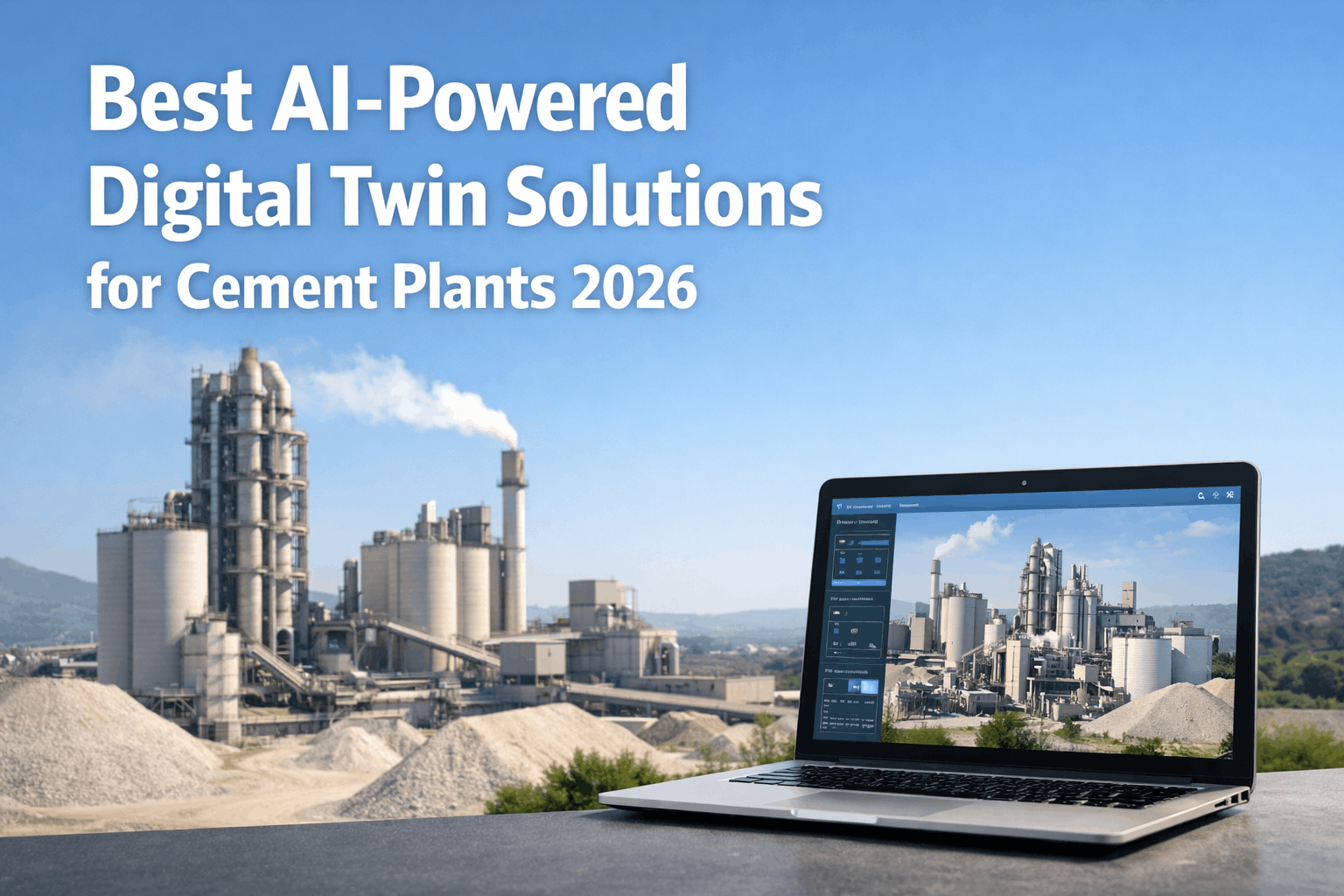
Digital twin technology creates a continuously updated virtual model of every major asset in the plant, fed by real-time sensor data and maintenance history. AI analyzes fleet-wide degradation trends to produce multi-year asset health projections, giving capital planning teams accurate visibility into which assets will require major investment and when. Repair-versus-replace decisions are supported by data rather than intuition. Maintenance intervals are optimized to maximize productive asset life without risking reliability. Plants using iFactory's digital twin platform report measurably extended asset lifespans and more predictable capital expenditure cycles.
iFactory for Cement Plants
All 8 Challenges. One AI Platform.
iFactory integrates predictive maintenance, energy optimization, quality control, emissions tracking, safety monitoring, and supply chain AI into a single platform built for the operational complexity of cement manufacturing.
Documented Results from AI Deployment in Cement Plants
These figures come from real-world implementations documented across independent research and production deployments — not projections.
The Cement Plants Adopting AI Now Will Define the Industry's Cost Floor
Competitors who implement AI-driven energy optimization, predictive maintenance, and emissions management in 2026 will lock in a structural cost advantage that compounds every quarter. The question is no longer whether AI belongs in cement manufacturing — it's whether your plant will be a leader or a follower in the transition.
Frequently Asked Questions
How does AI integrate with a cement plant's existing control infrastructure
AI platforms like iFactory are designed to sit on top of existing DCS (Distributed Control System) and SCADA infrastructure rather than replace it. The AI layer connects to existing sensors, historian databases, and process control interfaces via standard industrial communication protocols — OPC-UA, Modbus, REST APIs. It reads real-time process data, performs optimization analysis, and delivers recommendations back to operators through existing control room interfaces or separate dashboards. This overlay approach means plants can implement AI without capital-intensive control system replacements, significantly reducing the barrier to adoption and shortening the time to measurable results.
What is the typical ROI timeline for AI implementation in a cement plant
Most cement plants see initial measurable results within 30–60 days of AI activation, primarily through kiln energy savings and early predictive maintenance alerts. Full return on investment — calculated across energy savings, reduced maintenance costs, quality improvement, and emissions compliance cost avoidance — is typically achieved within 12–18 months for mid-size plants. McKinsey research documents 10:1 to 30:1 ROI ratios within 12–18 months for leading industrial AI implementations, and cement AI deployments consistently appear in this range. Larger, more complex plants with higher energy spend see proportionally larger absolute savings and therefore faster payback periods.
Can AI really replace experienced kiln operators in cement production
AI is not positioned to replace experienced operators — it is designed to augment them and, critically, to preserve their expertise permanently. The practical reality is that experienced operators are retiring faster than they can be replaced. AI systems capture the decision patterns of expert operators by analyzing years of historical operational data, encoding those patterns into models that provide real-time guidance to less experienced staff. The result is that a plant doesn't lose its operational intelligence when a 30-year veteran retires — it's embedded in the AI. Current operators, regardless of experience level, receive AI-backed recommendations that incorporate institutional knowledge far beyond what any single person could hold simultaneously.
How does AI help cement plants meet increasingly strict emissions regulations in 2026
AI addresses emissions compliance across three distinct layers. First, continuous monitoring: sensor networks track CO₂, NOx, SOx, and particulate emissions in real time, providing the data foundation that manual measurement programs cannot match for frequency or coverage. Second, predictive compliance: AI models forecast emissions based on current production parameters, raw material inputs, and fuel mix — flagging conditions likely to cause limit breaches before they occur so corrective adjustments can be made in advance. Third, automated documentation: compliance reports are generated automatically from the continuous monitoring data stream, eliminating the manual reporting burden and providing regulators with audit-ready evidence of continuous compliance management.
What data does iFactory's AI need to start optimizing a cement plant
iFactory begins extracting value from whatever operational data a plant already collects — most modern plants have substantial sensor and historian data that has never been analyzed at the depth AI enables. Core data inputs include kiln temperature profiles, raw meal composition analysis, fuel feed rates, clinker quality lab results, grinding circuit parameters, energy consumption by circuit, and equipment sensor readings. The more complete the historical data, the faster the AI models develop accurate predictive capability. In practice, plants with 6–12 months of operational data in their historian can achieve meaningful optimization within the first 30–60 days of deployment, with model accuracy improving continuously thereafter.
Is AI viable for smaller cement plants or only large multinational operations
AI has become accessible to plants of all scales in 2026. Cloud-based deployment models eliminate the need for large on-premise infrastructure investments. Subscription pricing structures mean plants pay proportionally to their operational scale rather than facing large upfront licensing costs. The ROI case is actually particularly compelling for smaller plants because the percentage impact of a single prevented kiln failure or a 5% fuel efficiency gain is proportionally larger against a smaller cost base. iFactory's platform is designed to scale from single-kiln operations to multi-plant portfolios, with the same core AI capabilities adapting to the operational complexity and data volume of each deployment context.