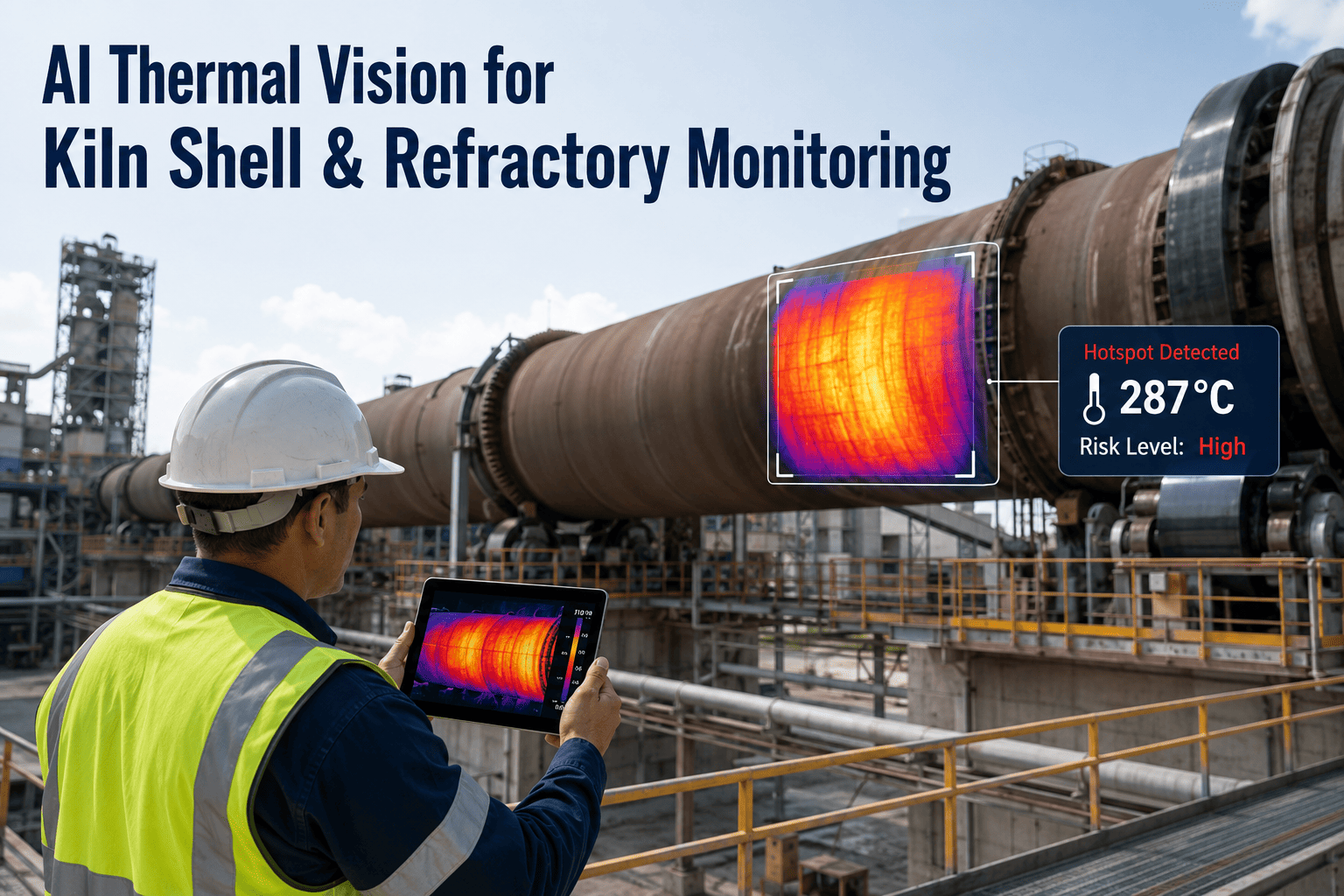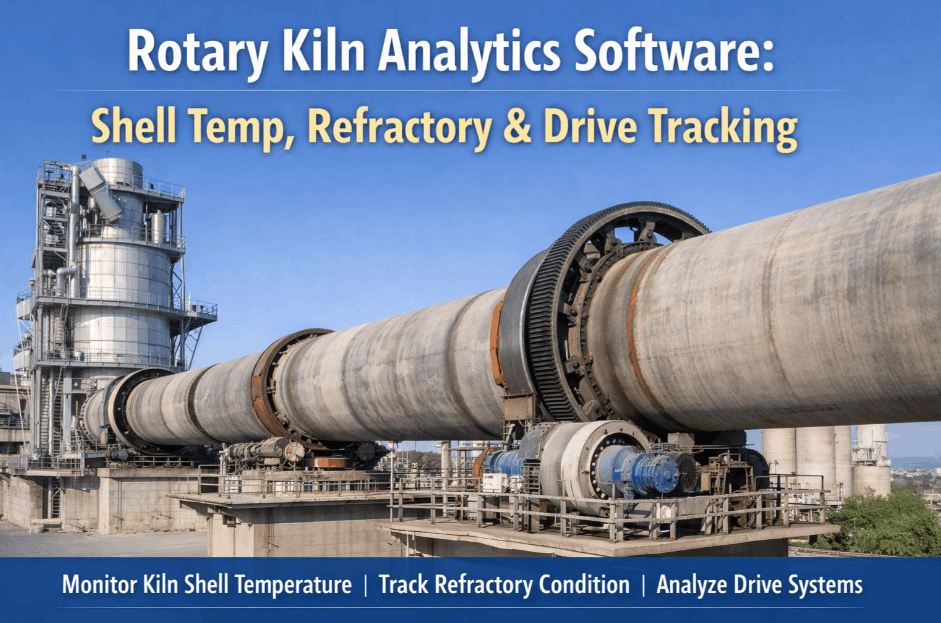
The rotary kiln is the beating heart of any cement manufacturing plant—a massive, continuously rotating thermal asset where raw meal is transformed into clinker at 1,450°C. When a kiln goes down unexpectedly, production stops instantly, costing upward of $50,000 per hour. Historically, plant managers relied on scheduled shutdowns and manual infrared scans to predict refractory failure or trunnion wear. Today, continuous AI-driven software fundamentally shifts kiln maintenance from reactive firefighting to predictive precision. By integrating live shell scanner thermal data, drive motor torque analytics, and bearing vibration telemetry, plant engineers can accurately forecast brick spalling and drive failures weeks before a catastrophic halt. If you are still relying on monthly external vibration routes to protect your most critical asset, book a demo to see how iFactory’s AI models safeguard heavy pyroprocessing equipment in real time.
AI-Powered Protection for Rotary Kilns
iFactory ingests thermal, acoustic, and vibrational data directly from your kiln sensors to automate predictive alerting, preserving refractory life and preventing catastrophic drive train failures.
What Does Rotary Kiln Software Actually Monitor?
A rotary kiln is not a single asset; it is a complex, interconnected system of thermal, mechanical, and aerodynamic components. Complete kiln protection requires holistic monitoring.
Shell & Refractory Health
Integrating with IR shell scanners to detect rapid thermal changes, localized hot spots, and predict silica brick spalling before emergency shutdown criteria are met.
Girth Gear & Pinion Drives
Vibration and lubricant debris monitoring to detect microscopic pitting and misalignment in the main girth gear, ensuring balanced load distribution.
Trunnion Rollers & Tires
Tracking thrust roller pressure, tire slip (migration), and bearing temperatures to detect mechanical skewing and prevent catastrophic shaft cracking.
ID Fan & Exhaust Aerodynamics
Acoustic and vibration monitoring on the massive ID fans to detect material buildup, impeller imbalance, and predict catastrophic bearing cage failures.
How AI Detects Cement Kiln Failures Before They Happen
Manual rounds cannot catch bearing defects that emerge over thousands of rotations. Industrial AI bridges the gap, translating invisible mechanical signatures into prescriptive, actionable repair orders.
By consuming live thermal imaging data, iFactory maps the structural integrity of the internal refractory. Machine learning predicts the precise week a specific thermal band will breach the 350°C redline, allowing optimal shutdown scheduling.
iFactory: Continuous thermal degradation modelingKiln trunnions rotate under immense crushing force. High-frequency vibration algorithms isolate subsurface bearing cracks months before heat is generated. Plant directors can order replacement brass without expedited shipping premiums.
iFactory: Multi-axis trunnion phase analysisAs mud rings or clinker buildup alters the kiln's center of gravity, main drive motors experience fluctuating torque loads. The AI correlates amperage spikes with structural imbalances to trigger burnout prevention protocols.
iFactory: Real-time electrical phase alignment trackingTraditional Tracking vs. Real-Time AI Diagnostics
The gap between calendar-based PMs and actual mechanical necessity drives millions in wasted parts and unpredictable kiln downtime.
| Diagnostic Area | Manual / Spreadsheet Tracking | Basic SCADA Alarms | iFactory Predictive AI |
|---|---|---|---|
| Kiln Shell Hotspots | Monthly handheld IR scanning | Alerts only after threshold breach | Spalling trajectory forecasted weeks in advance |
| Trunnion Alignment | Visual checks for thrust loading | Static bearing temp alarms | Micro-vibration phase analysis detects skew early |
| Girth Gear Lubrication | Calendar-based grease application | Flow rate monitoring only | Acoustic signature confirms active film thickness |
| ID Fan Imbalance | Monthly external contractor routes | High-vibration shutdown trips | Detects material buildup and orders cleaning cycle |
Accelerated Kiln Deployment Architecture
Achieving predictive coverage on a rotary kiln does not require massive electrical rewiring. Modern IoT sensors and Edge gateways deploy in days, not months. Book a Demo to review a wireless sensor map for your specific kiln dimensions.
Vibration & Acoustic Sensor Installation
Wireless, high-temperature-rated piezoelectric sensors are magnetically mounted to trunnion bearing housings, pinion gearboxes, and ID fans with zero drilling required.
Existing SCADA/Shell Scanner Interconnection
iFactory connects natively via OPC-UA to your existing Siemens or Rockwell automation systems, extracting baseline thermal maps and drive torque histories without disrupting live operations.
Baseline Training & Predictability Live
The AI models spend 14 days learning the baseline acoustic signature of your specific kiln. Upon completion, predictive work orders begin auto-generating for the reliability engineering team.
Rotary Kiln Analytics: Common Questions
Stop Unplanned Kiln Outages Before They Erase Your Margins.
A single prevented kiln stoppage pays for the iFactory platform instantaneously. Connect your SCADA systems, mount wireless trunnion sensors, and give your reliability team the predictive intelligence they need to execute precision maintenance.