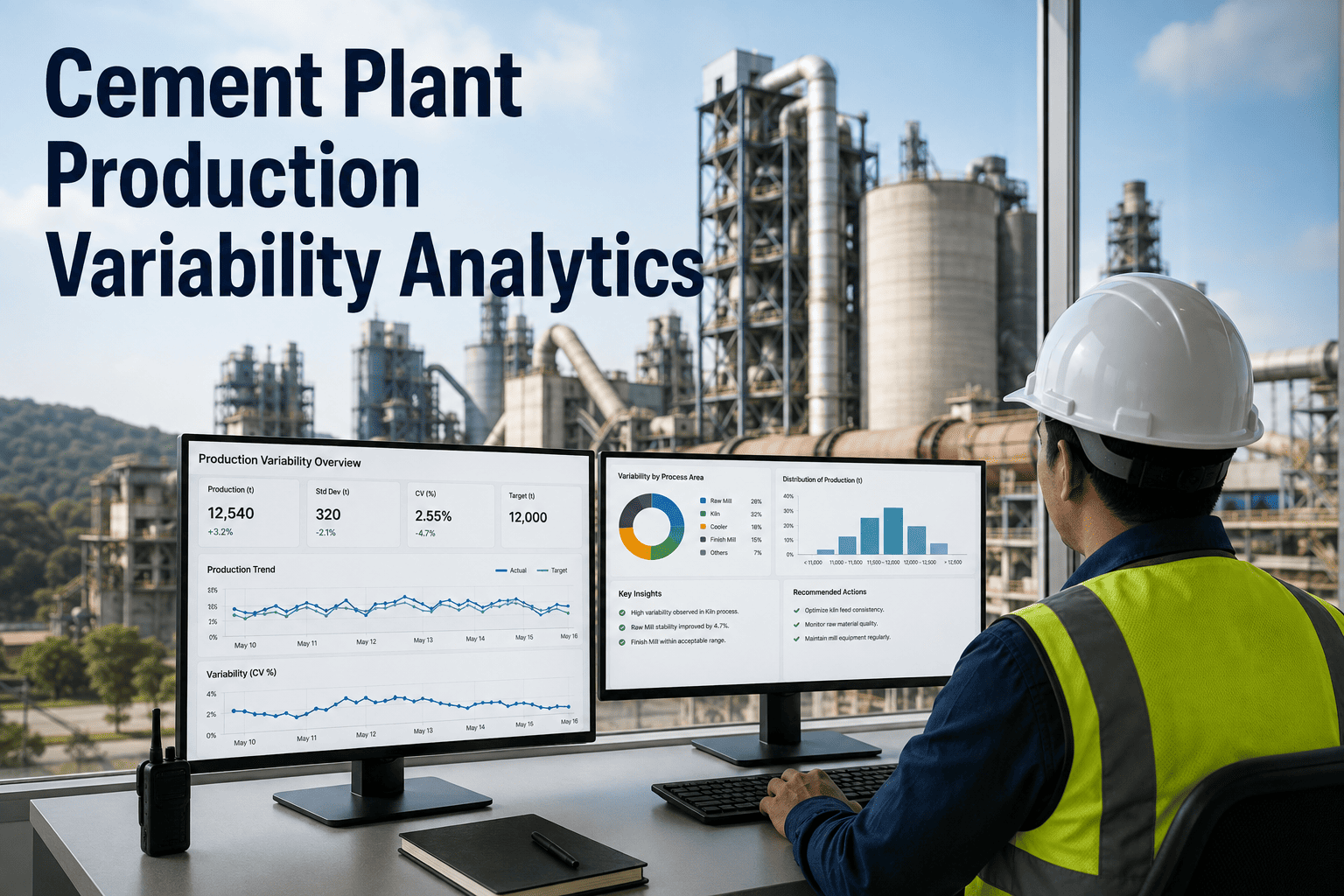
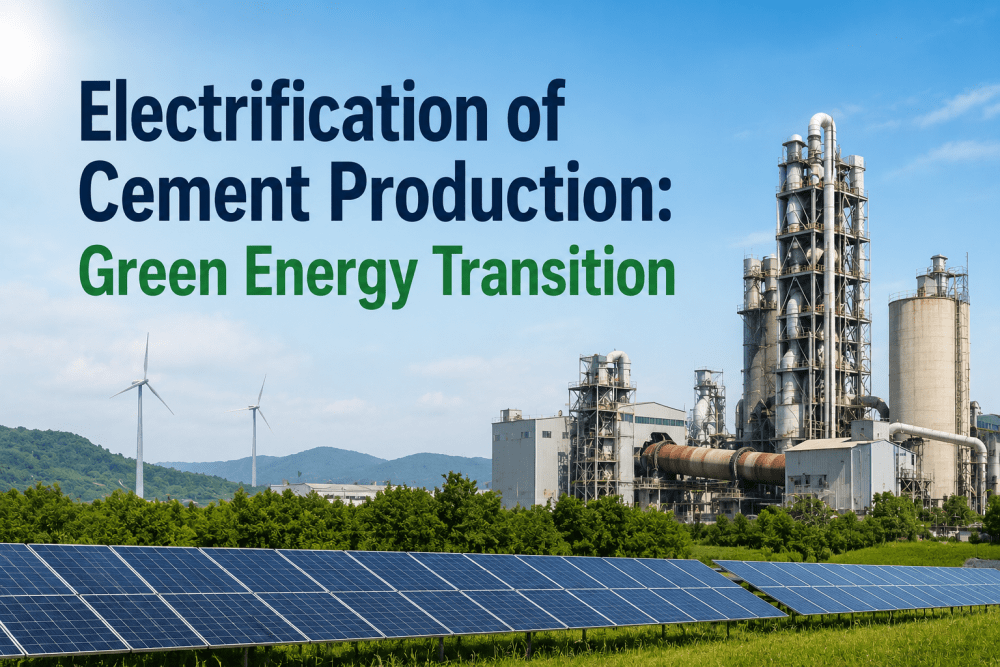
The American cement industry is undergoing its most significant transformation since the Interstate Highway Act. Driven by the $1.2 trillion Infrastructure Investment and Jobs Act (IIJA) and the federal 'Buy Clean' task force, US producers are facing a dual mandate: expand capacity to meet surging domestic demand while drastically reducing the carbon intensity of every ton produced. Most US plants, operating with 30-to-50-year-old assets, are struggling to bridge the gap between legacy operations and modern green procurement requirements. iFactory's US Modernization Module transforms aging cement assets into high-efficiency, EPD-ready production hubs—converting the Infrastructure Act's demand into measurable, compliant profit with payback timelines as short as 6-10 weeks.
Modernize US Cement Assets for the Infrastructure Act Surge
Automate EPD documentation, optimize kiln OEE, and meet GSA 'Buy Clean' mandates — with real-time analytics for aging US plants.
Why Analytics Modernization Matters for the US Cement Industry
The Infrastructure Act has released a wave of demand for concrete across US highways, bridges, and ports. However, this capital is increasingly tied to Executive Order 14057, which mandates the use of low-carbon materials in federal projects. US producers relying on manual emissions tracking and reactive kiln maintenance risk being locked out of multi-billion dollar DOT contracts. Book a Demo to see how continuous modernization secures your federal project eligibility.
A single DOT project requirement for 'Type IL' cement or a specific GWP (Global Warming Potential) threshold can render standard production non-compliant. Modern US plants cannot afford legacy asset management. Real-time analytics for carbon intensity, coupled with predictive insights on kiln stability for aging assets, compress the modernization payback from years to under 3 months.
Four Drivers of US Cement Industry Modernization
Modernization follows the federal mandate. Understanding the regulatory and market drivers is the foundation for an effective US cement analytics strategy.
Federal 'Buy Clean' & GSA Compliance
The GSA now requires Environmental Product Declarations (EPDs) for all major concrete procurements. Plants without real-time carbon intensity (kg CO2/t) tracking cannot provide the verified data needed to secure these high-margin federal contracts. Book a Demo to automate your EPD generation.
Aging Asset Capacity Optimization
The average US kiln is over 35 years old. These assets struggle to maintain OEE during the IIJA demand surge. iFactory's 'Digital Twin' analytics optimize preheater and cooler efficiency, pushing legacy kilns to 105% nameplate capacity safely.
Type IL (PLC) Transition Management
State DOTs are rapidly approving Portland Limestone Cement (Type IL). Switching from Type I/II requires precise limestone blending and mill optimization. Analytics ensure strength targets are met while maximizing clinker substitution.
Energy Intensity & Alternative Fuel Scaling
With rising US energy costs, scaling alternative fuels (RDF, plastics) is critical. iFactory's thermal analytics stabilize the kiln flame during high-TSR (Thermal Substitution Rate) operations, reducing coal dependence by 20-30%.
US Cement Analytics ROI: Savings by Infrastructure Project Type
Analytics-driven modernization ROI is maximized when aligned with federal spending categories. The table below shows validated savings for US producers.
| Project Type (IIJA) | Modernization Driver | Capacity Impact | Compliance Benefit | Payback Period | Year-1 ROI |
|---|---|---|---|---|---|
| Highways & Bridges | Buy Clean EPDs, Type IL Blending | +12% Throughput | GSA/DOT Certified | 6–8 weeks | 7.4× |
| Transit & Rail | Carbon Intensity Tracking | +8% OEE | Verified Low-Carbon | 8–10 weeks | 6.2× |
| Ports & Waterways | Kiln Stability, Energy Scaling | +15% Uptime | Sustainable Sourcing | 7–9 weeks | 8.1× |
| Clean Energy & Grid | Advanced Emissions Control | +10% Output | Full EPA/GSA Compliance | 5–7 weeks | 9.3× |
Even on 40-year-old assets, modernization analytics deliver 6.2× first-year ROI. For plants targeting the $110B DOT highway fund, the payback is virtually immediate through contract win-rates.
Five Key Metrics for US Cement Modernization
Effective US analytics requires real-time visibility into these interconnected parameters. Book a Demo to see automated US-market tracking in action.
1. Real-Time Carbon Intensity (kg CO2/t)
Continuous integration with CEMS (Continuous Emissions Monitoring) and clinker scales. This metric is the foundation for GSA 'Buy Clean' compliance and EPD generation, updated every 15 minutes.
2. Clinker Factor & Limestone Substitution %
Tracks the transition to Type IL cement. Analytics correlate limestone feed with 3-day and 28-day strength predictions, ensuring DOT-grade product at the lowest clinker cost.
3. Kiln Thermal Substitution Rate (TSR)
Measures the percentage of heat provided by alternative fuels. iFactory stabilizes legacy kilns during fuel transitions, preventing the rings and bypass blockages that plague aging US assets.
4. Asset OEE & Predictive Downtime
Specifically calibrated for aging US equipment health (bearings, VFDs, preheater fans). Alerts trigger 2–3 weeks before failure, enabling repairs during planned DOT project pauses.
5. Green Procurement Compliance Rate
A dashboard for the sales team showing the percentage of production meeting specific GWP (Global Warming Potential) thresholds for upcoming federal and state project bids.
Infrastructure Act Compliance: EPD Automation for DOT & GSA
US infrastructure contracts increasingly require product-specific Environmental Product Declarations (EPDs). Manual EPD generation is slow, expensive, and often based on outdated data. Book a Demo to see automated EPD generation in action.
iFactory's compliance engine auto-generates audit-ready EPD data directly from your plant telemetry. Every shift's emissions, energy, and material inputs are logged with secure timestamps—meeting GSA requirements while eliminating $50K–$100K in annual consulting fees for manual LCA studies.
Infrastructure Act Documentation Deliverables
The platform establishes a secure digital chain of custody for every ton shipped to federal projects.
- Automated Project EPDs: Live carbon footprint data for every federal contract bid.
- GSA 'Buy Clean' Dashboards: Real-time tracking against federal emissions thresholds.
- Type IL Strength Validation: Automated DOT-compliant reports for blended cement.
- EPA GHG Alignment: Seamless export to mandatory Greenhouse Gas Reporting Programs.
- DOE Industrial Heat Sync: Data readiness for US Department of Energy decarbonization grants.
What a US Plant Manager Said
Frequently Asked Questions
Common questions from US cement operations leaders regarding IIJA and modernization.
Does iFactory integrate with US EPA and DOT reporting standards?
Yes. Our platform is pre-configured with US-specific emission factors and DOT strength testing standards. It automates the data collection required for EPA Greenhouse Gas Reporting and provides the verifiable data needed for GSA 'Buy Clean' concrete procurement.
Can this modernize a 40-year-old US kiln without major CAPEX?
Absolutely. Most US kilns have the sensors needed but lack the analytics layer. iFactory connects to your existing SCADA/DCS and CEMS to create a 'Digital Twin,' providing the predictive control needed to optimize OEE and emissions without replacing the physical asset.
How does the platform help with the transition to Type IL (Portland Limestone Cement)?
Type IL requires higher limestone blending while maintaining DOT strength standards. iFactory's mill analytics correlate limestone feed with real-time strength predictions, allowing you to maximize clinker substitution while ensuring every ton meets state highway standards.
What is the specific ROI on federal infrastructure project eligibility?
For US producers, the ROI is measured in contract win-rates. As federal 'Buy Clean' thresholds become mandatory, plants with automated EPDs and low-carbon metrics gain first-mover access to the $1.2T IIJA fund. Typical payback for the modernization module is less than 90 days.
How quickly can we go live at a US plant?
Standard deployment takes 60 days. This includes connecting to your plant SCADA, calibrating carbon intensity models, and setting up your Infrastructure Act compliance dashboards. No plant shutdown is required during implementation.
Does it support US-specific alternative fuels like RDF and biomass?
Yes. We specialize in stabilizing kilns during high-TSR (Thermal Substitution Rate) operations. Our analytics help US plants scale their use of local waste-derived fuels, reducing coal costs and lowering the carbon footprint needed for green procurement.
Can iFactory help us apply for DOE decarbonization grants?
Yes. The data provided by our platform is essential for documenting baseline emissions and projected savings in Department of Energy (DOE) grant applications. We help you build the technical case for federal decarbonization funding.
Get Your US Modernization ROI Model — Secure Your DOT Contracts
See exactly how iFactory helps aging US assets meet Infrastructure Act demand and 'Buy Clean' mandates with 60-day deployment.