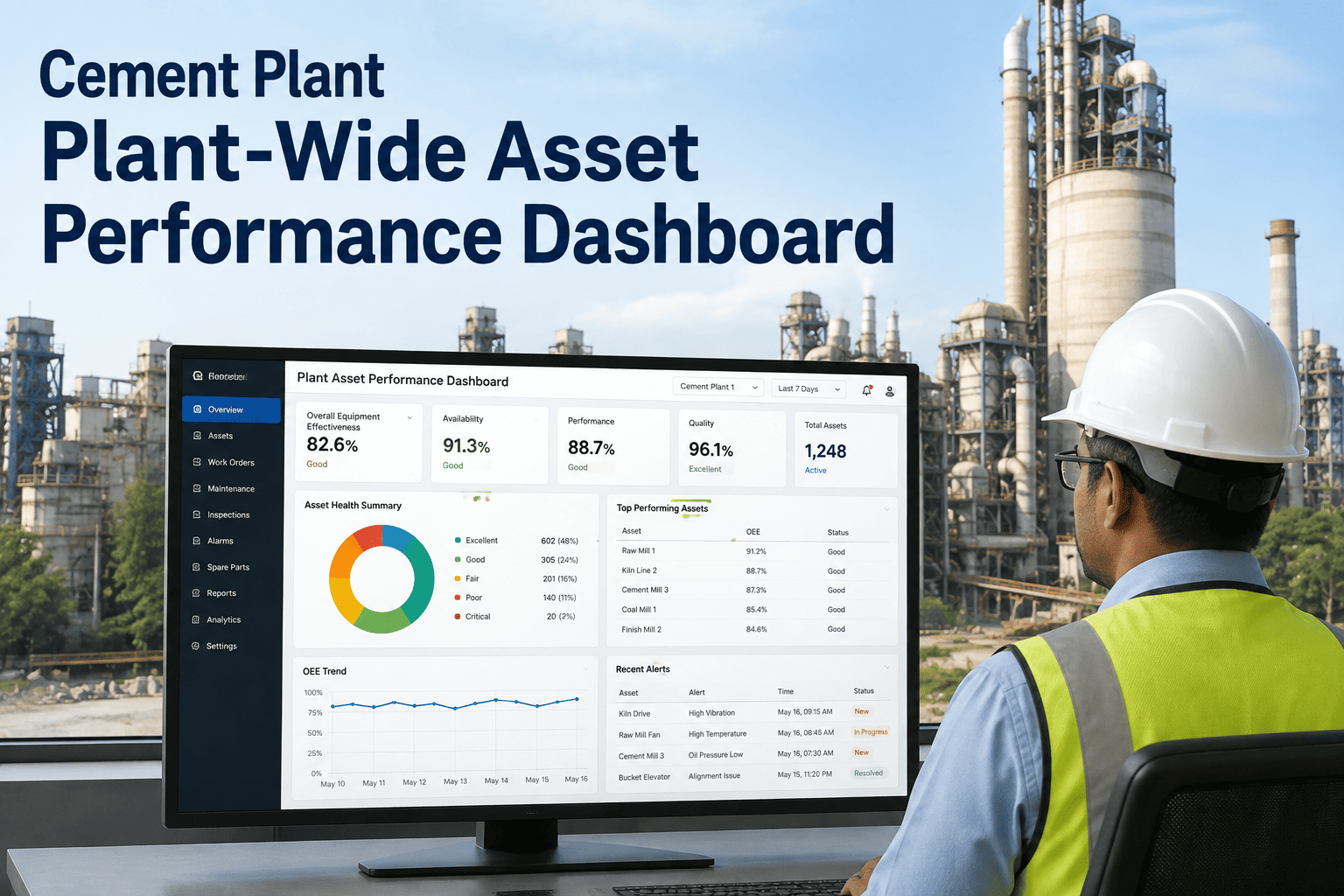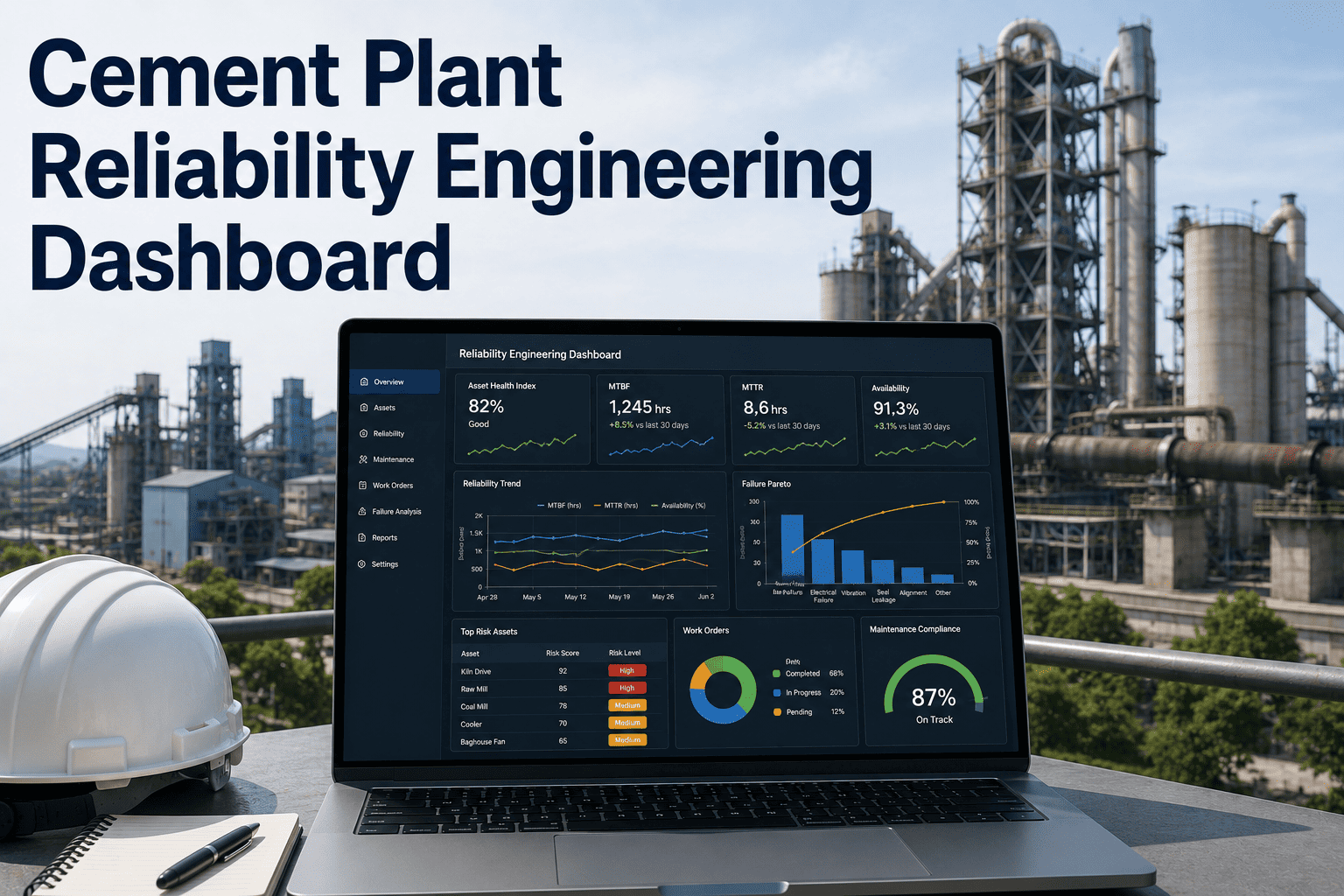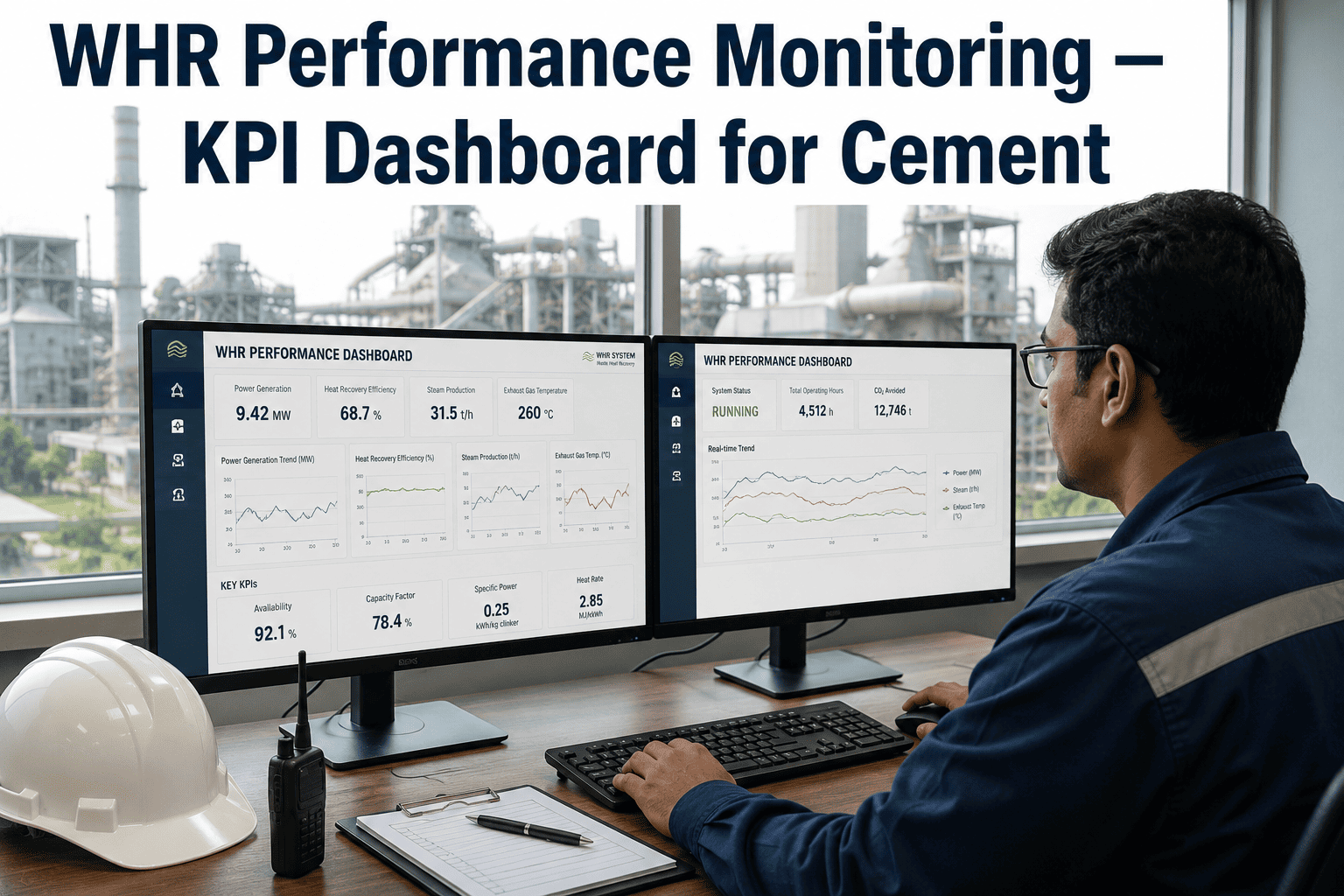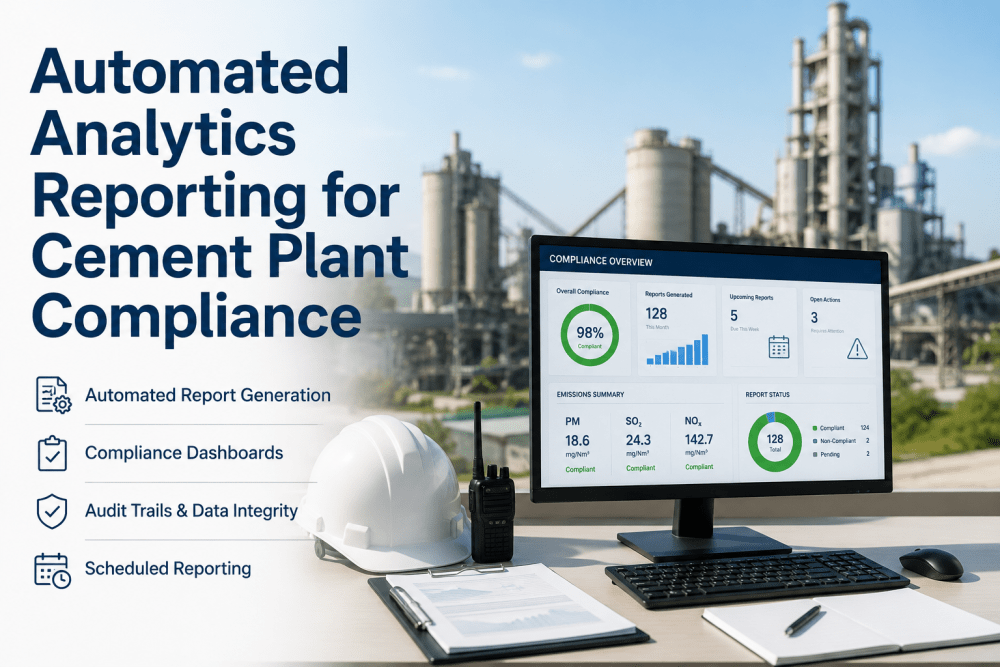
In the heavy industrial environment of cement manufacturing, maintenance is often viewed through the lens of 'firefighting' rather than strategic reliability. Yet, the difference between a plant that struggles and one that leads is found in four numbers: MTBF, MTTR, OEE, and PM Compliance. Operating without real-time visibility into these KPIs means missing the micro-vibrations in a raw mill or the temperature drifts in a kiln that precede catastrophic failure. This article reveals how iFactory's AI-driven KPI analytics transforms cement plant reliability from a reactive burden into a measurable profit driver, with payback timelines as short as 6-8 weeks.
Master Your Cement Plant Reliability in Real Time
Track MTBF, MTTR, and OEE across your entire asset hierarchy — with automated reliability dashboards and PM compliance tracking.
Why Reliability KPI Analytics Matters in Cement Manufacturing
Cement plants are 24/7 continuous operations where a single hour of kiln downtime can cost $20,000 to $50,000 in lost revenue and thermal energy waste. Yet, most plants rely on retrospective Excel sheets and manual logs to track performance—missing the early warning signs of equipment degradation. Schedule a Demo to see how real-time KPI tracking prevents unplanned outages.
A low PM Compliance rate—dropping below 85%—is the leading indicator of upcoming catastrophic failures in raw mills and preheater fans. Modern cement operations cannot afford to manage by 'gut feel.' Real-time analytics for MTBF (Mean Time Between Failures) and MTTR (Mean Time To Repair), coupled with predictive OEE insights, compress the ROI on reliability projects from years to weeks.
Four Critical Reliability Metrics for Cement Producers
Reliability failures in cement follow predictable patterns. Understanding these four metrics is the foundation for an effective analytics and predictive maintenance strategy.
MTBF (Mean Time Between Failures)
The ultimate measure of asset health. For critical components like the kiln drive or raw mill gearbox, tracking MTBF reveals if your maintenance strategy is actually extending life or just 'patching' problems. Book a Demo to model your asset-specific MTBF.
MTTR (Mean Time To Repair)
High MTTR indicates inefficient troubleshooting or poor spare parts availability. Analytics identify bottlenecks in the repair process—whether it's wait time for parts or lack of digital SOPs—reducing the 'firefighting' duration.
OEE (Overall Equipment Effectiveness)
In cement, OEE tracks Availability (is the kiln running?), Performance (is the mill at full TPH?), and Quality (is the clinker within spec?). Automated OEE tracking eliminates manual bias and identifies 'hidden' speed losses. Book a Demo to quantify your speed loss costs.
Planned vs. Reactive Ratio
World-class plants operate at 80% planned / 20% reactive. Most plants are the inverse. Tracking this ratio in real-time allows leadership to shift resources from emergency repairs to high-impact preventative work.
Cement KPI Analytics ROI: Savings by Department
Reliability ROI scales with asset criticality. The table below shows validated savings across three primary cement production zones.
| Department | Primary KPI Focus | Annual Downtime Risk | Prevention Savings | Payback Period | Year-1 ROI |
|---|---|---|---|---|---|
| Kiln & Preheater | MTBF, Availability, TSR | $500K–$1.2M | $400K–$950K | 4–6 weeks | 9.2× |
| Raw & Cement Mills | OEE (Performance), MTTR | $300K–$700K | $240K–$550K | 6–8 weeks | 7.8× |
| Packing & Logistics | OEE (Quality), PM Compliance | $150K–$350K | $110K–$280K | 8–10 weeks | 5.4× |
Even in conservative scenarios, cement KPI analytics deliver 5.4× first-year ROI. For integrated plants with high thermal costs, the payback on kiln availability alone pays for the entire platform in weeks.
Five Key Metrics for Real-Time Reliability Dashboards
Effective reliability requires visibility into five interconnected parameters. Book a Demo to see how automated tracking eliminates reporting burden.
1. PM Compliance Rate (%)
The percentage of scheduled preventative maintenance tasks completed on time. A dropping rate is a 30-day early warning of an upcoming equipment failure. iFactory automates this tracking across all asset classes.
2. MTBF Trend (Rolling 12 Months)
Visualizing whether asset health is improving or degrading. Historical trending reveals if recent repair strategies are effective or if chronic issues are being ignored.
3. Speed Loss & Performance Efficiency
Often overlooked, 'micro-stops' and reduced TPH (Tons Per Hour) on mills represent massive hidden costs. iFactory identifies exactly where speed loss is occurring and correlates it to specific equipment health.
4. Backlog Aging (Days)
Measures the depth of the maintenance queue. A rising backlog age indicates a resource or skill gap, allowing management to adjust staffing before a critical failure occurs.
5. Spare Parts Inventory Accuracy
High MTTR is often caused by missing critical spares. iFactory syncs reliability data with inventory, ensuring parts are ordered 2-3 weeks before a predicted repair is needed.
What a Reliability Engineer Said
The Cement Reliability Maturity Curve
Reliability ROI scales with analytical sophistication. Early-stage plants capture 15–25% of available savings; fully integrated AI-driven operations capture 80–95%.
| Maturity Level | Capability | Savings Capture | Typical Facility |
|---|---|---|---|
| Level 1 — Manual Logs | Excel-based MTBF, manual downtime entry | 0–15% | Traditional plant, paper-based reporting |
| Level 2 — Periodic Reports | Monthly KPI reviews, basic CMMS data | 20–35% | Standard facility, basic digital tracking |
| Level 3 — Real-Time Dashboards | Automated OEE, live sensor integration, PM tracking | 40–60% | Modern plant, integrated dashboards |
| Level 4 — Predictive Analytics | AI-driven failure prediction, MTBF forecasting | 70–85% | Industry leader, AI-integrated ops |
| Level 5 — Autonomous Reliability | Self-optimizing PM schedules, autonomous triggers | 85–95% | Smart factory, full automation |
Key Takeaways: Why KPI Analytics Matter Now
Rising energy costs and global competition have made 'good enough' maintenance a liability. Book a Demo to build your facility-specific business case.
Data stops the guesswork: Real-time MTBF and OEE reveal exactly where profit is leaking—whether it's speed loss, quality defects, or unplanned downtime.
Payback is short: 4–10 weeks depending on department. ROI ranges from 5.4× to 9.2× in the first year of deployment.
Compliance is automated: iFactory generates audit-ready reliability logs and PM compliance reports—eliminating 40–60 hours of manual documentation monthly.
Implementation is fast: 60-day deployment with zero production disruption. Connect to your existing SCADA/DCS and start seeing ROI immediately.
Frequently Asked Questions
Below are the most common questions from cement operations leaders evaluating reliability KPI analytics.
How do you calculate MTBF for a cement kiln?
We define a 'failure' as any unplanned stoppage of the kiln drive. iFactory automatically calculates MTBF by tracking the time between these stoppage events, excluding planned maintenance outages. This gives you a pure view of asset reliability.
Can we track OEE if our plant doesn't have full automation?
Yes. iFactory can integrate with existing PLC data or even manual log entry if necessary. Our platform is designed to scale with your plant's digitalization level, providing value even if you're just starting your journey.
Is PM Compliance tracking automated?
Yes. By syncing with your CMMS (like SAP or IBM Maximo), iFactory automatically tracks which work orders were completed within their scheduled window, providing a real-time compliance score for every department.
What is the difference between MTTR and 'Downtime'?
Downtime is the total time an asset is offline. MTTR specifically measures the time spent on active repair and troubleshooting. Identifying a high MTTR allows you to focus on training, spare parts access, or better documentation.
Can the system generate reports for corporate ESG audits?
Yes. Our reliability dashboards provide the verifiable data needed for ESG and sustainability audits, showing how improved OEE leads to lower energy consumption and reduced carbon footprint per ton of cement.
How does KPI analytics reduce maintenance costs?
By shifting from reactive to proactive maintenance. Tracking MTBF allows you to predict and plan repairs during scheduled outages, which typically costs 3-4 times less than an emergency breakdown repair.
Does it integrate with our existing ERP?
Yes. iFactory features open APIs to sync KPI data, work orders, and inventory status with SAP, Oracle, and other major ERP systems, ensuring a single source of truth for your plant data.
What is the typical deployment cost?
Pricing is modular based on the number of monitored assets. Most integrated cement plants see full payback within 6–10 weeks of deployment through downtime prevention and OEE gains.
Get Your Reliability ROI Model — Custom Built for Your Plant
See exactly how KPI analytics eliminate reactive failures, improve PM compliance, and deliver 6–10 week payback at your facility.