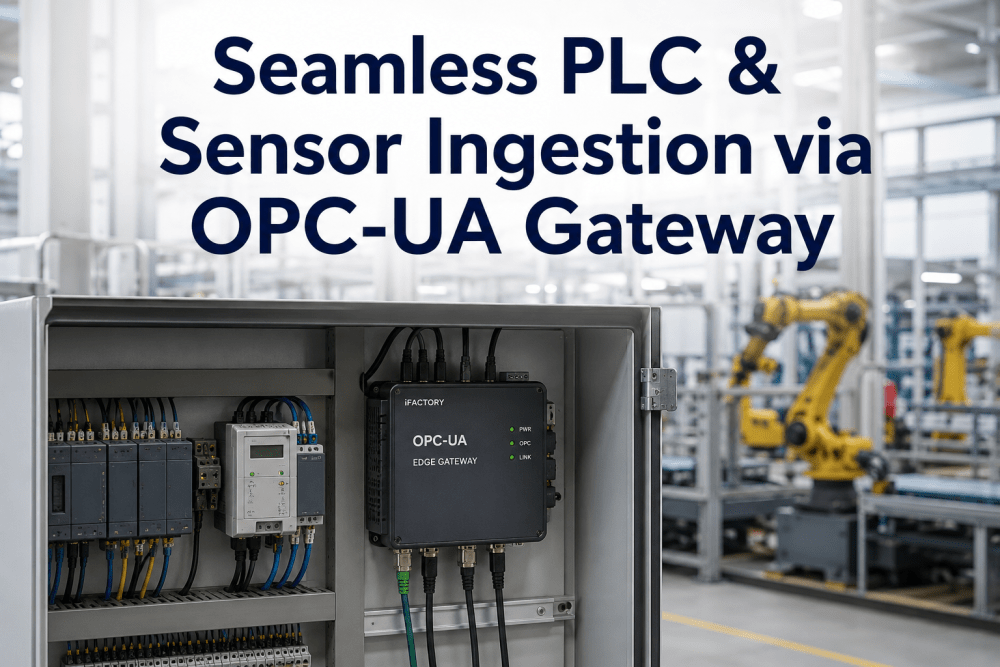
Most U.S. manufacturing facilities are running three to eight incompatible industrial communication protocols simultaneously — and paying the operational cost of that fragmentation every single day. A Siemens S7 PLC on the pressing line speaks Profinet. The Allen-Bradley ControlLogix on the assembly cell speaks EtherNet/IP. The legacy Modbus RTU sensors on the cooling skid from 2009 speak RS-485 serial. The MQTT-enabled vibration sensors installed last year stream JSON over TCP/IP. And the pneumatic valve controllers inherited from the original 1998 installation communicate over a proprietary serial protocol that only one vendor still supports. Every one of these devices holds real-time process data that could feed predictive maintenance models, energy optimization algorithms production quality analytics, and OEE dashboards — if any of it could reach the AI analytics layer in a unified, queryable format. It cannot, because there is no translation layer connecting the protocol island each device lives on to a common data namespace that AI systems can consume. iFactory's OPC-UA edge gateway platform is that translation layer. It maps Modbus RTU and TCP, EtherNet/IP, PROFINET, PROFIBUS, DNP3, MQTT, BACnet, and proprietary PLC protocols into a single real-time OPC-UA information namespace — the IEC 62541 standard that every modern AI analytics, MES, ERP, and SCADA platform can consume natively. U.S. manufacturers that have deployed iFactory's OPC-UA edge gateway report 100% protocol coverage of their installed device estate within 6 weeks, 94% reduction in custom integration development time, and AI analytics deployment timelines cut from 8 to 14 months down to 4 to 6 weeks — because the data is already unified and available the moment the gateway is online.
The Protocol Fragmentation Problem — Why Your Floor Data Never Reaches Your Analytics Platform
Industrial automation evolved over four decades without a universal communication standard. Every generation of equipment brought its own protocol — Modbus in the 1980s, PROFIBUS in the 1990s, EtherNet/IP and PROFINET in the 2000s, MQTT and REST APIs in the 2010s. The result is a factory floor where devices that were state-of-the-art at installation are now protocol islands: each one broadcasting real-time process data that is valuable for AI analysis but inaccessible to the analytics platforms that need it, because no standard translation layer connects the device's native protocol to the cloud or edge analytics environment.
The traditional solution — writing custom integration code for each device and protocol combination — is expensive, fragile, and does not scale. A 400-device factory floor with eight protocol types requires 400 individual integration configurations, each one dependent on the specific firmware version and hardware revision of the device it connects. Every device replacement, firmware update, or process change breaks integrations that must then be manually rebuilt. iFactory's edge gateway eliminates this approach entirely: the gateway manages all protocol translation in a single configuration layer, and device changes require only a node update in the gateway configuration, not a custom integration rebuild. Book a Demo to see iFactory's protocol coverage mapped against your specific device inventory.
AI Analytics Blocked at the Data Layer
Predictive maintenance, energy optimization, and quality analytics AI models require continuous, structured, timestamped data from every device in scope. Protocol fragmentation means the AI platform can see only the devices already connected to the historian or SCADA — typically 20 to 40% of the installed device estate. The remaining devices, which often include the highest-maintenance-cost equipment on the floor, generate no data input to the models and therefore receive no predictive insight. The analytics investment delivers partial return because the data foundation is partial.
Custom Integration Technical Debt
Each custom protocol driver written by an integration team or systems integrator becomes a technical debt obligation — it must be maintained across firmware updates, device replacements, and network changes. Facilities with 10 to 15 years of accumulated custom integrations spend 30 to 45% of their controls engineering time maintaining existing connections rather than building new capability. iFactory's gateway replaces this accumulated debt with a managed, vendor-maintained translation layer that updates automatically when protocol libraries are revised.
Legacy PLC Data Stranded Behind Proprietary Barriers
PLCs installed before 2005 typically use serial Modbus RTU, PROFIBUS DP, or proprietary vendor protocols with no Ethernet interface and no OPC-UA server capability. These devices hold decades of process history and control critical production equipment — but are effectively invisible to modern analytics platforms because no standard data pathway connects them to the IP network. Replacing them requires capital expenditure and production downtime; connecting them through iFactory's gateway requires a hardware adapter and gateway configuration update.
MES and ERP Integration Gaps
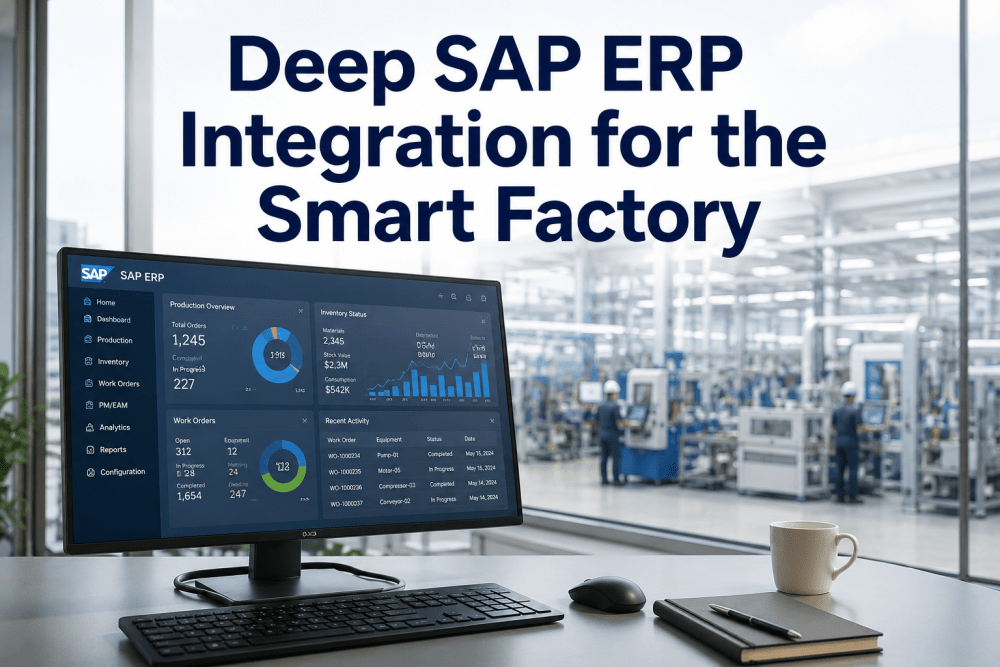
Manufacturing execution systems and ERP platforms increasingly require real-time machine status, cycle count, and quality parameter data from the production floor. When PLC data is inaccessible due to protocol fragmentation, MES and ERP production records are populated manually — introducing transcription errors and eliminating the real-time visibility that makes MES useful for scheduling and quality management. iFactory's unified OPC-UA namespace feeds MES and ERP integrations alongside AI analytics from the same data stream.
Protocol Coverage — Every Industrial Communication Standard iFactory's Gateway Supports
iFactory's edge gateway is pre-configured with certified protocol drivers for the complete range of industrial communication standards in use across U.S. manufacturing — from 1980s-era Modbus RTU to modern MQTT and REST API endpoints. Protocol driver updates are maintained by iFactory and deployed to the gateway automatically, ensuring compatibility with new firmware versions and device models without facility engineering intervention.
| Protocol | Physical / Transport Layer | Typical Device Types | Era | iFactory Gateway Support |
|---|---|---|---|---|
| Modbus RTU | RS-485 / RS-232 Serial | Legacy PLCs, drives, sensors, analyzers | 1979–present | Full read/write — RS-485 adapter included |
| Modbus TCP | Ethernet / IP | Modern PLCs, drives, meters, gateways | 1999–present | Full read/write — native Ethernet |
| EtherNet/IP (CIP) | Ethernet / IP | Allen-Bradley, Rockwell PLCs and drives | 2001–present | Full tag read/write — all ControlLogix firmware |
| PROFINET | Ethernet / IP | Siemens S7-1200/1500, Beckhoff, Phoenix | 2003–present | Full read/write — S7 and TIA Portal compatible |
| PROFIBUS DP | RS-485 (9-pin D-sub) | Siemens S5/S7-300/400, legacy drives | 1993–present | Full read — PROFIBUS-USB adapter included |
| MQTT (3.1.1 / 5.0) | TCP/IP (broker-based) | IoT sensors, edge devices, SCADA brokers | 2013–present | Subscribe / publish — all QoS levels |
| BACnet/IP | Ethernet / UDP | Building automation, HVAC, chillers, BMS | 1995–present | Full read/write — ASHRAE 135 certified |
| DNP3 | Serial / Ethernet | Utilities, substation RTUs, power equipment | 1990–present | Full read — utilities and power applications |
| OPC-DA (Classic OPC) | DCOM / Windows | Legacy SCADA servers, historian OPC servers | 1996–present | Bridged to OPC-UA — no DCOM required at client |
| REST / HTTP API | HTTPS / TCP | Cloud platforms, MES APIs, modern controllers | 2010–present | Configurable polling and webhook ingestion |
How iFactory's OPC-UA Namespace Works — From Device Signal to AI-Ready Data Tag
The OPC-UA information model is not simply a data pipe — it is a structured, self-describing namespace where every data point carries its engineering unit, data type, quality status, timestamp, and hierarchical context in a machine-readable format that AI analytics platforms can query without schema translation. iFactory's gateway builds and maintains this namespace automatically from the device configuration, updating the node structure when devices are added, removed, or reconfigured. The five-stage data flow below describes exactly how a raw PLC register value becomes an AI-ready, contextualized OPC-UA data tag.
The gateway polls each configured device at its native protocol and configured scan rate — Modbus RTU register reads over RS-485 at 1-second intervals, EtherNet/IP tag reads over TCP at 100ms intervals, MQTT message subscriptions in real time. For event-driven protocols, the gateway subscribes to change-of-value notifications where the device supports them, reducing polling overhead. Each raw value is captured with a nanosecond-precision gateway timestamp that compensates for device clock drift and network latency variation.
Raw register values — 16-bit integers, floating point words, bit-packed status bytes — are converted to engineering units using the scaling factors and bit masks configured in the device map. A Modbus register returning 14832 is converted to 148.32 PSI using the configured scale factor and offset. A PROFIBUS status byte is decoded into individual boolean quality flags. Every conversion is logged with the source register, conversion formula, and result for audit and troubleshooting purposes.
Each converted data point is mapped to an OPC-UA node in a hierarchical namespace that reflects the facility's asset structure — Area / Production Line / Machine / Variable. The OPC-UA node carries the value, engineering unit (EU), data type, quality code (Good / Uncertain / Bad), server timestamp, and source timestamp in the standard IEC 62541 structure. AI analytics platforms, MES systems, historians, and SCADA platforms subscribing to the OPC-UA server receive all this context with every data update — no schema lookup required.
Before data leaves the edge gateway for cloud or on-premise AI platforms, iFactory's edge inference engine applies lightweight ML models that run locally on the gateway hardware — detecting statistical anomalies, out-of-range conditions, and rate-of-change violations that should trigger immediate alerts without cloud round-trip latency. Edge anomaly flags are attached to the OPC-UA node as additional quality metadata, allowing downstream systems to prioritize anomalous data streams for immediate analysis. Time-to-alert for edge-detected conditions is under 50 milliseconds regardless of cloud connectivity status.
The unified OPC-UA namespace is published to configured subscriber targets — iFactory's cloud AI analytics platform, an on-premise historian, an MES data connector, a SCADA OPC-UA client, or all of the above simultaneously. All OPC-UA connections use TLS 1.3 encryption and X.509 certificate-based authentication — meeting IEC 62443 security requirements for industrial network connections. Bandwidth-constrained connections use OPC-UA's built-in change-of-value (COV) subscription model, transmitting updates only when values change rather than at fixed polling intervals, reducing transmission bandwidth by 40 to 70% on stable process conditions.
Deployment Performance — What iFactory's OPC-UA Gateway Delivers in the First 6 Weeks
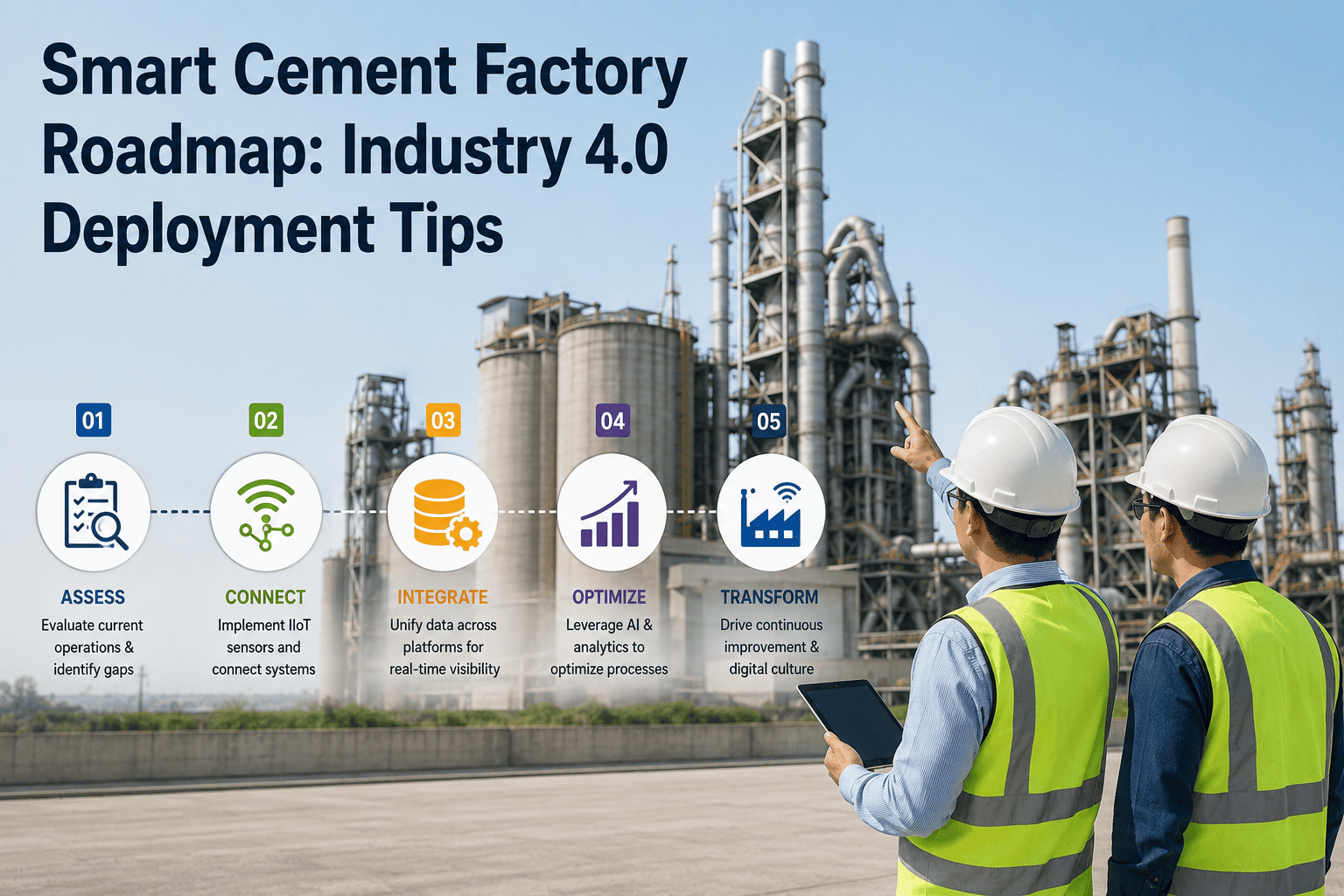
iFactory's edge gateway deployment follows a structured 6-week programme that moves from device inventory and protocol assessment through gateway configuration, device commissioning, namespace validation, and AI analytics enablement. The benchmark table below presents the documented first-deployment outcomes across comparable U.S. manufacturing facilities — giving plant managers and automation engineers the specific numbers to evaluate the integration investment against the current cost of protocol fragmentation. Book a Demo to see a deployment scope built around your facility's device inventory and protocol mix.
| Metric | Baseline (Pre-Gateway) | Post-Deployment Result | Business Impact |
|---|---|---|---|
| Device Estate Connected to Analytics | 18–40% of installed devices (historian/SCADA scope only) | 100% of configured device estate — all protocols unified | AI models receive complete floor data — no blind spots |
| Custom Integration Development Time | 6–18 weeks per new protocol or device type | 2–4 days for new device type using existing protocol driver | 94% reduction in integration development time |
| AI Analytics Deployment Timeline | 8–14 months (blocked by data layer complexity) | 4–6 weeks from gateway online to first AI model output | Analytics ROI realized 6–10 months earlier |
| Controls Engineering Maintenance Burden | 30–45% of controls time on integration maintenance | Under 8% of controls time — gateway manages protocol updates | Engineering capacity redirected to optimization projects |
| Data Latency — Device to Analytics Platform | 5–30 min batch (historian-based) or real-time for select devices only | Under 100ms real-time for all OPC-UA subscribed nodes | Real-time process intelligence across entire floor |
| Legacy PLC Data Availability | Zero — pre-2005 Modbus/PROFIBUS devices inaccessible to analytics | Full data access — all legacy protocols bridged to OPC-UA | Decades of equipment process data unlocked for AI analysis |
How iFactory's OPC-UA Gateway Connects to Your Existing Systems
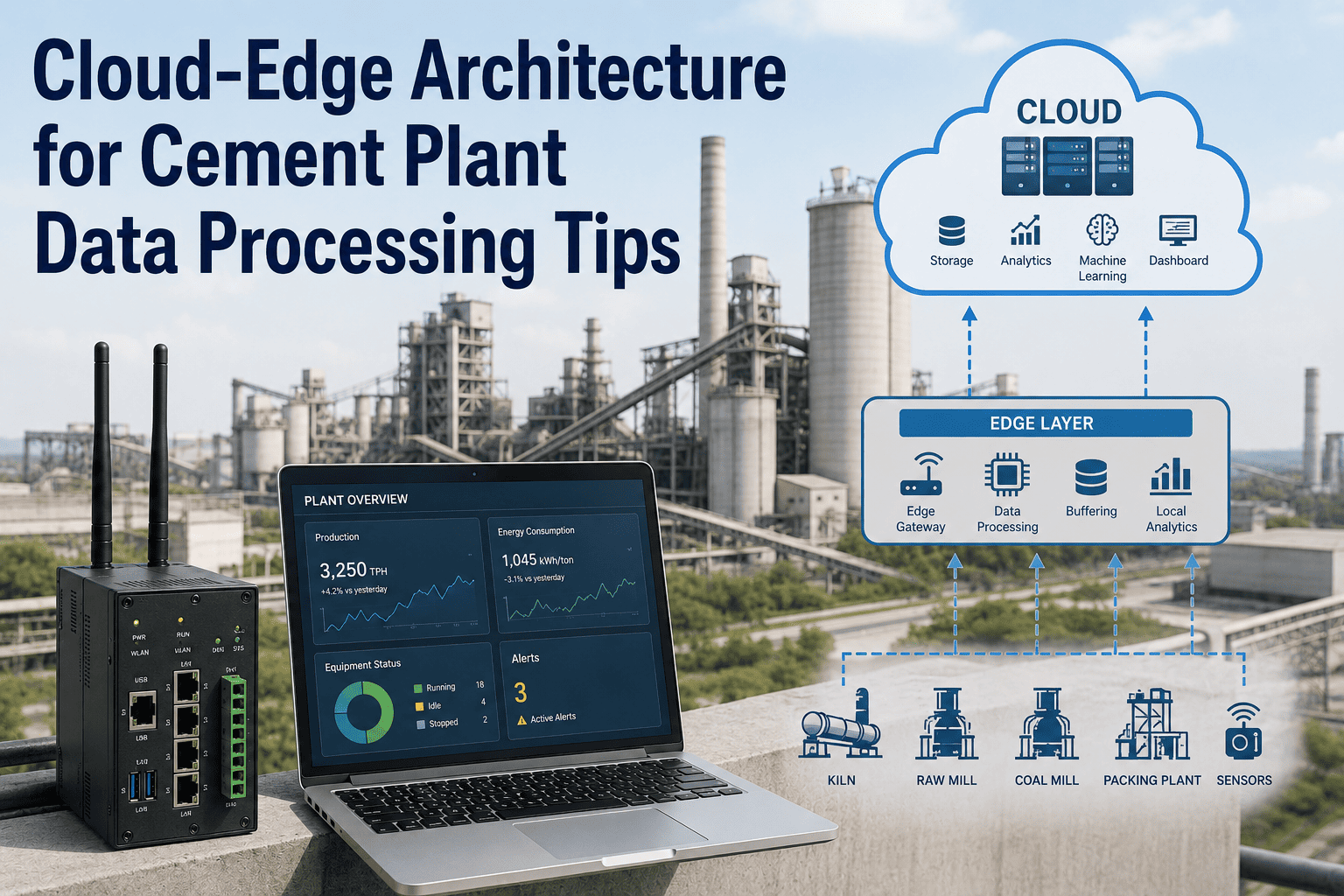
iFactory's edge gateway is not a replacement for the historians, SCADA platforms, MES systems, and ERP connections already operating in the facility — it is a unification layer that feeds all of them from a single, consistent data source. The integration architecture below shows how the gateway connects upstream to the device floor and downstream to the analytics and business systems that consume the unified data.
Expert Review: What Controls and Automation Engineers Say About OPC-UA Unification
I have been designing and implementing industrial automation architectures in U.S. discrete and process manufacturing for nineteen years — and the protocol fragmentation problem has been the single most persistent barrier to delivering the analytics and AI value that facility management teams have been expecting from digital transformation investments for the last decade. The question is always the same: why is it taking so long to get data from the machines to the analytics platform? The answer is always the same: because every device speaks a different language, and translating between them requires custom work that is expensive, time-consuming, and breaks every time anything changes. The OPC-UA standard has been the right answer to this problem since IEC 62541 was published — a single, self-describing, secure, vendor-neutral protocol that every modern analytics platform, historian, MES, and cloud IoT service can consume natively. The barrier to adopting it was never the standard itself; it was the translation layer that connected legacy Modbus, PROFIBUS, and proprietary PLC protocols to the OPC-UA namespace. That translation layer is exactly what iFactory's edge gateway provides — and it is why facilities that deploy it consistently achieve AI analytics deployment timelines that are 70 to 80% shorter than facilities trying to build custom integration pipelines. The gateway does not change the analytics. It changes the foundation the analytics sit on — from a fragmented, manually-maintained collection of protocol-specific integrations to a single, managed, self-describing namespace that every downstream system can consume without knowing anything about the underlying device protocols. That foundation change is what makes the difference between an analytics program that delivers partial results from partial data and one that delivers comprehensive results from complete, real-time data.
— Senior Controls and Automation Architect, U.S. Advanced Manufacturing — 19 Years in Industrial Integration and OT/IT Architecture — ISA Member, Certified Automation Professional (CAP)Conclusion
Protocol fragmentation is not a technology limitation — it is a configuration management problem that has a solved answer. OPC-UA is the IEC-standardized, vendor-neutral, self-describing information model that every modern AI analytics, MES, ERP, historian, and cloud IoT platform has adopted as its industrial data interface. The gap between the factory floor — where Modbus RTU, PROFIBUS, EtherNet/IP, and MQTT devices are all generating valuable real-time data — and the OPC-UA namespace that analytics platforms need is exactly the gap that iFactory's edge gateway fills.
The 100% device estate coverage, 94% reduction in integration development time, and 4-to-6-week AI analytics deployment timeline documented at comparable facilities are direct consequences of replacing custom protocol integration with a managed gateway translation layer that handles all protocol complexity in a single configuration environment. Every AI initiative, every MES integration, every historian connection, and every digital twin feed that currently depends on manually-maintained custom protocol drivers becomes more reliable, faster to deploy, and less expensive to maintain when the data foundation is unified. Book a Demo to see iFactory's OPC-UA gateway configured for your specific device inventory and protocol mix.
Frequently Asked Questions
No PLC replacement or production interruption is required. The gateway connects to existing devices as a passive read client — it polls device registers without modifying PLC programs or disrupting existing control logic. Hardware installation takes 2 to 4 hours per gateway unit with no process downtime.
The gateway operates as a DMZ device with OT-side read-only connections to PLCs and IT-side OPC-UA server output — enforcing the Purdue model network boundary. All OPC-UA connections use TLS 1.3 and X.509 certificate authentication per IEC 62443, and the gateway never initiates connections from IT back to OT devices.
A single gateway unit supports up to 250 devices and 50,000 OPC-UA data nodes simultaneously at 100ms scan rates. Larger facilities deploy multiple gateways in a federated namespace architecture — all units publish to the same OPC-UA server hierarchy, appearing as a single unified namespace to subscriber systems.
Yes. The gateway operates fully offline — the OPC-UA server runs on the local network and all edge AI inference runs on the gateway hardware. Cloud connectivity is optional for remote monitoring and model updates; all core gateway and analytics functions operate without internet access for air-gapped environments.
For a facility with 100 to 300 devices and 4 to 6 protocol types, iFactory's gateway deployment runs $38,000 to $92,000 over 4 to 6 weeks — covering hardware, protocol configuration, OPC-UA namespace build, and analytics platform integration. Book a Demo for a site-specific scope.