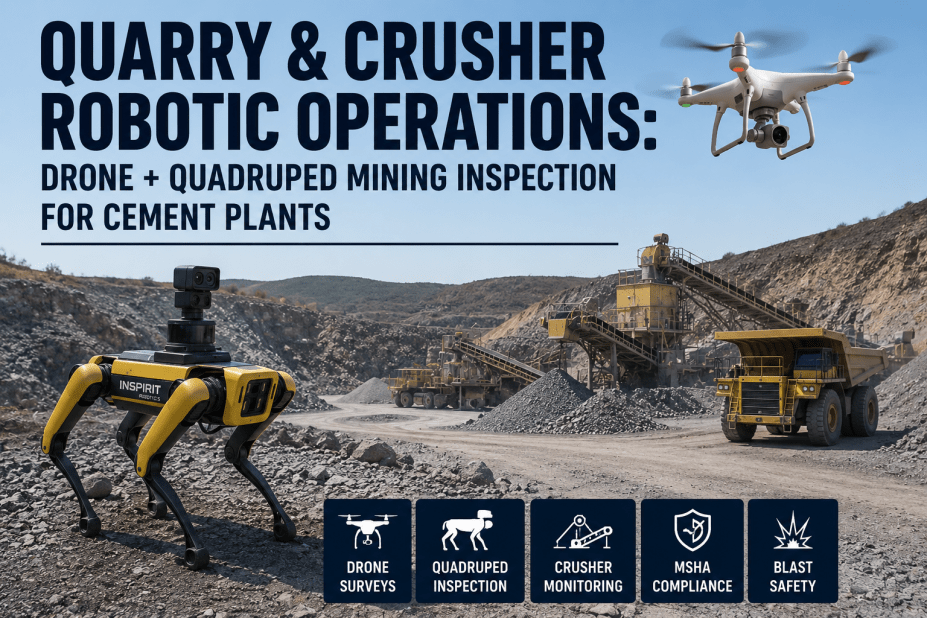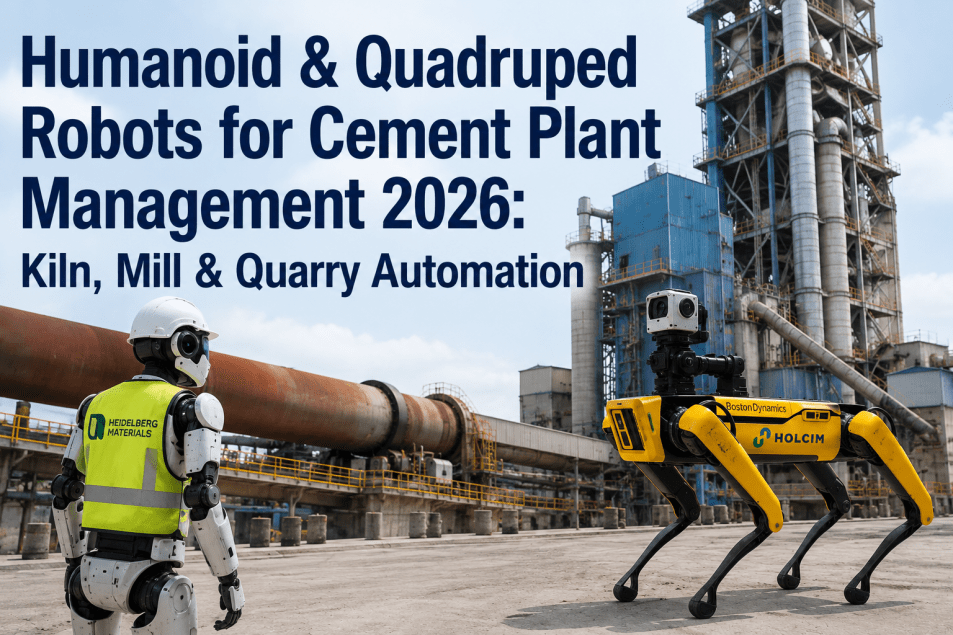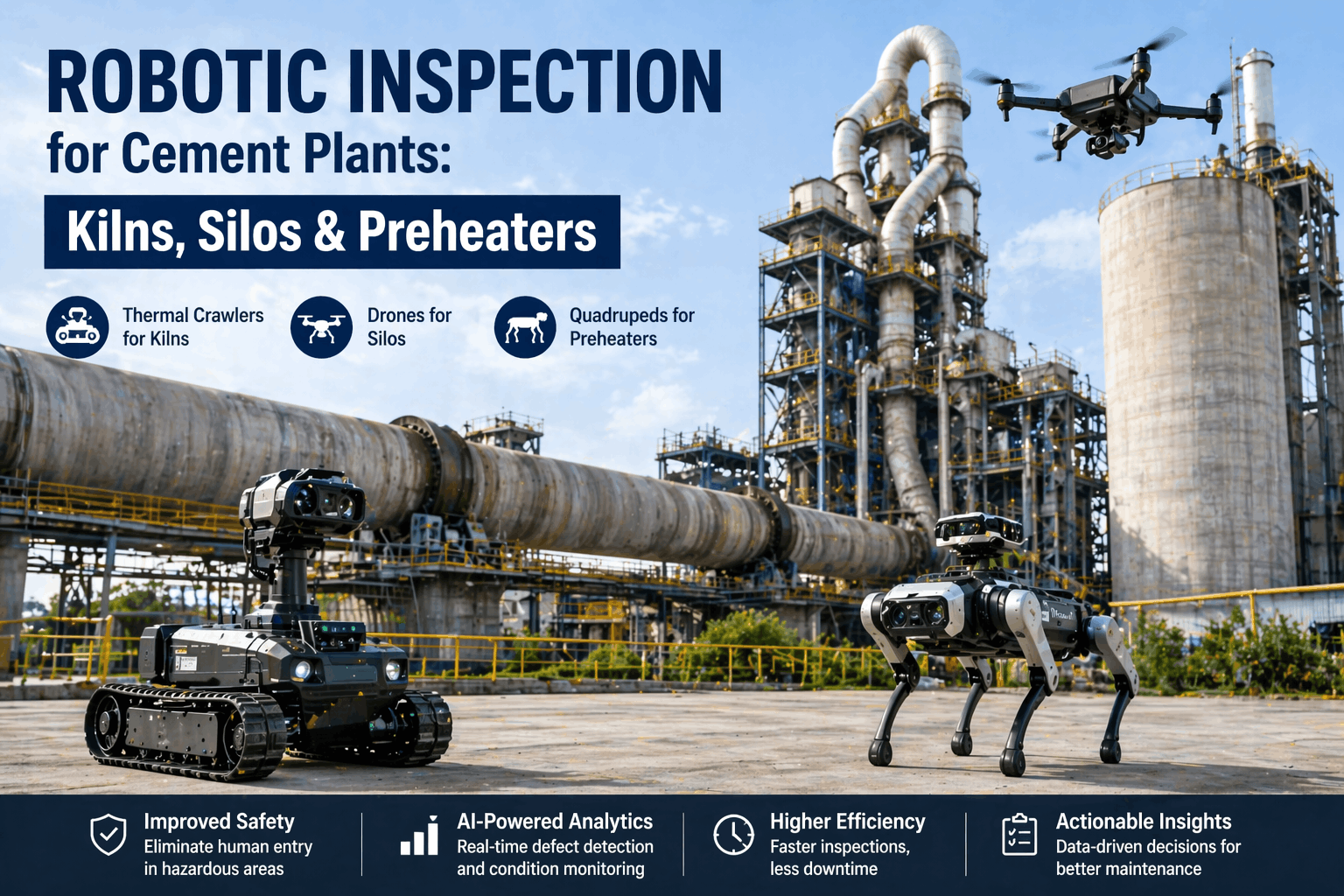
Robotic inspection for cement manufacturing is fundamentally rewriting how heavy industrial plants manage confined space safety and asset integrity. By replacing manual entry into high-temperature kilns, vertical silos, and complex preheater towers with a fleet of thermal crawlers, LiDAR drones, and quadrupeds, a robotic analytics platform eliminates human risk while delivering sub-millimeter defect detection. For cement manufacturers under pressure to maintain 24/7 uptime in harsh, high-vibration environments, adopting AI-driven robotic inspection is no longer just a safety upgrade. It is the operational foundation for high-density predictive maintenance and clinker quality stabilization. This guide explores how autonomous drone simulation, magnetic crawler monitoring, and real-time robotic analytics combine to deliver measurable asset intelligence across every stage of cement production.
Inspect Your Assets Without Stopping the Hot Line
iFactory's robotic integration platform delivers autonomous thermal scanning, 3D silo modeling, and AI-driven defect tagging built for hazardous cement environments.
The Three Pillars of Robotic Intelligence in Cement Plants
Traditional inspection requires cooling assets for days, erecting scaffolding, and sending humans into hazardous, dust-choked environments. In 2026, the robotic inspection cement standard utilizes three distinct specialized platforms that feed a single AI defect-detection engine. When a silo drone detects a 0.5mm hairline crack in a structural wall, or a kiln crawler identifies a hot-spot before a shell-reddening event, it syncs directly to the Digital Twin. This is the difference between reactive repairs and genuine robotic intelligence software. Manufacturers who book a demo with iFactory find that robotic data replaces guesswork with absolute spatial certainty.
LiDAR-Equipped Silo Drones
Autonomous drones navigate the interior of raw meal and clinker silos, creating high-density 3D LiDAR point clouds. Detects build-ups, wall thinning, and structural fatigue without confined space entry.
Magnetic Thermal Kiln Crawlers
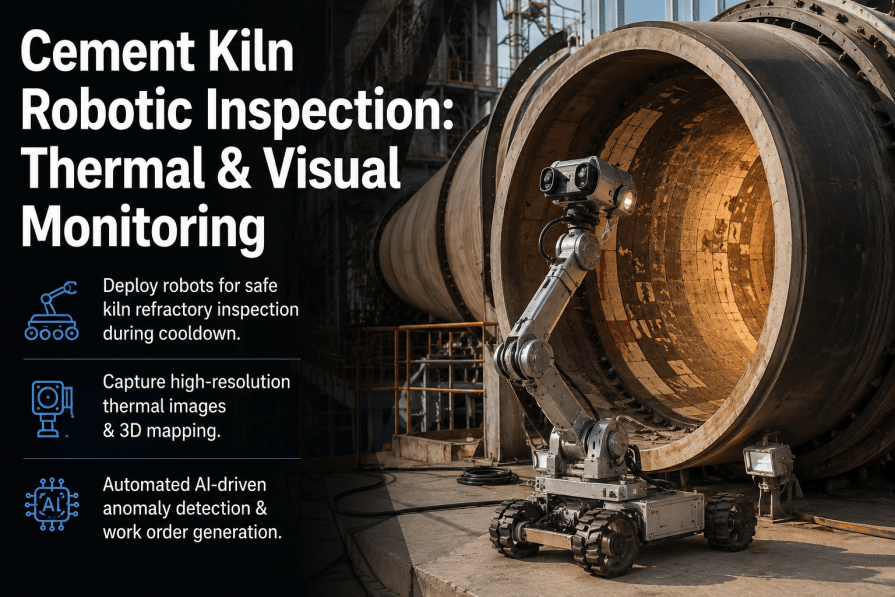
Ruggedized crawlers move along the external kiln shell or interior refractory zones. Utilizing radiometric thermal imaging, they identify refractory spalling and shell warping in real-time.
Quadruped Preheater Towers
Walking robots navigate the multi-level preheater tower, checking for gas leaks, valve anomalies, and cyclone blockages using ultrasonic and chemical sensors while the line is running.
AI Defect Tagging & Sync
Raw robotic video and LiDAR data is processed by AI defect-detection models, automatically tagging "high-risk" areas in the plant's Digital Twin and triggering corrective work orders.
Quantifying the Robotic Shift: Eliminating Human Risk
Digital robotic platforms resolve the dangerous trade-off between inspection frequency and safety. In legacy plants, inspection is delayed as long as possible to avoid the risks of heat stress and falling debris. Robotic inspection allows for continuous health auditing without a single human crossing the threshold of a confined space. Plants that have deployed this approach with iFactory report that booking a demo reveals the massive cost recovery found in reduced insurance premiums and faster inspection turnaround.
Manual vs. Robotic Inspection: A Financial Comparison
The economic logic of cement plant robotics is driven by "Time-to-Data." A manual inspection of a raw mill preheater tower requires a total shutdown, cooling, and hours of technician labor. A quadruped robot can enter the tower while it's warm, identifying anomalies before they trigger a catastrophic blockage. This level of responsiveness is what operations directors need to approve robotics budgets, frequently requesting a demo to validate the payback period.
| Inspection Mode | Traditional Manual Entry | Robotic iFactory Standard | Profit Impact |
|---|---|---|---|
| Silo Integrity | Scaffolding / Rope Access | LiDAR Drone (15 min flight) | $45k saving per silo cycle |
| Kiln Hotspot Tracking | External Thermal Scanner | Mobile Crawler (Interior/Exterior) | Refractory life extended 14% |
| Confined Space LOTO | Manual Lockout (6 hrs) | Digital Validation (15 min) | Faster restart, 3.2% OEE boost |
| Defect Categorization | Subjective (Human opinion) | AI-driven defect grading | 100% data consistency |
| Historical Continuity | Fragmented report logs | Persistent 3D Digital History | 70% faster audit readiness |
"Implementing robotic crawlers for our rotary kilns was the single most effective safety upgrade in our facility's 50-year history. We no longer send people into hot environments to find cracks; our robots find them with 20x higher precision while the assets are still on-line."
— Senior Operations Manager, Global Cement Group
Robotic Impact Across Key Cement Manufacturing KPIs
The performance gains from deploying a robotic inspection platform span every operational dimension. The chart below benchmarks the average improvement cement plants achieve across critical KPIs within 12 months of adopting autonomous robotic rounds, based on iFactory deployment data across kiln, mill, and preheater zones.
Robotic Inspection in Cement Plants — Frequently Asked Questions
How do drones fly inside a silo without a GPS signal?
Robotic silo drones used by iFactory utilize non-GPS spatial aware navigation systems (SLAM - Simultaneous Localization and Mapping) and LiDAR. They create their own high-fidelity map of the internal silo geometry in real-time, allowing them to navigate safely in dark, dust-choked environments without human pilot input.
Can robots inspect kilns while they are still in operation?
Yes. External kiln crawlers use active cooling and magnetic wheels to traverse the shell while the kiln is at production temperatures. Internal refractory crawlers can enter the kiln during warm-stops (approx. 200°C), significantly reducing the required 48-hour cool-down period needed for human entry.
What types of defects can the AI-driven robotics platform detect?
The system identifies refractory spalling, brick thinning, structural cracks in silo walls, girth gear wear, preheater valve blockages, and bearing anomalies. Each defect is automatically categorized by severity and logged into the plant's Digital Twin with sub-millimeter coordinates.
Is the hardware rugged enough for the dust and heat of a cement plant?
All iFactory robotic partners provide IP67 or IP68 ruggedized platforms specifically designed for heavy industrial use. Sensors are shielded from abrasive clinker dust, and motors are high-torque brushless variants capable of navigating the steep, difficult terrain of a preheater tower or raw mill basement.
How does the robotic data integrate with our existing CMMS/Dashboard?
Robotic data is normalized through iFactory’s central platform and pushed to your CMMS (SAP PM, Oracle, or IBM Maximo) as actionable work orders. Thermal heatmaps and 3D point clouds are overlaid on your existing Digital Twin for a unified "Asset Health" view.
Do we need to hire specialized robotic pilots to run these tools?
No. Modern industrial robots are autonomous. iFactory provides "Robot-as-a-Service" (RaaS) models where the platform handles the navigation. Your existing maintenance team simply defines the mission (e.g., "Map Silo 4") and triggers the flight via a ruggedized tablet.
What is the estimated payback period for a robotic inspection program?
Most sites achieve full ROI in under 12 months. This is primarily driven by the reduction in shutdown duration (average 36-48 hours saved per kiln cycle) and the elimination of scaffolding costs, which often exceed $20k per major silo inspection.
Does robotic inspection support ESG and Safety transparency?
Absolutely. It provides an auditable, verifiable record of "Confined Space Entry Elimination"—a critical KPI for modern ESG reporting. It demonstrates a proactive commitment to "Zero Harm" by removing humans from the highest-risk zones in the facility.
Deploy Robotics That Actually Protect Your Cement Team
iFactory's robotic analytics platform delivers autonomous silo mapping, high-temp kiln crawling, and real-time defect tagging — purpose-built for the rigors of cement manufacturing.