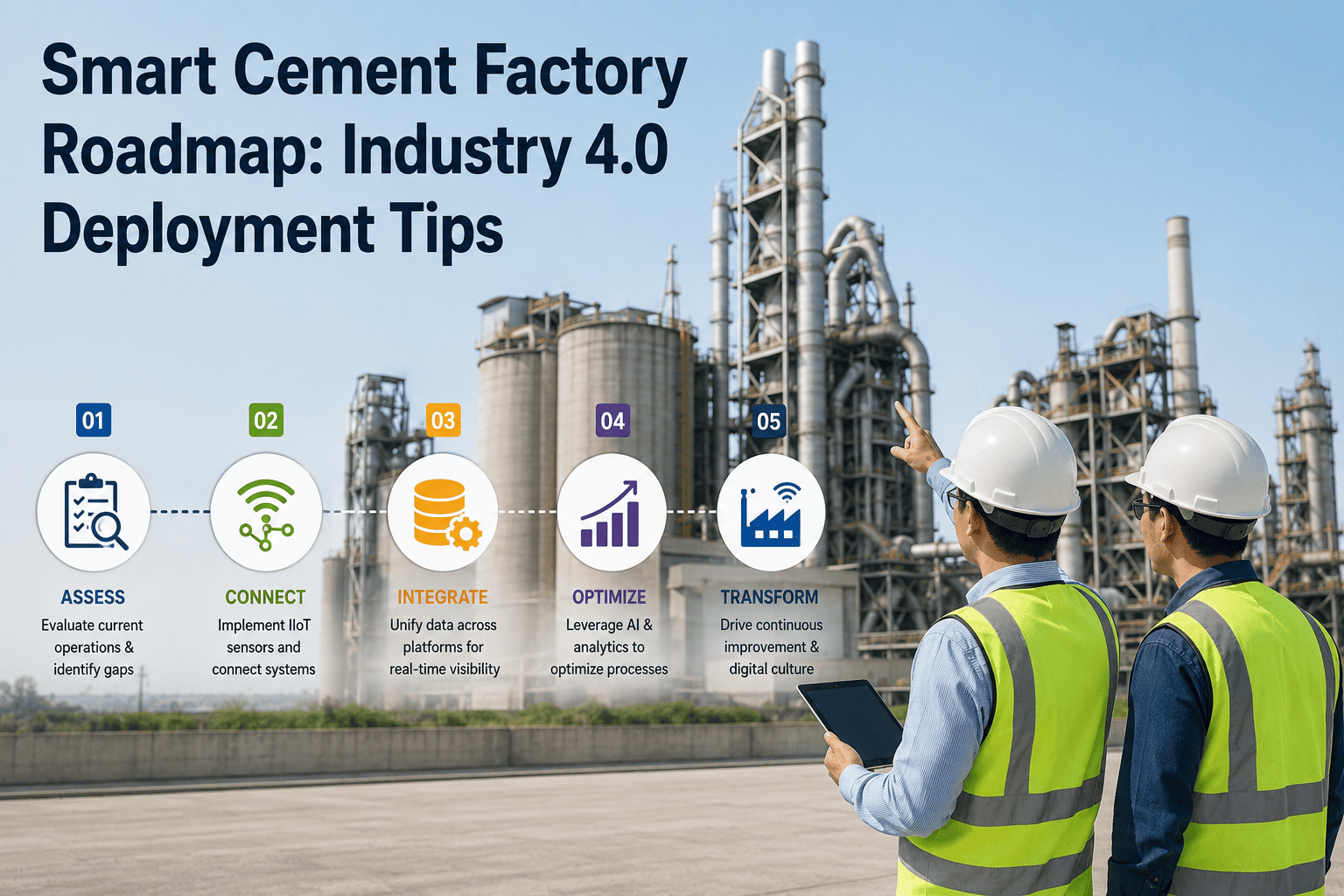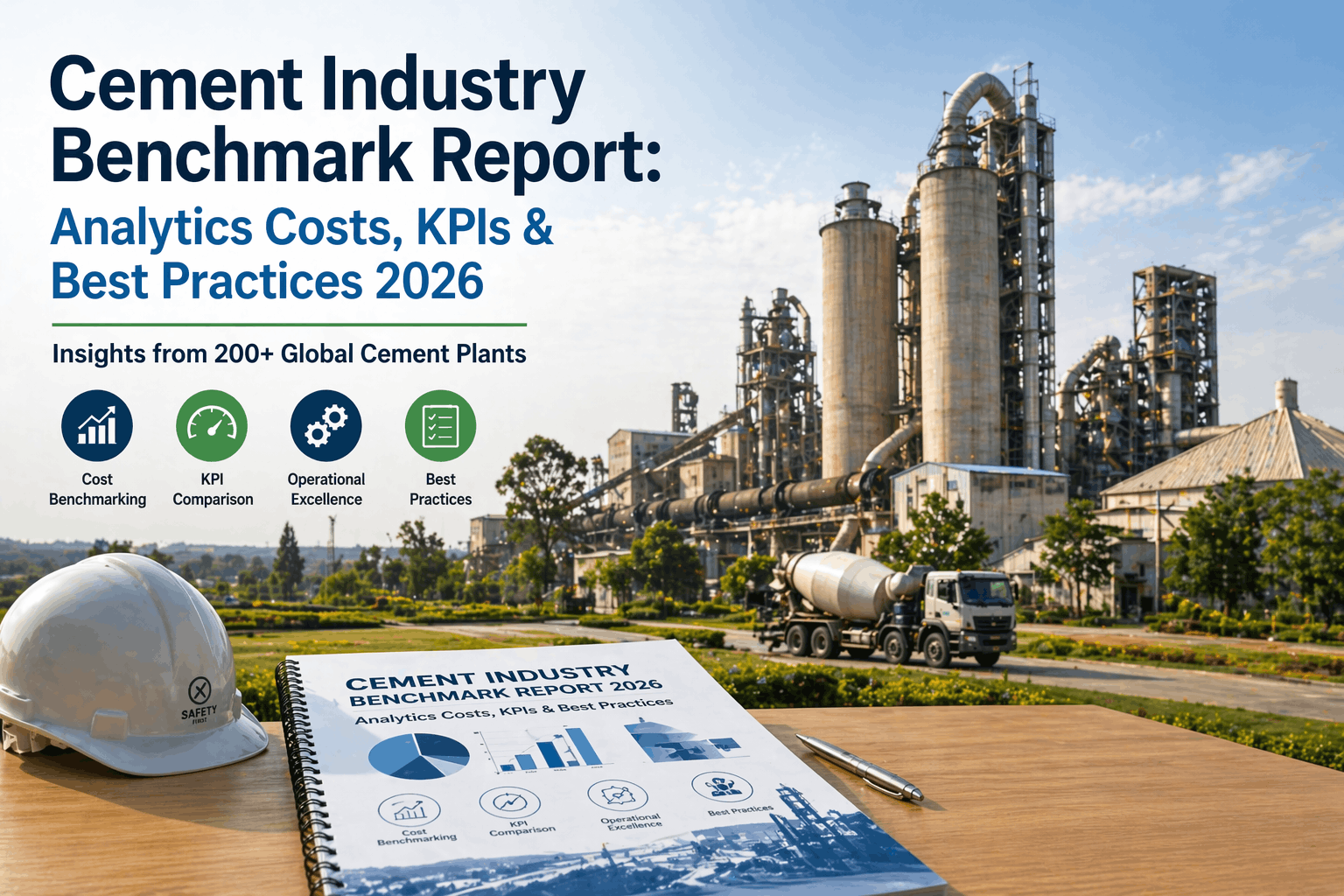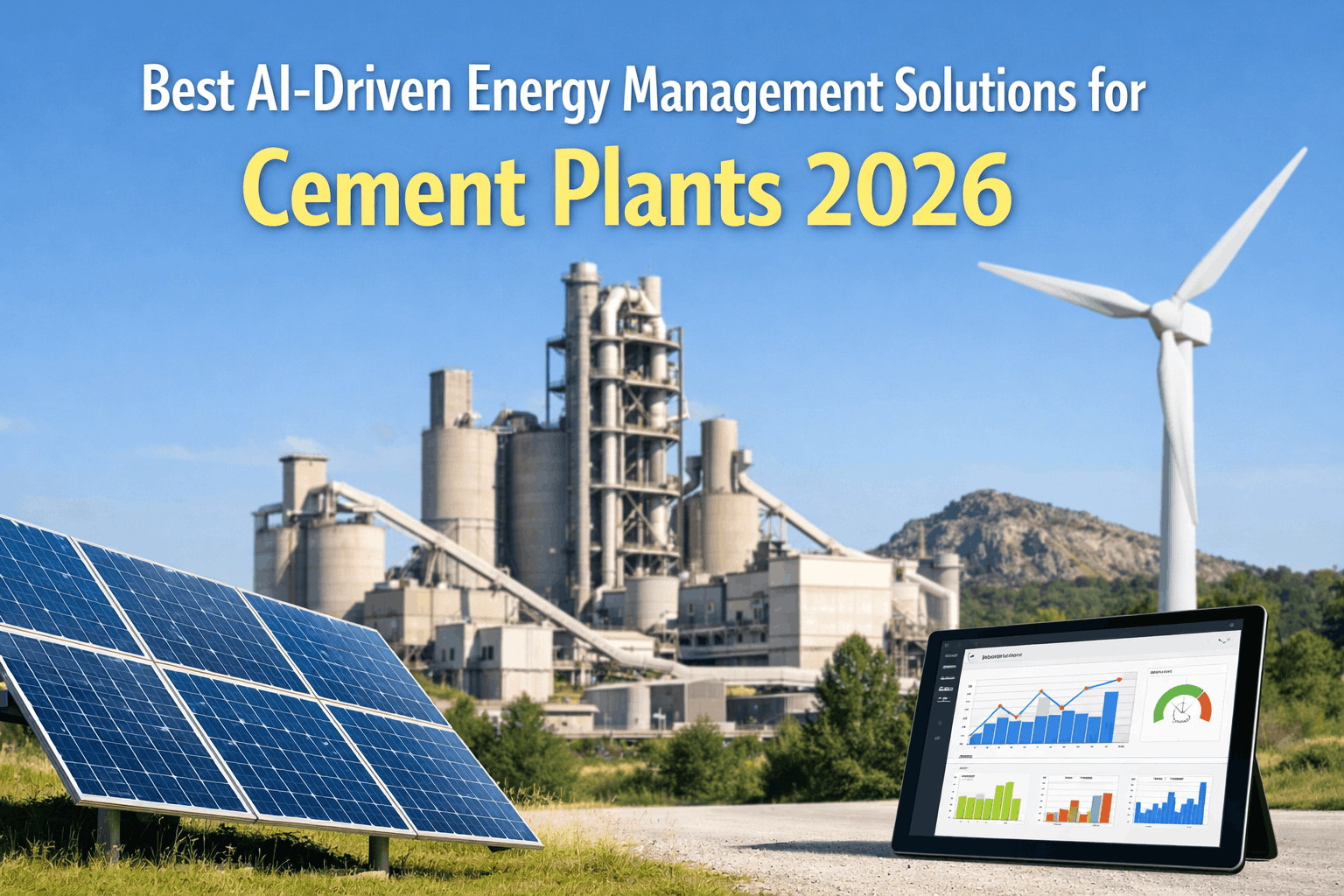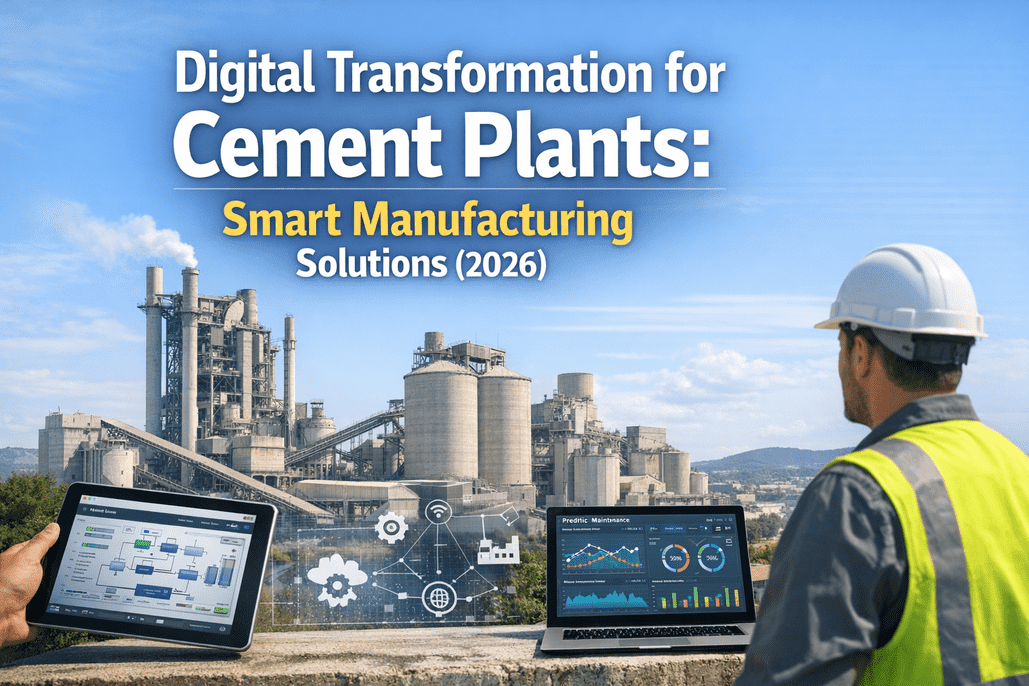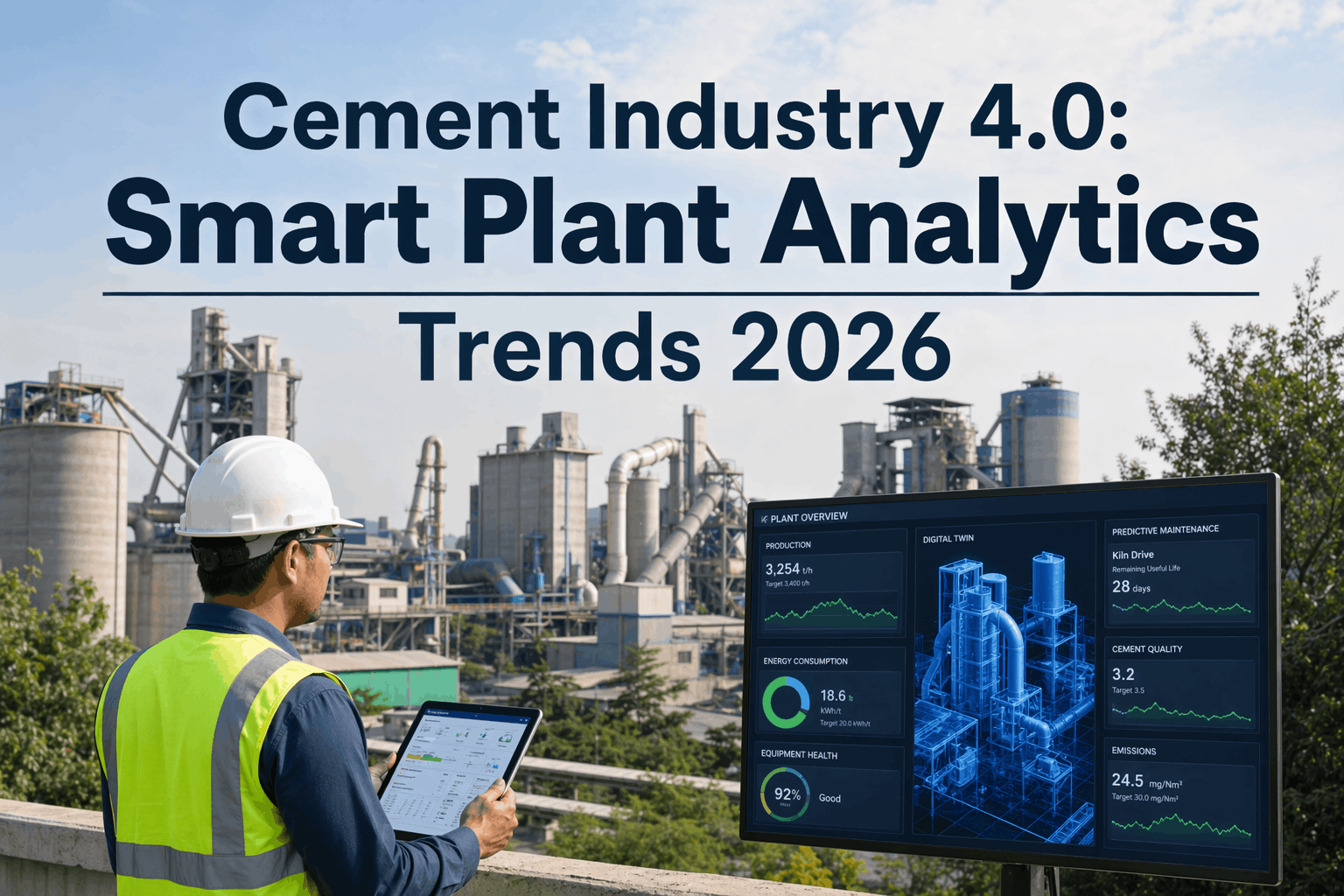
The "Smart Plant" is no longer a concept limited to industry whitepapers; in 2026, it is the primary engine of competitive survival in the heavy industrial sector. Cement Industry 4.0 has evolved from basic sensor logging to autonomous, self-healing production environments where AI predicts mechanical failure before the first vibration is felt. As decarbonization mandates intensify, the fusion of Digital Twin analytics and robotic inspection is becoming the standard for world-class clinker production. Book a demo to see how iFactory is leading the Cement 4.0 revolution.
Ready for the 2026 Technology Shift?
Join 40+ global cement groups who have already digitized their field operations with iFactory's Smart Plant suite.
Trend 1: The Digital Twin Kiln Shell
The 2026 smart cement plant is centered around a high-fidelity "Digital Twin." This isn't just a 3D model; it is a live thermal heatmap that correlates shell temperature with internal refractory thickness, planetary gear torque, and raw meal chemistry. Sites using Digital Twin analytics report a **12% higher refractory lifecycle** compared to legacy plants.
Physics-Based Heatmaps
- Real-time thermal scanner integration.
- Predictive "Thin Spot" forecasting (10-day lead).
- Stress-load correlation for retaining rings.
Autonomous Sync
- Automatic work order generation for shell cooling.
- Burner nozzle adjustment alerts via AI.
- Sync to SAP PM for seamless part tracking.
Technology Adoption: 2026 Smart Plant Benchmarks
The transition to Cement Industry 4.0 is happening in waves. This chart illustrates the current adoption rates of transformative technologies within global cement groups. Facilities lagging in the "Blue Zone" are currently paying **2x higher** unplanned downtime costs than their digitized peers.
Predictive AI (Asset Health)
AR-Guided Maintenance
Robotic / Drone Inspection
Trend 2: AR-Guided Rounds & Field Empowerment
One of the most human-centric cement technology trends is the rise of the "Augmented Operator." By using iFactory’s 17px tablet interface, field engineers receive real-time, step-by-step guidance overlays for complex tasks like VRM liner replacements or Girth Gear lubrication audits.
Visual Asset Overlay
technicians point their tablet at a motor, and the AI overlays the current vibration score, last oil-change date, and any active severity-level alerts. This eliminates the need for manual manual-log lookup in high-stress environments.
NFC Proximity Lockdown
Safety protocols are now linked to geography. A technician cannot start a checklist for the clinker cooler unless their mobile device is physically present at the asset tag, ensuring 100% compliance with LOTO (Lock-Out, Tag-Out) procedures.
The AI-Driven Clinker Quality Table
Quality control is moving from the lab to the kiln floor. Smart plant analytics can now predict Clinker Free-Lime levels by correlating burner nozzle pressure with kiln drive current. The table below outlines how AI stabilization impacts quality benchmarks.
| Process Metric | Manual Control Standard | AI-Stabilized Trend | Profit Impact |
|---|---|---|---|
| Clinker Free-Lime (%) | +/- 1.2% Variance | +/- 0.3% Variance | High Quality / Lower Penalty |
| Specific Heat Consumption | 820 - 850 kcal/kg | 780 - 795 kcal/kg | Massive Energy Savings |
| Secondary Air Temp | Volatile Swings | Flattened Curve | Refractory Lifecycle ++ |
| Alternative Fuel % | Max 40% safely | Up to 90% safely | Net-Zero ESG Compliance |
Lead the 2026 Smart Plant Revolution
Don't wait for your competitors to digitize. Implement the Cement Industry 4.0 standards today and secure your facility's operational future.
Smart Plant FAQs: Trends & Implementation
What is the single biggest trend in cement analytics for 2026?
Predictive Chemistry. We are seeing a shift from "Maintenance AI" to "Process AI," where systems predict clinker quality (Free-Lime) in real-time, reducing laboratory lag by 4-6 hours.
Can AR-guided tools work in high-dust cement environments?
Yes. iFactory utilizes high-contrast UI assets specifically designed for low-visibility environments. All field hardware is IP68 ruggedized and tablet interfaces are usable with industrial gloves.
How does a Digital Twin help with kiln relining?
It provides a 3D visualization of thinning spots. By tracking the exact erosion rate inside each refractory zone, the AI forecasts the "Date of Failure" (DOF), allowing relining to be scheduled during planned stops rather than emergency breakdowns.
Will robotic internal inspections replace field engineers?
No. Robotic crawlers and drones replace the **dangerous** tasks—like entering a hot kiln or a confined silo. They empower engineers with precision data, allowing them to focus on remediation rather than data collection.
How does iFactory handle data sovereignty in global cement groups?
We offer a hybrid-cloud model. Your production telemetry can be processed at the Edge (behind your firewall) while higher-level benchmarks and reporting are synced to the secure enterprise cloud.
What is the first step toward a 2026 Smart Plant?
Standardization. You cannot automate chaos. The first step is digitizing all field operator rounds into a common high-density mobile platform like iFactory to create a clean baseline of asset health data.