Southeast Asia's cement industry is undergoing a fundamental shift. Vietnam, Indonesia, and the Philippines now account for over 480 million metric tons of annual cement production capacity — driven by infrastructure spending, urbanization rates above 3 percent per year, and foreign direct investment in industrial zones across the ASEAN economic corridor. iFactory AI's multi-site management platform with tropical condition analytics provides cement plant operators with a unified technology stack for monitoring production performance, environmental compliance, and equipment health across geographically distributed plants operating in the region's unique tropical climate conditions. Book a Demo to see the platform configured for your Southeast Asian cement operations.
Manage Multi-Site Cement Operations Across Southeast Asia with iFactory AI
iFactory's tropical-optimized cement plant platform combines multi-site production dashboards, tropical condition alerts, AI-powered predictive maintenance, and environmental compliance tracking — purpose-built for the ASEAN cement industry's rapid expansion and tropical climate challenges.
The Three Growth Engines of ASEAN Cement Demand — Vietnam, Indonesia, and the Philippines
Southeast Asia's cement market is not monolithic. Each of the three dominant markets — Vietnam, Indonesia, and the Philippines — operates under distinct demand drivers, regulatory frameworks, and infrastructure investment cycles that plant operators must understand to optimize production allocation, logistics, and capacity expansion timing across multi-site portfolios.
Vietnam's cement industry operates at approximately 180 million metric tons of clinker and cement capacity, with the country serving as both the region's largest producer and a major export hub for clinker to Bangladesh, the Philippines, and Africa. The Vietnamese government's infrastructure development plan targets $25 billion in transportation and urban infrastructure spending through 2030, sustaining domestic cement demand while the industry manages export margin pressure from oversupply. iFactory's multi-site management platform enables Vietnamese cement operators to monitor production allocation across plants, optimize clinker inventory for export logistics, and track environmental compliance with the Ministry of Construction's increasingly stringent emissions standards.
Indonesia's cement market is the second-largest in ASEAN at approximately 160 million metric tons of capacity, with demand concentrated on Java while the new national capital Nusantara in East Kalimantan creates a long-term demand corridor for cement producers with distribution infrastructure in the eastern archipelago. Semen Indonesia Group, Indocement, and Semen Merdeka operate multi-plant networks across Sumatra, Java, Kalimantan, and Sulawesi — each facing distinct logistics challenges, fuel cost variability, and tropical weather exposure that demand integrated multi-site management capabilities.
The Philippines cement market at approximately 140 million metric tons of capacity is the third growth engine, driven by the Build Better More infrastructure program that allocates $45 billion through 2028 for transportation, water, and energy infrastructure. The Philippine cement industry faces unique challenges including high power costs, imported coal dependency, and typhoon-related production disruptions that operators must manage through real-time production monitoring, predictive maintenance, and supply chain visibility across islands.
Book a Demo to explore how iFactory's multi-site management platform supports cement operators in each of these ASEAN markets with market-specific production optimization, logistics tracking, and environmental compliance modules.
| Market Parameter | Vietnam | Indonesia | Philippines |
|---|---|---|---|
| Annual Capacity (M metric tons) | 180 | 160 | 140 |
| Key Demand Driver | Infrastructure plan $25B through 2030 | New capital Nusantara + Java development | Build Better More $45B through 2028 |
| Primary Fuel Source | Anthracite coal (domestic) | Imported bituminous coal | Imported coal + biomass co-processing |
| Climate Challenge | Monsoon humidity, typhoon exposure | Year-round tropical humidity, volcanic ash | 20+ typhoons annually, monsoon seasons |
| Regulatory Framework | Ministry of Construction standards | ESDM + Ministry of Environment | DENR + DOE compliance |
| Export Position | Major clinker exporter (30M+ tons/year) | Limited export, domestic-focused | Net importer of clinker |
| iFactory Solution | Multi-site production + export logistics | Island logistics + tropical alerts | Typhoon resilience + power monitoring |
Tropical Climate Challenges in Southeast Asian Cement Operations — Humidity, Temperature, and Monsoon Management
Operating cement plants in tropical Southeast Asia introduces climate-related challenges that plants in temperate regions do not face — high ambient humidity, sustained elevated temperatures, and monsoon-season rainfall that directly affect raw material moisture content, clinker cooling efficiency, finished cement quality, and equipment reliability. iFactory's tropical condition alerts module provides cement operators with weather-integrated production optimization that adjusts process parameters based on real-time and forecast environmental conditions.
Raw Material Moisture Variability
Tropical humidity ranging from 65 to 95 percent year-round and monsoon rainfall averaging 2,000 to 4,000 mm annually increase raw material moisture content from typical 2–5 percent in dry season to 15–25 percent in wet season. This variability disrupts raw mill feed consistency, increases drying energy consumption by 30 to 60 percent in the raw mill and preheater system, and reduces grinding throughput by 15 to 25 percent without active moisture compensation. iFactory's analytics platform integrates real-time raw material moisture data from online analyzers and weather station inputs to optimize raw mill feed blending, dryer temperature setpoints, and preheater energy allocation based on actual moisture load.
Clinker Cooling Efficiency Degradation
Ambient temperatures consistently above 30°C and high humidity reduce grate cooler heat exchange efficiency by 8 to 15 percent compared to design performance in temperate reference conditions. Reduced clinker cooling increases clinker discharge temperature, accelerates cooler grate wear, and elevates clinker transport belt maintenance frequency. iFactory's tropical cooler optimization model adjusts grate speed, cooling fan speed, and under-grate pressure setpoints based on real-time ambient temperature, humidity, and clinker production rate data — recovering 5 to 10 percent of cooler efficiency lost to tropical ambient conditions.
Cement Quality Impact from Humidity
High ambient humidity during finish grinding and cement storage reduces gypsum dehydration efficiency, increases cement moisture content, and accelerates cement silo caking and bridging — particularly in open-storage clinker yards exposed to monsoon rainfall. Cement moisture above 0.5 percent reduces 28-day compressive strength by 5 to 15 percent and increases false set risk. iFactory's cement quality analytics module integrates finish mill inlet and outlet moisture sensors, gypsum feed rate data, and ambient humidity forecasts to optimize gypsum calcination temperature, separator speed, and cement transport air volume for consistent cement quality across tropical weather conditions.
Equipment Corrosion and Reliability
Sustained 30–40°C ambient temperatures with 70–95 percent relative humidity accelerate corrosion rates on exposed steel structures, electrical enclosures, and instrumentation by 3 to 5 times compared to temperate environments. Preheater tower steel, clinker cooler housing, finish mill internals, and baghouse filter housings experience the most severe corrosion exposure. iFactory's equipment health monitoring module with tropical corrosion analytics tracks casing thickness trends, electrical insulation resistance degradation, and structural coating condition across all plant assets — generating predictive maintenance alerts for corrosion-related failures before they cause unplanned downtime.
Power Supply Reliability and Cost Volatility
Cement plants in Vietnam, Indonesia, and the Philippines face power costs ranging from $0.08 to $0.18 per kWh — 40 to 200 percent higher than U.S. and Middle Eastern cement production costs — with grid reliability issues causing 10 to 40 unplanned grid interruption events per year in some regions. iFactory's power management module monitors grid frequency and voltage in real time, executes automated load shedding protocols during grid disturbances, optimizes captive power generation from waste heat recovery and solar systems, and provides plant-wide power cost allocation to each production unit — supporting data-driven decisions on captive power investment, shift scheduling around peak tariff periods, and energy efficiency improvement targeting.
Multi-Site Management for ASEAN Cement Operators — From Plant-Level to Portfolio-Level Visibility
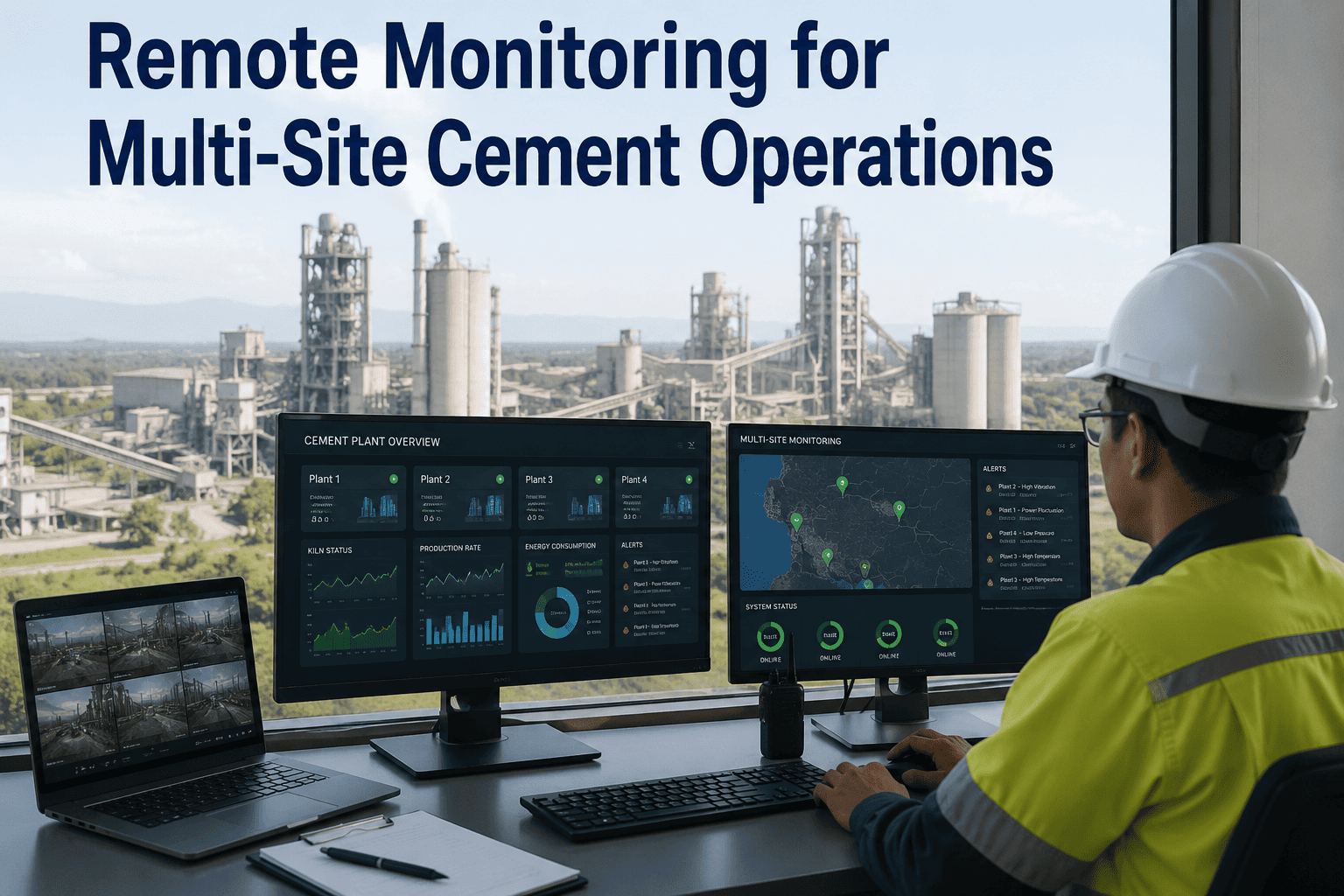
The defining operational challenge for Southeast Asian cement producers is not managing a single plant — it is managing 5, 10, or 20 plants across multiple islands, regulatory jurisdictions, and climate zones while maintaining consistent production efficiency, environmental compliance, and equipment reliability across the portfolio. iFactory AI's multi-site management platform is built for this portfolio-level visibility, providing cement operations teams with unified dashboards, cross-plant benchmarking, and centralized maintenance planning across all sites in a single pane of glass.
Unified Production Dashboard Across All Sites
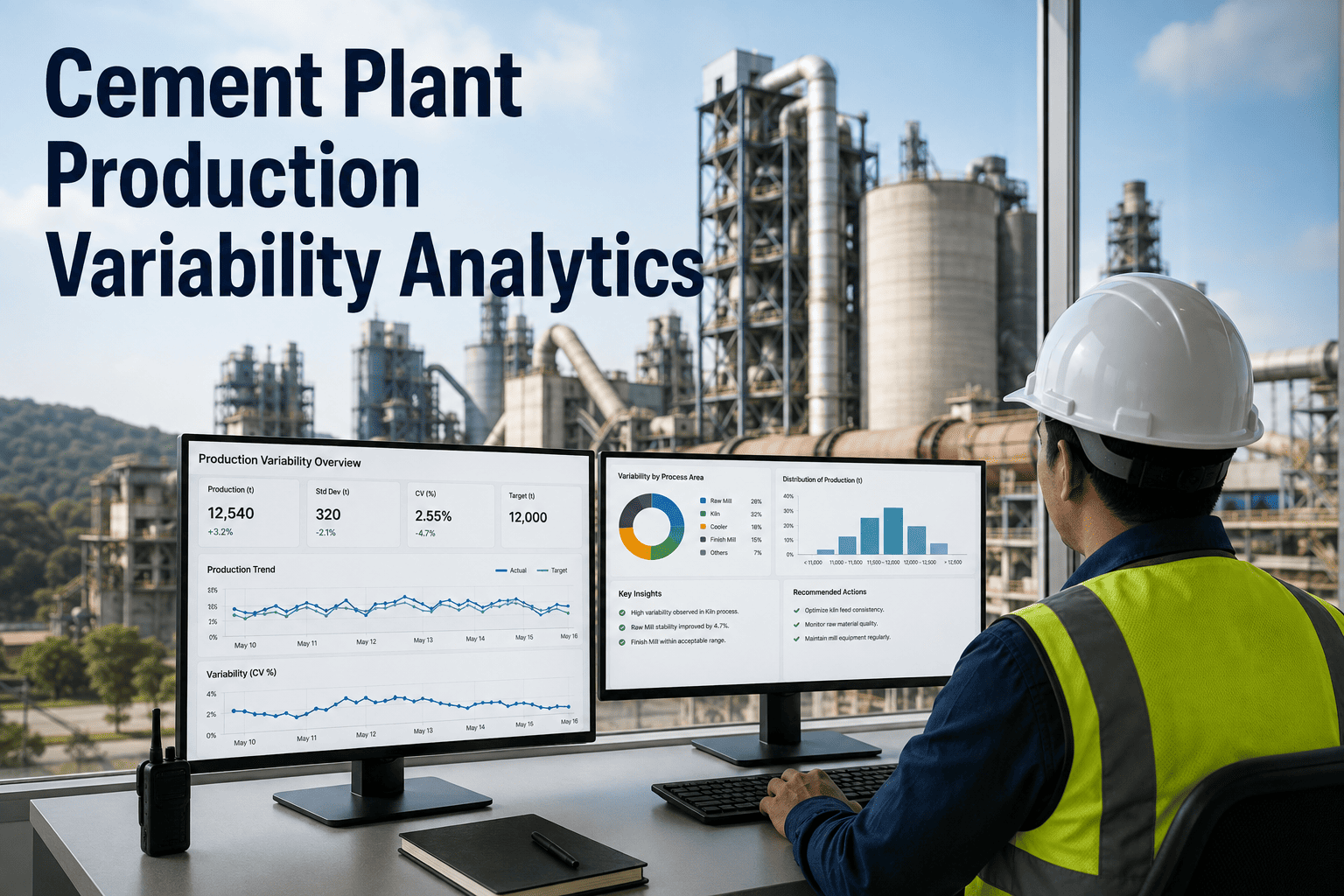
Real-time production KPIs — clinker production rate, cement grinding throughput, kiln specific heat consumption, finish mill power draw — displayed for every plant in the portfolio with color-coded performance bands and drill-down to plant-level detail. Cross-plant benchmarking highlights top- and bottom-performing assets for each production metric, enabling operations teams to identify and replicate best practices across the fleet. Dashboard data refreshes at one-minute intervals from each plant's DCS, PLC, and sensor network through secure VPN or cloud connectivity.
Tropical Condition Alert Engine
Weather-integrated alert system that combines real-time meteorological data from each plant location — temperature, humidity, rainfall intensity, wind speed, typhoon trajectory — with plant-specific process models to generate predictive alerts for production disruption risks. Alerts include monsoon-related raw mill throughput reduction with recommended dry material blending adjustments, typhoon approach warnings with recommended pre-shutdown procedures, and high-humidity cement quality alerts with gypsum feed rate optimization recommendations. Alert severity and response guidance are calibrated to each plant's tropical climate exposure profile.
Centralized Maintenance Planning and Spare Parts Management
Multi-site maintenance planning module displays all open work orders, scheduled maintenance activities, and equipment condition alerts across the portfolio with asset criticality scoring and resource allocation optimization. Spare parts inventory visibility across all plants enables parts transfer between sites, bulk procurement optimization, and inventory cost reduction through centralized stock management. Maintenance planner views available maintenance crew capacity, tooling, and replacement part availability at each site before scheduling non-routine work.
Environmental Compliance and Reporting Across Jurisdictions
Each ASEAN country operates its own environmental regulatory framework with different emissions limits, reporting formats, and submission timelines. iFactory's compliance module maps each plant's monitoring data — stack emissions, ambient air quality, water discharge quality, noise levels — to the specific regulatory requirements of Vietnam's Ministry of Construction, Indonesia's ESDM and Ministry of Environment, and the Philippines' DENR standards. Automated report generation produces country-specific compliance submissions in the required format, eliminating manual data aggregation across spreadsheets.
Executive Analytics and Portfolio Performance Reporting
Executive dashboard provides portfolio-level KPIs for production volume, production cost per ton, capacity utilization, environmental compliance status, safety incident rate, and maintenance backlog by plant and by country. Trend analysis shows portfolio performance trajectory against budget and prior periods, with variance analysis that identifies the specific plants and production areas driving performance deviations. Automated weekly and monthly reports are distributed to operations leadership, regional management, and corporate stakeholders.
- Each plant operates independently with separate DCS, CMMS, and reporting systems; portfolio visibility requires manual consolidation across spreadsheets
- Climate-related production disruptions addressed reactively after weather events impact production or quality
- Maintenance planning executed at plant level; spare parts duplicated across sites with no centralized inventory visibility
- Environmental compliance managed through country-specific spreadsheets with manual data aggregation and report generation
- Executive performance reporting produced monthly through offline data collection and consolidation across all plant locations
- Unified platform connects all plants through one dashboard; real-time production KPIs, equipment health, and compliance status for every site
- Predictive tropical condition alerts provide 24–72 hour advance warning for monsoon, typhoon, and high-humidity production impact events
- Centralized maintenance planning with cross-site spare parts visibility and resource allocation optimization across the fleet
- Automated compliance report generation for each ASEAN country's regulatory framework; data collected once, reported in any format
- Executive analytics updated in real time with automated reporting to operations leadership and corporate stakeholders
- New plants added to the platform in days through standardized data integration templates and cloud-based deployment
What Cement Operations Leaders Say About Multi-Site Management in ASEAN
We operate seven cement plants across Vietnam, Indonesia, and the Philippines, with total clinker capacity of approximately 30 million metric tons per year. Before deploying iFactory's multi-site management platform, our operations team spent roughly 40 percent of each month manually collecting production data, quality data, and environmental compliance data from each plant's separate reporting systems — consolidating the information into Excel spreadsheets that were already three weeks old by the time they reached senior management. The manual data collection workload was not just inefficient; it was obscuring the real performance differences between plants that we needed to address to optimize our portfolio.
Within three months of deploying iFactory's platform across our ASEAN portfolio, we identified a 7 percent specific heat consumption gap between our best-performing and worst-performing kilns that had been invisible in our monthly reporting cycle. Closing that gap across the underperforming plants delivered $2.4 million in annual fuel cost savings at current coal prices — more than returning the full platform investment in the first year. The tropical condition alerts have proven equally valuable: during the 2025 typhoon season, the platform provided 48-hour advance warnings for production preparation at three Philippine plants, enabling our teams to secure raw material stockpiles, fill finished cement silos, and schedule maintenance crews for the disruption period — actions that reduced typhoon-related production losses by approximately 65 percent compared to the previous season.
Deploy Multi-Site Cement Management Across Your Southeast Asian Operations
From real-time production dashboards to tropical condition alerts and cross-country environmental compliance — iFactory AI delivers the complete multi-site management intelligence stack for ASEAN cement operators in one platform built for the region's unique operating environment.
The Southeast Asian Cement Analytics Opportunity — Turning Data into Competitive Advantage
The volume of data generated by a modern cement plant in Southeast Asia is staggering — DCS process data at sub-second intervals from 3,000 to 8,000 I/O points, quality laboratory data from hourly and shift samples, equipment vibration and temperature data from 2,000 to 5,000 condition monitoring points, environmental monitoring data from continuous emissions monitoring systems and ambient air quality stations, and logistics data from dispatch, shipping, and inventory systems. The competitive advantage belongs to operators who can transform this data into actionable insights — not just within a single plant, but across a multi-site portfolio operating in different countries, climate zones, and regulatory environments.
iFactory AI's analytics platform delivers that transformation through a four-layer analytics architecture designed specifically for cement manufacturing operations. The first layer — descriptive analytics — replaces manual reporting with automated dashboards that display production, quality, maintenance, environmental, and logistics KPIs for each plant and across the portfolio, refreshed in real time from plant data sources. The second layer — diagnostic analytics — uses root-cause analysis algorithms and correlation engines to identify the underlying drivers of performance deviations, such as the specific process parameter changes that caused a kiln specific heat consumption increase or a cement mill throughput reduction.
The third layer — predictive analytics — forecasts future performance and failure events using machine learning models trained on each plant's operating history, enabling operators to predict kiln refractory wear rates, finish mill liner replacement timing, baghouse filter change-out windows, and clinker quality trends before they reach control limits. The fourth layer — prescriptive analytics — generates recommended operating parameter adjustments and maintenance actions based on the predictive model outputs, closing the gap between data insight and operational action. Book a Demo to see iFactory's cement analytics platform configured for your Southeast Asian plant portfolio.
Manage Your ASEAN Cement Portfolio with iFactory's Multi-Site Analytics Platform
iFactory monitors every plant in your ASEAN portfolio, generates tropical condition alerts for climate-related production risks, provides AI-powered predictive maintenance for equipment reliability, and produces automated compliance reports for every regulatory jurisdiction in the region — in one platform built for Southeast Asian cement operations.
Southeast Asian Cement Industry — Frequently Asked Questions
What is the current total cement production capacity of Southeast Asia, and which countries lead the market?
Southeast Asia's combined cement production capacity exceeds 480 million metric tons per year across Vietnam, Indonesia, and the Philippines — the three dominant ASEAN markets. Vietnam leads the region at approximately 180 million metric tons of annual capacity and ranks among the top five global cement producers. Indonesia follows at 160 million metric tons, and the Philippines at 140 million metric tons, with each market experiencing demand growth driven by infrastructure investment and urbanization rates above 3 percent per year.
How does tropical climate in Southeast Asia affect cement plant operations and production efficiency?
Tropical climate conditions in Southeast Asia — sustained 30–40°C ambient temperatures, 65–95 percent relative humidity, and monsoon rainfall of 2,000–4,000 mm annually — affect cement plant operations across raw material handling, clinker production, finish grinding, and equipment reliability. Raw material moisture varies from 2–5 percent in dry season to 15–25 percent in wet season, increasing drying energy consumption by 30–60 percent. Clinker cooler efficiency degrades 8–15 percent due to reduced ambient-to-clinker temperature differential. Equipment corrosion rates accelerate 3–5 times compared to temperate environments.
What are the key regulatory differences for cement plants operating in Vietnam, Indonesia, and the Philippines?
Each ASEAN country operates a distinct environmental regulatory framework for cement plants. Vietnam's Ministry of Construction sets emissions standards for SOx, NOx, particulate matter, and CO2 with reporting frequencies varying by plant capacity. Indonesia regulates cement plants through ESDM for energy standards and the Ministry of Environment for emissions and water discharge compliance, with increasingly stringent limits under the new Omnibus Law framework. The Philippines requires compliance with DENR ambient air quality and water quality guidelines plus DOE power generation reporting for captive plants.
How can multi-site cement operators in Southeast Asia improve portfolio-level visibility and performance?
Multi-site cement operators can improve portfolio-level visibility through a unified platform that connects all plant data sources — DCS, CMMS, quality laboratory, environmental monitoring, and logistics systems — into a single performance management dashboard. Key capabilities include real-time production and equipment KPIs for every plant, cross-plant benchmarking to identify top and bottom performers, centralized maintenance planning with spare parts visibility across sites, automated environmental compliance reporting for each country's regulatory framework, and executive analytics with portfolio-level trends and variance analysis. Book a Demo to see how iFactory's multi-site platform delivers portfolio-level visibility across ASEAN cement operations.
What ROI can Southeast Asian cement operators expect from deploying AI-driven analytics and multi-site management platforms?
Cement operators deploying AI-driven analytics and multi-site management platforms across Southeast Asian operations typically achieve platform investment recovery within 9 to 18 months through fuel cost reduction from kiln specific heat consumption optimization, avoided unplanned downtime from predictive maintenance alerts, reduced energy cost from power management optimization, lower maintenance spend from condition-based replacement timing, decreased logistics cost from inventory optimization, and improved labor productivity from automated reporting. A 5 percent reduction in specific heat consumption across a 10 million ton per year clinker operation at $100 per ton coal cost delivers $5 million in annual fuel savings, while a single avoided kiln refractory failure event with 14 days of lost production at $250 per ton clinker value represents $3.5 million in avoided production loss. Book a Demo to begin an ROI assessment for your specific ASEAN cement portfolio configuration and operating cost profile.