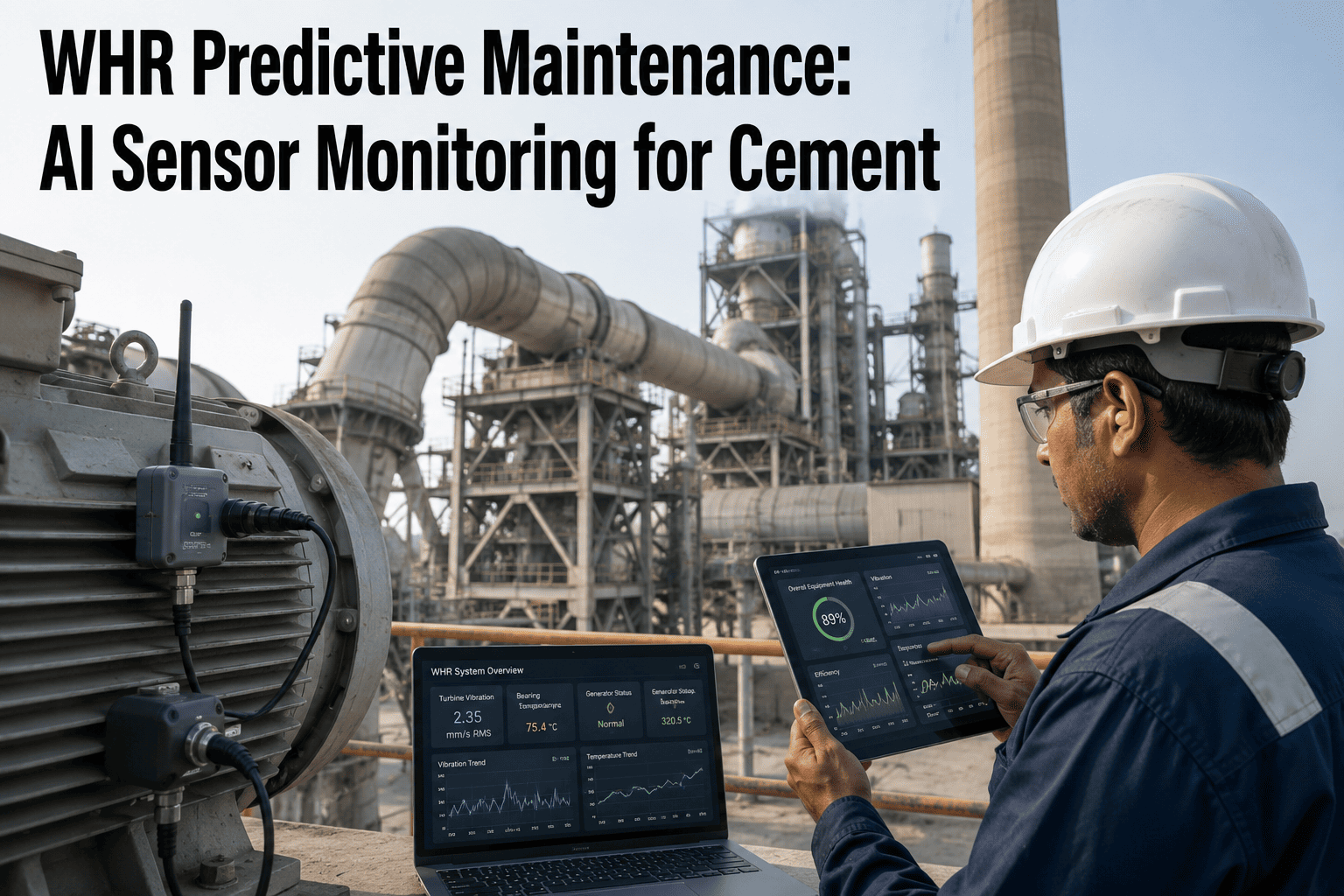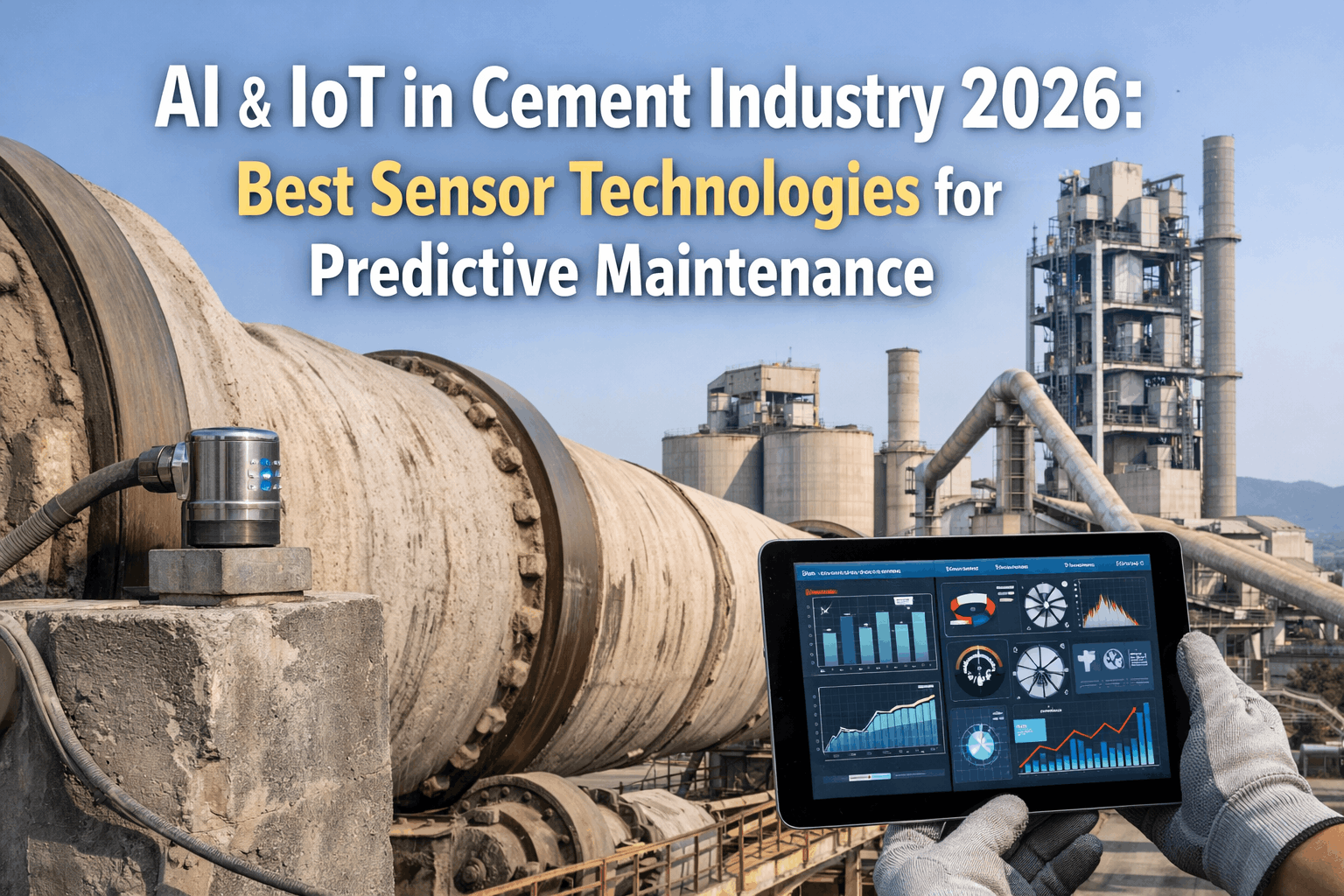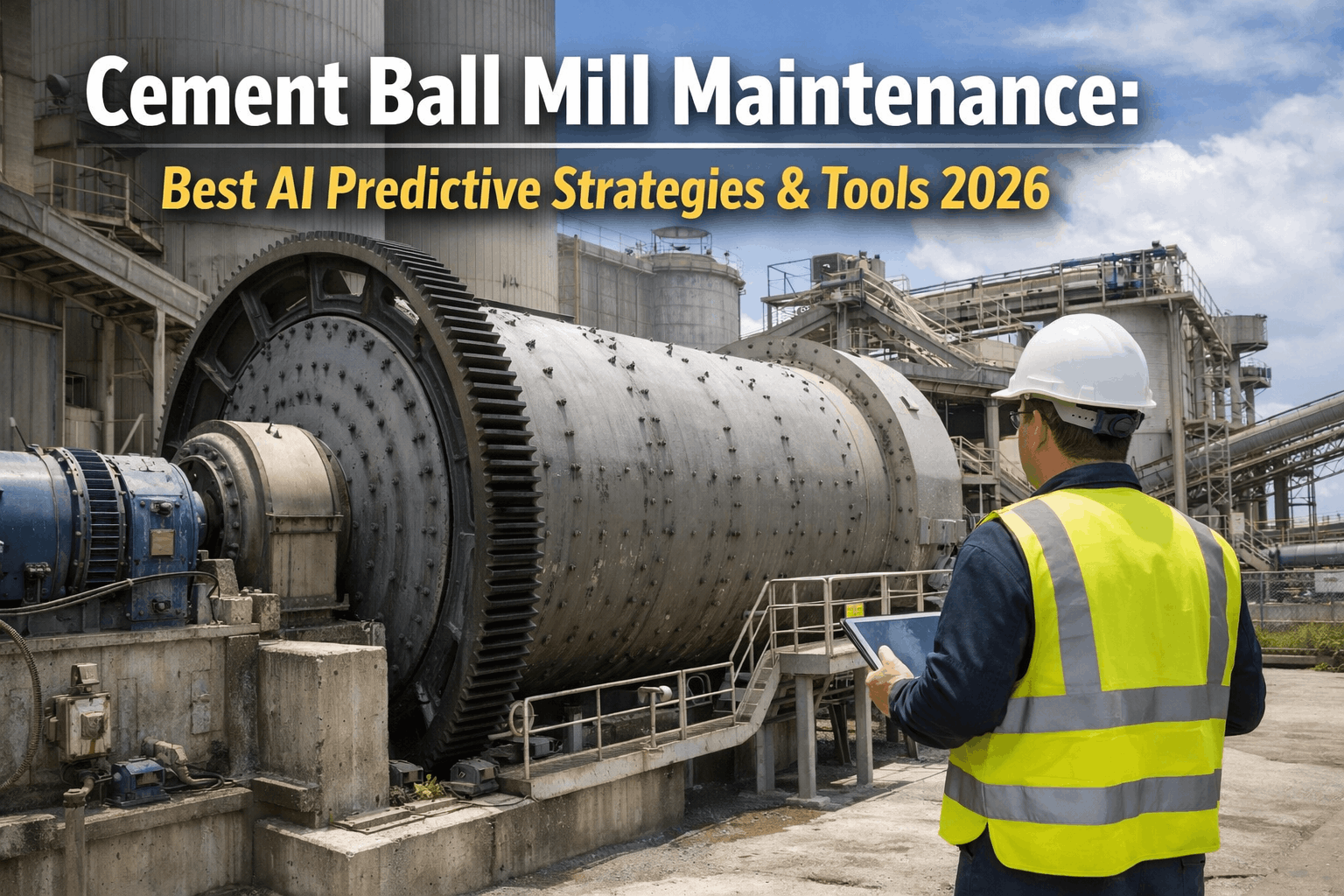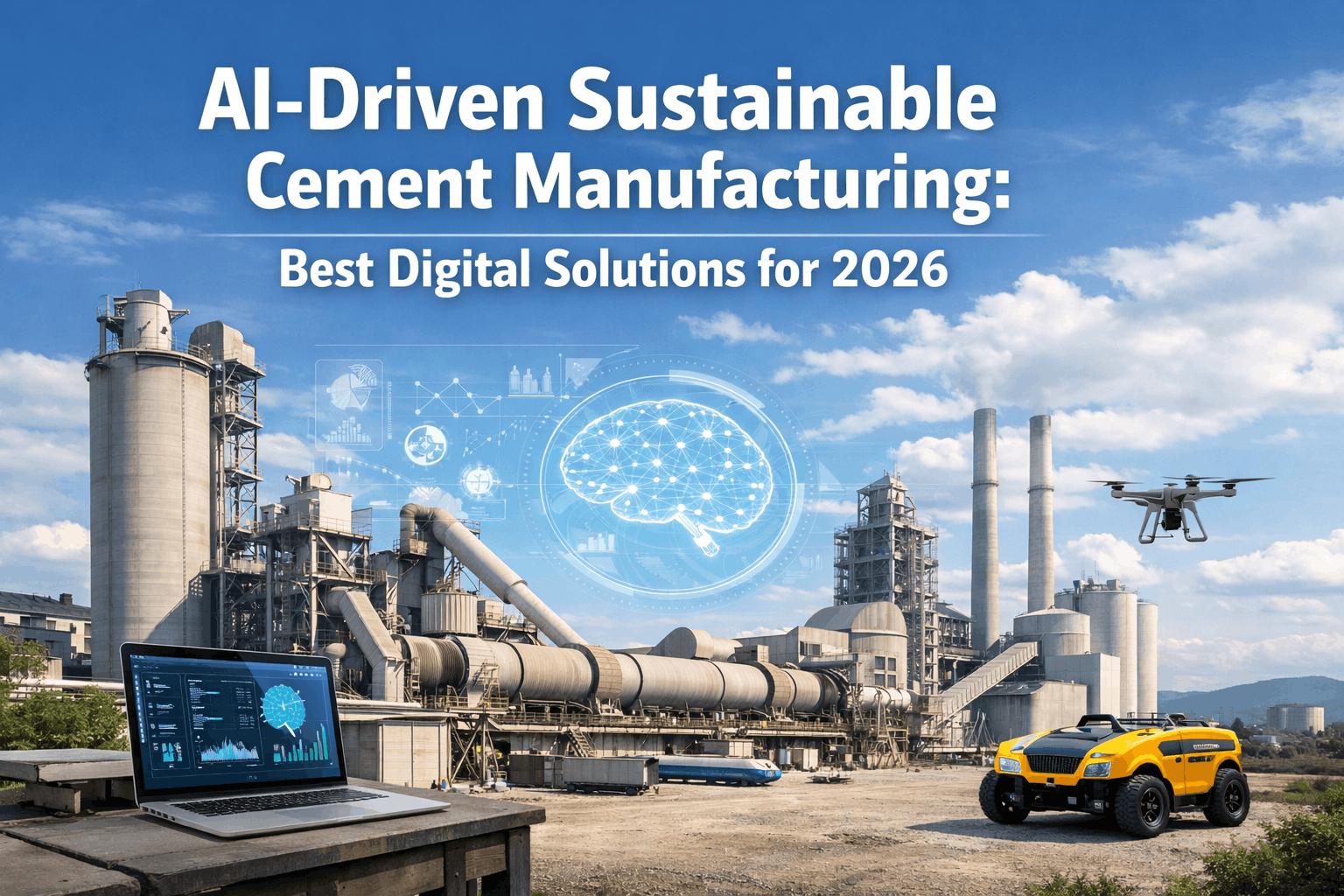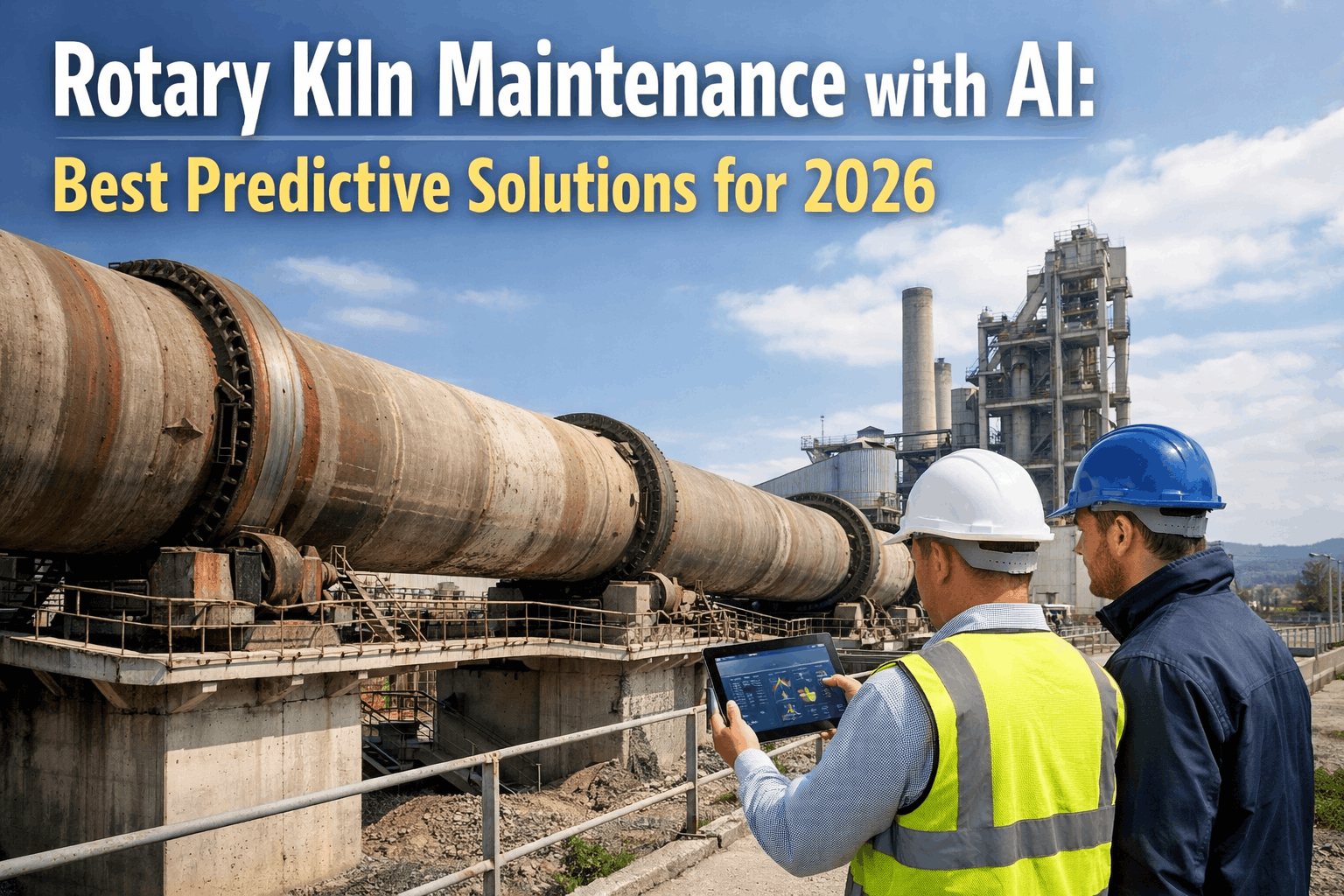
The global cement industry produces over 4 billion tonnes annually — and every kiln rotation, raw mill grind, and clinker cooler cycle burns energy, generates emissions, and wears critical assets. Yet most cement plants still operate with manual process adjustments, reactive maintenance schedules, and disconnected control systems that leave millions in efficiency gains on the table. In 2026, Industry 4.0 technologies — AI-powered process optimization, IoT sensor networks, digital twin simulation, MES+CMMS integration, and cloud-edge computing architectures — are converging to transform cement manufacturing from an energy-intensive legacy industry into a smart, predictive, and autonomous operation. iFactory AI brings this transformation to your plant. Book a free consultation and discover how AI-driven Industry 4.0 can cut your energy costs by 8–15%, extend equipment life by 30%, and put your cement plant at the forefront of digital transformation.
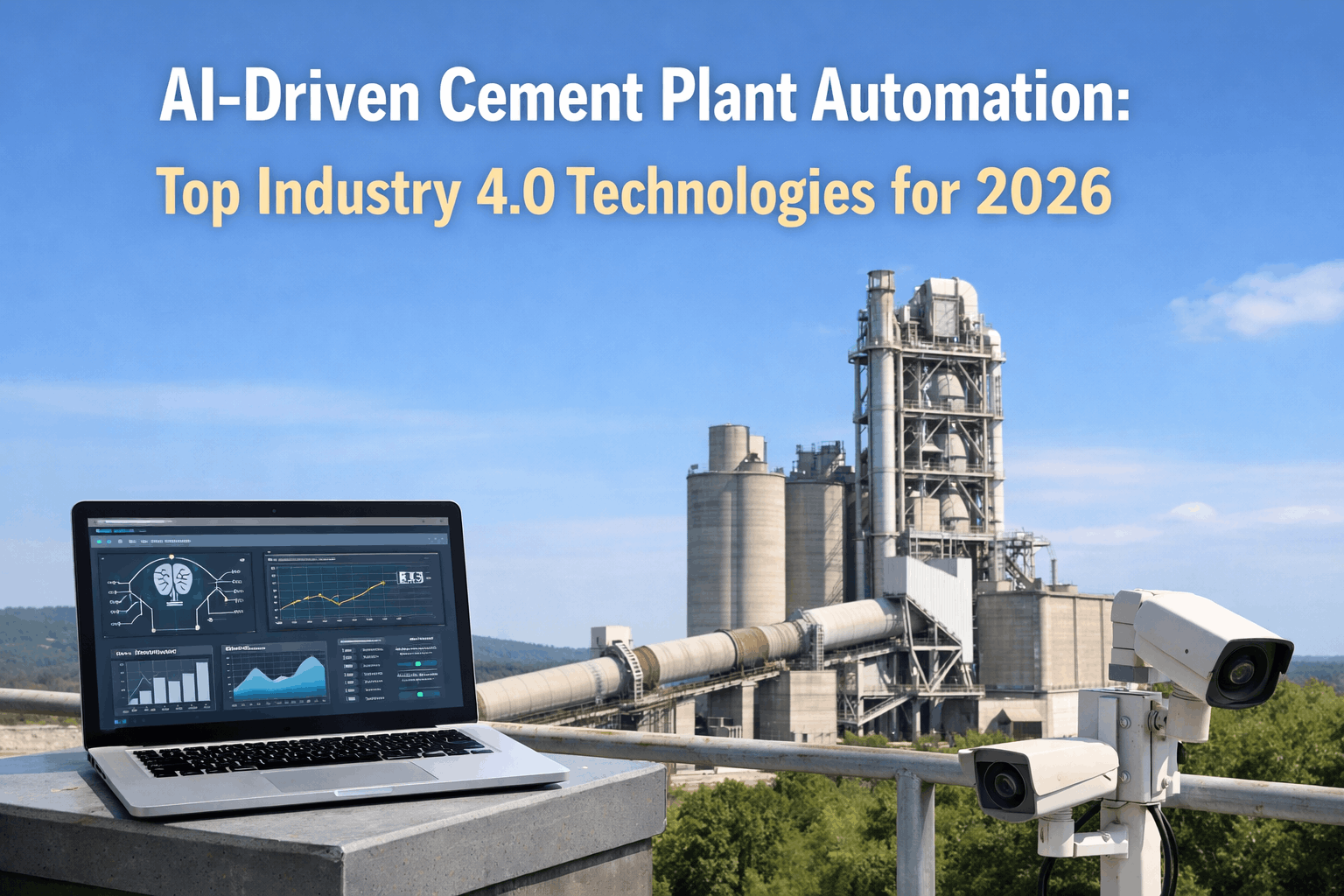
AI-Driven Cement Plant Automation
Top Industry 4.0 Technologies for 2026
Cement manufacturing accounts for 8% of global CO₂ emissions and consumes $8–12 per tonne in energy alone. iFactory AI's Industry 4.0 platform connects every kiln, mill, cooler, and conveyor to a unified AI intelligence layer — optimizing process parameters in real time, predicting equipment failures before they halt production, and delivering the digital transformation roadmap that turns your plant into a smart factory.
Energy Costs via AI
Life via Predictive AI
Unplanned Downtime
Why Cement Plants Can't Afford to Ignore Industry 4.0
Cement manufacturing is one of the most energy-intensive and equipment-heavy industries on earth. Without AI and IoT, plants operate blind — burning excess fuel, missing degradation signals, and reacting to failures instead of preventing them.
iFactory AI — Industry 4.0 Architecture for Cement Plants
A unified technology stack connecting every process zone, asset, and decision-maker in your cement plant to a single AI intelligence layer.
7 Technologies Transforming Cement Plant Automation in 2026
Each technology pillar addresses a specific dimension of cement plant operations. Together, they create an integrated smart factory ecosystem that optimizes energy, quality, maintenance, and throughput simultaneously.
AI & Machine Learning for Process Optimization
AI models continuously analyze kiln flame patterns, raw mill feed rates, cement fineness, and clinker quality — autonomously adjusting process parameters to minimize fuel consumption while maintaining product quality. ML algorithms learn your plant's unique operational patterns and deliver optimization recommendations that human operators alone cannot achieve at the speed of production.
Industrial IoT Sensor Networks & Edge Computing
Deploy vibration, thermal, acoustic, and process sensors across kilns, mills, coolers, conveyors, and fans. Edge computing gateways process critical data locally for sub-second response times — while streaming aggregated data to cloud analytics for long-term trend analysis and cross-plant benchmarking.
Digital Twin Technology for Cement Operations
A real-time 3D digital replica of your entire cement production line — from limestone quarry feed to cement dispatch. The twin mirrors live sensor data, enables scenario simulation (what happens if we change fuel blend?), validates AI recommendations before execution, and provides operators with complete plant-wide visibility from a single dashboard.
MES + CMMS Integration for Unified Operations
Connecting your Manufacturing Execution System (MES) with your Computerized Maintenance Management System (CMMS) eliminates the data silos between production and maintenance. When AI predicts a gearbox failure on the raw mill, the CMMS auto-generates a work order with parts pre-staged — while the MES adjusts production scheduling to accommodate the planned repair window without throughput loss.
Predictive Maintenance & Asset Health Intelligence
AI analyzes vibration signatures, motor current draw, bearing temperatures, and oil analysis data to predict equipment failures 72+ hours before they occur. For cement plants, this means forecasting kiln refractory degradation, girth gear wear, mill liner condition, and fan bearing failures — converting catastrophic unplanned stops into planned 2-hour maintenance windows.
Cloud & Edge Computing Architecture
A hybrid cloud-edge architecture gives your cement plant the best of both worlds: edge computing for real-time process control decisions with sub-second latency, and cloud computing for AI model training, multi-plant analytics, and long-term data storage. This architecture ensures critical plant operations continue even during internet connectivity disruptions.
Connected Workforce & Mobile Operations
Equip every plant operator, maintenance technician, and quality engineer with mobile access to AI insights, work orders, asset histories, and real-time process data. Digital SOPs, AR-assisted maintenance guides, and mobile inspection checklists ensure that the human workforce operates in sync with AI systems — not in parallel silos.
Legacy Cement Operations vs. AI-Driven Industry 4.0 Plant
The ROI of Industry 4.0 for Cement — In Hard Numbers
Cement plants deploying AI-driven Industry 4.0 technologies consistently report measurable gains across energy, maintenance, quality, and throughput.
| Metric | Before Industry 4.0 | With iFactory AI Platform | Improvement |
|---|---|---|---|
| Thermal Energy (Kiln) | Operator-tuned, variable | AI-optimized 200+ parameters | 3–8% reduction per tonne |
| Electrical Energy (Mill) | Fixed mill speeds, no adaptation | AI load optimization + grinding aids | 5–12% reduction |
| Unplanned Downtime | 5–15 stops per year | Predictive AI eliminates 40–60% | 40–60% reduction |
| Equipment Life | Fixed replacement cycles | Condition-based, AI-extended | 20–30% longer life |
| Quality Consistency | Lab feedback delayed by hours | Real-time AI quality prediction | 40% fewer off-spec batches |
| CO₂ Emissions | Quarterly manual reporting | Continuous AI tracking + optimization | 5–10% per tonne reduction |
Talk to our cement industry specialists about your plant's Industry 4.0 roadmap.
Deployment Timeline — From Legacy Plant to Smart Factory
A phased roadmap that delivers quick wins in the first 90 days while building toward full autonomous operations over 12–18 months.
| Phase | Focus Area | Timeline | Key Deliverables | Quick Win |
|---|---|---|---|---|
| 01 Assess | Plant audit, IoT gap analysis, data readiness | Weeks 1–3 | Digital maturity report, sensor plan | Baseline visibility |
| 02 Connect | IoT sensor deployment, edge gateway setup | Weeks 4–8 | Connected sensor network, data pipeline | Real-time monitoring |
| 03 Model | Digital twin build, AI model training | Weeks 8–14 | Live digital twin, predictive models | First failure predictions |
| 04 Integrate | MES+CMMS integration, mobile workforce | Weeks 14–20 | Unified platform, auto work orders | Zero-paper maintenance |
| 05 Optimize | AI kiln + mill + energy optimization | Weeks 20–30 | Process AI live, energy dashboards | First energy savings |
| 06 Scale | Full autonomous ops, multi-plant rollout | Month 8–18 | Autonomous operations, benchmarks | Full Industry 4.0 |
Purpose-Built for Cement Industry 4.0
Generic IoT platforms don't understand kiln thermodynamics, clinker chemistry, or cement grinding physics. iFactory AI is built for heavy process industry operations.
Cement-Native AI Models
Pre-trained on cement-specific process data — kiln thermal profiles, raw mill particle size distributions, clinker free-lime correlations, and cement strength curves. Models understand the physics of cement manufacturing, not just generic pattern matching.
Deep MES + CMMS Integration
Seamlessly connects production scheduling (MES) with maintenance management (CMMS) — so when AI predicts a failure, maintenance is auto-scheduled without disrupting production targets. SAP, Oracle, Maximo, and custom integrations supported via pre-built connectors.
Hybrid Cloud-Edge Architecture
Critical process control decisions happen at the edge in milliseconds. AI model training, multi-plant benchmarking, and long-term analytics run in the cloud. Plant operations continue uninterrupted even during connectivity outages — no single point of failure.
ESG & Emission Compliance Built-In
Continuous CO₂, NOx, and SOx monitoring with automated regulatory reporting. AI optimizes process parameters for minimum emissions while maintaining production targets — helping your plant meet 2030 decarbonization commitments with data-driven precision.
Every Cement Plant Zone — Connected, Monitored, Optimized
Everything You Need to Know About AI-Driven Cement Plant Automation
What is Industry 4.0 for cement plants?
Industry 4.0 for cement plants is the integration of AI, IoT sensors, digital twin technology, cloud-edge computing, MES+CMMS integration, and connected workforce platforms to create a smart, self-optimizing factory. Instead of operators manually adjusting kiln parameters or maintenance teams reacting to breakdowns, AI continuously monitors every process variable, predicts equipment failures, optimizes energy consumption, and coordinates production with maintenance — all in real time. The result is lower costs, higher quality, fewer emissions, and dramatically reduced downtime.
How does AI optimize rotary kiln operations?
AI kiln optimization uses machine learning models trained on your plant's specific kiln data — flame temperature, burning zone shell temperature, exhaust gas composition, feed chemistry, and clinker free-lime. The AI simultaneously optimizes 200+ interrelated parameters that human operators cannot manage at production speed — reducing thermal energy consumption by 3–8% per tonne while maintaining clinker quality. The digital twin validates every AI recommendation before execution, ensuring zero-risk optimization.
What ROI can a cement plant expect from Industry 4.0?
Cement plants typically see $1.5–3M in annual energy savings from AI optimization alone, plus 40–60% reduction in unplanned downtime, 20–30% extension of equipment life, and 40% fewer off-spec quality batches. Combined, these translate to 300%+ ROI within 3 years, with an average payback period of 18 months. Book a free demo to get a custom ROI projection for your specific plant configuration.
Does iFactory integrate with our existing DCS and SCADA systems?
Yes. iFactory's platform connects via standard industrial protocols (OPC-UA, Modbus, MQTT) and pre-built connectors with all major DCS and SCADA systems including ABB, Siemens, Honeywell, Yokogawa, and Schneider. The platform reads process data from your existing historian, applies AI analytics, and feeds optimization recommendations back through the DCS — no rip-and-replace of existing automation infrastructure is required.
How long does full Industry 4.0 deployment take?
A phased deployment delivers quick wins in the first 90 days (real-time monitoring, first failure predictions) while building toward full autonomous operations over 12–18 months. The initial IoT and digital twin deployment takes 8–14 weeks. MES+CMMS integration and AI optimization follow in parallel, with full Industry 4.0 operational maturity typically reached by month 12–18. Schedule a free consultation for a deployment timeline tailored to your plant.
Can this help with our ESG and decarbonization targets?
Absolutely. iFactory's platform provides continuous CO₂, NOx, and SOx emission monitoring with automated regulatory reporting. AI optimizes kiln operations for minimum thermal energy per tonne — directly reducing carbon intensity. The platform tracks emission reductions over time against your decarbonization roadmap, providing the data infrastructure needed for ESG reporting, carbon credit verification, and regulatory compliance. Visit our Support Center for more information on cement decarbonization advisory.
Ready to Transform Your Cement Plant into an AI-Driven Smart Factory?
Every kiln rotation without AI optimization wastes energy. Every unplanned stop without predictive maintenance costs six figures. Let our cement industry specialists show you exactly how Industry 4.0 transforms your plant — in a free, no-obligation 30-minute demo.