In the cement industry, the modernization of legacy equipment has evolved from a maintenance project into a strategic financial imperative. Most global cement capacity still operates on assets designed 20 to 35 years ago — systems that were built for reliability but not for the high-efficiency, low-carbon requirements of the 2026 regulatory era. The gap between what legacy kilns and mills deliver and what modern sustainability mandates demand is where operational margins are lost and carbon liabilities breed. Understanding the Retrofit vs. Replace ROI is the foundation of a proactive, data-driven modernization strategy. If you want to see how leading cement manufacturers close this gap with real-time asset intelligence retrofitted onto legacy gear, you can book a demo of our modernization planning platform today.
Is Your Legacy Cement Equipment Dragging Down Your ROI?
Deploy digital retrofits, energy-efficient upgrades, and AI-driven capital planning to transform aging assets into high-performance production lines.
The Strategic Framework for Retrofitting vs. Replacing Cement Assets
Modernization in cement manufacturing involves a complex calculation of remaining useful life, energy intensity, and technology obsolescence. Within aging facilities, "Modernization Analytics" extends the life of physical assets by layering a digital intelligence layer over legacy mechanical systems: continuously capturing vibration, heat, and power data to verify that assets are performing at their theoretical peak. For plants facing tightening carbon budgets, the decision to schedule a modernization audit is the first step in identifying which assets are "Retrofit-Ready" and which require full "Phased Replacement."
Modern AI-driven platforms address this by connecting directly to legacy equipment—even those with analog or no existing instrumentation—delivering continuous performance verification that is audit-ready by design. The shift from "patch-and-repair" to "Predictive Retrofitting" is not just a technology upgrade; it is a structural improvement in how cement manufacturers extend asset life while reducing carbon intensity. You can book a demo to explore how digital twins can be retrofitted onto different cement equipment categories.
Digital Retrofitting
Layering IoT sensors (vibration, thermal, acoustic) on legacy kilns and mills to enable predictive maintenance and real-time performance tracking without replacing the core asset.
Energy Efficiency Upgrades
Replacing old motors with high-efficiency alternatives and installing Variable Frequency Drives (VFDs) on large ID fans to reduce power consumption by up to 25%.
Control System Modernization
Upgrading legacy PLC and SCADA environments to modern, AI-integrated controllers that allow for closed-loop autonomous process optimization and better data visibility.
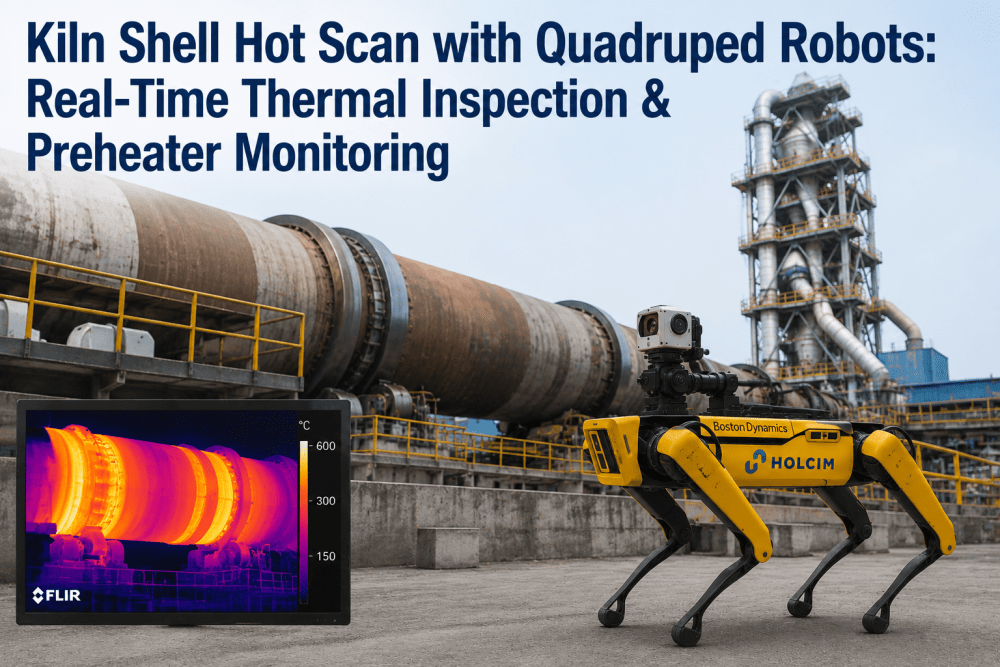
Kiln Shell Stewardship
Retrofitting aging kilns with modern shell scanners and predictive refractory models to prevent unplanned shutdowns and extend the interval between major overhauls.
Phased Asset Replacement
Implementing a 5-year capital plan to replace obsolete components—like old grate coolers or preheater cyclones—one by one, balancing CapEx with operational continuity.
Carbon Intensity ROI modeling
Modeling the "Carbon Payback" of modernization projects, identifying where equipment replacement is the only way to meet EU ETS or CBAM compliance targets effectively.
Retrofit vs. Replace Benchmarks: Cement Asset Modernization Strategy
Not all cement assets warrant the same modernization approach. The specific ROI, service life extension, and energy saving potential vary significantly by equipment category. The table below provides a benchmark overview of Retrofit vs. Replace options, supporting more precise capital planning for plant managers. For any facility where modernization is being formalised, understanding the "Efficiency Gap" of each asset is essential. To build a modernization roadmap mapped to your specific equipment list, you can book a demo with our engineering team.
| Asset Category | Retrofit Option | Full Replace Option | ROI Horizon | Sustainability Impact |
|---|---|---|---|---|
| Large ID Fans | VFD + Aero-Efficiency Upgrade | High-Efficiency Direct Drive | 18–24 Months | High |
| Raw / Cement Mill | Predictive Vibration & AI Control | Vertical Roller Mill (VRM) | 3–5 Years | High |
| Kiln Shell | Thermal Scanners + Shell Monitoring | Kiln Shell Section Replacement | 12–18 Months | Medium |
| Control System | Cloud-Edge IoT Layer Retrofit | Full DCS/SCADA Overhaul | 9–12 Months | High |
| Cooler System | Grate Plate & Aero-Retrofit | Modern Fourth-Gen Clinker Cooler | 4–6 Years | High |
| Baghouse / Filters | Smart Pulse Controller Retrofit | High-Efficiency Baghouse | 12–24 Months | Medium |
These benchmarks represent standard industry modernization ROI and should be validated against your specific energy costs and carbon footprint targets. You can request a custom ROI model for your facility's top 10 assets.
How to Layer Modernization Intelligence on Legacy Cement Gear
The architecture of a modern retrofit programme in cement manufacturing operates across five interconnected layers—from the legacy physical sensor to the executive capital planning dashboard. Understanding how these layers interact is essential for plant directors who are evaluating whether their legacy infrastructure can survive the next decade of competition. Leading cement manufacturers who have implemented data-driven modernization programmes consistently report higher uptime, lower energy intensity, and a more stable path to net-zero. The transformation begins at the legacy asset layer but ends at the balance sheet.
Legacy Asset Instrumentation (Sensor Layer)
Identify "Blind Spots" on legacy assets and deploy non-intrusive IoT sensors. Capture vibration, acoustics, and heat data from equipment built before the digital age, creating the first-ever high-fidelity data stream for these machines.
Edge-to-Cloud Data Normalization
Ingest disparate data from old PLCs and new IoT sensors into a unified digital twin. Normalize historical operating patterns to establish a "Baseline Health" for each asset, identifying where degradation is deviating from typical benchmarks.
Predictive Performance Modelling
AI models simulate the impact of potential retrofits. "What if we install a VFD on this fan?" The platform predicts the energy saving and payback period based on your plant's specific historical load profiles, not generic OEM brochures.
Phased Implementation & ROI Tracking
Execute retrofits in stages during scheduled shutdowns. The platform tracks the post-retrofit performance in real-time, validating the ROI and providing the data evidence needed to secure capital for the next phase of modernization.
Executive Capital Planning Dashboard
All modernization data feeds into a long-term capital roadmap. See precisely when every asset in the plant will reach its "Replace" trigger, allowing for strategic, multi-year budgeting that eliminates reactive crisis CapEx.
Modernization Requirements for Aging Cement Plants: What Digital Twins Deliver
The requirement for modernization in the cement industry is no longer just about preventing breakdowns; it is about "Efficiency Recovery." Every year a legacy kiln operates with obsolete controls or manual adjustments, it consumes 5–10% more energy than its digital-optimized counterpart. Traditional maintenance schedules cannot address this structural inefficiency. Digital modernization addresses three critical failure modes: Energy Waste, Maintenance Surprises, and Compliance Risk. You can book a demo to see how automated modernization planning integrates with your existing asset management programme.
Cement plants must meet increasingly strict energy intensity targets (kWh per tonne). Modernization platforms identify which legacy assets are "Energy Sinks" and prioritize VFD retrofits or motor replacements that offer the fastest carbon-payback.
Legacy PLC and drive components often reach "End of Support," where spare parts are unavailable. Digital twins track component obsolescence risk across the entire plant, flagging critical assets where a "Replace" decision must be made before a failure occurs.
For assets that are structurally sound but technologically dated, digital retrofitting can extend service life by 5–10 years. The platform identifies where precision monitoring can safely defer a multi-million dollar replacement by managing stress windows more tightly.
Modernization requires multi-million dollar budgets. Digital platforms remove the guesswork from capital planning by generating risk-weighted ROI models for every asset, allowing plant managers to defend their CapEx requests with real-world data.
— Operations Director, Mediterranean Cement Group
Retrofit vs. Replace: The Compliance & Performance Gap
The difference between a "patched" legacy plant and a "modernized" digital facility is structural. Facilities that have transitioned from reactive maintenance to digital modernization consistently report measurable improvements across every performance dimension. The comparison below helps operations directors articulate the business case for modernization investment to corporate leadership. When expressed in terms of energy savings, carbon liability, and capital ROI, the case for digital modernization is typically decisive. To understand what a transition to modern intelligence would look like for your specific facility, you can book a demo with our plant engineering team.
| Modernization Dimension | Legacy / Manual Status | Modern / Digital Retrofit | Operational Gain |
|---|---|---|---|
| Energy Intensity Tracking | Monthly utility bill (reactive) | Real-time kWh/tonne (proactive) | Critical |
| Kiln Shell Life Management | Annual visual inspection | 24/7 predictive thermal twin | High |
| Unplanned Downtime Rate | 8–12% (legacy failures) | <3% (predictive alerts) | High |
| CapEx Planning Accuracy | Manual estimates (±30% variance) | Data-driven models (±5% variance) | High |
| Carbon Cost Mitigation | Minimal (old tech baseline) | High (efficiency & fuel optimization) | Critical |
| Maintenance Resource Spend | High — reactive repairs & crisis OT | Low — planned interventions | High |
Stop Guessing Your Capital Plan. Start Modernizing with Real-World Intelligence.
Our modernization planning platform gives cement manufacturers the ROI data, predictive health indices, and energy benchmarks needed to transform legacy gear into modern assets.
Frequently Asked Questions: Modernizing Legacy Cement Plant Equipment
How do I know if an asset should be retrofitted or replaced?
The decision hinges on three factors: Structural Integrity, Energy Gap, and Obsolescence. If the core physical structure (like a kiln shell or mill body) is sound, a digital retrofit of controls and drives typically offers a 2–3x faster ROI than replacement. However, if the asset's energy consumption is >50% higher than modern alternatives or spare parts are non-existent, full replacement is usually the only viable long-term strategy.
What is the most common "Quick Win" modernization project for cement plants?
Retrofitting large ID fans with Variable Frequency Drives (VFDs) and smart flow controllers is almost always the fastest "Quick Win." These projects typically offer a payback period of under 18 months through energy savings alone, while significantly improving kiln stability and process control.
Can I layer IoT sensors on 30-year-old mechanical equipment?
Yes. Modern industrial IoT sensors (vibration, thermal, acoustic) are designed to be non-intrusive and can be retrofitted onto virtually any mechanical asset. This allows you to capture high-fidelity performance data from legacy gear without needing to modify the equipment's original engineering or control logic.
How does modernization help with EU ETS and CBAM compliance?
Modernization is the primary lever for carbon mitigation. By upgrading legacy burners to handle higher alternative fuel (AF) rates and retrofitting kiln controls for better thermal efficiency, you directly reduce your CO2 per tonne. Digital modernization also provides the immutable data historian required to prove these reductions for regulatory audits.
What is "Phased Modernization" and why is it recommended?
Phased modernization involves breaking a large-scale plant upgrade into smaller, manageable projects (e.g., modernizing the cooler this year, the preheater fans next year). This spreads the CapEx over multiple budget cycles, reduces the risk of massive production shutdowns, and allows the ROI from Phase 1 to help fund Phase 2.
How does a digital twin assist in modernization planning?
A digital twin acts as a "Simulation Sandbox." It allows you to model the impact of a retrofit (like a new burner or different fan logic) using your plant's real historical data before you commit any capital. This significantly reduces "Technology Risk" and ensures that the modernization results match the ROI projections.
What is the typical lifespan extension achievable through digital retrofitting?
In the cement industry, we typically see a 5–10 year life extension on major rotating and thermal assets through digital retrofitting. By monitoring stress windows and preventing "extreme" operating events that cause structural damage, you can safely defer capital replacement while maintaining modern performance levels.