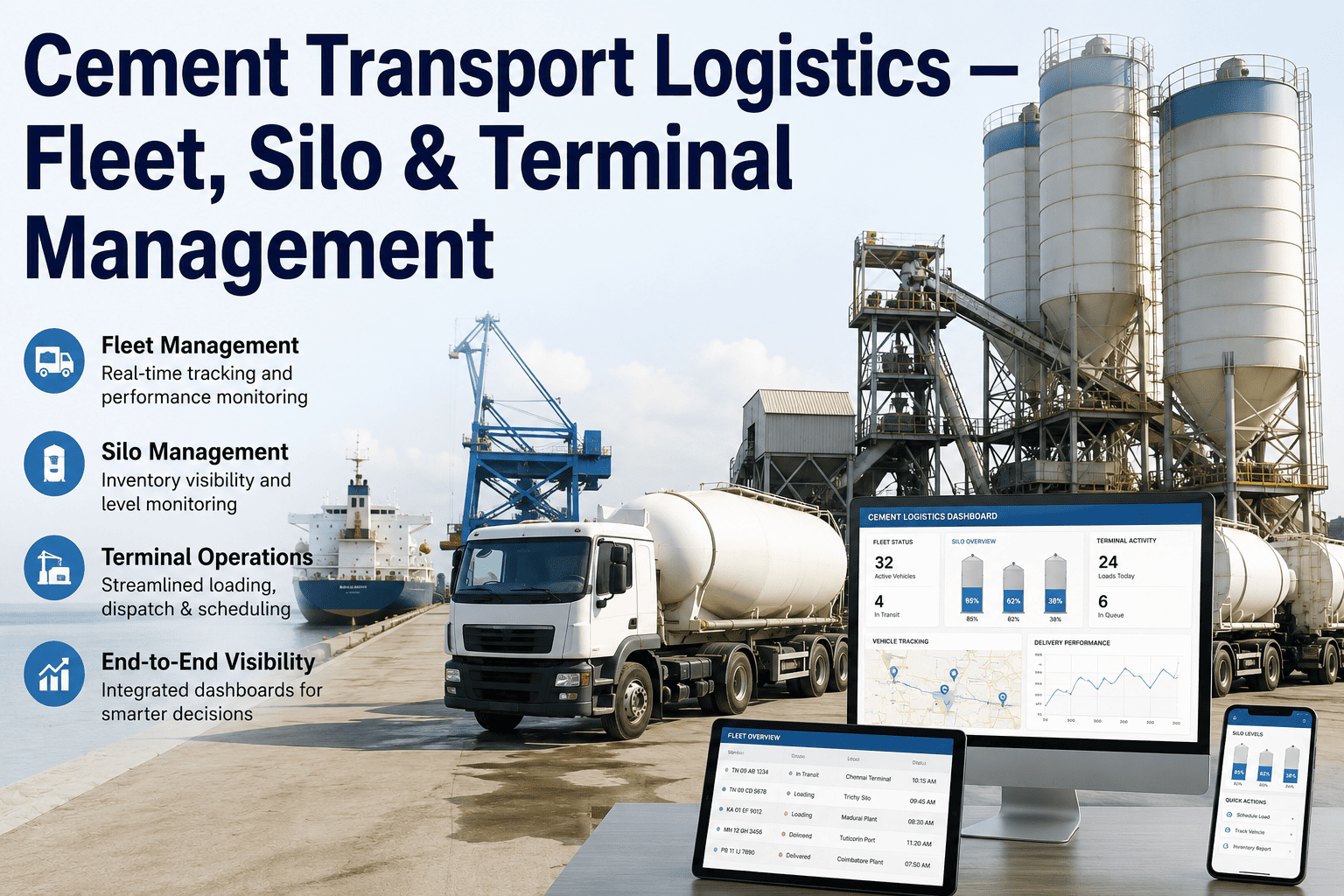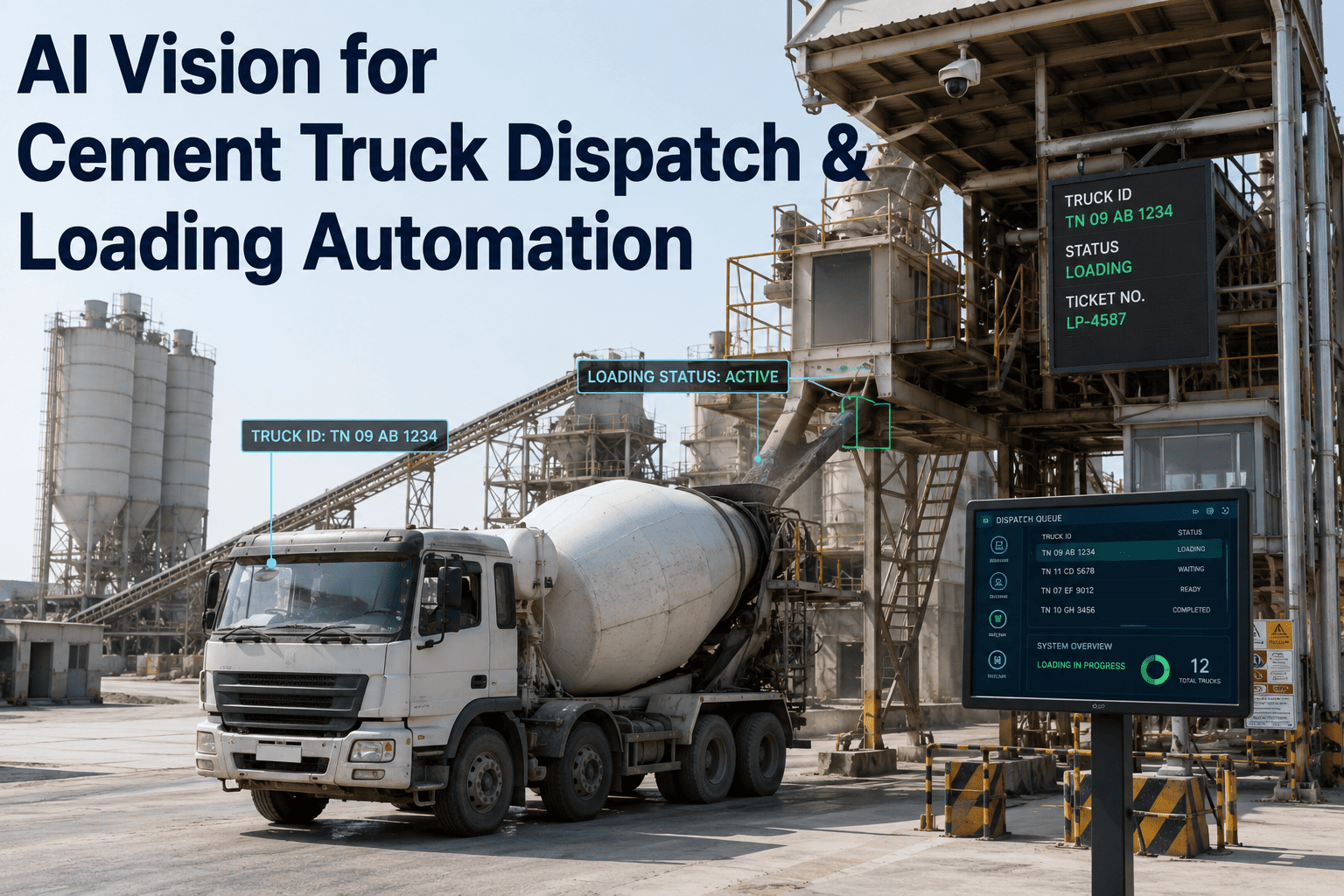
Cement logistics is one of the most time-critical and margin-sensitive operations in heavy industry. A loaded transit mixer that arrives 45 minutes late does not just disappoint a contractor — it may result in a rejected load, a wasted batch, and a customer complaint that costs a supply relationship worth hundreds of thousands of dollars annually. Yet most cement producers and bulk cement haulers still manage their fleets with combinations of phone-based dispatch, manual route planning, and GPS dots on a map that tell dispatchers where trucks are but not what they should do next. iFactory's AI-powered fleet management and dispatch platform is built specifically for the cement and building materials logistics environment — integrating GPS tracking, route optimization, delivery scheduling, and predictive fleet maintenance into a single operational intelligence layer that reduces transportation cost, eliminates delivery failures, and gives operations managers the real-time visibility their distribution networks demand. To see how iFactory transforms cement fleet operations, schedule a live fleet demo with our logistics team today.
The Cement Fleet Optimization Problem Most Producers Underestimate
Why GPS Tracking Alone Does Not Solve Cement Logistics Inefficiency
The most common mistake cement producers make in logistics technology is confusing location visibility with operational intelligence. Basic GPS tracking tells a dispatcher where truck number 14 is at 10:47 AM. It does not tell them whether truck 14 will make its 11:30 AM delivery window given current traffic conditions, whether truck 14 should be rerouted to the Site B order because the Site A contractor just called to delay by two hours, or whether truck 14's drum motor is drawing 8% more current than normal and should be flagged for inspection before it fails mid-delivery with a full load of hardening concrete. Cement fleet management at the level that actually reduces transportation cost and eliminates delivery failures requires four interconnected capabilities working simultaneously: real-time GPS and telematics data integrated with route optimization; AI-driven dispatch scheduling that re-sequences deliveries dynamically in response to site delays and traffic events; fleet health monitoring that catches mechanical degradation before it causes roadside failures; and delivery performance analytics that show operations managers exactly where cycle time is being lost across the distribution network. iFactory's platform delivers all four from a single connected system. Infrastructure organizations and cement producers ready to close their logistics intelligence gap can schedule a fleet operations assessment with iFactory's logistics team.
5 Core Capabilities of iFactory's Cement Fleet and Dispatch Management Platform
Built for the Operational Realities of Cement Distribution — Not Generic Freight Logistics
Cement Logistics Cost Structure: Where AI Fleet Management Delivers the Most Value
Quantifying the Opportunity Across the Five Biggest Cost Drivers in Cement Distribution
| Cost Driver | Root Cause Without AI | iFactory Solution | Typical Annual Saving |
|---|---|---|---|
| Fuel Overconsumption | Suboptimal routes, excessive idling, deadheading | AI route optimization + idle detection alerts | $45K – $180K |
| Rejected Loads / Late Deliveries | No real-time rerouting on site delay events | Dynamic dispatch re-sequencing with mix compatibility matching | $60K – $240K |
| Demurrage Revenue Leakage | No GPS-verified on-site wait time documentation | Automated timestamped digital delivery tickets | $25K – $110K |
| Roadside Vehicle Breakdowns | No predictive fleet health monitoring | OBD + telematics predictive maintenance alerts | $35K – $150K |
| Dispatch Overhead & Errors | Manual phone-based dispatch with no schedule optimization | Automated scheduling + dispatcher decision support | $20K – $80K |
How iFactory Connects Plant Dispatch to Field Delivery in Real Time
The Integration Architecture That Makes Cement Logistics Intelligence Possible
iFactory's cement logistics platform is not a standalone dispatch tool — it is an integrated layer within the same connected system that manages your plant's production scheduling, silo inventory levels, and maintenance work orders. When iFactory's production planning engine signals that Silo 3 has reached the batch-ready threshold for a 40-tonne bulk order, the dispatch module automatically updates the available loading queue and sequences the next truck assignment based on driver availability, vehicle capacity, and delivery route efficiency. When an order is modified at the sales desk — a contractor increases their pour volume from 120 to 160 cubic meters with 4 hours notice — the dispatch engine automatically evaluates whether the current fleet schedule can accommodate the increased volume, identifies which route adjustments are needed, and alerts the relevant drivers via the mobile app without requiring a dispatcher to manually re-contact every vehicle. This end-to-end connection between plant production, silo management, order management, and truck dispatch is what distinguishes iFactory from point-solution GPS tracking vendors that operate in isolation from the production system generating the loads they are asked to track. To see the full plant-to-delivery integration in a walkthrough, contact our cement logistics team.
Radial/spoke chart using SVGImplementation: How Cement Operations Deploy iFactory's Fleet Platform
A Practical Four-Phase Rollout That Delivers ROI Within the First Operating Quarter
Frequently Asked Questions
What is cement logistics optimization and how does AI improve it?
Cement logistics optimization is the process of maximizing the efficiency of cement truck fleet operations — reducing transportation cost per tonne, eliminating delivery failures, minimizing vehicle idle time, and improving on-time delivery performance. AI improves cement logistics by replacing static dispatch planning and manual routing with a dynamic optimization engine that continuously re-sequences deliveries based on real-time GPS positions, site delay events, traffic conditions, and fleet health data. iFactory's AI dispatch platform integrates with vehicle telematics, plant batch systems, and order management to provide a live operational picture of every truck in the fleet and automatically generate the optimal dispatch sequence for every delivery window — reducing fuel costs by up to 22%, rejected loads by up to 80%, and dispatcher manual workload significantly.
How does GPS fleet tracking reduce cement transportation costs?
GPS fleet tracking reduces cement transportation costs through four mechanisms: it enables real-time route optimization that eliminates inefficient routings and unnecessary mileage; it provides idle time monitoring that identifies excessive engine-on stationary time consuming fuel without productive output; it enables accurate cycle time measurement that reveals loading, transit, and on-site time inefficiencies by route and driver; and it provides the GPS-verified delivery timestamps needed to invoice demurrage charges for contractor delays, recovering costs that would otherwise be absorbed by the cement producer. iFactory's fleet platform adds AI-driven route optimization on top of basic GPS visibility — the combination consistently delivers 15 to 22% reductions in fuel cost per tonne in cement distribution operations within the first operating quarter.
Can iFactory's fleet platform integrate with existing batch plant and ERP systems?
Yes. iFactory integrates with major cement batch plant control systems, ERP platforms including SAP, Oracle, and Microsoft Dynamics, and existing telematics systems including Samsara, Motive, and Geotab via standard APIs and data connectors. The platform is designed as an integration-first system that connects and adds intelligence to your existing technology investments — not a rip-and-replace solution that requires abandoning working systems. Most cement operations complete the integration of batch plant order data, GPS telematics, and ERP logistics records within the first 2 weeks of deployment, with the full analytics and optimization layer live within 4 to 6 weeks of implementation start.
What is demurrage in cement logistics and how does iFactory help recover it?
Demurrage in cement logistics is the additional charge invoiced to contractors who delay cement truck unloading beyond the contractual waiting time allowance — typically 30 to 60 minutes per delivery. Without GPS-verified timestamps, demurrage is difficult to document and frequently disputed, resulting in cement producers absorbing waiting costs that should be billed to the customer. iFactory automatically logs GPS-verified arrival and departure timestamps at every delivery site, records the precise duration of on-site waiting time at each pour location, and generates digital delivery tickets with the timestamped evidence needed to invoice and defend demurrage charges. Cement operations that previously wrote off demurrage disputes due to lack of documentation consistently recover $25,000 to $110,000 annually after deploying iFactory's digital ticketing and GPS tracking layer.
How does iFactory handle route optimization for cement trucks with bridge weight restrictions?
iFactory's route optimization engine is built on a commercial vehicle routing model that incorporates bridge weight ratings, road load restrictions, urban delivery time windows, and site access constraints for heavy vehicles — not standard passenger vehicle routing. The system automatically filters routing options to exclude roads and bridges that cannot support loaded cement truck gross vehicle weights, and flags site access limitations that dispatchers need to brief drivers on before departure. For operations crossing municipal boundaries with different weight restriction regimes, iFactory maintains and updates restriction databases specific to each jurisdiction covered by your distribution network. This heavy vehicle-aware routing is what prevents the costly infrastructure incidents and regulatory violations that occur when cement trucks are routed by standard commercial GPS systems without heavy vehicle constraints.
Can the platform track transit mixer drum rotation and load status in real time?
Yes. For transit mixer fleets, iFactory integrates with drum rotation sensors and PTO engagement monitors to provide auto-status updates throughout the delivery cycle — loaded and in-transit, on-site and pouring, washing out, or returning empty. This sensor-driven status intelligence eliminates the need for drivers to manually report their stage to dispatchers and provides the real-time load status data needed to make re-routing decisions before concrete passes its maximum transit time window. The same drum rotation data feeds into iFactory's predictive fleet maintenance engine, flagging abnormal motor current draw or rotation speed patterns that indicate developing drum drive mechanical issues before they cause mid-route failures with hardening loads aboard.
What ROI timeline should cement operations expect from fleet management platform deployment?
Most cement fleet operations achieve positive ROI from iFactory's fleet management platform within 6 to 9 months of full deployment. The primary ROI drivers in the first operating quarter are fuel cost reduction from AI route optimization (typically 15 to 22%), rejected load elimination from real-time dispatch re-sequencing, and demurrage recovery from GPS-verified digital ticketing. Secondary ROI from predictive fleet maintenance — reduced emergency breakdown costs and deferred vehicle replacement — builds over the first 12 to 18 months as the maintenance model accumulates vehicle health history. Operations managing 15 or more trucks with annual fuel spend above $400,000 consistently achieve full platform payback within the first operating year.
Does iFactory's driver app work in areas with poor mobile connectivity?
Yes. iFactory's driver mobile app for iOS and Android includes full offline capability, allowing drivers to receive dispatch instructions, capture delivery confirmations, log digital signatures, and record on-site conditions even in areas with no mobile network connectivity. All data captured offline is automatically synced to the platform when connectivity is restored. For bulk cement haulers operating in rural areas, mines, or industrial sites with limited signal coverage, this offline-first architecture ensures that delivery documentation is complete and GPS tracking resumes synchronization without data gaps when the vehicle returns to coverage areas.