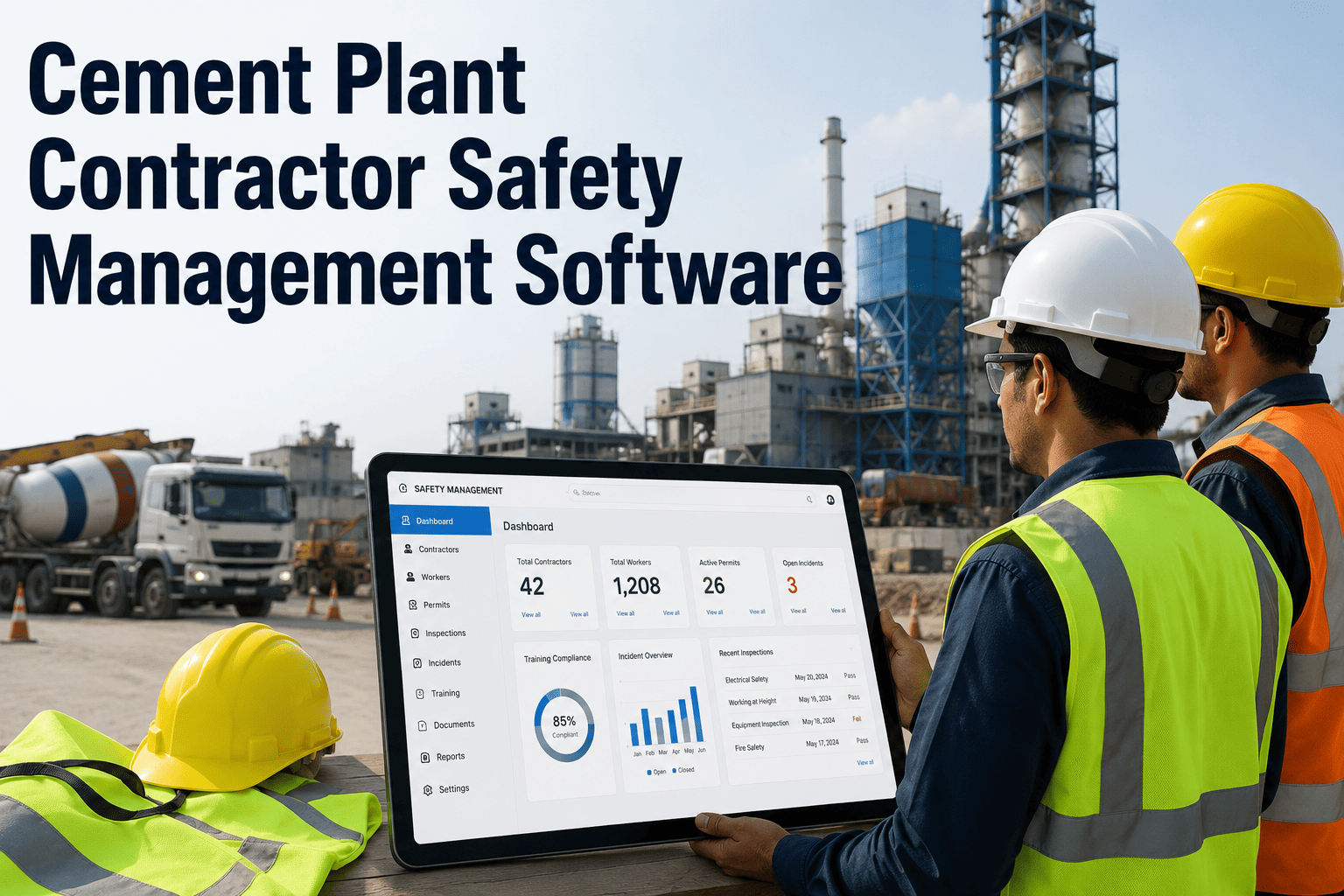
Cement plant safety management represents the ultimate operational priority in heavy industrial manufacturing—a high-complexity governance layer where mechanical energy isolation confined space atmospheric testing, and fall protection converge. Operating within a high-heat, high-dust environment like a clinker kiln or cement mill requires more than basic precautions; it demands a rigorous adherence to OSHA cement compliance and the proactive framework of ISO 45001 cement safety standards. Statistics consistently show that the most severe incidents in cement plants occur during maintenance shutdowns—specifically in silos and cyclones—where failing to implement digital cement LOTO (Lockout/Tagout) procedures can lead to catastrophic mechanical or electrical energy releases. This guide explores the technical orchestration of modern cement plant safety software, designed to move safety from a paper checkbox to a real-time, AI-driven intelligence layer that protectsEvery worker on the site floor.
Is Your Cement Plant Safety Framework Truly Audit-Ready?
Unify confined space permits, LOTO tracking, and dust exposure logs into one intelligent platform designed for zero-incident cement operations.
Why OSHA & ISO 45001 Alignment is the Foundation of Cement Excellence
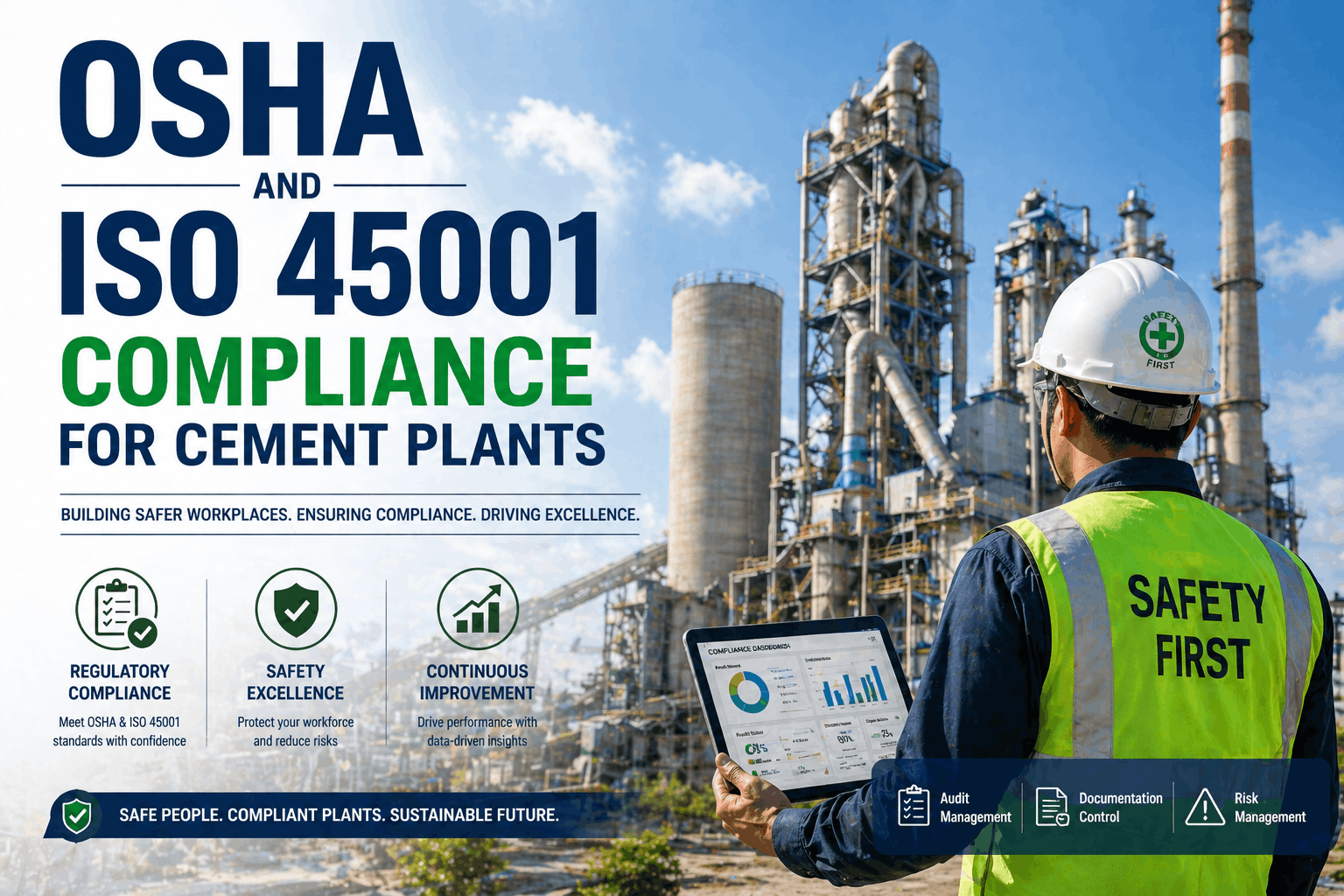
In the cement industry, safety is not merely a department—it is a culture of continuous hazard identification. While OSHA cement compliance provides the mandatory legal baseline for operations like fall protection and silica dust limits, ISO 45001 cement management systems provide the behavioral framework for sustainable risk reduction. Modern cement plant safety management platforms bridge this gap by digitizing the "Plan-Do-Check-Act" (PDCA) cycle, ensuring that every safety meeting, toolbox talk, and incident report is instantly accessible to leadership. When site managers schedule a demo, they see how integrating their safety permits with their Level 2 SCADA systems creates an unbreakable barrier against unauthorized machine restarts during LOTO procedures.
Confined Space Permit Logic
Manage high-risk entries in silos, kilns, and baghouses. Automatically verify O2 levels and toxic gas thresholds via digital cement confined space permits that lock out access if tests fail.
Digital LOTO Isolation Tracking
Replace manual board-based tagging with cement LOTO digital verification. TrackEvery energy isolation point in real-time, ensuring zero mechanical movement during mill or crusher maintenance.
Dust Exposure & Silica Guard
Monitor respirable crystalline silica levels across the plant. Link cement dust exposure sensors to site access control to ensure mandatory respirator use in high-particulate zones.
Height & Fall Protection Auditing
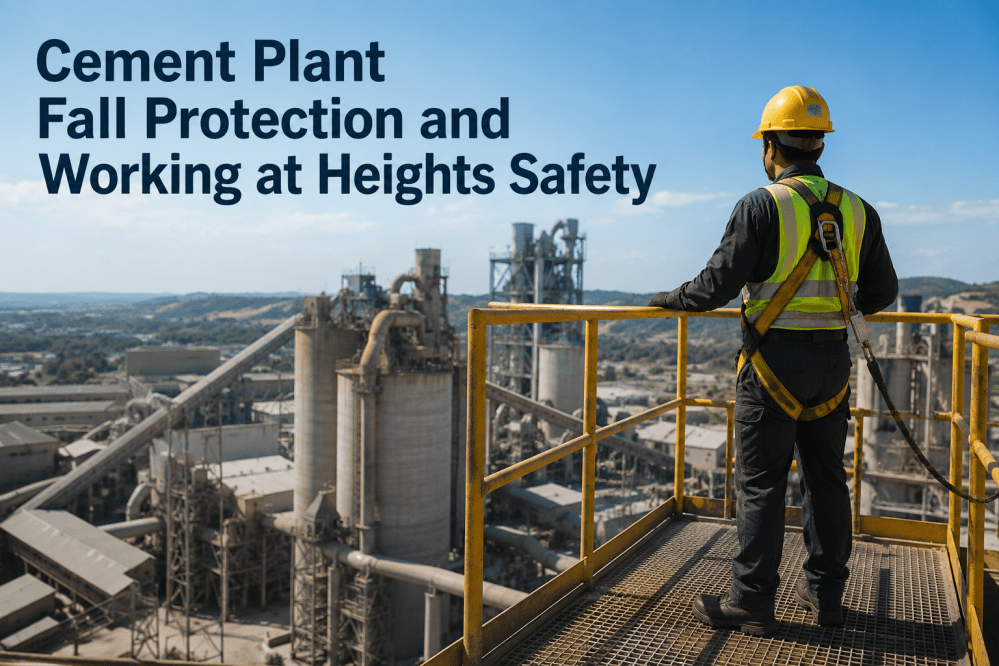
Ensure 100% cement fall protection compliance. Use digital logs to track the inspection lifecycle of harnesses, lanyards, and static lines on pre-heater towers and silos.
The Anatomy of a Proactive Cement Plant safety Ecosystem
Building a cement safety AI-driven environment requires the orchestration of heterogeneous data sources — from wearable location trackers to AI-vision camera feeds that detect PPE non-compliance. Top producers who have scheduled a demo often focus on unifying these 'silos' of safety data into a single corporate-wide dashboard for hazard oversight.
| Safety Component | OSHA Standard | ISO 45001 Focus | Digital Feature | Risk Reduction |
|---|---|---|---|---|
| Confined Space | 29 CFR 1910.146 | Risk Control (8.1.2) | Atmospheric Test Log | Eliminated |
| Energy Access (LOTO) | 29 CFR 1910.147 | Hazard ID (6.1.2.1) | Machine Specific LOTO | Eliminated |
| Height Access | 29 CFR 1910.28 | Continuous Improve | Inspection QR Codes | Mitigated |
| Silica/Dust Control | 29 CFR 1910.1053 | Worker Participation | Area Exposure Mapping | Mitigated |
| PPE Compliance | 29 CFR 1910.132 | Operational Control | AI Vision PPE Detect | Standardized |
5 Steps to Modernizing Your Cement Plant Safety Infrastructure
Implementing cement plant safety software is a journey that starts with digitizing the permit-to-work system and evolves into full cement safety AI-driven predictive analytics. Managers who book a demo early consistently report 40% reduction in near-miss incidents by identifying behavioral trends before they lead to lost-time injuries (LTI).
Comprehensive Hazard Inventory (HIRA)
Map every physical hazard across the kiln, mills, and silos. Use the cement plant safety management platform to document baseline risk levels for every operational zone.
Digital Permit-to-Work (PTW) Launch
Transition all confined space, hot work, and cement fall protection permits to a mobile-first digital workflow. Ensure zero 'ghost' permits and 100% sign-off accountability.
LOTO Procedure Digitization
Input machine-specific isolation procedures for every crusher, mill motor, and conveyor. Enable QR-code scanning at each lock point to ensure OSHA cement compliance for energy control.
Industrial Hygiene & Dust Mapping
Integrate real-time PM2.5 and silica sensors. Generate heatmaps of cement dust exposure to optimize ventilation cycles and define mandatory respiratory gear zones.
AI Safety Cockpit Integration
Finalize the system by enabling AI-driven PPE detection and behavioral analytics. Use predictive modeling to identify high-risk shifts based on staffing levels and maintenance intensity.
Fatal Risks in Conventional Cement Plant Safety Management
Most cement producers pursuing ISO 45001 cement certification must first address the 'deadly gaps' found in legacy paper-based safety systems. Modern cement plant safety software is specifically designed to eliminate these vulnerabilities.
Confined space entry into bridged silos without accurate mechanical level checking and verified rescue harness attachment.
Incomplete fuel-line isolation during LOTO, leading to accidental ignition while maintenance personnel are inside the kiln shell.
Relying on physical signatures rather than sensor-verified energy state checks (Try-It step) before allowing work to begin on high-voltage mill motors.
Entering cement confined spaces without a digital 'dead-man' switch or real-time location tracking for emergency responders.
Using fall protection harnesses that have exceeded their 5-year shelf life or have suffered thermal degradation near kiln pre-heaters.
Failure to track cumulative cement dust exposure for long-term employees, bypassing OSHA cement compliance for respiratory health.
Standardize Your Cement Plant Safety Today
Deploy a unified safety analytics platform that manages every permit, lock, and hazard log — built for the extreme conditions of the global cement industry.
Cement Plant Safety Management — Technical Questions Answered
How does digital LOTO prevent accidents on high-voltage mill motors?
iFactory enforces a QR-code step at the breaker and isolation switch, preventing the digital job from 'opening' untilEvery lock location is verified and sensor-checked for zero energy.
Can the platform handle multi-gas atmospheric testing logs?
Yes, the cement confined space module integrates with portable gas detectors to log O2, CO, H2S, and LEL readings directly into the permit before entry is authorized.
How do you ensure harnesses are safe near high-heat kiln zones?
The system tracks cement fall protection gear assets by material type, enforcing shorter inspection cycles for aramid or heat-resistant webbing used near pre-heaters and kiln hoods.
What is the benefit of AI-driven PPE detection for OSHA audits?
AI cameras provide a 24/7 digital log of PPE usage. During an OSHA cement compliance audit, you can show a verified 'safety compliance percentage' score rather than relying on manual spot-checks.
Does the platform support emergency rescue plan documentation?
Every cement confined space permit automatically links to a pre-approved rescue plan, identifying the specific tripod, retrieval line, and trained rescue team required for that asset.
How are digital toolbox talks integrated into the daily safety log?
Supervisors use the mobile app to record attendance and topics for toolbox talks, creating a geolocation-tagged ISO 45001 cement audit trail for daily worker participation.
Can we track the inspection lifecycle of Fall Protection harnesses?
Yes, each piece of cement fall protection gear is registered as a digital asset with a countdown to its mandatory 6-month inspection or 5-year replacement date.
How does the system manage safety onboarding for external contractors?
Contractors must upload safety certifications and watch site-specific training videos before the cement plant safety software authorizes their unique digital 'permit-to-work' access.