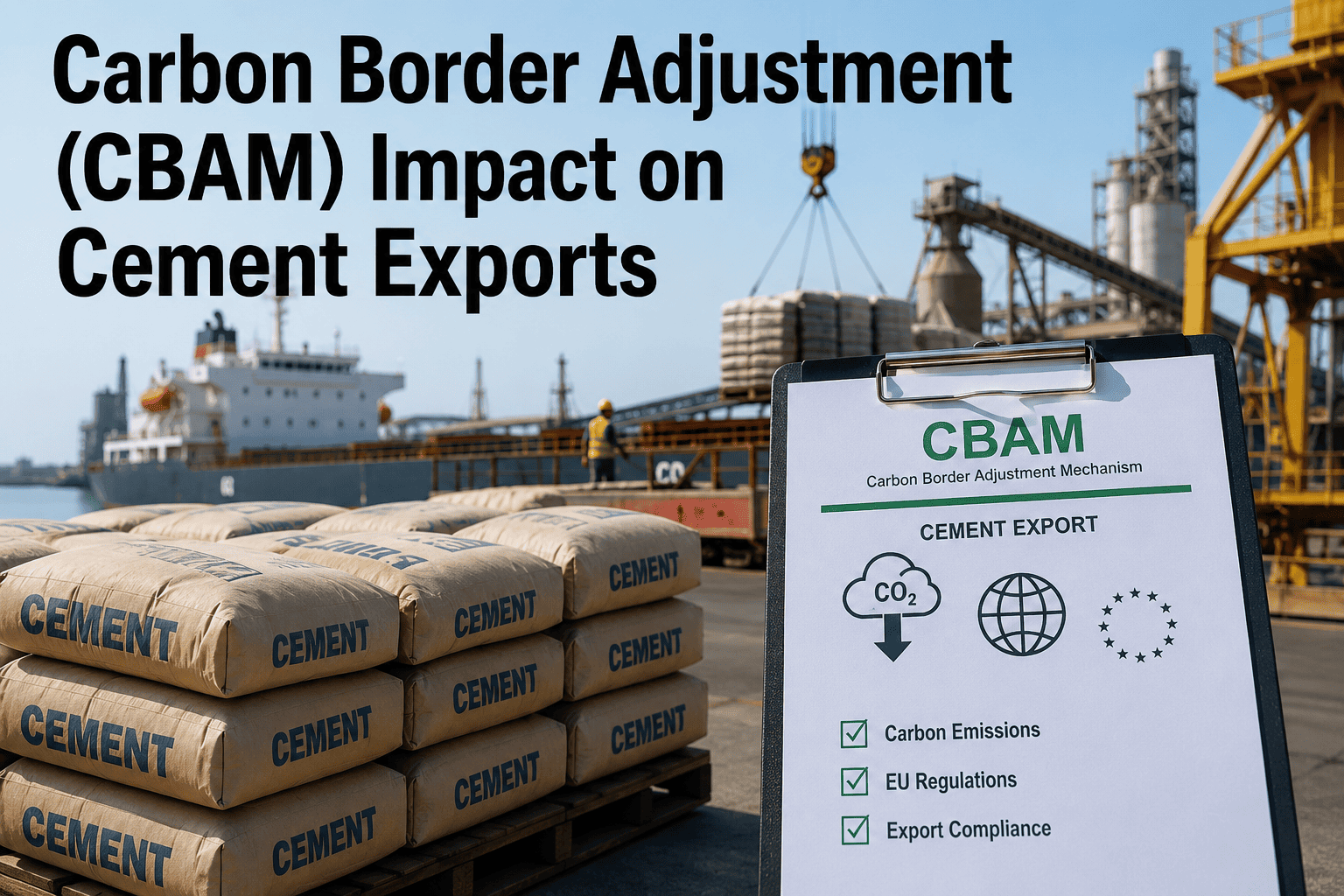
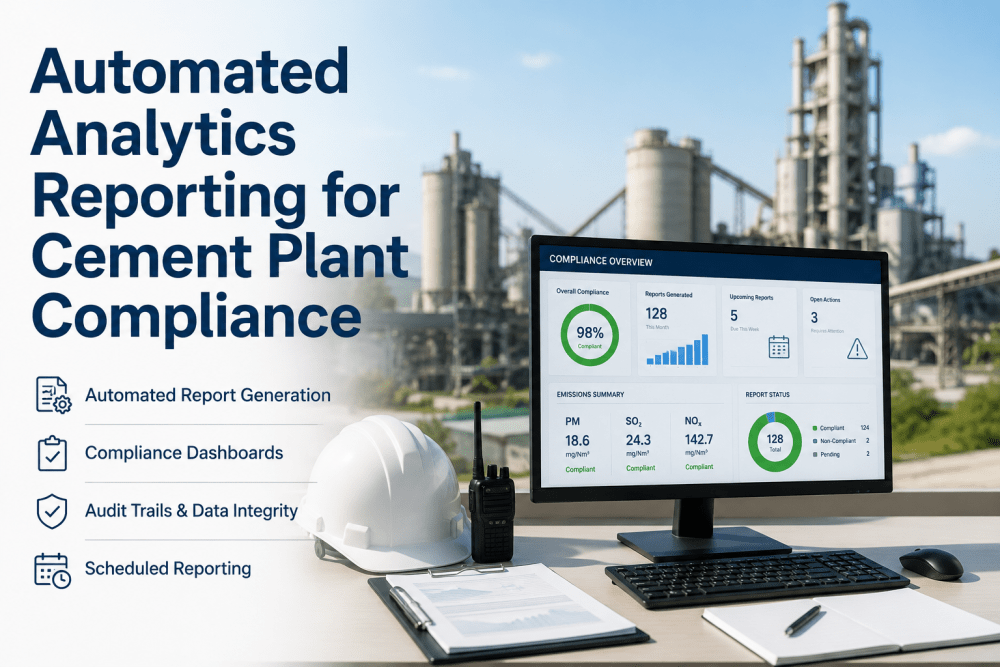
In the global cement trade, EU CBAM (Carbon Border Adjustment Mechanism) has transformed carbon from a sustainability metric into a hard financial barrier. Starting in 2026, cement exporters to the European Union must purchase CBAM certificates to cover the carbon footprint of their products—effectively equalizing the carbon price between EU and non-EU manufacturers. For exporters in high-volume regions, the difference between providing actual, verified emissions data and relying on punitive EU "Default Values" can represent millions of Euros in annual tariffs. Understanding CBAM analytics requirements is the foundation of maintaining European market access in a decarbonizing global economy. If you want to see how leading cement exporters automate their CBAM compliance with real-time intelligence, you can book a demo of our compliance platform today.
Is Your Export Business Prepared for the 2026 CBAM Deadline?
Deploy automated embedded emissions tracking, quarterly CBAM reporting, and audit-ready documentation — all in one unified compliance platform.
What CBAM Analytics Means for Global Cement Exporters
CBAM — the Carbon Border Adjustment Mechanism — is the EU's landmark policy to prevent "carbon leakage" by ensuring that imported goods pay a carbon price equivalent to those produced within the EU ETS. Within cement operations, CBAM analytics extends beyond simple carbon tracking: it continuously captures data across the entire production chain — from clinker burning to final grinding — to calculate the "Specific Embedded Emissions" (SEE) per ton. For exporters, these requirements are non-negotiable. Regulatory frameworks mandate documented direct and indirect emissions, quarterly declarations, and independent verification — and the precision required makes manual spreadsheets a structural liability.
Modern CBAM intelligence platforms address this by connecting directly to plant monitoring systems — CEMS, power meters, and fuel dosing units — and delivering continuous, audit-ready data that minimizes tariff exposure. The shift from reactive reporting to proactive CBAM analytics is not just a compliance task; it is a structural necessity for any exporter wishing to remain competitive in the European market. You can book a demo to explore how automated CBAM documentation works for your specific export volume.
Embedded Emissions Tracking
Calculate the precise CO2e emitted for every ton of cement produced. Moving from global averages to batch-specific data allows you to prove your actual carbon performance, avoiding the higher costs of EU default values.
Indirect Emission Calculation
CBAM requires tracking the carbon footprint of the electricity used in production. The platform correlates real-time kWh draw with grid emission factors to provide a complete Scope 2 ledger for every shipment.
Carbon Price Deduction Logic
If you already pay a carbon tax in your home country, CBAM allows for deductions. The platform maintains a transparent record of local carbon costs paid, ensuring you never pay for the same emission twice.
Quarterly Declaration Automation
CBAM mandates quarterly reports detailing the volume of goods, country of origin, and embedded emissions. The platform compiles these reports automatically, reducing the administrative burden by over 90%.
Audit-Ready "Carbon Passport"
Every shipment carries a digital footprint. The system generates a 'Carbon Passport' for every bill of lading, providing the verified data requested by European importers and accredited verifiers.
Accredited Data Verification
Independent verification of emission data is mandatory under CBAM. The platform’s tamper-resistant data logs provide verifiers with a clear, timestamped trail of all emission sources and calculations.
CBAM Requirements for Cement: The Transition Timeline
The implementation of CBAM is a multi-phase process that moves from pure reporting to hard financial liability. Exporters who fail to digitize their monitoring during the current transition phase will face significant friction as the definitive phase begins in 2026. The table below provides a benchmark overview of CBAM obligations and the data precision required at each stage. For any facility exporting to the EU, understanding this timeline is essential for CAPEX and OPEX planning. To build a CBAM compliance roadmap for your facility, you can book a demo with our regulatory team.
| Phase | Timeline | Data Requirement | Financial Impact | Compliance Priority |
|---|---|---|---|---|
| Transition Phase | Oct 2023 – Dec 2025 | Quarterly Emissions Reporting | None (Reporting Only) | Medium |
| Definitive Phase Begins | Jan 2026 | Verified Actual Data (Direct + Indirect) | Full CBAM Certificate Payment | Critical |
| Free Allocation Phase-out | 2026 – 2034 | Declining EU-ETS Free Benchmarks | Increasing Tariff per Ton | Critical |
| Full Implementation | 2034 Onwards | 100% Embedded Carbon Price | Maximum Tariff Exposure | Critical |
These phases represent the EU's current CBAM rollout strategy. Exporters using verified "Actual Data" consistently outperform those using "Default Values," which are set at the level of the worst-performing 5% of EU plants. To ensure you are using the most advantageous data, you can book a demo.
How CBAM Intelligence Architecture Works in Cement Export
The architecture of a robust CBAM compliance programme operates across five interconnected layers — from the stack sensor to the EU CBAM Registry. Understanding how these layers interact is essential for export directors who are evaluating whether their current manual data collection is fit for the 2026 financial deadline. Leading cement exporters who have implemented data-driven CBAM analytics consistently report lower tariff liabilities, faster audit approvals, and higher confidence from their European customers. The cascade of value runs from the plant floor directly to the balance sheet.
Source-Level Data Integration
Real-time data from CEMS (for CO2), fuel dosing systems, and power meters is captured directly. This eliminates the "estimation bias" that often inflates carbon footprints in manual reporting.
SEE Calculation Engine
The platform applies the official EU CBAM methodology to calculate Specific Embedded Emissions (SEE) for clinker and cement, ensuring that every ton is accounted for according to regulatory standards.
Carbon Price Offset Matching
The system tracks local carbon taxes, royalties, or ETS payments made in the country of origin. These costs are automatically mapped against the CBAM liability to ensure maximum deduction of local costs.
Quarterly Report Generation
Aggregated production and emission data are compiled into the official XML/JSON formats required by the EU CBAM registry, providing a "one-click" submission process for compliance teams.
Verification & Audit Ledger
A tamper-resistant audit trail is maintained for all data points. When a third-party verifier arrives, they access a structured portal that contains every piece of evidence needed for accredited certification.
— Export Director, MENA Region Cement Producer
CBAM Documentation Requirements: What Digital Compliance Delivers
CBAM documentation forms one of the most audit-intensive components of any modern cement export operation. Every shipment requires a defined emission profile, a verified country-of-origin record, and a quarterly declaration — all of which must be transparent and tamper-resistant. Traditional paper-based or hybrid reporting fails this requirement: data gaps are common, verification takes weeks, and accuracy is impossible to guarantee. Digital CBAM management addresses all three failure modes. Reports are compiled automatically, accuracy is source-verified, and audit readiness is constant — creating a traceable compliance record that secures your European market access. You can book a demo to see how automated CBAM reporting integrates with your existing export operations.
The EU applies "punitive defaults" to exporters without verified data. Digital tracking allows you to use your actual performance, which is typically 10-20% more efficient, saving millions in certificate costs.
Independent verification is mandatory. Digital ledgers provide verifiers with a structured "Evidence Portal," reducing the time and cost of annual audits by over 70% while ensuring 100% certification success.
Don't pay twice. The platform documents all local carbon taxes and royalties, providing the legally required evidence to deduct these payments from your final EU CBAM liability at the end of the year.
European importers are now legally liable for CBAM data. Exporters who provide seamless, digital, audit-ready carbon data become the "suppliers of choice" for B2B contracts across the EU.
Stop Fearing Carbon Tariffs. Start Governing Your Export Compliance.
Our compliance platform gives cement exporters the verified data, automated reporting, and audit-ready documentation needed to secure market access and minimize CBAM liabilities.
Frequently Asked Questions: EU CBAM for Cement Exporters
What is the "Transition Phase" of CBAM and what are our current obligations?
The transition phase runs from October 2023 to December 2025. During this period, cement exporters are required to report quarterly on the volume of goods and the embedded emissions. There is no financial payment required during this phase—it is designed to ensure data systems are ready for the definitive phase in 2026.
How is the "Specific Embedded Emission" (SEE) calculated for cement?
The SEE is the total CO2e emitted during the production of clinker and the subsequent grinding of cement, divided by the total tonnage of cement produced. It includes direct emissions from the kiln and indirect emissions from the electricity consumed. iFactory automates this calculation using the official EU CBAM methodology.
What happens if we don't provide actual emission data?
If an exporter fails to provide actual, verified data, the EU applies "Default Values." These values are set at the emission level of the worst-performing 5% of EU plants. Using these defaults is significantly more expensive than reporting actual data, potentially leading to much higher tariff costs than necessary.
Can we deduct the carbon taxes we already pay in our own country?
Yes. CBAM allows for the deduction of any "carbon price paid" in the country of origin. This includes carbon taxes or payments made under a local emissions trading system. Documentation must be provided to prove the payment was made and that it was not rebated on export.
Does CBAM apply to all cement products, including clinker?
Yes. CBAM covers a wide range of cement products listed under CN codes, including cement clinker, aluminous cement, and Portland cement. Each product category has specific calculation rules within the regulation.
Is third-party verification mandatory for our CBAM reports?
During the transition phase (until end of 2025), verification is not strictly mandatory but is highly recommended to ensure data systems are accurate. Starting in January 2026, all annual declarations must be verified by an accredited independent verifier.
How does iFactory help our European importers?
In the EU, the "Authorized CBAM Declarant" (the importer) is legally responsible for the accuracy of the data. By providing them with verified, digital, and structured data through iFactory, you reduce their legal risk, making you a much more attractive supplier compared to those with manual or unverified data.