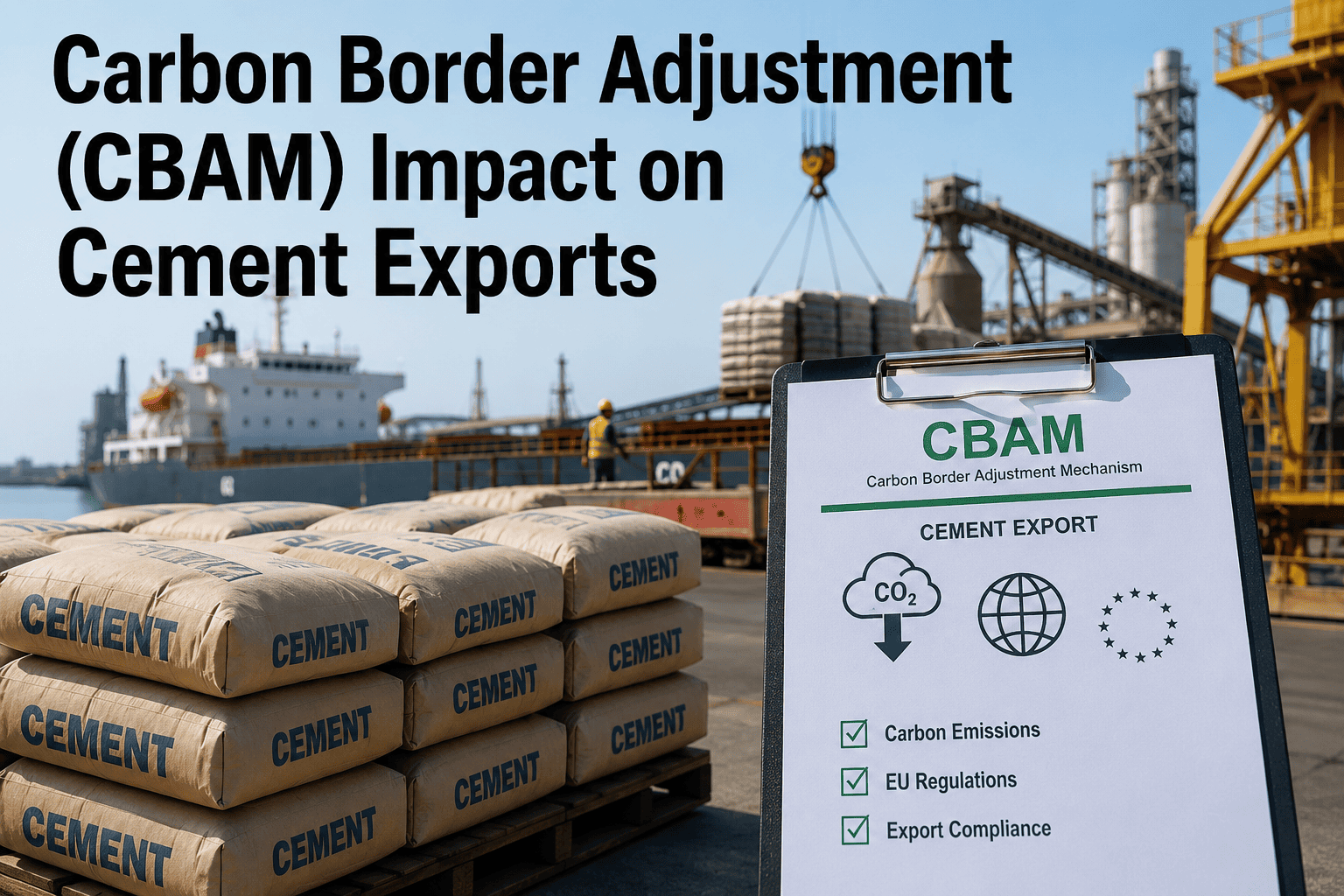
The European Union's Carbon Border Adjustment Mechanism (CBAM) is reshaping the global cement trade landscape, imposing new carbon costs on imports based on embedded emissions. For cement manufacturers outside the EU, understanding CBAM's intricate calculation methodologies, reporting obligations, and competitive implications is no longer optional—it is a strategic necessity. This comprehensive guide provides an authoritative, technically detailed analysis of CBAM's impact on cement exports, covering carbon cost structures, embedded emission quantification, compliance frameworks, and actionable strategies to maintain market access and profitability. As the EU phases in full CBAM implementation through 2026, non-European producers must urgently adapt their production processes, data management systems, and sustainability roadmaps. Book a Demo to see how iFactory's AI-driven analytics can streamline your CBAM compliance and optimize your carbon footprint.
CBAM and Cement: A New Era of Carbon-Costed Trade
Understand the mechanism, quantify your exposure, and build a resilient export strategy.
What Is CBAM and Why Cement Is in the Crosshairs?
CBAM is the EU's landmark policy to prevent carbon leakage by ensuring imported goods face a carbon price equivalent to that paid by domestic producers under the Emissions Trading System (ETS). Cement is one of the initial six sectors covered, due to its high emission intensity and significant trade volume. The mechanism requires importers to purchase CBAM certificates corresponding to the embedded emissions of their products. For cement, this means every tonne of clinker or cement imported into the EU will incur a cost directly tied to its CO2 footprint. The transition period (October 2023–December 2025) focuses on reporting obligations, while full financial implications begin in 2026. Non-EU cement manufacturers must now meticulously track and report emissions from raw material extraction, clinker production, grinding, and transport—a paradigm shift from voluntary disclosure to mandatory, auditable data.
Embedded Emission Calculation for Cement: The Technical Core
Embedded emissions under CBAM are calculated using a bottom-up methodology that covers direct and indirect emissions from the production process. For cement, the key emission sources include calcination of limestone (process emissions), fuel combustion in kilns (energy emissions), and electricity consumption (indirect emissions). The default values provided by the EU are intentionally conservative—higher than actual best-practice levels—to incentivize accurate reporting. Producers can use actual emissions data if certified by an accredited verifier, which often results in lower carbon costs. The calculation must follow the mass balance approach, tracking all carbon inputs and outputs across the production chain. iFactory's platform automates this data collection from sensors and ERP systems, ensuring real-time, audit-ready emission figures. Book a Demo to see how we simplify embedded emission tracking.
CBAM Emission Factors for Cement Products
| Product | Default Emission Factor (t CO2/t) | Best Practice (t CO2/t) | Potential Cost at €90/t CO2 |
|---|---|---|---|
| Clinker | 0.86 | 0.78 | €77.40 |
| Portland Cement (CEM I) | 0.67 | 0.58 | €60.30 |
| Blended Cement (CEM II) | 0.52 | 0.44 | €46.80 |
| Masonry Cement | 0.45 | 0.38 | €40.50 |
CBAM Implementation Timeline: Key Milestones for Cement Exporters
Five Strategic Pillars for CBAM-Compliant Cement Production
1. Low-Carbon Clinker Technology
Adopt alternative fuels (biomass, waste-derived), oxy-fuel combustion, or carbon capture to reduce process emissions. These technologies can cut clinker emissions by 30-50%.
2. Blended Cement Optimization
Increase the use of supplementary cementitious materials (SCMs) like fly ash, slag, or calcined clay. Blended cements have significantly lower embedded emissions per tonne.
3. Real-Time Emission Monitoring
Deploy IoT sensors and AI analytics to track emissions continuously. Automated data collection eliminates manual errors and ensures CBAM-compliant reporting.
4. Supply Chain Decarbonization
Collaborate with raw material suppliers to reduce upstream emissions. Use low-carbon transport modes and optimize logistics to lower the overall carbon footprint.
5. Carbon Offset & Certificate Trading
Invest in verified carbon credits or participate in the EU ETS secondary market to manage residual emissions. This provides flexibility while transitioning to cleaner production.
Transform CBAM Compliance into Competitive Advantage
Leverage iFactory's predictive analytics to reduce embedded emissions and lower your carbon costs. Stay ahead of regulations and protect your EU market share.
Regulatory Nuances: CBAM vs. EU ETS for Cement
While CBAM mirrors the EU ETS carbon price, key differences exist. CBAM does not include free allowances, meaning importers face the full carbon cost from day one. Additionally, CBAM certificates are priced based on the weekly average ETS auction price, creating a direct link to market volatility. For cement, the embedded emission calculation must account for all production stages, including clinker cooling, grinding, and blending. The EU has also introduced a 'carbon leakage' adjustment factor that reduces the CBAM obligation for certain sectors if the exporter's country has a domestic carbon price. Understanding these nuances is critical for accurate cost forecasting. iFactory's platform integrates real-time ETS pricing data and regulatory updates to provide dynamic cost simulations. Book a Demo to see how we keep your compliance strategy agile.
CBAM Cost Impact Comparison: EU vs. Non-EU Cement Producers
| Parameter | EU Producer (ETS) | Non-EU Producer (CBAM) |
|---|---|---|
| Carbon Price (€/t CO2) | 90 (with free allowances phasing out) | 90 (full from 2026) |
| Free Allowances | Yes, declining to 0 by 2034 | None |
| Reporting Frequency | Annual | Quarterly (transition), then annual |
| Verification | Third-party mandatory | Third-party mandatory after 2025 |
| Cost per t Cement (CEM I) | €52 (after free allowances) | €60 (full cost) |
Frequently Asked Questions on CBAM and Cement
How is the embedded emission of cement calculated under CBAM?
The embedded emission is calculated using a mass balance approach that accounts for all direct and indirect emissions from the production process, including calcination, fuel combustion, and electricity use. Producers can use default values provided by the EU or actual verified data. The calculation must be performed per tonne of product and submitted to the CBAM registry. iFactory's platform automates this by integrating with plant sensors and ERP systems to collect real-time data, ensuring accuracy and compliance. Book a Demo to see how we simplify this process.
What are the penalties for non-compliance with CBAM reporting?
Non-compliance can result in significant financial penalties, including fines of up to €100 per tonne of unreported CO2, plus the cost of purchasing CBAM certificates at the prevailing ETS price. In severe cases, importers may face restrictions on future imports. The EU has also empowered customs authorities to verify declarations and impose additional sanctions. To avoid these risks, cement exporters must establish robust data collection and reporting systems. iFactory's predictive maintenance and analytics platform ensures your emission data is always audit-ready. Contact Support for guidance on building a compliant data infrastructure.
Can carbon offsets be used to reduce CBAM liability?
No, CBAM does not currently accept carbon offsets to reduce the embedded emissions of imported goods. The liability is based solely on the actual or default emissions of the production process. However, offsets can be part of a broader corporate sustainability strategy and may influence the carbon price indirectly through EU ETS market dynamics. iFactory recommends focusing on direct emission reductions through process optimization and cleaner technologies. Book a Demo to explore how our AI tools identify the most cost-effective emission reduction opportunities.
How does CBAM affect the competitiveness of cement from developing countries?
Developing countries often rely on older, less efficient cement plants with higher emission intensities, making them disproportionately affected by CBAM. The added carbon cost can erode their price advantage in the EU market, potentially reducing export volumes. However, the mechanism also incentivizes technology transfer and investment in cleaner production. Countries that adopt low-carbon clinker technologies or use alternative fuels can mitigate the impact. iFactory's analytics help manufacturers in emerging markets benchmark their emissions against best practices and identify cost-effective upgrades. Learn More about our global deployment case studies.
What is the role of the CBAM registry and how do I submit data?
The CBAM registry is an electronic database managed by the European Commission where importers must submit quarterly reports on embedded emissions, including supporting documentation from the producer. Access is granted through national competent authorities of the EU member state where the importer is established. The submission process requires detailed product-level data, emission factors, and verification certificates. iFactory's platform integrates directly with the CBAM registry API, automating data submission and reducing administrative burden. Book a Demo to see how we streamline your reporting workflow.
Secure Your Cement Exports to the EU with iFactory
Our AI-driven platform provides end-to-end CBAM compliance, from real-time emission monitoring to automated reporting. Protect your market share and turn carbon management into a strategic advantage.