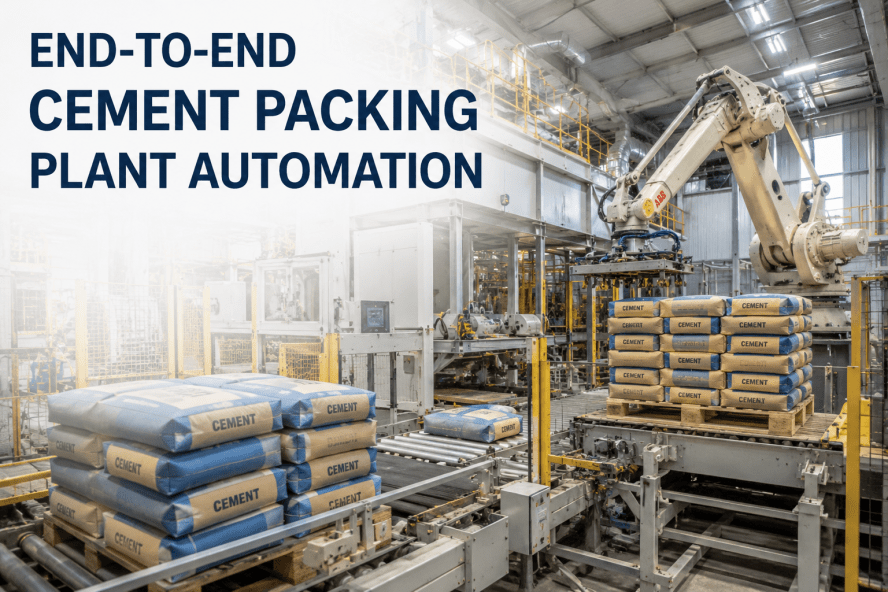
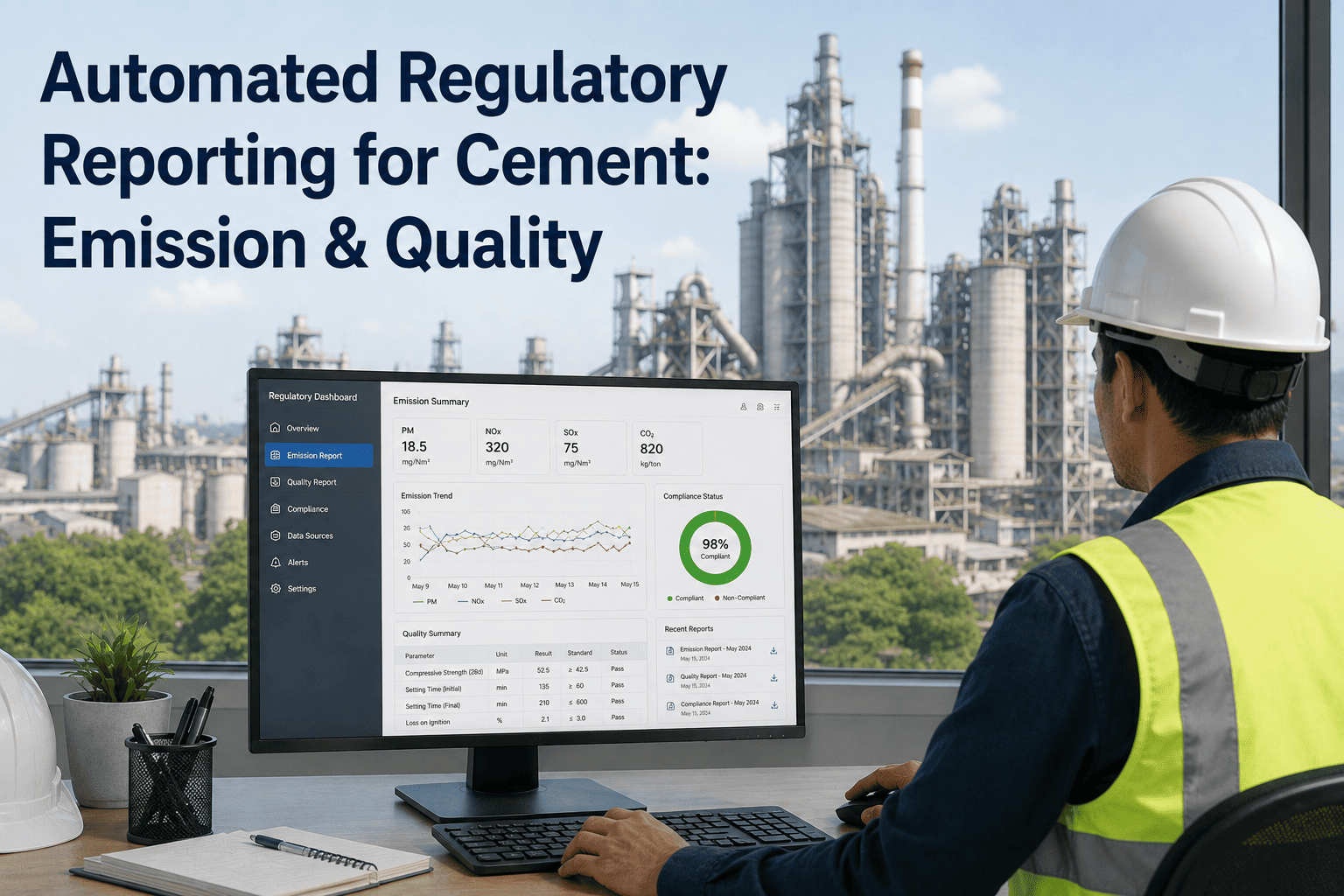
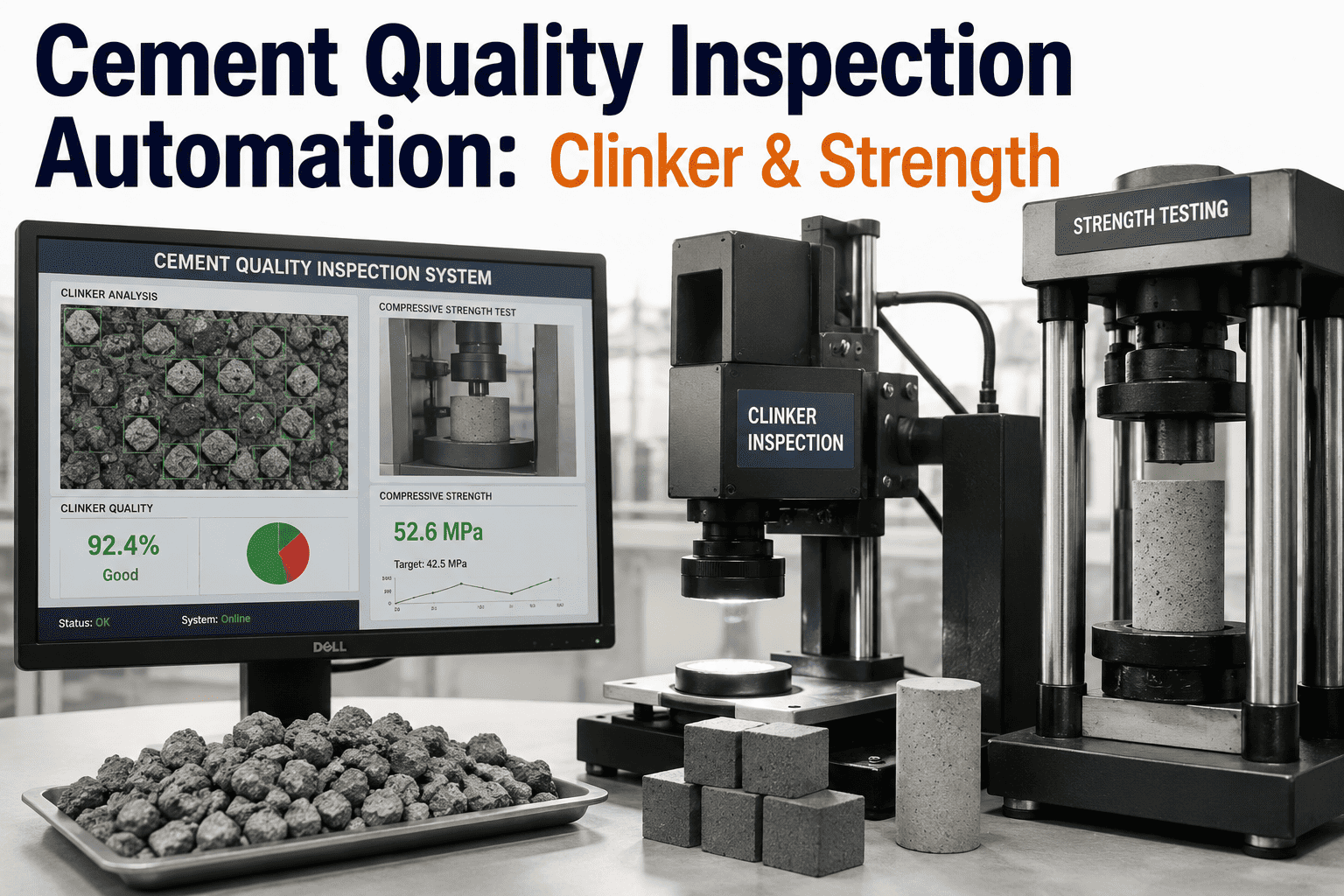
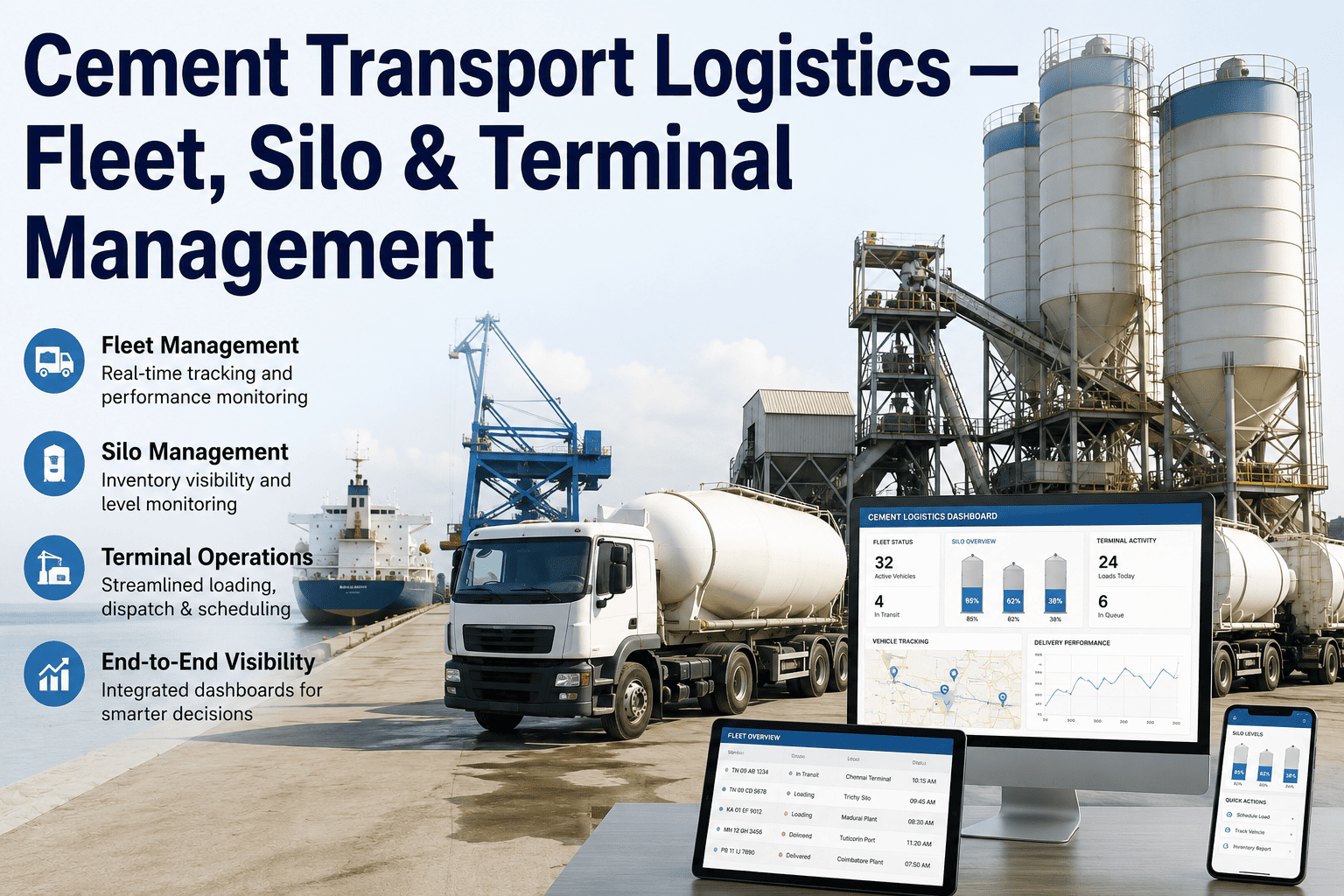
Every cement packing line running below its rated capacity is a quiet, compounding cost that rarely appears as a single line item on any P&L. It shows up as excess labor hours, elevated bag rejection costs inflated truck demurrage charges, and a customer complaint rate that stays frustratingly above the target no matter how many operational corrections are made at the shift level. The operations that have eliminated these losses did not do it by working harder at manual coordination — they did it by replacing manual coordination with integrated automation: AI vision systems inspecting every bag at line speed, robotic palletizers building every pallet to an optimized pattern automated bag placers running without fatigue or repetitive strain, and a manufacturing execution hub that connects all of it into a single self-coordinating system. End-to-end cement packing plant automation is not a future-state aspiration for most U.S. cement producers. It is deployable capital investment with a documented ROI profile, and the plants not deploying it are subsidizing the ones that are.
The business case is well-established in the facilities that have done it. Throughput gains of 22 to 35% from a line running the same physical equipment. Packing line labor reductions of 60 to 75%. Bag rejection rates driven below 0.3% from AI vision replacing sampled manual inspection. Truck turnaround times cut from 68 minutes to under 15 with automated dispatch sequencing. This guide maps exactly how end-to-end automation achieves those outcomes, what the five integrated technology layers consist of, how AI vision quality control changes the inspection economics at 100% coverage, and what the full ROI structure looks like for a U.S. cement operation evaluating the investment. If your operation is ready to model the numbers against your specific throughput and labor baseline, book a packing line assessment with iFactory's automation team.
35%
Maximum throughput gain documented at U.S. cement packing lines after full end-to-end automation deployment
75%
Packing line labor reduction achievable when bag placing, palletizing, and dispatch are fully automated
$1.9M
Average annual labor and quality cost reduction at a 2-line, 4,800 bag/hr integrated packing plant
18 mo
Typical payback period for full end-to-end packing automation at U.S. cement facilities
Ready to model the ROI of full packing line automation against your facility's throughput and labor baseline? Book a 30-minute packing line assessment with iFactory's cement automation team.
Why Point-Solution Automation Caps Out — and What End-to-End Integration Unlocks
Most cement plant automation projects begin as point solutions: a robotic palletizer installed to reduce injury exposure at the stacking position, a checkweigher added to meet weight compliance requirements, a bag placer deployed after a repetitive strain injury event. Each investment delivers its local objective. The packing line as a system, however, continues to underperform because the individual automation islands are not coordinated. The palletizer runs at 2,400 bags per hour but is constrained by an upstream bag placer set to 1,800. The checkweigher logs weight drift but no one connects that signal to an automatic spout adjustment before the compliance threshold is crossed. The vision station rejects bags but the count feeds a manual report compiled at shift end rather than a real-time corrective signal to the filling station.
End-to-end integration closes those gaps by creating a common MES layer that coordinates the behavior of every automation island against a shared production objective. When the vision system detects a filling defect pattern, it signals the filling station — not a shift report. When the palletizer completes a pallet, it signals the AGV scheduler — not a forklift operator waiting for a radio call. The result is a system that runs faster, rejects less, and requires far fewer human decision points per tonne dispatched. That is the throughput differential between point-solution automation and end-to-end integration, and it is the reason the ROI changes by an order of magnitude when the integration layer is added.
Throughput Coordination Loss
Uncoordinated automation islands run at the speed of the slowest stage — a bag placer capped at 1,800 bags/hr constrains a palletizer rated at 2,400, erasing the capacity investment made at the faster station.
HIGH IMPACT
Delayed Quality Feedback Loops
Vision rejection data reaching the filling station at shift end rather than in real time allows a systematic defect — a worn spout, a sealing jaw out of tolerance — to propagate through hundreds of bags before correction.
HIGH IMPACT
Manual Dispatch Coordination Overhead
Yard coordinators manually sequencing pallet release against truck arrival create an average 45–90 minute truck turnaround — a demurrage and logistics cost that compounds across every dispatch day and every loaded truck.
MEDIUM IMPACT
Sampled Inspection Misses
Manual or sampled bag inspection at 1–3% coverage rates misses systematic defects that full AI vision coverage catches on the third occurrence — the difference between a 12-bag defect run and a 400-bag defect run reaching the customer.
MEDIUM IMPACT
Injury Risk at Manual Positions
Manual bag placing and stacking positions generate 35–45% of recordable injuries in cement packing operations — a workers' compensation and productivity cost that automated equipment eliminates entirely rather than reduces.
MEDIUM IMPACT
Disconnected Maintenance Visibility
Without a common condition monitoring layer across the packing line, equipment faults are discovered at failure rather than predicted from condition signals — generating unplanned stoppages that interrupt production at the worst possible moments.
MANAGED RISK
The Five Technology Layers of End-to-End Cement Packing Automation
A fully automated cement packing plant is five coordinated technology layers, each solving a specific problem in the flow from silo to loaded truck — and each generating independent value while amplifying the value of the adjacent layers when integrated through a common MES platform. Understanding each layer's function, what it replaces, and how integration changes its performance ceiling is the prerequisite for structuring a capital investment that delivers system-level returns rather than isolated efficiency improvements.
01
Automated Bag Placing and Precision Filling Spout Control
Automated bag placers eliminate the highest-repetition manual position in the packing plant — a single operator placing 800 to 1,200 bags per hour under continuous dust exposure and repetitive strain conditions. Modern automated placers achieve 1,800 to 2,400 bags per hour with placement accuracy within ±2 mm. Weight-based filling spout control, connected to the in-line checkweigher through the MES integration layer, maintains bag weight within ±100 grams of the nominal 94-pound or 50 kg specification. When the MES detects a weight drift pattern over 10 consecutive bags — mean trending toward the rejection threshold before any individual bag actually fails — it automatically adjusts the spout setpoint and logs the correction. The same event that would have produced 40 to 80 rejected bags in a manual system produces zero rejections in the integrated system because the correction happens before the threshold is crossed rather than after it is detected.
02
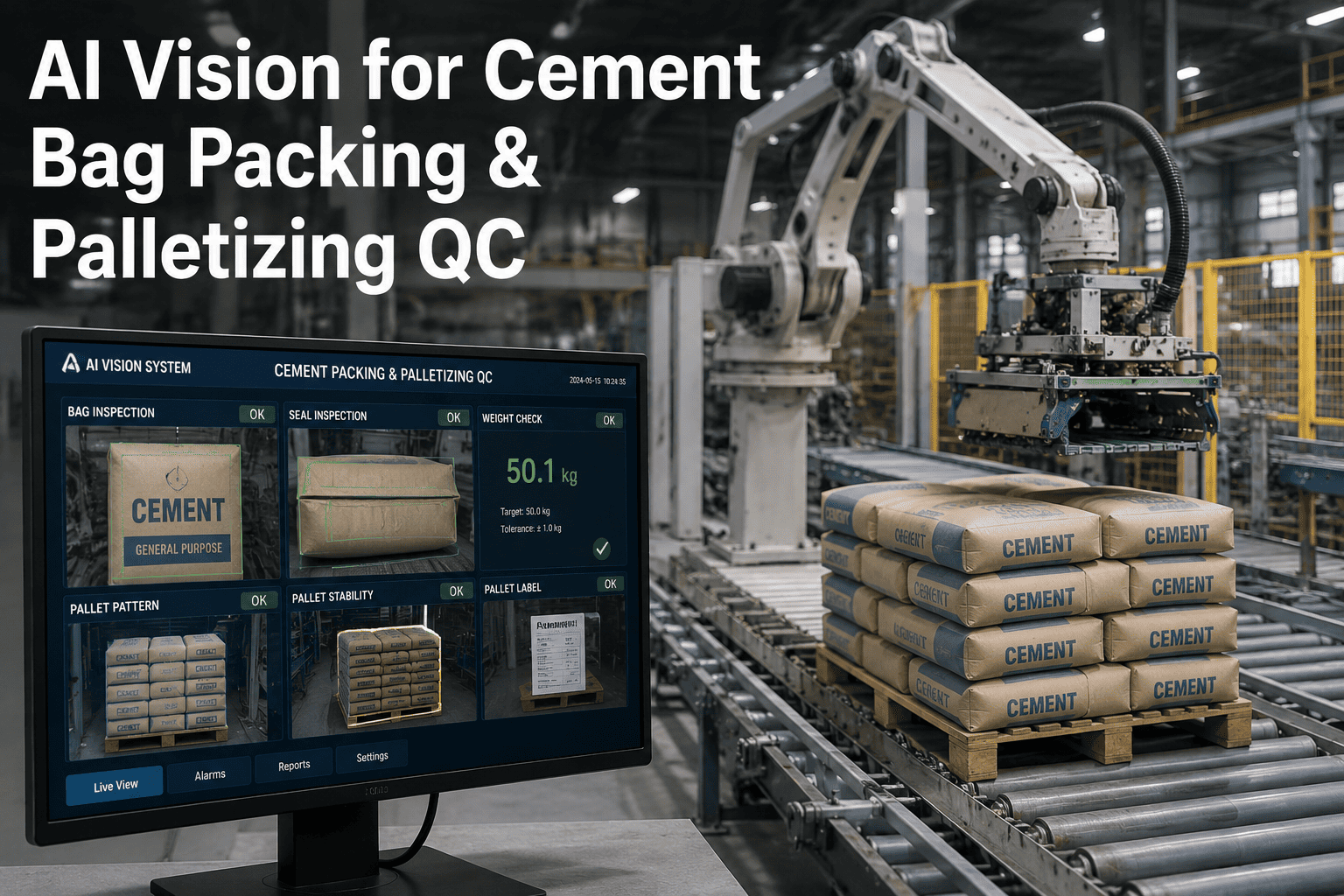
AI Vision Quality Control — 100% Inspection at Full Line Speed
AI vision inspection replaces manual bag sampling with complete coverage at every bag, every production run. The vision system simultaneously checks bag integrity (torn seams, open valve closures, punctures, moisture contamination), print quality (lot number, grade designation, date code legibility and correctness cross-validated against the MES production record), weight compliance (checkweigher cross-validation), and placement orientation before palletizing. Defective bags are automatically diverted to the reject conveyor without line stoppage or operator intervention. The AI model calibrates to the specific bag type, supplier, and cement grade mix at the facility — reject classification accuracy typically reaches 99.4% within the first 30 days of operation. Print verification catches wrong-grade labeling and misprint events that sampled inspection misses with near certainty, eliminating the post-dispatch label correction cost that averages $4,200 per incident at plants without automated print verification.
03
Robotic Palletizing with MES-Driven Pattern Optimization
Robotic palletizers eliminate the most physically demanding and injury-prone manual operation in the packing plant — a position that generates 35 to 45% of all recordable injuries in cement packing operations. Modern industrial and collaborative robotic palletizers operate at 1,600 to 2,800 bags per hour with fully configurable pallet patterns. The MES integration layer adds pattern optimization: rather than running a fixed pallet pattern for all orders, the system selects the pattern that maximizes pallet stability for the current bag weight, ordered destination, and transit mode — reducing transit damage claims by 18 to 28% versus fixed-pattern palletizing. Pattern changeovers for different orders happen automatically at pallet completion with no human intervention and no downtime — eliminating the 12 to 18 minute manual changeover that shows up as an undefined delay code in production logs at plants without the integration layer.
04
Automated Stretch Wrapping, Pallet Labeling, and Quality Release
Automated stretch wrappers apply consistent, tension-controlled film coverage to every pallet — eliminating the wrap quality variation that generates transit damage claims when manual wrapping applies insufficient overlap or inconsistent tension on the bottom layers. Automated pallet labeling systems print and apply labels at the point of wrap completion with batch traceability, customer order reference, and destination routing information sourced directly from the MES order management module. The quality release decision — hold or dispatch — is generated automatically from the MES based on the combined inspection record. A pallet with a documented quality excursion is automatically placed on hold and flagged for disposition review. This single change removes the manual QC sign-off step from in-spec production, eliminating 94 to 97% of manual quality intervention while tightening the hold criteria for out-of-spec pallets.
05
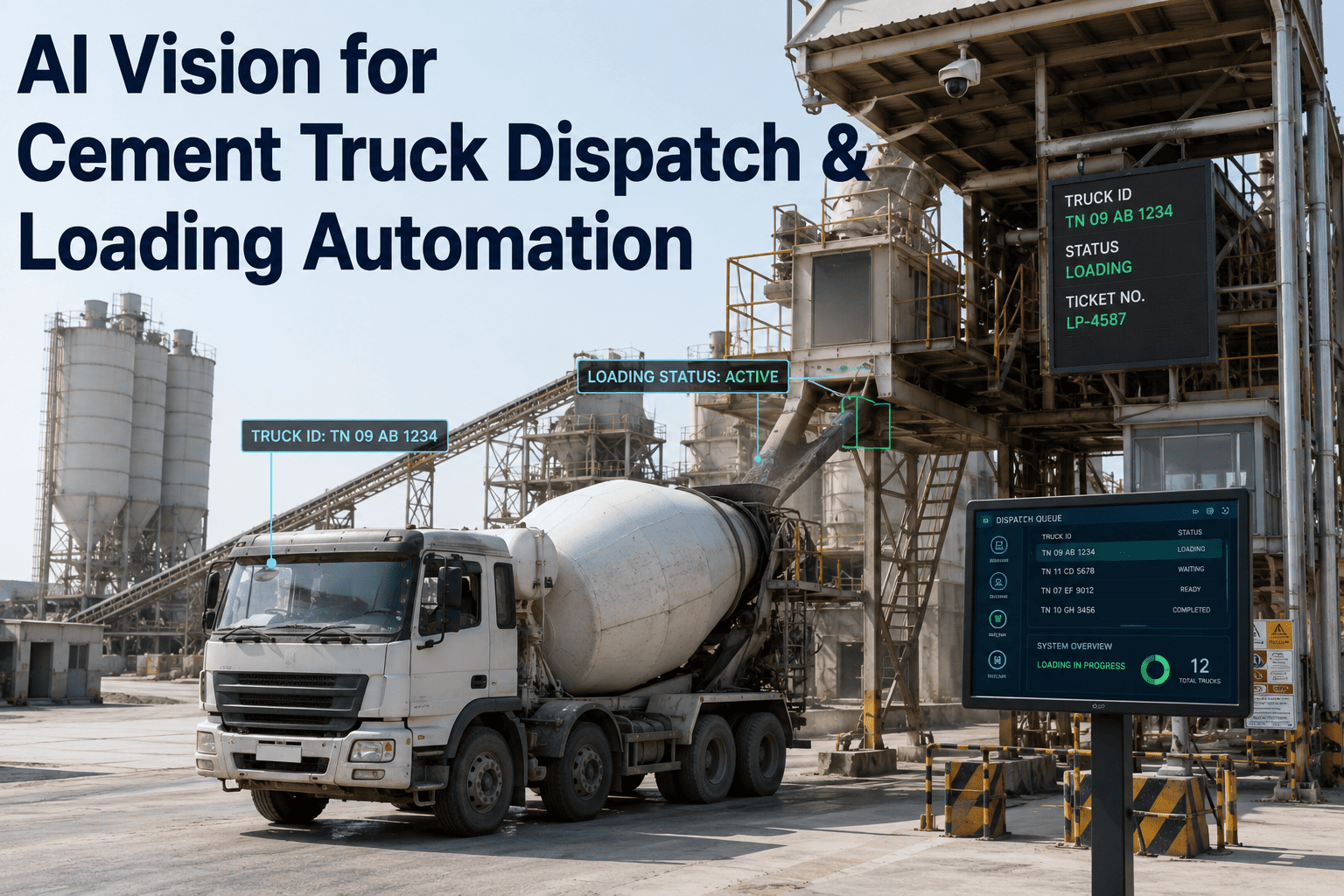
Smart Dispatch Sequencing and AGV Fleet Management
Automated guided vehicles or conveyor-based pallet transport systems move finished pallets from the wrapping station to the dispatch bay in the sequence determined by the MES dispatch scheduler — which sequences pallet release based on truck arrival time, customer order priority, load order, and bay availability, updated continuously as trucks arrive and depart. Integration with the plant's truck scheduling and gate management systems reduces average truck turnaround time from 45–90 minutes to 12–18 minutes. The yard coordinator's role shifts from active traffic direction to exception handling — the system manages 95% of dispatch transactions without human intervention, and the coordinator addresses only the 5% that involve a truck arrival variance, a damaged pallet requiring substitution, or a load weight reconciliation issue. That shift alone typically recovers the equivalent of 1.5 to 2 full-time coordinator positions per dispatch shift by redeploying that capacity to value-adding quality and logistics oversight tasks.
AI Vision Quality Control: The Economics of 100% Inspection Coverage
The shift from sampled inspection to 100% AI vision inspection is the most consequential quality economics change in modern cement packing automation — and the one with the most direct impact on customer complaint rates, regulatory compliance, and production efficiency simultaneously. In a manual or sampled inspection system, the inspection protocol might check 1 to 3% of bags per shift, with the rest dispatched on statistical inference from the sample. When a systematic defect develops — a sealing jaw that degrades over a 2-hour period, a spout nozzle that develops a partial blockage — it can produce 200 to 400 defective bags before the next sample catches it. In an AI vision system inspecting 100% of bags, the same defect is caught on the third occurrence and the cause is flagged for correction before the defective run extends to double digits.
AI Vision Inspection — What 100% Coverage Catches That Sampled Inspection Misses
Systematic seam defects: A worn sealing jaw produces a consistent partial seam failure on every 8th to 12th bag — a pattern that a 1% sampling program statistically misses 88% of the time. AI vision catches it on the 3rd occurrence and alerts the maintenance queue.
Wrong-grade print labeling: A grade changeover that leaves the previous grade's label program active produces correctly-shaped, correctly-weighted bags with the wrong label — invisible to weight sampling but caught on the first bag by print OCR verification cross-referenced against the MES production record.
Orientation failures before palletizing: Upside-down or sideways bags on a pallet create structural instability that generates transit damage even when the individual bag is intact. AI vision catches orientation failures and routes them to a reorientation conveyor — recovering 60–80% without rejection — before they reach the palletizer.
Moisture contamination from conveyor contact: A wet conveyor section from a condensation or spill event creates a row of moisture-compromised bags that a walking inspector may not notice until the bags are already palletized. The vision station flags the moisture pattern in real time, allowing the source to be corrected and the affected batch quarantined before dispatch.
Weight drift before the rejection threshold: SPC control charts from the checkweigher integration detect mean weight trending toward the compliance limit before any individual bag fails — allowing proactive spout recalibration that keeps the weight distribution centered rather than reacting to failures after they occur.
Partial valve closure on valve-type bags: An incompletely folded or heat-sealed valve closure is imperceptible to visual inspection from a distance but produces cement powder loss in transit. Vision-based valve closure verification catches partial closures with 98.7% detection accuracy at full line speed.
Batch traceability gaps from manual transcription: Manual inspection records contain human transcription errors that create traceability gaps when a quality investigation requires linking a specific bag to its production batch. AI vision creates a machine-generated, timestamped inspection record for every bag linked to the MES production order — audit-ready without manual reconstruction.
Surface printing smear from ink system degradation: Gradual print head degradation produces increasingly illegible date codes and lot numbers — a compliance risk under NIST Handbook 133. AI OCR verification catches the legibility threshold the moment it is crossed, not at the next manual inspection round.
99.4%
AI vision defect detection accuracy after 30-day calibration period at full line speed
0.3%
Maximum bag rejection rate achievable with integrated AI vision and spout feedback control
$4,200
Average cost per post-dispatch label correction incident at plants without automated print verification
Deploy AI Vision and Robotic Automation Across Your Cement Packing Line
iFactory's cement packing automation platform integrates bag placing, AI vision quality inspection, robotic palletizing, stretch wrapping, and smart dispatch into a single managed system — delivering measurable throughput, quality, and labor improvements from the first operating quarter without requiring new sensor infrastructure at most installations.
ROI Framework: Investment, Return Streams, and Payback Structure
The investment case for end-to-end cement packing automation is built on six simultaneous return streams that compound over the system life. Unlike single-technology investments that generate one primary return, integrated automation generates returns in labor cost reduction, quality cost avoidance, throughput increase, maintenance cost reduction, logistics cost reduction, and injury cost elimination — all from the same platform investment. The table below maps the typical investment and return profile for a two-line, 4,800 bag-per-hour integrated packing plant in a U.S. cement facility.
Value Stream
Baseline (Manual / Partial)
After Full Integration
Annual Value
% of Total ROI
Packing Line Labor
12–18 operators per shift, 3 shifts at $28–$42/hr loaded cost
4–5 operators per shift (supervision and exception handling)
$680K–$1.1M per year
36–42% of total ROI
Bag Rejection and Rework
1.6–2.4% rejection rate; manual rework at 3.2 min/bag average
Below 0.3% rejection; automated diversion, zero manual rework
$180K–$340K per year
12–18% of total ROI
Throughput Revenue Gain
1,400–1,800 bags/hr actual vs. rated line capacity
2,200–2,400 bags/hr sustained at same line equipment
$280K–$520K per year
18–24% of total ROI
Unplanned Downtime Reduction
4.2–6.8 hrs/week unplanned stoppage across packing line
Below 0.8 hrs/week with condition-based maintenance integration
$120K–$240K per year
8–12% of total ROI
Dispatch Demurrage Reduction
$18K–$45K/month in truck wait and demurrage charges
Below $4K/month with automated dispatch sequencing
$168K–$492K per year
10–18% of total ROI
Transit Damage and Customer Claims
0.8–1.4% of dispatched pallets generating claims at $340–$680/claim
Below 0.15% with optimized pallet patterns and consistent wrapping
$60K–$140K per year
4–8% of total ROI
$2.8M
Typical Full Investment
2-line, 4,800 bag/hr integrated automation including robotics and platform
$1.9M
Average Annual Return
Combined labor, quality, throughput, and logistics savings post-deployment
18 mo
Typical Payback Period
Full cost recovery timeline across documented U.S. cement packing deployments
340%
5-Year Average ROI
Return on full integration investment across iFactory cement packing deployments
Measured Outcomes at Cement Plants Running End-to-End Automation
2,400
Bags Per Hour Sustained
Throughput achieved at two-line cement packing plants after full integration — compared to 1,600–1,800 bags/hr at the same physical equipment under manual coordination.
0.28%
Average Bag Rejection Rate
Post-deployment rejection rate at facilities running AI vision with integrated spout feedback control — down from 1.9% average pre-deployment baseline.
14 min
Average Truck Turnaround
Truck turnaround time with automated dispatch sequencing versus 68-minute average under manual yard coordination at the same facility pre-deployment.
71%
Reduction in Unplanned Stoppages
Packing line unplanned stoppage reduction with condition-based maintenance monitoring across all automated equipment — robotic arms, conveyor drives, vision station components.
2 hrs
Audit Preparation Time
Compliance audit preparation time with iFactory's digital batch traceability — compared to 2–4 days of manual record assembly from paper inspection logs and shift reports.
Zero
Stacking Position Injuries
Recordable injuries at the manual stacking position after robotic palletizer deployment — the position that historically generated 35–45% of all packing line recordable incidents.
Ready to model these outcomes against your specific facility throughput, labor cost, and rejection rate baseline? Book a 30-minute ROI modeling session with iFactory's cement packing automation team.
Expert Review: What Full Automation Changes About Running a Cement Packing Plant
We had two packing lines running 1,600 bags per hour each, 14 operators per shift across 3 shifts, a rejection rate of 1.9%, and a truck turnaround time of 72 minutes. Every one of those numbers was within the industry benchmark range — we were not a poorly run operation. What the integrated automation project revealed is that we were leaving $1.7 million per year on the table not because of bad management but because the system was not designed to surface those losses. The bag placer was running below rated speed because the filling spout had drifted and no one connected the checkweigher to an automatic adjustment. The palletizer was running at 78% OEE because pattern changes for different destination orders were being done manually, taking 12 to 18 minutes per changeover. Truck turnaround was long because the yard coordinator was walking the dispatch bay to sequence release. When iFactory's MES layer connected the checkweigher to the spout control, the palletizer to automated pattern selection, and the quality hold status to the AGV dispatch scheduler, every one of those loss sources disappeared within 60 days. The throughput improvement alone — 1,600 to 2,280 bags per hour — covered the full platform investment in 14 months. The labor savings doubled the total first-year return on top of that.
The most underestimated ROI driver in cement packing automation is not labor — it is the quality feedback loop speed. Every manual inspection system operates with at least a one-shift lag between a defect developing and the correction being made, because the data has to travel from the inspection record to the QC supervisor to the production floor. A systematic filling defect that develops at 6 AM gets corrected at the 2 PM shift review. In the six hours between those events, you have produced 40,000 bags. Even at a 0.5% defect rate from that specific cause, that is 200 rejected or suspect bags that have already been palletized and may have been partially dispatched. AI vision connected to the spout control corrects the same defect within 10 bags of its development. The bags those 190 recovered bags represent — over a full year of packing operations — account for more annual cost reduction than most plants' entire preventive maintenance programs. That is the number that changes the economics of the investment case for operations that have never calculated it before.
Regional Operations Director, Cement Manufacturing Group
U.S. Southeast — 4 Plants, 6 Packing Lines — Post-Automation Benchmark Study 2025
Frequently Asked Questions
iFactory's packing automation platform is designed to integrate with both greenfield installations and existing partial-automation environments. The minimum infrastructure for MES integration is a network-connected PLC or SCADA system at each automated packing line station — present in virtually all cement packing plants built or modernized in the past 15 years. For plants with older equipment lacking PLC connectivity, iFactory provides edge computing gateway hardware that reads analog and digital I/O signals from legacy equipment and converts them to network-addressable data points without requiring PLC replacement or line shutdown. The AI vision system requires a dedicated camera station with controlled lighting — a standalone unit installed between the checkweigher and palletizing infeed conveyor in a 4 to 6 hour installation that does not require production interruption.
iFactory's AI vision system maintains separate inspection models for each product-bag type combination in the packing plant's standard product range. When the MES initiates a grade changeover, the vision system automatically loads the corresponding inspection model for the new product — including the correct print template for label verification, the nominal bag dimensions and seam geometry for integrity inspection, and the weight specification for checkweigher cross-validation. The model transition occurs in under 3 seconds at grade changeover with no vision system downtime required.
U.S. cement bag weight declarations are subject to NIST Handbook 133 requirements for packaged commodities — specifically the Maximum Allowable Variation limits for 94-pound bags and the requirement that the average net weight of any lot not be below the labeled weight. iFactory's checkweigher integration maintains a real-time running record of all weight measurements for each production lot, calculates the lot mean and standard deviation continuously, and generates a weight compliance certificate for each completed pallet that documents compliance with Handbook 133 requirements without manual calculation.
iFactory's integration architecture includes a degraded-mode operating protocol for every automation layer — ensuring that a fault in one station does not cascade to a full line stoppage. For the AI vision system: if the vision system experiences a fault preventing automated inspection, the MES automatically activates a manual inspection bypass mode. The line continues to run, bags continue to reach the palletizer, and an alert is sent to the quality supervisor to initiate manual sampling inspection at the increased frequency defined in the quality plan for manual bypass operation. The vision fault generates a maintenance work order with automatic priority escalation.
For a two-line, 4,800 bag-per-hour facility implementing full integration from bag placer through dispatch automation on existing robotic palletizers, the iFactory platform investment — MES integration, AI vision system, dispatch automation, condition-based maintenance analytics — runs $380,000 to $680,000.The business case structure that most U.S. cement CFOs approve most efficiently is a three-bucket ROI model:(1) labor cost reduction — quantified from current headcount versus projected post-automation staffing at current wage rates including benefits typically $680,000 to $1.1 million per year for a two-line operation;(2) quality cost avoidance — quantified from current rejection rate, rework labor,and regulatory compliance burden, typically $240,000 to $480,000 per year.
End-to-End Cement Packing Automation — Full Throughput, Full Quality Control, Single Platform
iFactory's cement packing automation platform connects your bag placing, AI vision inspection, robotic palletizing, stretch wrapping, and dispatch management into a single coordinated intelligence layer — delivering 22–35% throughput improvement, below 0.3% rejection rates, and 60–75% labor reduction from the first operating quarter.
Conclusion: The Packing Line as a Margin Driver, Not a Cost Center
The cement packing plant has been treated as a cost center for most of the industry's modern history — a labor-intensive, inspection-heavy final step between production and revenue that is managed for adequacy rather than optimized for performance. The operations outperforming on cost-per-tonne dispatched, customer quality claim rates, and dispatch reliability have reframed that equation entirely. They treat the packing line as a margin driver: a system that, when properly automated with AI vision, robotic handling, integrated MES coordination, and intelligent dispatch management, actively contributes to competitive position rather than absorbing margin through quality failures, throughput limitations, and logistics inefficiency.
The data from iFactory's cement packing deployments is consistent. Full integration delivers 22 to 35% throughput improvement, 60 to 75% labor reduction, and bag rejection rates below 0.3% — from the same physical packing line that was generating substandard results under manual or disconnected-automation operation. The capability was always there in the equipment. The integration layer is what unlocks it, connects it, and converts it into a production asset that compounds its return over the system life rather than degrading toward its maintenance cost floor. The technology is deployed today. The capital structure supports it. The only remaining question is whether your operation captures those returns in the next budget cycle or continues absorbing the cost of a packing system that was never designed to be coordinated.