Azure AI Foundry is the most comprehensive enterprise AI platform Microsoft has ever shipped — 11,000+ models from OpenAI, Anthropic, Meta, Mistral, DeepSeek, xAI, FLUX, NVIDIA, and a growing partner ecosystem, all wrapped in a unified PaaS with RBAC, observability, Defender integration, and 1,400+ tool connectors. It's also a pricing model that can move from "transparent and predictable" to "what just happened to our quarterly burn rate?" inside two production cycles. The honest truth most cloud-versus-on-prem comparisons skip: Foundry is the right answer for some workloads, and the wrong answer for others — and the breakpoint isn't ideology, it's tokens-per-month plus data sensitivity. This page maps the fit honestly. Where Foundry wins, you should buy it. Where sustained inference and sovereignty pull the math toward DGX Spark, RTX PRO 6000, or hybrid on-prem, you should know that before signing the EA.
Map Your Azure AI Foundry vs On-Prem AI Path Live
Join the iFactory team at SAP to model your exact AI deployment scenario — Azure AI Foundry, on-prem DGX Spark / RTX PRO 6000, or hybrid routed by workload. Walk in with your token-volume forecast and S/4HANA edition; walk out with a costed, defensible 2026–2028 plan.
Foundry Is a Brilliant Platform. The Question Is Whether It's Yours.
Microsoft Foundry is used by 80% of Fortune 500 companies and 80,000+ enterprises. It is genuinely the deepest model catalog in cloud AI — 11,000+ options spanning OpenAI's GPT-5.1, Anthropic's Claude Opus 4.6, Llama, Mistral, DeepSeek R1, xAI's Grok, FLUX, plus 1,400+ tool connectors. The platform is free to explore; you pay only for what you deploy. So the question is rarely "is Foundry good?" — it's "is Foundry the right architecture for the workloads we'll run on it for the next 36 months?" Talk to our team about that question — we model it against your token volume, model mix, and data residency constraints.
Eight Workload Patterns — Where Foundry Wins, Where On-Prem Wins
The cloud-vs-on-prem question isn't ideological — it's empirical. Below are the eight enterprise workload patterns we see most often, mapped to whichever architecture actually wins on cost, speed, and risk. Find yours, then book a 30-minute call with our solution architects to validate against your specifics.
Bursty, low-volume agentic workflows
Internal copilots, sales-rep assistants, summarization tools, ad-hoc Q&A. Token volume is unpredictable, peaks for hours not days. Foundry's pay-as-you-go pricing absorbs the variance gracefully.
Sustained high-throughput inference serving
24/7 customer-facing chat, document processing pipelines, automated decisioning. Once daily token volume crosses ~10M sustained, on-prem RTX PRO 6000 or DGX Spark cluster pays back inside 8–14 months.
Multi-model evaluation and prototyping
You need to A/B test GPT-5.1 against Claude Opus 4.6 against DeepSeek R1 across the same task. Foundry's model catalog and inference API make swap-testing trivial — five lines of code, no infrastructure changes.
Regulated data with strict residency rules
Healthcare PHI, defense IL5, financial trade secrets, EU GDPR-locked datasets that legally cannot leave a jurisdiction. Even Foundry's Sovereign Cloud variants have audit-trail complexity that air-gapped on-prem sidesteps entirely.
Microsoft 365 and Dynamics 365 deep integration
If your enterprise lives in Microsoft 365 Copilot, Teams, Dynamics 365, BizChat, or SharePoint, Foundry plugs in natively. The integration depth is genuinely unique — no on-prem stack approximates it.
Heavy domain fine-tuning on proprietary corpora
You need full fine-tuning (not just LoRA) on millions of internal records — defect taxonomies, formulation data, telemetry. On-prem GPU clusters give you unrestricted iteration; Foundry's hosted fine-tuning charges per token of training data.
Small teams without ML platform engineers
You don't have an MLOps team yet. You don't want to manage Kubernetes, GPU schedulers, model versioning, or vector databases. Foundry handles the operational layer; your team ships product.
Edge inference at plant floors and field sites
Latency-sensitive on-site inference where backhaul is unreliable, slow, or expensive — manufacturing plants, oil rigs, retail stores, ships, vehicles. Cloud round-trip latency makes Foundry impractical regardless of price.
Foundry Pricing — What the Token Math Actually Looks Like
Foundry's two deployment modes work very differently in practice. Standard (pay-as-you-go) is great until volume becomes predictable; PTUs (Provisioned Throughput Units) are great when volume is predictable but become inefficient at low utilization. Below is how the math compares to on-prem for a representative mid-market workload. Want this modeled against your actual token forecast? We turn it around in 24–48 hours.
Standard (Pay-as-you-go)
- Daily token volume is unpredictable or seasonal
- You're prototyping across multiple models
- Workload has long idle gaps (overnight, weekends)
- You haven't yet established a steady-state pattern
Provisioned Throughput (PTU)
- Daily token volume is predictable and sustained
- You need latency SLAs and capacity guarantees
- You're past the prototyping phase
- You want predictable billing for finance
On-Prem (DGX Spark / RTX PRO 6000)
- Sustained daily token volume > 10M tokens
- Data sovereignty rules out cloud entirely
- You need unrestricted fine-tuning iteration
- Latency requirements demand sub-50ms inference
When Does On-Prem Pay Back? — The Token Volume Threshold
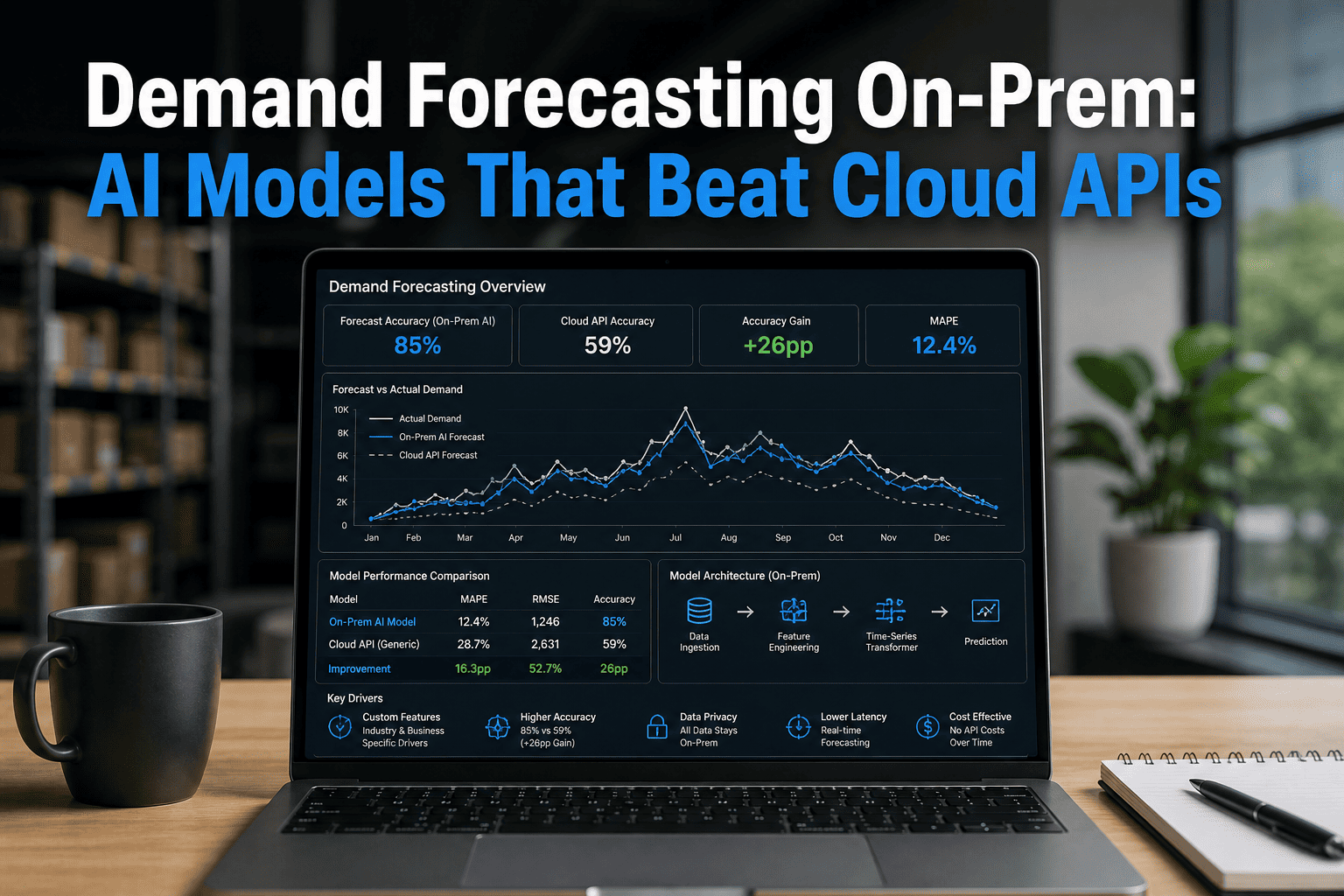
This is the chart most cloud-vendor decks won't show you. Below is the rough breakeven curve for a representative GPT-class workload — Foundry Standard pricing vs a single on-prem RTX PRO 6000 workstation amortized over 36 months. Your specifics will differ; the shape won't.
For Most Enterprises, the Right Answer Is "Both"
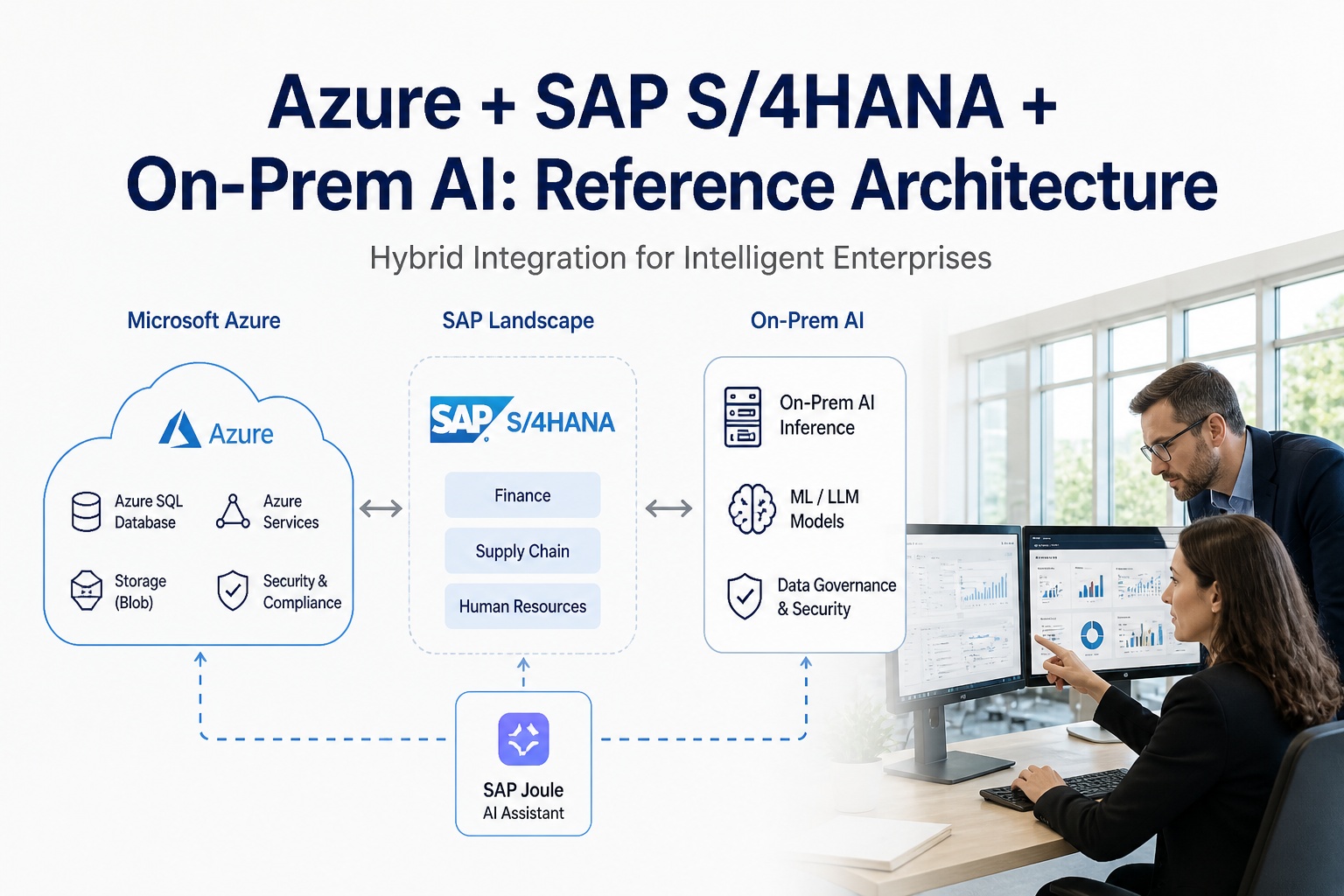
The cleanest architecture we see in production isn't pure cloud or pure on-prem — it's a hybrid where each workload runs where the math wins. Book a 30-minute call with our solution architects to map this against your environment.
- Multi-model prototyping & eval
- Bursty internal copilots
- M365 / D365 / Teams agents
- Public-data RAG & search
- Standard pay-as-you-go pricing
- Sustained inference serving
- Regulated & sovereign data
- Domain fine-tuning iteration
- Plant-floor & edge inference
- Predictable amortized cost
Why iFactory Is the Right Partner for This Decision
Most cloud vendors push cloud. Most hardware vendors push hardware. We've shipped 1000+ enterprise AI deployments — pure cloud, pure on-prem, and every hybrid permutation. We have no quota tied to your answer. Talk to our solution architects and we'll bring real benchmarks, your edition, and a costed plan.
Vendor-Neutral TCO Modeling
We model Foundry Standard, Foundry PTU, on-prem DGX Spark, RTX PRO 6000, and hybrid combinations against your actual token volume forecast. The recommendation is whichever wins — not whoever sponsors us.
Foundry-Native Implementation
If Foundry wins, we deploy it correctly the first time — RBAC, networking, Azure Policy integration, Defender for Cloud, content filtering, observability via Azure Monitor, and the Foundry SDK in your IDE.
On-Prem & Hybrid Architecture
If on-prem wins, we ship the entire stack — DGX Spark or RTX PRO 6000 hardware, model selection, fine-tuning pipeline, MLOps, observability, and integration with your SAP, MES, or ERP environment.
SAP, MES & ERP Integration
50+ pre-built connectors for industrial OT, ERP, and PLM systems. Whether your AI runs in Foundry or on-prem, it talks to your real plant-floor and business data on day one — not after a six-month integration project.
Sovereign-Grade Compliance
Healthcare PHI, defense IL5, EU GDPR, financial trade secrets. We've shipped regulated AI deployments behind air-gaps, in cleanrooms, and across multi-jurisdiction residency boundaries.
Lifecycle Continuity
Models evolve, prices shift, hardware refreshes, GPU generations transition (Blackwell to Rubin). We don't ship and disappear — engineers stay engaged through the full 3–5 year deployment lifecycle.
Azure AI Foundry vs On-Prem — Frequently Asked
Get a Costed Foundry vs On-Prem Recommendation in 30 Minutes
Foundry, on-prem, or hybrid? The right answer depends on your token volume, model mix, data sensitivity, and integration constraints — not on whoever pitches you first. Bring us your scenario; we'll model the TCO, sketch the architecture, and give you a defensible recommendation backed by 1000+ enterprise deployments.