A jet bridge motor fails, a technician repairs it, and the work order gets closed. Six weeks later the same motor fails again, a different technician repairs it a different way, and that work order gets closed too. Multiply that pattern across thousands of assets and years of work orders, and most airports are sitting on a mountain of evidence about why equipment keeps breaking down — evidence no one has the time to read. AI failure pattern detection changes that by mining every work order, inspection note, and condition reading an airport already generates and surfacing the recurring patterns a technician would otherwise have to notice by memory, which is why maintenance teams are working with iFactory's airport reliability engineering team to put that buried history to work.
Stop Diagnosing The Same Failure From Scratch Every Time
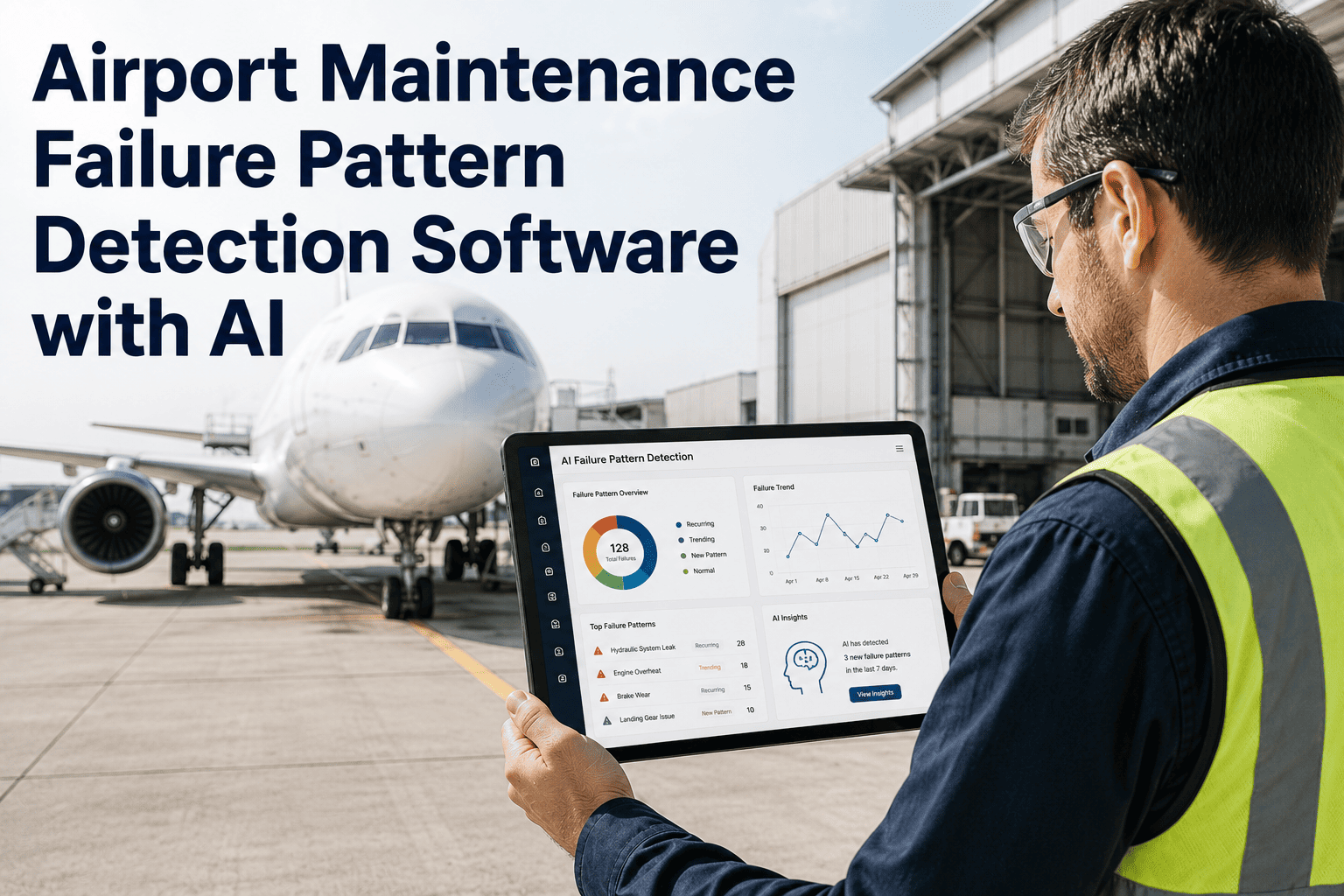
AI mines your work order history, inspection records, and condition data to surface recurring failure patterns automatically — so technicians walk up to a fault already knowing what it probably is, what's caused it before, and what actually fixed it last time, instead of starting the diagnosis from a blank page.
Repeat Failures Aren't Bad Luck — They're Undetected Patterns
A significant share of equipment failures at any large facility are not new problems. They're the same underlying issue resurfacing because the root cause was never actually identified, only patched. A technician clears the immediate symptom, closes the work order, and moves to the next call — reasonably, because diagnosing a deep root cause during an active fault on a live operational floor is rarely realistic. The pattern only becomes visible when someone looks across dozens of work orders on the same asset at once, and almost nobody has the time to do that manually.
The problem compounds because the evidence is scattered across different technicians, different shifts, and sometimes different terminals, each closing their own version of the same fault without ever seeing the others. One technician's note might say "reset breaker," another's might say "checked wiring, seemed fine," and a third might mention a part that was swapped — three fragments of the same story that never get read together. By the time the pattern would be obvious to a human reviewer, it usually takes a formal, after-the-fact root cause investigation to even go looking, and those investigations are typically reserved for the handful of failures that were expensive or visible enough to justify the engineering time.
This is the specific gap AI failure pattern detection closes. It doesn't replace the technician's diagnostic judgment — it hands them the pattern their own team already documented across years of work orders, so the fifth occurrence of a fault gets treated as the fifth occurrence instead of a fresh mystery. The value isn't a smarter algorithm replacing an engineer; it's an engineer no longer starting every diagnosis from zero, and a maintenance program that stops paying, quietly and repeatedly, for the same undiagnosed problem.
How Failure Pattern Detection Actually Works, Step By Step
AI pattern detection is a pipeline, not a single black-box output. The five stages below are what happens between "years of maintenance history" and "a technician sees a ranked, evidence-backed cause the moment a new fault is logged." Understanding each stage matters because it's also where trust gets built — a technician is far more willing to act on a recommendation when they can see the chain of evidence behind it rather than a single unexplained score.
Six Data Sources Airports Already Have That Feed Pattern Detection
The most common misconception about AI failure detection is that it requires a full sensor retrofit before it can help. In reality, most of the signal already exists in data airports generate every day — the model's job is connecting it, not replacing it. Whatever data maturity your operation is at today is a valid starting point; the six sources below simply describe where the analysis gets richer as more of them come online.
Four Types Of Patterns Technicians Never Have Time To Find Manually
Not every hidden pattern looks the same. The four categories below are the recurring types of insight airport reliability teams consistently get once years of maintenance history are actually analyzed together, and each one points a technician toward a different kind of fix.
Why Reading Work Orders By Hand Can't Keep Up With The Backlog
Most maintenance teams already do root cause analysis — the question is whether it happens after a handful of high-visibility failures, or continuously, across every asset, before the failure count justifies pulling an engineer off other work. The comparison below is where those two approaches structurally diverge, and it's usually the small, unglamorous faults sitting in the left column that quietly cost a fleet the most over a full year.
| Dimension | Manual Root Cause Review | AI Pattern Detection |
|---|---|---|
| Coverage Across Asset Fleet | Limited to a few flagged high-cost failures | Every asset, continuously |
| Time To Surface A Pattern | Weeks, if it's investigated at all | Seconds, at the moment of the next work order |
| Data Actually Reviewed | Recent memory and a handful of records | Full multi-year work order and inspection history |
| Root Cause Classification | Best-guess judgment call | Scored against maintenance, design, and wear-out causes |
| Consistency Across Technicians | Varies by individual experience | Same evidence base delivered to every technician |
| Trigger For Investigation | Usually after a costly or visible failure | As soon as a matching pattern accumulates |
The gap matters most for the failures that never get flagged as "big enough" to justify a formal RCA — the small, recurring, moderately annoying faults that quietly consume the most cumulative labor hours across a fleet. AI pattern detection catches exactly those, because it isn't waiting for a failure to look expensive before it looks for the pattern.
Run Your Work Order History Through The Pattern Engine
Book a walkthrough and see how iFactory's failure pattern detection platform mines your existing work order history to surface recurring faults, precursor signals, and ranked root causes your team hasn't had time to connect yet.
A Walkthrough Of One Real Pattern Being Surfaced
Abstract descriptions of pattern detection are less useful than seeing the shape of an actual finding. The walkthrough below is a representative example of how a recurring fault moves from scattered work orders to a ranked, actionable cause, following the same four-row structure your own reliability team would use to document a real investigation.
The fix itself, once identified, was straightforward — the correct-rated part cost no more than the incorrect one had. What made the difference was surfacing the pattern at all. Six technicians across eighteen months had each independently reset the same breaker without ever seeing the other five entries, and the fault would very likely have continued indefinitely without a system connecting those records together.
The thing that surprises maintenance leaders most isn't that AI can find patterns — it's how much pattern was already sitting in their own data, undiscovered, for years. Every airport I've worked with has technicians who are excellent diagnosticians individually, but no single person reads every work order across every asset, so the pattern that's obvious across six incidents stays invisible when each incident is reviewed on its own. What changes the diagnostic conversation is putting that connected history in front of the technician at the exact moment they're standing at the asset, not in a report three weeks later. That timing is the whole difference between a tool that's interesting and a tool that actually changes how fast a fault gets fixed correctly the first time.
Frequently Asked Questions
Give Every Technician The Pattern Your Team Already Documented
iFactory's failure pattern detection platform mines your work order history, inspection records, and condition data to surface recurring faults and ranked root causes automatically, so the next repeat failure gets fixed permanently instead of patched again — and your technicians spend their diagnostic time on the failure in front of them, not the paperwork behind it.