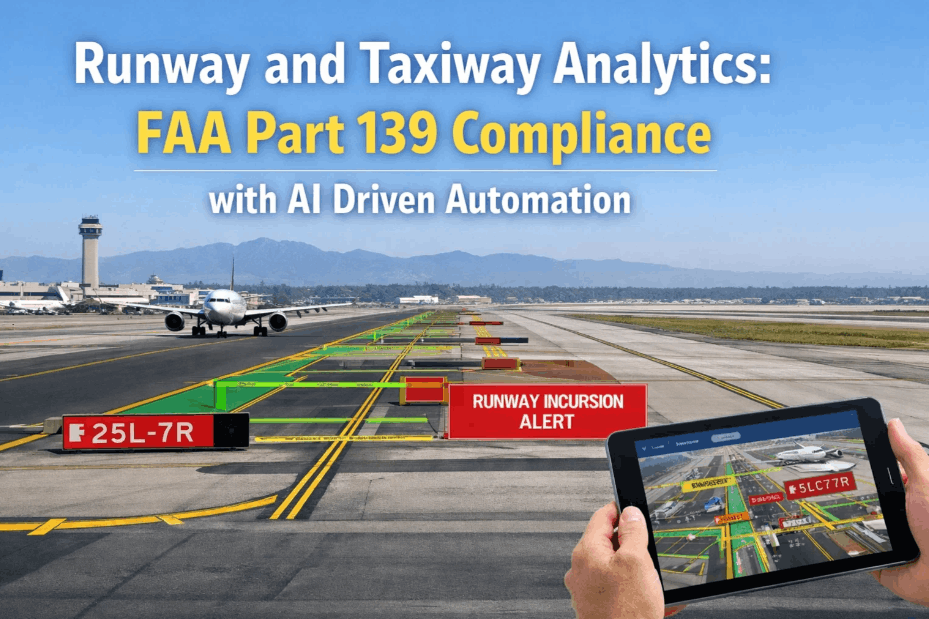
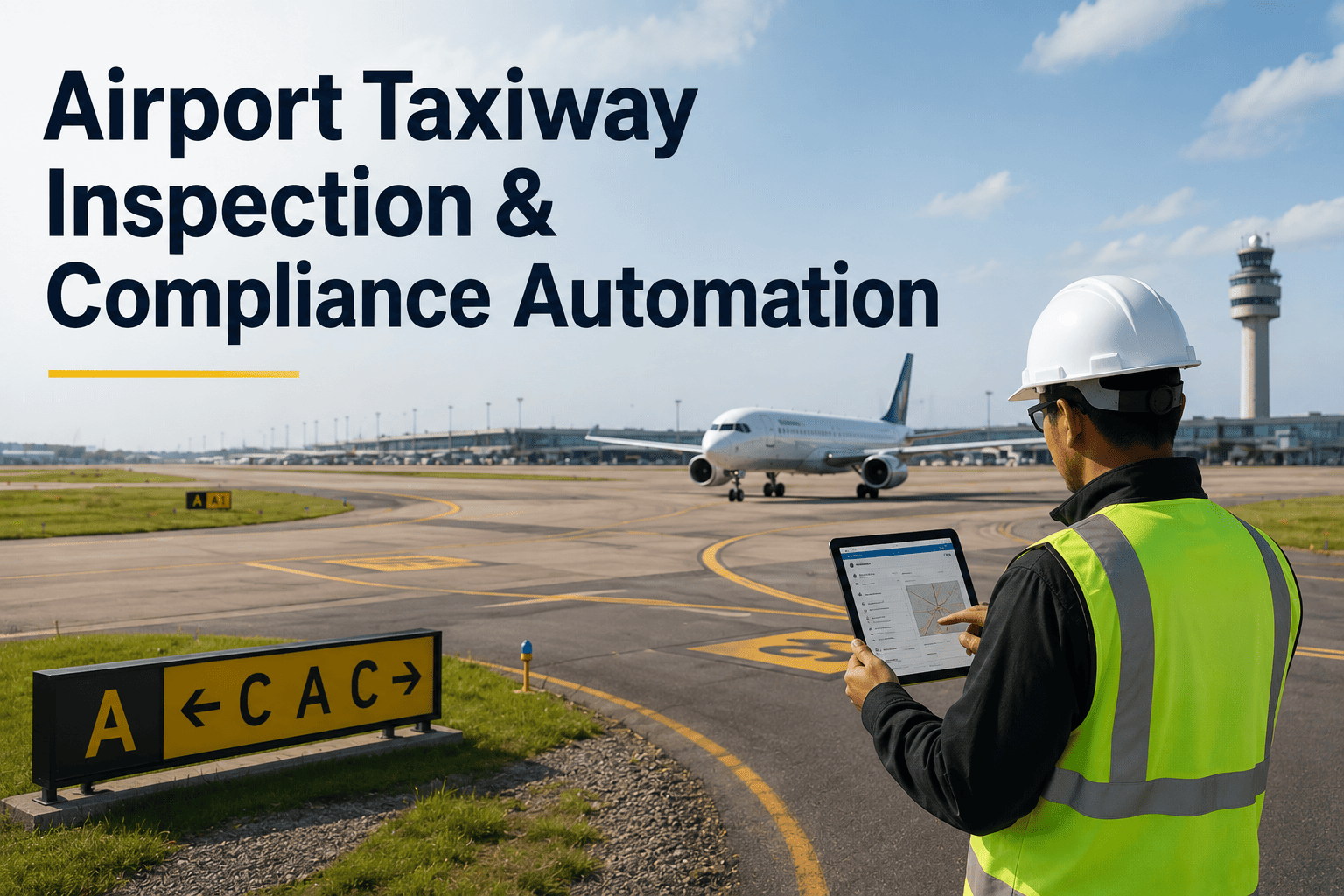
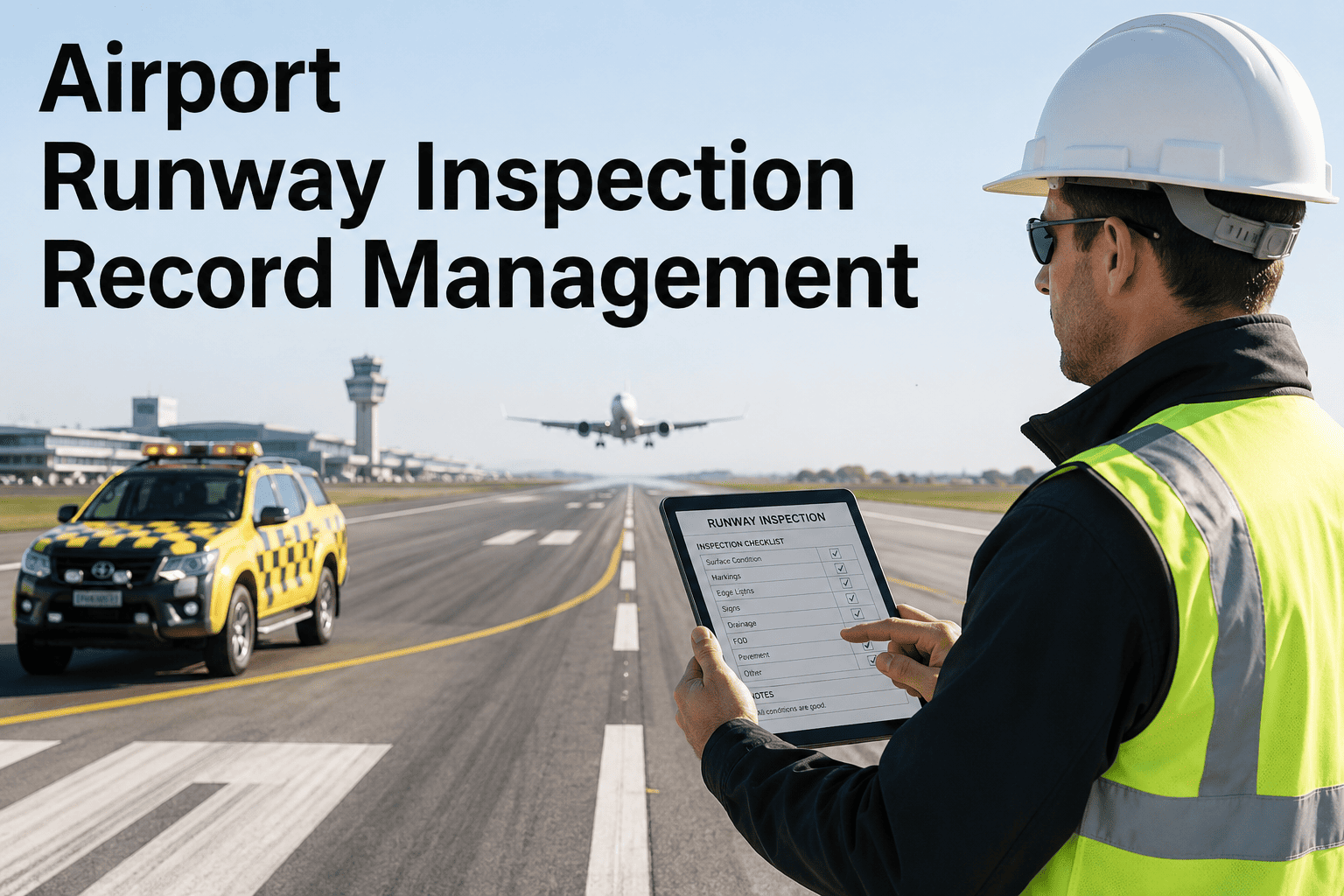
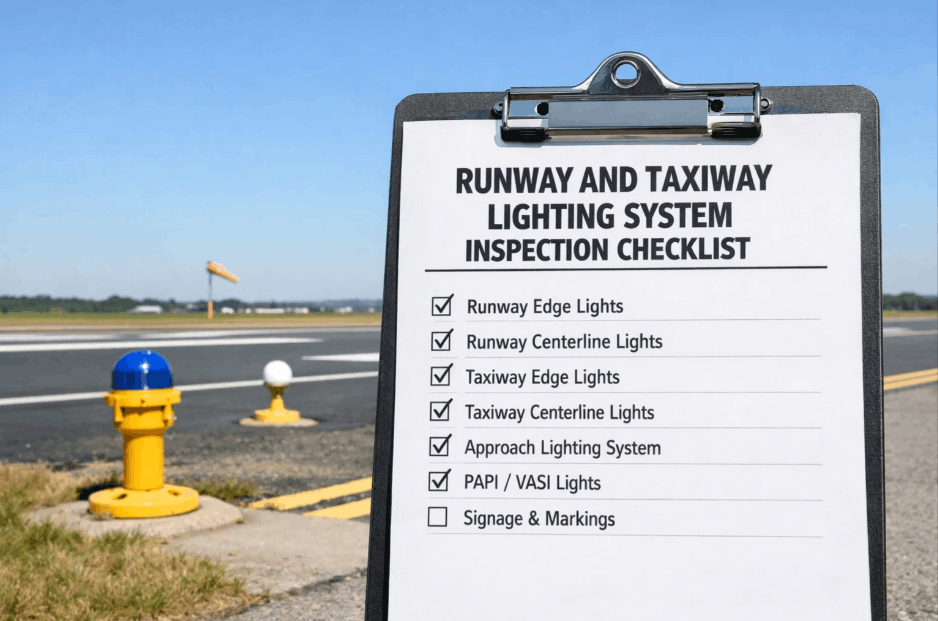
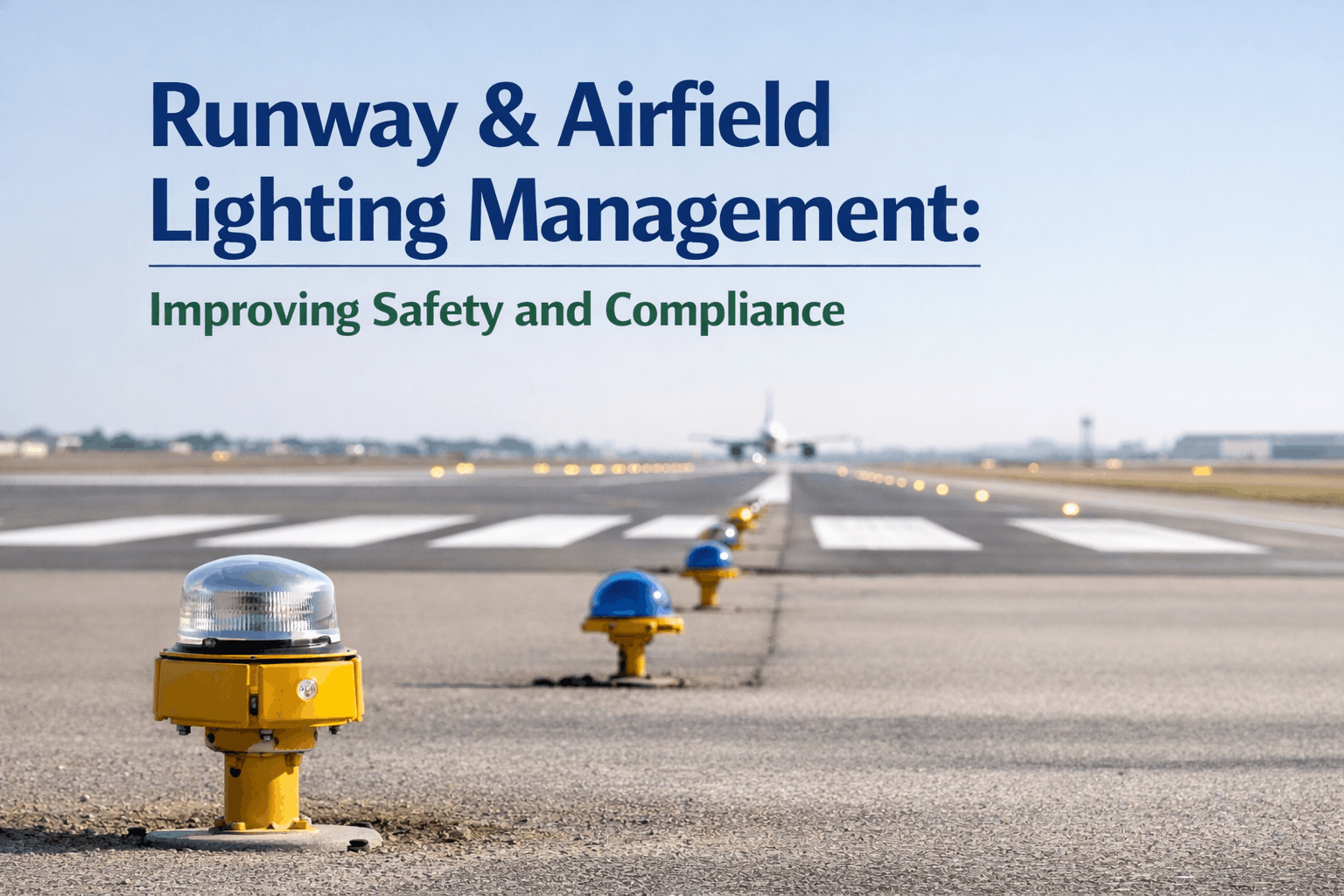
Runway and taxiway analytics is redefining how airports achieve FAA Part 139 compliance — transforming labor-intensive manual inspections into automated, AI-driven workflows that deliver real-time pavement condition data, lighting system status, marking visibility scores, and FOD detection alerts. For airport operators still managing airfield self-inspection programs with paper checklists and spreadsheet logs, the compliance risk is escalating. Book a demo to see how iFactory's AI-driven compliance platform closes the gap between your current inspection process and FAA audit-ready documentation standards.
Automate Your FAA Part 139 Runway Inspections
iFactory's AI-driven runway and taxiway analytics platform gives your airfield team real-time pavement condition scores, automated inspection workflows, and one-click FAA audit documentation — all in a single connected system.
139
FAA Part 139 Certificate Requirements for Commercial Airports
72%
Reduction in Inspection Documentation Errors with Digital Platforms
$50K+
Average FAA Civil Penalty Per Violation Finding
3×
Faster Audit Pack Generation vs. Paper-Based Systems
What Is Runway and Taxiway Analytics?
Runway and taxiway analytics refers to the continuous collection, processing, and interpretation of airfield surface condition data — encompassing pavement structural integrity, surface friction levels, marking visibility degradation, lighting system performance, and foreign object debris (FOD) detection — through integrated IoT sensors, AI vision systems, and automated inspection platforms. Unlike traditional airport self-inspection programs that depend on scheduled manual walkthroughs, airfield analytics AI-driven platforms generate condition intelligence continuously, flagging degradation trends weeks before they reach FAA-reportable thresholds. The result is a compliance posture that is proactive rather than reactive — and a documentation trail that withstands the most rigorous FAA Part 139 certification audits.
FAA Part 139 Compliance: What Airport Operators Must Document
FAA Part 139 imposes a comprehensive set of airfield inspection, maintenance, and documentation requirements on certificated airports serving commercial air carriers. Compliance is not a one-time event — it is a continuous operational obligation that requires systematic inspection programs, real-time corrective action tracking, and audit-ready records spanning multiple years. Airports failing to demonstrate consistent compliance risk civil penalties, certificate suspension, and the reputational consequences of an FAA enforcement action. With runway analytics FAA Part 139 automation, operators can eliminate the documentation gaps that most commonly trigger compliance findings.
Common Compliance Gaps
✗ Paper inspection logs with missing sign-offs and date gaps
✗ No systematic tracking of corrective action closure
✗ Subjective pavement condition assessments without data backing
✗ FOD detection relying entirely on visual sweeps
✗ Lighting outage records scattered across shift reports
What Audit-Ready Operations Look Like
✓ Automated digital inspection records with timestamped evidence
✓ End-to-end corrective action tracking from finding to closure
✓ Objective pavement condition index (PCI) scoring via AI analytics
✓ Continuous FOD detection alerts with photographic documentation
✓ Unified lighting system health dashboard with outage history
Core Capabilities of an AI-Driven Airfield Analytics Platform
Effective runway inspection AI-driven platforms are not single-function tools. They are integrated data architectures that span surface condition monitoring, lighting system analytics, marking visibility assessment, FOD management, and compliance documentation — all connected in a unified platform accessible to airfield operations, maintenance, and safety teams. Understanding these core capabilities helps airport operators identify gaps in their current inspection program and evaluate the scope of improvement available. If your team is ready to modernize, book a demo with iFactory's airfield compliance specialists today.
01
Pavement Analytics
Airport Pavement Analytics and PCI Scoring
AI-driven pavement condition assessment continuously calculates Pavement Condition Index (PCI) scores for each runway and taxiway segment — using high-resolution surface imagery, crack detection algorithms, and distress classification models trained on FAA pavement engineering standards. Trend analysis identifies segments approaching maintenance intervention thresholds before they generate airworthiness concerns.
02
Lighting Analytics
Runway and Taxiway Lighting System Analytics
Taxiway lighting analytics platforms monitor individual light unit operational status, photometric output levels, and circuit integrity in real time — automatically generating maintenance work orders when units fall below FAA-required intensity thresholds. Runway lighting analytics dashboards give tower and operations teams instant visibility of the full airfield lighting network status without manual circuit checks.
03
Marking Analytics
Taxiway Marking Analytics and Retroreflectivity Monitoring
Taxiway marking analytics systems use AI vision processing to continuously assess the retroreflectivity and contrast of runway and taxiway markings — flagging segments where paint degradation has reduced marking visibility below FAA Advisory Circular standards. Proactive repainting recommendations replace calendar-based schedules, ensuring markings are always within compliance thresholds.
04
FOD Management
AI-Powered FOD Management for Airport Runways
FOD management airport systems deploy continuous AI vision scanning of active runway and taxiway surfaces — detecting foreign object debris in real time, classifying object type and size, and dispatching immediate alerts to operations teams. Automated FOD incident logs provide full documentary evidence for Part 139 self-inspection records and safety management system (SMS) reporting.
Runway Surface Inspection: From Manual Walkthroughs to Continuous AI Monitoring
Traditional runway surface inspection programs require airport operations personnel to conduct vehicle-based perimeter and surface inspections at defined intervals — typically twice daily under FAA Part 139 requirements. While these inspections remain a regulatory obligation, their value as a safety and maintenance intelligence tool is fundamentally limited by the time between inspections, the subjectivity of visual assessment, and the absence of systematic trend tracking. AI-driven runway condition assessment fills these gaps by providing continuous surface monitoring between scheduled inspections, delivering objective condition data rather than subjective visual observations, and automatically populating the digital inspection record that Part 139 compliance requires. Airports that have integrated AI-powered runway surface inspection tools report significant reductions in the number of undetected surface defects reaching safety-reportable severity.
Runway Surface Condition
Daily self-inspection
Subjective visual gaps
Continuous AI crack detection + PCI scoring
Airfield Lighting Systems
Nightly outage check
Shift handover data gaps
Real-time photometric monitoring + auto work orders
Pavement Markings
Periodic visibility check
Calendar-based schedules
AI retroreflectivity scoring + proactive alerts
FOD Detection
Pre/post-movement sweeps
Human detection limits
Continuous AI vision scanning + instant alerts
Corrective Action Records
Full documentation trail
Paper records fragmented
End-to-end digital tracking from finding to closure
Airport Pavement Management: The Analytics Advantage
Airport pavement management is one of the highest-cost maintenance obligations in airfield operations — and one of the most consequential for safety and regulatory compliance. Runways and taxiways subject to heavy aircraft loads, freeze-thaw cycles, and jet blast exposure degrade in complex, non-linear patterns that simple calendar-based inspection schedules cannot adequately capture. AI-driven airport pavement analytics changes this by delivering continuous condition intelligence that drives smarter maintenance prioritization, more accurate capital planning, and earlier intervention at lower cost. Airports using predictive pavement management analytics consistently report extended pavement life cycles and reduced emergency repair expenditures. Want to see what data-driven pavement management looks like in practice? Book a demo with iFactory's airfield analytics team.
FAA Advisory Circular 150/5380-6 on Airport Self-Inspection programs explicitly requires airports to develop systematic inspection procedures, maintain complete records, and demonstrate corrective action follow-through. Digital airfield analytics platforms that automate inspection documentation and corrective action tracking are no longer an operational luxury — they are the most reliable mechanism available for consistent Part 139 compliance across all shifts and all weather conditions.
Airfield Compliance Documentation: The Audit-Readiness Standard
FAA Part 139 certificate holders are subject to periodic certification inspections conducted by FAA Airport Certification Safety Inspectors. These inspections examine not just the physical condition of airfield infrastructure, but the quality and completeness of the airport's self-inspection program documentation. Inspectors review inspection frequency, corrective action records, lighting outage logs, and pavement maintenance history — and compliance gaps in any category can generate findings that require immediate corrective action and formal response. For airports using airfield compliance documentation systems built on AI-driven analytics, audit preparation shifts from a multi-day manual record assembly exercise to a single-click audit pack generation process. Explore how iFactory's compliance tracking feature can deliver this capability at your airport.
1
Automated Self-Inspection Program Scheduling
Digital inspection schedules auto-generate based on FAA Part 139 frequency requirements — ensuring daily runway inspections, nightly lighting checks, and periodic pavement assessments are never missed, with real-time compliance dashboards showing inspection completion rates across all shifts and inspection categories.
Core Compliance Feature
2
Timestamped Photo Evidence for Every Inspection Finding
Every inspection finding captured through the mobile inspection platform is automatically tagged with GPS location, timestamp, inspector ID, and photographic evidence — creating an immutable audit trail that demonstrates the systematic inspection discipline FAA certification inspectors require.
Core Compliance Feature
3
Corrective Action Workflow Automation
When an inspection finding is logged, the platform automatically generates a work order, assigns it to the appropriate maintenance team, sets an SLA-based completion deadline, and tracks closure through to verified completion — ensuring the corrective action follow-through that is a critical Part 139 compliance requirement.
High-Value Capability
4
One-Click FAA Audit Pack Generation
When an FAA certification inspection is scheduled, the platform generates a complete audit documentation package — covering the full inspection history, corrective action records, lighting outage logs, and pavement maintenance records — in a structured format that directly addresses each Part 139 inspection criterion.
High-Value Capability
FOD Management: AI Detection vs. Traditional Airport FOD Programs
Foreign object debris on active runway and taxiway surfaces represents one of the highest-consequence safety risks in airfield operations. A single undetected FOD event can result in jet engine ingestion damage running into millions of dollars, potential hull loss, and regulatory scrutiny that extends far beyond the immediate incident. Traditional FOD management airport programs rely on scheduled vehicle sweeps and visual inspection — an approach fundamentally limited by human detection capability under variable lighting, weather, and operational tempo conditions. AI-powered FOD detection systems eliminate these limitations by providing continuous visual scanning of active surfaces, detecting objects as small as 20mm in real time, and dispatching immediate operations team alerts with precise location coordinates and photographic evidence for the self-inspection record. This represents a qualitative leap in both airfield safety assurance and Part 139 documentation quality.
Implementing Runway and Taxiway Analytics: A Phased Deployment Approach
Successful deployment of airport runway analytics follows a structured implementation pathway that manages integration complexity, delivers early compliance wins, and scales systematically across the full airfield asset base. Airports with existing CMMS platforms, SCADA systems, or airfield lighting control systems can accelerate deployment through pre-built integration layers that connect iFactory's analytics engine to your existing operational technology stack. Book a demo to begin your implementation scoping conversation.
Phase 1
Airfield Asset Registry and Baseline Inspection Migration (Weeks 1–4)
Complete digital asset register covering all runway and taxiway segments, lighting circuits, marking zones, and drainage infrastructure. Historical inspection records migrated to the digital platform. Mobile inspection app deployed to operations team with FAA Part 139 inspection templates pre-configured.
Phase 2
AI Analytics Activation and Alert Calibration (Weeks 4–12)
IoT sensors deployed on priority lighting circuits and pavement monitoring zones. AI pavement condition models begin generating PCI scores and trend alerts. FOD detection systems activated on primary runway surfaces. Corrective action workflows integrated with maintenance team scheduling.
Phase 3
Full Airfield Network Integration and Compliance Automation (Months 3–9)
Sensor coverage extends to the full runway and taxiway network. Taxiway marking analytics and retroreflectivity monitoring activated. Automated compliance reporting generates real-time Part 139 adherence scores. Audit pack generation capability fully operational with complete historical documentation trail.
Frequently Asked Questions: Runway and Taxiway Analytics
What does FAA Part 139 require for runway self-inspections?
FAA Part 139 requires certificated airports to conduct daily self-inspections of all movement areas — including runways, taxiways, and aprons — checking pavement condition, lighting operability, marking visibility, signage, drainage, and FOD presence. Inspection records must be maintained and made available to FAA inspectors on request. Digital inspection platforms automate the scheduling, documentation, and corrective action tracking that these requirements demand.
How does AI-driven runway inspection differ from traditional manual inspection?
Traditional manual runway inspection relies on scheduled vehicle-based walkthroughs with subjective visual assessment and paper-based documentation. AI-driven runway inspection provides continuous surface condition monitoring, objective PCI scoring based on image analysis, automated corrective action workflows, and a complete digital audit trail — eliminating the documentation gaps and subjectivity that most commonly generate FAA Part 139 compliance findings.
What is Pavement Condition Index (PCI) and why does it matter for Part 139?
Pavement Condition Index (PCI) is a standardized numerical rating (0–100) of pavement structural integrity based on the type, extent, and severity of surface distresses. While FAA Part 139 does not mandate a specific PCI threshold, consistent PCI tracking provides objective, defensible evidence of systematic pavement management — the kind of documentation that distinguishes compliant airports in FAA certification inspections. AI-driven airport pavement analytics platforms continuously calculate and trend PCI scores at the segment level.
Can runway analytics platforms integrate with existing airport management systems?
Yes. Modern airfield analytics platforms are designed with open API architectures that connect to existing CMMS platforms, airfield lighting control systems, SCADA networks, and airport operations management systems. Integration complexity depends on the age and openness of existing systems, but experienced implementation teams routinely achieve full integration within the Phase 1–2 deployment window.
How does AI-powered FOD detection support Part 139 compliance?
FAA Part 139 requires airports to maintain runway and taxiway surfaces free of foreign object debris as part of the daily self-inspection obligation. AI-powered FOD management systems generate automated, timestamped incident records every time a FOD event is detected and cleared — creating the continuous safety assurance documentation that Part 139 compliance reviews examine, and providing a level of detection reliability that manual visual sweeps cannot match.
One Platform for Runway Analytics, Part 139 Compliance, and Airfield Safety
iFactory connects runway and taxiway analytics, FAA Part 139 self-inspection workflows, pavement condition management, FOD detection, and compliance documentation into a single aviation-grade platform. Mobile-ready, audit-proof, and built for zero-deficiency airfield operations.