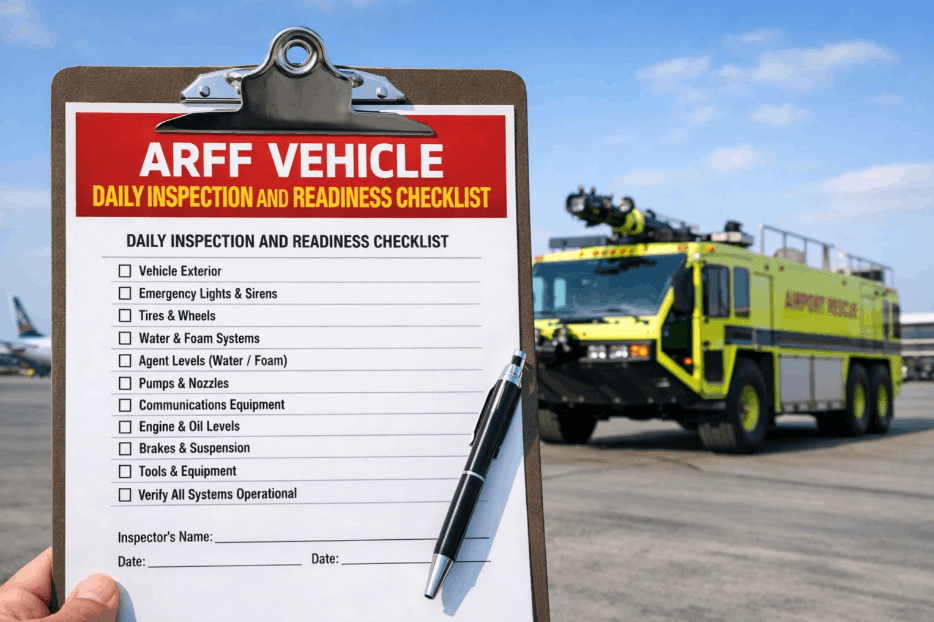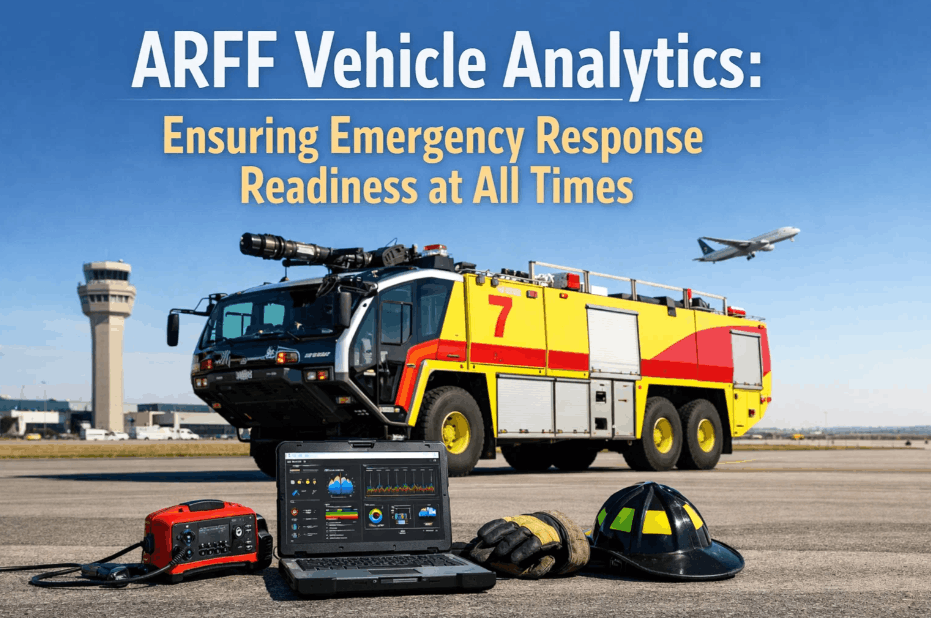
Aircraft Rescue and Firefighting (ARFF) vehicle readiness in 2026 is no longer just a maintenance task—it is a critical component of continuous FAA Part 139 compliance that dictates an airport's operational category. With the FAA increasing the frequency of unannounced inspections, the ability to prove 24/7 vehicle serviceability, pump performance, and foam proportioning accuracy is non-negotiable. Traditional paper-based logbooks and manual inspection rounds create documentation gaps that can lead to immediate index downgrades or operational restrictions. Modern ARFF vehicle analytics platforms close these gaps by providing real-time performance tracking, automated compliance documentation, and predictive alerts before a mechanical failure becomes a regulatory violation. Airport safety directors looking to ensure uninterrupted readiness can schedule a Part 139 readiness audit to validate their current ARFF posture.
Why Conventional ARFF Maintenance Fails to Meet Modern FAA Compliance Standards
FAA Part 139.319 requires that all ARFF vehicles be operationally capable and able to reach any point on the farthest runway within 3 to 4 minutes during air carrier operations. When ARFF maintenance depends on manual checks performed between calls, hidden failures—such as pump seal degradation or foam concentration drift—often go unnoticed until a training drill or, worse, an actual emergency. This reactive approach creates significant regulatory liability and threatens airport service levels.
AI-driven ARFF analytics shift the focus from "documenting work" to "validating readiness." By integrating with vehicle sensors and pump controllers, the platform establishes continuous baselines for engine health, agent pressure, and response time metrics. The result is an ARFF fleet that is perpetually audit-ready, with every daily check and system test digitally verified and GPS-tagged for total transparency.
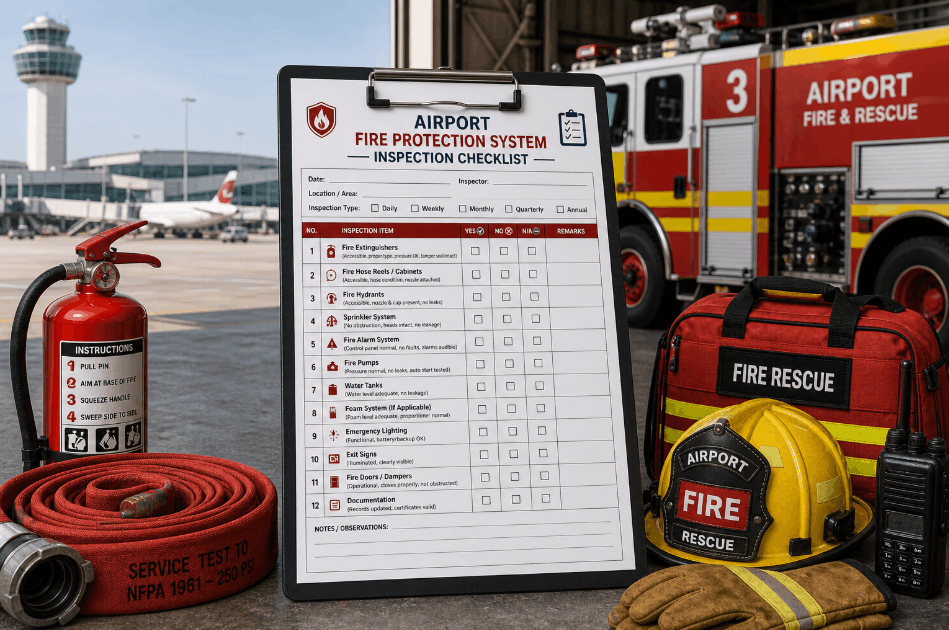
Paper daily logs are prone to "checklist fatigue" and missing entries. Digital platforms enforce shift-by-shift validation of fuel, water, foam, and communication systems with mandatory photo evidence.
Foam systems can drift out of FAA-required concentration ranges between annual certification tests. AI monitors dosing pump performance and nozzle pressure to detect drift signatures weeks before a failure occurs.
Vehicle PM logs stored separately from ARFF operational logs make it impossible to prove readiness to an inspector. AI centralizes all asset health, training, and 139 compliance data into one exportable record.
When a vehicle goes unexpectedly out of service (OOS), the airport index may drop instantly. Predictive analytics identify coolant leaks and electrical faults before they cause an OOS event, allowing for planned repairs.
How ARFF Vehicle Analytics Integrates Equipment Health with FAA Compliance
Linking vehicle performance data to compliance tracking requires an analytics platform that speaks both the language of fire engineering and the language of Part 139 regulation. This requires mapping every critical component—from the turret joystick to the foam tank sensors—to the specific FAA requirement it supports. Book a demo with iFactory to see how this ARFF-specific integration works across your entire fleet.
Digital ARFF Asset & Index Mapping
Every ARFF vehicle is mapped as a critical safety asset, including its agent capacity, index contribution, and FAA-required response time target. This ensures the system recognizes when a single vehicle failure risks a mandatory airport index downgrade.
Real-Time Pump & Foam Performance Baselining
IoT-connected sensors stream pump rotation speeds, discharge pressures, and foam dosing ratios to the AI platform. Baselines are established for every discharge scenario—ensuring that every drill doubles as a comprehensive system health check.
AI Fault Detection for Firefighting Systems
Machine learning models analyze turret response, valve actuation times, and engine performance against failure signatures. When a turret joystick shows intermittent signal loss or a valve sticks, the platform generates a high-priority readiness alert.
Automated Part 139 Log Generation
The platform automatically converts daily inspection data, maintenance work orders, and training drill metrics into FAA-compliant documentation. Every event is timestamped and user-authenticated, creating an immutable record of readiness for inspectors.
Continuous Response Time Monitoring
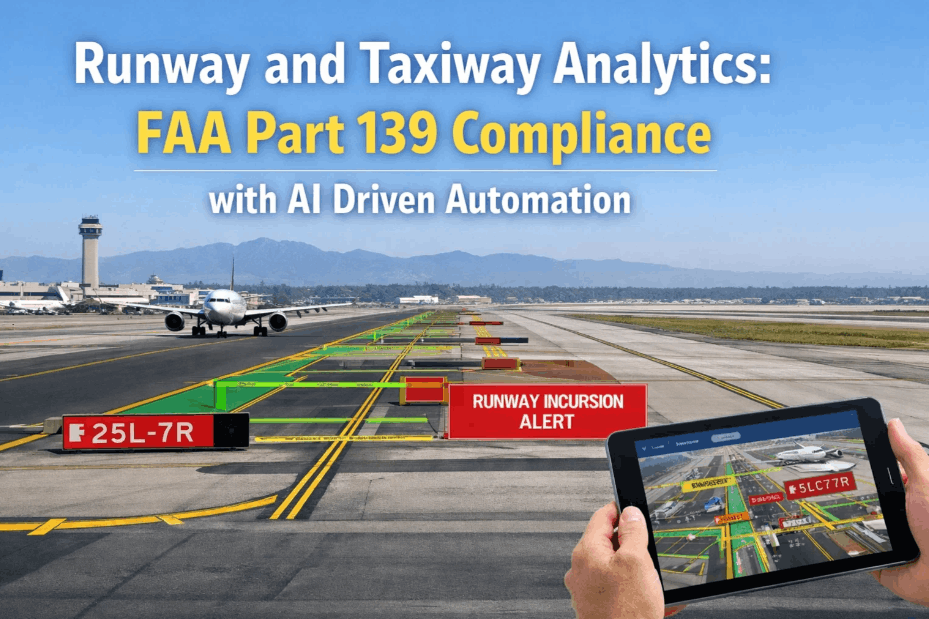
GPS and telematics data from response drills are tracked against FAA's 3-minute and 4-minute time requirements. The system identifies trend risks—such as deteriorating vehicle acceleration or route bottlenecks—before they produce a drill failure.
ARFF Readiness Tracking: Daily Inspections vs. Critical System Performance
Operational capability requires more than just a 24-hour check; it requires a deep dive into the subsystems that must perform flawlessly under pressure. The table below maps common ARFF vehicle systems to their Part 139 requirement and the AI-detectable failure modes that put them at risk.
| ARFF System | FAA Part 139 Requirement | AI-Detectable Failure Mode | Readiness Impact | Regulatory Risk |
|---|---|---|---|---|
| Agent Discharge (Pump) | Specified discharge rate (gpm) | Pump seal wear, cavitational drift | Insufficient fire suppression power | Major Part 139 violation |
| Foam Proportioning | Accurate foam/water ratio | Dosing pump lag, sensor fouling | Ineffective fire blanket formation | Mandatory index downgrade |
| Turret / Nozzle Ctrl | Proper discharge pattern/aim | Joystick signal drift, actuator wear | Delay in suppression delivery | Safety risk, audit finding |
| Drivetrain / Chassis | Response time target alignment | Acceleration lag, coolant degradation | Failure to reach runway in time | OOS event, NOTAM required |
| Comms / Lighting | Full operational visibility/comm | Battery health decay, radio signal drop | Command & control failure in field | Operational capability breach |
| Tires / Brakes | Safe high-speed emergency ops | TPMS anomalies, brake heat signatures | Vehicle instability during response | Safety/Maintenance non-conformance |
| Winter Readiness | Discharge capability < 33°F | Heater element failure, relay sticking | Frozen agent lines/valves | Winter Operations Plan breach |
The AI Advantage for ARFF: What Digital Compliance Delivers That Paper Cannot
FAA auditors and airport certification inspectors look for "unbroken chains of evidence." Manual records fail this test because they lack the metadata and real-time connectivity needed to prove the vehicle was ready *at the exact moment* a flight took off. AI-driven platforms provide the level of granular documentation that today's regulatory environment demands. Talk to our specialists to audit your existing ARFF documentation infrastructure.
Shift inspections (fuel, agent, comms) are captured in the mobile app with timestamps and operator IDs, replacing paper sheets with an immutable, searchable database.
Annual foam concentration certificates are linked to the specific vehicle and updated as new tests are conducted—ensuring compliance is always current in the master dashboard.
When a vehicle's health data indicates a 70% probability of an OOS event within 48 hours, the system alerts the Fire Chief to move reserve vehicles into position proactively.
During an FAA inspection, export all daily logs, maintenance records, and training drill metrics for any vehicle over the last 24 months in seconds, not hours.
Every response drill is automatically documented with the route taken, response time achieved, and agent discharge verification—meeting FAA training record requirements natively.
Real-time foam and water level tracking across the fleet ensures the airport always meets its minimum ARFF Index requirements with automated alerts for refill needs.
Implementing ARFF Vehicle Analytics: A Roadmap to Continuous Readiness
Integrating analytics into an ARFF operation is a phased deployment that respects the critical nature of fire and rescue services. The roadmap below is used by airports to transition from reactive maintenance to an AI-driven, audit-proof compliance model. Leading airports Schedule an ARFF fleet assessment to initialize their modernization plan.
Fleet Audit & FAA Compliance Mapping
Inventory all ARFF vehicles, agents, and monitoring equipment. Map your current ACM requirements to digital inspection templates. This phase ensures the system is tuned to your specific airport category and index needs.
Digital Daily Log Go-Live & Training
Deploy the mobile inspection app to ARFF crews. Establish the daily workflow for shift-change vehicle checks and agent inventory verification. This phase eliminates the paper bind and ensures contemporaneous documentation.
Pump & Agent sensor Data Integration
Connect vehicle telemetry and pump controllers to the AI platform. Collect 8–12 weeks of performance data during routine drills to establish "Operationally Capable" baselines for every vehicle in the fleet.
Predictive Fault Model Calibration
Configure AI models to detect early drift in foam systems, turret response, and drivetrain performance. Set severity-tiered alerts that distinguish "maintenance recommendations" from "mandatory readiness alerts."
Full Audit Readiness & Drill Analytics
Validate the system's one-click audit export capability with a mock FAA inspection. Activate drill analytics to track fleet-wide response time trends against Part 139 requirements for continuous improvement.
ARFF Readiness KPIs: Measuring Compliance Excellence
Effective ARFF leadership requires KPIs that focus on the probability of a successful emergency outcome. The following metrics track the health of your compliance program and identify risks before they become audit findings.
ARFF Analytics Integration Across Airport Categories
Part 139 requirements scale with airport traffic. Whether managing a single vehicle at a GA facility or a massive fleet at a major hub, the need for data-backed readiness remains constant. book a demo with iFactory to explore ARFF solutions for your specific airport size.
Managing fleet-wide response targets across multiple stations. AI-driven dispatch integration and predictive engine health monitoring ensure the massive specialized vehicles are always prepositioned for maximum safety.
With fewer backup vehicles, uptime is critical. Predictive analytics on foam systems and pumps ensure that reserve vehicles are truly ready for service when a primary vehicle goes OOS for scheduled PM.
Merging military mission readiness with civilian Part 139 compliance. Unified data platforms allow for complete documentation that satisfies both command requirements and FAA inspections.
Small teams need automated compliance. Mobile shift logs and automatic agent inventory alerts ensure that the few personnel on site stay focused on safety, not reporting.
Frequently Asked Questions: ARFF Vehicle Analytics & FAA Compliance
Yes. FAA inspectors increasingly prefer digital records because they provide immutable timestamps, GPS verification, and are much easier to cross-reference during an audit. Most modern ACMS solutions satisfy FAA record-keeping requirements for Part 139 inspections.
Yes. Older vehicles can be retrofitted with IoT sensor kits that monitor critical points like pump pressure, battery voltage, and coolant temperature. The mobile app also provides a "standard interface" for manual daily checks, giving you a unified look at the entire fleet.
The system analyzes performance data during daily discharge checks and routine training drills. By comparing current valve actuation speeds and pump pressure buildup against a healthy baseline, AI detects the subtle "fault signatures" of seal wear or electronic lag before they cause a failure.
No. iFactory is designed for use in the field. Large touch targets, voice-to-text input, and photo-based reporting make daily inspections faster than paper. Most crews find that digital tools reduce their overall administrative burden by 50% or more.
The system features "offline-first" capability. Daily inspections and maintenance data are stored locally on the device and automatically synchronized with the cloud once a connection is re-established, ensuring documentation continuity at all times.