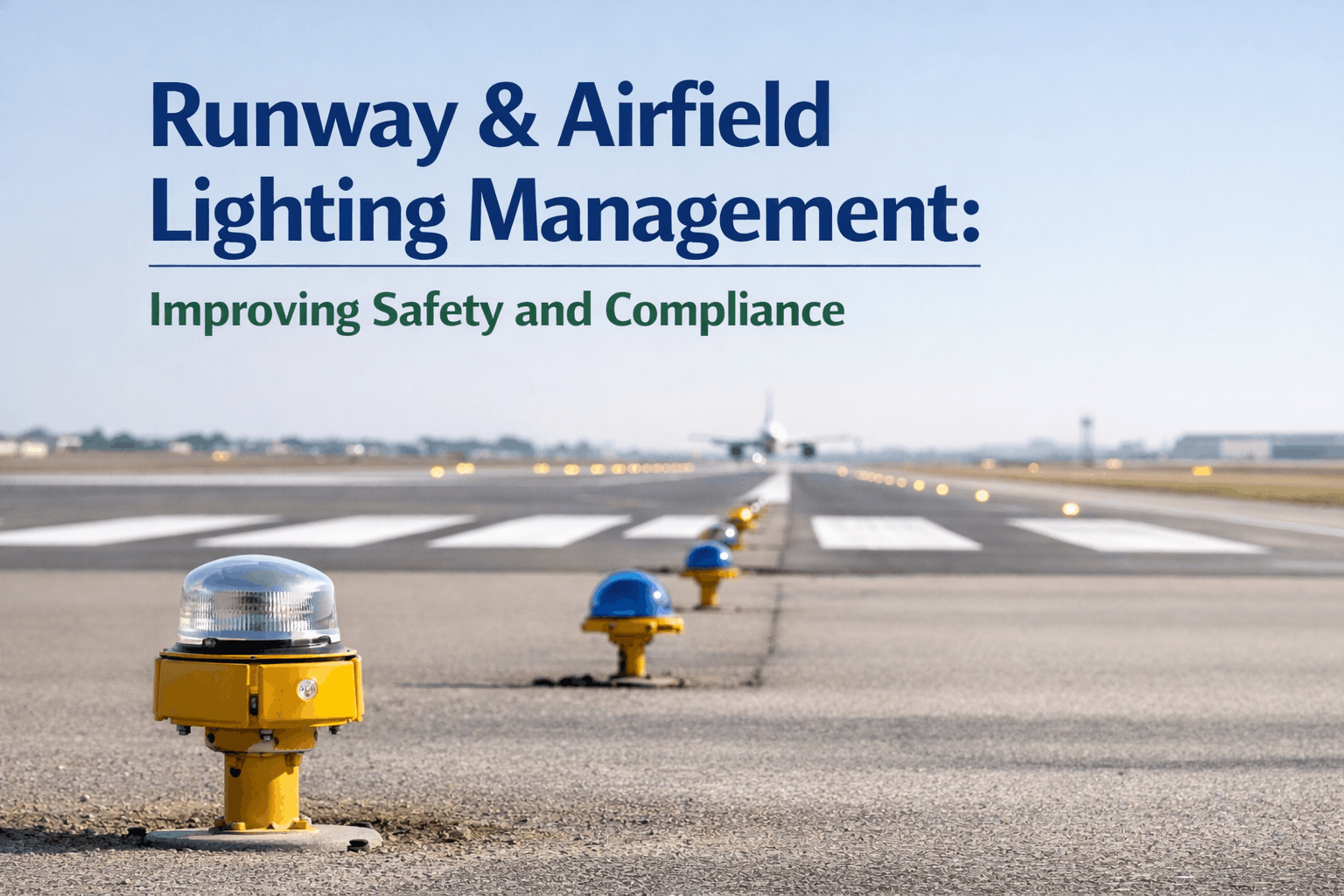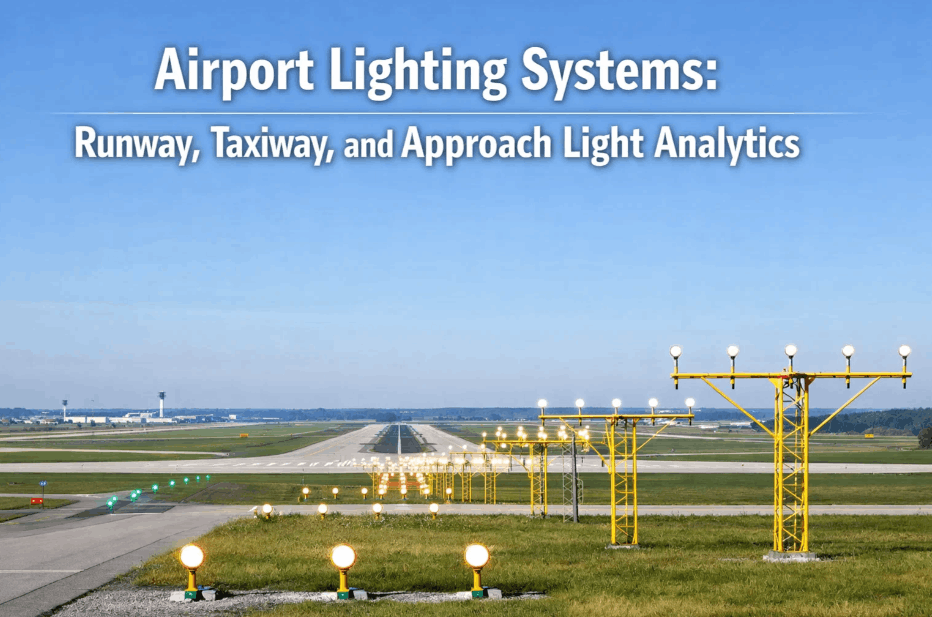
Airfield Ground Lighting (AGL) systems are the primary visual guidance for pilots during low-visibility operations, making their 100% serviceability a non-negotiable safety requirement. Under FAA Advisory Circular 150/5340-26C, airports must maintain rigorous serviceability tolerances—often as high as 95% for runway centerline and CAT II/III edge lights—balancing technical complexity with constant environmental wear. Traditional maintenance programs rely on manual nightly inspections and periodic "Megger" circuit tests, which often fail to detect moisture ingress or photometric degradation until a fixture falls below the 70% intensity threshold. Modern airport lighting analytics platforms bridge this gap by providing real-time circuit health monitoring, automated photometric performance tracking, and predictive failure alerts that ensure year-round FAA compliance. Airfield managers looking to modernize their visual aids can schedule an airfield lighting audit to identify hidden vulnerabilities today.
Why Conventional Airfield Lighting Maintenance Programs Struggle with Compliance
The transition from halogen to LED technology has significantly reduced energy costs, but it has also increased the complexity of circuit diagnostics and photometric alignment. Standard maintenance protocols are often reactive: a fixture is replaced only after it has burned out or been flagged by a pilot. This "fix-on-fail" model creates significant risk during inclement weather when CAT II and CAT III operations depend on precise intensities and beam angles that manual inspections simply cannot verify.
AI-driven lighting analytics shift the paradigm from visual confirmation to electrical and photometric prediction. By analyzing insulation resistance trends and current harmonics within the constant current regulator (CCR) loops, the platform identifies the specific fixtures or circuit segments most likely to fail due to moisture ingress or electrical stress. This allows maintenance teams to execute targeted repairs during low-traffic windows, ensuring the runway is never compromised by unplanned outages. Book a demo to see how iFactory predicts AGL failures before they happen.
Fixture intensity can drop below FAA minimums (70%) due to rubber buildup or lens pitting long before the lamp fails. AI monitors cleaning cycles and photometric test data to flag dim fixtures for early maintenance.
Micro-cracks in secondary cables lead to intermittent "Megger" failures that are hard to pinpoint. AI-driven circuit monitoring analyzes resistance drift over time to locate leaks at specific connector points.
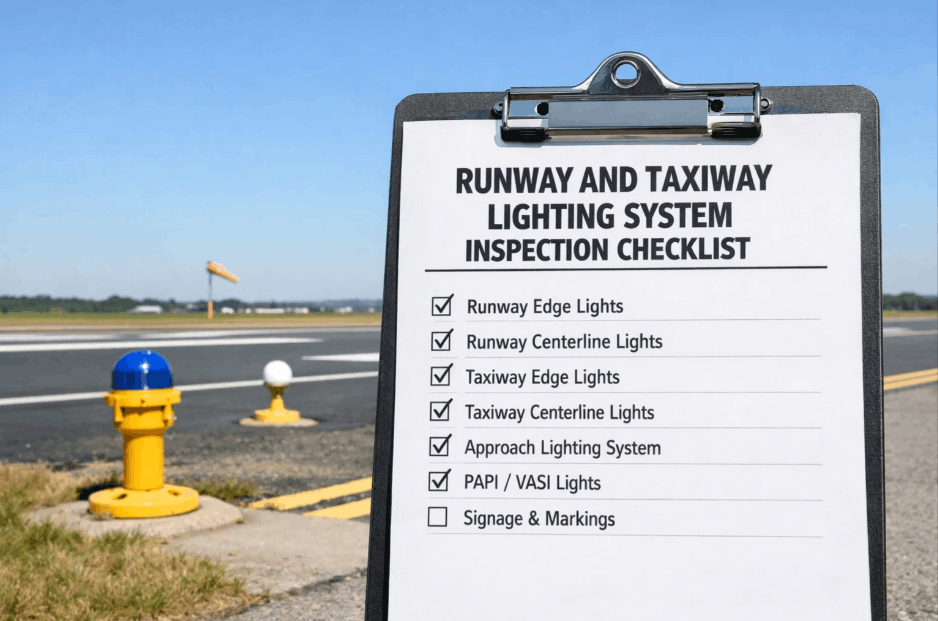
Nightly "drive-bys" are subjective and prone to missing individual taxiway centerline outages. Digital inspection apps with AI image verification ensure every outage is logged, geolocated, and tracked to closure.
Without a digital lifecycle record, it's impossible to track which fixtures are under warranty or which circuits are end-of-life. AI centralizes every lamp change and test result for complete asset traceability.
How AI-Driven Analytics Automate Lighting Compliance and Safety
Modernizing airfield lighting requires a system that integrates natively with your existing Airfield Lighting Control and Monitoring System (ALCMS) while layering on advanced data modeling. This allows for the transition from a "working/not working" visibility to a "healthy/degraded" health score for every fixture. Talk to our engineers to explore how to bridge your ALCMS data with predictive analytics.
Digital Airfield Asset Mapping (GIS)
Every runway, taxiway, and approach fixture is mapped into a georeferenced digital twin. This provides maintenance crews with the exact GPS coordinates for every outage, significantly reducing time spent on the hot runway searching for faulty fixtures.
ALCMS & CCR Real-Time Integration
The platform streams current, voltage, and insulation resistance data directly from the CCRs. AI models analyze these electrical signatures to detect "earth leaks" and circuit imbalances that precede major outages.
Automated Photometric Performance Tracking
Photometric test results (mobile or UAV-based) are ingested and compared against FAA AC 150/5345-46 requirements. The system automatically triggers work orders for any fixture falling into the "degraded" (below 70%) or "unserviceable" category.
Predictive Lifecycle Modeling
By correlating lamp runtime, environmental exposure (pollution/snow), and electrical stress, the AI predicts the remaining useful life of each fixture. This enables "block replacement" strategies that minimize line-entry time.
Compliance Reporting & Audit Archiving
One-click generation of FAA-compliant serviceability reports. The platform stores a complete history of circuit tests, fixture replacements, and photometric results, creating an bulletproof audit trail for FAA Part 139 inspectors.
Airfield Lighting Comparison: Technical Requirements & Maintenance Drivers
Different airfield lighting sections have vastly different maintenance profiles and regulatory tolerances. The table below outlines how AI-driven analytics addresses the unique challenges of each lighting system segment. Schedule a lighting lifecycle assessment to benchmark your facility.
| Lighting Segment | FAA Tolerance (Cat II/III) | Primary Maintenance Driver | AI Predictive Focus | Lifecycle Benefit |
|---|---|---|---|---|
| Runway Centerline (LED) | 95% Serviceable | Rubber buildup, moisture ingress | Photometric intensity drift | Reduces unneeded cleaning by 30% |
| Runway Edge / TDZ | 95% Serviceable | Snow removal damage, lens pitting | Circuit insulation resistance | Locates earth leaks to +/- 5 fixtures |
| PAPI / VASI Systems | 100% Serviceable | Alignment drift, sensor fouling | Vertical angle diagnostic | Prevents "glide path" safety violations |
| Approach Lighting (ALS) | 90-95% Serviceable | High voltage stress, weathering | Capacitor/Transformer health | Predicts flasher failure 30 days early |
| Taxiway Centerline | 90% Serviceable (per circuit) | High traffic wear, connector seal fail | Connector heat signature modeling | Extends secondary cable life by 25% |
| Signs (Mandatory/Info) | 100% Legible | LED driver failure, internal heat | Driver lifespan tracking | Eliminates "blacked-out" taxi guidance |
| Obstruction Lighting | 100% Serviceable | Power surges, lightning strikes | Surge protection degradation | Ensures 24/7 mountain/tower visibility |
The AI Advantage for AGL: Digital Records vs. Maintenance Excellence
Transitioning to a digital lighting record isn't just about passing the FAA audit — it's about optimizing your capital budget and labor hours. In the past, airfield electricians spent 70% of their time troubleshooting and 30% fixing. iFactory flips that ratio. talk to our specialists to see how peer airports are achieving zero-outage runways.
Instead of once-a-month tests, IoT circuit monitoring provides daily insulation resistance trends, identifying moisture buildup before it triggers a CCR fault.
The system automatically flags fixtures that fail before their rated LED lifespan, generating the necessary data for manufacturer warranty claims without manual record searching.
Tracks energy consumption per circuit and correlates it with operational brightness levels, identifying opportunities for step-setting optimization that extends lamp life.
Electricians log outages on a tablet with GPS tagging. The work order is created instantly, ensuring that maintenance is prioritized by runway criticality.
Visualizes runway light output as a color-coded map. Maintenance shifts are directed specifically to "dim" zones, ensuring the runway maintains a uniform visual profile.
Predictive models forecast lamp and cable usage, ensuring that the necessary transformers and fixtures are always in stock before a major maintenance window opens.
The Roadmap to AI-Driven Airfield Lighting Asset Management
Implementing an airfield-wide lighting analytics system is a multi-phase journey that begins with digitizing your existing assets and culminates in predictive circuit automation. Leading airports book a demo with iFactory to see where they sit on this maturity curve.
AGL Asset Digitization & GIS Mapping
Creating the digital foundation. All fixtures, signs, and CCRs are geolocated and assigned a unique ID in the platform. Existing circuit drawings and spare parts inventories are cross-referenced to the digital map.
ALCMS Integration & Multi-Site Visibility
Establishing the real-time data flow. The platform connects to the ALCMS to ingest live outage alerts and CCR status. Managers gain a high-level view of serviceability percentages across all runways and taxiways.
Condition-Based Circuit Analytics Deployment
Layering on the electrical diagnostics. Insulation resistance monitoring and current harmonic analysis are activated to identify degrading connectors and secondary cable leaks before they cause circuit trips.
Photometric & Lifecycle Predictive Calibration
Connecting photometric test data to maintenance schedules. AI models begin predicting lamp failure and intensity degradation, allowing for the transition from "inspect-and-fix" to "predict-and-prevent."
Autonomous AGL optimization & Energy Hub
The final stage: AI autonomously optimizes cleaning cycles and PM windows based on weather, traffic, and equipment health data, achieving the highest possible serviceability at the lowest cost point.
Airfield Lighting KPIs: Measuring Uptime and Compliance Health
Measuring AGL performance requires looking beyond "lights on." These specific KPIs define the health of your lighting infrastructure and the effectiveness of your maintenance team's data response.
Lighting Analytics Across All Airport Tiers
Whether you are a General Aviation facility or a massive international hub, your lighting system is your most valuable visual tool. Our analytics scale with your infrastructure complexity. book a demo with iFactory to explore segment-specific lighting solutions.
Managing 10,000+ fixtures across multiple runways. AI-driven photometric mapping and circuit health modeling are essential for maintaining CAT III readiness with minimal line closure time.
Focusing on reliability during night operations. Predictive maintenance on PAPI, VASI, and Approach lights ensures that cargo operators have flawless visual guidance during all-weather windows.
Limited tech staff benefit from automated daily inspections and circuit resistance tracking, allowing a single electrician to manage airfield-wide compliance with AI-guided troubleshooting.
Harsh environments require rugged circuit monitoring. AI analyzes weathering patterns and surge protection health to ensure mission-critical lighting is ready for any deployment.
Frequently Asked Questions: Airfield Lighting & AI Analytics
No, AI enhances and directs photometric testing. While FAA AC 150/5340-26 mandates regular testing, AI uses that data—combined with runtime and electrical health—to tell you *which* fixtures to test and *when* to clean them, maximizing the impact of every test run.
Yes. By integrating with high-fidelity ALCMS data or circuit-level harmonic sensors, the platform can detect the small electrical signature of an individual LED outage within the series loop, geolocating it for rapid repair.
The system monitors the "Megger" trends (insulation resistance) streamed from the Constant Current Regulator. AI identifies the specific pattern of resistance decay associated with connector moisture versus cable insulation failure, allowing for pre-emptive troubleshooting.
Yes. iFactory is hardware-agnostic. We ingest data via standard protocols (MODBUS, BACnet, or API) from all major lighting and control manufacturers, providing a single source of truth for your entire airfield portfolio.
Typically, airports see a return within 12 months through a 25% reduction in lamp/fixture replacement costs, a 30% decrease in manual inspection labor, and the elimination of FAA non-compliance fines or flight restrictions.