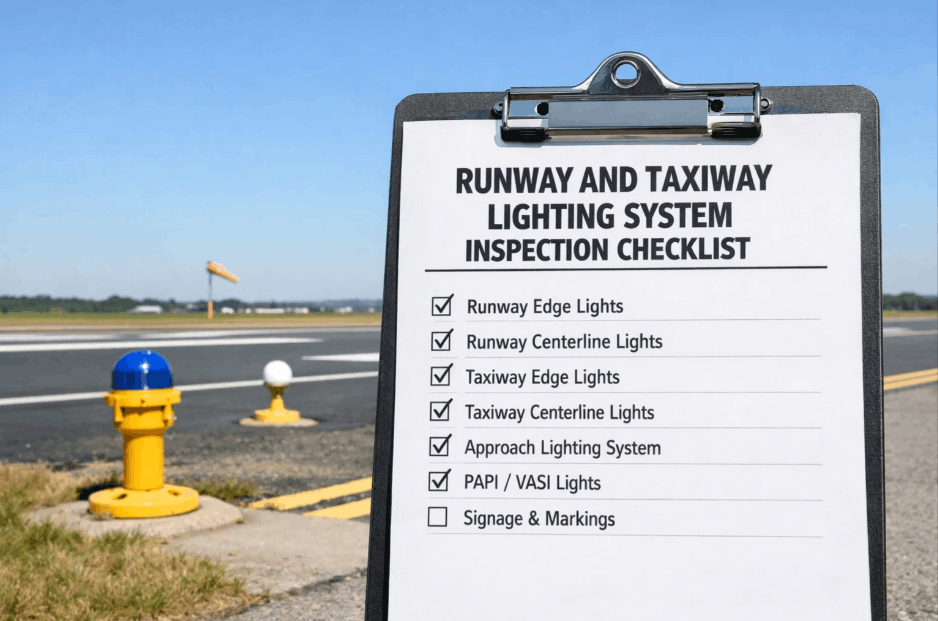
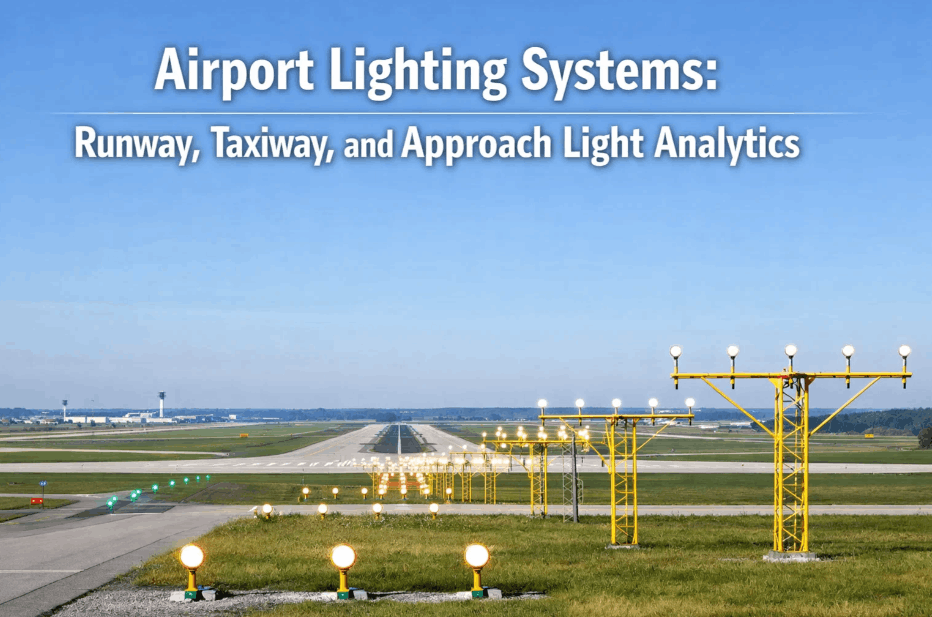
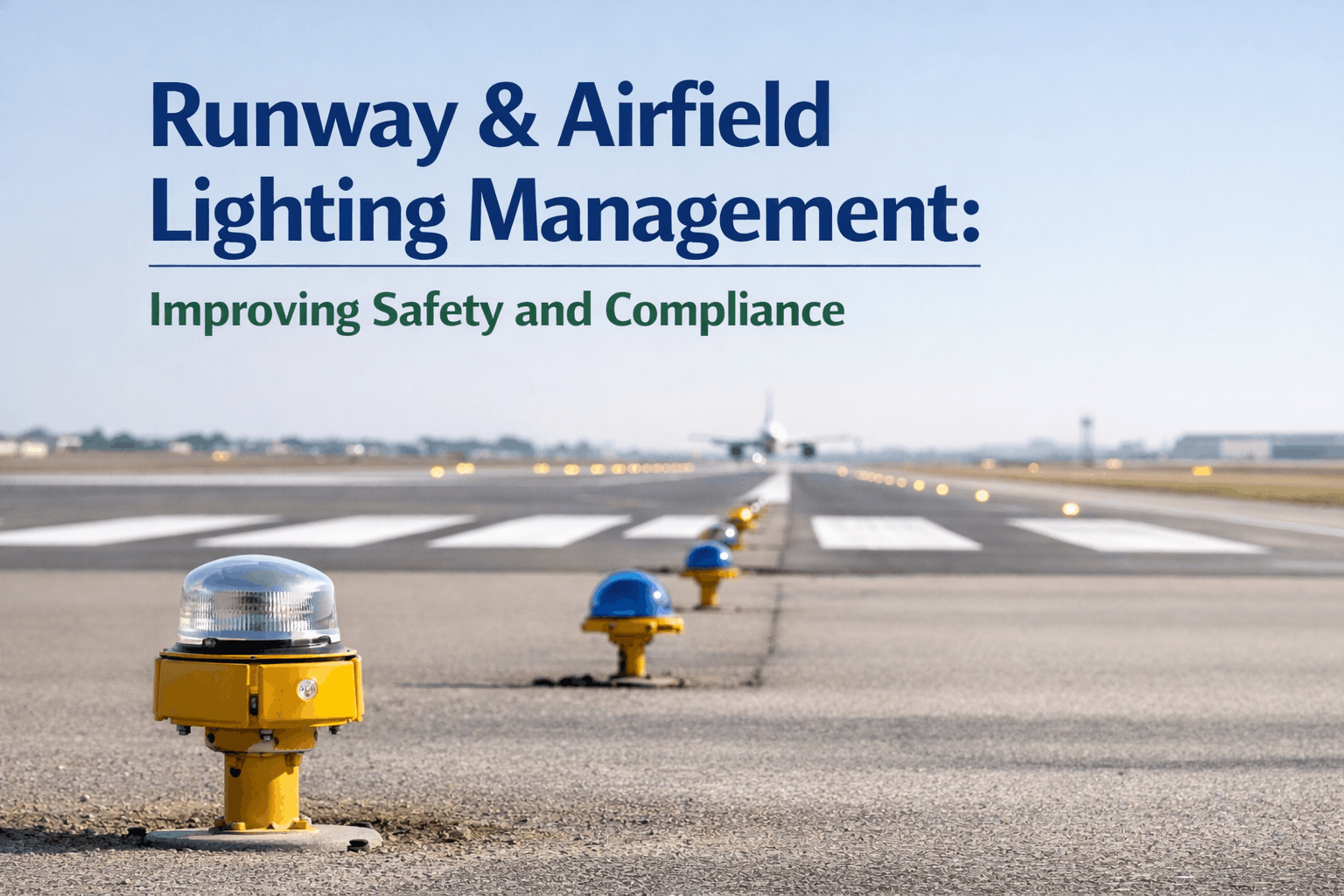
Daily runway and taxiway lighting system inspections are non-negotiable for airfield safety and regulatory compliance. Lamp outages, lens contamination, and circuit grounding faults go undetected without rigorous daily verification. Airfield lighting must be inspected at the start of every operational period to confirm intensity, verify orientation, and validate series circuit integrity. Incomplete or undocumented daily inspections create blind spots in your airport’s safety management system (SMS) and expose your facility to missed approach incidents, runway incursions, and strict FAA/ICAO regulatory penalties. Book a Demo to automate runway and taxiway lighting inspection scheduling, fault logging, circuit resistance documentation, and safety sign-off.
Automate Airfield Lighting System Daily Inspection Verification
Schedule runway and taxiway lighting inspections, log lamp outages with GPS coordinates, document series circuit resistance performance, capture photo evidence of visual aid condition, and generate compliance reports — for every circuit and visual aid at your airport.
Why Airfield Lighting Daily Testing Matters
Regulatory Compliance
Meet FAA Part 139 and ICAO Annex 14 requirements for airfield lighting and visual aid monitoring. Documented runway and taxiway inspections protect your operating certificate and prevent landing area closures. Digital records ensure audit-ready safety documentation at all times.
Operational Safety
Identify misaligned PAPI units, dimming edge lights, and damaged guidance signs before they impact pilot visibility. Daily verification ensures transition from approach to landing is supported by reliable visual cues. Prevent runway incursions and landing incidents caused by lighting failures.
Digitize Your Airfield Lighting Inspection Program
Automate runway and taxiway lighting inspection scheduling, capture circuit resistance results with precise timestamps, document lens condition with photos, and generate audit-ready FAA/ICAO compliance records for every shift.
Benefits of Digital Airfield Lighting Management
Automated Inspection Logs
Never miss a runway lighting inspection with automated triggers based on shift change or flight operations. Set up recurring daily checks that notify airfield electricians automatically at sunrise and sunset.
Real-Time Circuit Visibility
Track circuit resistance trends, CCR performance, and lamp outage rates across your entire airfield with comprehensive dashboards and instant fault notifications.
GPS-Tagged Fault Locations
Operators log outages on mobile devices directly at the fixture. Exact GPS coordinates and photos enable maintenance teams to locate and repair faults faster, reducing runway downtime.
Audit-Ready Safety Records
Digital timestamps and permanent records satisfy FAA Part 139 and ICAO Annex 14 requirements. Access complete inspection history for any circuit instantly during ramp safety audits.
Automatic Work Order Triggers
Failed inspections or circuit insulation drops automatically trigger maintenance tickets. Priority logic ensures critical runway centerline faults are addressed before taxiway edge issues.
Asset Life-Cycle Tracking
Maintain complete history for every lamp, transformer, and CCR. Identify degradation patterns and justify airfield lighting modernization budgets with historical performance data.
Frequently Asked Questions
1. How often must runway and taxiway lighting be inspected?
Visual inspections are required daily for Part 139 airports, typically conducted at dawn and dusk. Mobile photometric testing is usually performed monthly or quarterly for high-intensity systems. FAA standards require documentation of every inspection, including lamp counts and circuit checks.
Book a Demo to automate your inspection schedule.
2. What constitutes a "major failure" in airfield lighting?
For high-intensity runways, more than 15% lamp outages in a category (e.g., edge lights) or two adjacent lamp outages usually require a NOTAM and potential category downgrade. Circuit insulation resistance below 1 Mega-ohm is considered a critical safety risk requiring immediate isolation. All major failures must be logged in the airfield SMS records.
3. Why is PAPI alignment checked during daily inspections?
PAPI units provide precise glide slope guidance. Factors like ground heave, jet blast, or frangible mount damage can cause tilt. A misaligned PAPI could lead a pilot into an unsafe approach angle. Daily visual checks of the "Red/White" transition sharpness and case levelness are baseline safety requirements.
4. Can digital checklists replace paper airfield logs?
Yes. FAA and ICAO both accept digital records provided they are permanent, timestamped, and secured against unauthorized edits. Digital logs actually provide superior compliance by enforcing all checklist items are completed before submission and providing real-time oversight to the Airport Director.
5. What is the benefit of tracking circuit resistance ("Megger" tests)?
Tracking insulation resistance allows for predictive maintenance. A steady drop in Mega-ohms over several weeks indicates moisture ingress or cable degradation before it causes a complete circuit failure. This allows maintenance teams to schedule "ground fault" hunts during low-traffic periods.
Start Your Airfield Lighting Compliance Program Today
Join airport operators automating runway lighting inspection protocols, tracking circuit health in real time, and passing Part 139 audits with complete, timestamped digital documentation for every asset.