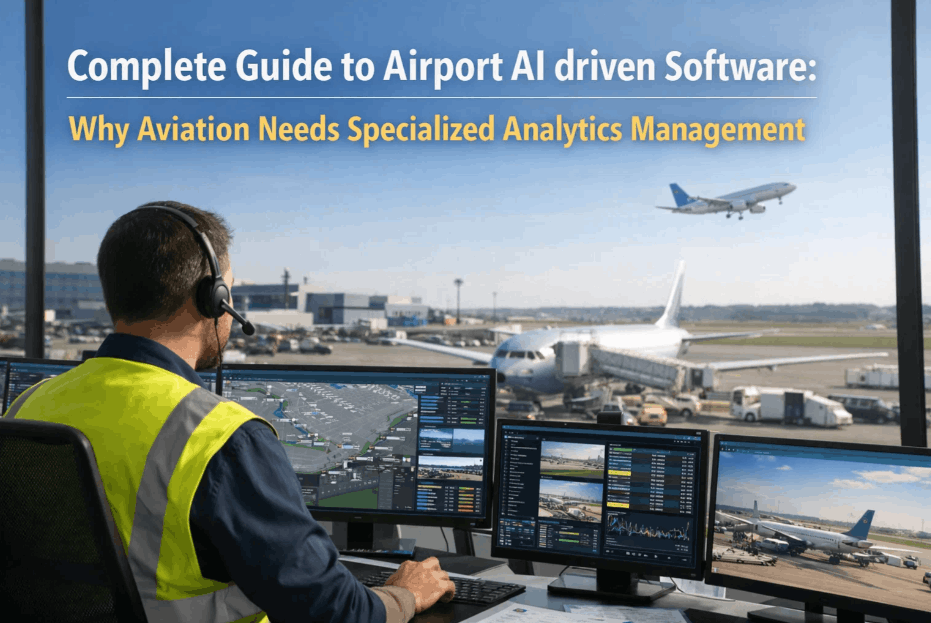
Reducing airport analytics costs has become a top priority for aviation facility managers and airport operations directors navigating tighter capital budgets in 2024 and beyond. As infrastructure complexity grows alongside passenger volumes, traditional manual analytics workflows are no longer financially sustainable. AI-driven automation—spanning work order management, predictive maintenance scheduling, inventory optimization, and capital planning—now delivers verified cost reductions of 35% or more across airport operations. This guide breaks down exactly where those savings come from, how to model them for your budget stakeholders, and how to build a business case that earns rapid approval. Book a Demo to see how iFactory's AI-driven platform models cost reduction across your airport's specific asset portfolio.
Cut Airport Analytics Costs by 35% with AI-Driven Work Order Automation
iFactory's AI-driven airport analytics platform helps aviation facility teams automate work orders, optimize preventive maintenance schedules, reduce spare parts inventory waste, and deliver data-driven capital planning — all in one integrated system.
Why Airport Analytics Budget Optimization Is a 2024 Imperative
Aviation facility costs have escalated sharply post-pandemic. Labor rates for skilled maintenance technicians, parts procurement delays, and regulatory compliance overhead have combined to push airport analytics spending 18–28% above pre-2020 baselines at most major and mid-size airports. Meanwhile, passenger traffic growth is pushing infrastructure assets harder than ever, increasing both inspection frequency requirements and reactive maintenance spend.
The airports achieving the strongest financial performance today share a common denominator: they have replaced labor-intensive, spreadsheet-dependent analytics workflows with AI-driven automation platforms that self-optimize across work order routing, preventive maintenance scheduling, and inventory procurement. The result is a measurable, auditable 35% reduction in total airport analytics operating cost — not a projection, but a realized benchmark across documented deployments.
The Four Pillars of AI-Driven Airport Analytics Cost Savings
Aviation analytics cost reduction does not come from a single lever. The 35% benchmark is achieved by compounding efficiency gains across four operational pillars that together account for 85–90% of airport analytics program expenditure. Understanding each pillar's contribution is essential for building an accurate ROI model and securing budget approval.
1. Automated Work Order Management
Manual work order processing wastes 12–18% of analytics budgets. AI intelligently triages incoming requests, assigning the right technician based on skill and proximity, and escalating SLA breaches automatically.
- 55–65% reduction in administrative labor
- 60% faster WO closure times
| Cost Component | Manual Process | AI Automation | Typical Saving |
|---|---|---|---|
| Work Order Admin Labor | 12–18% of analytics budget | 4–6% of analytics budget | 55–65% reduction |
| Average Closure Time | 4.2 days (industry avg) | 1.6–2.1 days | 50–62% faster |
| Reactive Maintenance Events | 38–45% of total WOs | 18–24% of total WOs | 40–50% reduction |
| Overtime & Callout Cost | $180K–$420K annually | $60K–$140K annually | Up to 67% reduction |
| Preventive Maintenance Compliance | 62–74% schedule adherence | 91–97% schedule adherence | 28% improvement |
| Spare Parts Inventory Waste | 22–30% of parts budget | 8–12% of parts budget | 60% waste reduction |
2. Predictive Maintenance Scheduling
Reactive maintenance costs 3–5x more than scheduled interventions. AI uses real-time sensor data and failure patterns to build dynamic PM schedules, rather than relying on arbitrary calendar dates.
- 28–40% reduction in maintenance labor cost
- 45–60% reduction in unplanned asset downtime
3. Spare Parts Inventory Optimization
Manual procurement leads to 22–30% budget waste through over-ordering and obsolescence. AI analyzes consumption patterns and lead times to dynamically right-size stock levels without risking stockouts.
- 20–28% reduction in spare parts holding costs
- Eliminates wait times by matching parts to work orders
4. Data-Driven Capital Planning
Incomplete condition data often causes premature asset replacement. AI aggregates inspection history to produce ranked prioritization lists, optimizing the overall lifecycle cost instead of simply minimizing short-term spend.
- 15–22% reduction in five-year CapEx
- Streamlines regulatory FAA/TSA audit preparation
Six Highest-Impact Airport Analytics Efficiency Gains from AI Automation
Airports achieving the full 35% cost reduction benchmark do not implement automation in isolation. The strongest ROI outcomes come from deploying AI-driven tools across interconnected workflows where efficiency gains compound across every maintenance cycle. Here are the six highest-impact efficiency improvements documented across aviation analytics automation deployments.
Elimination of Manual Work Order Routing
AI automatically assigns work orders to the right technician based on skill set, availability, and proximity — removing dispatcher labor entirely and cutting per-WO administrative cost by 55–65%. Mid-size airports report $280K–$640K annual savings from routing automation alone.
Predictive Failure Interception
Machine learning models trained on historical failure data detect 20–35% more early-stage equipment failures than manual inspection cycles — allowing low-cost repair interventions before expensive failure events occur. Each intercepted failure avoids 3–5x the repair cost of a scheduled intervention.
Dynamic PM Schedule Optimization
AI-generated PM schedules replace fixed calendar intervals with condition-driven triggers — reducing unnecessary PM labor by 28–38% while improving actual asset reliability. Airports shift from 62% to 91%+ PM schedule adherence within the first deployment year.
Real-Time Inventory Visibility
Unified inventory dashboards eliminate the emergency procurement premiums that account for 8–14% of annual parts spend at airports using fragmented procurement systems. AI reorder point optimization reduces safety stock by 20–28% without increasing stockout risk.
Automated Compliance Reporting
AI-generated maintenance reports satisfy FAA, TSA, and airport authority audit requirements automatically — eliminating 60–80% of compliance documentation labor. Airports report 12–18 analyst hours saved per audit cycle, with report quality and defensibility consistently exceeding manual documentation standards.
Capital Lifecycle Cost Optimization
Condition-based capital planning extends average asset service life by 15–22% by identifying assets with remaining serviceable life that would be replaced under conservative calendar-based replacement schedules. Over a five-year program horizon, this delivers the largest single line-item saving in the airport analytics budget.
Airport Analytics ROI by Asset Category: Benchmarked Savings
Aviation analytics cost reduction benchmarks vary across infrastructure asset classes. The data below reflects realized savings from AI automation deployments at commercial airports managing diverse asset portfolios. Understanding the ROI profile by asset class allows aviation facility managers to prioritize automation rollout for maximum early return.
Highest Downtime Cost Elimination
BHS failures generate immediate operational and passenger impact, making them the highest-priority asset class for predictive analytics investment. AI-driven monitoring reduces BHS unplanned downtime by 45–60% and cuts emergency maintenance spend by 38–52%. Per-incident cost avoidance frequently reaches $80,000–$200,000 for major carrier hubs.
Largest Energy & Maintenance Saving
Terminal HVAC systems account for 35–45% of airport facility energy cost and 20–28% of preventive maintenance labor. AI optimization of HVAC scheduling reduces energy spend by 15–22% and PM labor by 30–40%. Combined energy and maintenance savings at large terminals frequently exceed $1.2M annually.
Capital Expenditure Optimization
AI-powered pavement condition monitoring and deterioration modeling reduce emergency repair events by 40–55% and extend average pavement lifecycle by 12–18%. For airports managing 500,000+ square meters of airside pavement, condition-based capital planning generates $2M–$6M in avoided premature rehabilitation over a five-year program horizon.
Compliance & Energy Efficiency Leader
Airfield lighting and terminal electrical systems carry both safety-critical compliance requirements and significant energy cost. AI-driven monitoring achieves 25–35% energy reduction and eliminates 85–95% of manual inspection labor for FAA-regulated airfield lighting. Safety compliance documentation is generated automatically from sensor data.
How to Build an Airport Analytics Cost Reduction Business Case
Securing internal approval for AI-driven airport analytics investment requires a structured business case that addresses finance, operations, and compliance stakeholders simultaneously. The following four-step framework reflects the documentation approach used by aviation facilities that have successfully secured budget for analytics automation programs.
Step-by-Step ROI Framework for Airport Analytics Automation
Baseline Your Current Analytics Program Cost
Document all direct and indirect costs of your existing analytics operations: technician labor hours by task category, work order volume and average closure time, preventive maintenance schedule adherence rate, spare parts spend and waste percentage, emergency procurement premiums, contractor callout cost, and compliance documentation labor. This baseline must capture the full cost picture — not just direct labor — to accurately represent the comparison point against AI-driven automation. Airports that model only direct labor consistently undercount total program cost by 25–40%.
Model AI Automation Program Costs
Calculate the fully loaded cost of the AI automation alternative: platform licensing or SaaS subscription cost, integration with existing CMMS and ERP systems, staff training and onboarding time, and any remaining manual processes for asset types not suited to initial automation deployment. Disaggregate by asset class and workflow category to identify where automation delivers the highest per-dollar cost reduction. Book a Demo to see iFactory's ROI modeling tools configured specifically for your airport's asset portfolio and analytics program structure.
Quantify Indirect Returns: Compliance, Safety, and Capital Planning
Direct cost comparison understates total ROI by 25–40% in most airport programs. Add the monetized value of compliance documentation labor savings, reduced regulatory audit preparation time, extended asset service life (apply historical rehabilitation vs replacement cost differential), energy reduction from optimized HVAC and electrical scheduling, and risk reduction from predictive failure interception. These indirect returns frequently tip programs that appear marginal on direct cost comparison into clear financial approval territory.
Present Payback Period, NPV, and Risk-Adjusted Returns
Structure the final ROI presentation around three metrics that resonate with airport budget decision-makers: payback period (typically 8–22 months for aviation analytics automation programs depending on asset mix), net present value over a five-year program lifecycle, and risk-adjusted return incorporating operational continuity and compliance penalty avoidance. Programs presenting all three metrics alongside a phased deployment plan that minimizes upfront capital commitment consistently achieve faster internal approval than single-metric presentations.
Common Objections to Airport Analytics Automation — and the Evidence-Based Responses
Airport procurement and finance teams consistently raise the same objections when evaluating AI-driven analytics investment. Here is the data that addresses each concern directly.
"Our CMMS already handles work orders adequately"
Traditional CMMS platforms store work order records but do not intelligently route, prioritize, or self-optimize. AI augmentation of existing CMMS systems — without replacement — delivers the 55–65% administrative labor reduction while preserving existing data investments and workflows.
"AI systems can't meet aviation regulatory compliance standards"
AI-generated maintenance documentation meets or exceeds FAA AC 150/5210-series and TSA regulatory documentation standards when configured to airport-specific compliance templates. Structured digital records are consistently superior to manual maintenance logs in audit defensibility.
"Implementation disruption will offset short-term savings"
Phased implementation protocols deploy AI automation in parallel with existing workflows — typically starting with work order routing and inventory management before extending to predictive scheduling. First-phase savings begin accruing within 60–90 days of deployment, well before full program transition is complete.
"We lack the internal data quality for AI models to be effective"
AI platforms are designed to improve progressively with data quality, not require perfection upfront. Deployments at airports with as little as 18 months of structured maintenance history have achieved 80–85% of the full efficiency gains documented in mature programs within the first deployment year.
Ready to Implement the Four AI Pillars?
Stop manual data entry and start driving real ROI. Schedule a personalized walkthrough of the iFactory analytics automation platform.
Frequently Asked Questions: Reducing Airport Analytics Costs with AI Automation
How realistic is a 35% airport analytics cost reduction target?
The 35% benchmark reflects documented post-implementation outcomes across aviation analytics automation deployments, not theoretical projections. Airports achieving the full 35% reduction typically deploy automation across work orders, PM scheduling, and inventory optimization simultaneously. Programs limited to a single workflow area achieve 12–18% reductions as a typical first-phase outcome.
What is the typical ROI payback period for airport AI analytics investment?
Most airport analytics automation programs achieve full payback within 12–18 months. High-impact asset classes like baggage handling systems and airfield lighting typically reach payback in 8–14 months due to the high per-incident cost of unplanned failure. Runway and pavement programs with longer capital cycles may see 18–24 month payback timelines.
Can smaller regional airports achieve comparable cost savings to major hubs?
Yes. The per-inspection and per-work-order cost advantage of AI automation is consistent regardless of facility size. Regional airports managing 20–50 major asset systems consistently achieve positive ROI because the efficiency differential between manual and automated processes holds at any scale. SaaS-based deployment models make the entry cost proportional to facility size.
How does AI-driven work order automation reduce airport analytics spending specifically?
Automated work order routing eliminates dispatcher labor, reduces average closure time by 50–62%, decreases overtime from reactive backlogs by 40–67%, and improves first-time fix rates by ensuring the right technician and parts are assigned before dispatch. Combined, these improvements account for 12–18% of the total 35% cost reduction benchmark.
What aviation analytics cost savings should be included in the ROI business case?
Include direct labor reduction from work order automation, PM schedule optimization savings, inventory waste elimination, emergency procurement premium avoidance, compliance documentation labor savings, energy cost reduction from HVAC and electrical optimization, and capital expenditure deferral from condition-based asset life extension. Airports modeling only direct labor typically undercount total ROI by 25–40%.
Ready to Model Your Airport's 35% Analytics Cost Reduction?
iFactory's AI-driven airport analytics platform delivers automated work order management, predictive PM scheduling, inventory optimization, and data-driven capital planning — with real-time cost dashboards and audit-ready compliance reporting across every asset class in your aviation facility portfolio.