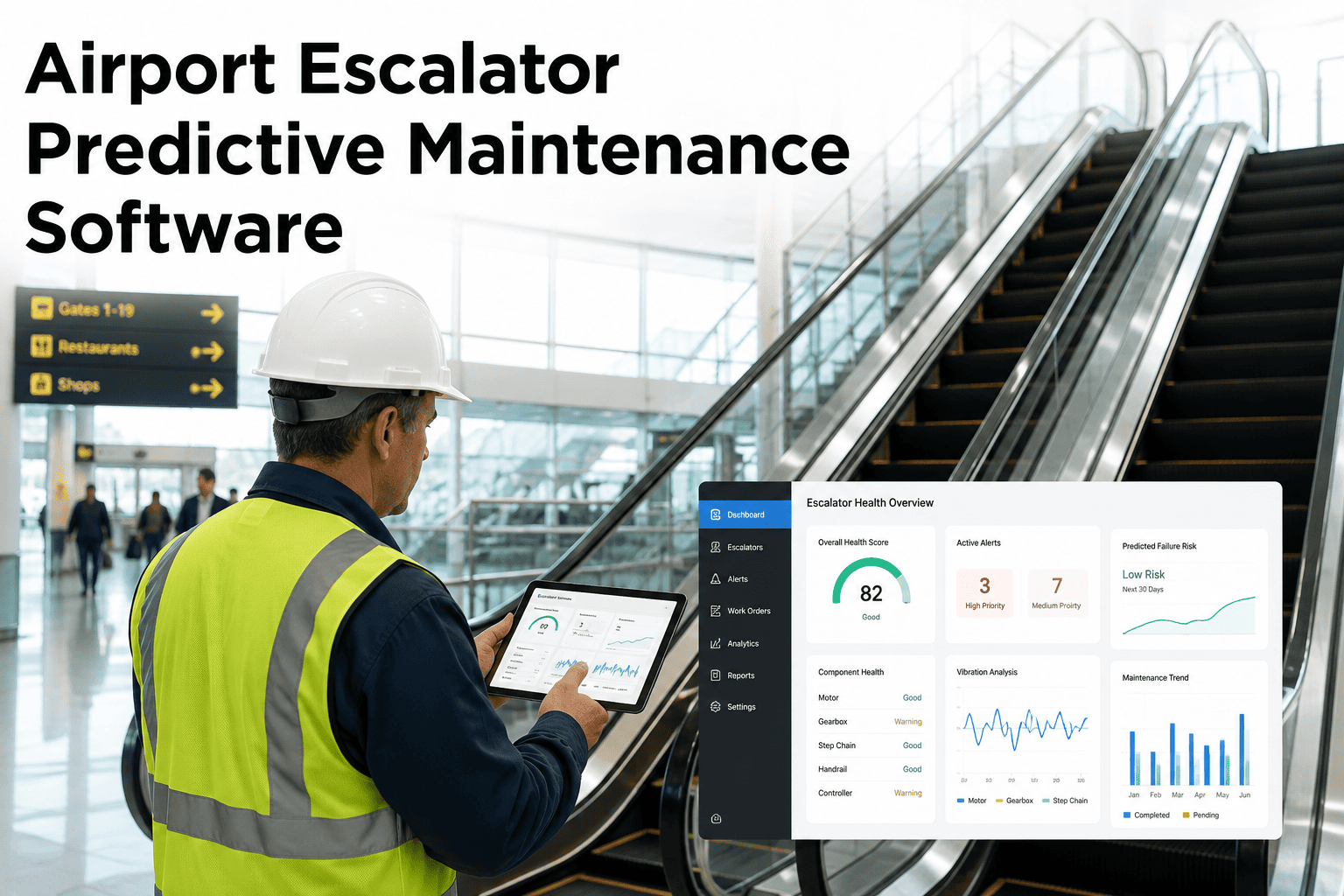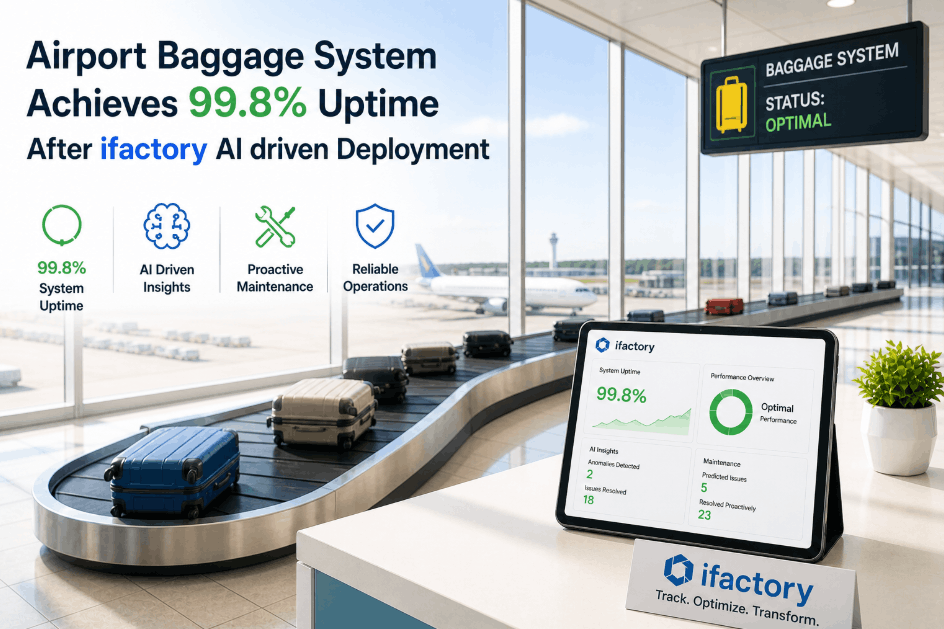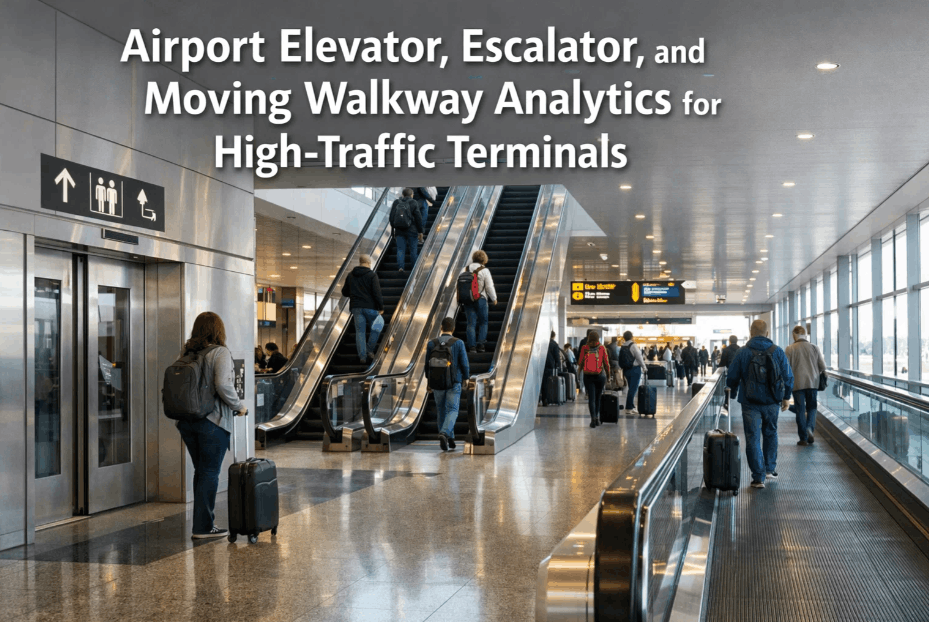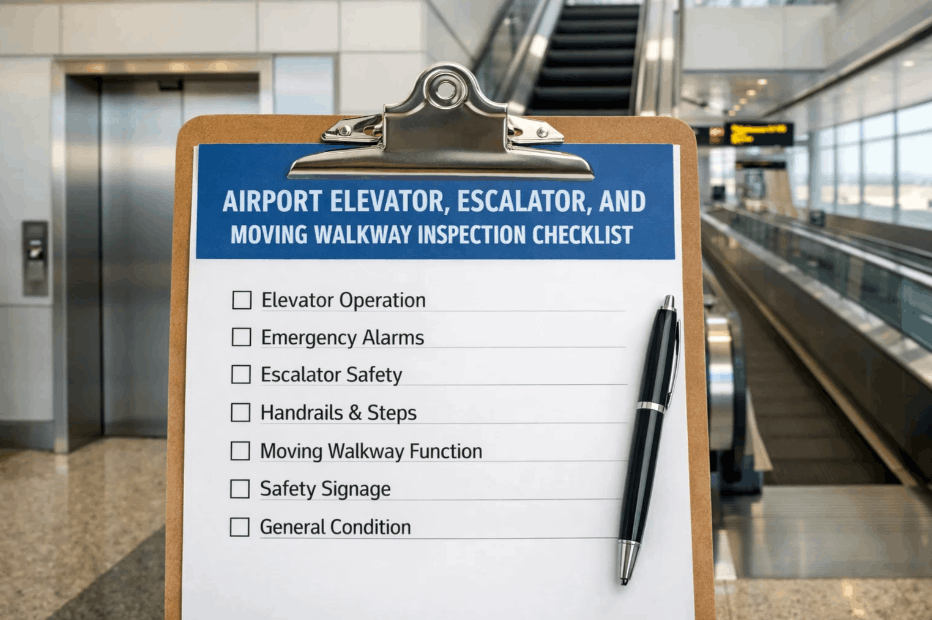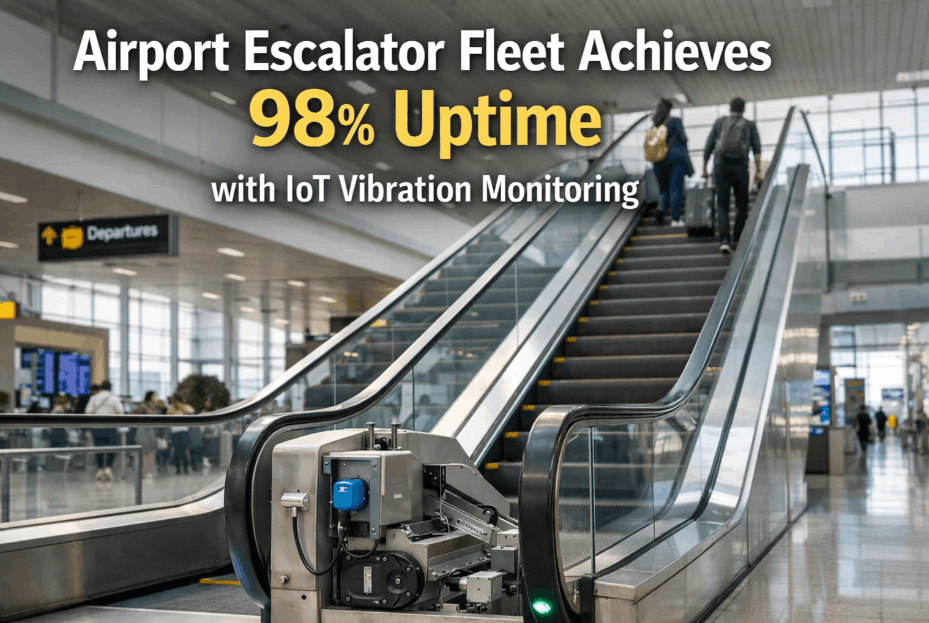
Maintaining seamless passenger flow in major airports relies entirely on continuous vertical transport. For a leading international terminal, reactive maintenance of escalators and moving walkways caused unacceptable crowding and safety risks. By deploying ifactory's AI-driven IoT vibration monitoring sensors across 150+ conveyance assets, the facility transitioned to predictive maintenance, achieving 98% fleet uptime and preventing over 40 potential catastrophic failures in the first year alone. Book a Demo to see how ifactory optimizes airport escalator reliability.
IoT Sensor Integration
|
Airport Operations
|
98% Fleet Uptime
Prevent Escalator Breakdowns with Predictive IoT Monitoring.
ifactory connects terminal escalators directly to AI-powered vibration and acoustic monitoring, alerting your technicians to motor bearing and gearbox degradation weeks before a failure halts passenger flow.
01 / The Challenge
Unexpected Outages and Severe Passenger Bottlenecks
The airport's facility management team relied entirely on routine calendar-based maintenance for its fleet of moving walkways and escalators. However, fluctuating passenger volumes and heavy rolling luggage placed unpredictable stress on drive mechanisms. When a sudden motor or bearing failure occurred during peak travel hours, an escalator shutdown immediately triggered massive passenger congestion, jeopardizing boarding times and violating ADA accessibility standards. Diagnosing the root cause of these sudden gearbox faults often took hours, leaving yellow barricades dotting the terminal and significantly degrading the overall airport passenger experience.
150+
Conveyance Assets
The facility manages a dense network of escalators, moving walkways, and vertical lifts bridging baggage claim, ticketing, and airside concourses.
82%
Reactive Repairs
Historically, 82% of major mechanical interventions were purely reactive, occurring only after passengers had reported a halted or smoking escalator.
6.5h
Mean Time to Repair
Diagnosing internal friction, ordering parts, and mobilizing specialized technicians resulted in an average downtime of 6.5 hours per outage incident.
400k
Peak Daily Traffic
A single barricaded escalator during peak seasonal travel created dangerous crowd densities, risking passenger safety and operational compliance.
"When an escalator barricade goes up, passenger satisfaction plummets instantly. We needed a way to 'listen' to our assets and replace components during the midnight shift, long before they had a chance to fail on a crowded Monday morning."
02 / The Solution
iFactory IoT Vibration Sensors: Predictive Intelligence for Conveyance
To eliminate sudden outages, the airport retrofitted its entire mobility fleet with ifactory's industrial IoT vibration and temperature sensors. Mounted magnetically or directly onto drive motors, gearboxes, and main bearings, these continuous health monitors stream tri-axial vibration data to the central AI platform. By instantly recognizing the subtle high-frequency friction patterns that precede a bearing collapse, the system now dispatches proactive work orders directly to technicians weeks before an escalator physically grinds to a halt. Book a Demo to explore our predictive sensor dashboards.
Tri-Axial Vibration Monitoring
Non-invasive IoT sensors continuously track the kinetic health of motors, catching microscopic imbalances, gear tooth wear, and lubrication degradation long before they affect equipment speed.
AI Anomaly Detection
ifactory's AI continually models the normal "acoustic signature" of each escalator under load, automatically flagging deviations without the need for manual data analysis.
Automated Work Order Triggers
Once an anomaly hits a critical degradation threshold, the platform instantly generates and routes a priority work order to mobile technicians for targeted after-hours maintenance.
Fleet Edge Visibility
Operations directors monitor the real-time health index of all 150+ terminal escalators on a single interactive floorplan, prioritizing budget for failing units.
03 / Implementation
Rapid Sensor Deployment and AI Calibration
Phase 1
IoT Hardware Retrofitting
The deployment required zero hardwiring. Over a single weekend, technicians applied magnetic, battery-powered IoT sensors to the gearboxes, drive chains, and main bearings of escalators and moving walkways across all terminals.
→
Phase 2
Machine Learning Baseline Calibration
For 14 days, the ifactory AI observed the natural vibration spectrums of the machinery during heavy passenger loads, off-peak hours, and cleaning cycles to establish a precise dynamic baseline for every individual component.
→
Phase 3
Live Predictive Analytics Go-Live
With baselines set, anomaly alerts were fully activated. The maintenance team was trained to respond to early-warning notifications, shifting their operations to intercept flagged components during scheduled night closures.
04 / Results
Unprecedented Escalator Reliability and Passenger Flow
The transition to IoT predictive analytics profoundly insulated the airport from mechanical disruption. Within the first year, the ifactory system successfully identified and flagged degrading components in over 40 units, allowing the team to conduct preemptive bearing replacements. This wiped out catastrophic daytime failures, driving the overall fleet uptime to an exceptional 98%. The reduction in emergency contract repair costs and the stabilization of passenger mobility yielded an absolute return on the sensor investment in under six months. Book a Demo to see complete predictive ROI models.
| Performance Metric | Pre-IoT Baseline | Post-IoT Result | Overall Improvement |
|---|---|---|---|
| Escalator Fleet Uptime | 86% | 98.4% | +12.4% Availability |
| Catastrophic Failures | 60+ Annually | 14 Annually | 76% Reduction |
| Equipment Failures Prevented | N/A | 42 Flagged | 100% Interception |
| Diagnostic Search Time | 2.5 Hours | Minutes | Pinpoint Accuracy |
| Passenger Congestion Incidents | High frequency | Near-Zero | Sustained Flow |
| Preventive Maintenance ROI | Variable | $840,000+ | 6-Month Payback |
98%
Fleet Uptime
40+
Failures Prevented
76%
Fewer Emergencies
150+
IoT Monitored Assets
05 / Key Benefits and Business Impact
Transforming Airport Mobility and Public Safety
Seamless Passenger Navigation
By virtually eliminating unexpected daytime escalator outages, the airport maintained continuous, high-volume passenger flow between ticketing, security, and gates—drastically reducing missed flight escalations.
Night-Shift Resource Optimization
The predictive data allows maintenance directors to schedule component replacements during 2:00 AM low-traffic periods, drastically reducing the impact of repair barricades on the public floor.
Extended Asset Lifecycle
Catching vibration anomalies early prevents minor bearing friction from cascading into catastrophic motor burnouts, effectively extending the lifespan of multimillion-dollar conveyance infrastructure by years.
Accessibility Compliance Guarantee
Ensuring reliable vertical transport safeguards compliance with disability and mobility regulations (ADA), significantly reducing liability and customer complaints related to accessibility barrier delays.
06 / Conclusion
The New Standard for Airport Vertical Transport
This deployment proved that catastrophic breakdowns of heavily trafficked airport escalators are entirely preventable. By relying on ifactory's IoT vibration sensors rather than passenger complaints or rigid calendars, the airport effectively modernized its asset management strategy. Achieving 98% uptime in one of the most high-stress mechanical environments possible underscores the necessity of continuous AI monitoring. The result is a safer, more predictable terminal environment that prioritizes the uninterrupted journey of the traveler. Book a Demo to see how ifactory can instrument your escalator fleet.
07 / FAQ
Frequently Asked Questions
How are the IoT sensors physically installed on escalators?
The sensors are designed for non-invasive rapid deployment. They are typically attached to the drive motor housing, primary gearboxes, and main step-chain bearings using industrial rare-earth magnets or heavy-duty epoxies, requiring zero drilling or wiring.
Do the sensors require a heavy Wi-Fi infrastructure?
No. the sensors operate securely on cellular networks or dedicated low-power structural mesh networks (LoRaWAN), completely bypassing the airport's public or internal Wi-Fi systems for maximum security and ease of deployment.
Can the AI distinguish between passenger load vibration and actual mechanical failure?
Yes. During the initial machine learning calibration phase, the AI learns the difference between healthy load vibrations (e.g., hundreds of passengers stepping onto the system) and the distinct high-frequency acoustic emissions caused by friction, worn bearings, or lack of lubrication.
How early can the system predict a failure?
Depending on the detected fault, the platform can flag degradation anomalies anywhere from 2 to 6 weeks before a component reaches the point of physical failure, giving teams ample time to procure parts and schedule night-shift maintenance.
Does this replace our escalator maintenance contractor?
No, it empowers them. Rather than relying on your contractors for reactive rescue calls, you can now provide them with targeted predictive data, ensuring they arrive on-site with the exact tools and replacement parts needed for an impending fault.
Is the sensor data secure enough for critical aviation infrastructure?
Absolutely. The IoT architecture utilizes end-to-end encryption. Because the sensors are isolated from the main flight operations IT network, they introduce no cybersecurity threat to terminal systems while providing critical physical asset intelligence.
Mobile AI
|
Aviation Ready
|
Fast Deployment
Ready for 98% Escalator Fleet Uptime?
Deploy ifactory's IoT vibration sensors on your airport conveyances and empower your facility management team with predictive anomaly alerts to prevent sudden terminal congestion.