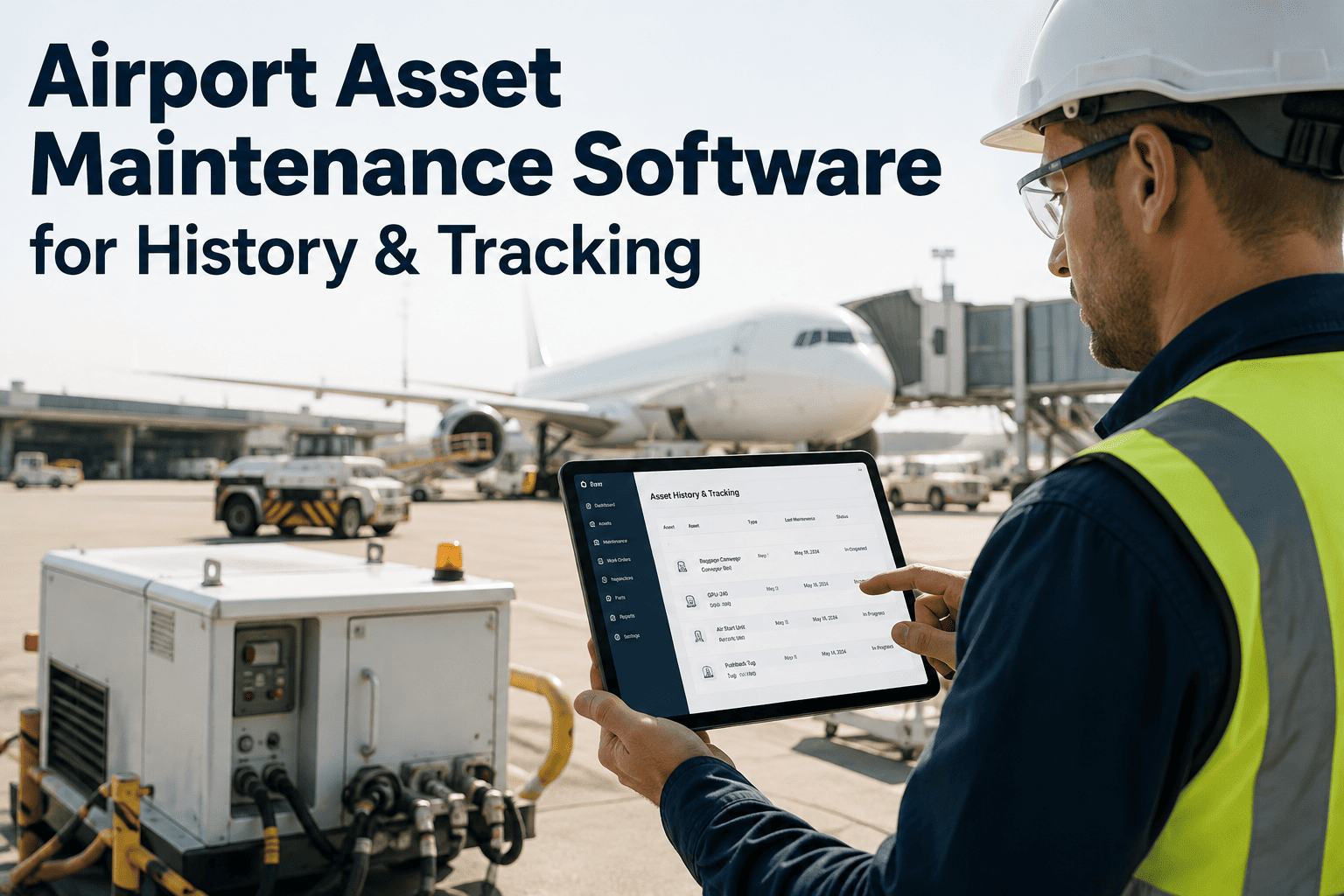
Managing 10,000+ assets across a major airport is one of the most complex infrastructure challenges in the world. From airside ground support equipment and runway lighting systems to terminal HVAC units, baggage handling conveyors, and landside parking structures, airport asset management demands a unified, data-driven framework that eliminates blind spots, prevents costly failures, and satisfies rigorous safety and regulatory obligations. This guide delivers a comprehensive airport asset management framework built specifically for large-scale aviation environments — covering asset inventory architecture, lifecycle tracking, condition scoring, capital planning, and the AI-driven analytics transforming how airports operate today. Book a Demo to see the full platform in action.
Build a Smarter Airport Asset Management Program
ifactory automates asset lifecycle tracking, condition scoring, and capital planning — delivering complete visibility across 10,000+ airport assets with zero-gap compliance documentation.
Why Airport Asset Management Requires a Dedicated Framework
Generic CMMS platforms and enterprise ERP systems were not designed for the operational complexity of commercial aviation infrastructure. Airport asset management sits at the intersection of safety-critical regulatory compliance, 24/7 operational continuity, multi-stakeholder ownership structures, and capital planning cycles that span decades. Without a purpose-built airport asset management framework, these obligations fall through the cracks, triggering compliance gaps, accelerated deterioration, and emergency repair costs that dwarf preventive maintenance spend. Book a Demo to discover how purpose-built aviation platforms eliminate these gaps.
The Four Zones of Airport Asset Inventory Architecture
Building a complete airport asset register begins with zone-based asset classification. Each of the four primary airport zones carries a distinct asset profile, failure consequence severity, and maintenance governance structure. Book a Demo to see how purpose-built platforms automate zone-level classification at scale.
Airport Asset Lifecycle Tracking: From Acquisition to Disposal
A robust airport asset lifecycle tracking system captures every stage of an asset's operational life — from capital procurement through active service, condition degradation, and eventual disposal. Lifecycle visibility reduces unplanned capital expenditure by 30–40% within the first two years of deployment. Book a Demo to see our lifecycle dashboard.
Airport Asset Condition Scoring
Condition scoring is the backbone of every effective airport asset management program. Standardized condition indices transform capital planning from a subjective exercise into a data-driven process based on the FAA's Pavement Condition Index methodology.
| Condition Band | Score | Asset Status | Recommended Action |
|---|---|---|---|
| Excellent | 85–100 | Like new; no performance degradation | Routine PM maintenance |
| Good | 70–84 | Minor wear; full functional capacity | Maintain PM schedule |
| Fair | 55–69 | Visible deterioration; capacity degrading | Increase inspection frequency |
| Poor | 40–54 | Significant degradation; reliability risk | Immediate rehabilitation |
| Failed | 0–24 | Non-functional or critical failure | Emergency replacement |
AI-Driven predictive Intelligence
AI-powered condition monitoring evaluates each asset individually against real-time sensor telemetry and historical failure patterns. This eliminates the inefficiency of fixed-interval schedules. Book a Demo to see our predictive models.
Compliance Obligations in Airport Asset Management
No other infrastructure sector carries as many overlapping regulatory frameworks as commercial aviation. ifactory tracks obligations across federal, state, and local jurisdictions while managing airline-specific SLA requirements.
Implementing Your Asset Management Framework
We follow a structured 4-phase approach to build data quality and team capability progressively, delivering measurable ROI at each stage of the transformation.
Conduct zone-by-zone field inventory. Tag every asset with a unique identifier and capture baseline condition scores.
Configure PM schedules based on OEM intervals and regulatory requirements. Launch automated work orders and mobile workflows.
Connect condition scoring to investment tools. Build data-backed CIP submissions with lifecycle cost models for priority assets.
Deploy sensor connectivity and AI fault detection on high-consequence asset segments to transition to anticipatory operations.
Build Your Airport Asset Management Framework Today
Deploy asset lifecycle management programs for inventories of 500 to 50,000+ assets within your existing compliance and capital cycles.