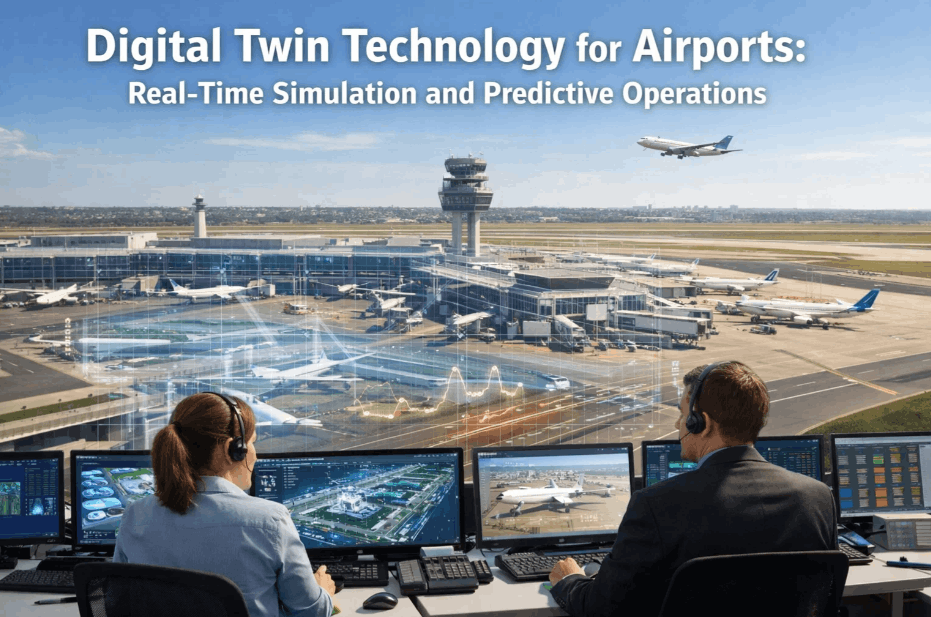
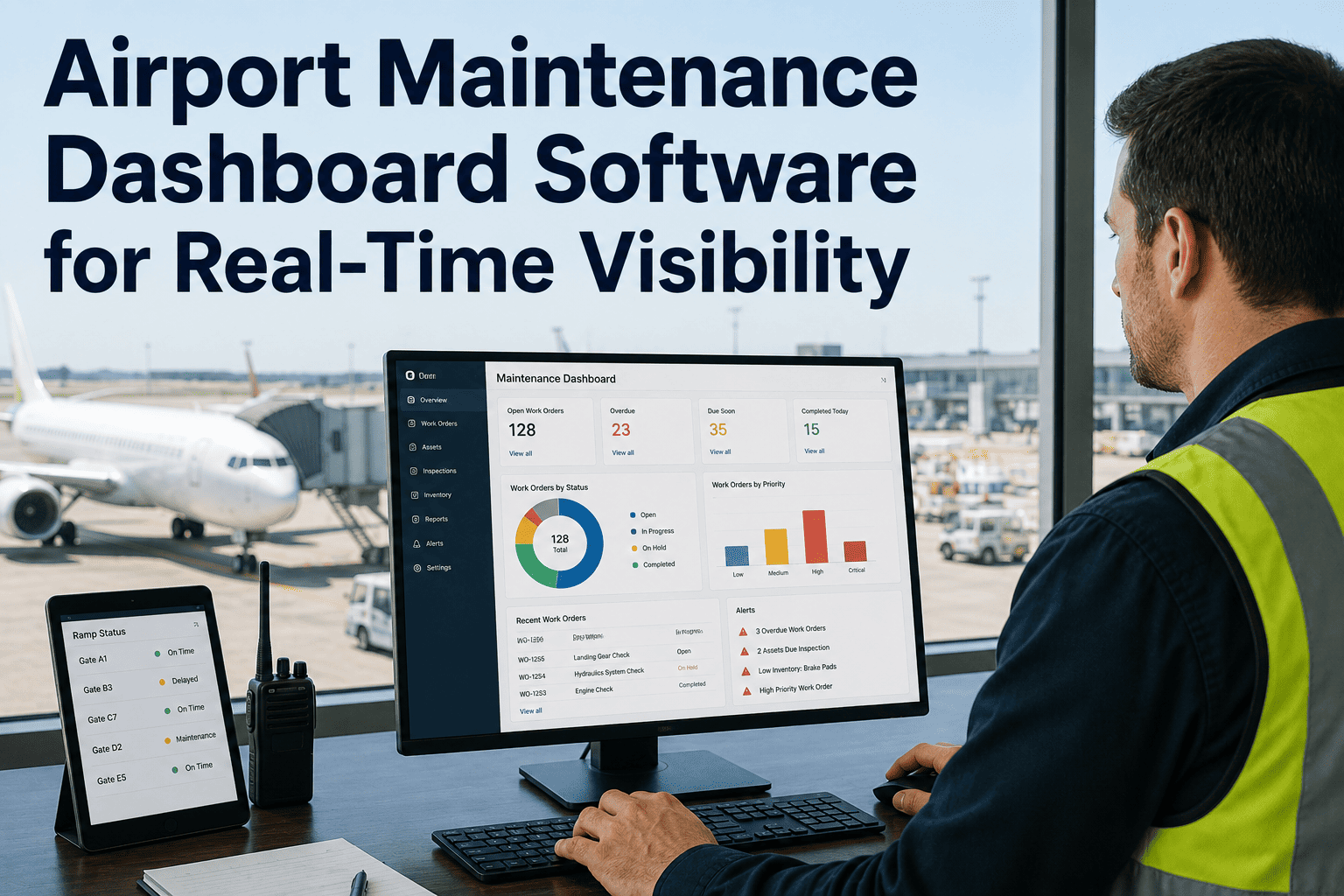
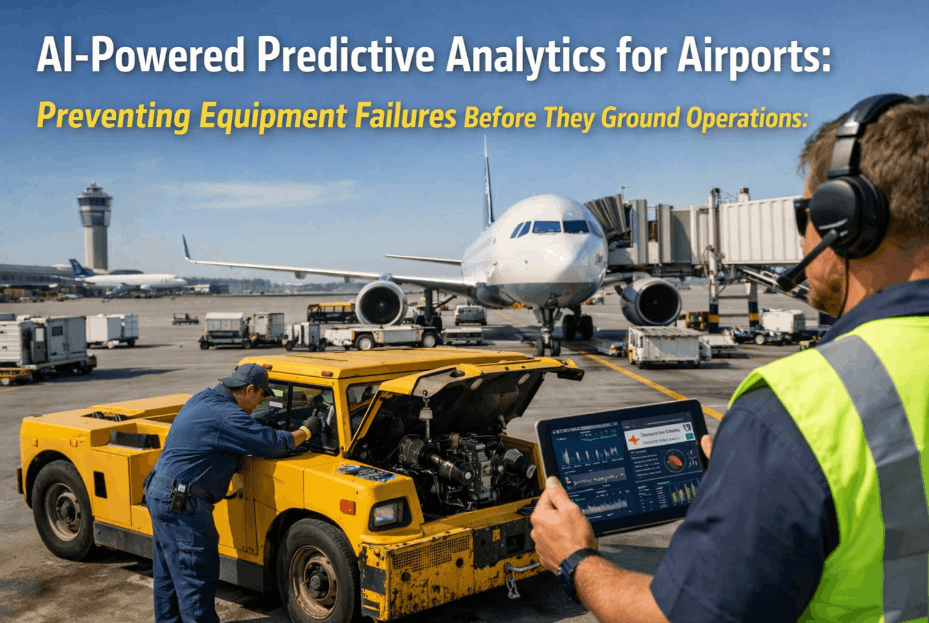
Airport operations managers face critical challenges managing thousands of daily operations across terminals, runways, taxiways, and support infrastructure. Digital twin airport technology creates a virtual replica of your entire facility — enabling real-time monitoring, predictive analytics, and scenario planning that traditional systems cannot provide. Whether optimizing gate utilization, predicting maintenance needs, or planning terminal expansions, a comprehensive airport digital twin technology platform connects physical assets to actionable insights. If your airport is still relying on disconnected systems, book a demo to see what integrated digital twin facility management airport solutions deliver.
Transform Your Airport Operations with Digital Twin Technology
Deploy real-time facility simulation, predictive asset monitoring, and scenario planning across your entire airport infrastructure — from terminals to runways to ground support systems.
What Is Digital Twin Airport Technology?
A digital twin airport is a comprehensive virtual model of your facility that mirrors physical assets, operational workflows, and system interdependencies in real time. Unlike static CAD models, a live digital twin integrates IoT sensors, operational data, maintenance records, and performance metrics into a dynamic simulation environment. This enables facility managers to monitor conditions across terminals, runways, taxiways, baggage systems, HVAC infrastructure, and ground support operations simultaneously — creating a single source of truth for operational decision-making. By connecting your airport digital twin technology with real-time sensor data, you transform reactive management into predictive operations. When you book a demo of a production platform, you'll see how real-time airport monitoring transforms operational efficiency within your first week.
Why Airports Need Digital Twin Technology Now
Real-Time Challenge
Gates sit idle while flights are delayed due to allocation inefficiency
Baggage system bottlenecks cause cascading flight delays
Passenger flow congestion creates bottlenecks at security and boarding
Ground support vehicle coordination creates runway delays
Real-Time Challenge
Critical HVAC failures occur without warning, disrupting operations
Runway surface degradation goes undetected until failure
Electrical and power system failures impact terminals unexpectedly
Water and sewage systems fail with no advance notice
Real-Time Challenge
Audit documentation scattered across multiple disconnected systems
Maintenance compliance gaps discovered too late for remediation
Safety incident investigations lack comprehensive facility context
Operational deviation documentation unavailable during regulatory reviews
Key Components of Airport Digital Twin Systems
Asset Layer
Complete Facility Representation
Your airport digital twin begins with comprehensive asset inventory — every gate, runway section, taxiway, terminal building, mechanical system, and support structure modeled with full geometric and operational specifications. This forms the foundation for all downstream analytics and simulation.
Data Integration
Real-Time Sensor Network
IoT sensors embedded across terminals, runways, and infrastructure systems feed continuous operational data into your digital twin facility management airport platform. Temperature, pressure, vibration, occupancy, energy consumption, and equipment-specific diagnostics flow into the virtual model, maintaining synchronization with physical reality.
Analytics Engine
Predictive Intelligence
Machine learning models analyze historical patterns and real-time conditions to forecast maintenance needs, identify efficiency opportunities, and detect anomalies. Your digital twin predictive analytics airport capabilities generate actionable recommendations before problems impact operations.
Simulation Layer
Scenario Planning
Test operational changes before implementation — model runway reconfiguration impact, simulate gate expansion effects, forecast terminal renovation impact on passenger flow. Airport planning simulation capabilities reduce implementation risk and optimize capital investment ROI.
Real-Time Airport Monitoring: How Digital Twin Sensors Transform Operations
The power of digital twin technology for airports becomes tangible when real-time airport monitoring integrates IoT sensor networks with your virtual facility model. Unlike periodic manual inspections, continuous sensor monitoring enables predictive operations that prevent rather than respond to failures. Your HVAC system experiences a subtle pressure drop detected by IoT sensors. Machine learning algorithms recognize early bearing degradation and generate a predictive maintenance work order before failure occurs — preventing unplanned outages. The same capability extends to runway surface monitoring, electrical systems, and occupancy tracking. When you book a demo of a production platform, expect to see examples showing how sensor-driven maintenance reduces unplanned downtime by 30-40% while cutting maintenance costs by 15-25%.
Airports deploying comprehensive digital twin technology reduce unplanned infrastructure failures by an estimated 35-45% compared to traditional maintenance-by-schedule approaches. For every 1% reduction in unplanned downtime, average passenger satisfaction increases measurably and operational cost per flight hour drops by 2-3%. The ROI on digital twin facility management airport systems typically achieves payback within 18-24 months.
Airport BIM Digital Twin Integration: From Static Models to Living Systems
Many airports already possess Building Information Models (BIM) capturing detailed facility geometry. The transition from static airport BIM digital twin documentation to a live digital twin facility management airport solution requires connecting BIM as the geometric foundation for your active system. Extract asset hierarchies from BIM files, then enrich with operational data layers — sensor networks map to asset locations, maintenance records attach to equipment, workflows anchor to spatial relationships. This approach preserves BIM investment while enabling predictive capabilities that static models cannot deliver. Many airport managers exploring this transition book a demo to understand how existing BIM assets become the foundation for active digital twin predictive analytics airport systems.
Airport Operations Modeling: From Simulation to Strategic Planning
1
Terminal Expansion Modeling
Simulate proposed terminal expansions at full operational complexity — model how new gate configurations affect passenger flow, how expanded baggage systems integrate with existing infrastructure, how renovations impact operations during phased construction. Virtual airport model simulations reveal unintended consequences before construction begins, enabling optimization that physical planning alone misses.
2
Runway Reconfiguration Analysis
Test runway reorientation, additional taxiway configurations, or expanded aircraft parking strategies in airport simulation technology before implementation. Model weather impact, aircraft mix effects, and ground support routing in your digital twin airport to ensure proposed changes deliver expected efficiency gains without creating new operational constraints.
3
Capacity & Throughput Optimization
Use airport planning simulation to identify optimal passenger processing rates, ground vehicle routing patterns, and equipment deployment strategies. Virtual airport model testing shows precisely where capacity expansion yields throughput improvements versus where optimization of existing resources achieves equivalent results at lower capital cost.
4
Maintenance Window Planning
Coordinate complex facility maintenance against operational schedules in your digital twin facility management airport system. Model how electrical system upgrades, HVAC maintenance, or runway resurfacing affects operations, and optimize scheduling to minimize disruption while ensuring maintenance work completes in required windows.
Predictive Analytics for Airport Asset Management
The economic value of digital twin airport technology crystallizes in predictive asset management — replacing maintenance calendars with condition-based intelligence. Rather than servicing equipment on fixed intervals regardless of actual condition, digital twin predictive analytics airport systems recommend maintenance work based on degradation patterns and failure risk. Baggage handling equipment operating under continuous stress uses vibration sensors, thermal imaging data, and degradation modeling to identify precisely when replacement becomes necessary. Maintenance intervals shorten or extend based on actual condition, not generic schedules. The cumulative effect across hundreds of assets produces substantial savings in spare parts inventory, labor hours, and equipment replacement costs. When airport managers want to understand the magnitude of these savings for their specific facility, they book a demo to see predictive maintenance recommendations and cost impact modeling specific to their equipment portfolios.
| Asset Category |
Traditional Maintenance Approach |
Digital Twin Predictive Approach |
Typical Savings |
| HVAC Systems |
Fixed 12-month service intervals regardless of condition |
Condition-triggered maintenance based on pressure, temperature, and efficiency trending |
20-30% reduction in emergency repairs, 15-20% service cost optimization |
| Baggage Systems |
Calendar-based component replacement on 18-month cycles |
Wear-pattern monitoring triggers replacement when degradation reaches threshold |
25-35% spare parts inventory reduction, 30-40% fewer unplanned stoppages |
| Power Infrastructure |
Visual inspections plus fixed-interval electrical testing |
Continuous power quality monitoring with predictive transformer and capacitor health modeling |
40-50% reduction in unplanned outages, 15-25% energy efficiency improvement |
| Runway & Taxiway |
Annual condition surveys with maintenance based on visual assessment |
Real-time surface monitoring with predictive pavement degradation modeling |
30-40% longer pavement life, better maintenance scheduling efficiency |
| Terminal Systems |
Preventive maintenance schedules applied uniformly across building systems |
Facility performance analytics triggering maintenance on actual degradation patterns |
20-25% reduction in preventive maintenance labor, improved occupant experience |
Digital Twin Terminal Management: Optimizing Gate & Passenger Operations
Terminal management represents the operational heart of airport digital twin technology. Digital twin terminal management systems model passenger flows in real time, identifying bottlenecks as they form. An arriving flight brings 200 passengers through baggage claim while an outgoing flight boards nearby. Occupancy sensors and flow analytics identify this scenario developing, alert ground operations to adjust routing to free pathways, and recommend temporary traffic rerouting. The 3-minute delay that would have cascaded becomes non-existent because the system acted predictively. Across dozens of daily flights, thousands of small optimizations improve on-time performance, passenger satisfaction, and staff efficiency. Airport operations teams exploring how digital twin terminal management applies to their facility often book a demo to see live modeling of their actual flight schedule and ground operation workflows.
Implementing Digital Twin Airport Technology: Strategic Roadmap
Phase 1
Asset Inventory & Digital Representation
Establish complete facility asset database with geometric models and system specifications. Integrate existing airport BIM digital twin documentation as foundation. Establish asset hierarchy and operational interdependencies. This phase creates the geometric and structural foundation for all downstream digital twin technology capabilities.
Phase 2
Sensor Network Deployment & Real-Time Data Integration
Deploy IoT sensor networks across critical infrastructure — mechanical systems, runways, terminals, power systems, water infrastructure. Establish data collection, transmission, and integration pipelines that feed real-time airport monitoring into your digital twin facility management airport platform. Begin with highest-value monitoring targets and expand systematically.
Phase 3
Predictive Analytics & Maintenance Optimization
Develop digital twin predictive analytics airport models for critical equipment and systems. Transition from calendar-based to condition-based maintenance triggers. Train maintenance teams on interpreting predictive recommendations and responding to condition-based work orders. Measure maintenance cost reduction and uptime improvement.
Phase 4
Operational Simulation & Strategic Planning
Build airport planning simulation and scenario modeling capabilities. Conduct terminal redesign analysis, runway reconfiguration studies, capacity expansion modeling. Integrate operational workflow data to enable comprehensive airport operations modeling. Use digital twin technology for strategic capital planning and operational optimization.
Deploy Digital Twin Technology Across Your Entire Airport Facility
Transform airport operations with real-time facility simulation, predictive analytics, and scenario planning built on comprehensive virtual airport modeling — from terminals to runways to mechanical systems.
Success Metrics: Measuring Digital Twin Airport Impact
Infrastructure Uptime
Target: 99.5%+
Percentage of time critical systems operate without unplanned downtime — the foundational metric for operational reliability
Predictive Accuracy
Target: 85%+
Percentage of predicted maintenance issues confirmed by subsequent inspections — validates predictive analytics effectiveness
Maintenance Cost Reduction
Trending Down
Year-over-year improvement in total maintenance expenditure achieved through condition-based optimization and failure prevention
On-Time Performance
Target: 90%+
Percentage of flights departing/arriving within scheduled windows — directly impacts passenger satisfaction and airline relationships
Passenger Satisfaction
Trending Up
Overall passenger experience ratings reflecting improvements from optimized terminal flow, reduced delays, and enhanced facility conditions
Capital Planning Accuracy
Trending Up
Percentage of asset replacement forecasts matching actual end-of-life timing — enables multi-year budget planning accuracy
Frequently Asked Questions: Digital Twin Technology for Airports
How does digital twin technology improve airport safety?
Digital twin predictive analytics identify equipment degradation and potential failures before they create safety risks. Real-time airport monitoring detects anomalous conditions immediately, enabling rapid intervention. Scenario modeling in airport planning simulation allows safety implications of operational changes to be evaluated virtually before implementation — preventing decisions that might create unexpected hazards.
Can we integrate digital twin airport technology with existing systems?
Yes. Enterprise digital twin platforms are designed to connect with existing asset management systems, building automation, operational databases, and third-party tools. The integration journey typically begins by leveraging existing airport BIM digital twin documentation as a foundation, then gradually expanding real-time data integration across systems. Most airports see measurable value within the first implementation phase.
What return on investment should we expect from airport digital twin technology?
Typical ROI metrics include 15-25% reduction in maintenance costs through predictive optimization, 30-40% reduction in unplanned downtime, and 2-5% improvement in on-time performance. Capital payback typically occurs within 18-24 months for full-deployment airports. Additional benefits include improved regulatory compliance, enhanced passenger experience, and data-driven capital planning accuracy.
How does real-time airport monitoring support regulatory compliance?
Regulatory bodies require documented evidence of facility conditions, maintenance compliance, and safety protocols. Digital twin facility management airport systems maintain comprehensive digital records of all asset conditions, maintenance actions, and operational parameters — instantly retrievable during audits or investigations. Real-time monitoring creates continuous compliance documentation that manual approaches cannot match.
Which airport infrastructure should we prioritize for digital twin deployment first?
Begin with highest-criticality, highest-cost infrastructure: HVAC systems, power distribution, baggage handling, and runway/taxiway systems. These assets have the greatest operational impact and typically generate the fastest ROI through predictive maintenance optimization. Expand to terminal operations and ground support systems in subsequent phases as core infrastructure modeling matures.
The Future of Airport Operations: Digital Twin as Strategic Differentiator
Digital twin airport technology has transitioned from emerging innovation to operational necessity. Airports deploying comprehensive systems gain competitive advantages in operational efficiency, passenger experience, regulatory compliance, and strategic capital planning. As passenger volumes grow and infrastructure ages, the gap between airports with advanced digital twin facility management airport capabilities and those using traditional approaches widens dramatically. The airports leading their markets in on-time performance and passenger satisfaction share a common characteristic: comprehensive virtual airport model systems that transform fragmented data into unified intelligence. They use airport operations modeling to test strategic decisions before committing resources, deploy smart airport digital twin technology to predict failures before they occur, and leverage real-time airport monitoring to optimize operations continuously. If your airport hasn't begun transitioning to predictive, integrated digital twin facility management airport operations, the competitive cost of delay accelerates each month. Book a demo today to see how comprehensive airport digital twin systems transform facility management and establish competitive advantage.
Deploy Digital Twin Technology Built for Airport Operations
See how comprehensive digital twin airport systems transform facility management, predictive maintenance, and strategic planning across terminals, runways, and infrastructure — with real-time monitoring, IoT sensor integration, and scenario modeling designed specifically for airport complexity.