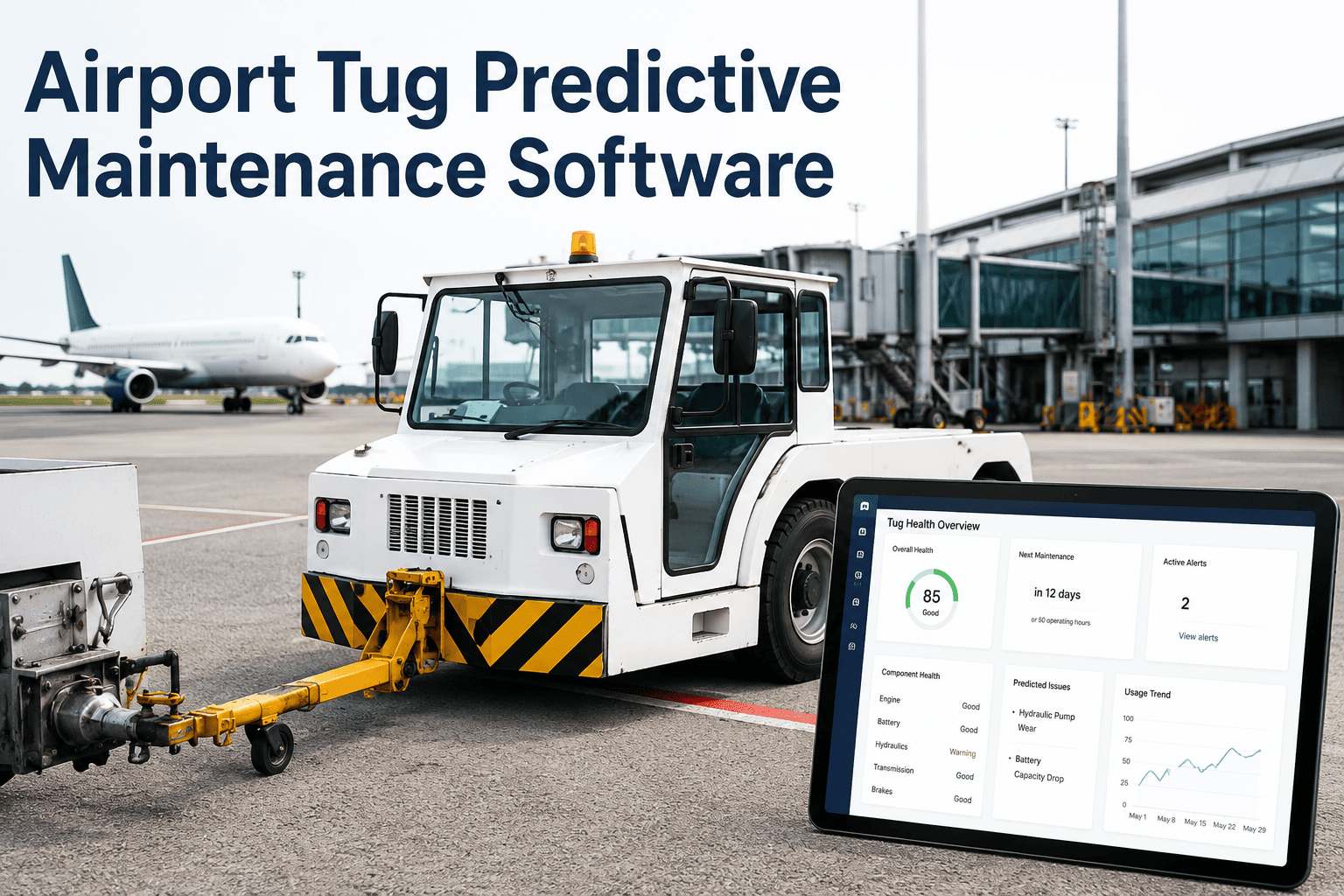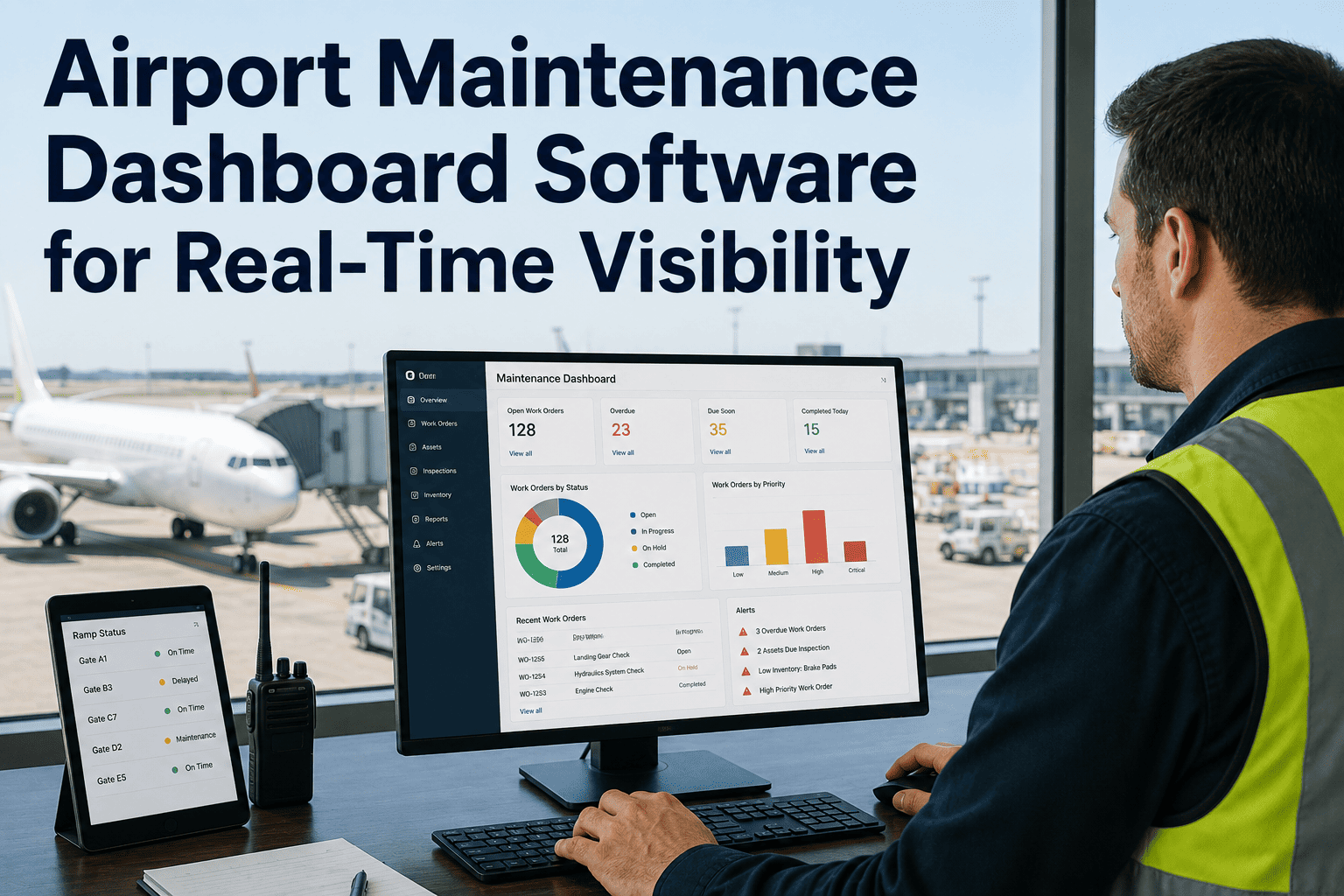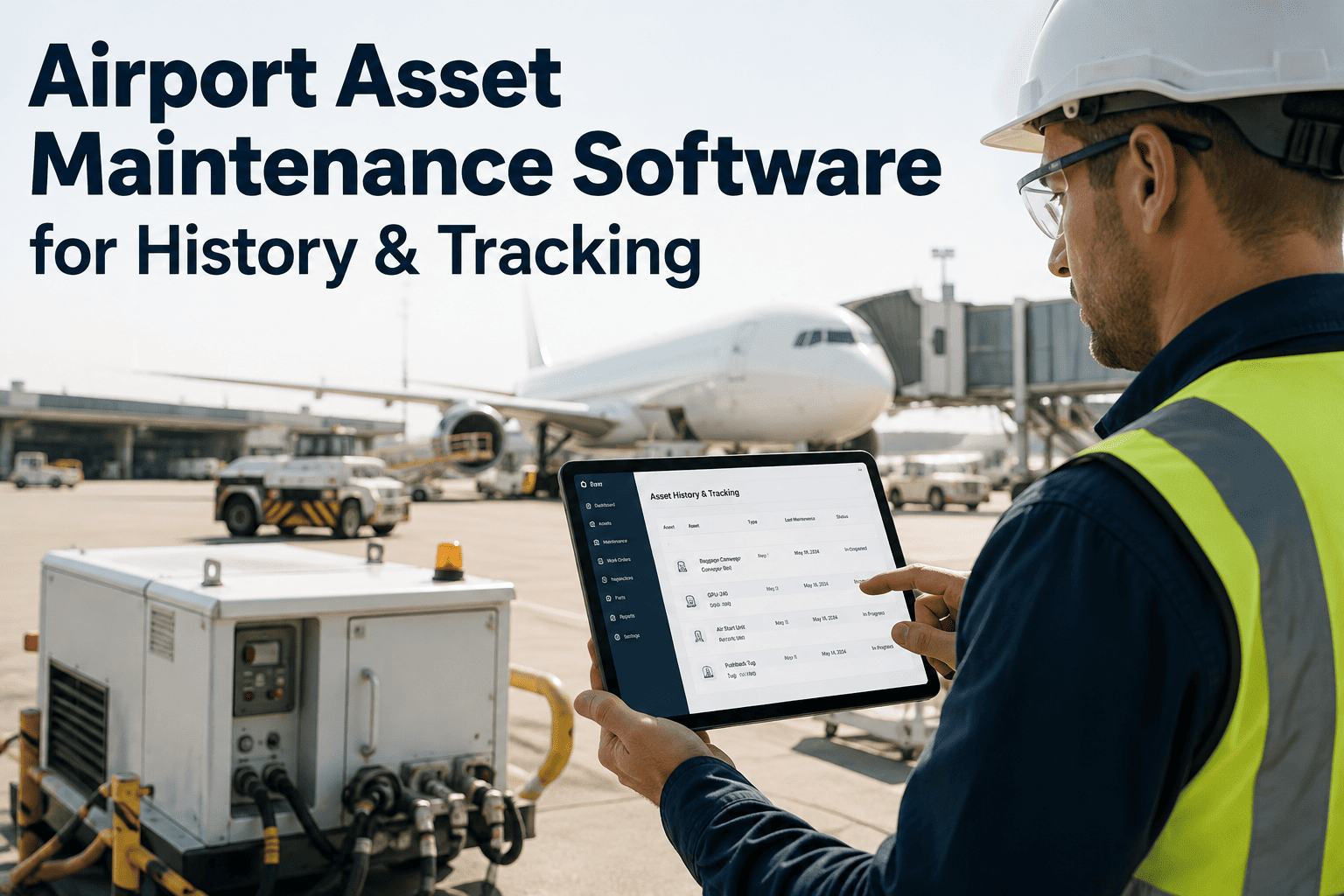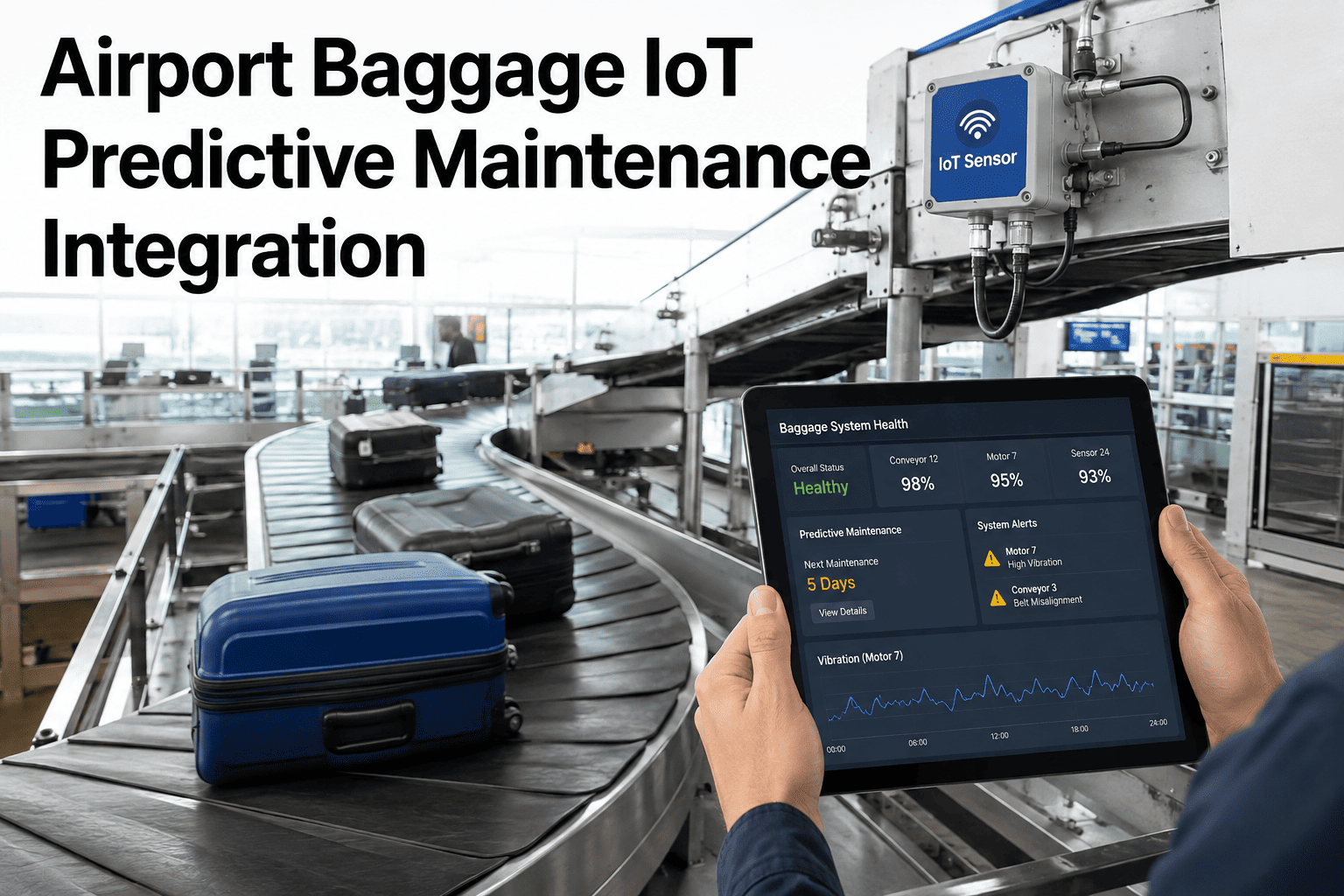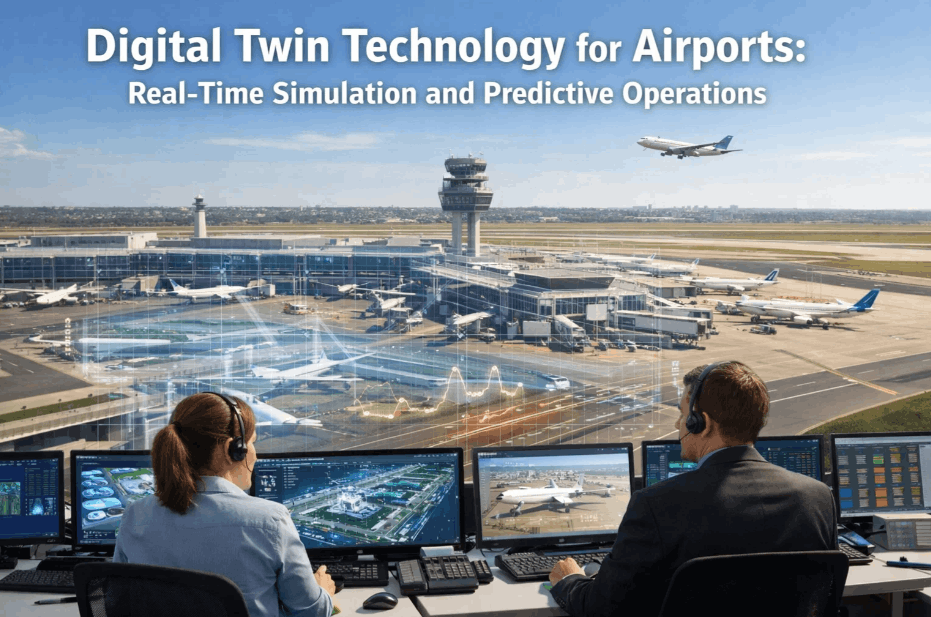
Every major airport is actually two airports operating simultaneously. The physical airport — runways, terminals, baggage systems, HVAC plants, jet bridges, electrical distribution, and 50,000+ individual assets — exists in three dimensions and degrades in real time. The information airport — spreadsheets, siloed CMMS records, paper inspection logs, disconnected BMS dashboards, and verbal handoff notes — exists in fragments scattered across departments that rarely share data. In 2026, the gap between these two airports is costing the industry billions. Runway pavement deteriorates between annual PCI surveys with no continuous visibility. Baggage handling motors degrade silently until peak-hour failure strands thousands of passengers. Terminal HVAC systems waste 25–40% of energy because BMS and maintenance data don't connect. And every unplanned infrastructure failure triggers $50,000–$150,000 per hour in airline delay penalties that a connected system could have predicted 30 days in advance. A digital twin closes this gap entirely — creating a real-time virtual replica of the entire airport, fed by thousands of IoT sensors, that shows what every asset is doing right now, predicts what it will do next, and connects every insight to a maintenance action through an integrated CMMS. iFactory's AI-Powered Digital Twin platform delivers this capability from one connected system — purpose-built for the unique scale, safety criticality, and 24/7 operational tempo that defines airport infrastructure management. Book a free digital airport assessment to see which assets in your airport would deliver the fastest ROI from digital twin simulation.
6 Reasons Disconnected Airport Systems Cost Millions
Every disconnected data silo in an airport creates a blind spot where asset degradation goes undetected, energy is wasted, and maintenance is reactive instead of predictive. Digital twin + IoT integration addresses each gap with measurable, real-time results:
Asset Condition Invisible Between Inspections
Without IoT sensors feeding a digital twin, airport asset condition is only known at inspection time — annual PCI surveys for pavements, quarterly vibration checks for rotating equipment, monthly walkthrough rounds for building systems. Between inspections, assets deteriorate silently. A digital twin with continuous IoT feeds provides real-time condition visibility for every connected asset 24/7/365.
BMS and CMMS Data Silos
Building Management Systems track HVAC and electrical performance. CMMS tracks maintenance work orders. Neither shares data with the other. The result: a chiller running 15% above normal energy consumption generates no maintenance alert because the efficiency data never reaches the maintenance system. A digital twin connects both — converting efficiency deviation into predictive maintenance action.
No Scenario Simulation Capability
"What happens if we defer this runway rehabilitation by 12 months?" "What is the cascade impact if Baggage Carousel 3 fails during peak season?" Without a digital twin, these questions are answered by anecdotal guesswork. With a digital twin, they are answered by AI simulation with quantified cost and risk projections.
Terminal Energy Waste Unmeasured
Airport terminals consume 150–400 GWh annually, with HVAC representing 40–60% of total consumption. Without IoT-connected digital twin tracking energy per zone against occupancy and weather data, airports pay for comfort they cannot measure and waste energy they cannot see. Digital twin energy modeling identifies 15–25% savings opportunities invisible to standalone BMS.
Reactive Maintenance Culture
72% of airports still run calendar-based PM programs — over-servicing healthy equipment while missing degrading assets between inspections. A digital twin shifts maintenance from calendar-based to condition-based — scheduling interventions at the optimal moment based on actual degradation data, not arbitrary time intervals.
Capital Planning Based on Guesswork
Airport capital budgets for infrastructure renewal are built from inspection snapshots and engineering estimates — not from continuous condition data with AI-projected deterioration curves. Digital twin capital scenario modeling transforms budget requests from anecdotal estimates into AI-verified investment cases with documented ROI projections.
Facing these data gaps? Book a free digital twin readiness assessment to identify your highest-value IoT and simulation targets.
How a Digital Twin Creates the Real-Time Digital Airport
The digital twin is a living virtual replica of the physical airport — fed by thousands of IoT sensors, enriched by AI pattern recognition, and connected to maintenance systems that convert every insight into action. Here is how data flows from physical asset to operational decision.
IoT Sensors Deployed
Vibration, temperature, current, pressure, and condition sensors installed on critical assets — streaming data 24/7 to the digital twin.
Digital Twin Processes
AI models analyse sensor data against asset physics, historical patterns, and operational context — building real-time condition intelligence.
CMMS Actions Generated
Predictive alerts auto-create work orders. Scenario simulations inform capital decisions. Energy insights drive optimization. Every twin output drives action.
Terminal Digital Twin
Virtual replica of terminal buildings — tracking HVAC performance, lighting systems, escalators, elevators, and passenger flow in real time. Energy consumption modeled per zone against occupancy and weather. Efficiency degradation detected and converted to maintenance action automatically.
Airfield Infrastructure Twin
Runway, taxiway, and apron pavement condition modeled continuously from PCI data, aircraft movement loads, weather exposure, and FOD detection feeds. Lighting circuit health tracked per fixture. Deterioration trajectories projected 6–12 months ahead for planned rehabilitation scheduling.
Baggage & Mechanical Twin
BHS conveyor drives, carousel motors, jet bridge mechanisms, and elevator systems modeled with continuous vibration and motor current data. AI detects bearing wear, belt degradation, and motor overload 30+ days before failure — scheduling maintenance during overnight low-traffic windows.
Electrical & Utility Twin
Transformers, switchgear, UPS systems, and electrical distribution modeled with thermal imaging, oil analysis trending, and load pattern analytics. Predicts transformer failure, identifies overloaded circuits, and optimizes power distribution across terminal zones based on real-time demand.
See Terminal, Airfield, Baggage & Electrical Digital Twins in One Platform
iFactory integrates all four digital twin domains into one connected platform — delivering real-time condition visibility, predictive maintenance, scenario simulation, and energy optimization for every airport asset category.
The ROI of a Real-Time Digital Airport
Quantified results from airports that have deployed IoT-connected digital twins with iFactory's integrated AI and CMMS platform.
Disconnected Systems vs. Digital Twin: The Gap
Ready to close the gap between your physical and information airports? Request a custom digital twin assessment for your airport.
5-Phase Implementation Roadmap
A phased approach that delivers measurable ROI at every stage — starting with your highest-impact asset categories and scaling to a fully connected digital airport.
Asset Inventory & IoT Readiness Assessment (Weeks 1–4)
Audit all 50,000+ airport assets. Classify by criticality, current monitoring status, and IoT sensor requirements. Identify highest-consequence asset categories — typically BHS, airfield lighting, terminal HVAC, and electrical distribution — for Phase 1 digital twin deployment. Assess network infrastructure capacity for IoT data streams.
IoT Sensor Deployment & Data Integration (Weeks 5–10)
Install IoT sensors on priority asset groups. Connect sensor data streams, existing BMS feeds, SCADA data, and CMMS records to iFactory's AI platform. Establish data quality baselines and confirm connectivity across all airport zones including remote airfield locations.
Digital Twin Model Training (Weeks 10–16)
Train digital twin models on 12–24 months of historical data plus live IoT streams. Configure physics-based and ML hybrid models for each asset category. Validate predictions against known operational data. Calibrate alert thresholds for predictive maintenance and energy optimization.
CMMS Integration & Operational Activation (Weeks 16–20)
Connect digital twin predictive alerts to CMMS work order generation. Activate operator dashboards, energy optimization recommendations, and capital scenario modeling tools. Train operations, maintenance, and engineering teams on digital twin-driven workflows.
Scale to Full Digital Airport (Week 20+)
Expand digital twin coverage to all asset categories across the airport. Activate pavement deterioration modeling, passenger flow simulation, and sustainability tracking. Build the continuous improvement loop that compounds prediction accuracy and operational value over time.
IoT Sensor Categories Powering the Digital Airport
The digital twin's intelligence depends on the quality and coverage of its IoT sensor network. Here are the five sensor categories that create a comprehensive digital airport.
Vibration & Motor Current
Continuous accelerometers and motor current analysers on BHS drives, carousel motors, jet bridges, escalators, and elevator machines. Detects bearing wear, belt degradation, and motor overload patterns 30+ days before failure.
Temperature & Humidity
Zone-level temperature and humidity sensors across terminal concourses, gate areas, and mechanical rooms. Combined with BMS chiller and AHU data to create the HVAC digital twin that identifies comfort and efficiency deviations in real time.
Electrical Power Monitoring
Current, voltage, and power quality sensors on transformers, switchgear, and distribution panels. Combined with thermal imaging data to build the electrical digital twin that predicts transformer failure and identifies overloaded circuits before cascade events.
Airfield & Pavement Condition
Weather station data (freeze-thaw cycles, precipitation), aircraft movement counters (weighted by type), FOD detection systems, and airfield lighting circuit current monitors. Together these feeds create the pavement and lighting digital twin for continuous deterioration modeling.
Expert Perspective
"The airports that will define operational excellence in the next decade are the ones building digital twins today. A digital twin is not a monitoring dashboard — it is a decision engine. It does not just show you that a chiller is consuming 18% more energy than its baseline; it tells you that the condenser coils are fouled based on the approach temperature trend, predicts how many days until the efficiency loss triggers a comfort complaint, generates a maintenance work order timed to the optimal intervention window, and quantifies the energy savings that the repair will deliver — all automatically, all connected, all in real time. That is the difference between a siloed BMS alert and an integrated digital airport. The airports that deployed digital twins first are already reporting 40% less unplanned downtime, 15–25% energy savings, and capital planning accuracy that transforms budget requests from guesswork into AI-verified investment cases."
Ready to build your real-time digital airport? Talk to our aviation digital twin specialists today.
Compliance & Industry Drivers at a Glance
Your Airport Exists in 3D. Your Data Should Too.
iFactory's AI-Powered Digital Twin creates a real-time virtual replica of your entire airport — connecting IoT sensors, BMS data, CMMS maintenance records, and AI predictive analytics into one platform that transforms how you maintain, optimize, and plan your infrastructure.