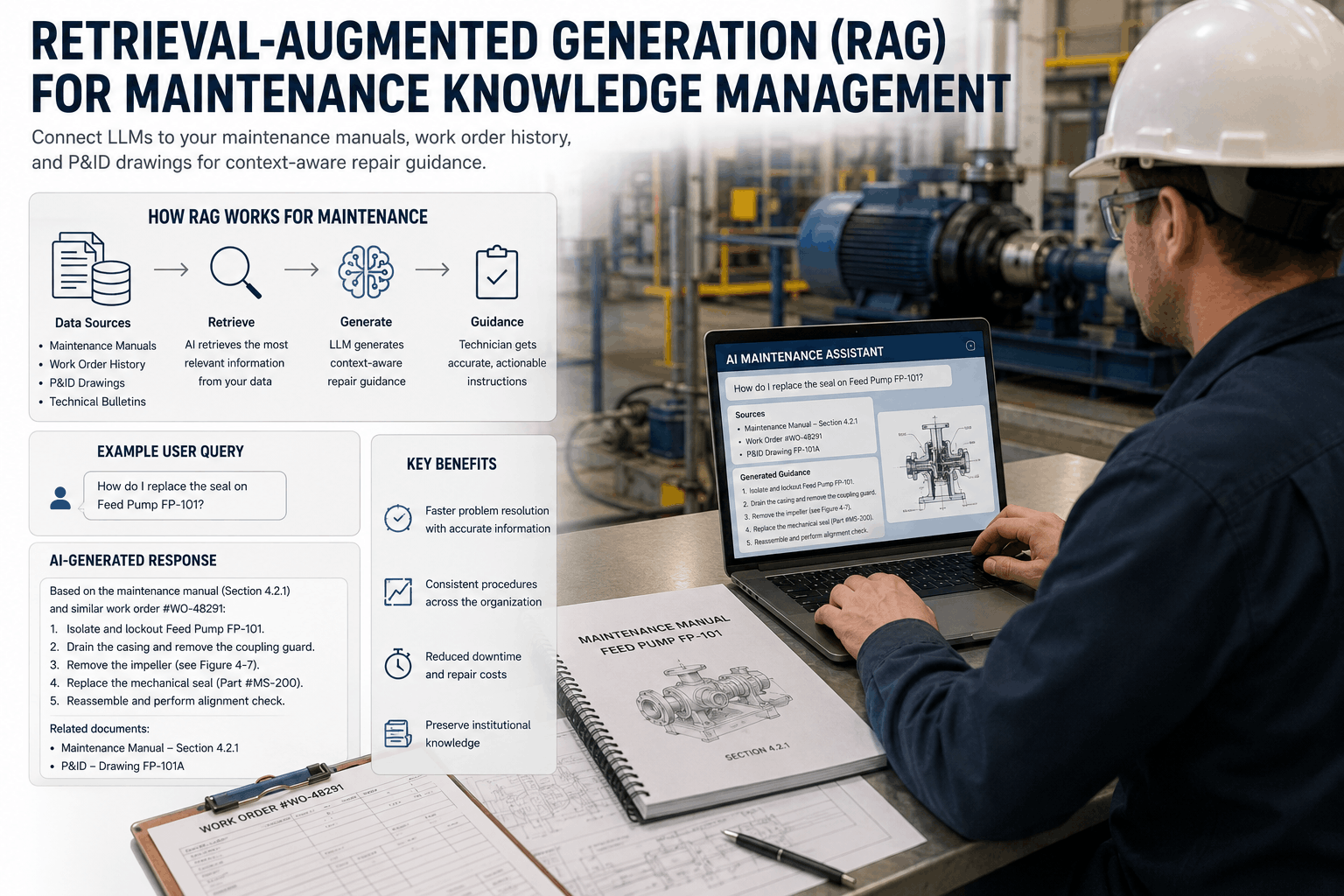
Predictive maintenance has spent a decade alerting technicians to problems. Agentic AI does the next step autonomously — it plans the repair, orders the part, and schedules the technician before a human even reads the notification. Deloitte reports that agentic AI adoption in manufacturing is growing from 6 percent to 24 percent by 2026, a fourfold expansion driven by industrial teams that have run out of patience with systems that predict problems but do nothing to resolve them. Start Trial to see how BusCMMS brings autonomous maintenance action to bus and equipment fleets.
Move From Maintenance Alerts to Autonomous Repair Action
BusCMMS connects sensor signals, parts inventory, and technician scheduling into a single loop so maintenance action happens the moment a failure pattern is detected — not after a supervisor reads an alert and decides what to do.
What Separates Agentic AI From Conventional Predictive Maintenance
Conventional predictive maintenance systems produce an alert and wait for human decision-making — a model that still requires a skilled supervisor to triage, prioritize, and dispatch every day. Agentic AI closes this gap by giving the maintenance system decision authority: when a bearing temperature anomaly crosses a learned threshold, the agent identifies the likely failure mode, retrieves the correct procedure, checks parts availability, and creates a scheduled work order without any human in the loop. Teams that Book Demo with BusCMMS see how autonomous workflow triggers connect sensor data to work order creation, parts requests, and technician assignment in a single uninterrupted action chain. This is the structural shift that makes predictive maintenance an operational capability rather than a data reporting exercise.
Autonomous Work Order Creation
When sensor data crosses a failure threshold, BusCMMS creates a structured work order with fault code, priority, and procedure reference — no supervisor action required.
Parts Availability Checking and Auto-Request
The agent checks parts inventory at the moment of work order creation and generates a purchase request automatically when required components are below reorder level.
Technician Scheduling Integration
Work orders are assigned to the first available qualified technician based on skill match and current workload, closing the dispatch gap that delays most maintenance actions.
Failure Pattern Recognition Across Fleet
Agentic patterns learned from one vehicle propagate to the entire fleet, so a bearing failure signature detected on unit 12 triggers proactive inspection on all similar units.
Self-Correcting PM Interval Adjustment
PM intervals adjust automatically based on actual failure pattern data, replacing fixed calendar schedules with intervals driven by real asset behavior.
Escalation and Human Override Protocols
High-criticality decisions or novel failure modes escalate to human review automatically, keeping safety-critical decisions within human authority while routine actions run autonomously.
Six Agentic AI Capabilities Transforming Industrial Maintenance
01
Autonomous Fault Detection and Work Order Initiation
Core Agentic Function
The fundamental agentic loop begins when a sensor anomaly triggers an AI agent that identifies the probable fault, retrieves the relevant repair procedure, and creates a prioritized work order — all within seconds of the detection event. This collapses the average time from anomaly detection to maintenance action from hours to minutes. Deloitte's 2026 manufacturing survey shows this capability as the primary driver of the fourfold increase in agentic AI adoption, because it directly reduces mean time to repair without additional headcount.
Alert-to-action: 4.2 hrs (conventional)
Alert-to-action: 8 min (agentic AI)
02
Fleet-Wide Pattern Propagation
Collective Intelligence
When an agentic system identifies a failure pattern on one asset, it searches the entire connected fleet for the same signature and generates preemptive inspection work orders on all matching units. This fleet-wide propagation converts a single failure event into a preventive action across dozens of vehicles, multiplying the maintenance intelligence produced by each incident without additional diagnostic effort from technicians.
Fleet pattern coverage: 18% (manual)
Fleet pattern coverage: 94% (agentic)
03
Autonomous Parts Procurement and Inventory Management
Supply Chain Integration
An agentic maintenance system that detects a failing component and cannot automatically verify parts availability and trigger procurement still requires human action at the critical moment. Fully agentic parts management checks inventory at work order creation, generates purchase requests for missing components, and updates the work order schedule to align with expected parts arrival — without any warehouse or purchasing team involvement in routine replenishment.
Parts-related delays: 38% of WOs
Parts-related delays: 9% of WOs
04
Dynamic PM Interval Self-Adjustment
Adaptive Scheduling
Fixed PM intervals are a compromise between manufacturer recommendations and operational reality that rarely match actual asset wear patterns. An agentic system continuously analyzes failure interval data and adjusts PM schedules to match actual asset behavior, extending intervals on low-stress units and compressing them on high-utilization assets without requiring a reliability engineer to manually review each vehicle's history.
Schedule accuracy: 61% (fixed intervals)
Schedule accuracy: 89% (adaptive AI)
05
Technician Skill-Match and Load-Balanced Dispatch
Workforce Optimization
Agentic dispatch assigns each work order to the most qualified available technician based on skill certification, current workload, and physical location — replacing the daily supervisor scheduling task with an automated optimization that is recalculated in real time as work order priority and technician availability change throughout the shift.
Tech utilization: 58% (manual dispatch)
Tech utilization: 81% (agentic dispatch)
06
Human-in-the-Loop Escalation for Critical Decisions
Safety Architecture
Agentic systems in safety-critical maintenance environments require clearly defined escalation boundaries — the specific failure types and criticality levels at which autonomous action stops and human review is required. Well-designed agentic maintenance architecture handles 80-90 percent of routine work autonomously while routing novel failure modes, safety-critical assets, and high-cost repair decisions to human supervisors with full diagnostic context already assembled.
Autonomous resolution: 88% of WOs
Human escalation: 12% of WOs
Agentic AI Maintenance Capability Comparison
Scroll for more
| Capability | Conventional PdM | Agentic AI | Operational Impact | BusCMMS Integration |
|---|---|---|---|---|
| Fault Detection | Alert only | Detect, classify, act | MTTR reduced 60–80% | Sensor-to-WO automation |
| Parts Management | Manual check | Auto-request on WO creation | Parts delays down 75% | Inventory-linked WO engine |
| PM Scheduling | Fixed calendar | Adaptive interval by asset | PM accuracy up 30% | Behavior-driven PM engine |
| Technician Dispatch | Supervisor assigned | Skill-match auto-assign | Tech utilization up 23% | Load-balanced dispatch |
| Fleet Learning | Single asset | Pattern propagates fleet-wide | Pre-failure coverage up 5x | Cross-fleet pattern engine |
How BusCMMS Implements Agentic Maintenance Workflows
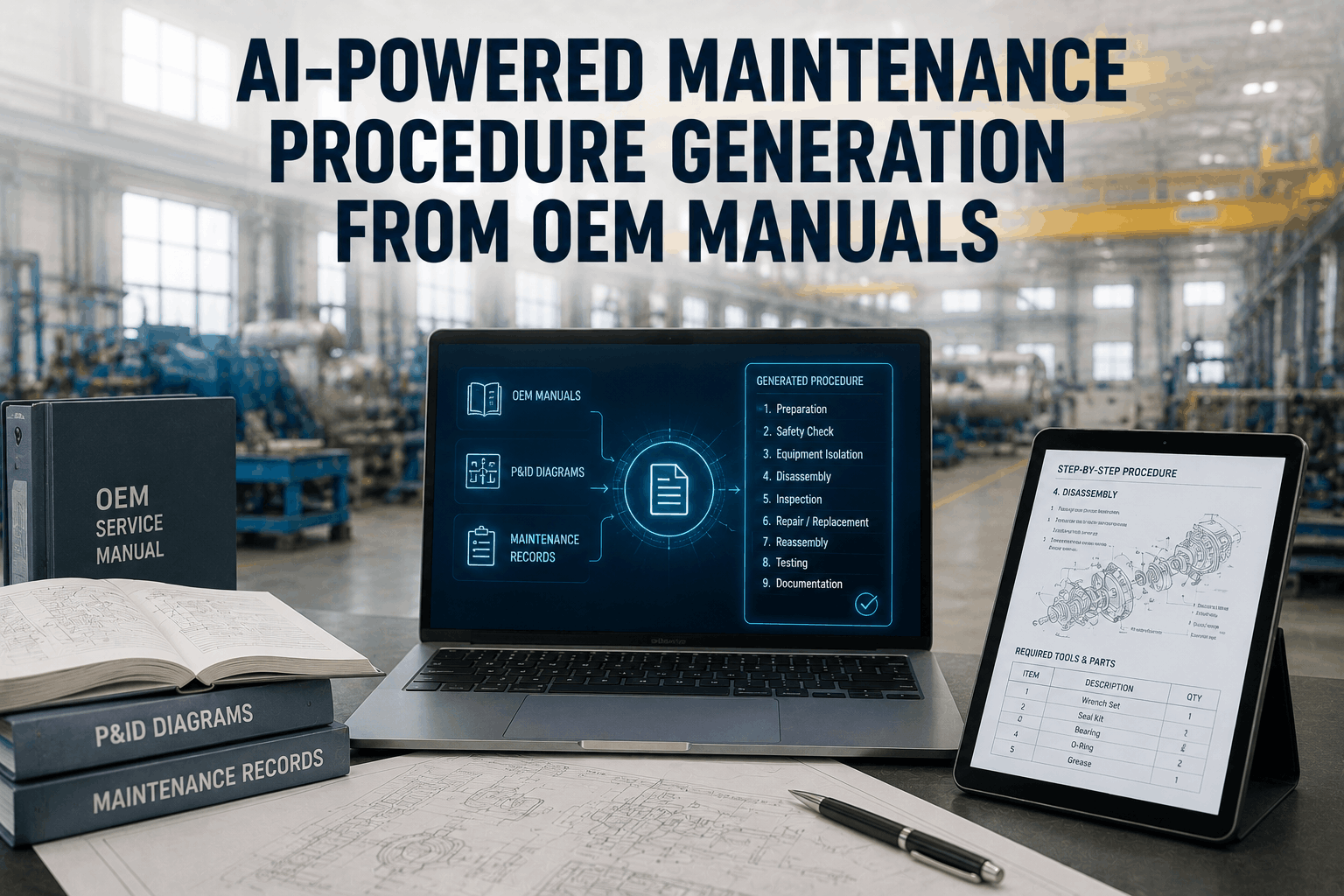
Agentic AI in maintenance is only as powerful as the operational system it is connected to, and BusCMMS provides the work order engine, parts inventory layer, and technician dispatch infrastructure that agentic detection logic needs to take autonomous action. When a sensor anomaly is classified, BusCMMS creates the work order, checks parts, assigns the technician, and schedules the repair window — then logs the outcome to improve the next detection cycle. Fleet teams can Start Trial and begin connecting predictive signals to autonomous maintenance action from the first asset in BusCMMS.
Sensor-to-Work-Order Automation
Fault signals from connected sensors create structured work orders in BusCMMS automatically, closing the detection-to-action gap without human dispatch.
Adaptive PM Scheduling Engine
PM intervals update based on actual failure pattern data, replacing fixed calendar schedules with asset-behavior-driven maintenance timing.
Parts-Linked Work Order Creation
Every work order checks inventory at creation and triggers procurement requests for missing components before the technician is dispatched.
Cross-Fleet Pattern Propagation
Failure signatures detected on one asset generate preemptive inspection work orders across all matching units in the connected fleet automatically.
Implementing Agentic Maintenance: Six Steps
01
Define the Autonomous Action Boundary
Identify which fault types and asset classes will receive autonomous work order creation, and which require human review before action is taken.
02
Connect Sensor Data to Work Order Engine
Establish the integration between sensor anomaly signals and BusCMMS work order creation so fault detection triggers maintenance action automatically.
03
Link Parts Inventory to Work Order Creation
Configure parts availability checking at work order creation and auto-request generation when required components fall below reorder threshold.
04
Configure Technician Skill-Match Dispatch Rules
Map technician certifications and specializations in BusCMMS so autonomous dispatch assigns work orders to the right person without supervisor input.
05
Enable Fleet-Wide Pattern Propagation
Configure cross-fleet pattern matching so fault signatures detected on one asset automatically generate preemptive inspection work orders on similar units.
06
Review and Refine Escalation Thresholds Monthly
Review which decisions are escalating to human review and adjust thresholds as the agentic system accumulates accuracy history on each fault type.
Frequently Asked Questions
What is agentic AI in predictive maintenance?
Agentic AI goes beyond fault prediction by autonomously executing repair planning, parts procurement, and technician scheduling when a failure pattern is detected, without waiting for human instruction.
How fast is agentic AI adoption growing in manufacturing?
Deloitte reports agentic AI adoption in manufacturing is growing from 6 percent to 24 percent by 2026, driven primarily by autonomous maintenance workflow applications that reduce MTTR without additional headcount.
What decisions should always remain under human control in agentic maintenance?
Safety-critical asset decisions, novel failure modes without sufficient training data, high-cost repairs above a defined threshold, and situations requiring regulatory documentation should always escalate to human review.
How does agentic AI differ from standard rule-based maintenance automation?
Rule-based automation follows fixed if-then logic. Agentic AI learns from outcomes, adapts its thresholds based on new data, and can handle novel scenarios that fall outside the original rule set.
How does BusCMMS support agentic maintenance workflows?
BusCMMS provides the work order engine, parts inventory layer, and dispatch infrastructure that agentic detection logic needs to take action, connecting sensor signals to autonomous maintenance execution.
Stop Reading Alerts. Start Taking Autonomous Action.
BusCMMS connects predictive signals to work order creation, parts procurement, and technician dispatch so your maintenance system acts the moment a fault is detected.

.png)