Airport ground operations in 2026 face a perfect storm of converging pressures. Ground Support Equipment (GSE) fleets — pushback tractors, baggage tugs, fuel bowsers, ground power units, air starters, de-icers, and belt loaders — operate under relentless duty cycles with minimal margin for failure. A single unplanned GSE breakdown can cascade into tarmac delays, missed departure slots, and penalty costs that far exceed any maintenance savings. Simultaneously, aviation regulators are tightening airworthiness and emissions standards, skilled aviation technicians are retiring faster than they can be replaced, and fuel costs continue their structural rise. Yet 2026 is also the year that AI-powered GSE management has reached full operational maturity — deployable, measurable, and proven. Here are the eight most critical challenges facing ground support teams today — and precisely how AI addresses each one.
Top 8 Ground Support Equipment
Challenges — Solved by AI in 2026
Unplanned GSE Failures & Cascading Tarmac Delays
Ground support equipment operates in punishing conditions — extreme thermal cycles, continuous duty rotations, outdoor exposure, and frequent operator changes that accelerate wear in ways that static maintenance schedules cannot anticipate. A pushback tractor failure at gate 34 does not just delay one departure; it triggers a cascade of slot misses, crew rest violations, and connection failures that ripple across a carrier's network for hours. Yet most GSE fleets are still maintained on fixed calendar intervals that ignore real component condition, replacing serviceable parts while missing the gradual degradation signatures that precede actual failures. The financial and operational cost of this approach compounds every single operational day.
Predictive Maintenance with IoT Sensors & Digital Twin
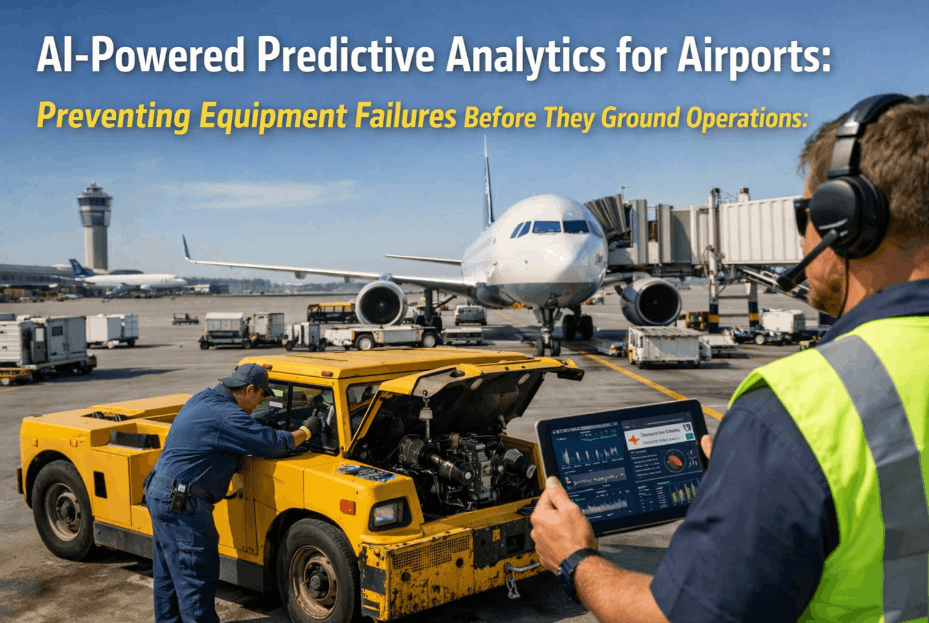
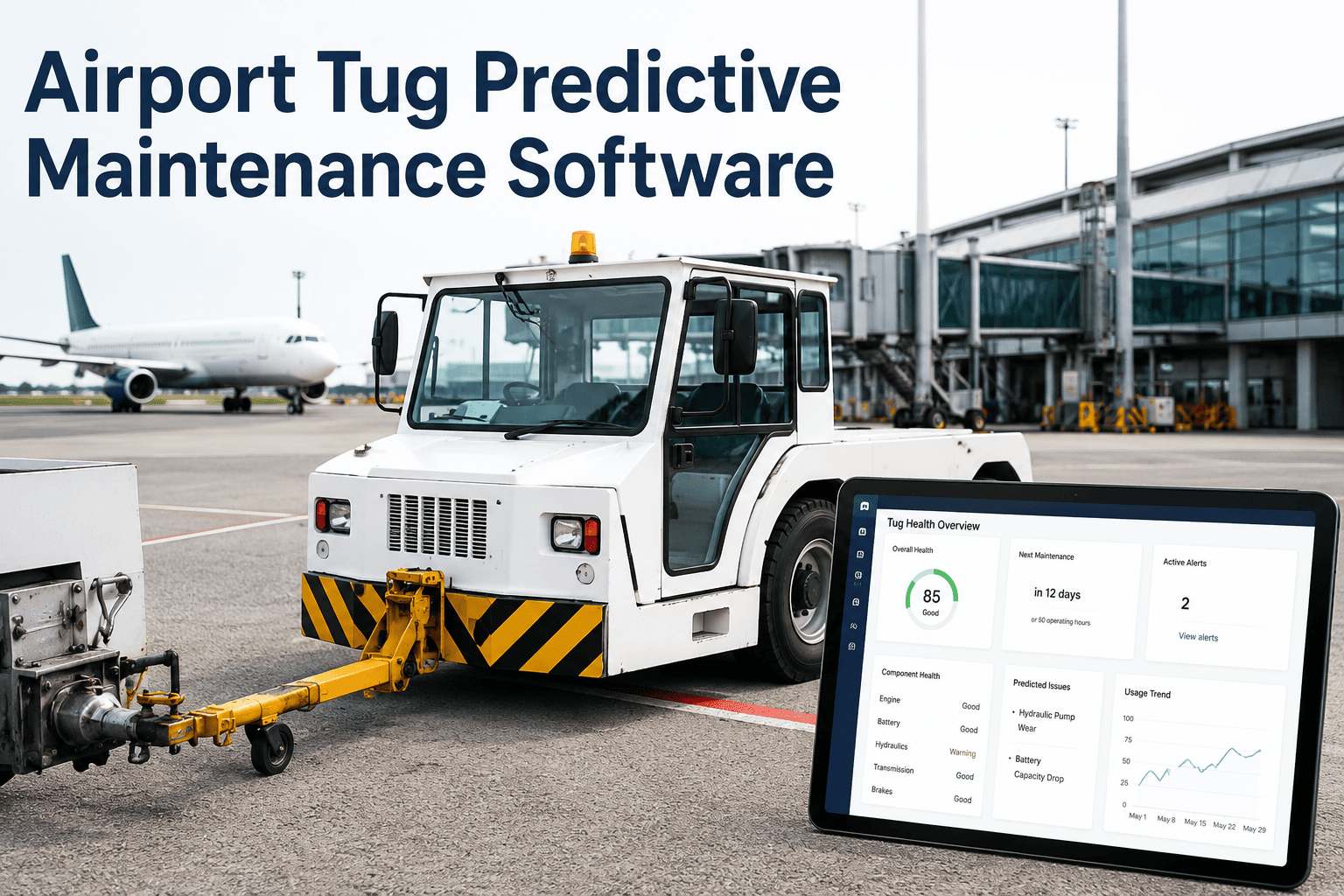
iFactory's AI embeds IoT sensors across the GSE fleet — monitoring hydraulic pressure, motor temperature, battery health, drivetrain vibration, and brake wear in real time. Machine learning models identify degradation patterns weeks before failure, enabling planned interventions during scheduled turnaround windows rather than emergency responses on the ramp. Digital twin models simulate each asset's remaining useful life with increasing precision as operational data accumulates. Airports using iFactory's predictive maintenance platform report up to 50% reduction in unplanned GSE downtime.
Spiraling Fuel & Energy Costs Across GSE Fleets
Diesel-powered ground support equipment — fuel bowsers, de-icing rigs, mobile generators, and heavy tow tractors — consumes fuel at rates that vary dramatically based on operator behavior, idling patterns, route inefficiency, and equipment condition. Ground power units and pre-conditioned air systems draw significant electrical energy, often running far longer than necessary because no system is tracking actual aircraft docking times against GPU connection durations. Across a large hub operation, these inefficiencies accumulate into millions of dollars of annual waste — invisible to management because no system is aggregating and analyzing the data.
Get started with iFactory to activate AI-driven energy optimization across your GSE fleet.
Real-Time Fleet Energy Optimization & Idle Reduction
AI continuously monitors fuel consumption and electrical draw across every GSE asset, correlating usage against actual operational need. ML models identify idling anomalies, inefficient routing patterns, and equipment running beyond mission requirements — generating alerts and automated dispatch optimization that eliminate wasteful energy consumption. Predictive scheduling matches the right equipment to each turn, reducing unnecessary deployment. Airports implementing iFactory's fleet optimization report 15–25% reductions in total GSE fuel and energy cost within the first 60 days.
Poor Fleet Utilization & Real-Time Visibility Gaps
Most ground handling operations have no accurate picture of where their GSE fleet is at any given moment, what its real-time operational status is, or how utilization compares across equipment categories. Belt loaders sit idle at remote stands while aircraft at the main pier wait. Ground power units are double-assigned through radio miscommunication. Pushback tractors queue at congested aprons while gates on the far concourse have none. This visibility gap drives both equipment over-procurement — buying units to cover for inefficiency — and service failures when equipment is genuinely unavailable due to poor deployment decisions made without real-time data.
Real-Time Fleet Tracking & AI Dispatch Optimization
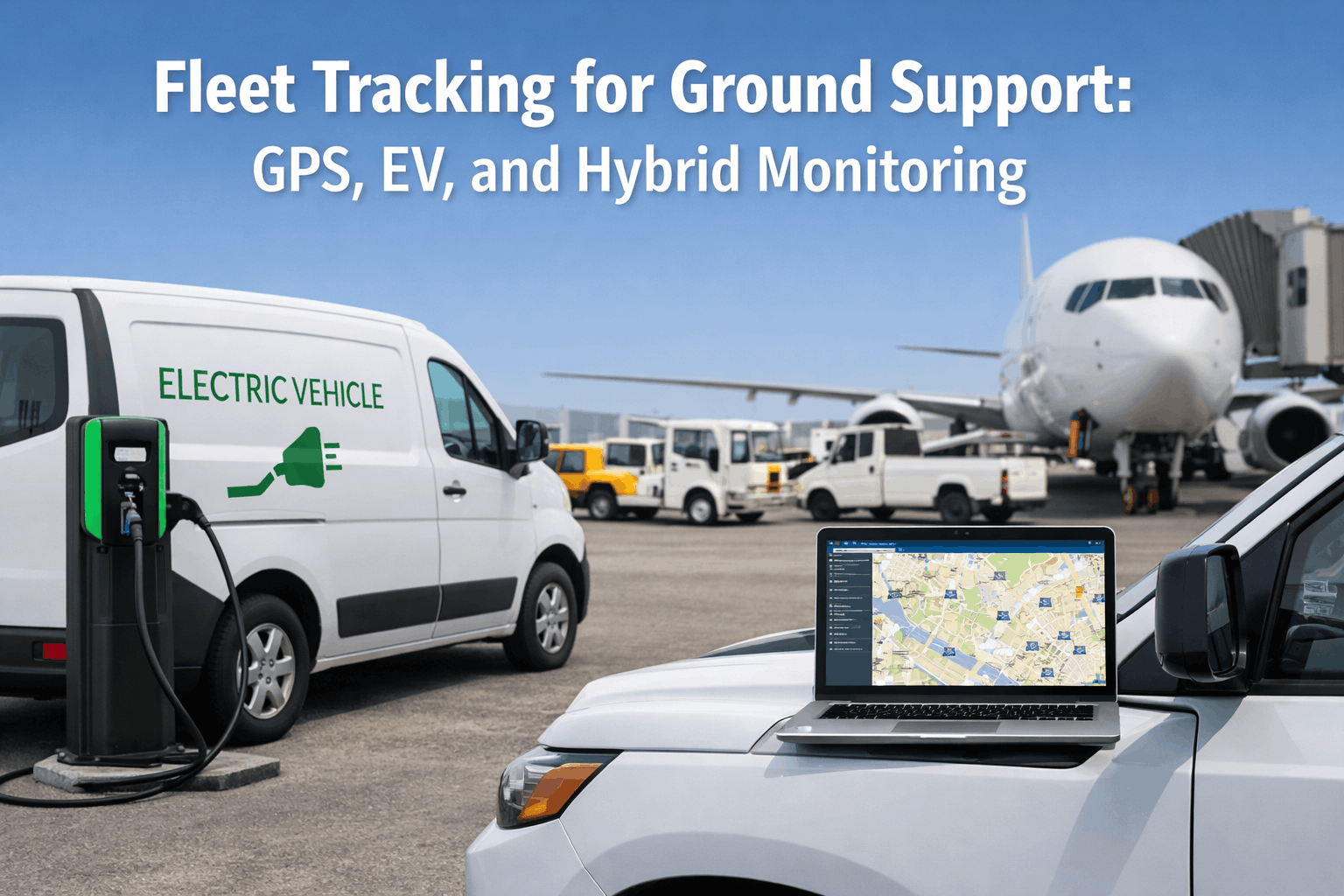
GPS telematics integrated with iFactory's AI platform provides second-by-second location and status data for every asset in the fleet, displayed on an operational dashboard accessible to dispatch, supervisors, and maintenance. AI dispatch algorithms analyze inbound flight schedules, turn time requirements, and current equipment positions to pre-stage assets optimally before aircraft arrive. Utilization analytics identify chronically underused equipment and over-pressured categories, enabling fleet right-sizing decisions backed by real data. Airports report 30–40% improvement in fleet utilization efficiency after AI dispatch implementation.
Workplace Safety Incidents in High-Pressure Ramp Environments
The airport ramp is one of the most hazardous workplaces in commercial aviation — narrow clearances between moving equipment and aircraft, time pressure from on-time performance targets, shift handover confusion, FOD risks, and the constant intersection of vehicle traffic and pedestrian movement create an environment where incidents happen fast and with serious consequences. Ramp accidents result in aircraft structural damage costing hundreds of thousands of dollars per incident, worker injuries, regulatory investigations, and insurance premium impacts that persist for years. Traditional safety management relies on periodic audits and incident reporting — reactive mechanisms that only respond after harm has already occurred.
Book a demo to see AI ramp safety monitoring in action at live airport environments.
Computer Vision Safety Monitoring & Proximity Detection
AI-powered computer vision deploys across the apron and equipment staging areas — monitoring GSE-to-aircraft proximity in real time, detecting personnel in vehicle movement zones, identifying missing PPE, and flagging unsafe equipment operating speeds. The system generates graded real-time alerts to supervisors and equipment operators via mobile and control room interfaces before incidents escalate. AI movement analysis identifies chronic high-risk patterns — specific gate configurations, turn time pressure events, handover periods — enabling structural safety improvements beyond reactive incident response. Safety incident rates at AI-monitored operations decline 40–60% year-over-year.
Regulatory Compliance & Airworthiness Documentation Burden
Aviation regulators — FAA, EASA, ICAO, and national civil aviation authorities — impose rigorous airworthiness and safety standards on GSE that interacts with aircraft. Equipment certification records, scheduled inspection compliance, defect reporting, and corrective action documentation must be maintained to an audit-ready standard at all times. In practice, compliance documentation is often paper-based, fragmented across shift logs and CMMS records, and assembled manually for inspections — a process that consumes technician time, introduces transcription errors, and exposes operations to regulatory sanctions when records are incomplete or inconsistent. As regulatory scrutiny intensifies in 2026, the documentation burden is escalating faster than manual processes can scale.
Automated Compliance Tracking & Audit-Ready Reporting
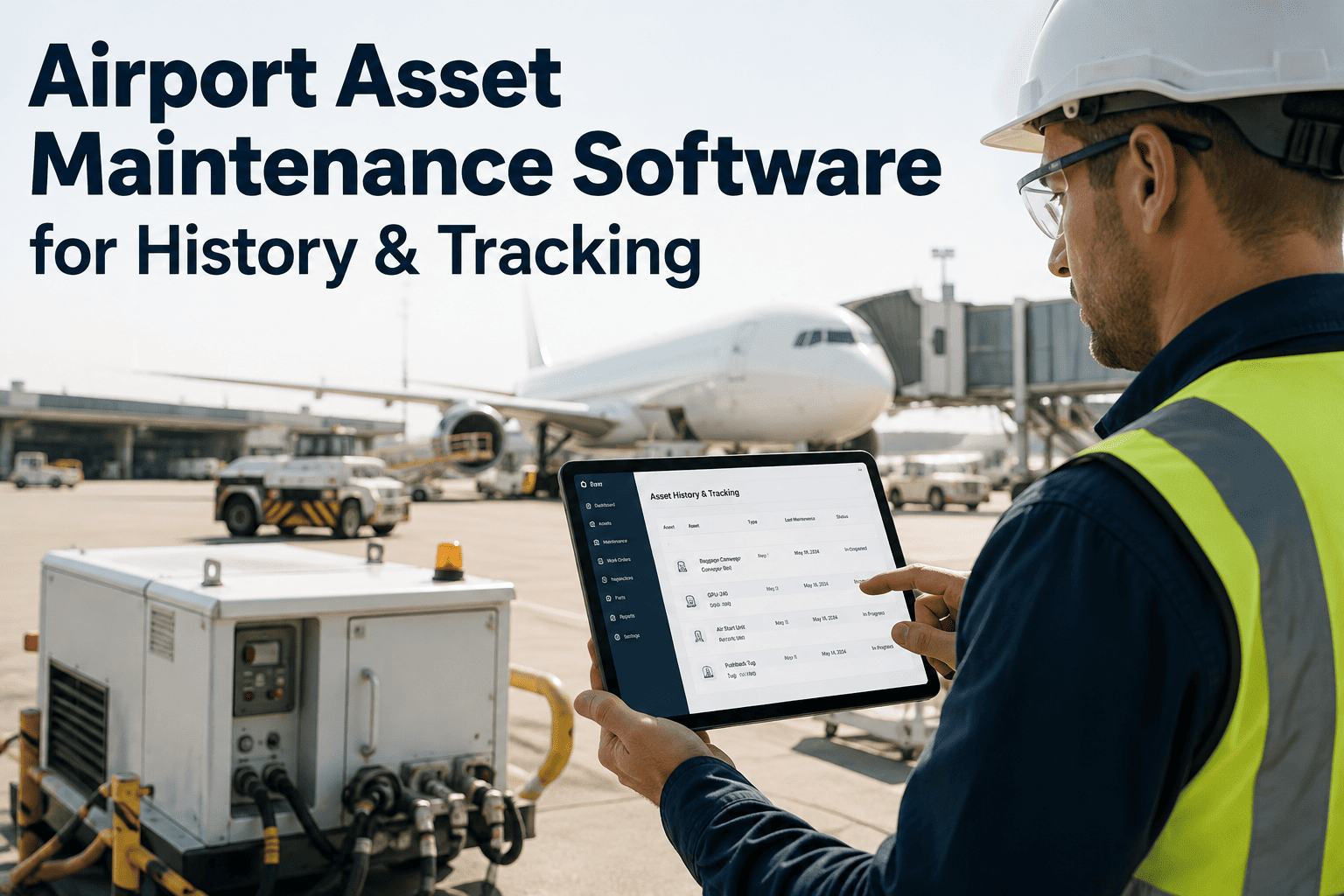
iFactory's CMMS-integrated AI platform automates GSE maintenance record generation, inspection scheduling, and regulatory compliance tracking across every asset in the fleet. AI monitors approaching certification deadlines and maintenance due dates, triggering automated work order generation before compliance lapses occur. All maintenance actions, defect records, and corrective actions are captured digitally and indexed for instant retrieval during audits. Compliance reports are generated on demand, eliminating manual document assembly. Operations using AI compliance management report 70–80% reduction in documentation-related administrative hours.
Workforce Knowledge Gaps & Aviation Technician Shortages
The aviation ground support sector faces a structural technician shortage that will intensify through the latter half of this decade. Experienced GSE engineers — specialists who developed deep knowledge of specific equipment types, airport-specific quirks, and seasonal failure patterns over decades — are retiring in significant numbers. Their replacement pipeline is inadequate: technical training programs cannot graduate candidates at the rate needed, and the knowledge accumulated by departing veterans has never been systematically captured or transferred. New technicians are managing complex, safety-critical equipment without the contextual depth that would have previously required years to develop, increasing both error rates and resolution times.
AI-Guided Troubleshooting & Knowledge Capture Systems
iFactory's AI encodes the decision patterns of experienced GSE technicians by analyzing historical maintenance records, fault codes, resolution actions, and outcomes — transforming accumulated expertise into an AI guidance engine accessible to every technician via mobile interface. When a fault occurs, the AI surfaces the most probable root cause, recommended diagnostic steps, and resolution procedures based on the equipment's specific history and similar fault patterns across the fleet. New technicians operate with the knowledge depth of a senior engineer from day one. As the AI ingests more resolution data, guidance accuracy improves continuously.
Spare Parts Mismanagement & Supply Chain Disruptions
GSE spare parts inventory is a chronic pain point for ground handling operations. Overstocking ties up capital in components that may sit on shelves for years; understocking leaves critical equipment awaiting parts for days or weeks during which every duty cycle that equipment misses represents real operational cost. Aviation supply chains have not fully recovered from pandemic-era disruptions, and lead times for specialist GSE components remain unpredictable. Without AI-driven demand forecasting, inventory managers fall back on conservative overbuying that inflates carrying costs, or reactive reordering that leaves fleets unnecessarily AOG during peak operational periods.
Connect your parts management to iFactory AI and eliminate supply chain guesswork.
Predictive Parts Demand & Intelligent Inventory Management
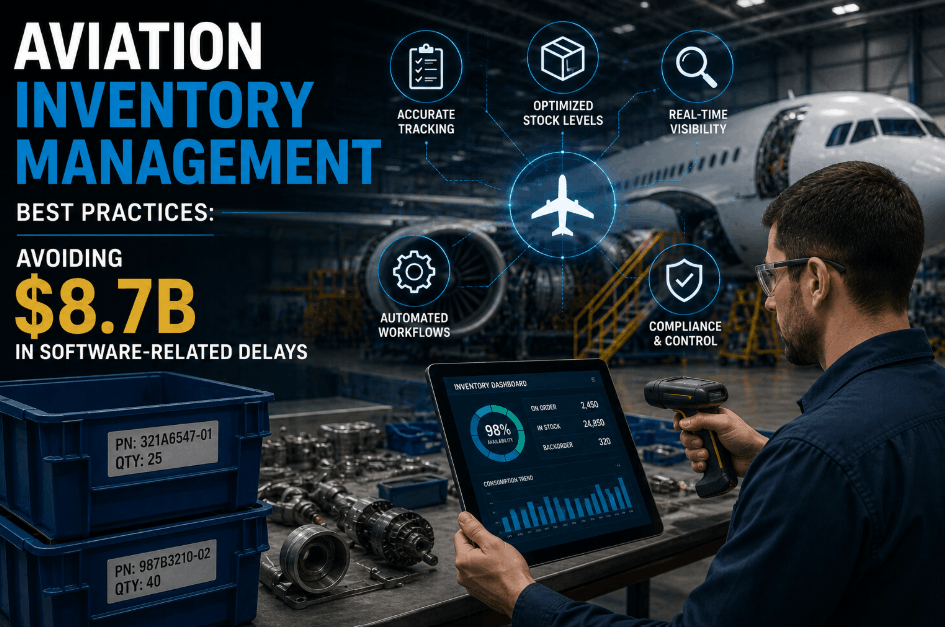
AI analyzes fleet-wide failure history, predictive maintenance forecasts, seasonal demand patterns, and supplier lead time data to predict parts consumption with precision that static reorder point models cannot approach. Automated purchase order triggers ensure critical components are on-hand before they are needed rather than ordered after an AOG event. Inventory carrying costs are reduced by eliminating speculative overstock while service levels improve because AI-predicted needs are met proactively. Airports using iFactory's AI parts management report 30–50% reduction in AOG-related delays attributable to parts unavailability.
Asset Lifecycle Management & Long-Range Capital Planning
A modern GSE fleet at a major international hub represents $50M–$200M in capital assets, with individual units ranging from $30,000 for a baggage tug to over $1M for a wide-body pushback tractor or advanced de-icing rig. Making the right repair-versus-replace decisions across a fleet of hundreds of assets — and doing so years in advance to align with airline contract cycles and capital budget planning — requires asset health visibility that traditional CMMS systems and manual condition assessments cannot provide. Without accurate fleet health data, capital planning becomes cautious guesswork that either under-invests in reliability or triggers premature replacements that destroy asset value.
Digital Twin Lifecycle Management & CapEx Forecasting
iFactory's digital twin platform creates a continuously updated virtual model of every GSE asset — integrating sensor data, maintenance history, utilization records, and failure patterns into a living health profile. AI analyzes fleet-wide degradation trends to project remaining useful life for each asset and model multi-year capital replacement requirements with quantified confidence intervals. Repair-versus-replace decisions are supported by data-driven economic modeling rather than intuition. Capital expenditure forecasts become predictable and defensible. Operations using iFactory's digital twin report measurably extended asset lifespans and capital budget variance reductions of 35–50%.
iFactory for Airport Ground Operations
All 8 GSE Challenges. One AI Platform.
iFactory integrates predictive maintenance, fleet visibility, energy optimization, safety monitoring, compliance automation, and supply chain AI into a single platform purpose-built for the operational complexity of airport ground support.
Documented Results from AI Deployment in GSE Operations
These figures reflect real-world outcomes documented across independent research and live operational deployments — not projections or estimates.
Ground Handlers Who Adopt AI in 2026 Will Define the Industry's Operational Standard
Airports and ground handling operators that implement AI-driven predictive maintenance, fleet optimization, and safety monitoring this year will lock in a structural performance advantage that compounds with every operational cycle. The question is no longer whether AI belongs in ground support management — it is whether your operation will lead the transition or follow it.
Frequently Asked Questions
How does iFactory's AI integrate with existing GSE management and CMMS systems?
iFactory is designed to layer on top of existing CMMS, ERP, and asset management platforms rather than replace them. The AI connects to existing data sources — maintenance historians, telematics feeds, sensor networks, and work order systems — via standard integration protocols including REST APIs, OPC-UA, and flat-file data exchange. The AI analysis layer processes this data to generate predictive insights and operational recommendations, delivered through iFactory's dashboards or integrated back into existing operator interfaces. Most ground handling operations can deploy iFactory without capital investment in new control infrastructure, significantly shortening time to first value.
What is the typical ROI timeline for AI GSE management implementation?
Most airport operations see measurable results within 30–60 days of deployment, primarily through energy savings from idle reduction and early predictive maintenance alerts that prevent first incidents. Full return on investment — calculated across downtime reduction, fuel savings, compliance efficiency gains, and safety incident cost avoidance — is typically achieved within 12–18 months. The ROI case is particularly compelling for hub operations with large fleets because the absolute value of preventing a single wide-body pushback AOG event or ramp safety incident typically exceeds an entire year's platform subscription cost.
Can AI GSE management work for smaller regional airports or only large hubs?
AI GSE management is accessible and commercially viable at all scales in 2026. Cloud-based deployment eliminates on-premise infrastructure requirements. Subscription pricing scales proportionally to fleet size and operational complexity, making the unit economics favorable for regional operations as well as large hubs. In fact, smaller fleets often see proportionally higher impact from AI implementation because a single prevented AOG event or a 20% fuel reduction represents a larger percentage of the operating budget. iFactory's platform scales from 10-unit regional GSE fleets to multi-airport portfolios managing thousands of assets under a single operational view.
How does AI help meet IATA, FAA, and EASA GSE compliance requirements?
iFactory addresses GSE regulatory compliance across three layers. First, continuous monitoring ensures all certification deadlines, inspection intervals, and airworthiness requirements are tracked automatically with alerts generated before compliance lapses occur. Second, digital records capture every maintenance action, defect report, and corrective action in a structured, audit-ready format — replacing paper logs and fragmented spreadsheet records with a single auditable data source. Third, automated reporting generates the compliance documentation required by IATA ground operations standards and national civil aviation authority requirements on demand, eliminating the manual assembly burden that currently consumes significant technician and supervisor time.
What GSE data does iFactory need to start generating value?
iFactory begins generating value from whatever operational data an airport already collects. Core inputs include equipment telematics or GPS data, maintenance work order history, fuel consumption records, fault code logs, and inspection records. The richer the historical data — particularly 12+ months of maintenance history — the faster AI models develop accurate predictive capability. For fleets with limited existing sensor infrastructure, iFactory can recommend practical IoT sensor additions that maximize predictive value at minimum cost. In practice, most modern GSE fleets have sufficient data in existing CMMS and telematics systems to achieve meaningful optimization within the first 30–60 days.
How does AI-powered GSE management improve on-time performance metrics?
On-time performance improvements from AI GSE management flow through several connected channels. Predictive maintenance eliminates the unplanned equipment failures that trigger gate holds and departure delays. AI dispatch optimization ensures the right equipment is pre-positioned at each gate before aircraft arrive, eliminating the wait times that accumulate when equipment is sourced reactively. Real-time fleet visibility allows supervisors to identify and resolve equipment availability gaps before they impact turn times. Combined, these improvements directly reduce the GSE-attributable share of departure delays — which industry data consistently places at 25–35% of all ground-side delay minutes at major hub operations.
-fleet-management-electrification,-tracking,-and-predictive-pm.png)