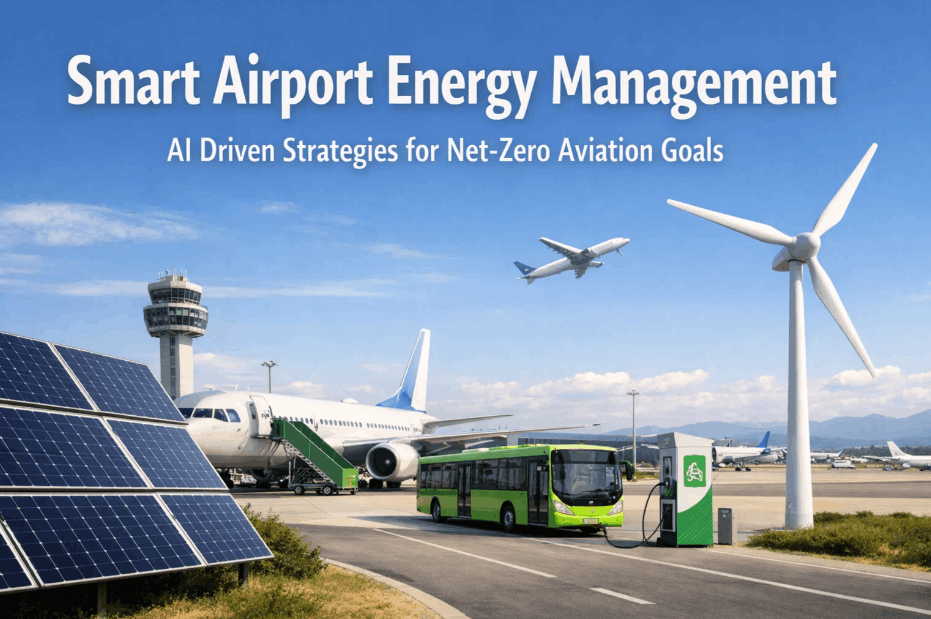
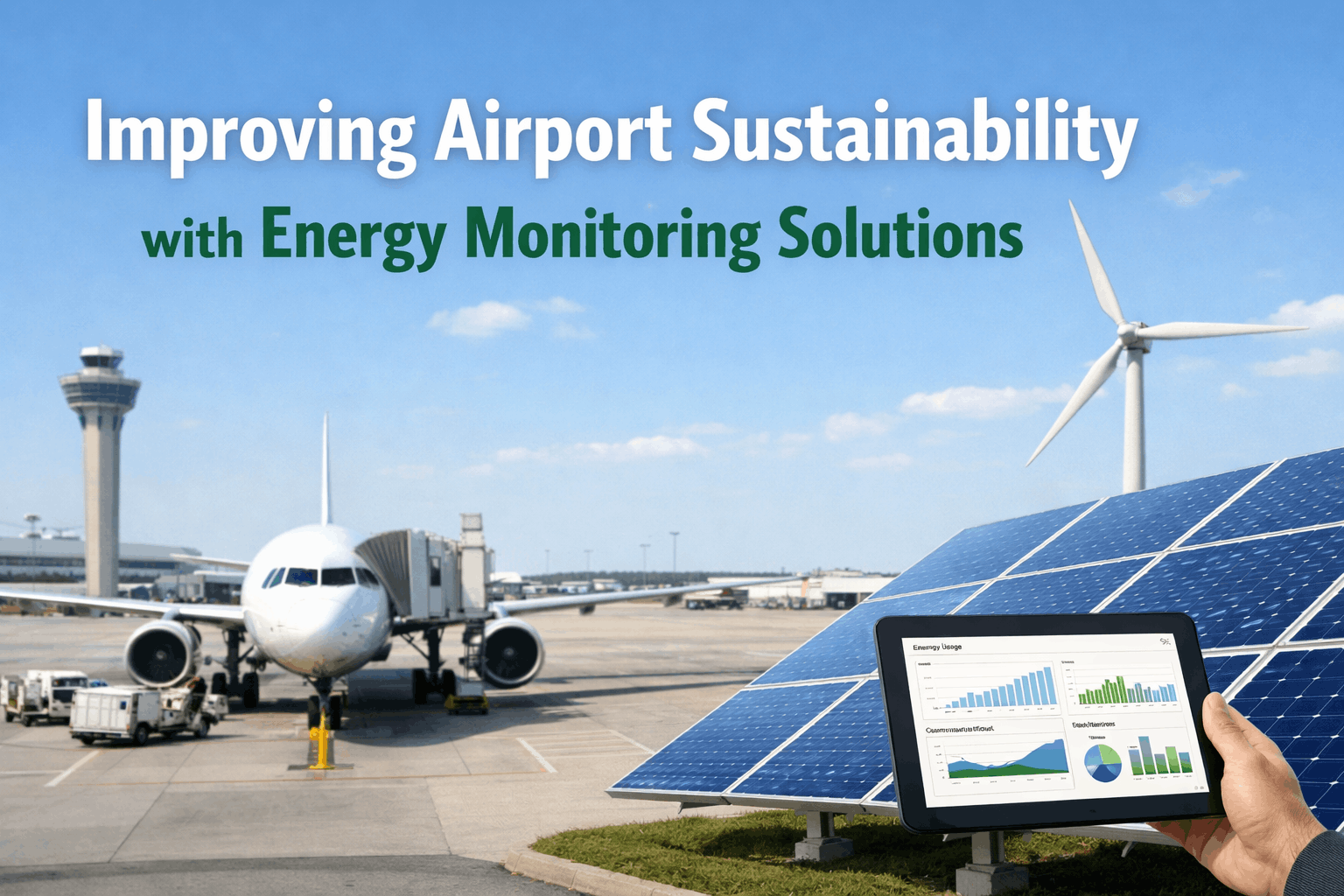
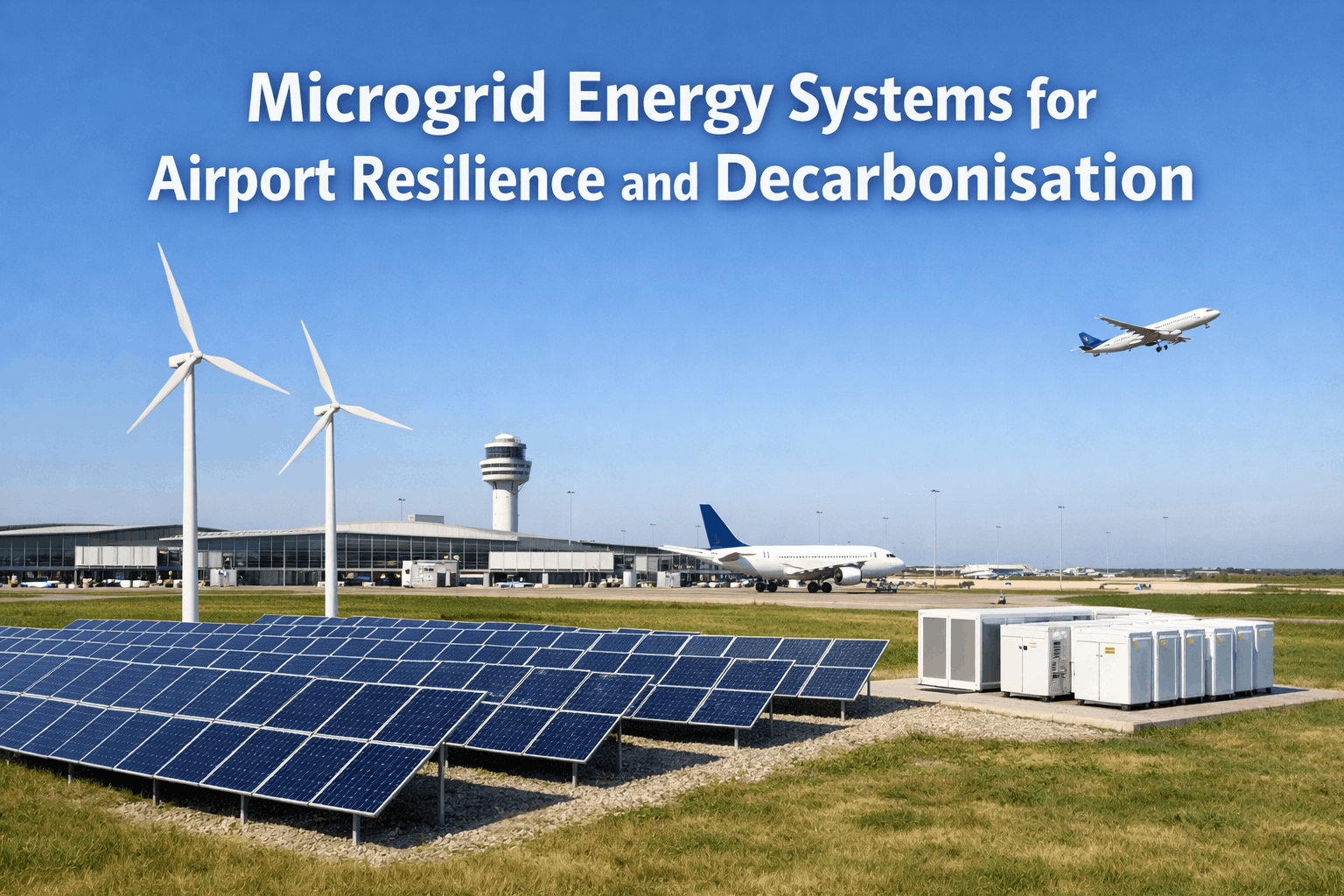
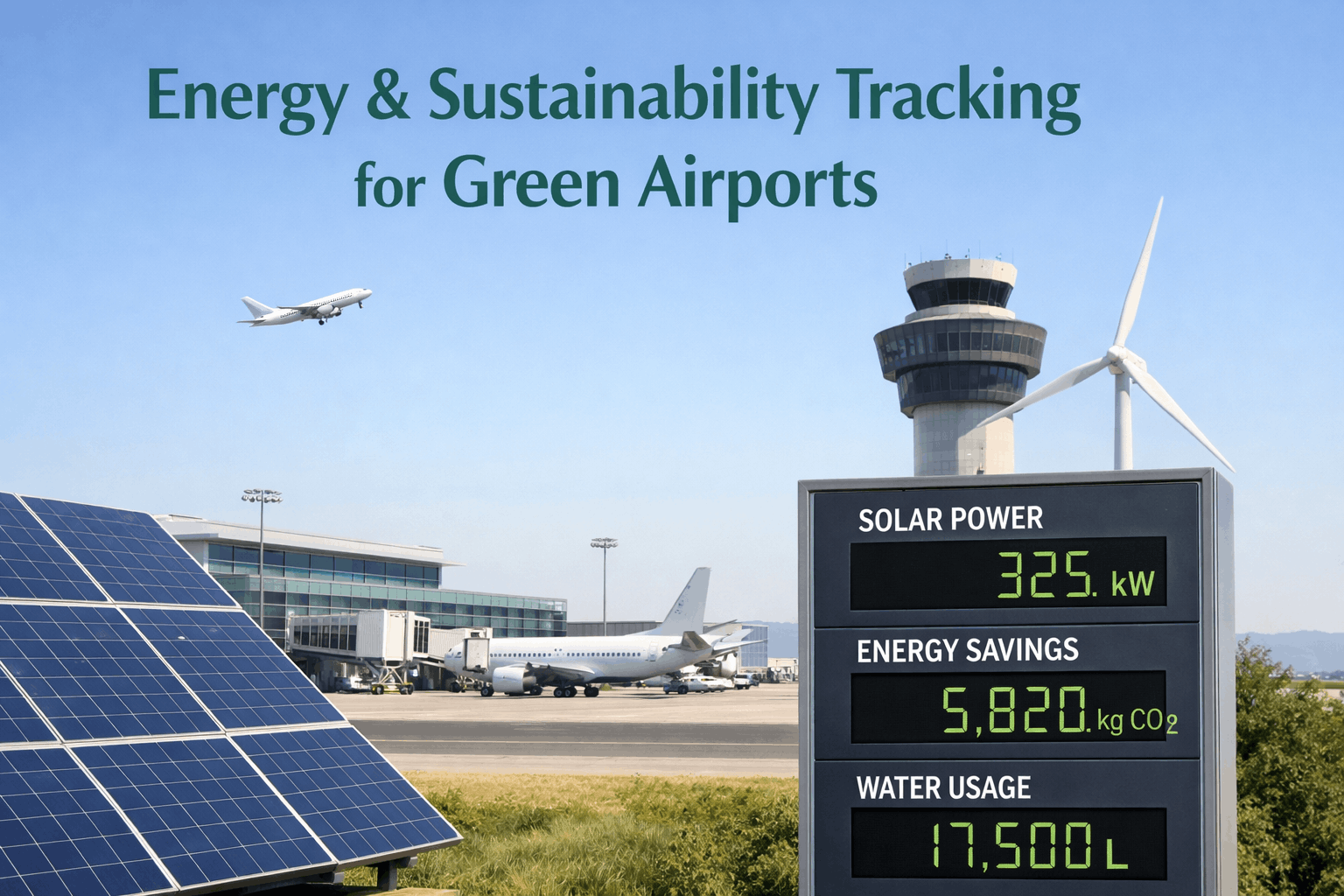
The path to net-zero airport operations has transitioned from a voluntary environmental goal to a critical financial and regulatory mandate. As global aviation standards tighten, airports are facing unprecedented pressure to decarbonize ground operations, eliminate waste, and provide transparent ESG reporting. For facility managers in 2026, the transition involves moving beyond annual spreadsheets to real-time, AI-driven sustainability analytics. By integrating GSE electrification tracking, renewable microgrid data, and automated water management into a single platform, airports are achieving ACA (Airport Carbon Accreditation) milestones 50% faster while significantly reducing operational utility costs. Airports looking to lead the green aviation transition can schedule a net-zero readiness audit to identify optimization opportunities today.
Why Traditional Environmental Models Fail Airport Net-Zero Strategies in 2026
The "Implementation Gap" is the primary hurdle for sustainable airport operations. While most airports have high-level climate action plans, the daily reality is often fragmented: Ground Support Equipment (GSE) charging remains unmanaged, terminal HVAC systems run on fixed schedules regardless of passenger load, and waste management relies on manual estimation. Without a digital system to capture and automate these sustainability workflows, carbon neutrality remains a moving target.
AI-driven sustainability analytics address these gaps by converting abstract climate goals into actionable field logic. Instead of building annual reports based on historical utility bills, the system provides real-time visibility into the energy intensity of every terminal zone and GSE asset — ensuring that a facility team can manage Scope 1 and 2 emissions with the same precision as flight operations.
Tracking carbon across utilities, fleets, and third-party tenants is a manual nightmare. AI-driven platforms automate data aggregation across all meters, providing "audit-ready" ESG reports in seconds.
Scaling electric GSE without smart charging leads to grid instability and high demand charges. AI-optimized charging schedules balance fleet readiness with building energy loads to reduce peak power costs.
Static terminal lighting and HVAC waste up to 35% of total building energy. Predictive analytics adjust systems based on real-time flight schedules and gate occupancy, eliminating "empty terminal" energy drain.
Gathering data for ACA Level 3/4+ accreditation typically takes weeks of manual effort. Automated compliance tracking maintains continuous visibility, reducing the administrative burden of annual submissions by 70%.
How AI-Driven Platforms Automate Net-Zero Performance and Close the Sustainability Gap
Maximizing airport environmental efficiency requires an analytics infrastructure that removes all friction from the green work cycle. This means every facility manager starts their day with a prioritized, data-backed list of energy-saving opportunities. Book a demo with iFactory to see how AI-driven automation converts your ESG data into a high-performance roadmap.
Automated Carbon Asset Prioritization
The platform analyzes real-time emissions data across terminal assets, identifies the highest "Carbon Intensity" zones, and automatically generates maintenance work orders for energy-inefficient hardware.
Predictive Renewable Energy Integration
AI monitors solar/wind microgrid performance and building demand to optimize energy storage usage. This ensures your airport maximizes "Green Hour" usage and minimizes reliance on high-carbon grid power during peak flight windows.
GSE Electrification Fleet Management
Track battery health and charging efficiency for your entire electric GSE fleet. AI ensures that e-tugs, belts, and pushbacks are always ready for aircraft turnarounds while minimizing battery degradation and energy costs.
Automated Water & Waste Auditing
As maintenance crews address leaks or waste diversions, the system automatically updates your sustainability dashboards. This removes the "document hunting" stress from quarterly environmental audits.
ESG Stakeholder Dashboard Integration
Provide real-time transparency to airlines, passengers, and federal regulators. Automated dashboards translate complex energy data into clear KPIs that demonstrate your progress toward net-zero targets.
Manual Sustainability Management vs. AI-Driven Net-Zero Operations
The delta between a traditionally managed airport and an AI-augmented facility is most visible in the "Cost-per-Decarbonization." The following table illustrates how AI changes the environmental math for critical airport operational functions.
| Sustainability Function | Manual Management Approach | AI-Driven Automation Benefit | Operational Savings | Net-Zero Impact |
|---|---|---|---|---|
| Terminal Energy Optimization | Fixed set-points and manual schedules | Real-time schedule-based automation | 25–30% Utility Cost Reduction | Massive Scope 2 reduction |
| GSE Fleet Management | Fuel log tracking and manual battery checks | Predictive battery & charging analytics | 15 Hours per Fleet Manager/Week | Accelerates GSE electrification |
| HVAC & Cooling Plant PM | Break-fix or fixed interval service | Predictive thermal efficiency alerts | 40% Reduction in Energy Waste | Prevents efficiency "drift" |
| Water Conservation Tracking | Manual meter reading and leak discovery | IoT-driven real-time leak detection | 20% Reduction in Water Usage | Preserves critical resources |
| Waste Stream Monitoring | Manual weigh-in and diversion logs | Automated bin load & diversion sensors | 10 Hours per Shift Lead | Achieves "Zero-Waste" targets |
| ESG / ACA Audit Prep | Days of searching invoices & bills | One-click digital compliance packages | 100+ Hours per Audit Cycle | Removes "reporting panic" |
| Tenant Energy Billing | Estimated "square foot" calculations | Precise real-time sub-metering | 100% Accuracy in Cost Recovery | Drives tenant accountability |
The AI-Augmented Green Airport: What Machines Deliver That Binders Cannot
In a net-zero mission, your digital platform must do more than just record carbon — it must actively eliminate it. This philosophy separates basic dashboards from high-performance AI sustainability platforms. Talk to our energy specialists to audit your existing sustainability workflows.
Cooling and heating loads aren't just based on sensors; they are predicted based on flight delays, passenger load factors, and external weather patterns in real-time.
Stop building manual ACA reports. AI-driven systems provide continuous visibility into your accreditation targets, ensuring you hit Level 4 and beyond with zero data gaps.
Monitor the health of your 400Hz units, PCair systems, and GSE chargers. Ensure that "Green Infrastructure" is actually performing at peak efficiency day and night.
Maintenance field crews receive "Green PMs" that focus on air sealing, valve efficiency, and insulation integrity — turning maintenance into an environmental superpower.
Managers can see real-time generation vs. consumption — allowing for rapid adjustment of non-critical loads during high-cost grid windows.
Provide your airlines and retailers with their own energy performance dashboards, empowering them to participate in the airport’s collective net-zero journey.
Building the AI-Powered Green Airport: A Phased Roadmap for Net-Zero Operations
Moving from a carbon-heavy legacy operation to a net-zero facility is a data-driven journey. The following roadmap reflects the implementation approach used by leading airports to achieve accreditation. Leading airports Schedule a sustainability optimization assessment to jumpstart this transition.
Sustainability Audit & Asset Mapping
Identify all Scope 1 and 2 energy consumers. Map your utility meters, GSE fleet, and HVAC controls to the AI platform. This creates the carbon baseline for all future reductions.
Real-Time Utility & GSE Electrification Monitoring
Connect high-load assets to digital work orders. Activate smart charging for electric GSE and sub-metering for major terminal zones. This phase typically identifies a 15-20% immediate energy savings.
Flight-Schedule Driven HVAC & Lighting Optimization
Integrate flight data with building management systems. Automate terminal lighting and cooling based on real-time gate activity, reducing "idle terminal" energy waste significantly.
Automated ACA Compliance & Stakeholder Reporting
Enable one-click environmental reporting for ACA, CDP, and internal ESG boards. Provide passengers and airlines with transparent live data on the airport’s green performance.
The Circular Airport: Full Ecosystem Net-Zero Optimization
Integrate waste-to-energy monitoring and advanced water recycling analytics. Continuous AI modeling optimizes the entire airport lifecycle for maximum environmental benefit.
Sustainability & ESG KPIs: Measuring the Impact of Airport Net-Zero Operations
You cannot manage what you do not measure. In a net-zero mission, your KPIs should focus on the *efficiency* of your infrastructure. The following indicators track how effectively your AI system is meeting environmental targets.
The percentage of total airport waste diverted from landfill to recycling or compost. AI monitors bin fill rates and vendor performance in real-time.
Sustainability Optimization Across Airport Segments
Environmental challenges differ by zone. A cargo hub needs "heavy-lift GSE electrification," while a passenger terminal needs "dynamic HVAC occupancy control." book a demo with iFactory to see segment-specific sustainability automation in action.
Highest energy and water consumption zones. AI-driven occupancy-based HVAC and smart restroom fixtures reduce terminal carbon footprint by up to 40%.
Critical for Scope 1 reductions. AI-optimized charging stations and fleet health monitoring ensure a smooth transition from diesel to electric operations.
High lighting and conveyor energy loads. Predictive maintenance on massive mechanical systems ensures peak energy efficiency during 24/7 high-volume sorting shifts.
Often overlooked for energy waste. AI identification of "vampire loads" and smart lighting in massive hangar bays delivers rapid ROI on green upgrades.
The heart of the green airport. AI manages the complex balance between thermal storage, solar generation, and backup grid power for maximum sustainability.
Massive LED lighting and EV-charging infrastructure. AI ensures parking decks are energy-efficient and EV-drivers are served without straining the airport grid.
Frequently Asked Questions: AI, ACA Accreditation & Airport Net-Zero
ACA Level 4/4+ requires detailed stakeholder engagement and Scope 3 tracking. iFactory automates the data collection for tenant energy and GSE usage, providing the validated evidence needed for high-level accreditation without the manual reporting stress.
Yes. iFactory integrates with sub-metering hardware to provide real-time visibility into airline lounge and retail energy usage, allowing your airport to drive tenant accountability and accurate ESG reporting.
Most airports report ROI within 6–12 months through reduced peak demand charges, 20% longer battery life for electric GSE, and significant reductions in diagnostic labor for fleet maintenance teams.
No. iFactory is scalable to airports of any size. Regional and secondary airports use the platform to baseline their emissions and build an incremental, budget-conscious roadmap to sustainability.
By identifying "hidden leaks" through flow-rate anomaly detection. The system flags irrigation or fixture leaks weeks before they would be noticed by a manual inspection, preventing thousands of gallons of waste.