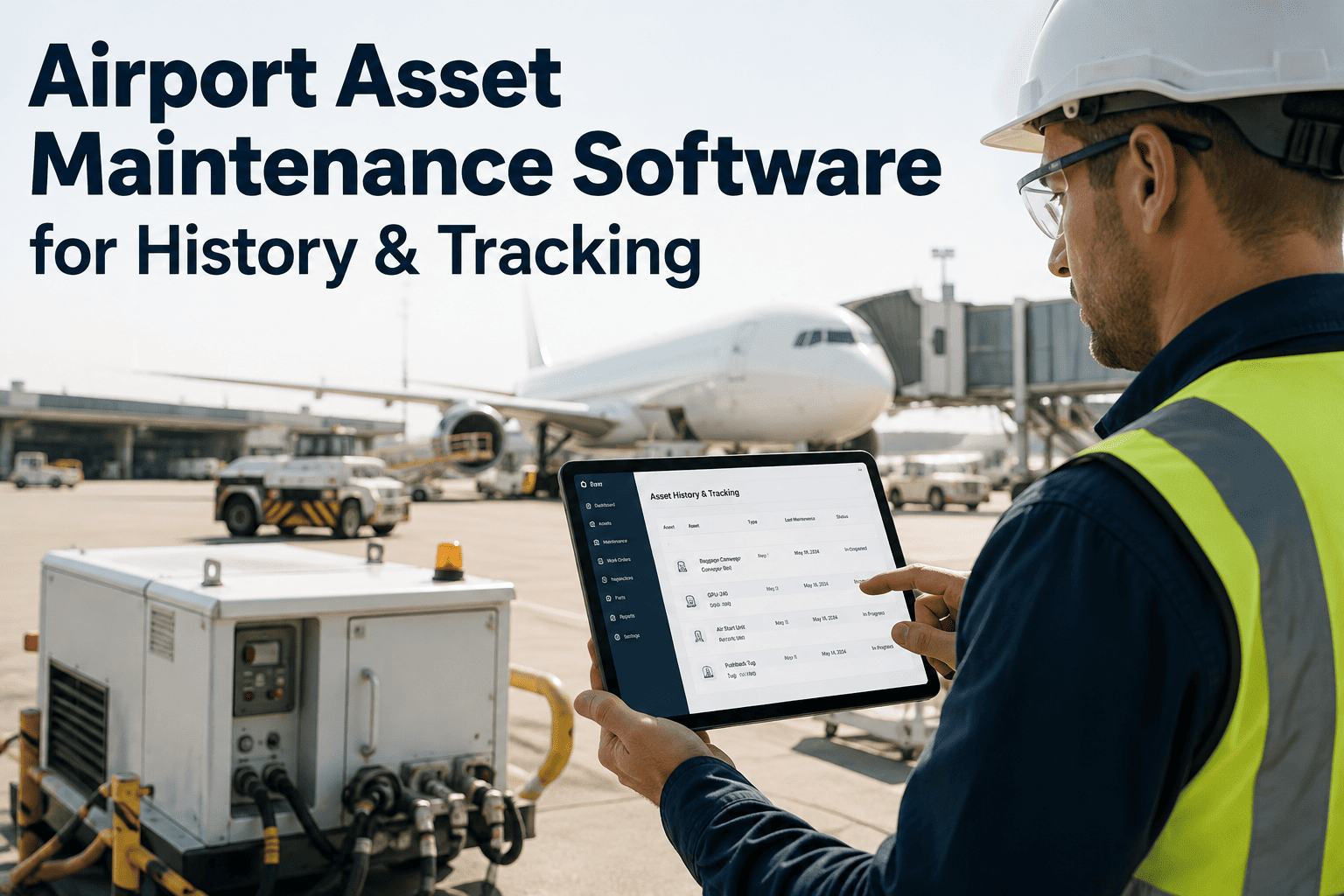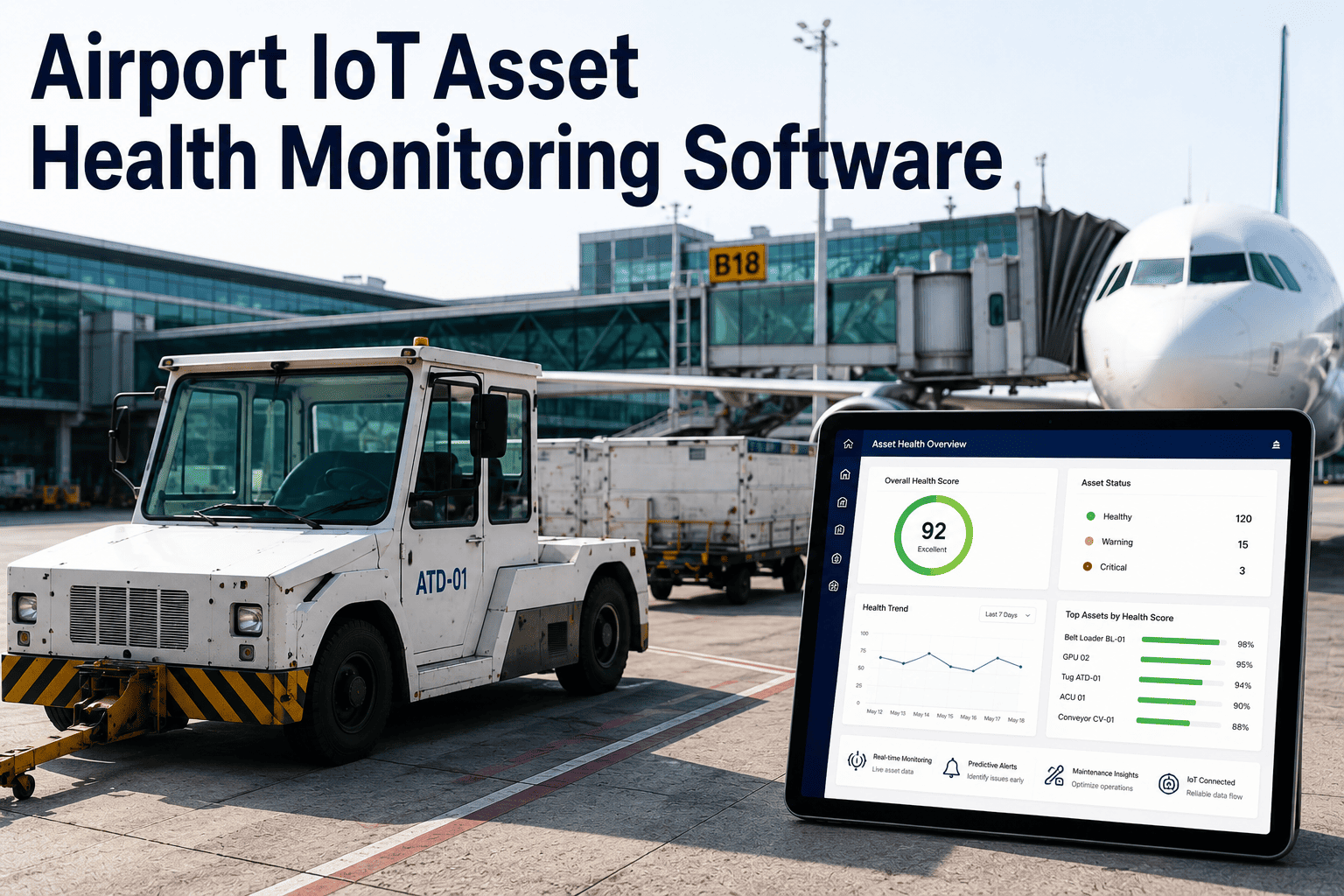
Most airports aren't short on sensors anymore. GSE telematics, baggage conveyor vibration monitors, HVAC current sensors, fuel bowser flow meters — the hardware is already out there, quietly streaming data every second of every shift. What's missing isn't the signal. It's what happens to that signal after it's collected, because in most airport operations it lands in a dashboard, a spreadsheet export, or a system nobody outside one department ever opens, and a failure still shows up the same way it always has: as a breakdown, not a warning. iFactory's asset health monitoring software is built to close that exact gap.
You Already Have the Sensor Data. Asset Health Monitoring Software Is What Turns It Into a Decision.
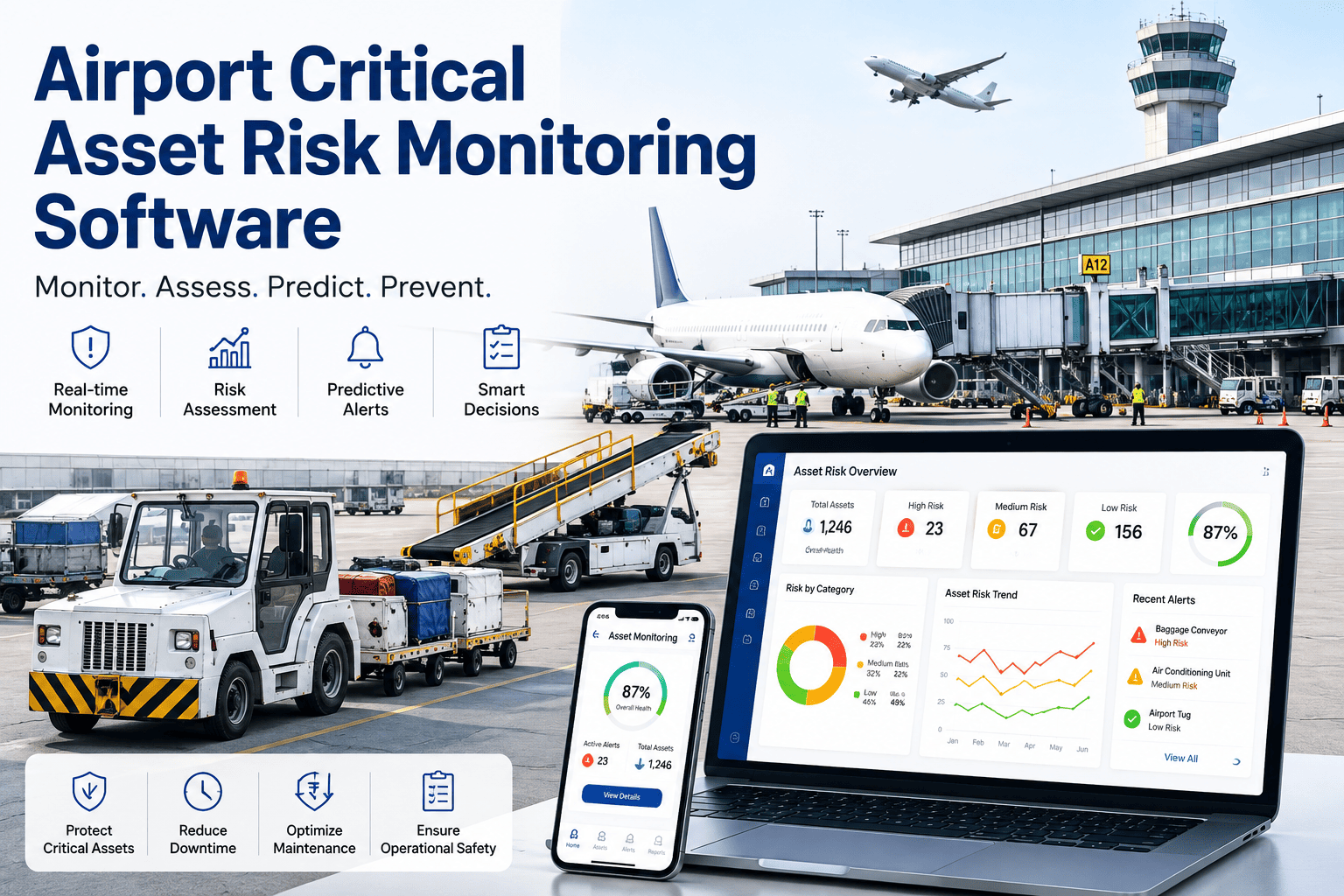
Airport IoT asset health monitoring software pulls sensor data, maintenance history, and inspection records from every system across your terminal, apron, and airfield into one live asset health score — and converts every meaningful signal into a work order automatically, instead of leaving it sitting in a disconnected dashboard.
Where IoT Signal Actually Dies Inside an Airport Operation
A sensor firing correctly isn't the same thing as a problem getting fixed. Between the moment a vibration reading crosses a threshold and the moment a technician actually shows up with the right part, there are usually three or four handoffs — and most airport operations lose the signal at one of them long before it ever reaches a work order.
This is what makes "disconnected IoT" such a deceptive problem. It doesn't look like a failure from the outside — the sensors are installed, the dashboards exist, and someone can point to a screen showing live data if asked. The failure only becomes visible after the fact, when a post-incident review turns up a reading that clearly showed the problem coming, sitting untouched in a system that never routed it anywhere useful.
What Asset Health Monitoring Software Actually Connects
An airport isn't one asset class — it's dozens running in parallel across the terminal, the apron, and the airfield, each historically monitored by a different system with its own login, its own alert format, and its own idea of what "urgent" means. Asset health monitoring software's job is to sit above all of that and speak one shared language.
The reason this matters more at an airport than almost any other facility type is scale and diversity combined. A hospital or a factory typically runs one dominant asset category under one operations umbrella. An airport runs rotating GSE, static building systems, moving passenger infrastructure, and outdoor airfield equipment side by side, often purchased by different departments over different budget cycles with no shared monitoring standard between them — which is exactly why the connective layer tends to matter more here than the sensors themselves.
GSE & Ground Equipment
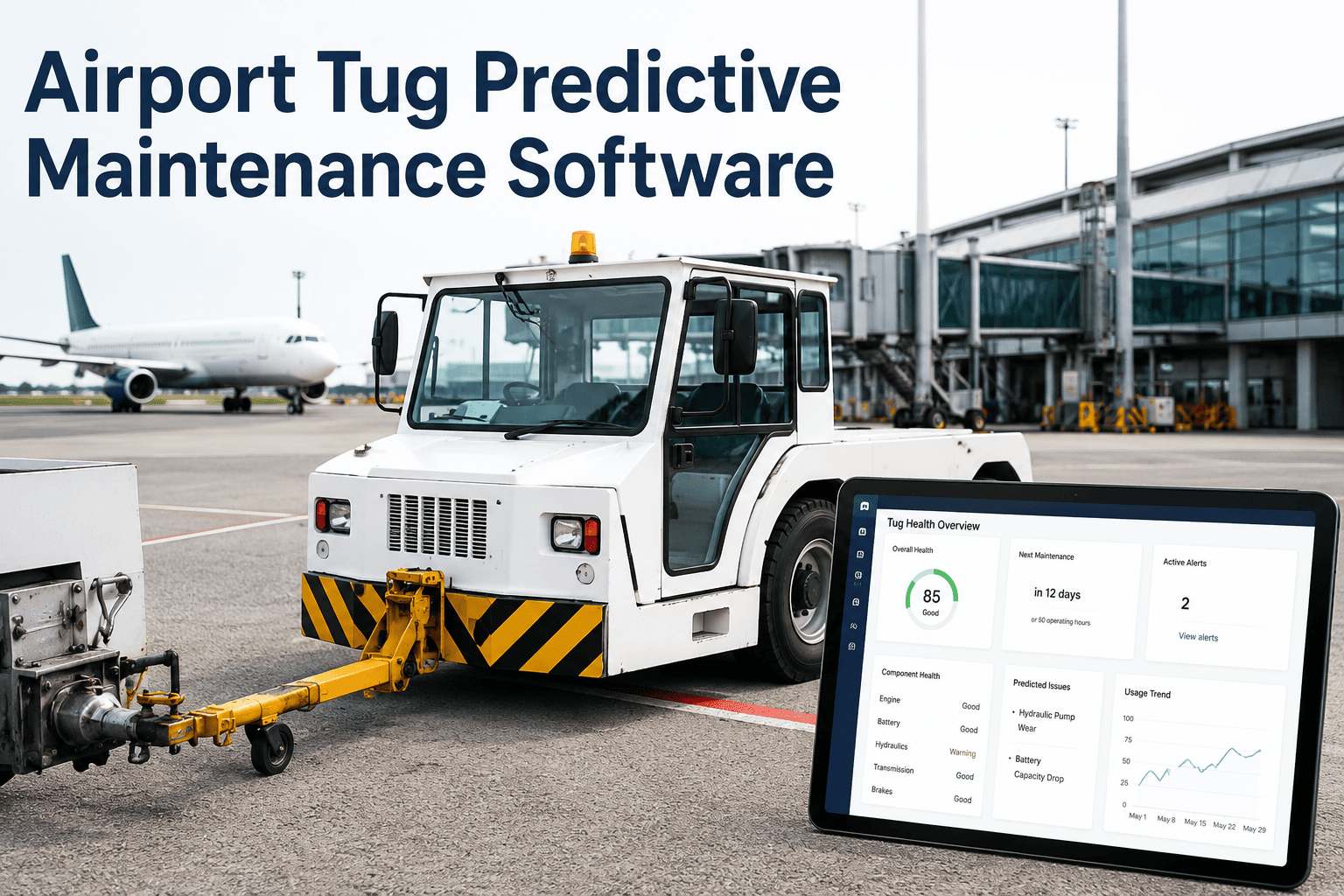
Pushback tugs, belt loaders, GPUs, air start units, and de-icing trucks — condition data pulled from existing telematics and OEM fault codes rather than requiring new hardware on every unit.
Baggage & Passenger Systems
Baggage conveyors, escalators, moving walkways, and jet bridges — vibration, current draw, and cycle-count data streamed continuously instead of reviewed only during scheduled inspections.
HVAC & Building Systems
Chillers, air handlers, and boiler plants — thermal and electrical trending that catches efficiency drift long before it shows up as a comfort complaint or an energy bill spike.
Fuel, Lighting & Infrastructure
Fuel hydrants, bowsers, airfield lighting circuits, and perimeter infrastructure — condition and reconciliation data that today mostly lives in separate, single-purpose systems.
The Real Cost of Staying Disconnected
Disconnected IoT rarely shows up as a single dramatic failure. It shows up as a slow accumulation of near-misses, duplicated effort, and missed early-warning windows that are individually easy to explain away and collectively very expensive.
The teams that feel this most acutely are usually the ones with the most sensors already installed, not the fewest — every additional monitoring system adds one more place a warning sign can quietly sit unread, which means the fragmentation problem tends to get worse, not better, as an airport's IoT footprint grows without a connective layer sitting above it.
Every Signal Above Deserves the Same Ending
iFactory pulls sensor and inspection data from every one of these systems into a single asset health model, so a fault on the apron and a fault in the terminal get the same outcome — a scheduled work order, not a missed alert.
Fragmented IoT Stack vs a Unified Asset Health Platform
Most airports don't lack sensors — they lack a single layer that all those sensors report into. That gap is what separates a facility with impressive-looking dashboards from one that actually catches failures before they happen.
Vendor-by-vendor monitoring made sense when each system was purchased and deployed independently, but it creates a specific structural weakness: nobody owns the view across systems. A facilities team watching the BMS has no visibility into what the GSE telematics platform is reporting at the same moment, and a maintenance planner working from the CMMS has no way to see either one unless someone manually cross-references them — which almost never happens in real time, only after something has already gone wrong.
| Capability | Fragmented IoT Stack | Unified Asset Health Platform |
|---|---|---|
| Data sources | Each system has its own app and login | All sensor and inspection data in one model |
| Alert format | Different thresholds and severity labels per vendor | One consistent health score across every asset class |
| Cross-system correlation | Not possible — systems don't talk to each other | A conveyor fault and a nearby HVAC anomaly can be linked automatically |
| Response trigger | Depends on someone noticing the alert | Work order generated automatically past a threshold |
| Reporting | Manual exports stitched together per audit or per meeting | Live, unified reporting across the whole facility |
How iFactory Turns Sensor Noise Into a Health Score
A raw sensor feed is just numbers until something gives it context. Turning that feed into a decision an operations team can act on takes a consistent pipeline, applied the same way across every connected asset regardless of where the data originated.
The point of the pipeline isn't to add another layer of complexity on top of already-complex airport systems — it's to remove the manual cross-referencing step entirely, so the correlation between a conveyor fault and a downstream HVAC anomaly gets caught by the model automatically instead of depending on a technician happening to notice both alerts on the same afternoon.
Ingest From Every Source
Sensor feeds, telematics APIs, and maintenance records are pulled in from existing systems through standard integration protocols, without requiring a rip-and-replace of hardware already in place.
Normalize Against a Shared Asset Model
Every reading is mapped against the specific asset it came from — make, model, duty cycle, and maintenance history — so a threshold means the same thing whether it came from a tug or a chiller.
Score Condition Continuously
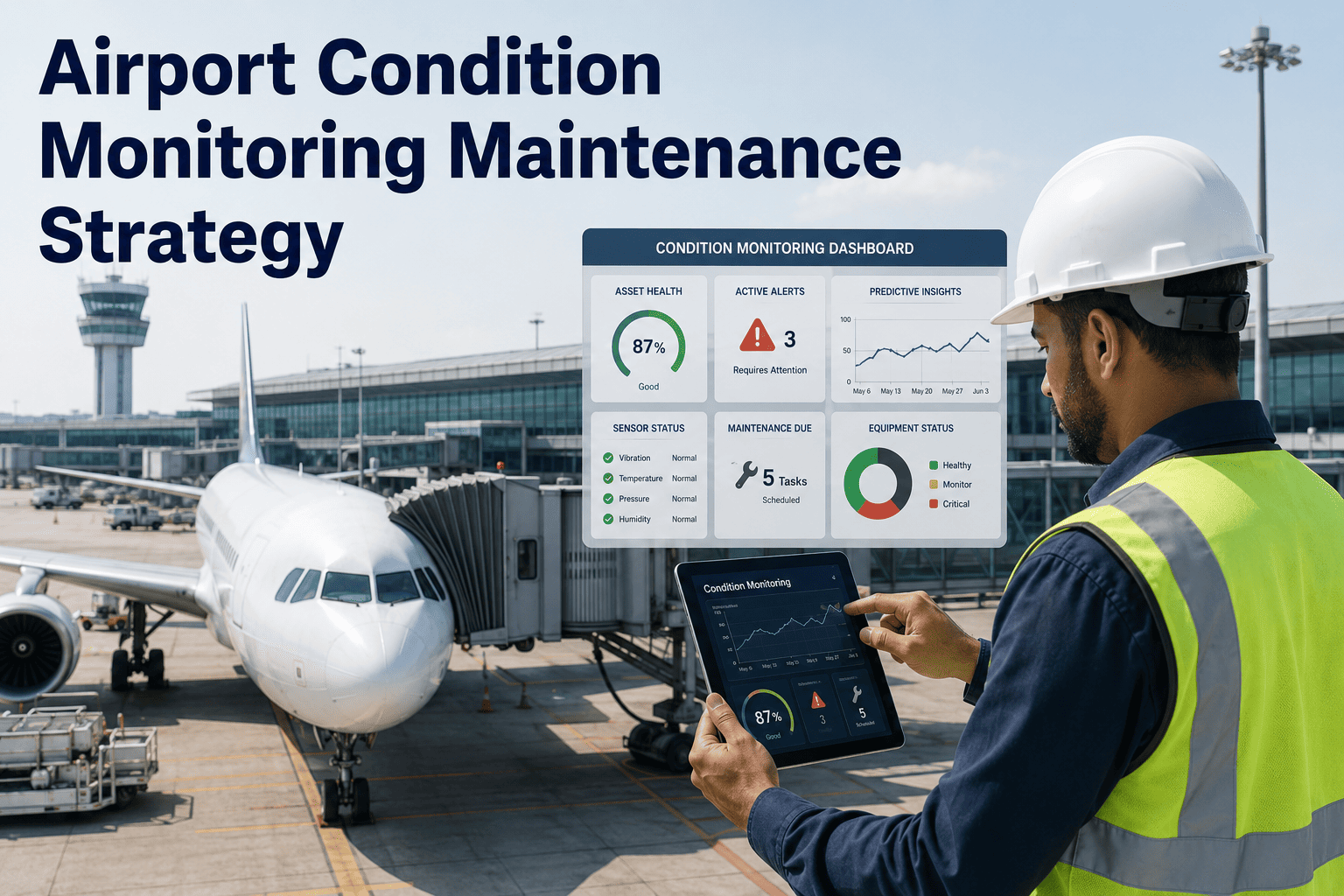
A live health score updates as new data arrives, weighted by how each signal has historically correlated with failure on similar assets across the fleet or facility.
Trigger a Work Order Automatically
Once a score crosses a defined risk threshold, a work order is generated with the likely root cause attached — no manual translation from alert to action required.
Feed the Outcome Back In
What the technician finds during the repair updates the model, so the next prediction on that asset class gets sharper instead of starting from zero again.
A Terminal That Stopped Finding Out About Failures the Hard Way
A mid-size international terminal had IoT sensors already installed across its baggage handling system, its GSE fleet, and its HVAC plant — three separate vendor platforms, three separate logins, and no shared view of asset health across any of them. Maintenance teams still found out about most failures the same way they had for a decade: an operator reported something broken.
After connecting all three systems into a single asset health platform, a pattern that had been invisible before became obvious within the first month — a specific conveyor motor's vibration signature consistently preceded HVAC load spikes in the same zone by several hours, a mechanical relationship nobody on the maintenance team had previously connected because the two systems had never shared data. Flagging that pattern let the team catch three separate motor failures at the early-warning stage in the following quarter, each one resolved during a scheduled maintenance window instead of during active terminal operations.
The terminal's maintenance planner described the shift less as a new tool and more as finally being able to see what had always been there — the sensors hadn't changed, and the underlying equipment hadn't changed. What changed was that three isolated data streams became one continuous picture, and a correlation that used to require a coincidence to notice became something the system caught on its own, every time.
Is Your Airport Ready to Unify Its Asset Data
Most operations don't need a fresh IoT rollout to get value from asset health monitoring software — they need the sensors they already have talking to each other for the first time. A few signals tend to indicate whether an airport is ready to make that connection now.
None of these readiness signs require a large capital project to address. Unlike a sensor deployment, which involves procurement, installation, and calibration across a physical fleet, unifying existing data sources is primarily an integration project — which is also why it tends to deliver visible value faster than most other digital initiatives an airport operations team can undertake.
You can already name three or more disconnected monitoring systems
If GSE telematics, BMS, and a CMMS are all already running independently, that's the exact fragmentation a unified platform is built to resolve first.
Your teams already know alerts are being missed
If maintenance or operations staff have ever said "we had that data, we just didn't see it in time," that's a direct signal the routing — not the sensing — is the gap.
Your CMMS can accept externally triggered work orders
The loop only closes if a health-score alert can generate a work order directly, rather than requiring someone to manually re-enter a report into a separate system.
Leadership wants one view, not five dashboards
A unified platform delivers the most value when there's genuine appetite to consolidate reporting, rather than adding one more dashboard on top of the existing five.
Frequently Asked Questions
A few questions come up in nearly every conversation about connecting existing airport systems into one asset health view — most of them centered on how much has to change to get there.
Do we need to replace our existing IoT sensors to use asset health monitoring software?
No — in most deployments, the majority of value comes from connecting sensors and systems that are already installed rather than replacing them. iFactory's platform integrates with existing telematics APIs, building management systems, and maintenance software through standard protocols, so the hardware already streaming data across your apron, terminal, and airfield becomes the starting data source. Visit support to see how this applies to the specific systems already running at your airport.
How is this different from the individual dashboards our GSE and BMS vendors already provide?
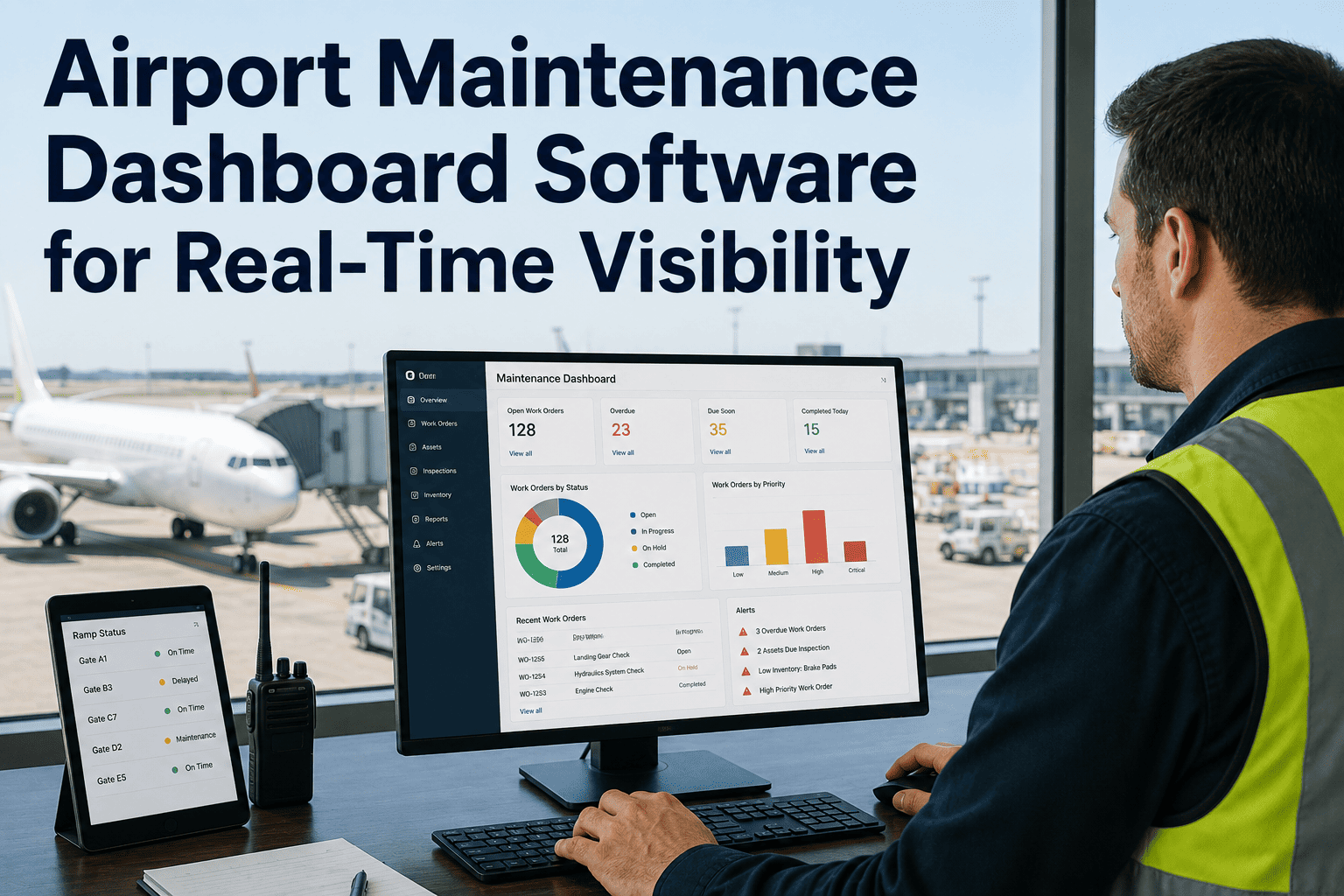
Vendor dashboards are built to show data from one system in isolation, which means a maintenance team has to check several different applications to get a complete picture of facility health, and cross-system patterns never surface at all. Asset health monitoring software pulls all of those feeds into a single model, scores condition consistently across every asset regardless of source, and routes anything significant straight into one shared work order queue.
How long does it take to connect our existing systems?
Integration timelines depend on how many systems are involved and how standardized their existing APIs are, but most airport deployments connect their first two or three major data sources within the first several weeks, with the earliest correlated insights typically appearing shortly after the first systems go live. Book a demo to get a realistic timeline for your specific system mix.
Can the platform correlate data across completely different asset types, like GSE and HVAC?
Yes — once data from different systems is normalized into a shared asset model, the platform can surface relationships that would otherwise stay invisible, such as a conveyor motor's vibration pattern preceding load changes in a nearby HVAC zone. These cross-domain correlations are often where the biggest early-warning gains come from, precisely because no single vendor system was ever built to see across that boundary.
What happens after a work order is automatically generated from a health-score alert?
The work order includes the likely root cause, the asset's recent condition trend, and relevant history, so the assigned technician starts the job with context instead of having to diagnose from scratch. As the repair is completed and findings are logged, that outcome feeds back into the model, sharpening future predictions for similar assets. Contact support for a walkthrough of the full work order lifecycle.
Stop Letting Good Sensor Data Go to Waste
iFactory connects every IoT system already running across your airport into one live asset health view, and turns every meaningful signal into a scheduled work order automatically.