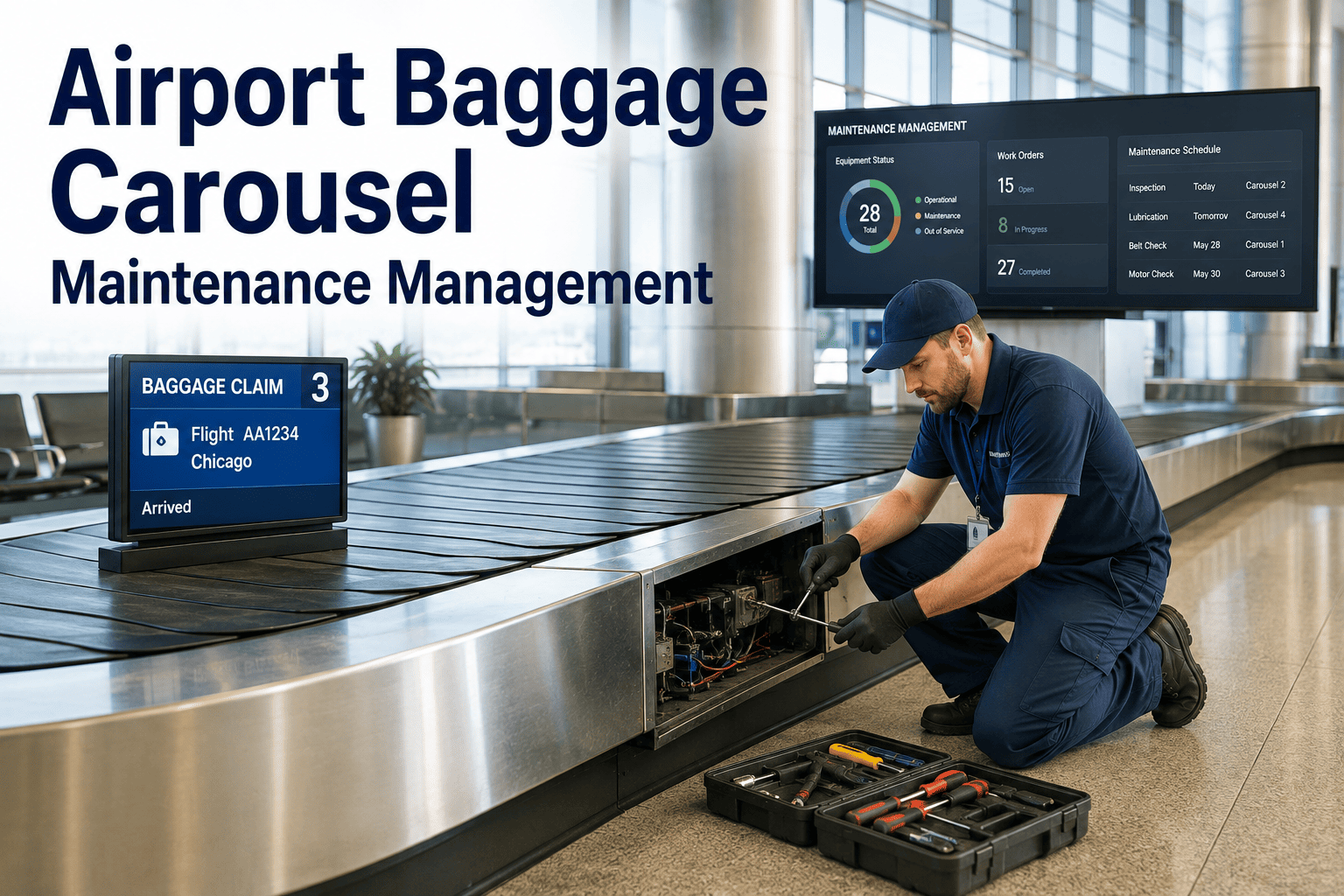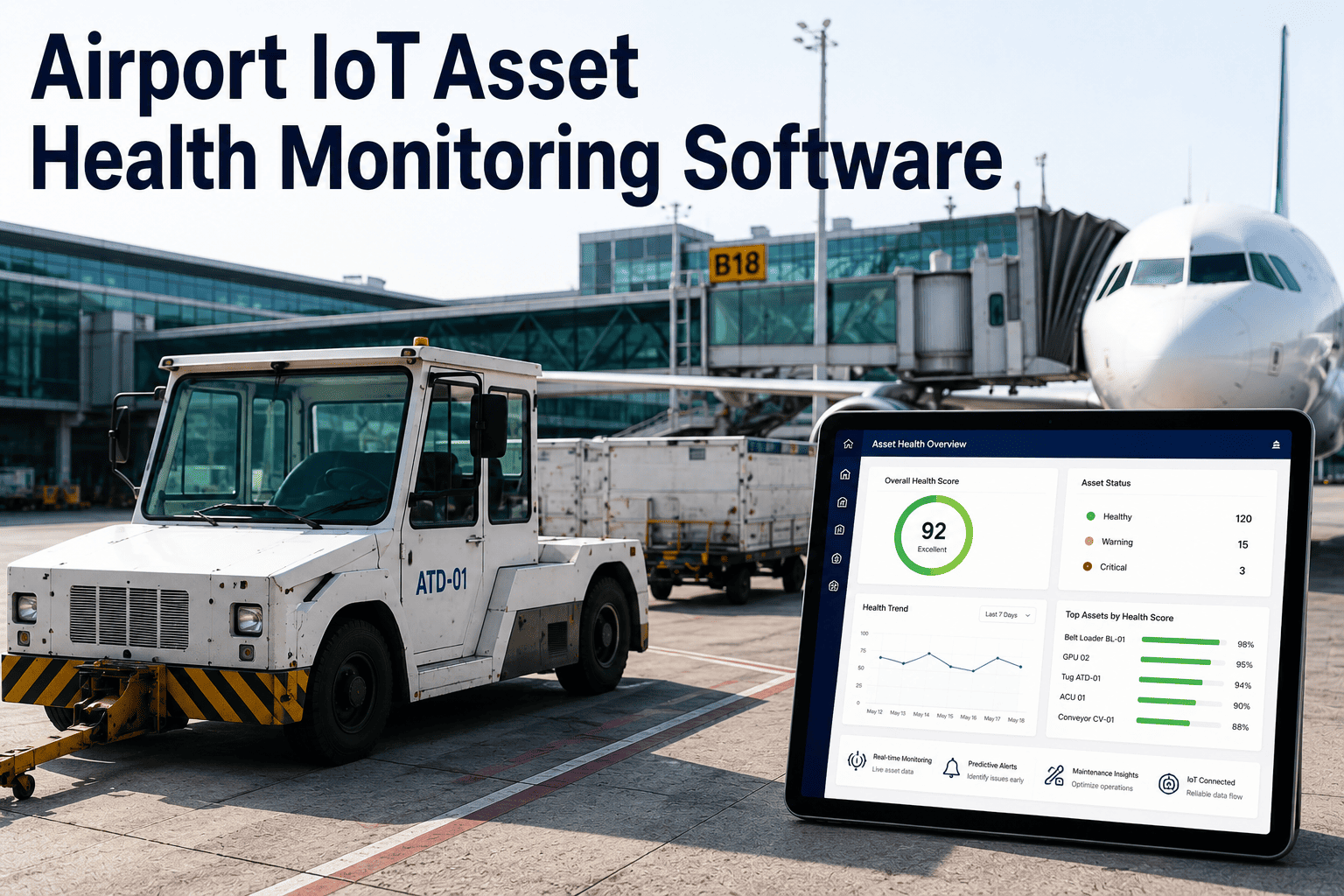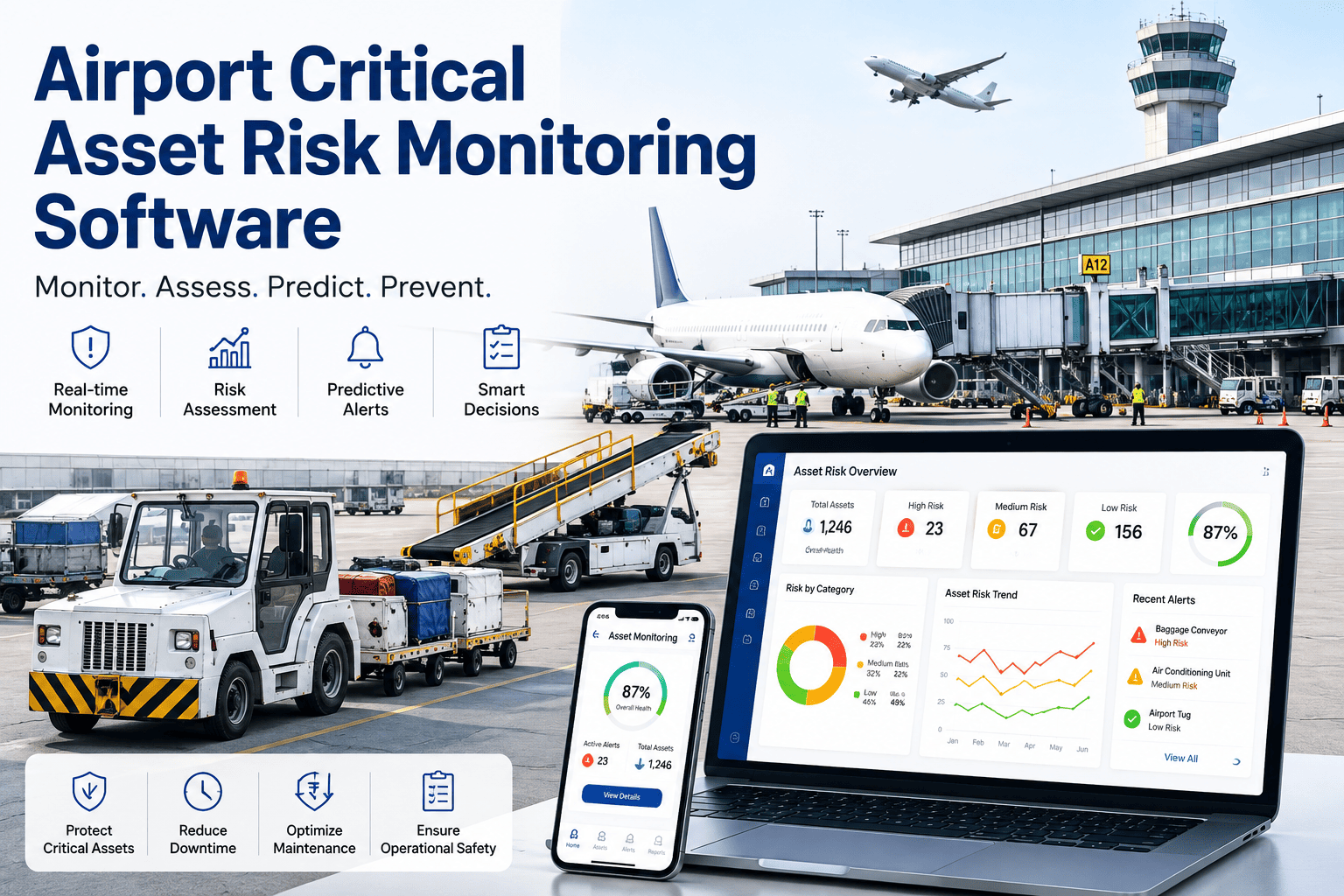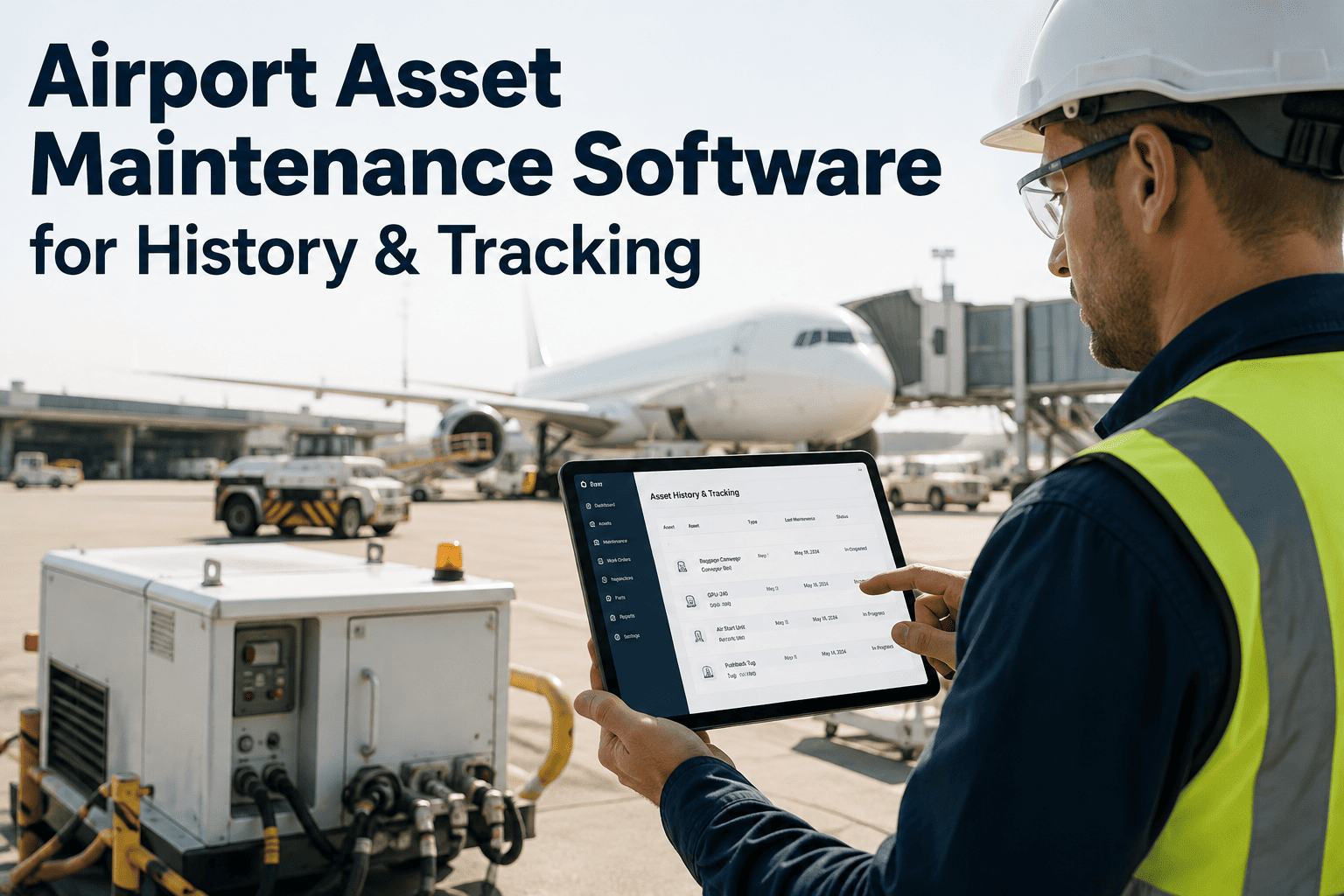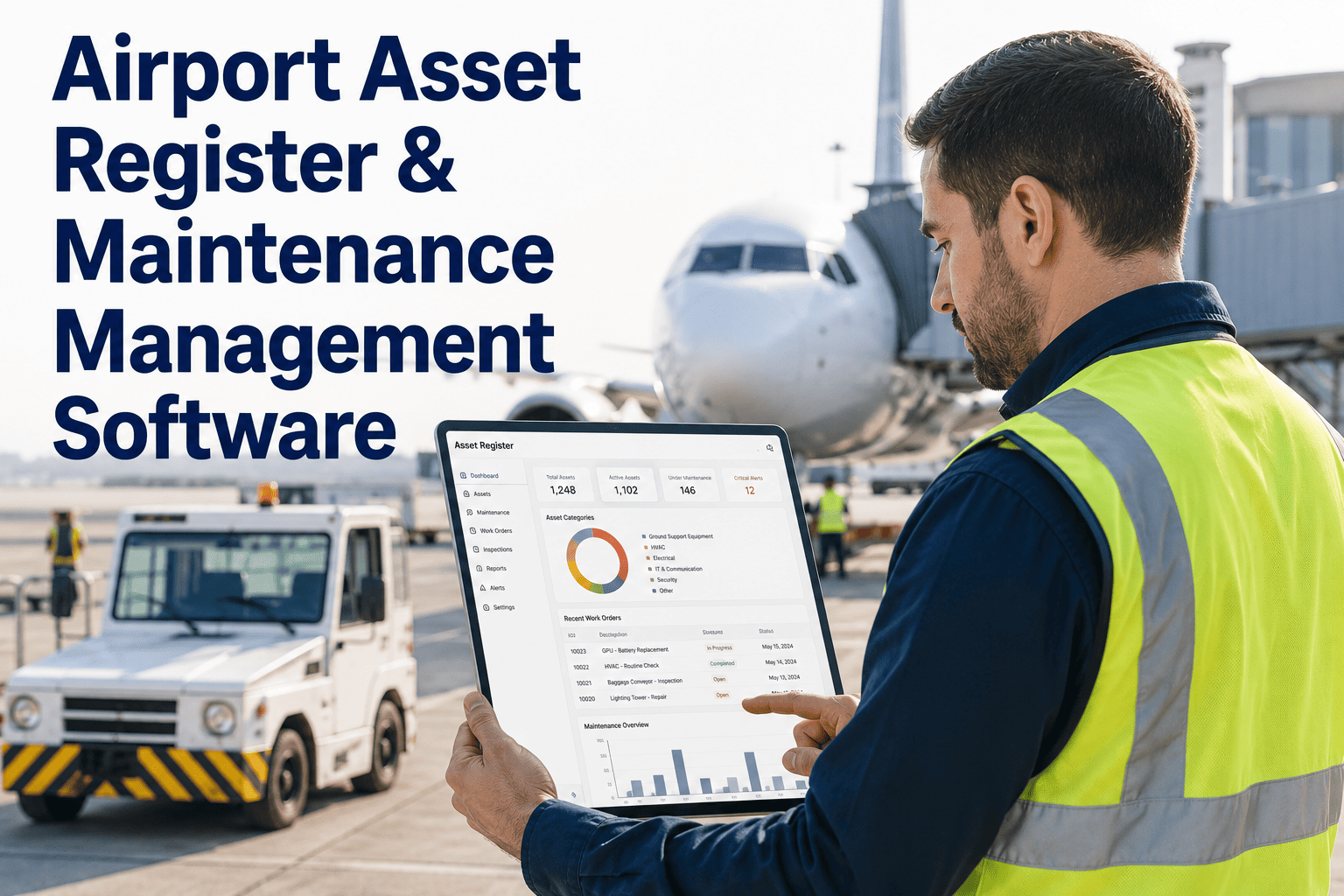
A mid-size airport can easily carry thousands of individually maintained assets across its terminals, airfield, and back-of-house systems, from jet bridges and baggage conveyors to airfield lighting circuits, HVAC units, and ground support equipment, and in most facilities that full inventory lives scattered across spreadsheets, paper binders, and two or three disconnected software tools that were never designed to talk to each other. A centralized asset register brings every one of those assets, along with its full maintenance history, condition score, and replacement timeline, into a single structured record that facilities and airfield teams can actually trust. Airport operators evaluating what that consolidation looks like for their own terminal can start by reaching out to the iFactory support team.
Every Terminal, Airfield, and GSE Asset. One Register. No More Guessing What You Own.
iFactory consolidates every airport asset category, terminal facilities, airfield systems, ground support equipment, and baggage handling infrastructure, into one searchable register with complete maintenance history and lifecycle status, so facilities teams stop losing track of what needs attention next.
Why Airport Asset Visibility Breaks Down So Easily
Airport asset management is uniquely difficult because the asset base is so varied. A single facility might need to track a jet bridge, a runway edge light, a baggage sortation motor, and a ground power unit, each with its own maintenance cadence, regulatory requirement, and depreciation schedule, and each historically managed by a different department using a different system entirely.
Most airports did not arrive at this fragmentation on purpose. It usually builds up gradually, as different departments adopt different tools over the years to solve their own immediate problem: facilities picks a building management system for HVAC, the airfield team keeps a legacy spreadsheet because it has always worked well enough for lighting inspections, and ground operations tracks GSE on whatever the ground handling contractor happens to use. None of those choices were wrong in isolation, but the cumulative result is an airport that cannot answer a simple question like "how many assets are past due for service right now" without pulling data from several unrelated sources and reconciling it by hand.
Assets Split Across Disconnected Systems
Building management handles terminal HVAC, a separate airfield system tracks lighting and pavement, and GSE often lives on spreadsheets entirely, leaving no single place to see the full asset picture at once.
Maintenance History That Doesn't Follow the Asset
When service records live in paper binders or personal notes, a new technician working on an asset for the first time has no reliable way to know what has already been tried or replaced.
No Shared View of Asset Condition
Without a consistent condition score across every category, leadership ends up comparing a jet bridge's urgency to a baggage motor's urgency based on whoever raised their hand loudest that week.
Capital Planning Built on Guesswork
Replacement budgets get built from memory and rough estimates rather than a defensible register of asset age, condition, and remaining useful life across the full portfolio.
Before and After a Centralized Register
The difference between a fragmented asset environment and a centralized register shows up in almost every daily task a facilities team handles, from a routine work order to a full capital planning cycle, and the gap tends to widen the larger and more complex the airport gets.
| Task | Spreadsheets & Disconnected Tools | Centralized Asset Register |
|---|---|---|
| Finding an asset's service history | Search multiple files, ask around, hope someone remembers | Pull the full history instantly from one asset record |
| Comparing condition across categories | No consistent scoring, judgment calls by department | Standardized condition score across every asset type |
| Planning next year's capital budget | Manual estimates built from memory and past invoices | Data-driven forecast built from real asset age and condition |
| Onboarding a new technician | Weeks of shadowing to learn where things are and how they were fixed | Full asset context available from day one in the register |
| Responding to an audit request | Days spent assembling records from scattered sources | Exportable, complete records available on demand |
Stop Rebuilding Your Asset Picture From Scratch Every Time Someone Asks
iFactory brings your terminal, airfield, and GSE assets into one register with complete history, so the answer to "what do we own and what shape is it in" is always one search away.
What Belongs in a Proper Airport Asset Record
A usable asset register is more than a name and a location. Each record needs enough structured detail that anyone on the team, not just the person who has worked there for years, can understand an asset's status at a glance, without needing to track down the one veteran technician who happens to remember when that unit was last serviced.
Identity and Location
A unique asset ID, category, manufacturer, model, and precise terminal, concourse, or airfield location tied to the record.
Installation and Warranty Data
Install date, expected service life, and warranty status, all of which drive when replacement planning should actually begin.
Full Maintenance History
Every past work order, part replaced, and technician note tied permanently to the asset rather than scattered across separate logs.
Current Condition Score
A standardized score that lets a jet bridge and a baggage motor be compared on the same scale for prioritization purposes.
Cost-to-Date and Replacement Forecast
Cumulative maintenance spend against the asset alongside a projected replacement window, feeding directly into capital budgets.
Where Airport Maintenance Budgets Actually Go
Facilities operating without a centralized register consistently spend a disproportionate share of their maintenance budget reacting to failures rather than planning around them, simply because nobody has a reliable enough view of asset condition to plan ahead with confidence.
How the Register Fits Into Daily Maintenance Work
A register that only gets opened during an audit or a budget cycle quickly falls out of date and stops being trustworthy. The version that actually holds up over time is the one built into the maintenance team's daily workflow, so that every completed work order, every part swap, and every inspection note updates the record automatically instead of relying on someone to remember to log it separately later.
In practice, that means a technician closing out a work order on a jet bridge lift motor is, at the same time, updating that asset's maintenance history, its cost-to-date figure, and potentially its condition score, all without a separate data entry step. Because the register and the work order system share the same underlying asset record, there is no gap between the work getting done and the record reflecting that it happened. That single change removes most of the drift that causes asset registers to become unreliable within a year or two of an initial setup effort, and it is the difference between a register that stays useful and one that quietly turns back into another outdated spreadsheet.
This same connection is what makes cross-department visibility possible without extra coordination overhead. When an airfield electrician closes a lighting circuit repair, a facilities manager reviewing capital plans a month later sees that update reflected automatically in the relevant asset's condition history, with no need for a status meeting or an email chain to relay what happened. Multiply that across a terminal's full asset base and the register becomes less a documentation project and more the operational backbone that every maintenance decision runs through.
A Composite Scenario: The Airfield Lighting Circuit Nobody Could Find
A regional airport's electrical team spent an entire overnight closure hunting for the source of an intermittent runway edge light fault, working from a paper circuit diagram that predated three separate contractor upgrades and no longer matched what was actually installed in the field. The closure ran long enough to push back the runway's return to service past the planned morning traffic window.
After that incident, the airport consolidated its airfield electrical assets into a centralized register with circuit-level detail, install dates, and every prior contractor modification recorded against the correct asset. The next comparable fault, on a different circuit eighteen months later, was traced and resolved in under ninety minutes because the technician could pull the exact circuit history, including the most recent contractor change, directly from the register before ever walking out to the field.
The airfield team went on to apply the same register structure to its lighting, drainage, and pavement marking assets, using the electrical circuit rollout as the template rather than starting the documentation effort from scratch for each category. Within a year, the airfield's asset documentation had gone from scattered contractor handoffs to a single maintained source of truth, and new contractor work orders were written with an explicit requirement to update the register as a condition of project close-out, so the documentation gap that caused the original overnight closure could not quietly reopen the next time a circuit got modified.
Common Mistakes Airports Make When Managing Their Asset Base
Managing Each Department's Assets in Isolation
Terminal facilities, airfield, and GSE teams each keeping separate records makes it impossible to see the full asset portfolio or compare priorities across categories.
Letting Maintenance History Live With the Technician
When service knowledge exists only in one person's memory or personal notes, it disappears the moment that person changes roles or leaves the organization.
Treating the Register as a One-Time Setup Project
An asset register that isn't updated after every work order or contractor visit drifts out of date quickly and stops being trustworthy within a single budget cycle.
Building Capital Plans Without Condition Data
Replacement budgets built on asset age alone, without an actual condition score, routinely misjudge which assets are truly closest to failure.
Is Your Airport Ready to Consolidate Its Asset Register
Readiness for a centralized register has less to do with how modern an airport's existing tools are and more to do with whether the organization is willing to commit to keeping one shared record current. Airports of almost any size can consolidate successfully once that commitment is in place, whereas even a well-funded, sophisticated set of legacy tools will keep drifting out of sync without it.
You already know your asset records are scattered
If different departments are tracking assets in different spreadsheets or tools, that fragmentation alone is reason enough to consolidate into a single register.
You have some existing maintenance and asset data to migrate
Existing spreadsheets, work order logs, and contractor records accelerate setup significantly, though a register can still be built starting from partial data.
Multiple teams need to see the same asset information
If facilities, airfield, and ground operations all touch overlapping assets, a shared register removes the friction of cross-department requests for basic information.
Leadership wants defensible capital planning data
A register only pays off for budgeting once leadership actually uses the condition and replacement data it produces to build the capital plan.
Frequently Asked Questions
What asset categories can a single register actually cover?
A properly built airport asset register covers every category that contributes to safe and efficient operations, including terminal facilities like HVAC and elevators, airfield systems like lighting and pavement markings, ground support equipment, baggage handling infrastructure, and security or IT systems that support check-in and screening. Rather than requiring a separate tool per category, the register organizes each asset type under a consistent structure so they can all be searched, scored, and reported on together. Teams can see how their specific asset mix maps onto this structure by reaching out to iFactory support.
Do we need to re-enter years of historical maintenance data manually?
Most consolidation projects start by importing whatever spreadsheets, work order exports, and contractor records already exist, then filling gaps with new data as work orders get completed going forward rather than requiring a full manual re-entry of every historical record. Assets with thin historical data still get a usable record from day one, and their history simply builds forward from that point through normal maintenance activity.
How is a centralized register different from the spreadsheets we already use?
Spreadsheets require someone to manually keep every tab, file, and version in sync across departments, and that synchronization almost always breaks down over time as more people touch the data. A centralized register instead gives every team the same live view of the same asset record, with a full audit trail of who changed what and when, which removes the version-control problems that make spreadsheet-based asset tracking unreliable at scale.
Can the register scale from a single terminal to a multi-terminal hub?
Yes, the register is built to organize assets hierarchically by terminal, concourse, and system, so a single-terminal regional airport and a large multi-terminal hub both use the same underlying structure, just at different scale. Most multi-terminal rollouts begin with the highest-priority facility or asset category and expand from there once the initial scope proves out. Book a demo to see how a phased rollout is typically scoped for an airport your size.
How does the register actually improve capital planning?
Once every asset carries a consistent condition score, install date, and cost-to-date figure in one place, capital planning shifts from department-by-department guesswork to a single, defensible forecast built from real data across the entire portfolio. That makes it far easier to justify a replacement budget request with actual asset condition evidence rather than anecdotal urgency, which is usually the biggest practical difference facilities leadership notices after consolidation.
Bring Every Terminal, Airfield, and GSE Asset Into One Trustworthy Register
iFactory consolidates your full airport asset base into a single register with complete history, condition scoring, and replacement forecasting built in.