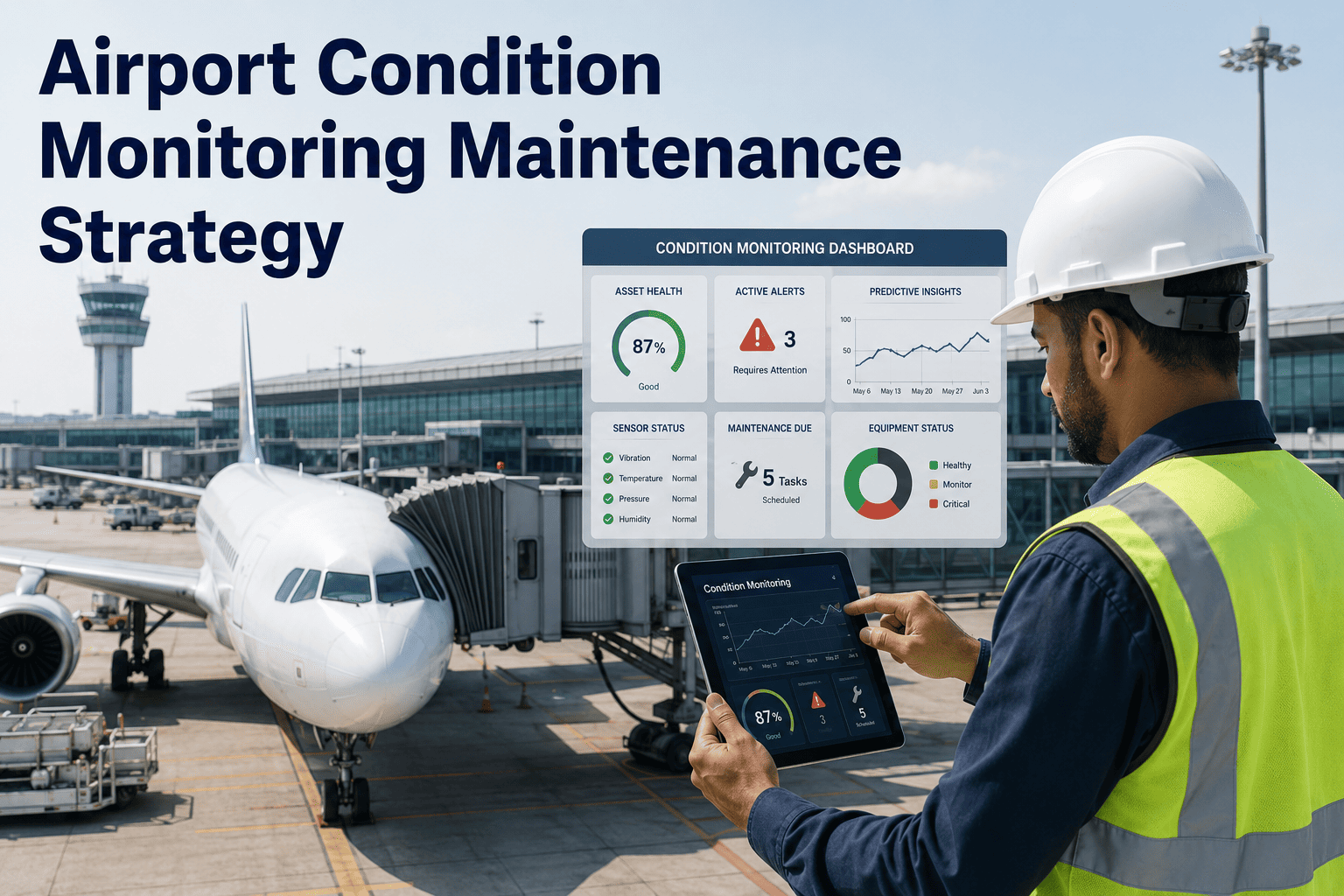
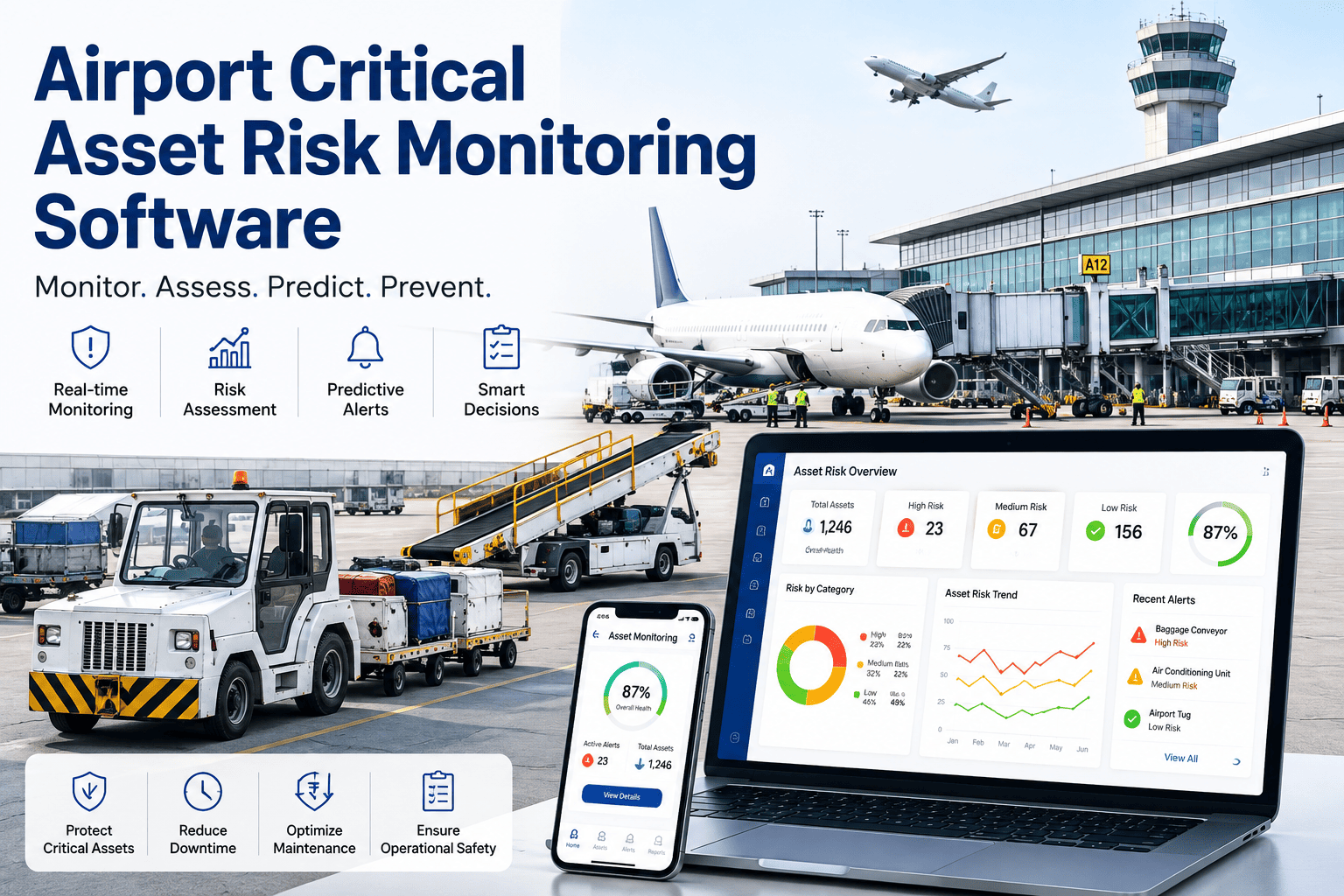
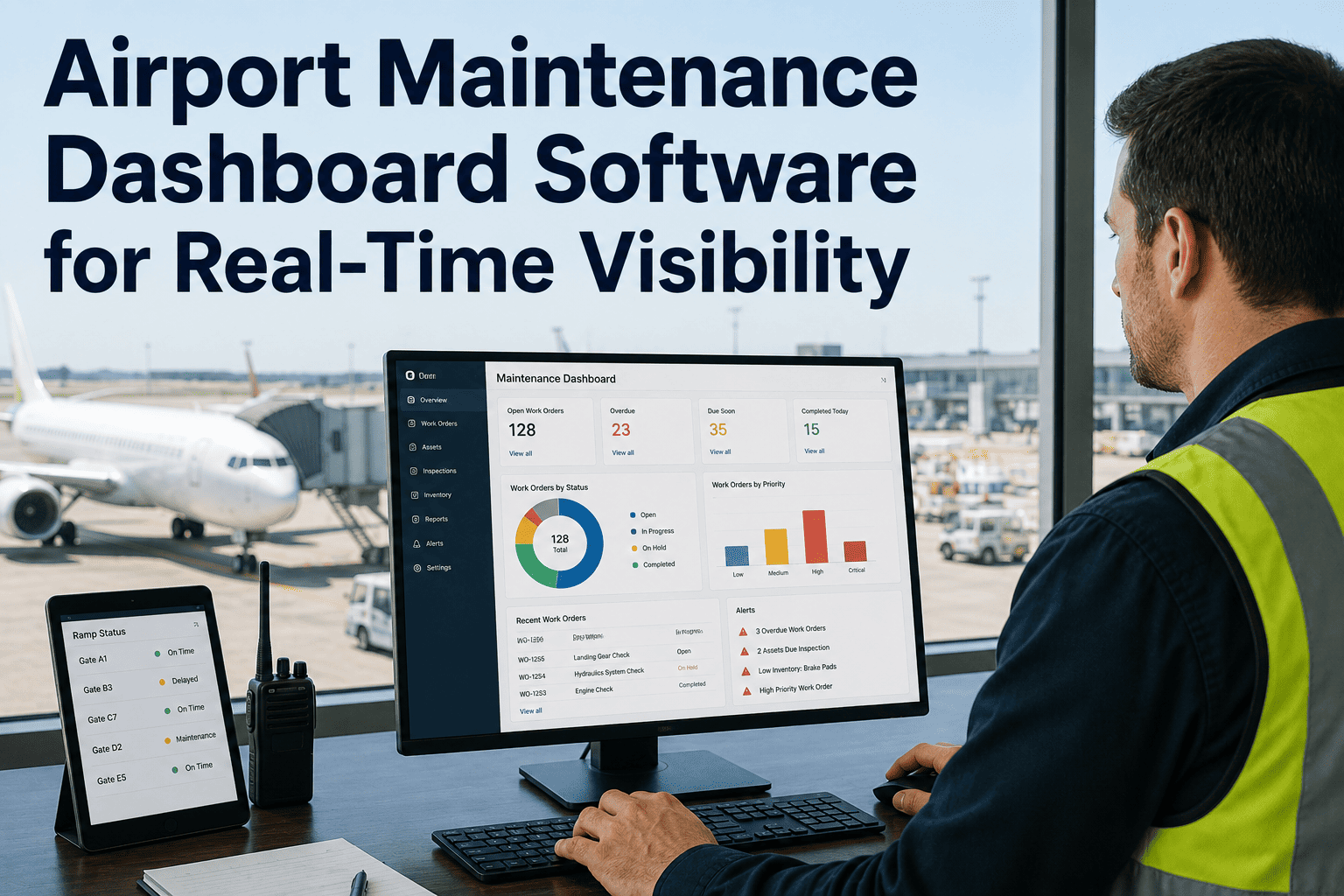
Airport maintenance departments have operated on fixed preventive maintenance schedules for decades, servicing equipment every three months or every five thousand operating hours regardless of whether that equipment actually needs attention at that moment. This approach was practical when condition data was unavailable but carries a hidden cost structure that most airports have never fully quantified. Equipment degrading faster than the PM interval catches failures between services, while healthy equipment at the scheduled service point receives unnecessary work that consumes labor and parts without improving reliability. A condition-monitoring maintenance strategy replaces fixed intervals with evidence-based triggers that activate maintenance only when condition data indicates it is needed, eliminating both the unplanned failures that slip between PM dates and the wasted effort on equipment that has not degraded. You can book a demo to see how iFactory builds condition-monitoring strategies for airport assets.
ARTICLE · CONDITION MONITORING · MAINTENANCE STRATEGY · AIRPORT ASSETS
Stop Servicing Equipment on a Calendar — Start Servicing It When Condition Data Says It Actually Needs It
This article breaks down why fixed PM fails airport assets, the four pillars of a condition-monitoring strategy, how to classify assets for the right monitoring approach, and the transition roadmap from calendar-based to condition-based maintenance.
THE SCHEDULING PROBLEM
Fixed PM Intervals Do Not Match How Equipment Actually Degrades
The fundamental flaw of fixed preventive maintenance is the assumption that all assets of the same type degrade at the same rate. In reality, two identical baggage conveyor motors installed at different gates under different load conditions will reach failure at completely different times. The timeline comparison below shows what a typical twelve-month cycle looks like under fixed PM versus a condition-based approach for the same asset.
FIXED PM SCHEDULE — SAME INTERVAL REGARDLESS OF CONDITION
PM 1 — No Issue Found
PM 2 — Minor Wear Noted
Unplanned Failure Between Services
PM 3 — Post-Repair Check
PM 4 — No Issue Found
Awaiting Next Scheduled PM
2 unnecessary services performed, 1 failure missed between PM intervals
CONDITION-BASED SCHEDULE — SERVICE TRIGGERED BY ACTUAL CONDITION
Monitoring — All Indicators Normal
Monitoring — All Indicators Normal
Alert — Degradation Trend Detected
Service — Condition Triggered
Monitoring — All Indicators Normal
Monitoring — All Indicators Normal
0 unnecessary services, 0 unplanned failures, maintenance performed at optimal time
STRATEGY FRAMEWORK
Four Pillars of an Airport Condition-Monitoring Maintenance Strategy
A condition-monitoring strategy is not just about installing sensors. It requires four interconnected capabilities that work together to transform raw condition data into correctly prioritized maintenance actions. Missing any one of these pillars produces either an overload of unfiltered data, inaccurate triggers, or work that does not address the highest-risk degradation.
01
Sensor-Based Continuous Monitoring
IoT sensors deployed on critical assets provide real-time condition data including vibration, temperature, pressure, and energy consumption that reveals degradation patterns as they develop rather than at the next scheduled inspection. This pillar eliminates the blind spots between inspection intervals where most unplanned failures actually occur.
02
Inspection-Based Condition Assessment
Trained technicians perform structured condition assessments using standardized checklists and measurement protocols at intervals determined by asset criticality and known degradation modes. This pillar captures data that sensors cannot measure such as visual wear progression, corrosion depth, structural cracking, and seal integrity that require human observation.
03
AI-Driven Degradation Analysis
Machine learning models process historical and real-time condition data to identify degradation trends, predict remaining useful life, and detect anomaly patterns that indicate developing failures before they reach critical thresholds. This pillar transforms raw data into predictive signals that trigger maintenance at the optimal point in the degradation curve.
04
Risk-Based Work Prioritization
Maintenance actions are ranked by combining predicted failure probability from the analysis pillar with operational consequence severity, ensuring that the most impactful potential failures receive attention first regardless of which asset category generated the alert. This pillar prevents maintenance teams from being overwhelmed by low-priority triggers.
Every Unnecessary PM Service Is Labor and Parts Your Airport Did Not Need to Spend
iFactory builds condition-monitoring strategies that replace fixed PM schedules with sensor-driven and inspection-driven triggers, so your maintenance team only works on assets that actually need attention.
DECISION FRAMEWORK
Not Every Asset Needs the Same Monitoring Approach — Use This Matrix to Decide
The biggest mistake airports make when adopting condition monitoring is trying to apply the same approach to every asset. The matrix below classifies assets along two dimensions: the consequence of failure and the availability of reliable condition indicators. Each quadrant maps to a specific maintenance strategy with a clear implementation priority.
HIGH CONSEQUENCE + HIGH MONITORABILITY
Condition-Based Monitoring — Priority 1
Assets where failure significantly impacts safety or operations and reliable condition indicators exist. Deploy continuous sensors, set calibrated thresholds, and transition fully from fixed PM to condition-triggered work orders as the highest ROI investment in your strategy.
HIGH CONSEQUENCE + LOW MONITORABILITY
Enhanced Fixed PM — Priority 2
Assets where failure impact is severe but reliable condition indicators are not currently available or cost-effective to deploy. Reduce PM intervals below manufacturer recommendations, add targeted inspection checkpoints, and actively investigate measurable condition indicators for future transition.
LOW CONSEQUENCE + HIGH MONITORABILITY
Condition-Based Monitoring — Priority 3
Assets where failure impact is limited but condition data is readily available through existing sensors or low-cost monitoring. Implement monitoring to optimize maintenance timing and eliminate unnecessary scheduled work, capturing labor savings that fund higher-priority monitoring investments.
LOW CONSEQUENCE + LOW MONITORABILITY
Standard Fixed PM — Priority 4
Assets where both consequence and monitorability are low. Maintain standard PM schedules as the most cost-effective approach for this category, with periodic condition assessments at annual intervals to identify any assets that should be reclassified to a higher-priority quadrant.
ASSET CLASSIFICATION
Four-Tier Asset Pyramid: What to Monitor and How Intensively
The pyramid below organizes airport assets into four tiers based on failure consequence, with each tier receiving a different monitoring intensity level. Tier 1 assets at the top require the most intensive monitoring because their failure carries the highest operational and safety impact, while Tier 4 assets at the base are best served by standard fixed PM with periodic condition checks.
TIER 1 — SAFETY-CRITICAL
Runway lighting, approach lighting, fire suppression, emergency power, fuel systems
Continuous sensor monitoring with real-time alerting and redundant inspection protocols
TIER 2 — OPERATION-CRITICAL
Baggage handling, boarding bridges, ground power units, pushback tractors, runway sweepers
Sensor-based monitoring with scheduled inspection validation and AI trend analysis
TIER 3 — SERVICE-CRITICAL
Terminal HVAC, escalators, moving walkways, elevators, passenger boarding doors
Periodic condition inspections with targeted sensor deployment on highest-degradation units
TIER 4 — FACILITY-SUPPORT
Interior lighting, landscaping irrigation, non-essential signage, parking systems, office HVAC
Standard fixed PM with condition assessment at annual intervals for reclassification review
INDICATOR MAPPING
From Asset Type to Actionable Trigger: How Condition Indicators Connect to Work Orders
Every condition-monitoring strategy needs a clear mapping from what is being measured to what action it triggers. The flow below shows how specific condition indicators for common airport asset types connect through threshold rules to concrete maintenance actions, creating the direct link between sensor data and technician work that makes the strategy operational rather than theoretical.
Baggage Conveyor Systems
Motor current draw, belt tension, bearing vibration velocity
Current exceeds 15% above baseline or vibration above ISO threshold
Schedule bearing inspection and motor diagnostic assessment
Passenger Boarding Bridges
Hydraulic system pressure, drive motor vibration, level sensor drift
Pressure drop below operating range or vibration trend increasing
Schedule hydraulic system inspection and seal assessment
Terminal HVAC Chillers
Compressor vibration, refrigerant pressure ratio, approach temperature, COP
Vibration exceeds ISO grade or COP drops below 85% of baseline
Schedule compressor inspection and refrigerant charge check
Escalators and Moving Walkways
Drive motor current, handrail speed deviation, step alignment, noise level
Speed deviation exceeds 2% or current draw increases by 10%
Schedule drive system inspection and chain tension assessment
Runway Edge Lighting
Lamp current draw, circuit voltage, fixture vibration, insulation resistance
Current deviation exceeds 5% or voltage drop detected on circuit
Schedule circuit inspection and fixture replacement assessment
Ground Power Units
Output voltage stability, frequency accuracy, coolant temperature, load current
Voltage deviation exceeds 2% or coolant exceeds operating threshold
Schedule generator inspection and cooling system assessment
TRANSITION ROADMAP
Five Phases to Move From Fixed PM to Condition-Based Maintenance
Transitioning an airport from fixed PM to condition monitoring is not a single switch but a structured progression that builds capability in each of the four pillars before removing the fixed schedule safety net. The phase progression below ensures that condition triggers are validated and accurate before they take control of work order generation, eliminating the risk of switching too early and missing maintenance that the old schedule would have caught.
PHASE 1
Asset Inventory and Criticality Assessment
Catalogue all maintained assets, assign consequence ratings across safety, operational, and financial dimensions, and document current maintenance strategies for each asset category to establish the baseline for transition planning.
PHASE 2
Condition Indicator Identification
For each asset category, identify measurable condition indicators that reliably predict degradation, assess available monitoring technologies, and determine data collection requirements including sensor types, inspection protocols, and measurement frequencies.
PHASE 3
Monitoring Deployment and Validation
Install sensors on priority assets, configure inspection checklists for condition assessment, establish data collection processes, and validate data quality by comparing sensor readings and inspection results against known equipment conditions.
PHASE 4
Trigger Calibration and Parallel Operation
Set initial condition thresholds based on manufacturer data and historical records, run parallel operation with existing PM schedules for four to eight weeks, validate trigger accuracy against actual equipment conditions, and refine thresholds.
PHASE 5
Full Activation and Continuous Optimization
Disable fixed PM schedules for validated asset categories, activate condition-based work order generation, implement predictive models for remaining useful life estimation, and establish continuous improvement cycles for threshold refinement.
FREQUENTLY ASKED QUESTIONS
Questions From Airport Maintenance Strategy Leaders
How do we determine which airport assets should transition from fixed PM to condition-based monitoring first?
The transition priority is determined by a two-factor assessment of each asset category: the consequence of failure measured across safety, operational, and financial dimensions, and the availability of reliable condition indicators that can predict degradation before failure occurs. Assets that score high on both factors move to condition-based monitoring first because they offer the highest return on monitoring investment. Assets with high consequence but low monitorability receive enhanced fixed PM while condition indicators are researched and developed. iFactory's asset classification framework automates this scoring process using configurable criteria.
Book a demo to see how the framework prioritizes your transition.
What happens during the transition period when we are moving from fixed schedules to condition triggers?
During the transition period, condition monitoring runs in parallel with the existing fixed PM schedule so there is no gap in maintenance coverage and no risk of missing a service that the old schedule would have caught. Sensor data and inspection results are collected and analyzed, but work orders continue to be generated on the existing calendar schedule. This parallel period typically runs four to eight weeks and serves to validate that the condition triggers are accurate before they take control of work order generation, while simultaneously building a baseline of condition data for threshold calibration.
Contact our support team to discuss transition planning for your airport.
How much sensor infrastructure investment is needed to implement a condition-monitoring strategy across an airport?
The sensor investment varies significantly based on which asset categories you prioritize and what condition indicators are already available from existing building management or SCADA systems that can be leveraged without new hardware deployment. Many airports already have temperature, pressure, and energy sensors on HVAC equipment that can be integrated directly into the condition-monitoring platform. For assets without existing sensors, investment is typically concentrated on Tier 1 and Tier 2 assets where the consequence of failure justifies the monitoring cost, with Tier 3 and Tier 4 assets relying more heavily on inspection-based condition assessment that requires minimal hardware.
Book a demo to get a sensor investment estimate based on your asset portfolio.
Can condition-based maintenance work for airport assets that do not have and cannot support installed sensors?
Condition-based maintenance does not require sensors on every asset, and inspection-based condition assessment is a fully valid monitoring approach that uses trained technicians with standardized checklists and portable measurement tools to evaluate equipment condition at scheduled intervals. Many airport asset categories including structural elements, flooring systems, signage, perimeter infrastructure, and architectural finishes are better suited to inspection-based monitoring than sensor-based monitoring because their degradation modes are visual or mechanical rather than measurable by continuous data streams. The four-pillar framework treats inspection-based assessment as an equal pillar alongside sensor-based monitoring.
Contact our support team to learn about inspection-based condition monitoring for non-sensored assets.
How do we measure whether our condition-monitoring strategy is actually performing better than our previous fixed PM approach?
A condition-monitoring strategy is measured against the fixed PM baseline using four key performance indicators tracked from the start of parallel operation: the reduction in unplanned failures and associated operational disruptions, the reduction in maintenance labor hours spent on assets that showed no measurable degradation at the scheduled service point, the change in mean time between failures for monitored asset categories compared to the fixed PM period, and the total maintenance cost per asset including sensor infrastructure, data analysis, and execution costs. These metrics create a direct before-and-after comparison that quantifies the strategy's financial and operational impact.
Book a demo to see how iFactory tracks condition-monitoring performance KPIs.
Fixed PM Was the Best Option When Condition Data Did Not Exist — That Excuse Is Over
iFactory builds condition-monitoring strategies for airport assets using sensors, inspections, AI analysis, and risk-based prioritization to replace fixed schedules with evidence-based maintenance that eliminates unnecessary work and prevents unplanned failures.